Kindergarten Counting Worksheets
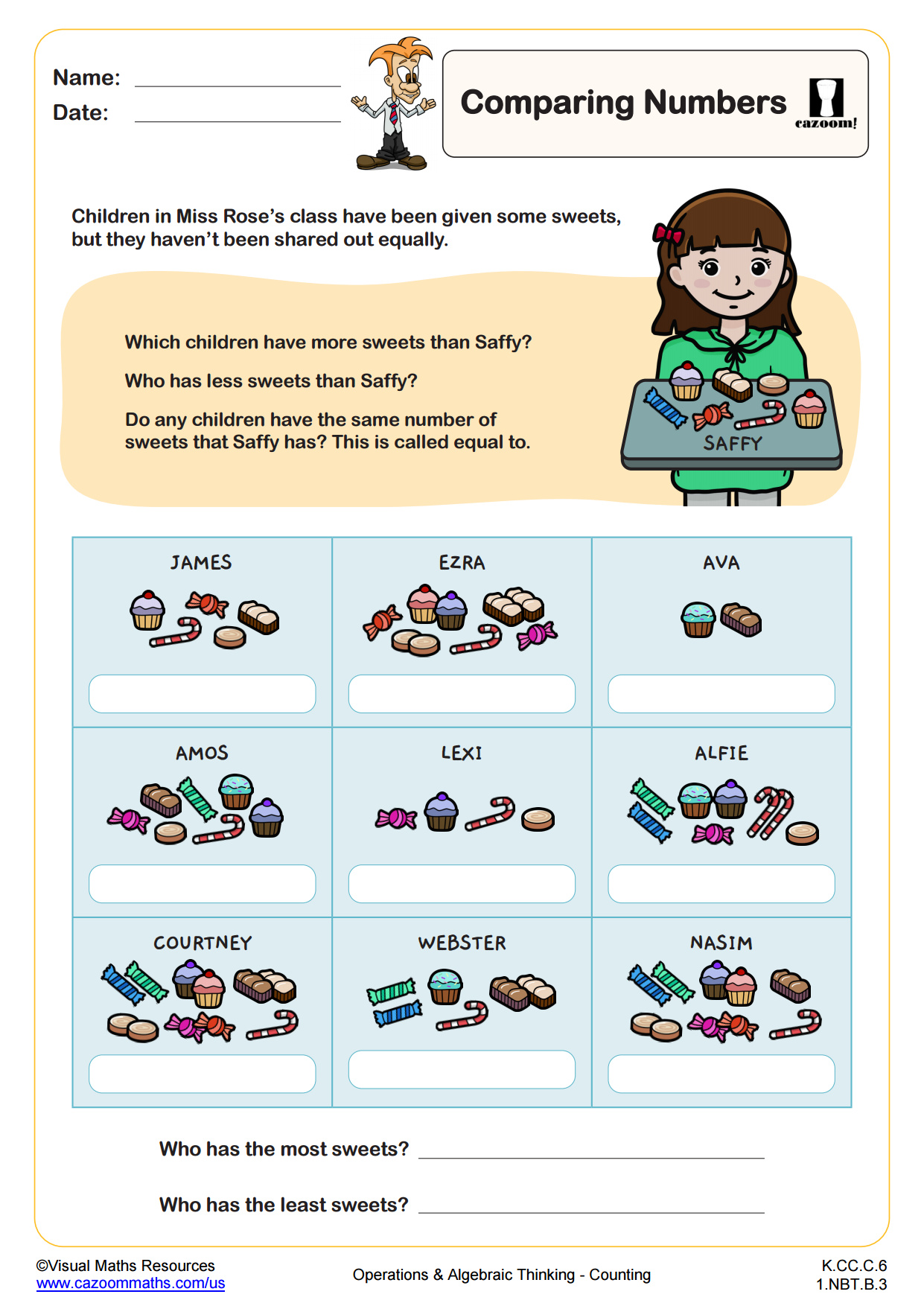
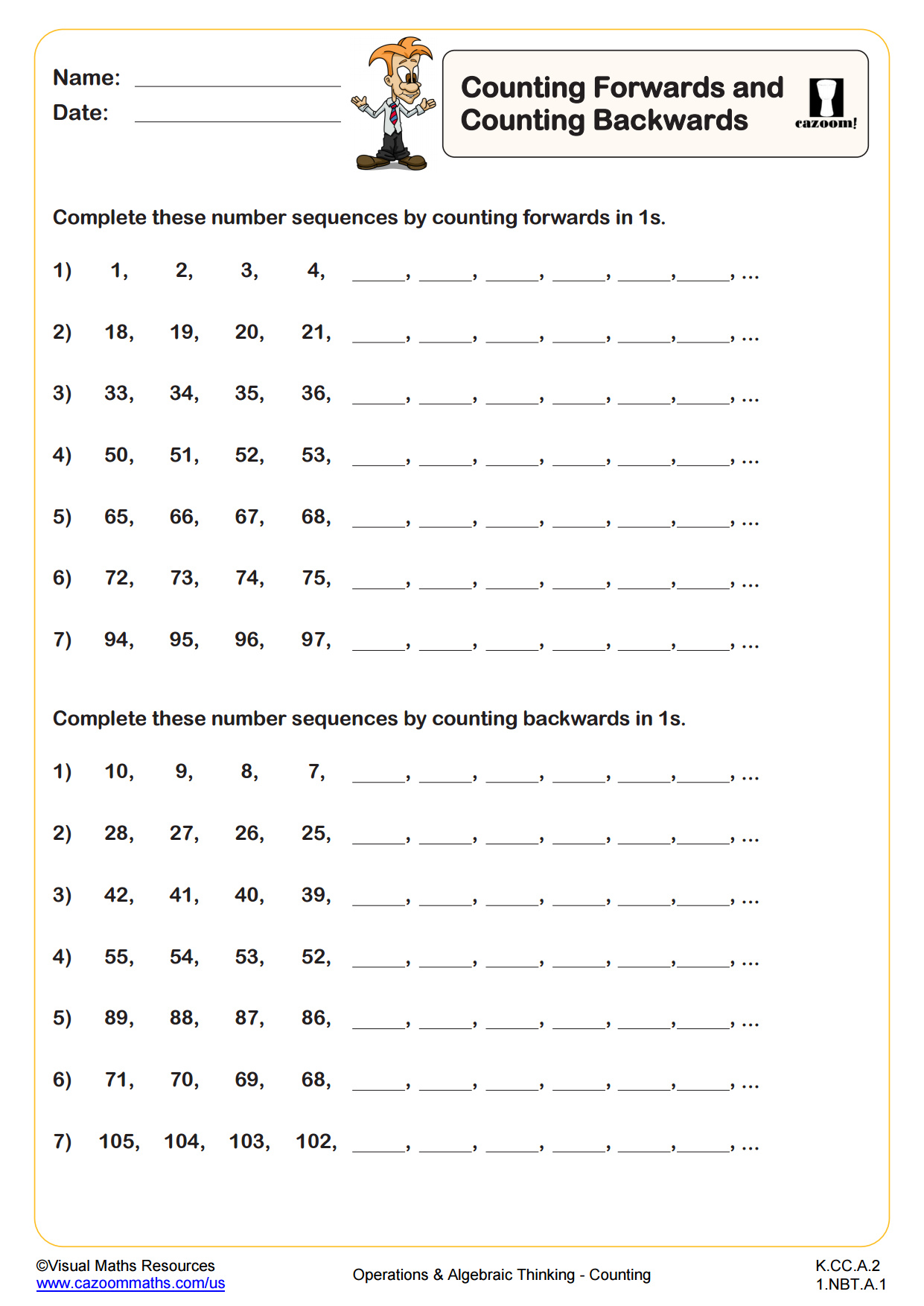
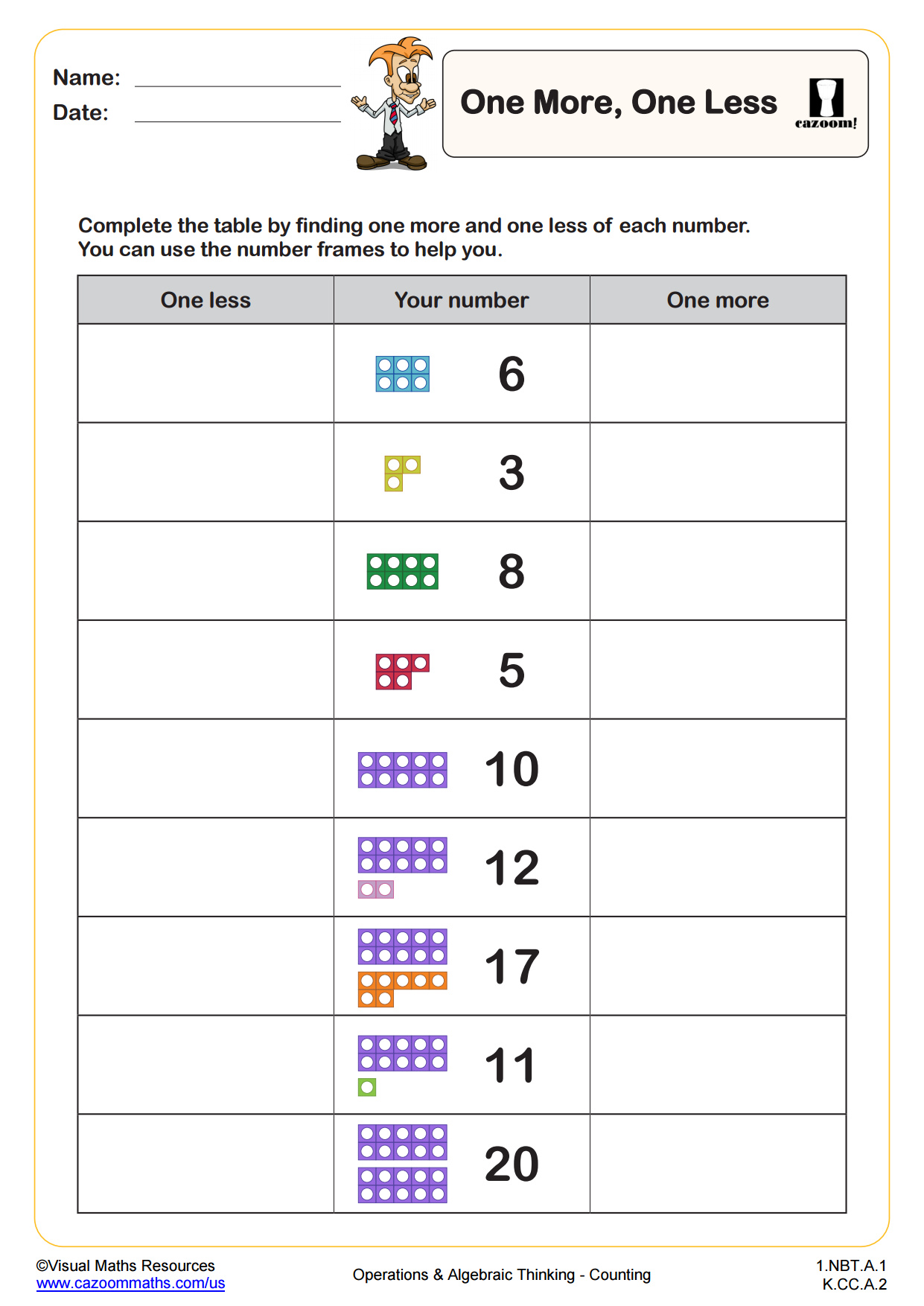
All worksheets are created by the team of experienced teachers at Cazoom Math.
What counting skills should kindergarten students master?
Kindergarten students should master counting forward to 20 (and ideally to 100 by ones and tens), counting backwards from 10, comparing numbers to determine which is greater or less, and understanding one more and one less within 20. These skills align with Common Core standards K.CC.A.1 through K.CC.C.7 and form the basis for addition and subtraction in first grade.
Students often struggle with the transition between decade numbers when counting forward—saying "twenty-ten" instead of thirty, for example. The worksheets address this by providing repeated practice with number sequences that cross these boundaries. Teachers notice that students who can confidently count backwards from 10 typically grasp subtraction concepts more quickly, since they understand that numbers decrease in a predictable pattern.
What grade level are these counting worksheets designed for?
These worksheets are specifically designed for kindergarten students in elementary school. They address the counting and cardinality standards that form the core of kindergarten math curriculum, including number recognition, sequencing, comparison, and early subtraction concepts using visual models like number lines.
The difficulty progression within the kindergarten worksheets moves from concrete counting tasks toward more abstract concepts. Students begin with comparing numbers and counting sequences, then advance to one more and one less relationships, and finally apply their counting skills to subtraction problems using number lines. This scaffolded approach ensures students build confidence with basic counting before tackling operations, which prepares them for the addition and subtraction within 10 that dominates first grade mathematics.
How do number lines help kindergarten students understand subtraction?
Number lines provide a visual model that shows subtraction as movement along a sequence of numbers. When students see a number line with numbers 0 through 10 or 0 through 20, they can physically count backwards from the starting number to find the answer, making the abstract concept of "taking away" concrete. This visual representation helps students recognize that subtraction means finding a number that comes before another number in the counting sequence.
This foundational skill connects directly to measurement concepts students encounter throughout elementary school. When students later measure lengths with rulers or calculate temperature changes on thermometers, they're using the same number line reasoning they learned in kindergarten. Scientists and engineers constantly use number lines to visualize data on graphs and charts, making this seemingly simple kindergarten skill a gateway to data analysis and scientific thinking in STEM careers.
How can teachers use these counting worksheets effectively in the classroom?
The worksheets provide structured practice that allows teachers to assess which specific counting skills individual students have mastered and which require additional instruction. The variety of subtopics means teachers can assign targeted practice based on formative assessment results rather than giving all students the same worksheet. The included answer keys make it practical to use these worksheets during independent work time while the teacher works with small groups.
Many teachers find these worksheets effective for math centers or stations, where students can work at their own pace with different counting activities. They also work well as homework assignments that parents can support without needing extensive math knowledge, since the answer keys clarify expectations. Some teachers use them as warm-up activities at the beginning of math lessons or as intervention materials for students who need extra practice before moving to first grade content. The printable PDF format allows teachers to create multiple copies or laminate sheets for repeated use with dry-erase markers.