Kindergarten Describe and Compare Shapes Worksheets
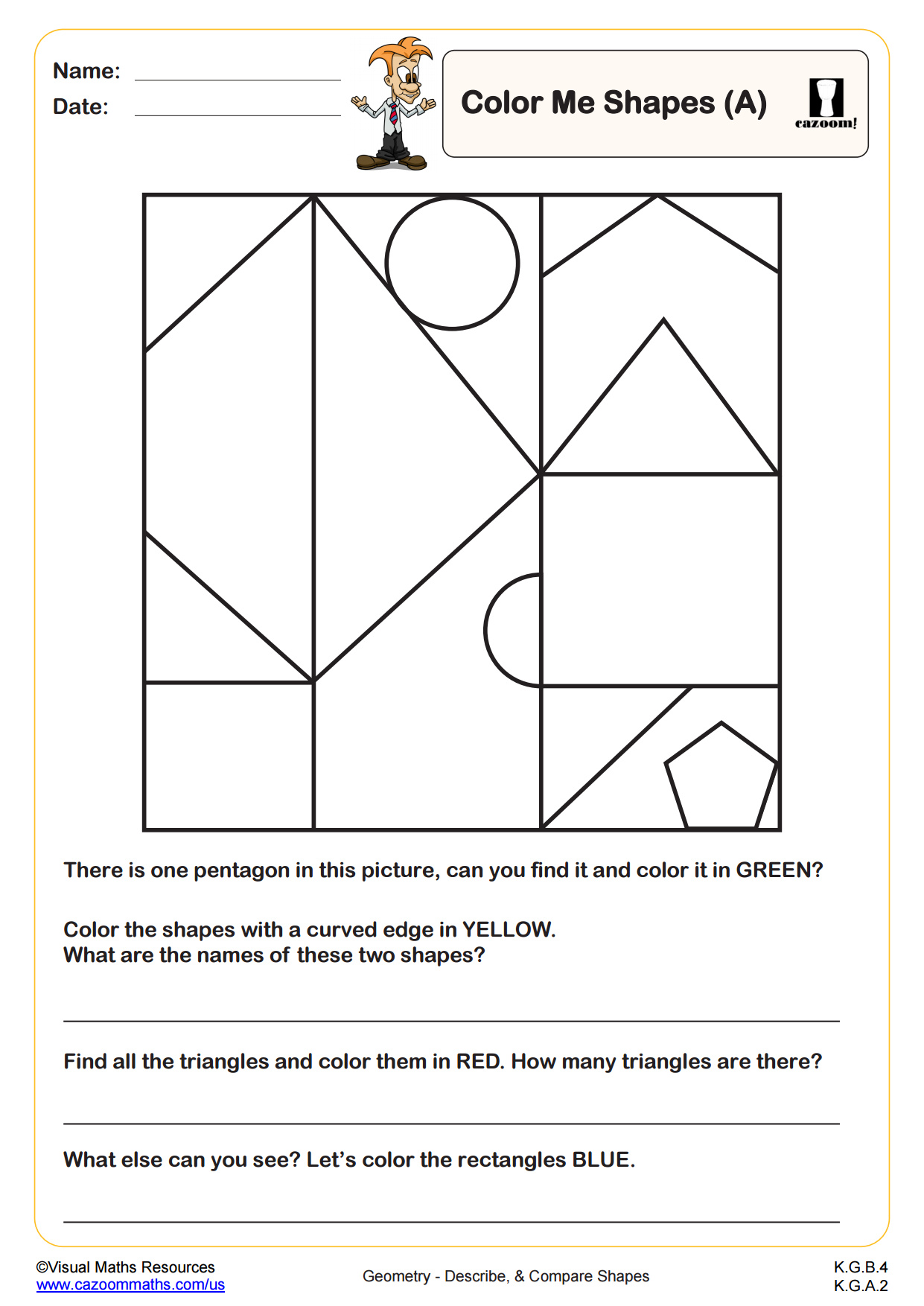
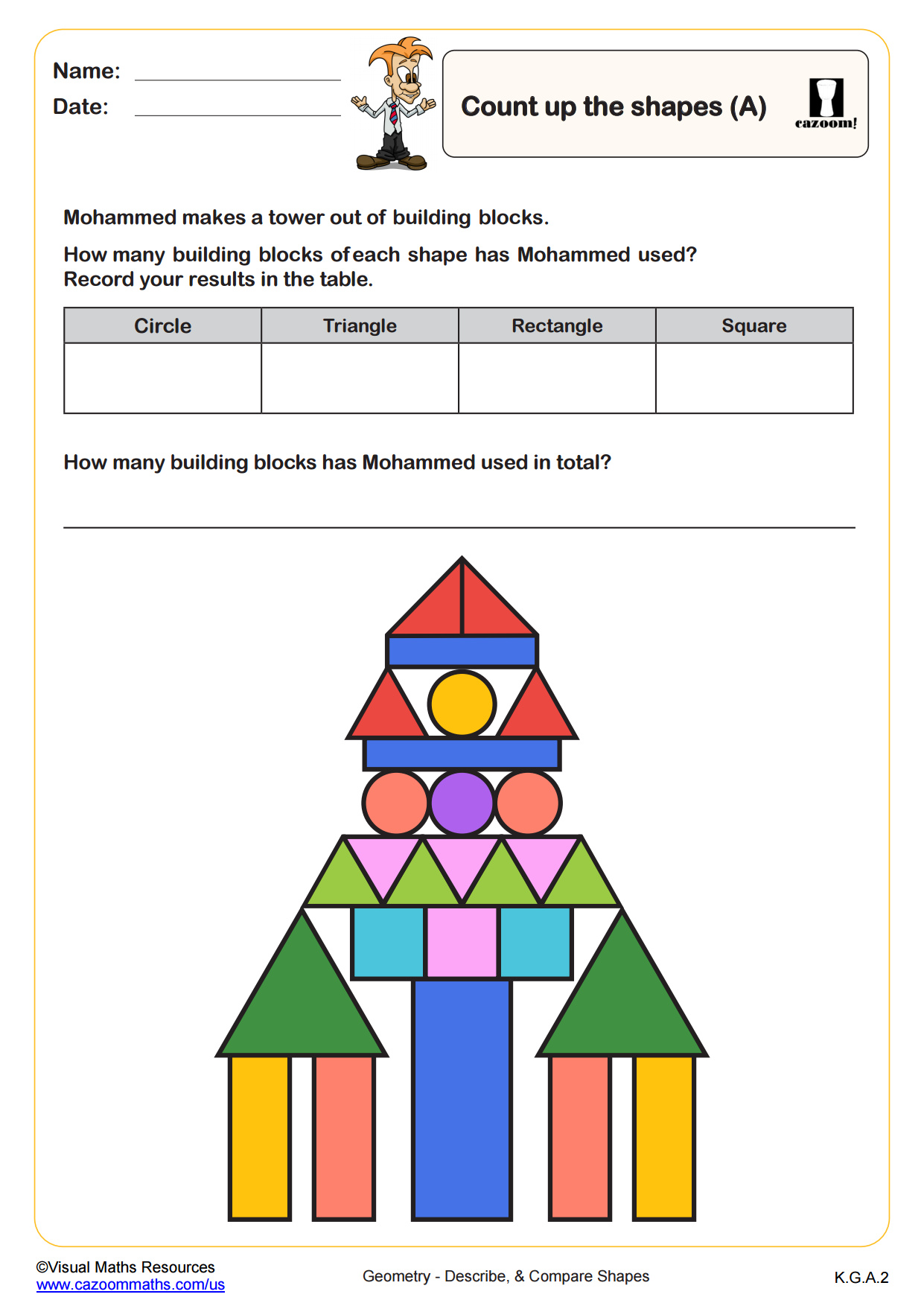
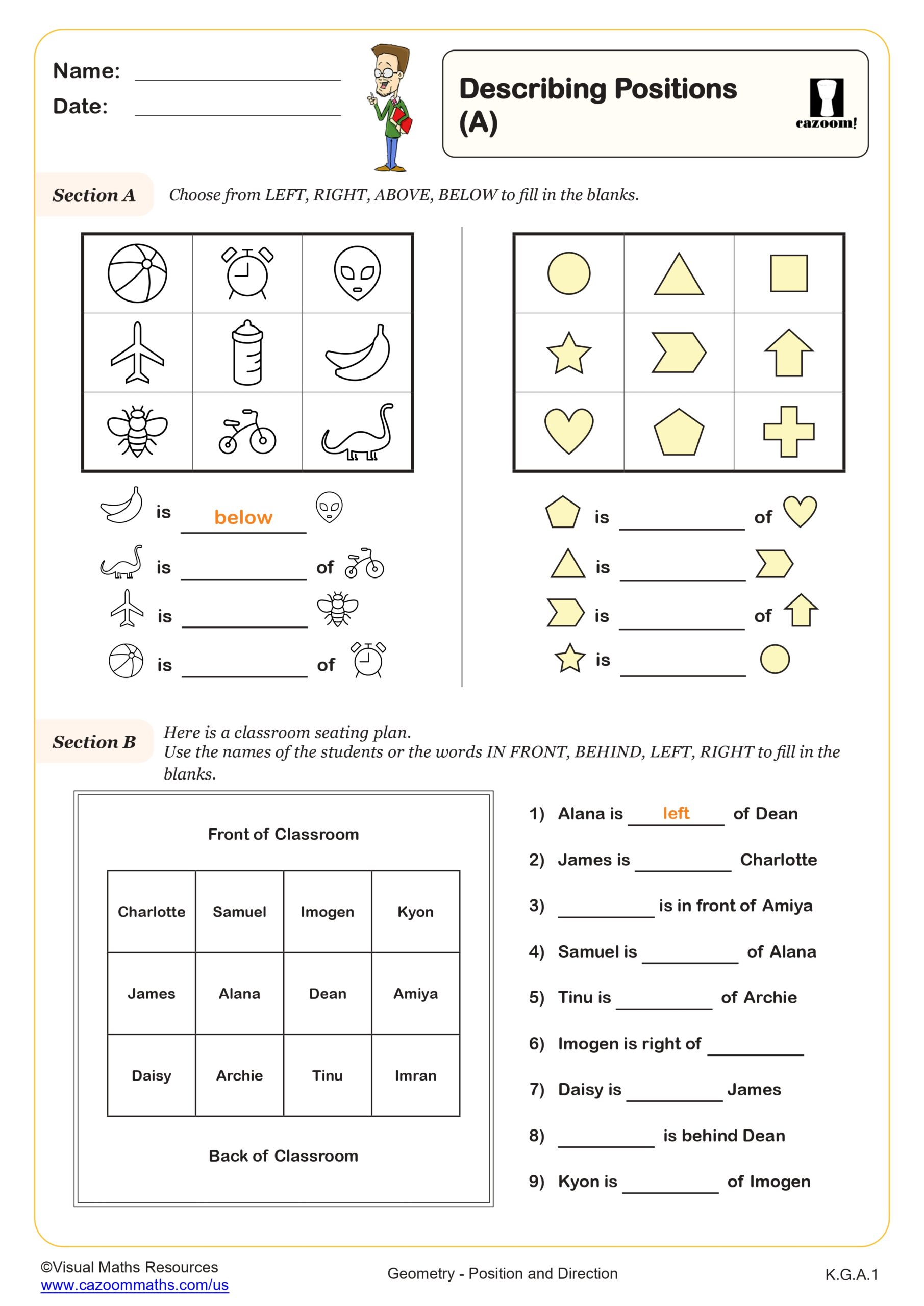
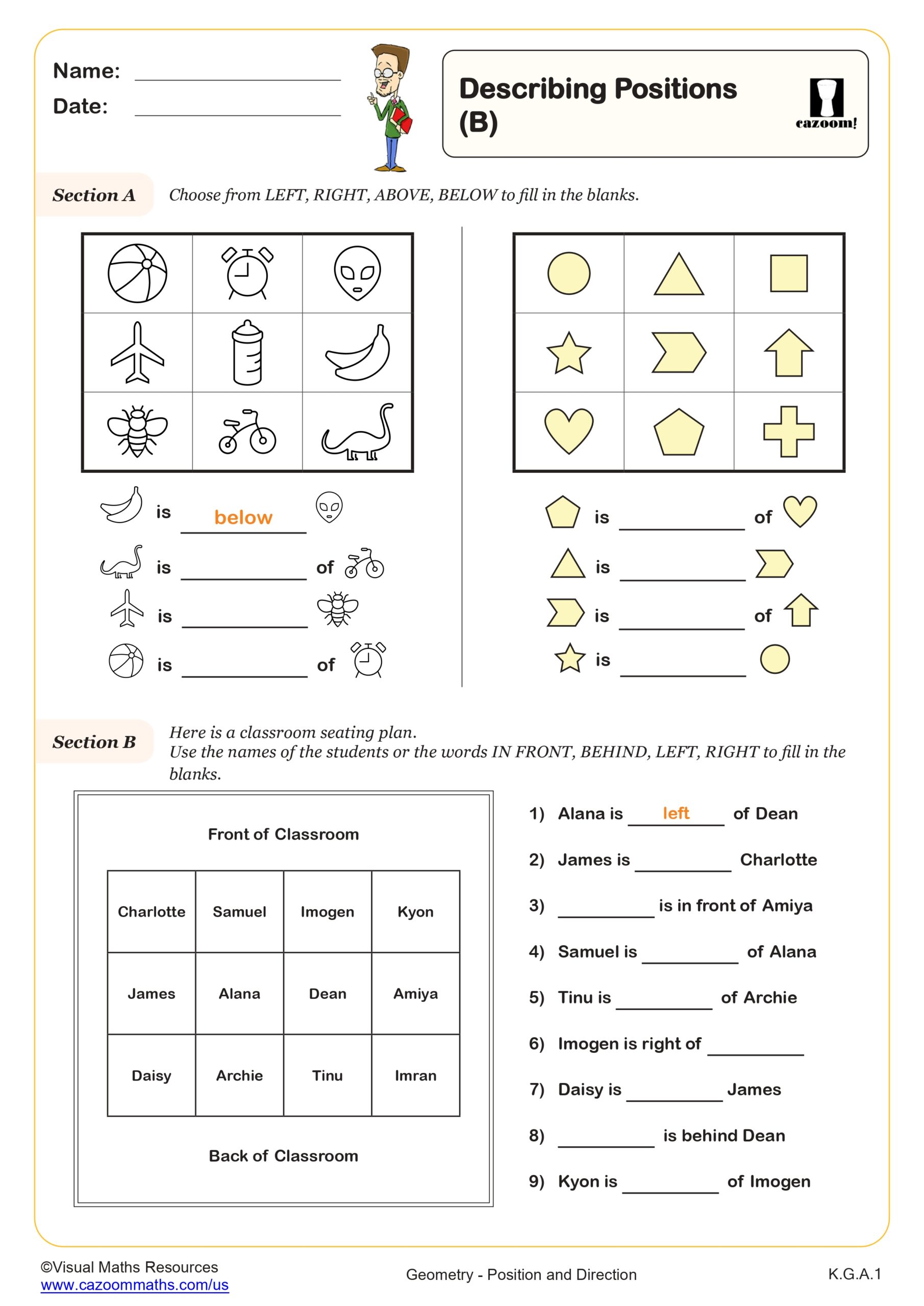
All worksheets are created by the team of experienced teachers at Cazoom Math.
What Skills Do Students Practice When Describing and Comparing Shapes?
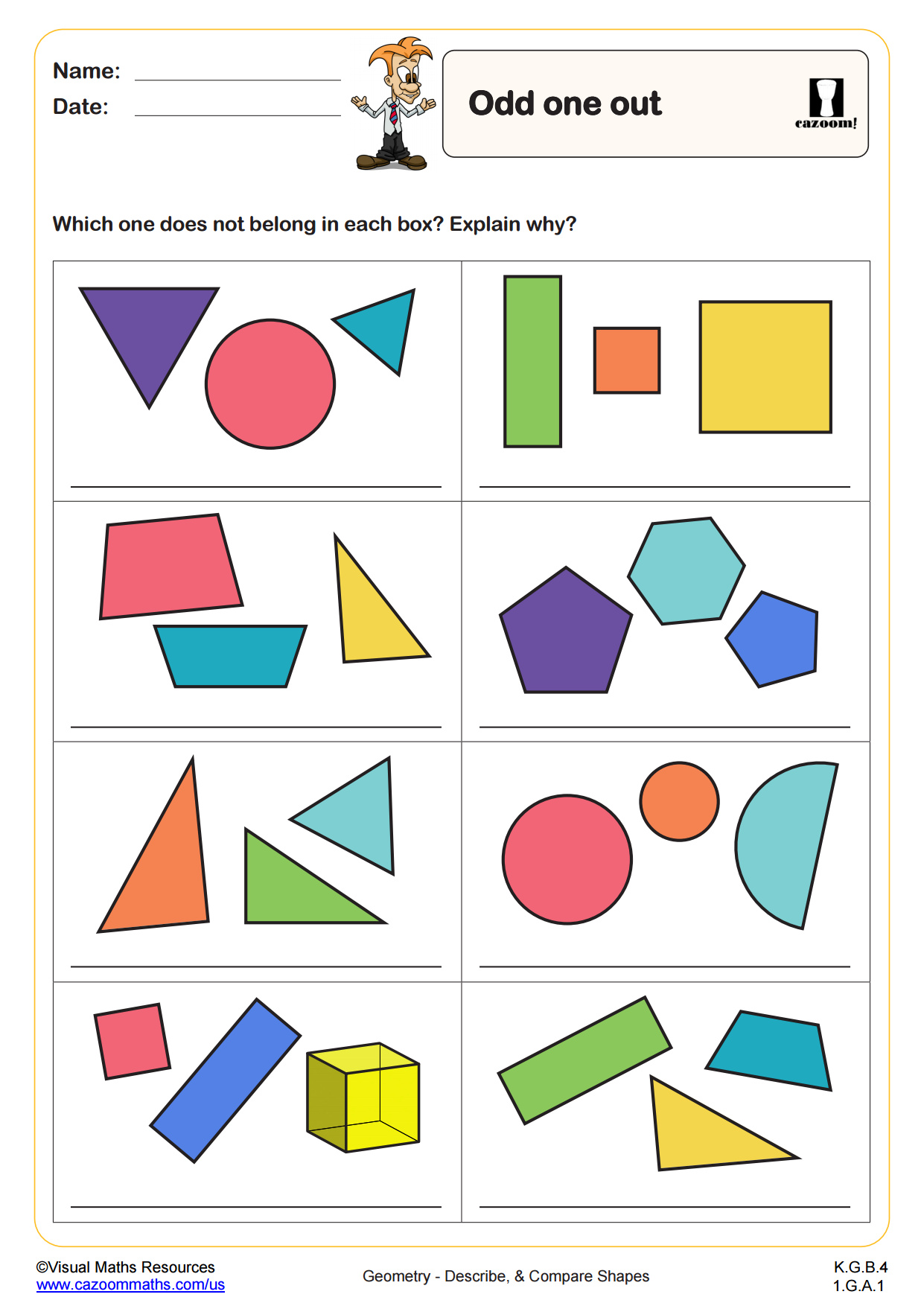
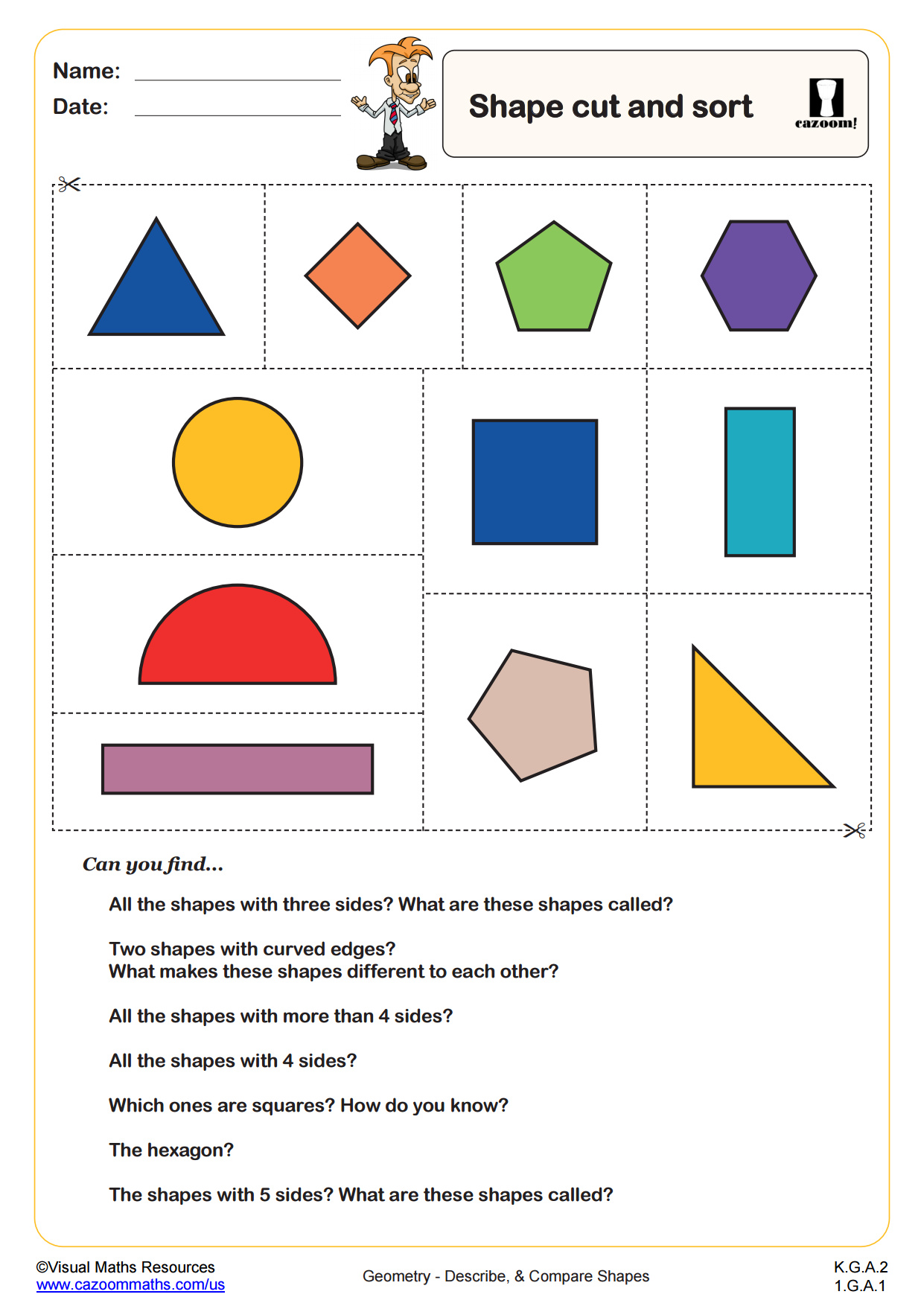
Kindergarten students learn to identify and name basic two-dimensional shapes (circles, squares, triangles, rectangles) and describe their attributes. This includes counting sides and vertices (corners), recognizing whether sides are straight or curved, and understanding that shapes maintain their identity regardless of size or orientation. These skills align with Kindergarten Common Core geometry standards that focus on analyzing and comparing shapes.
A common misconception emerges when students confuse vertices with sides, particularly on shapes like triangles and squares where the distinction isn't immediately obvious. Teachers often find that using physical manipulatives alongside worksheets helps students touch and count each vertex separately from the sides. Students lose points on assessments when they identify a rotated square as a diamond rather than recognizing it as the same shape in a different position.
Which Grade Levels Use Worksheets for Describing and Comparing Shapes?
These worksheets are specifically designed for kindergarten students in elementary school. At this developmental stage, students are building their first formal understanding of geometric properties and learning the mathematical language needed to discuss shapes precisely. Kindergarten represents the entry point for geometry in the Common Core State Standards.
The progression within kindergarten moves from simple shape recognition to more complex comparative tasks. Early worksheets focus on identifying and coloring specific shapes, while later activities challenge students to count attributes, describe spatial movements (slides, flips, turns), and compare multiple shapes based on their properties. This scaffolded approach prepares students for first grade work with composing and decomposing shapes into larger geometric figures.
How Do Students Learn About Describing Rotations and Movement of Shapes?
Describing rotations and movement introduces kindergartners to spatial reasoning through transformations. Students learn that shapes can slide (translate), flip (reflect), or turn (rotate) while maintaining their defining characteristics. This concept helps develop flexible thinking about shapes—recognizing that a triangle remains a triangle whether it points up, down, or sideways. Teachers notice breakthroughs when students start predicting how a shape will look after a specific movement.
These spatial transformation skills connect directly to real-world applications students encounter daily. Architects rotate building components when designing structures, computer programmers use transformations to create video game graphics, and engineers analyze how parts move and fit together in machinery. Even simple activities like turning puzzle pieces to make them fit or understanding map orientations rely on this foundational geometric reasoning that begins in kindergarten.
How Can Teachers Use These Describe and Compare Shapes Worksheets Effectively?
The worksheets provide structured practice that reinforces concepts introduced through hands-on exploration with shape manipulatives. Each activity targets specific skills like counting vertices or identifying shapes after rotation, allowing teachers to pinpoint exactly which geometric concepts students have mastered. The included answer keys enable quick formative assessment, helping teachers identify which students need additional support before moving forward.
Many teachers use these worksheets during math centers while working with small groups on hands-on shape activities, creating differentiated learning stations. They work well as morning work for early finishers, homework that families can support without advanced math knowledge, or as review before kindergarten assessments. Some teachers pair students to complete worksheets together, encouraging mathematical discussion as partners explain their reasoning about shape attributes and movements.