Kindergarten Number Bonds Over 20 Worksheets
All worksheets are created by the team of experienced teachers at Cazoom Math.
What Are Number Bonds and Why Do They Matter?
Number bonds show the relationship between a whole number and its parts, helping students visualize how numbers break apart and combine. For kindergarten students working with numbers over 20, this concept extends their understanding of decomposition and composition, which forms the foundation for all future operations. Common Core State Standards introduce number bonds as a way to build number sense before formal algorithms.
Students often struggle when transitioning from concrete manipulatives to abstract representations, making ten frames particularly valuable for this work. The visual structure helps students see that 23, for example, consists of two full tens and three ones. Teachers notice that students who master number bonds with visual supports become more flexible thinkers when solving word problems and mental math challenges later in elementary school.
What Should Kindergarten Students Know About Number Bonds Over 20?
Kindergarten standards vary by state, but most expect students to work fluently with numbers to 10 and begin exploring numbers to 20 by year's end. Number bonds over 20 represent an extension activity for advanced kindergarten students or enrichment work as they prepare for first grade. Students at this level should recognize that numbers above 20 follow the same patterns they've learned with smaller numbers, just with additional tens.
This work builds directly on kindergarten's focus on composing and decomposing numbers within 10, which students typically master using counters, fingers, and drawings. Understanding number bonds over 20 prepares students for first grade standards, where they'll work with two-digit addition and subtraction within 100. The conceptual foundation established through number bond practice makes place value instruction far more accessible when students encounter it formally in later grades.
How Do Ten Frames Support Number Bond Understanding?
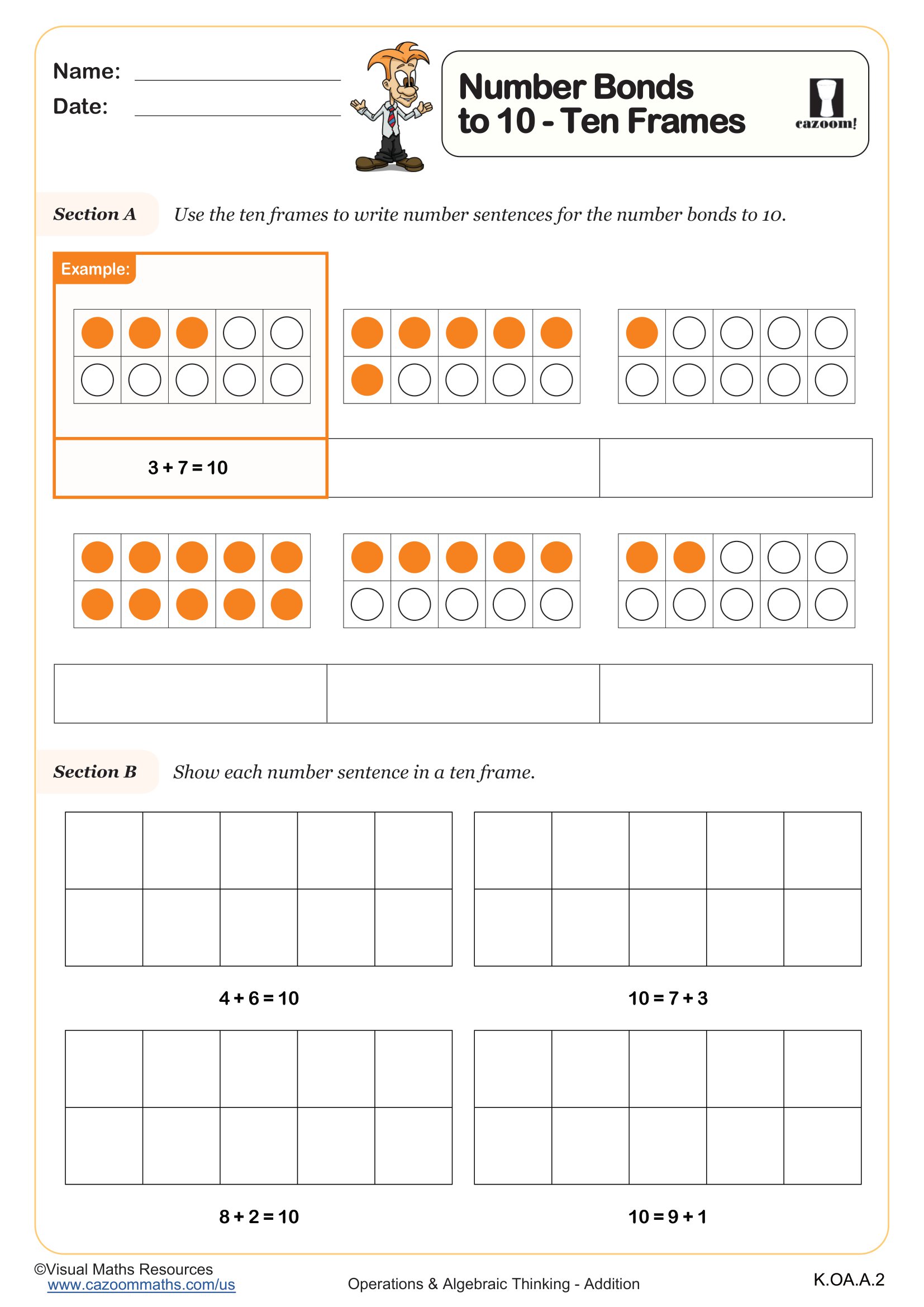
Ten frames provide a structured visual model that helps students see numbers as combinations of tens and ones. When working with numbers over 20, students use multiple ten frames to represent the whole number, then explore different ways to partition that quantity. This visual approach makes abstract number relationships concrete, allowing students to physically see how 25 might split into 20 and 5, or into two tens and five ones.
This skill connects directly to real-world counting situations students encounter daily. When organizing classroom supplies into boxes of ten, counting lunch money in dimes and pennies, or distributing snacks for a class party, students apply their understanding of grouping by tens. In STEM contexts, ten-based thinking appears in measurement systems, data collection, and early coding activities where students learn to count and group objects systematically.
How Can Teachers Use These Worksheets Most Effectively?
These worksheets work best when students have already established fluency with number bonds to 10 and are beginning to explore teen numbers confidently. The ten frame format provides visual scaffolding that helps students transition from concrete manipulations to representational thinking. Teachers can use the answer keys to quickly identify patterns in student errors, such as miscounting dots in ten frames or confusing the total with one of the parts.
Many teachers use these worksheets during math centers as an independent activity for students who have demonstrated readiness for challenge work beyond grade-level standards. They also serve well in small group settings where teachers can observe student strategies and provide immediate feedback. Some teachers send them home as optional enrichment, giving families a structured way to extend classroom learning while the answer keys allow parents to support their child's practice with confidence.