Kindergarten Number Bonds Up to 20 Worksheets
Making 10
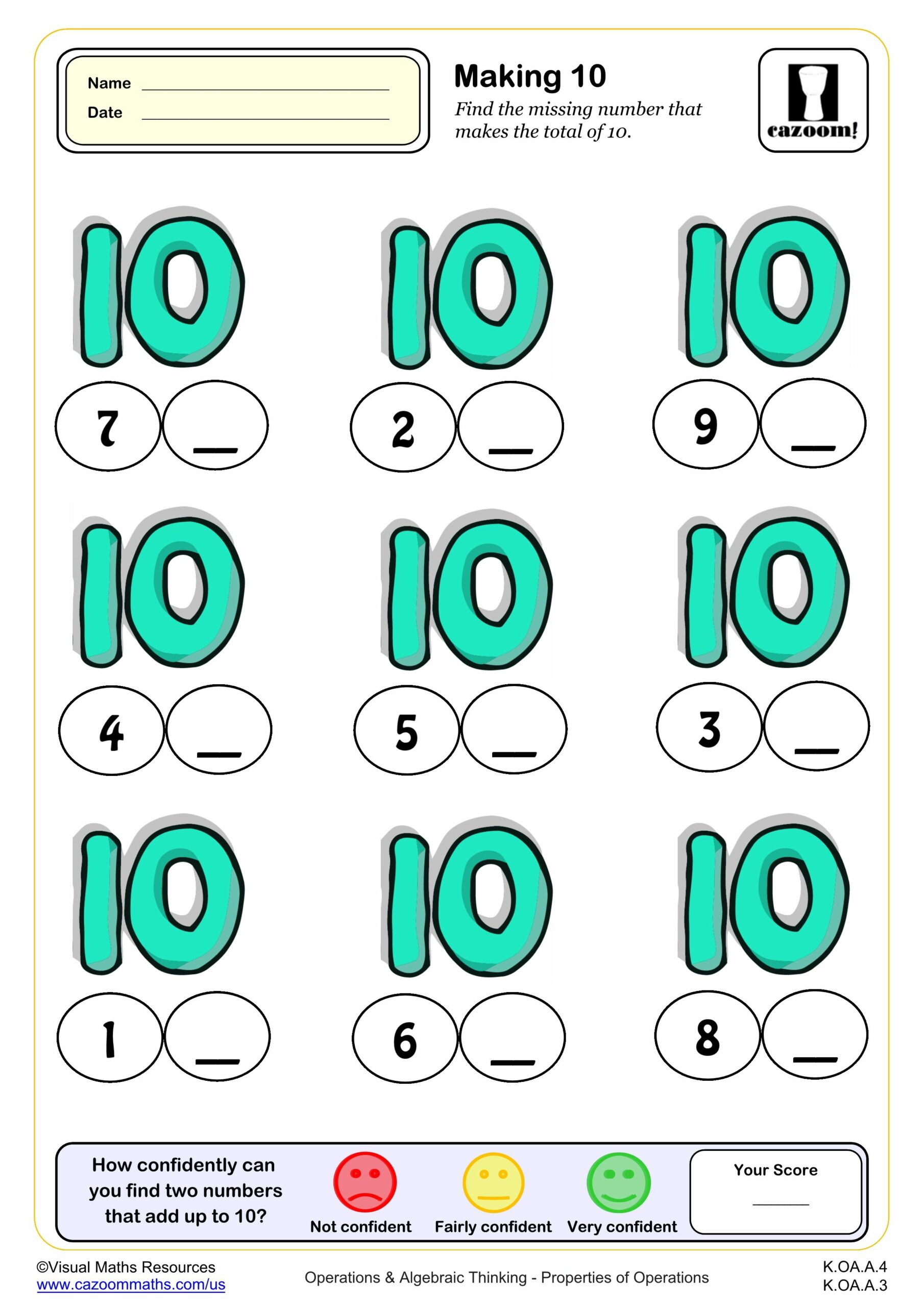
Making 10 (BONDS)
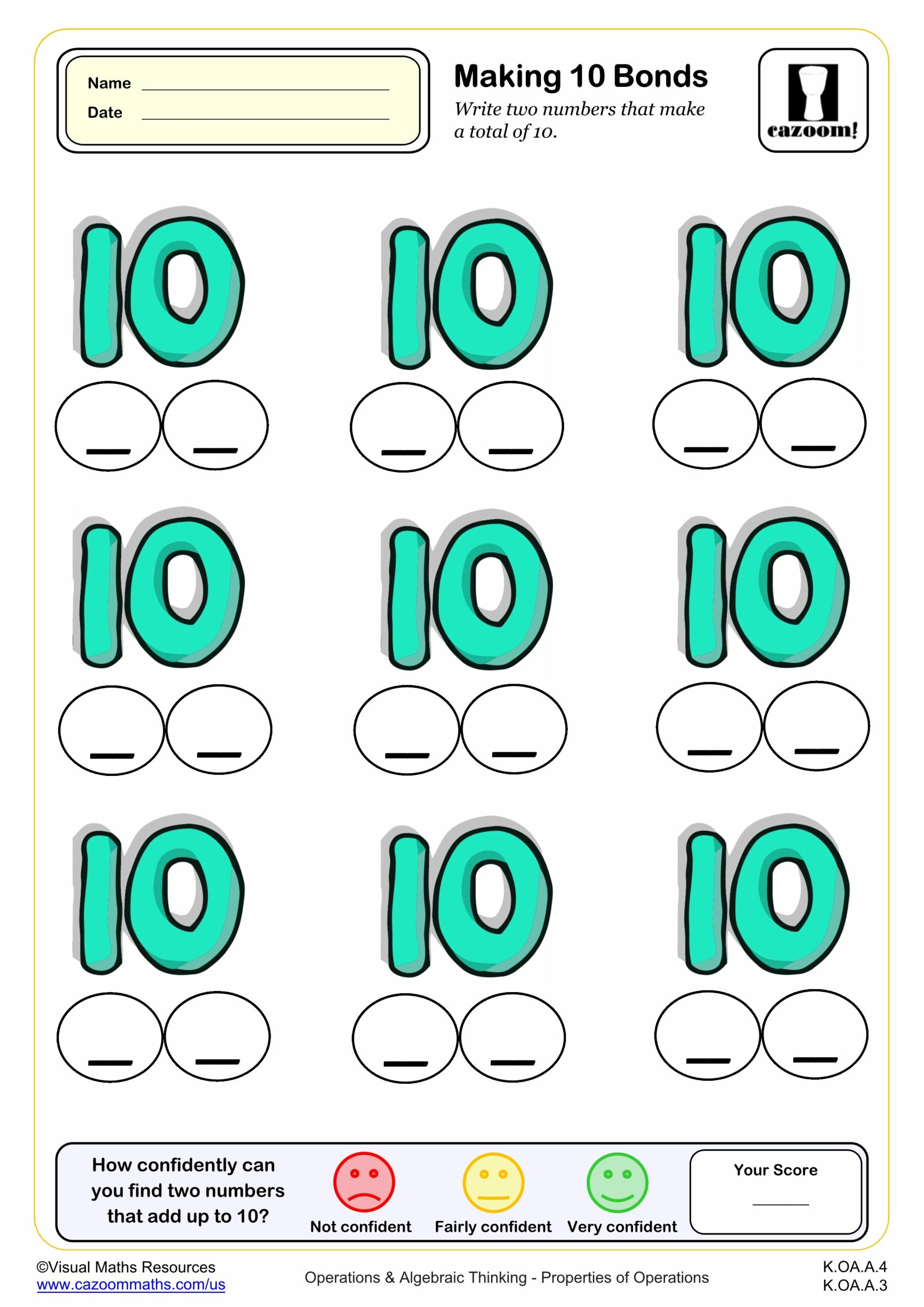
Making 10 with three numbers
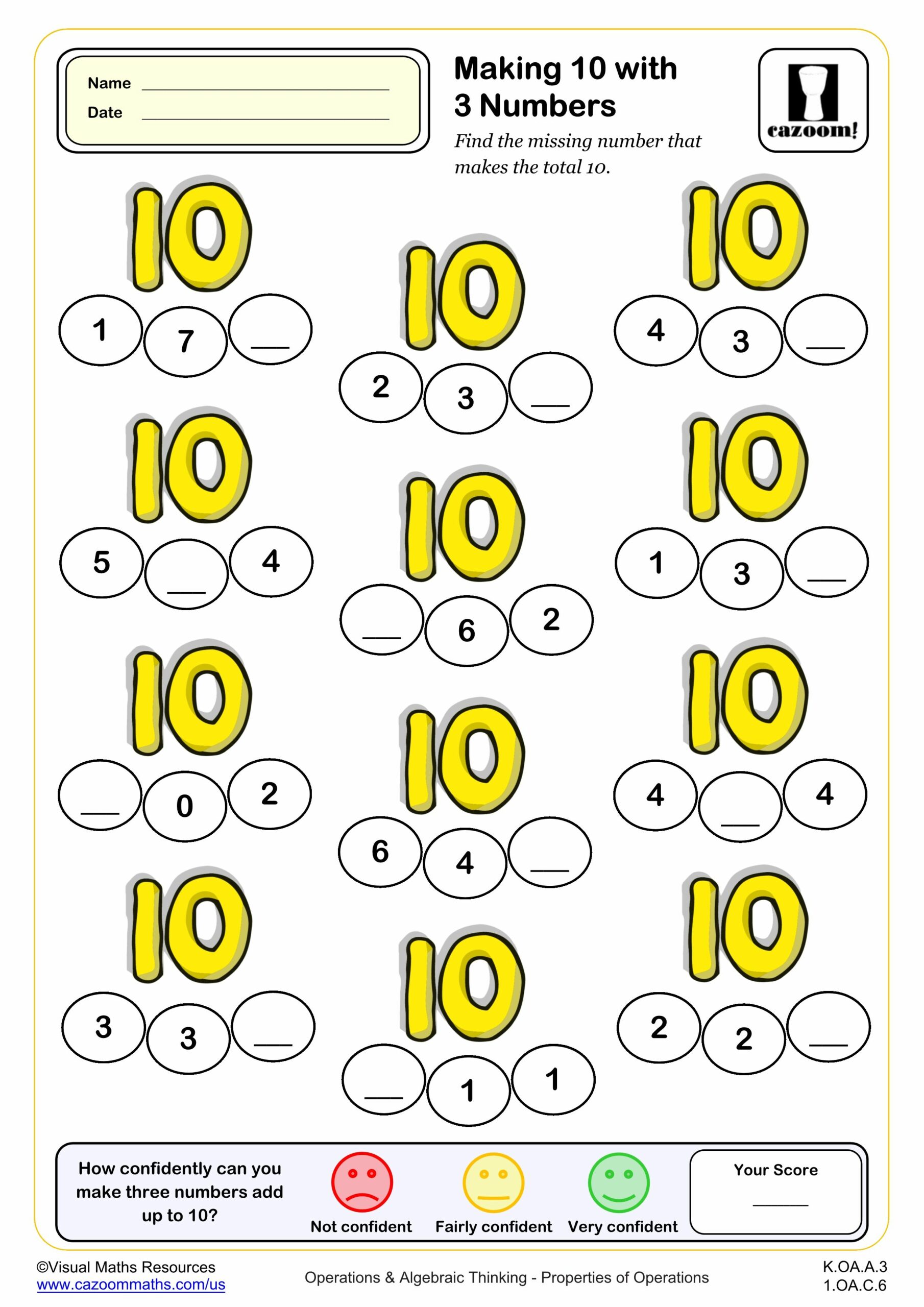
Making 10 with three numbers (Blanks)
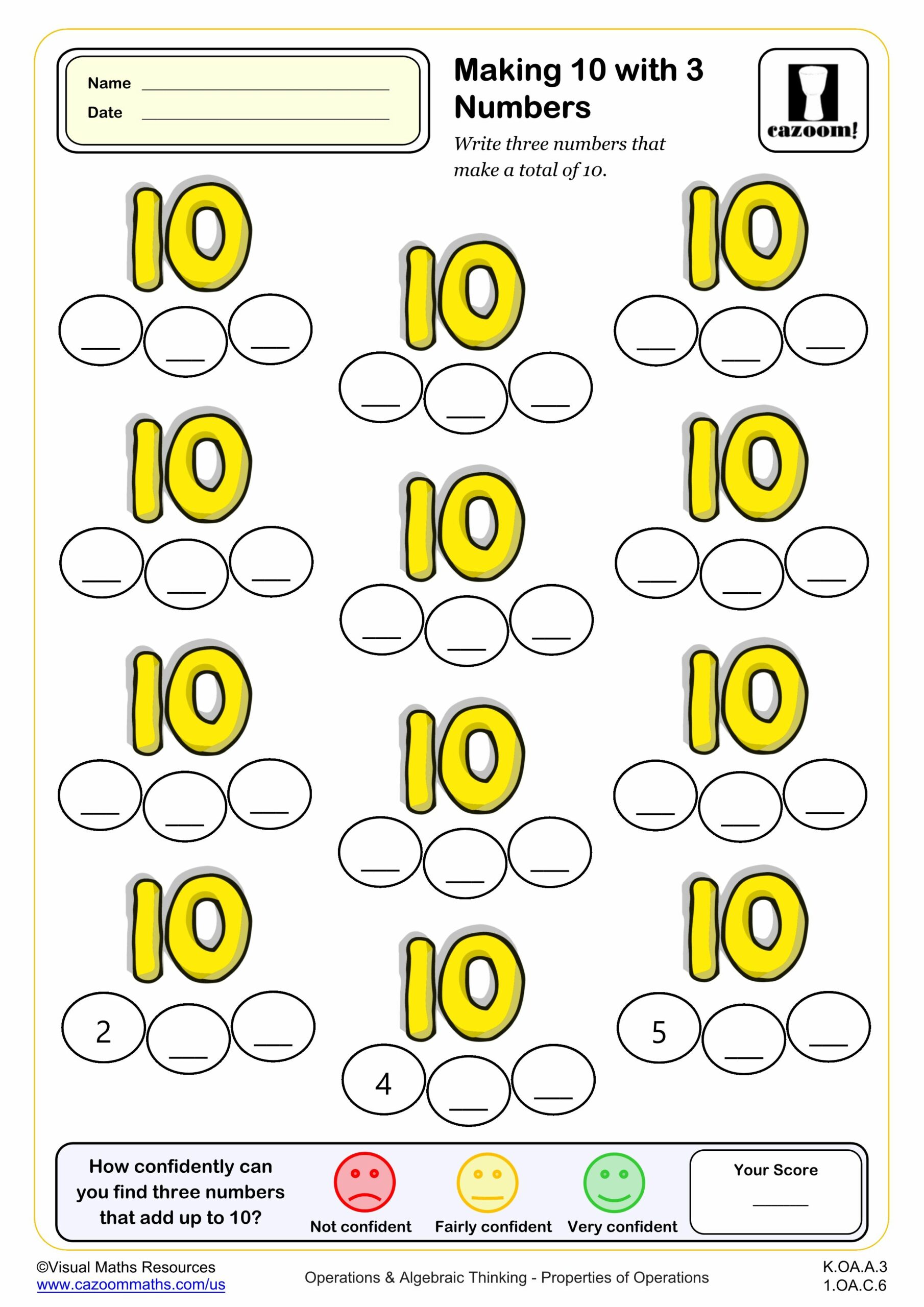
Making 15
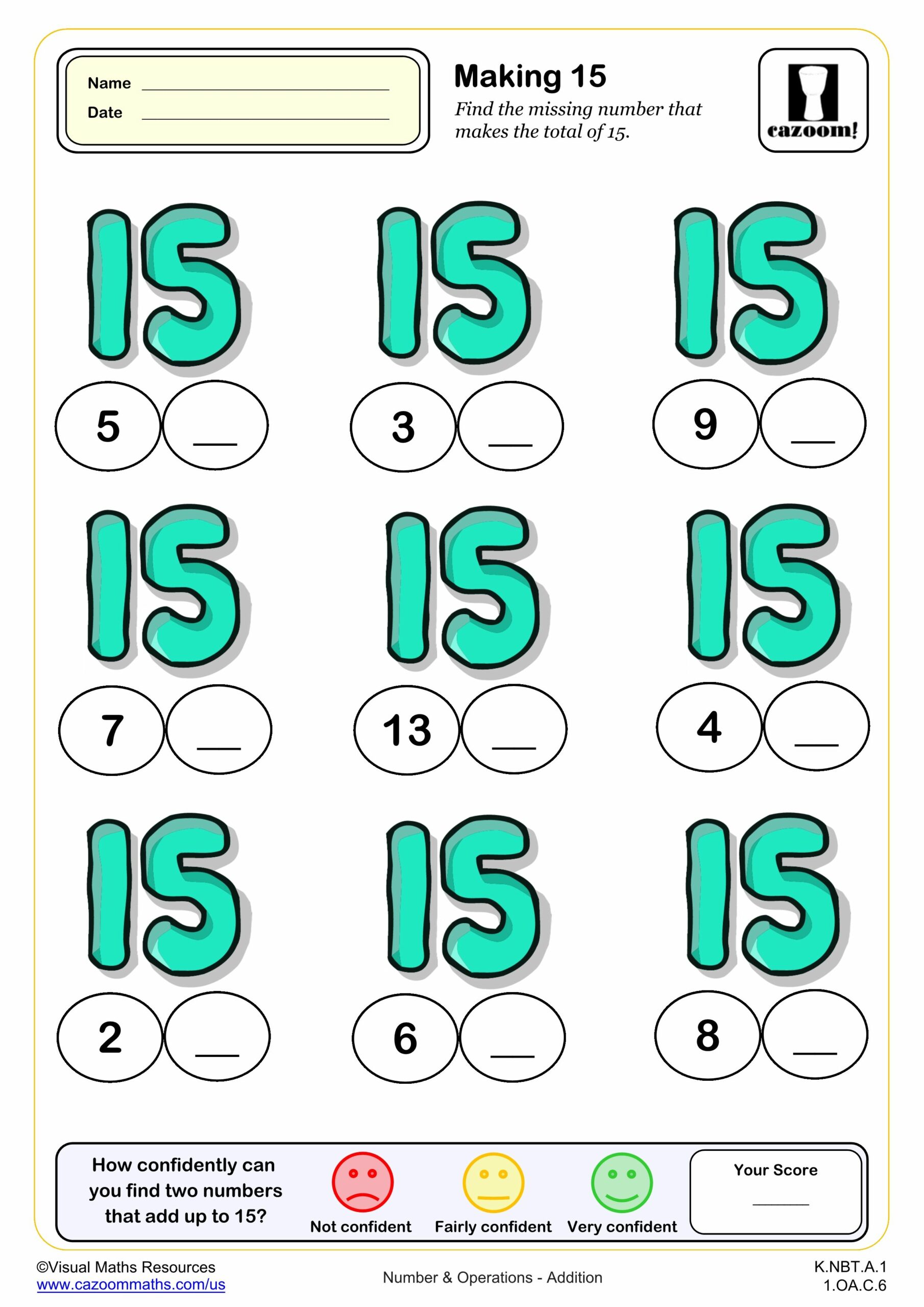
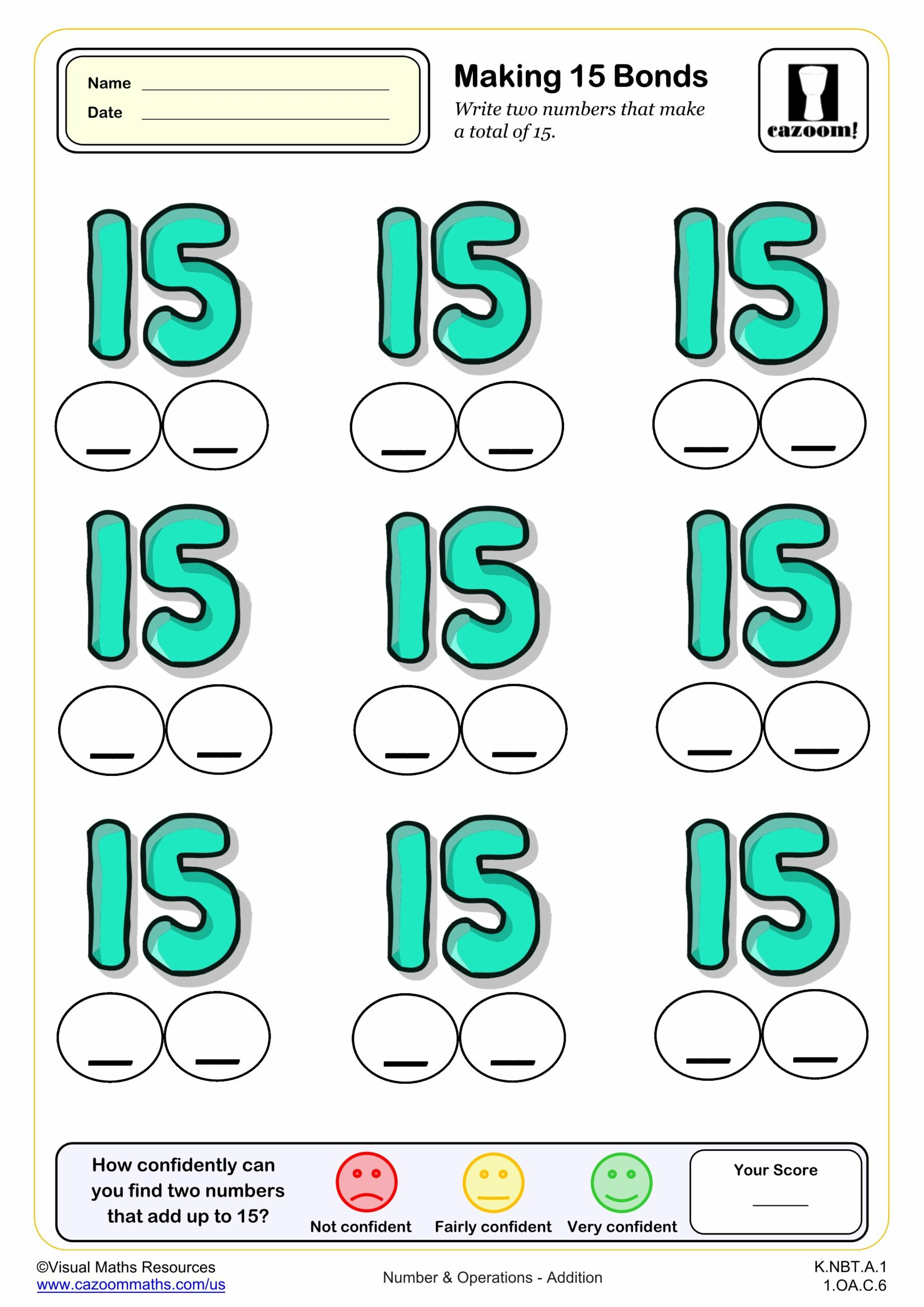
Making 15 (BONDS)
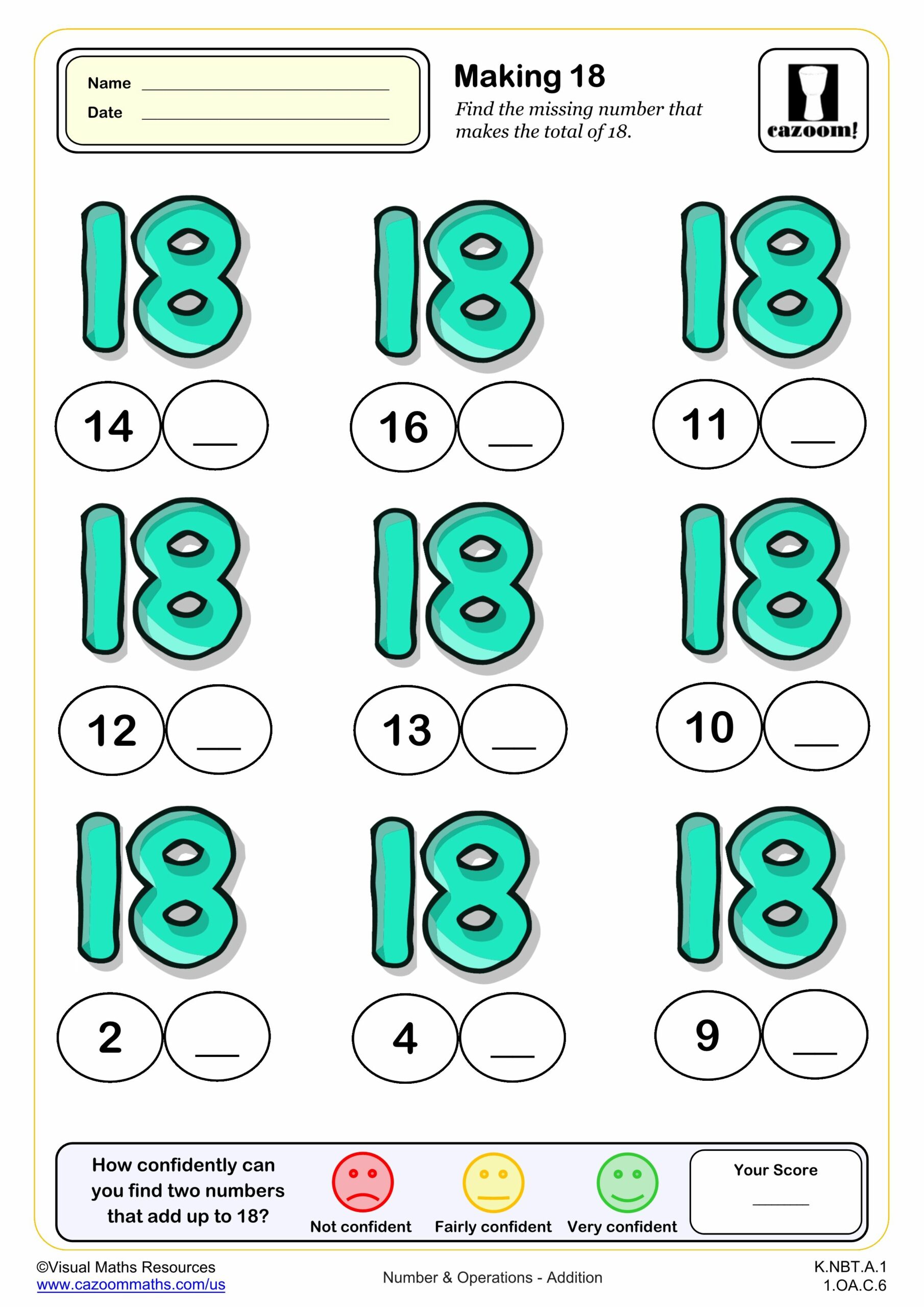
Making 18
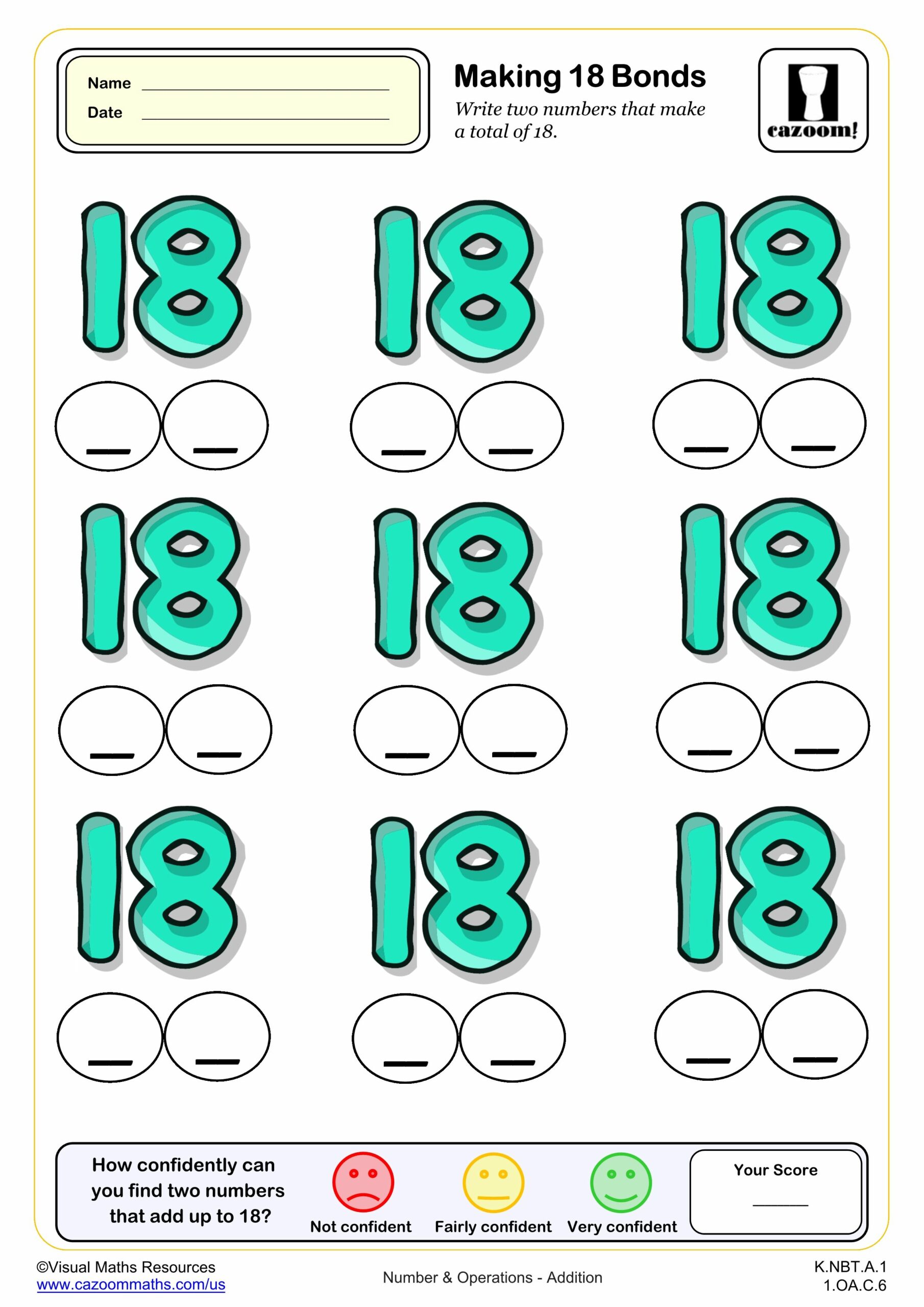
Making 18 (BONDS)
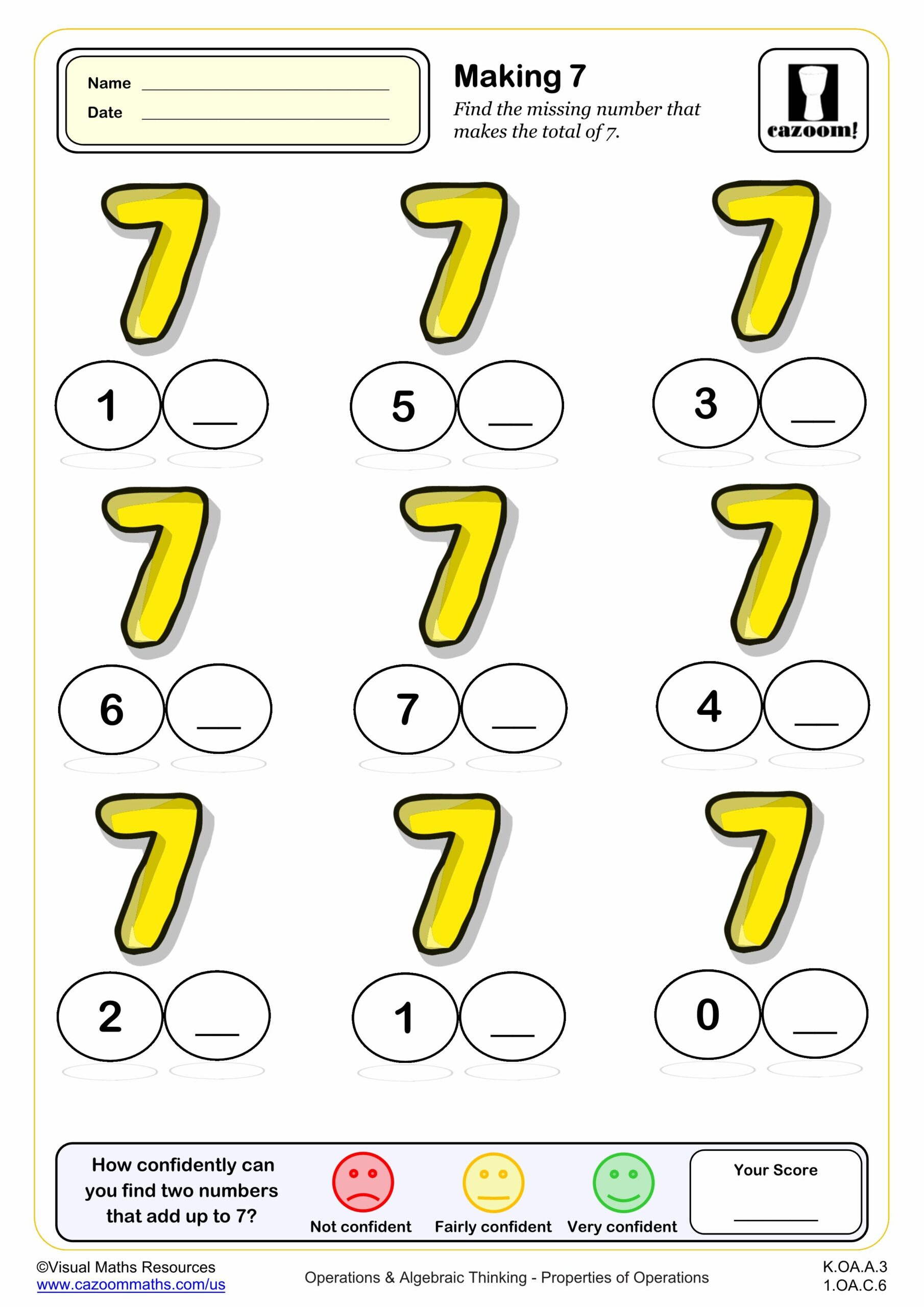
Making 7
Making 7 (Bonds)
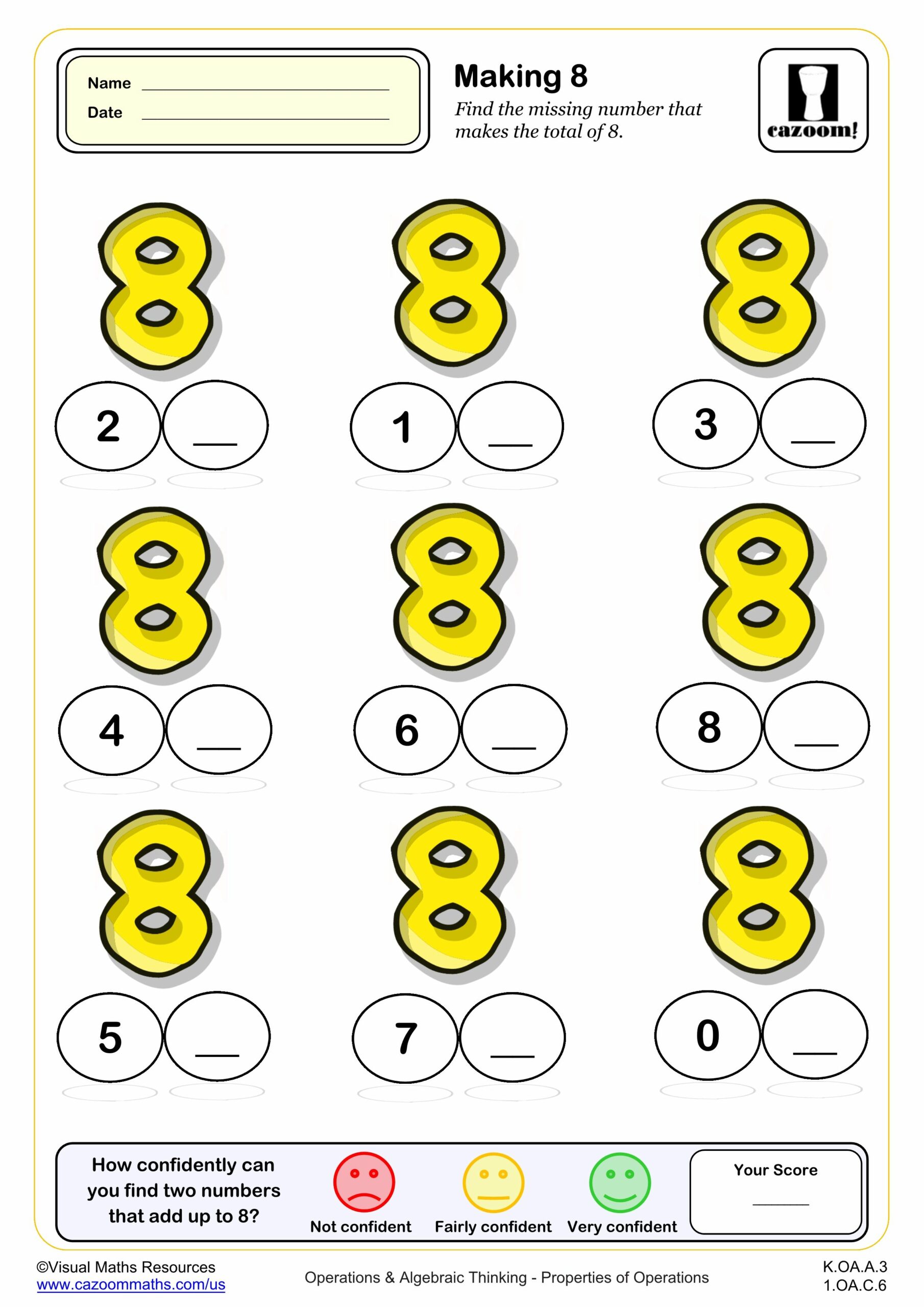
Making 8
Making 8 (BONDS)
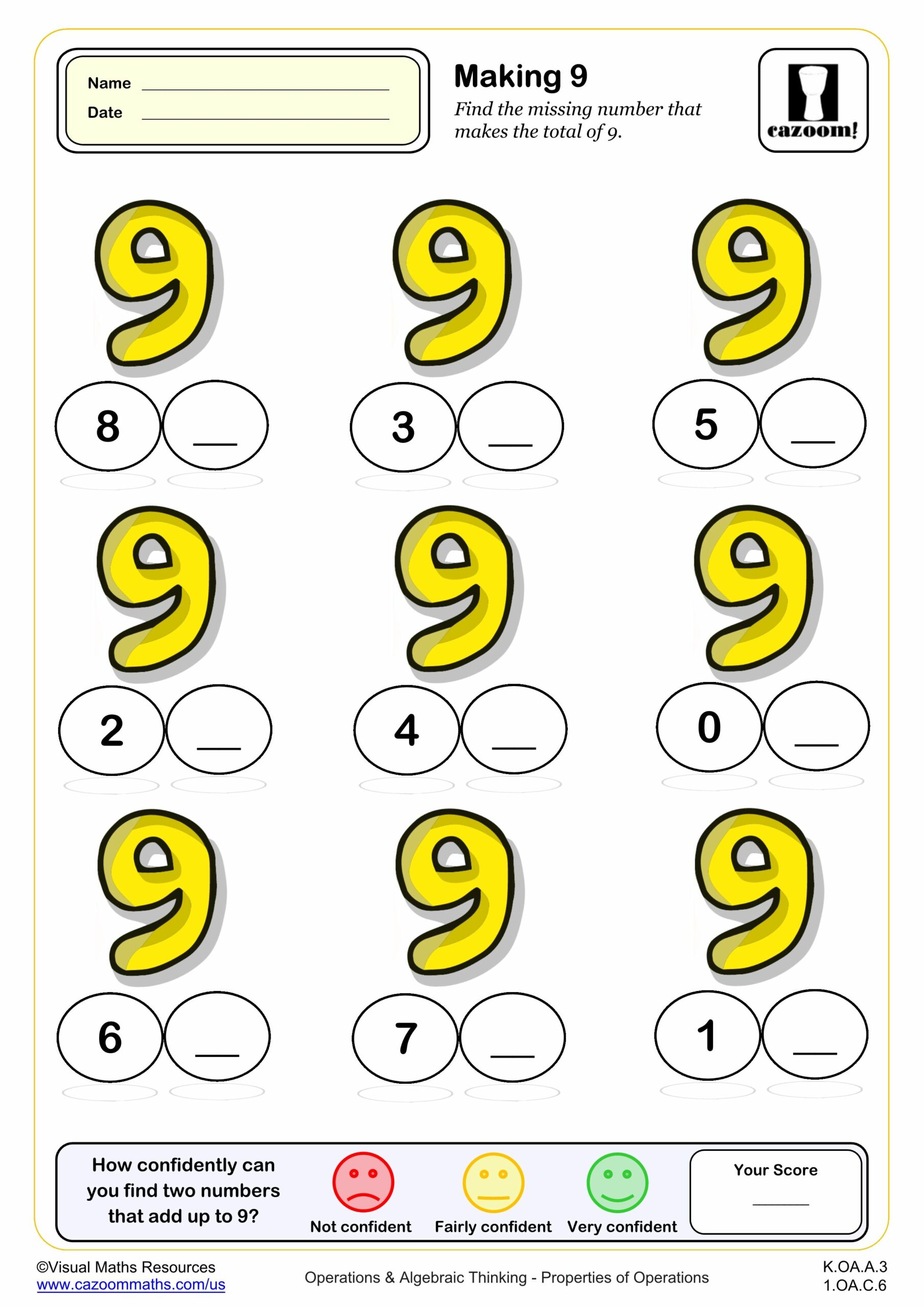
Making 9
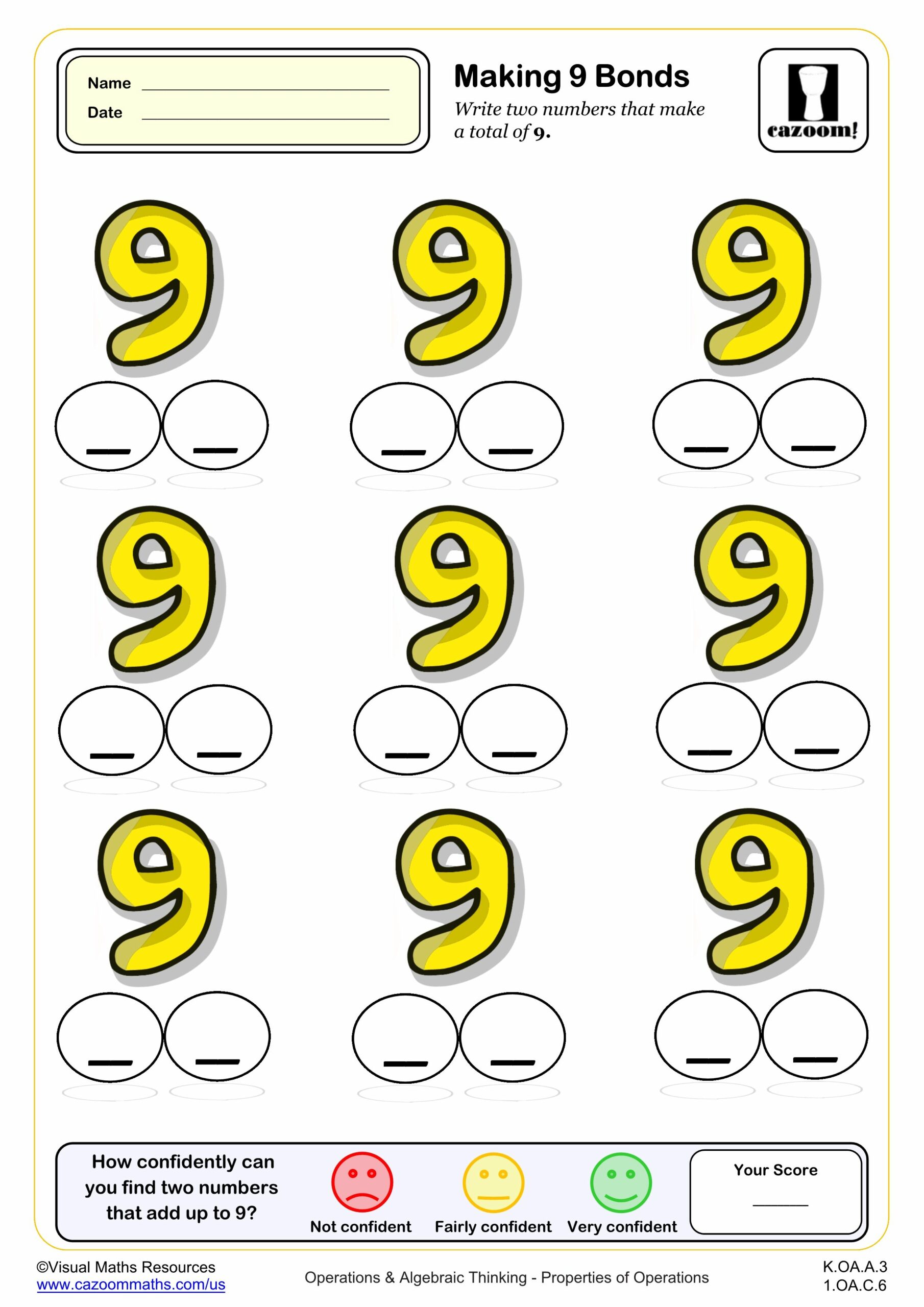
Making 9 (BONDS)
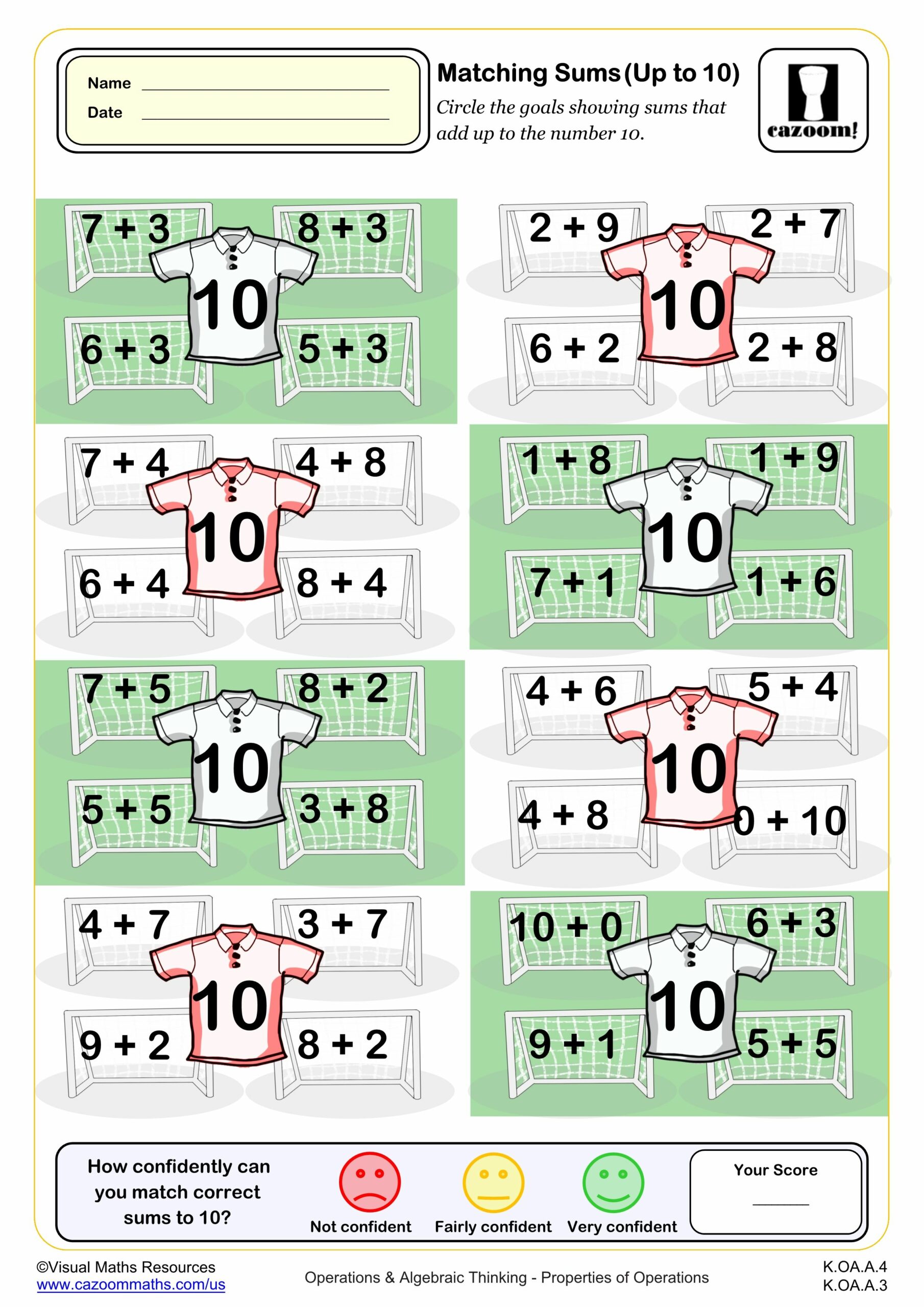
Matching Sums (to 10)
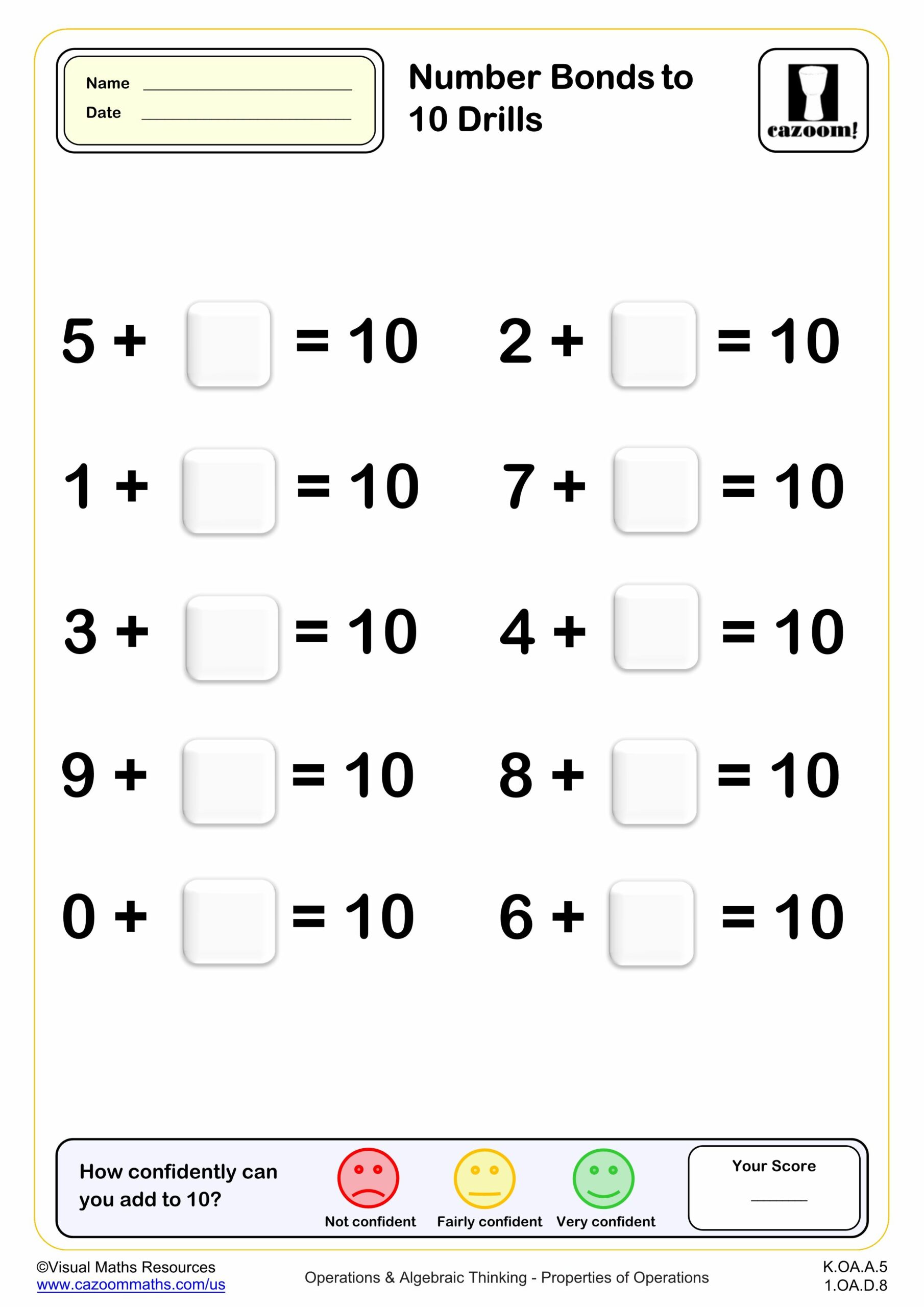
Number Bonds to 10 drills (10 questions)
Number Bonds to 10 drills (20 questions)
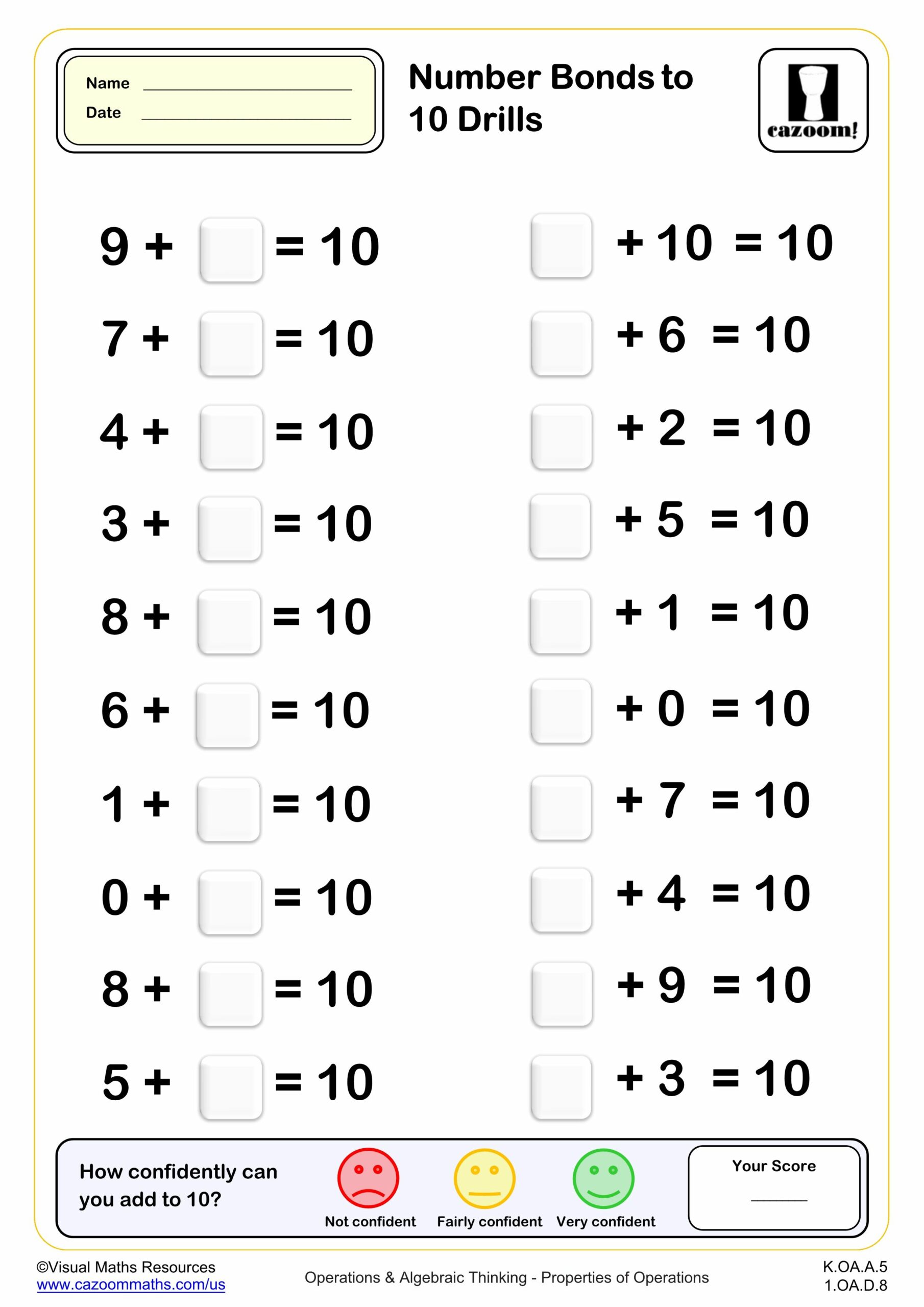
Number Bonds to 10 drills (50 questions)
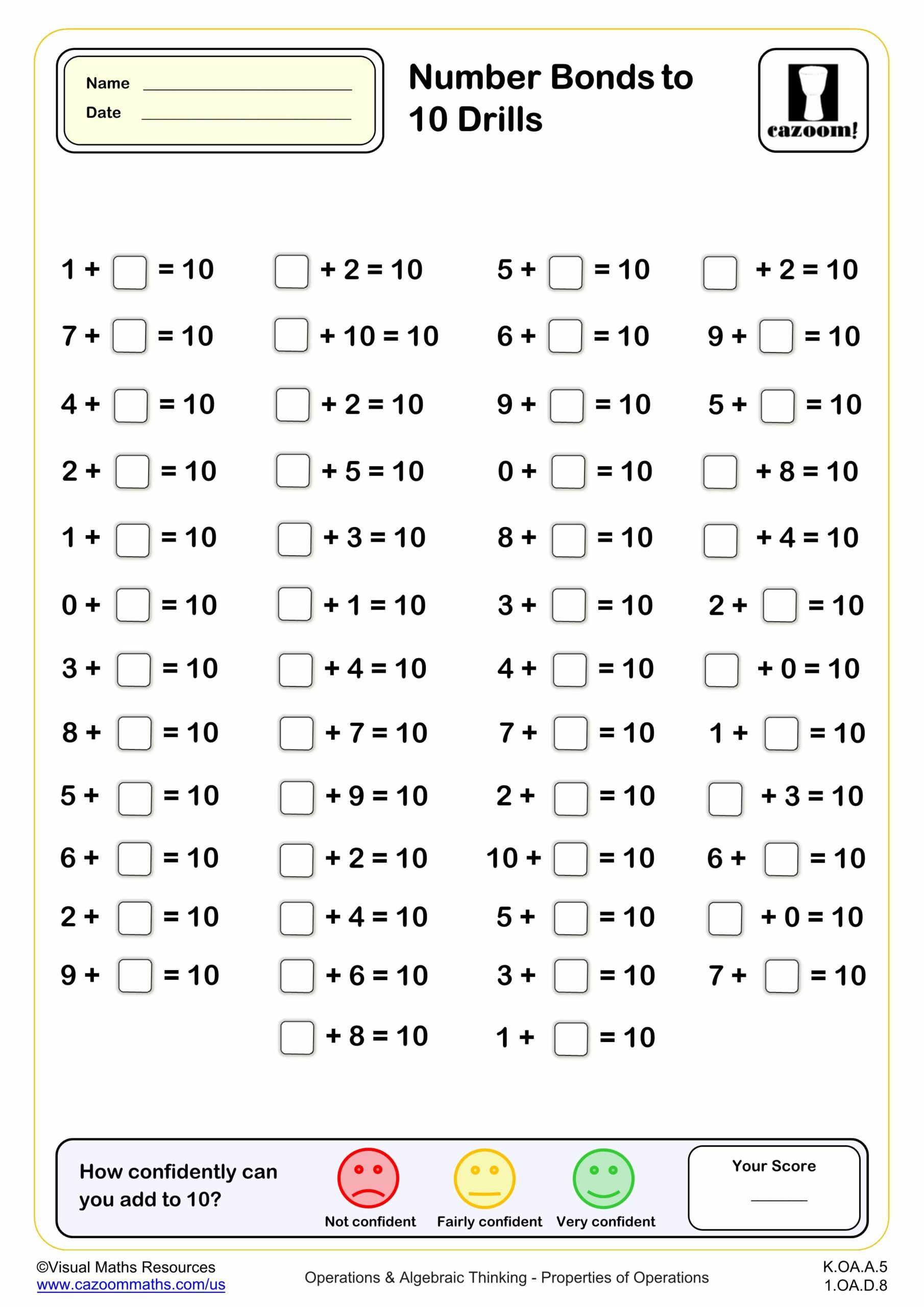
Number Bonds to 10 with Dots
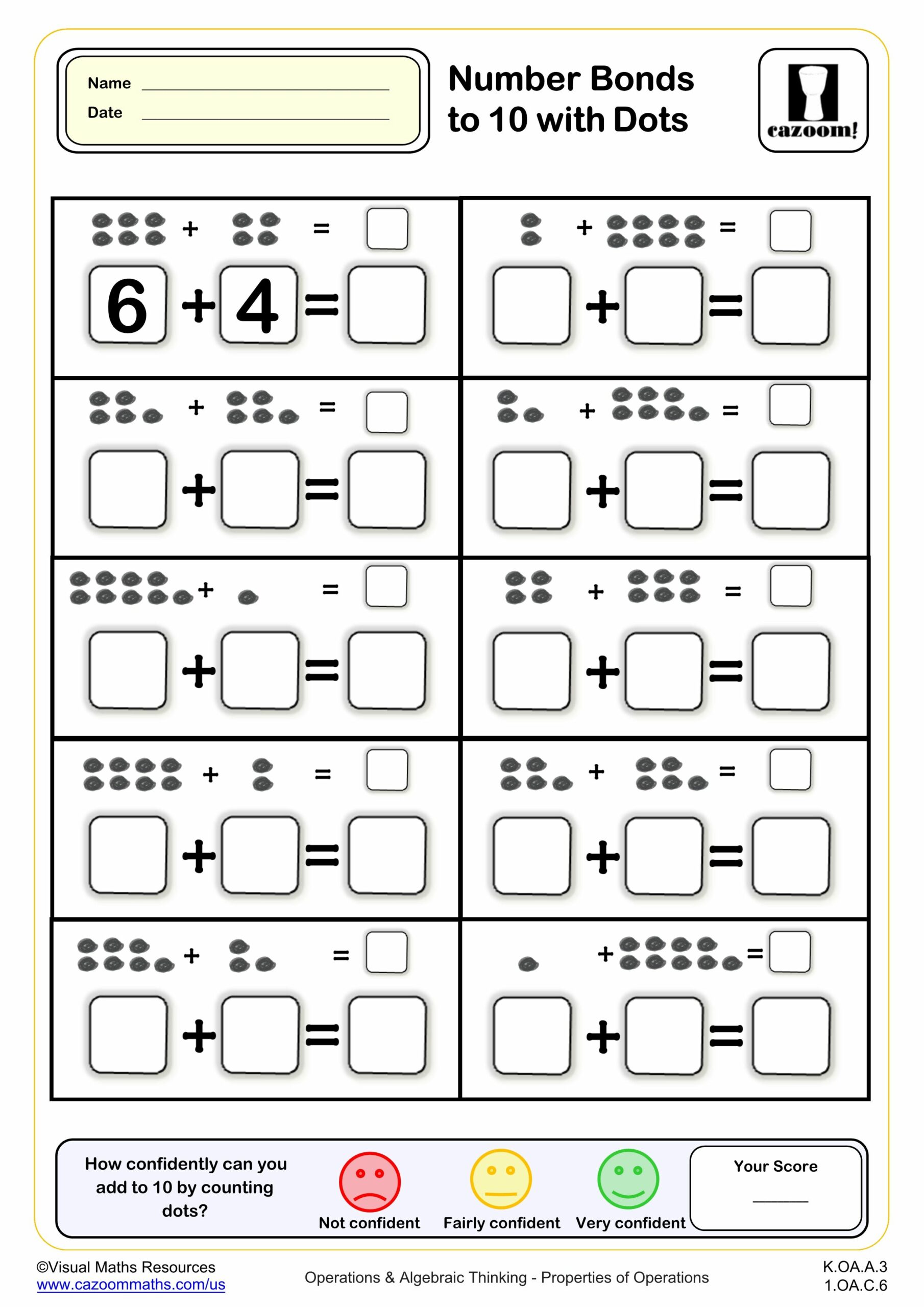
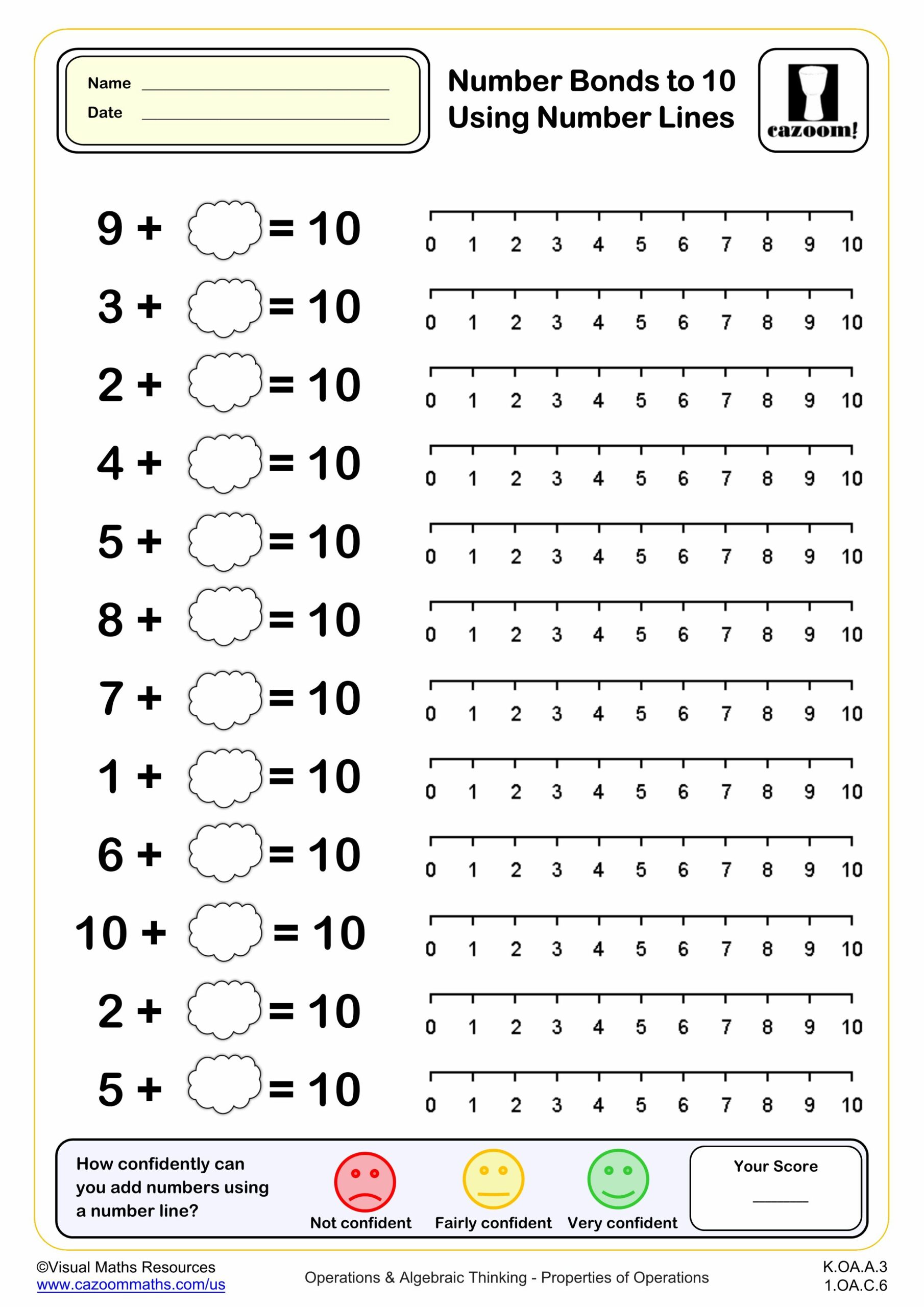
Number bonds to 10 with number lines
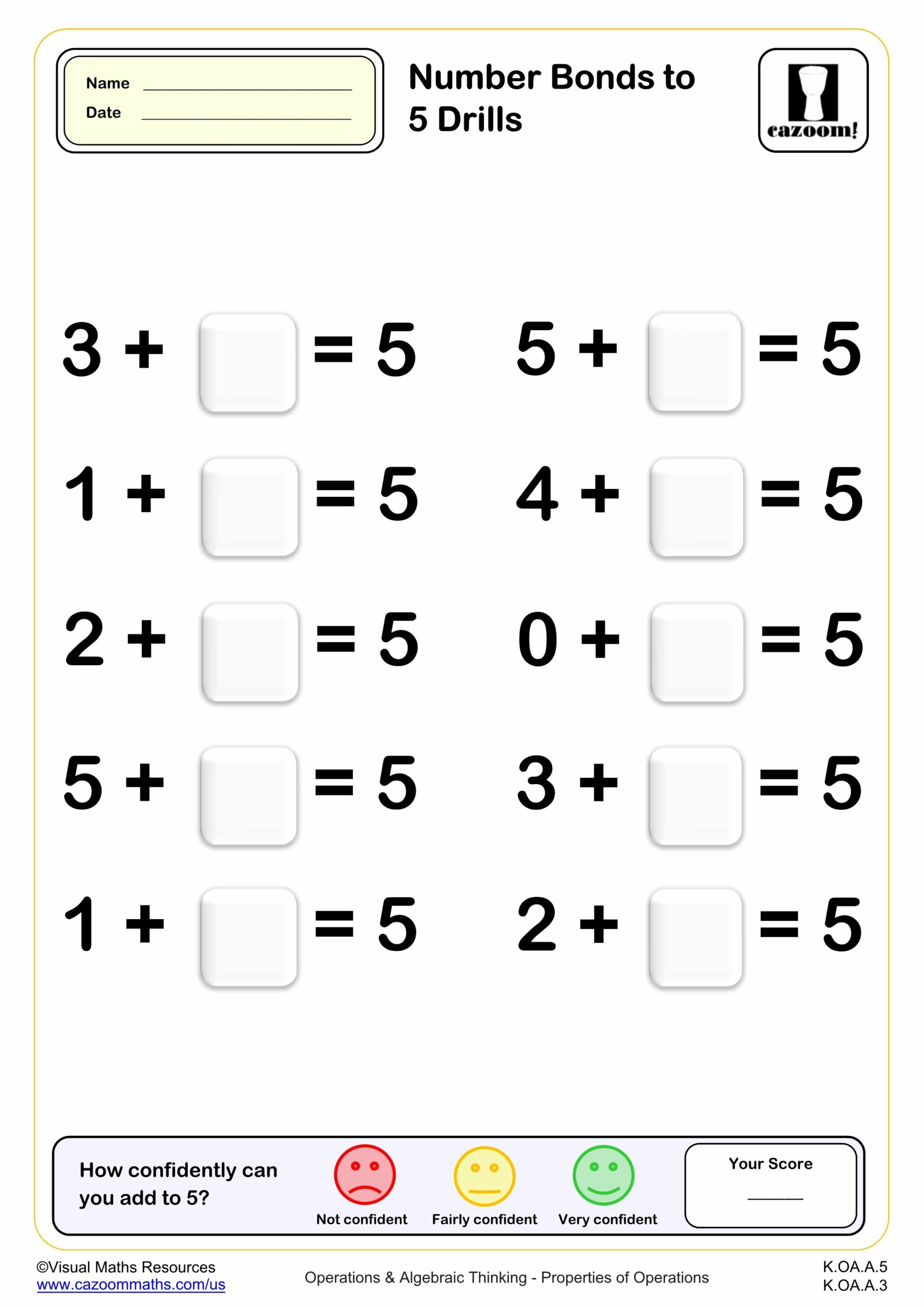
Number Bonds to 5 drills (10 questions)
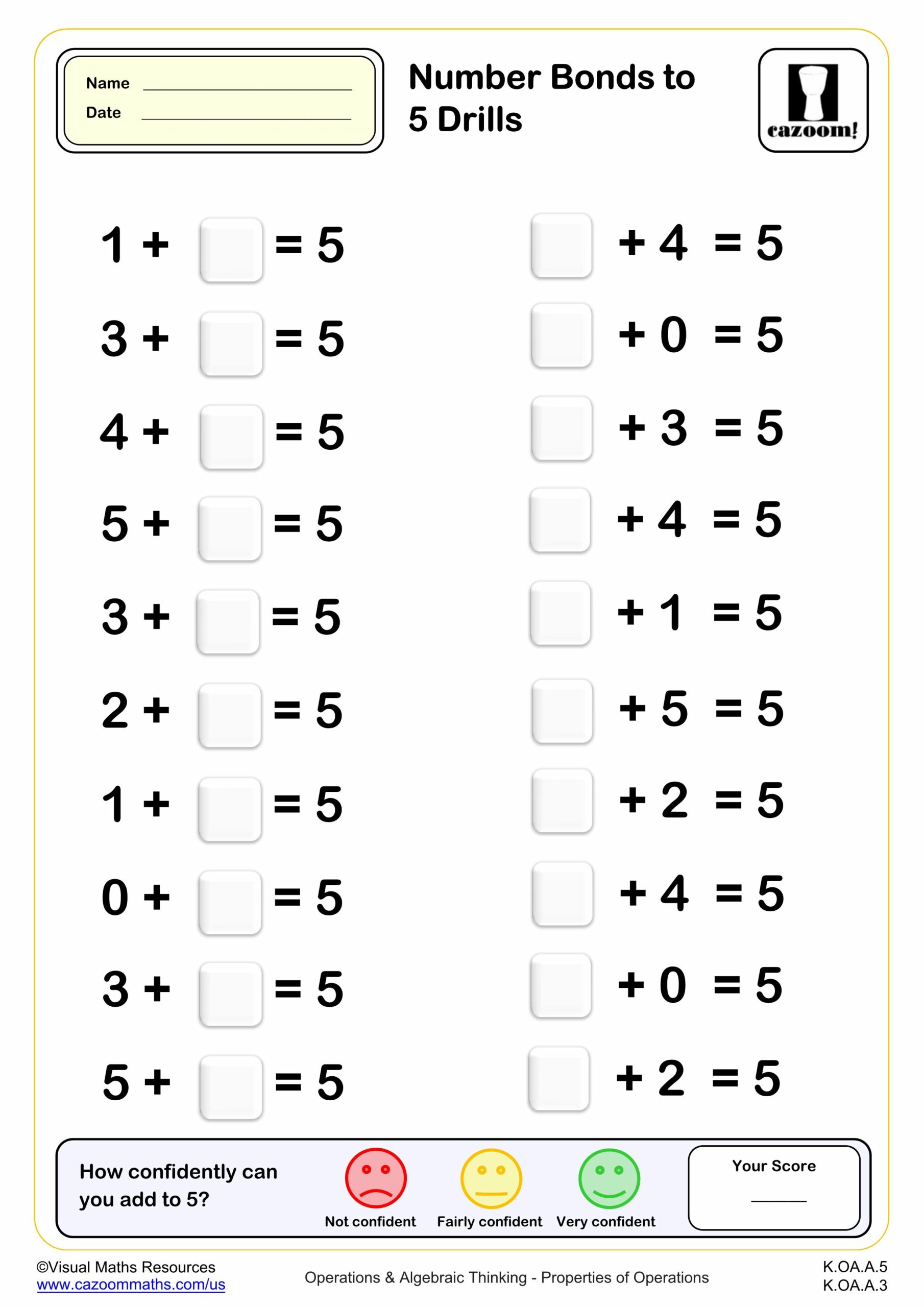
Number Bonds to 5 drills (20 questions)
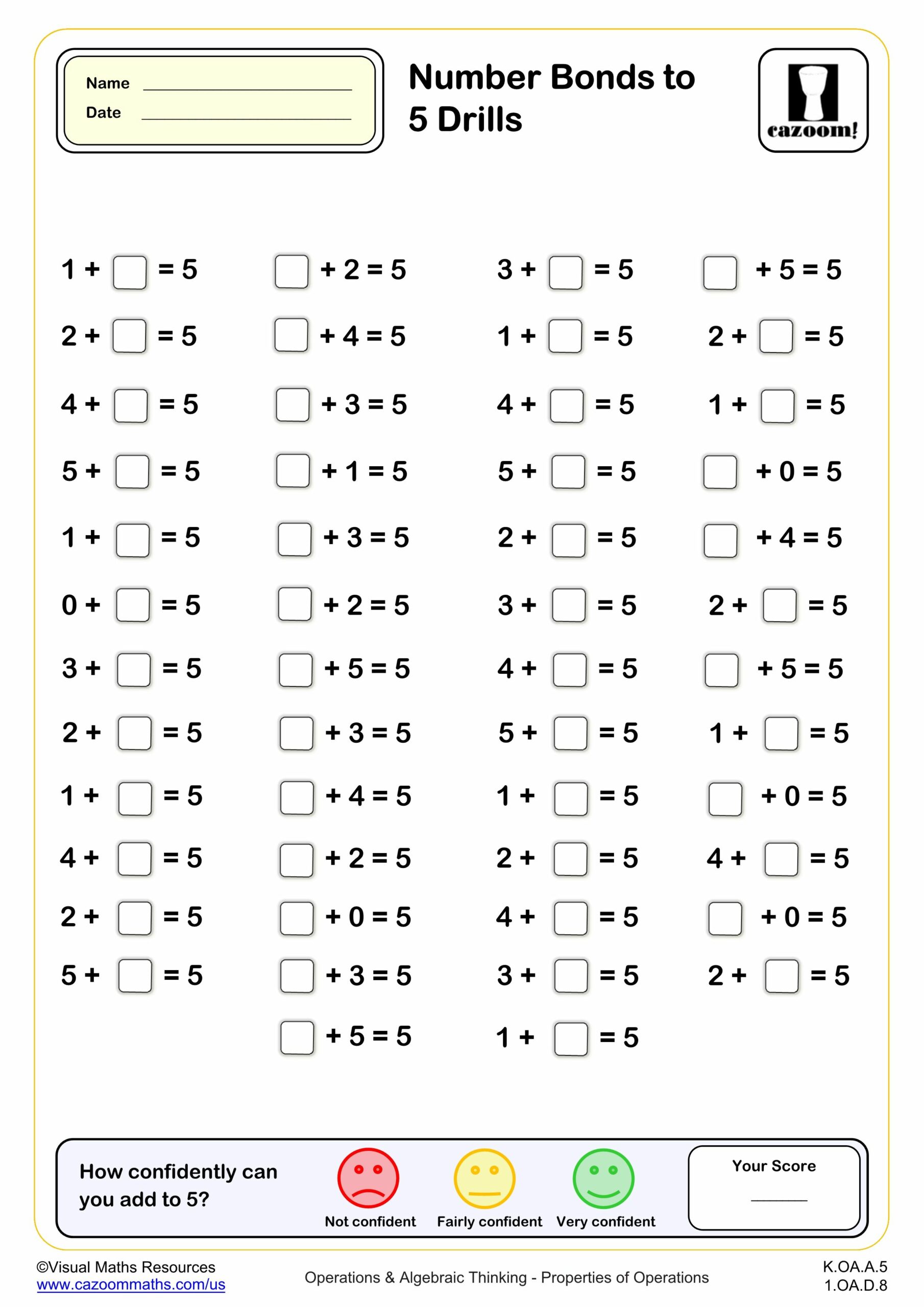
Number Bonds to 5 drills (50 questions)
All worksheets are created by the team of experienced teachers at Cazoom Math.
What Are Number Bonds and Why Do Kindergarteners Need Them?
Number bonds are visual representations showing how a whole number breaks into parts, helping young learners understand that numbers are flexible and can be composed or decomposed in different ways. In kindergarten, number bonds up to 20 align with Common Core standards requiring students to fluently add and subtract within 10 and begin working with numbers to 20. This foundational skill appears throughout early elementary assessments and prepares students for more complex operations.
Students often struggle when they view addition as only "counting on" rather than recognizing patterns in number relationships. For example, many kindergarteners will count from 1 to find 8 + 2 instead of recognizing that 8 needs 2 more to make 10. Number bond practice helps children visualize these relationships, making the jump from concrete counting to abstract number sense. Teachers notice that students who master bonds to 10 tackle larger numbers with significantly more confidence.
What Grade Level Are Number Bonds Up to 20 Worksheets For?
These number bonds worksheets are specifically designed for kindergarten students in elementary school. At this stage, children are developing number sense and learning to work with quantities beyond basic counting. The activities match the developmental level where students are transitioning from manipulatives to mental math strategies, though hands-on tools still support learning.
The collection progresses from simpler bonds (making 10 with two numbers) to more complex combinations (making 15 or using three addends to reach 10). This scaffolded approach allows students to build confidence with foundational bonds before tackling larger numbers. Many teachers introduce making 10 first since it becomes a powerful mental math strategy for addition facts beyond 10, like recognizing that 9 + 5 can be solved by breaking 5 into 1 and 4, making 10 + 4.
How Does Making 10 Work in Number Bond Practice?
Making 10 is a fundamental number bond strategy where students learn all the number pairs that combine to equal 10: 1+9, 2+8, 3+7, 4+6, and 5+5. Worksheets include activities where students identify missing partners (7 + __ = 10) and work with three-number combinations where two addends make 10 before adding the third. This mental strategy becomes automatic with repeated practice, allowing students to solve problems quickly without counting.
This skill connects directly to money math, a real-world application students encounter early. When children learn that 10 pennies equal a dime, understanding bonds to 10 helps them make quick exchanges: if they have 7 pennies, they know they need 3 more to trade for a dime. This same thinking appears when measuring in STEM activities, like recognizing that a 10-centimeter strip can be made from a 6-centimeter piece and a 4-centimeter piece, building spatial reasoning alongside number sense.
How Can Teachers Use These Number Bond Worksheets Effectively?
The worksheets provide structured practice that moves from visual bond diagrams to abstract number sentences, helping students internalize number relationships through repetition with variation. Different subtopic sections allow teachers to target specific skills, whether introducing the concept of making 10 or challenging students with three-addend combinations. The included answer keys make these suitable for independent practice once students understand the concept, freeing teachers to work with small groups.
Many teachers use these worksheets during math centers, pairing them with manipulatives like counters or ten-frames so students can verify their answers physically. They work well for morning work to build daily fluency, homework to reinforce classroom learning, or intervention sessions for students who need extra practice with part-whole relationships. Teachers also find them valuable for quick formative assessments, identifying which students have internalized bonds to 10 versus those still counting on fingers, information that guides differentiated instruction decisions.