Kindergarten Place Value Worksheets
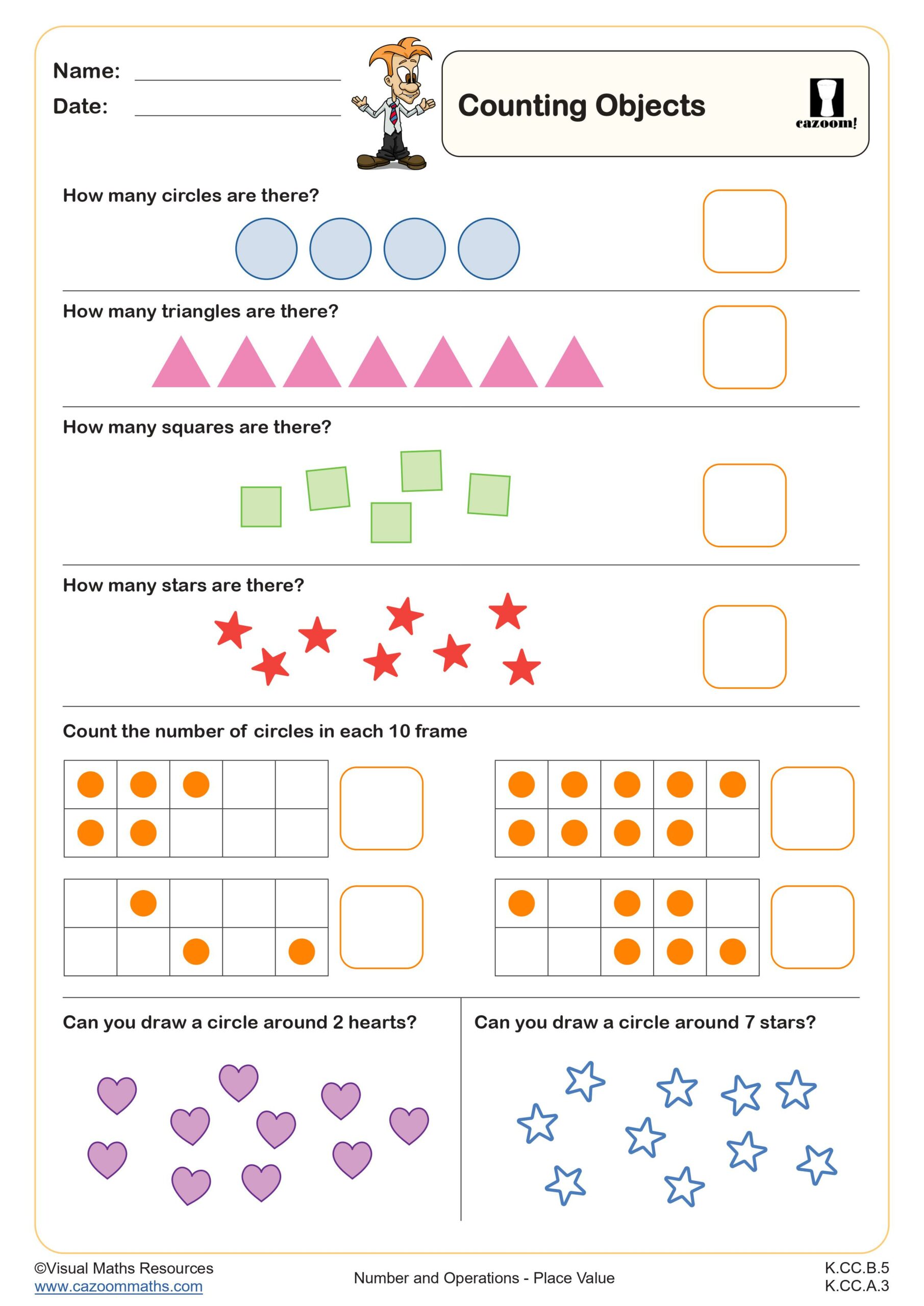
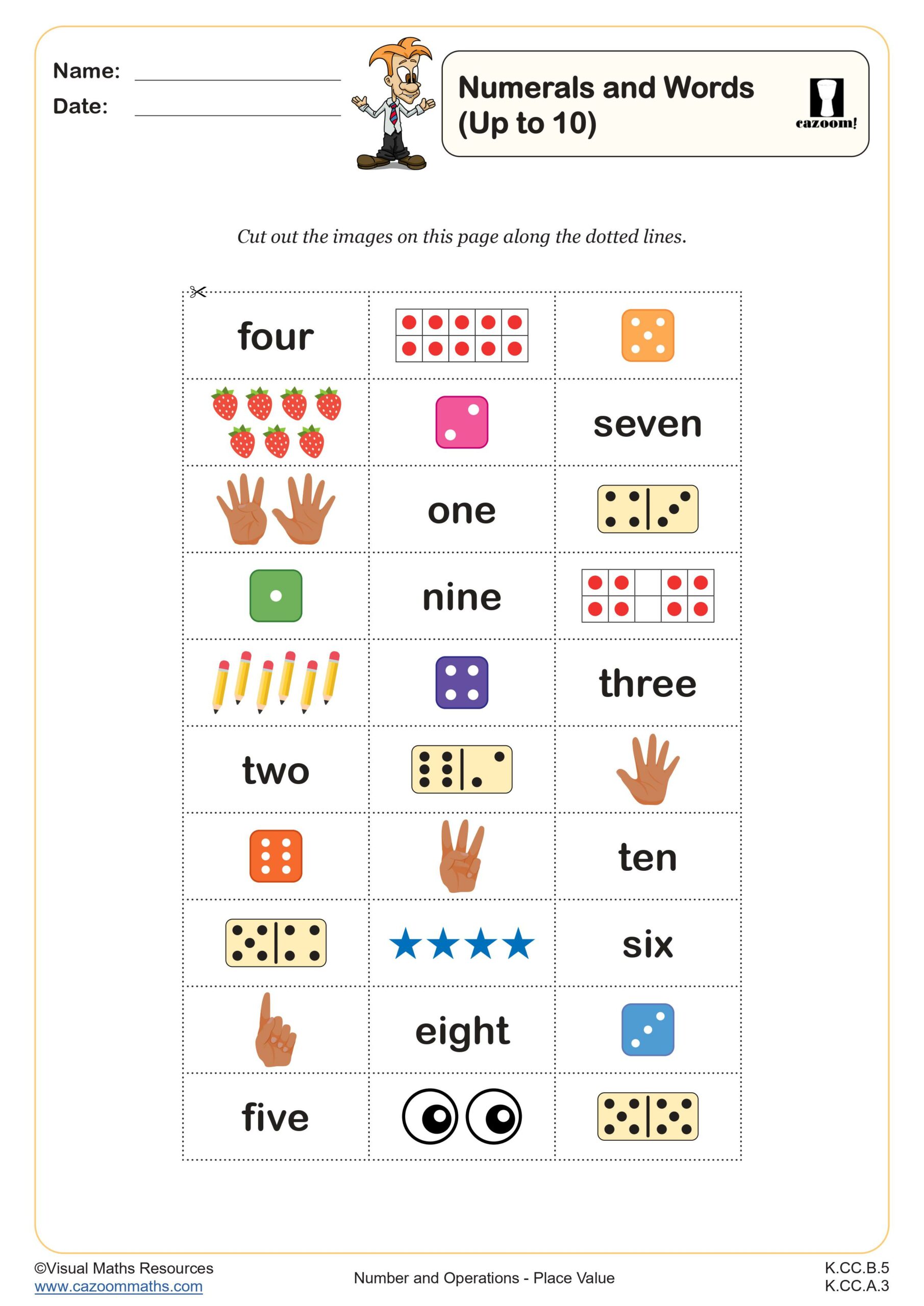
All worksheets are created by the team of experienced teachers at Cazoom Math.
What is place value in kindergarten math?
In kindergarten, place value instruction focuses on understanding that numbers have meaning and represent specific quantities. Students learn to recognize numerals 0-10, match them to the correct number words, and count objects accurately with one-to-one correspondence. This foundational work prepares students for the formal place value concepts of ones and tens that they'll encounter in first grade.
Teachers often observe that kindergarteners initially struggle to distinguish between the numeral itself and the quantity it represents. A common error occurs when students write the numeral 5 but count out seven objects, revealing a disconnect between symbol recognition and quantity understanding. Providing repeated practice matching numerals, words, and physical objects helps students build this critical connection.
What should kindergarten students know about numbers and counting?
By the end of kindergarten, students should count to 100 by ones and tens, count forward from any given number, write numerals 0-20, and understand that each successive number represents one more object. They should also compare groups of objects using terms like more, less, and equal. These skills align with Common Core State Standards for kindergarten counting and cardinality.
This early number work builds directly on preschool experiences with counting songs, finger counting, and basic quantity recognition. Mastering these kindergarten skills creates the foundation for first-grade place value work, where students will begin decomposing numbers into tens and ones. Students who enter first grade with strong numeral recognition and counting fluency typically grasp two-digit place value concepts more readily.
How do students learn to connect numerals and number words?
Learning to match numerals with their corresponding number words requires students to recognize that the same quantity can be represented in multiple ways. This involves visual recognition of written numerals (1, 2, 3), auditory recognition of number words (one, two, three), and understanding that both represent the same amount. Repeated exposure through various formats helps students internalize these connections and develop automaticity with number identification.
This skill connects directly to real-world literacy development. Students encounter numbers everywhere: on calendars showing dates, on house addresses, on price tags at stores, and on digital clocks. When kindergarteners recognize that the numeral 5 on a speed limit sign means the same as counting five objects or writing the word "five," they're building mathematical literacy that extends beyond the classroom into daily problem-solving situations.
How can teachers use place value worksheets effectively in kindergarten?
These worksheets provide structured practice that reinforces whole-group instruction through independent work. The visual format with clear counting exercises helps students practice at their own pace while teachers circulate to provide individual support. The included answer keys allow for quick progress checks and help teachers identify which students need additional intervention with specific number ranges or counting skills.
Many teachers use these worksheets during math centers or small-group instruction, where students can work collaboratively while discussing their counting strategies. They're also effective for homework assignments that give parents concrete ways to support math learning at home. Some teachers laminate copies for use with dry-erase markers, creating reusable practice materials for students who need repeated exposure to numeral and word recognition before achieving mastery.