Kindergarten Single Digit Subtraction Worksheets
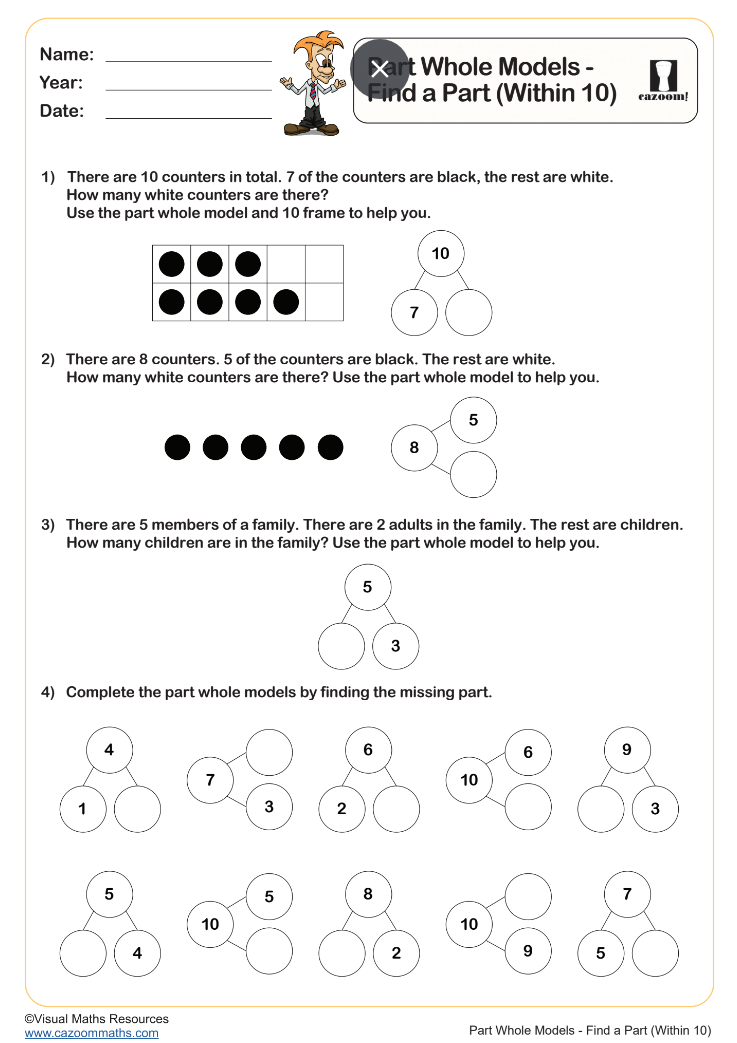
Part Part Whole Models - Find a Part (Within 10)
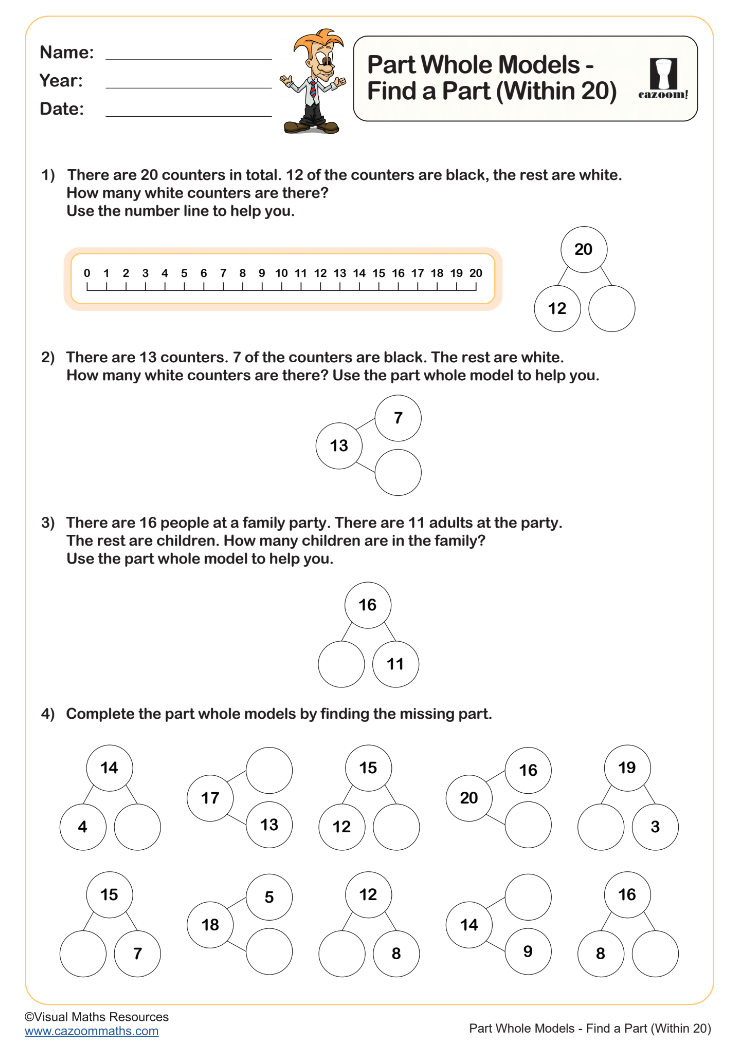
Part Part Whole Models - Find a Part (Within 20)
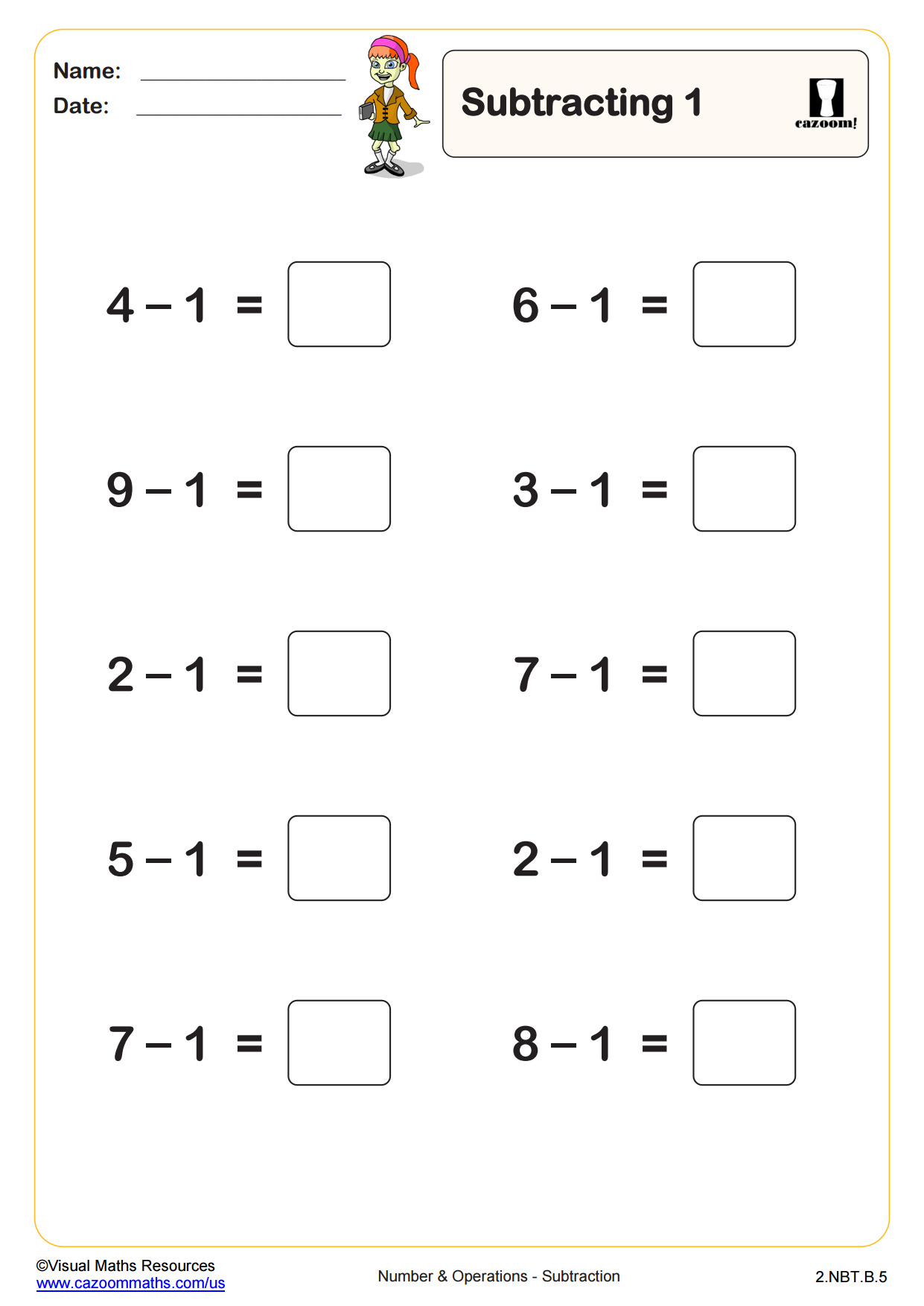
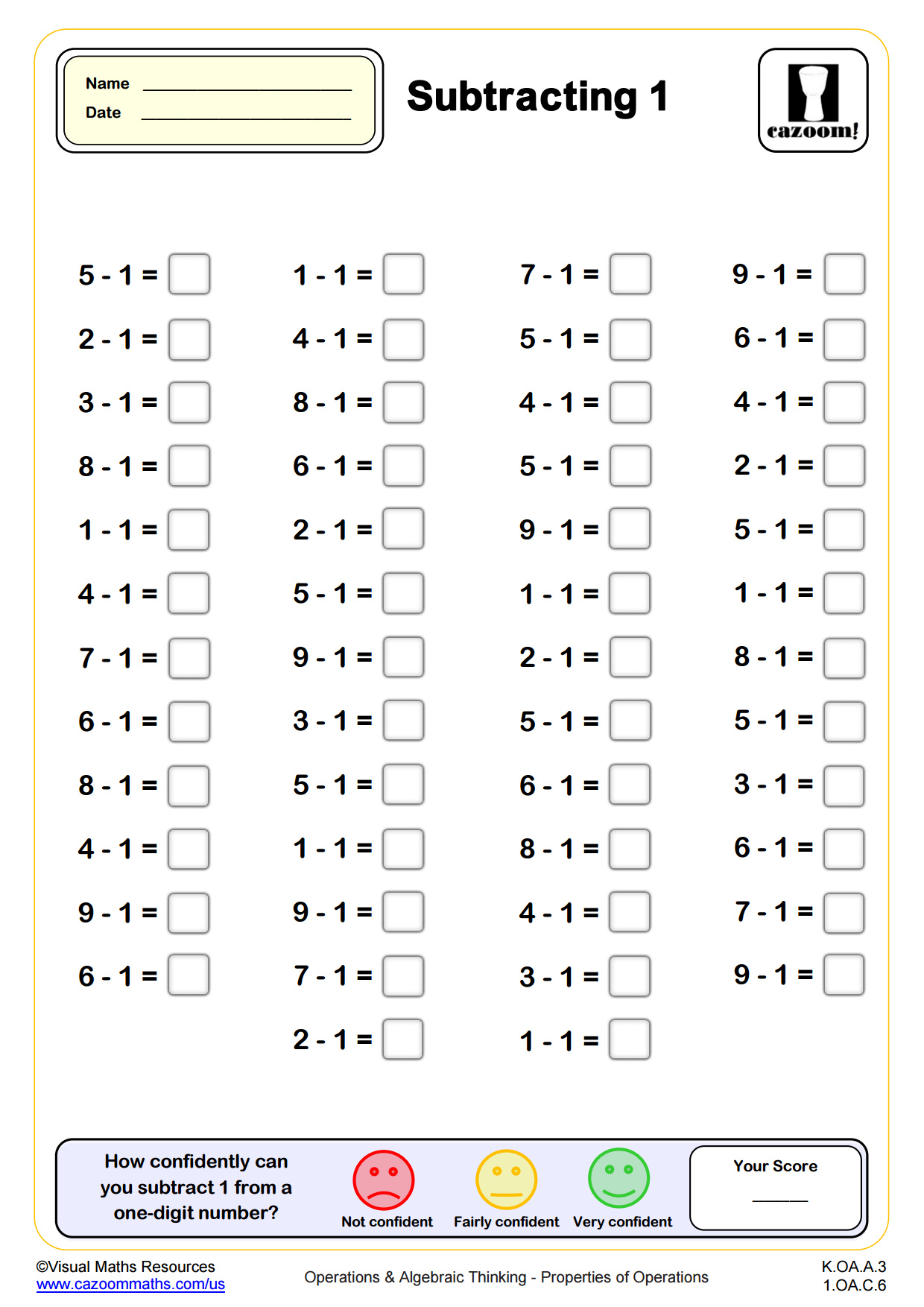
Subtracting 1 (10 questions)
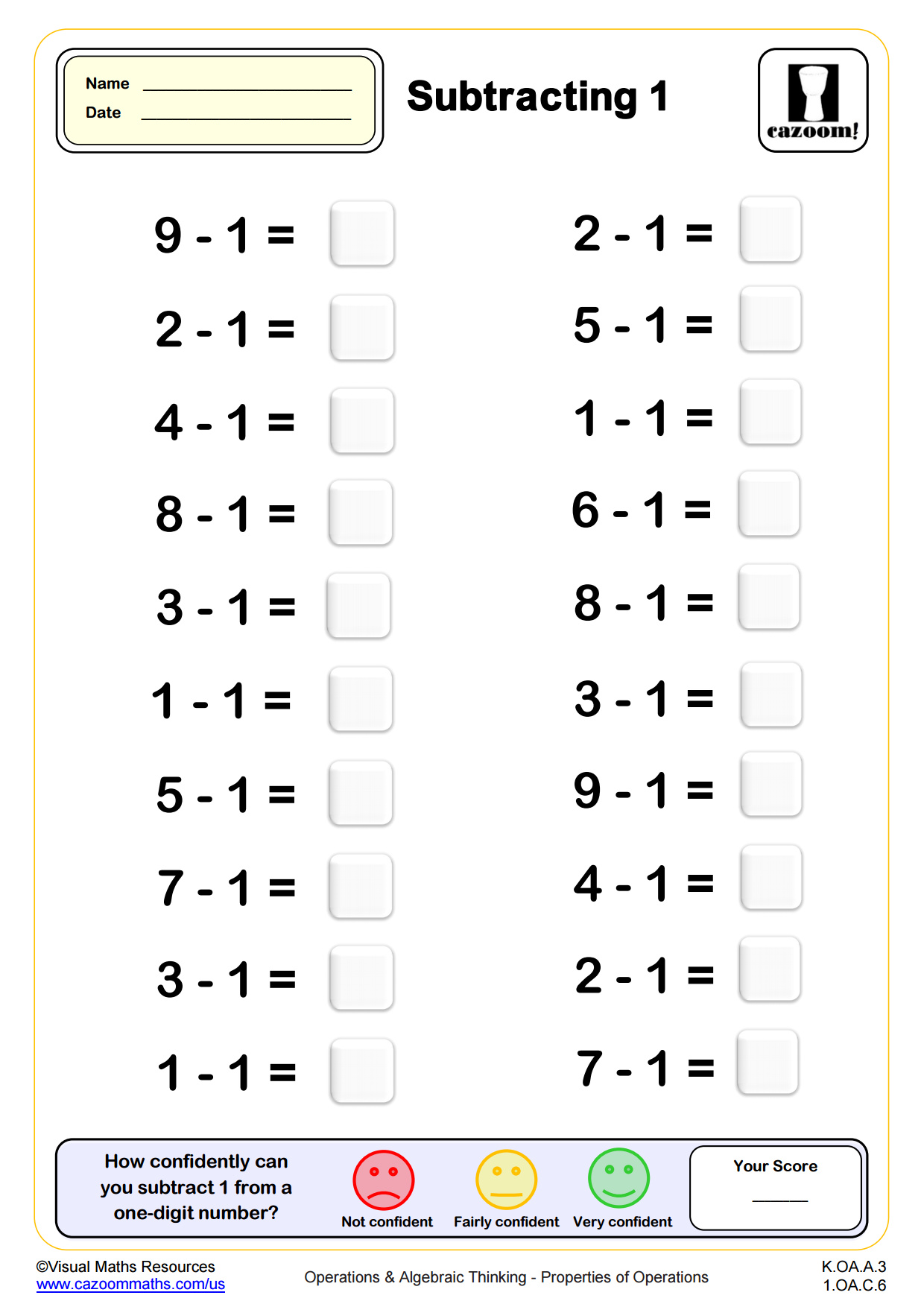
Subtracting 1 (20 questions)
Subtracting 1 (50 questions)
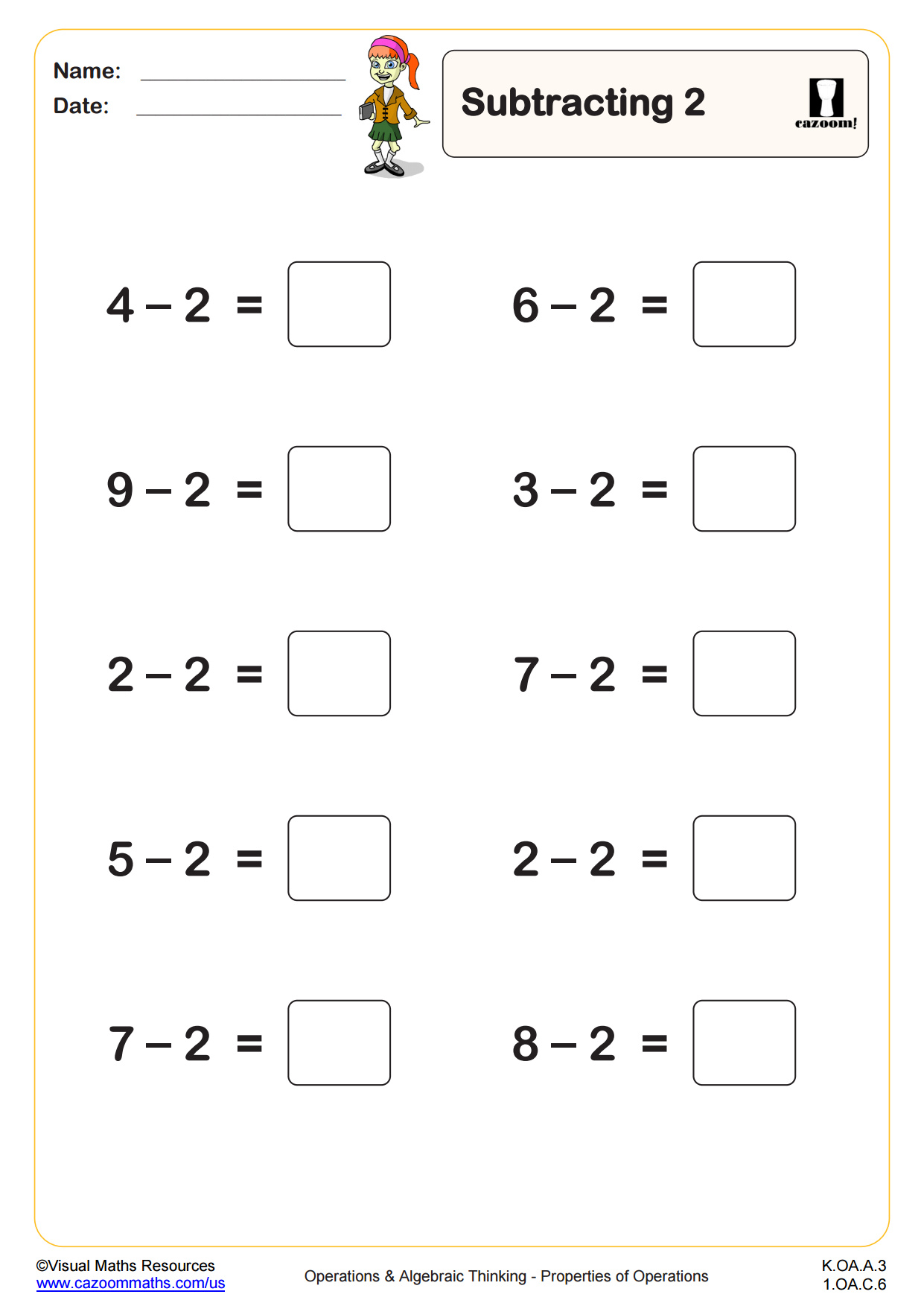
Subtracting 2 (10 questions)
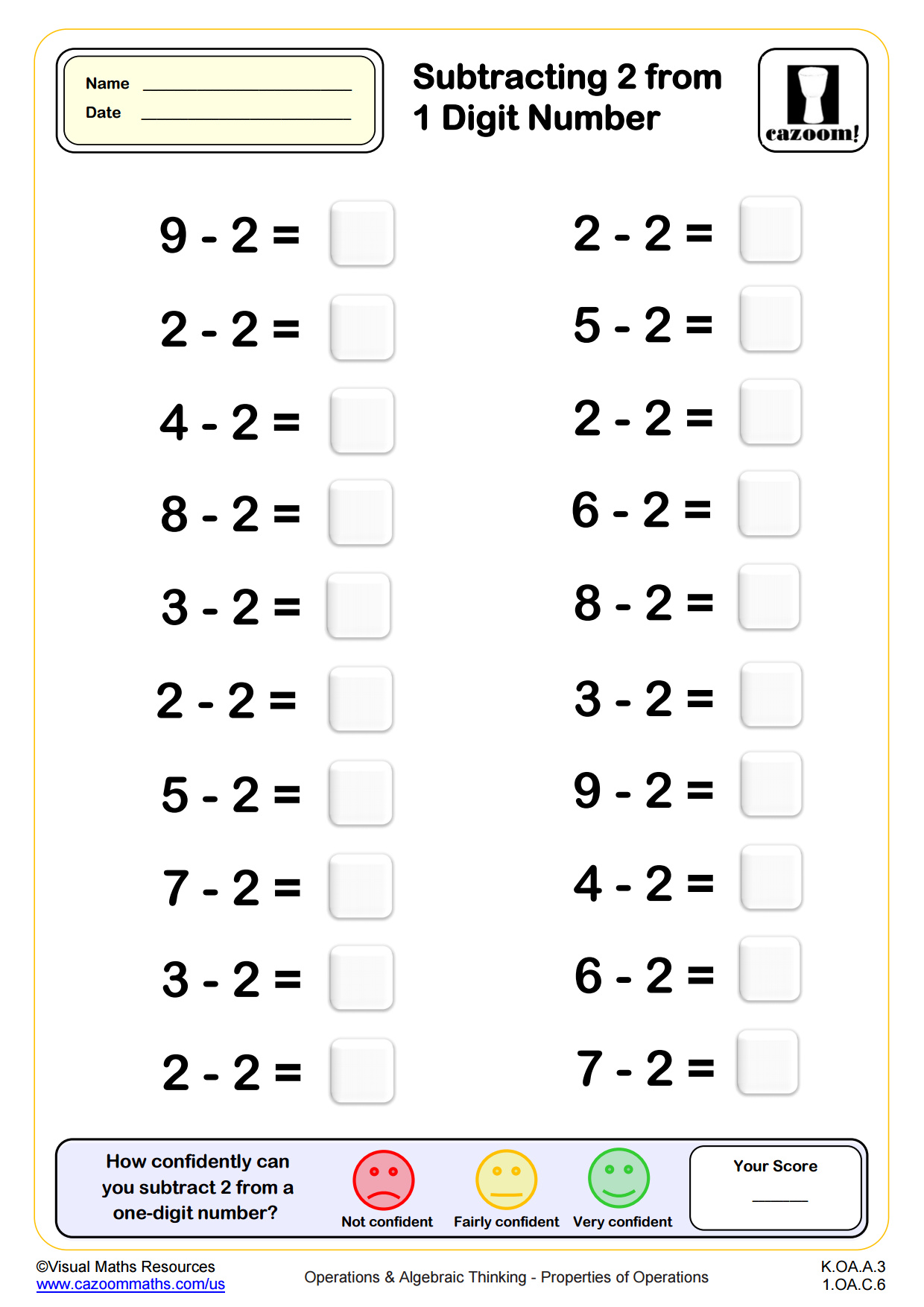
Subtracting 2 (20 questions)
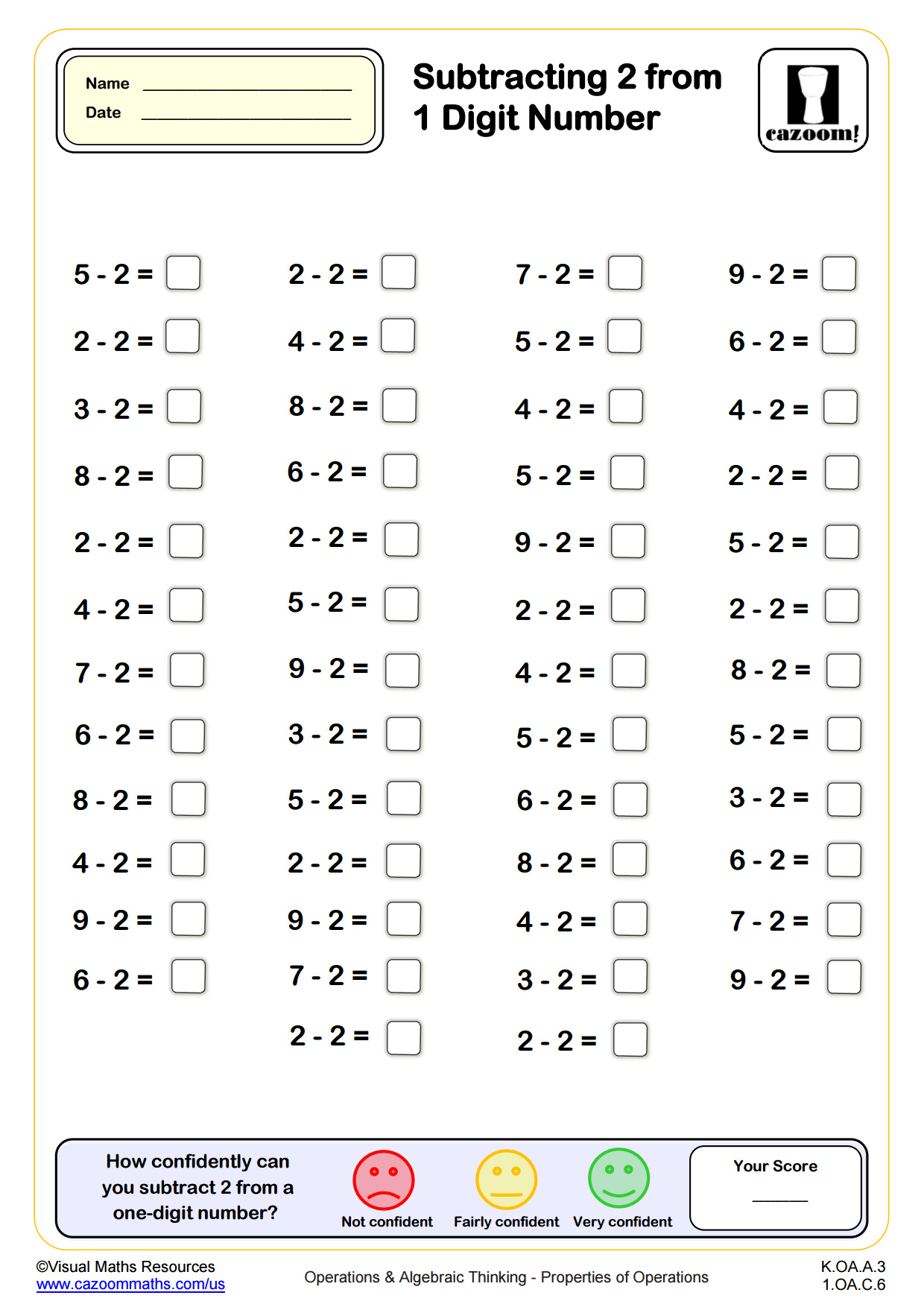
Subtracting 2 (50 questions)
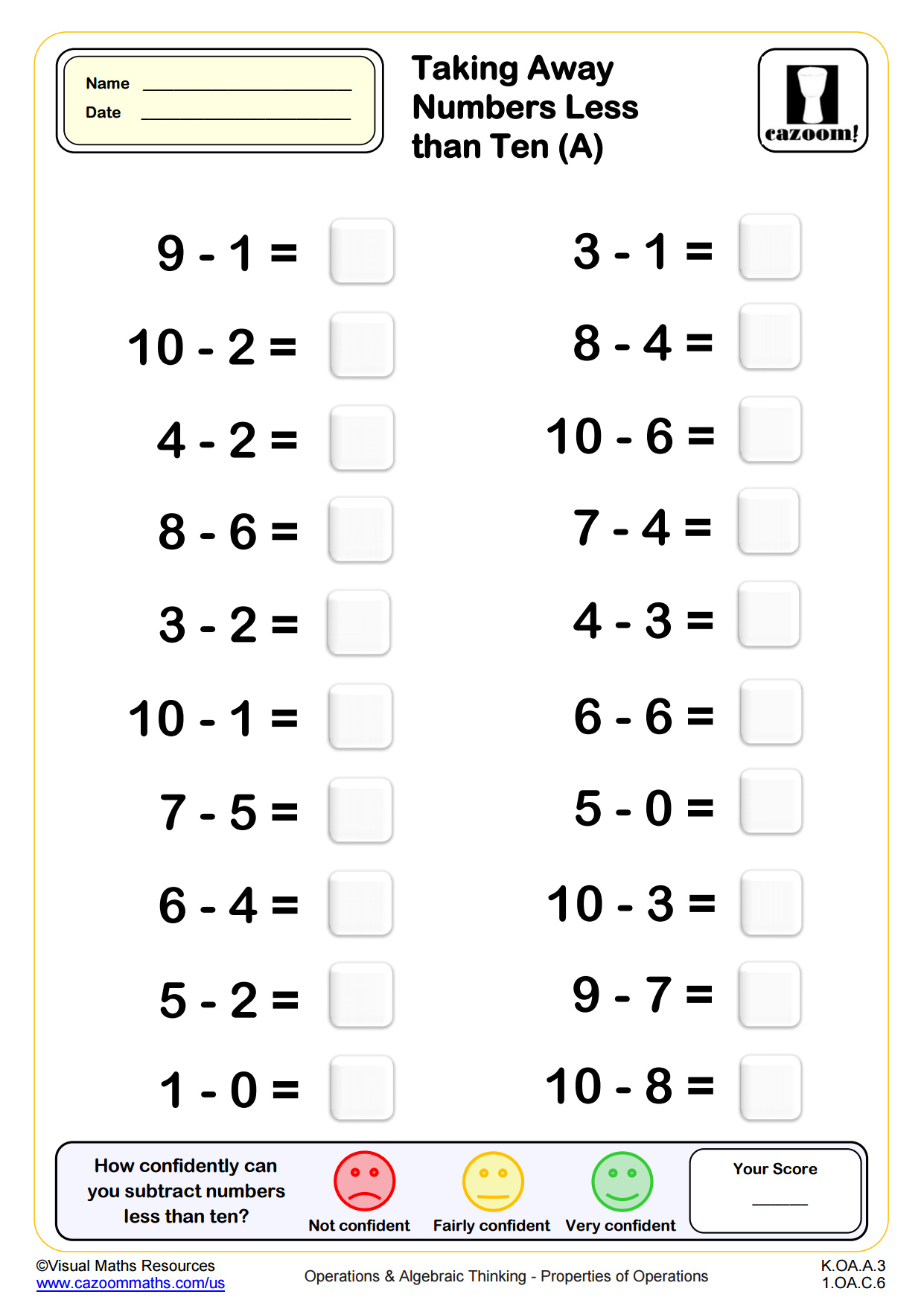
Subtracting Numbers Less Than 10 (A)
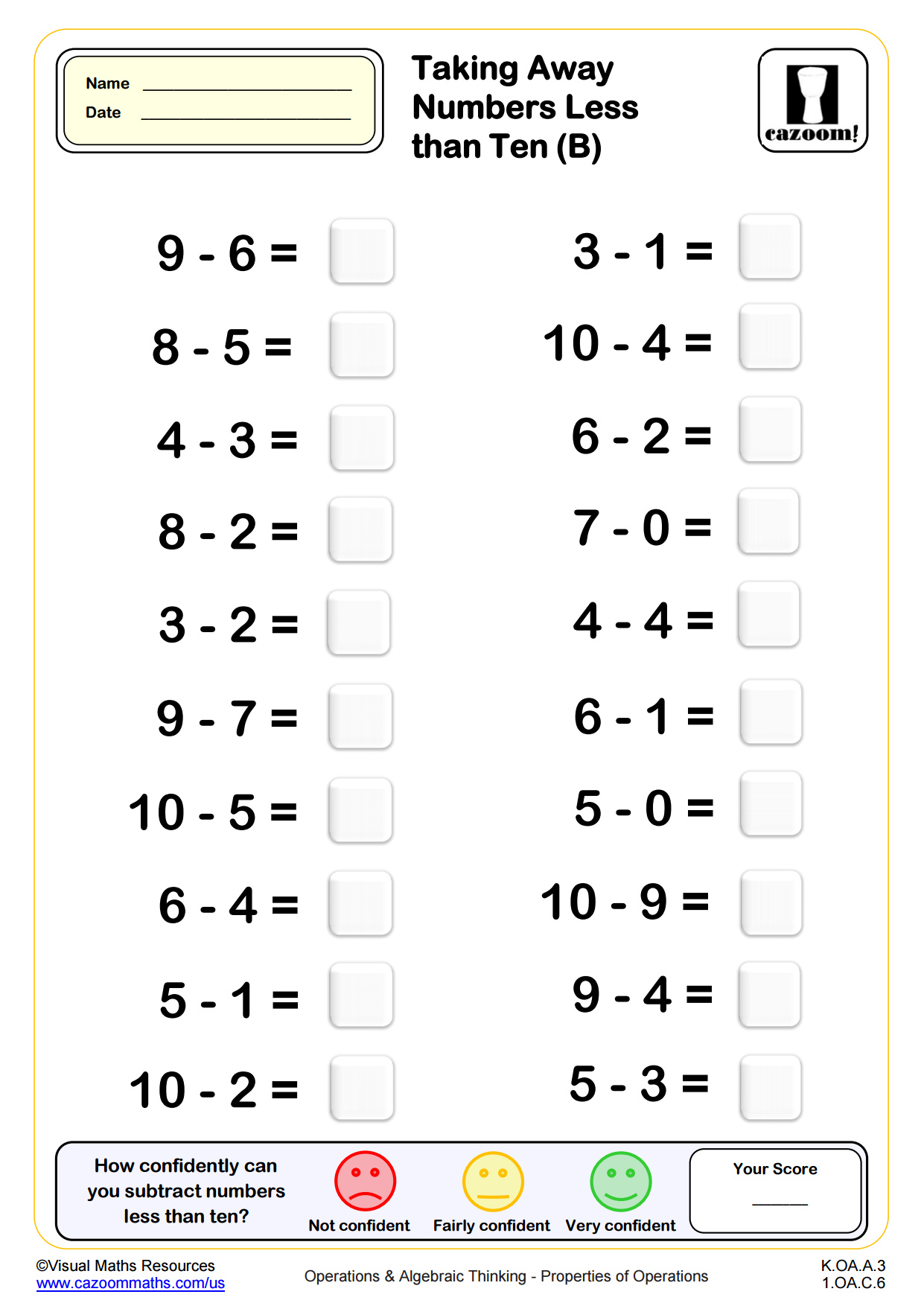
Subtracting Numbers Less Than 10 (B)
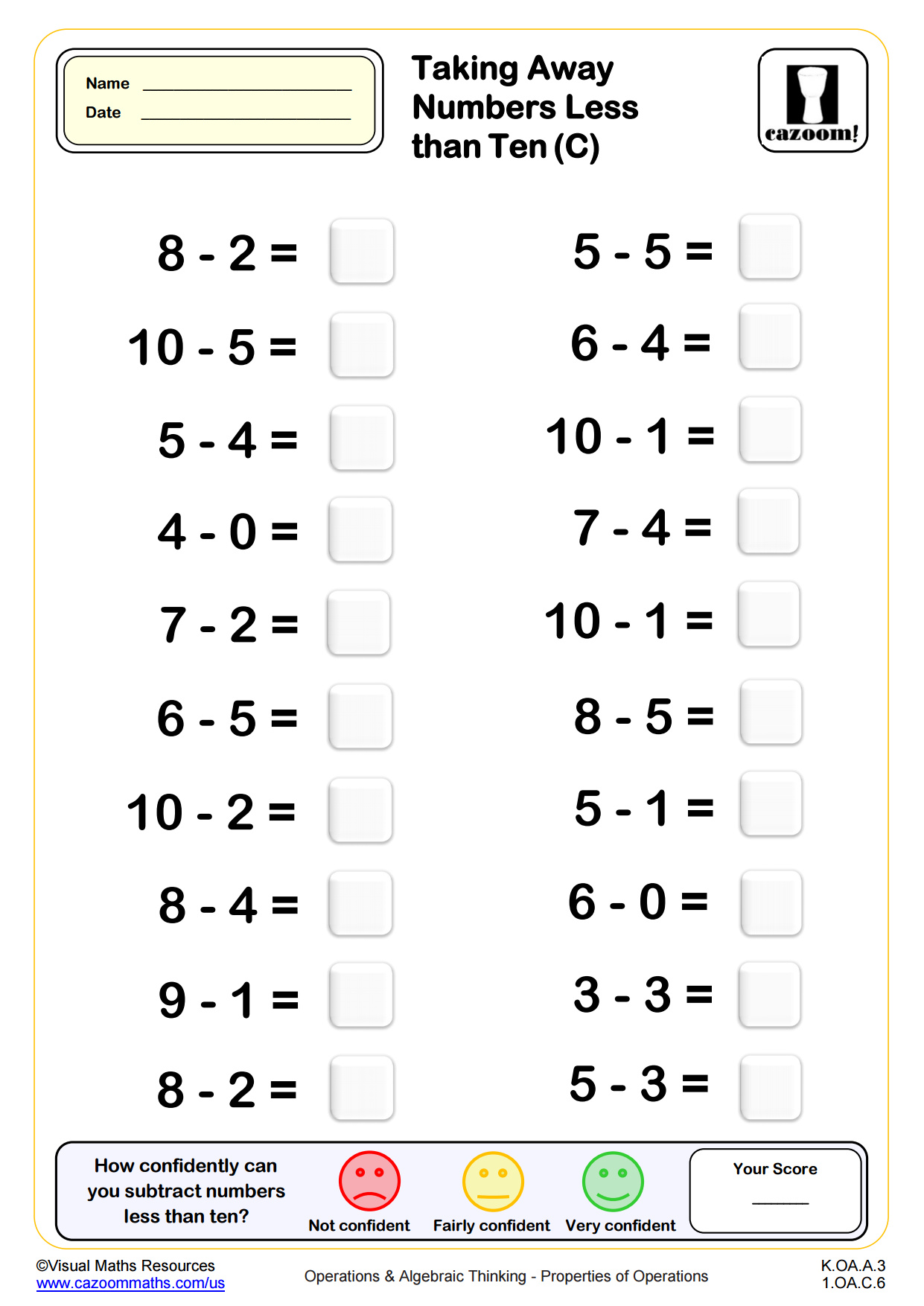
Subtracting Numbers Less Than 10 (C)
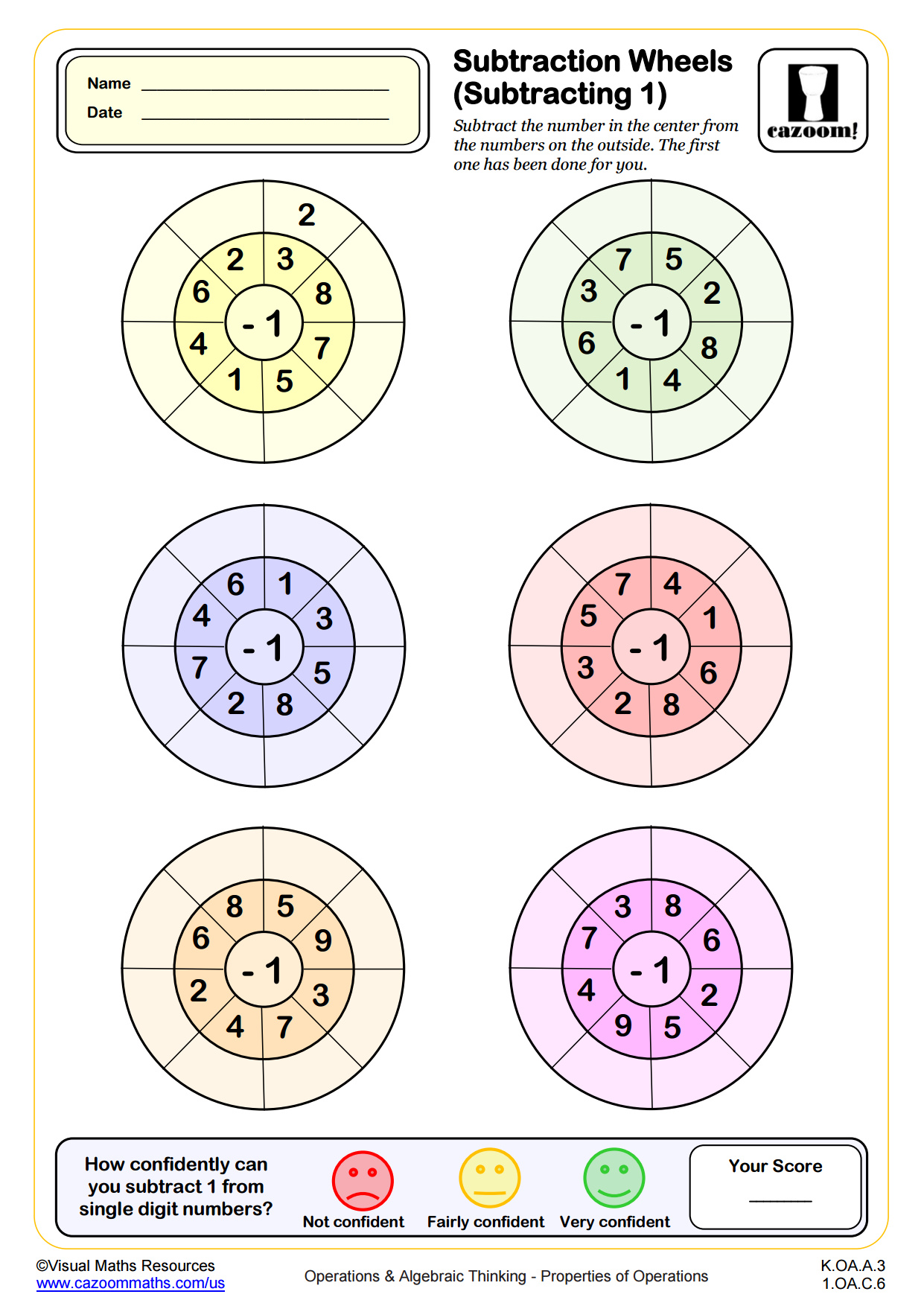
Subtraction Wheels (Subtracting 1)
Subtraction Wheels (Subtracting 2)
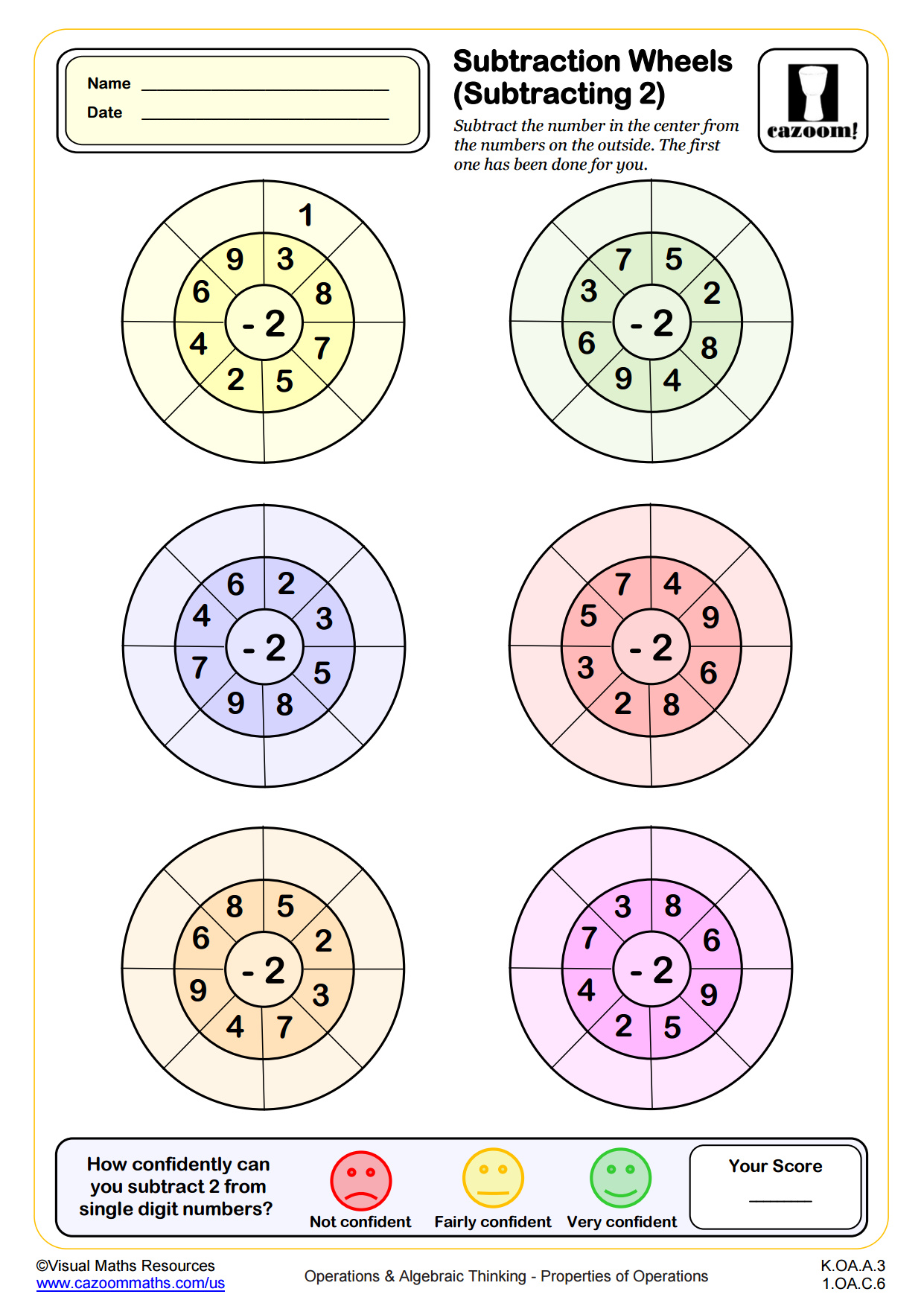
Subtraction Wheels (Subtracting 5)
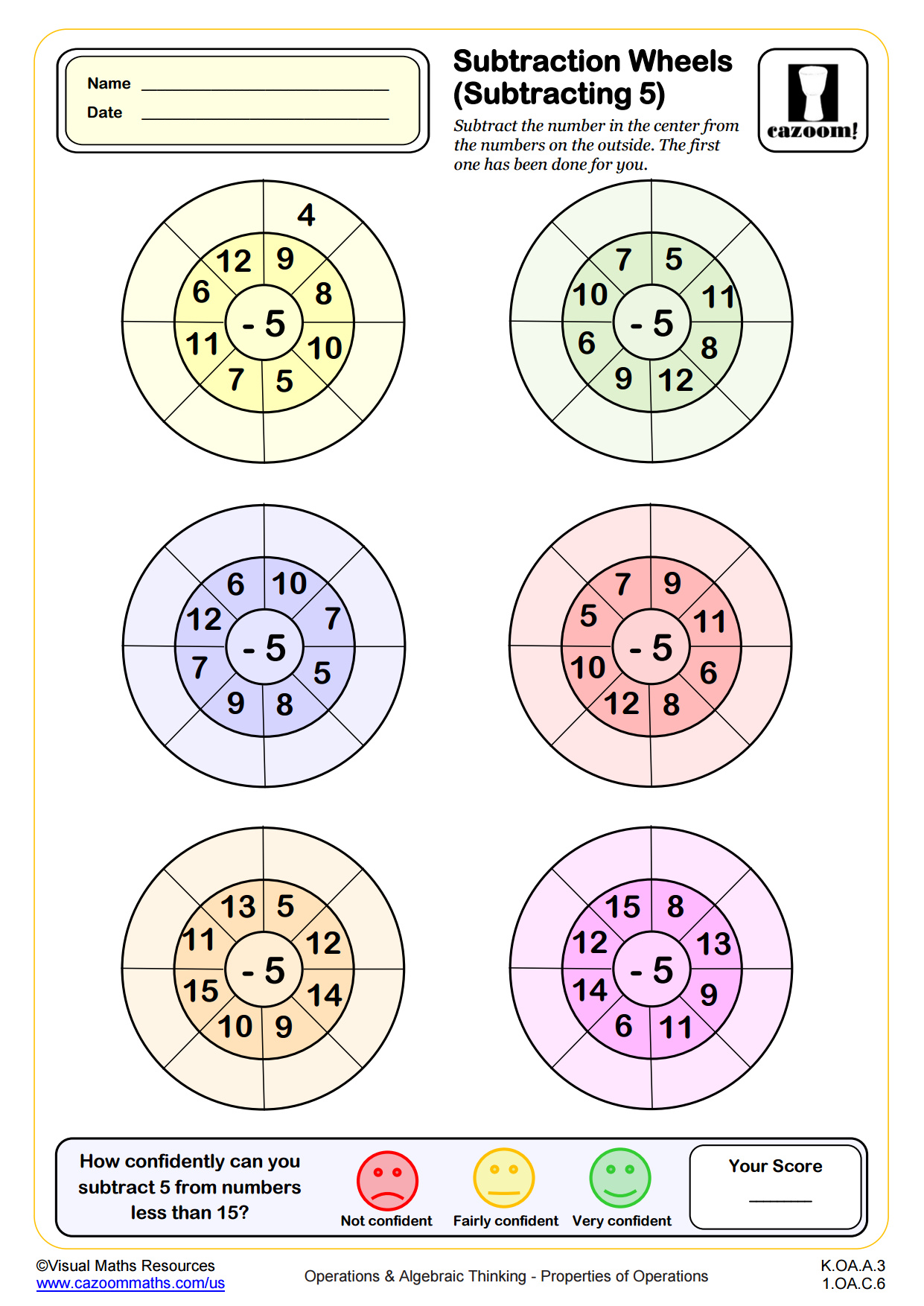
Subtraction Wheels (Subtracting up to 10) A
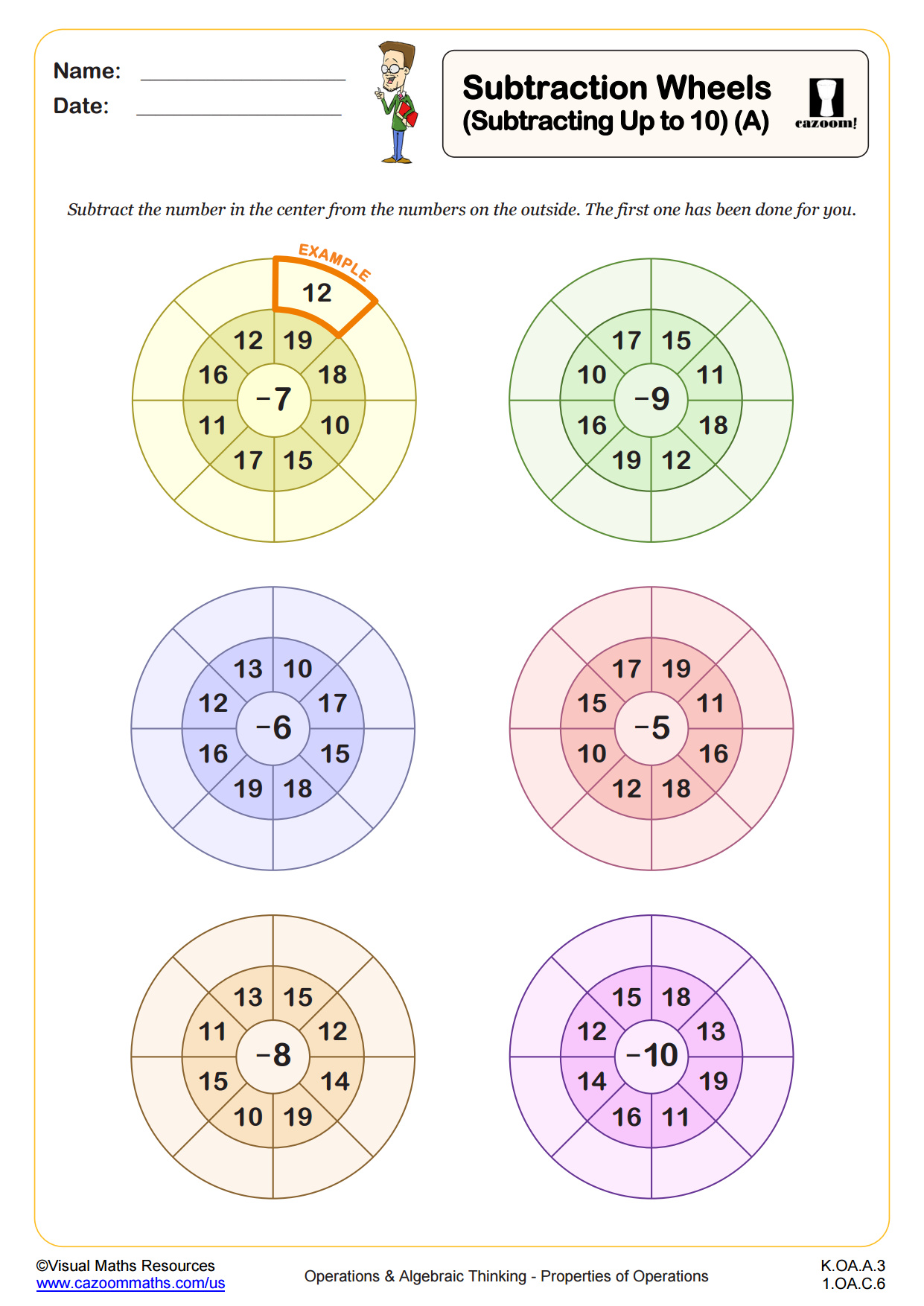
Subtraction Wheels (Subtracting up to 4)
All worksheets are created by the team of experienced teachers at Cazoom Math.
What Skills Do Single Digit Subtraction Worksheets Develop?
Single digit subtraction worksheets develop number sense, computational fluency, and the fundamental understanding that subtraction represents taking away or finding the difference between two quantities. Students learn to recognize the minus sign, understand its meaning, and apply strategies like counting back, using number lines, or recalling subtraction facts automatically. These worksheets align with kindergarten Common Core standards that emphasize fluently subtracting within 5 and working toward fluency within 10.
Students often struggle when problems are presented horizontally versus vertically, as the visual format can confuse those still building symbolic understanding. Teachers notice that alternating between formats helps students recognize that 7 - 3 means the same thing whether written across the page or stacked, strengthening their conceptual grasp. The matching activities in these worksheets specifically address this flexibility, requiring students to connect different representations of the same subtraction fact.
What Grade Level Uses Single Digit Subtraction Worksheets?
These single digit subtraction worksheets are designed specifically for kindergarten students in elementary school. At this stage, students are introduced to subtraction concepts alongside addition, learning to work confidently with numbers from 0 to 10. Kindergarten marks the beginning of formal arithmetic instruction, where students transition from purely concrete manipulative work to symbolic representation on paper.
The progression within kindergarten typically moves from subtracting within 5 to subtracting within 10, with increasing expectations for both accuracy and speed. Early worksheets might feature larger visual supports and fewer problems per page, while later practice introduces more abstract formats and expects students to work more independently. Many kindergarten teachers use these worksheets as formative assessments to identify which students have mastered subtraction facts and which need additional support with manipulatives or counting strategies before advancing to first grade content.
How Do Matching Activities Help With Subtraction Facts?
Matching activities require students to evaluate multiple subtraction expressions and connect each problem to its corresponding answer, which strengthens fact recognition and builds mental math skills. Unlike traditional computation worksheets where students solve one problem at a time in isolation, matching formats encourage students to compare quantities and notice patterns across related facts. This approach develops flexible thinking as students might solve 8 - 3 to get 5, then immediately recognize that answer when evaluating 9 - 4.
This skill connects directly to real-world situations where students need to make quick comparisons. When a child has 6 cookies and gives away 2, or when comparing heights of two block towers that differ by 4 blocks, they're using the same mental matching process developed through these worksheets. Scientists and engineers constantly compare measurements and calculate differences, making subtraction fluency foundational for STEM careers. The ability to quickly recognize subtraction relationships without laborious counting supports data analysis skills students will use throughout their education.
How Can Teachers Use These Subtraction Worksheets in the Classroom?
These worksheets offer scaffolded practice that moves from selecting numbers to complete equations, through matching problems with solutions, providing multiple entry points for students at different readiness levels. The variety of formats within the collection allows teachers to differentiate instruction by assigning specific subtopic worksheets that match individual student needs. Complete answer keys enable quick grading and help teachers identify patterns in student errors, such as consistently adding instead of subtracting or struggling with problems that involve zero.
Many teachers use these worksheets during math centers, allowing students to work independently while the teacher provides small-group instruction to those needing extra support. The matching activities work particularly well for partner practice, where students can check each other's work and discuss their reasoning. These worksheets also serve effectively as morning work, exit tickets to assess daily learning, or homework that reinforces classroom instruction without requiring parent expertise. Teachers often keep completed worksheets as documentation of student progress toward grade-level fluency standards.