Methods for Addition Worksheet
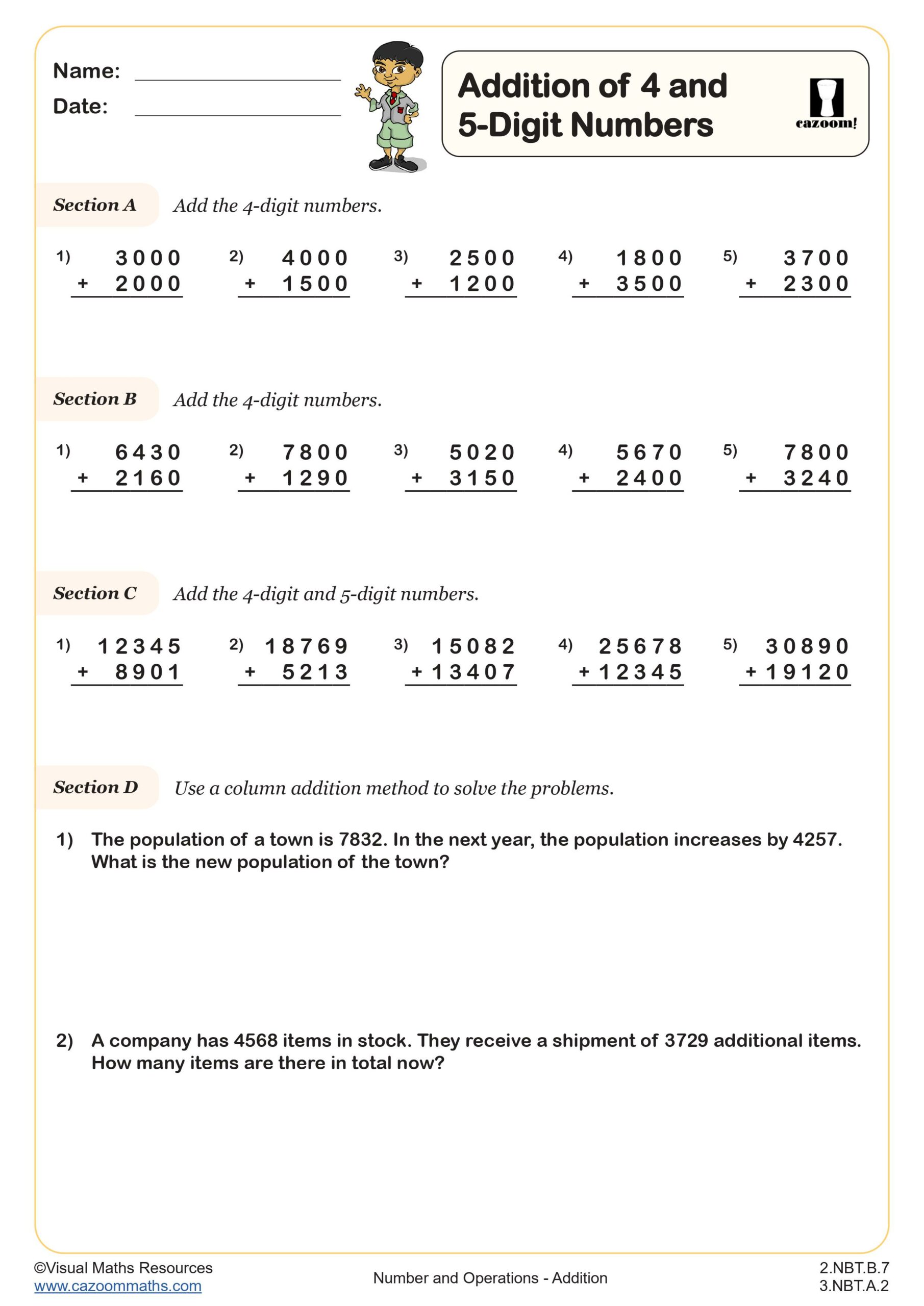
Addition of 4 and 5-digit Numbers
Grades: 2nd Grade, 3rd Grade
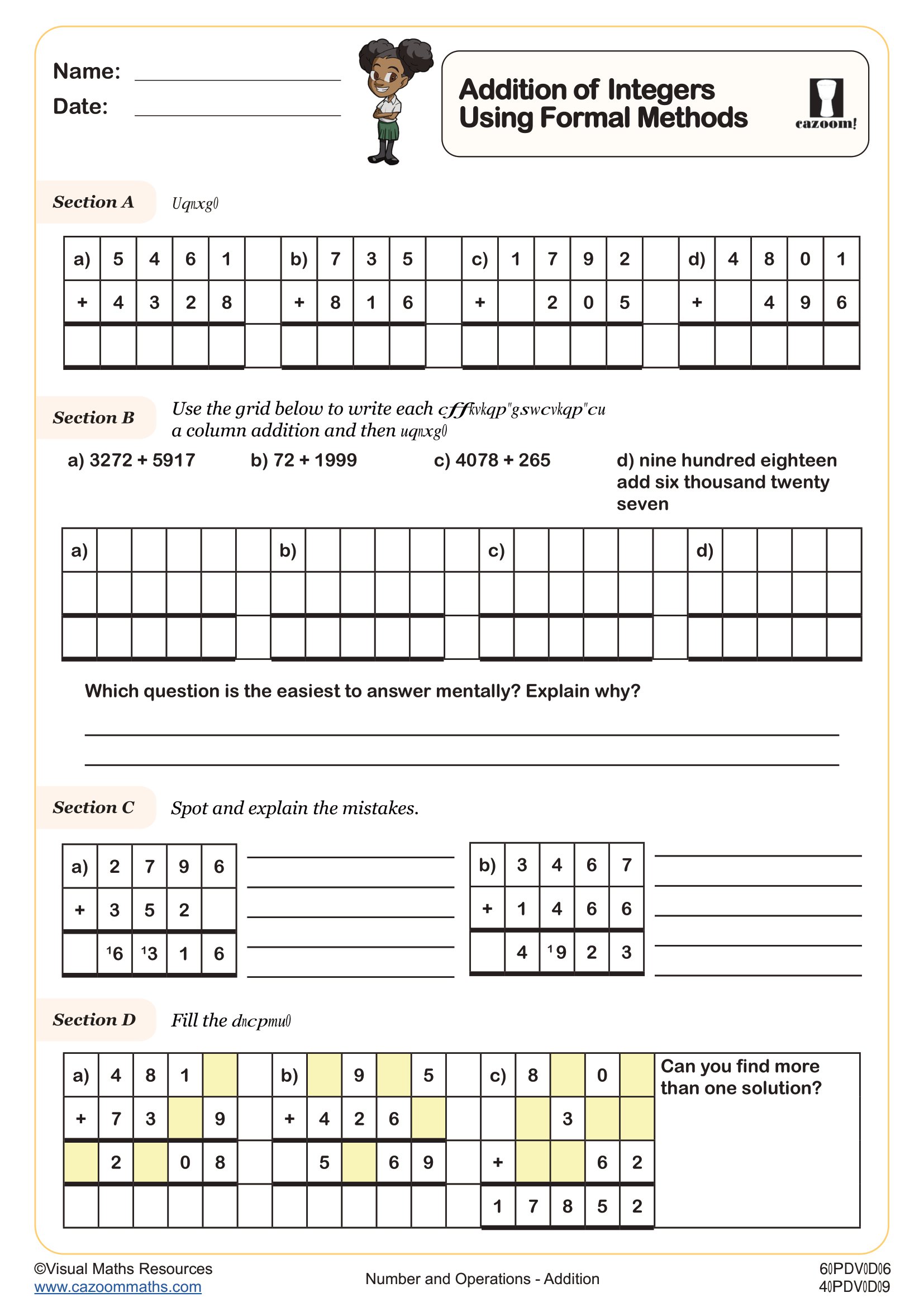
Addition of Integers Using Formal Methods
Grades: 2nd Grade, 4th Grade
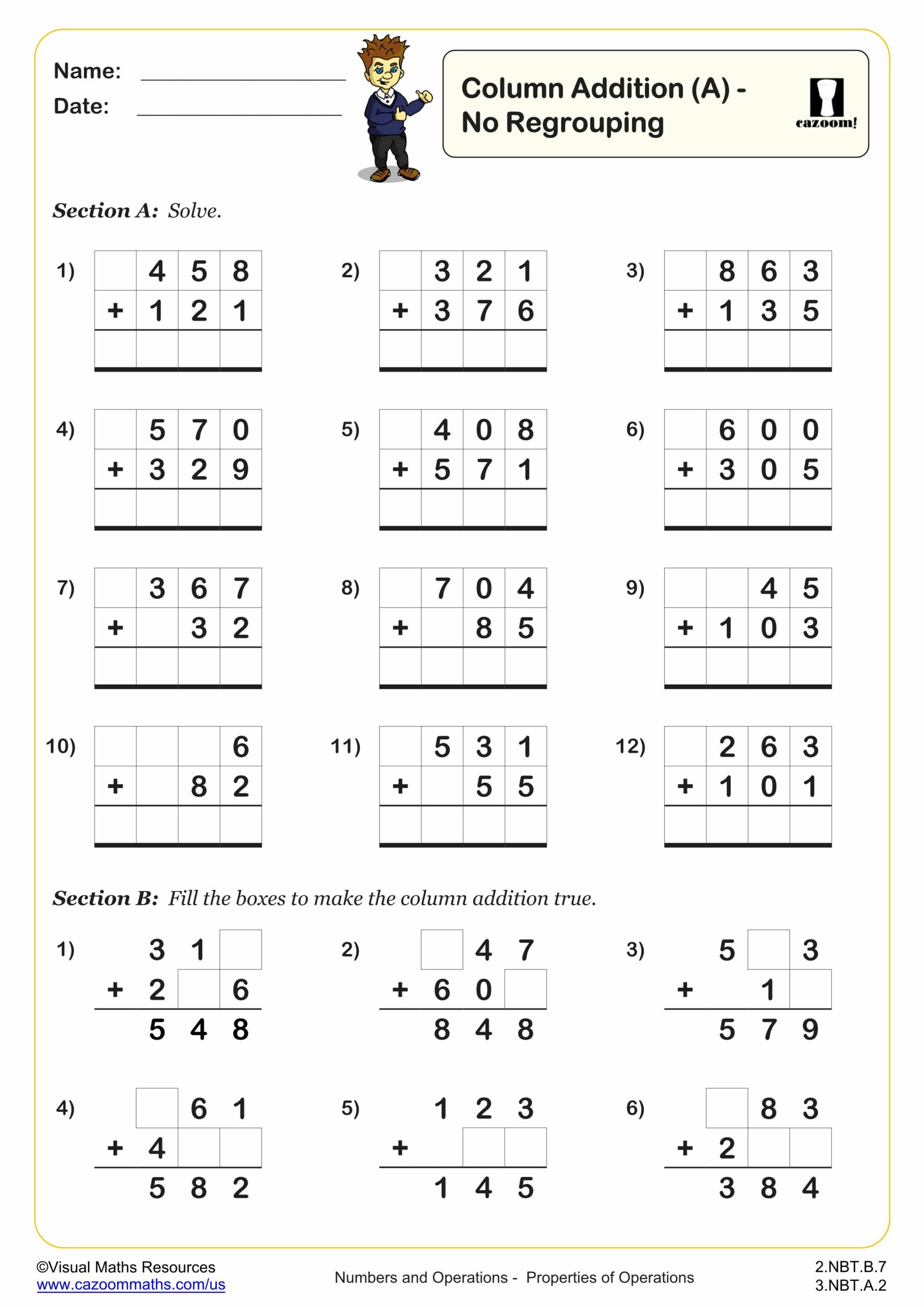
Column Addition (A)
Grades: 2nd Grade, 3rd Grade
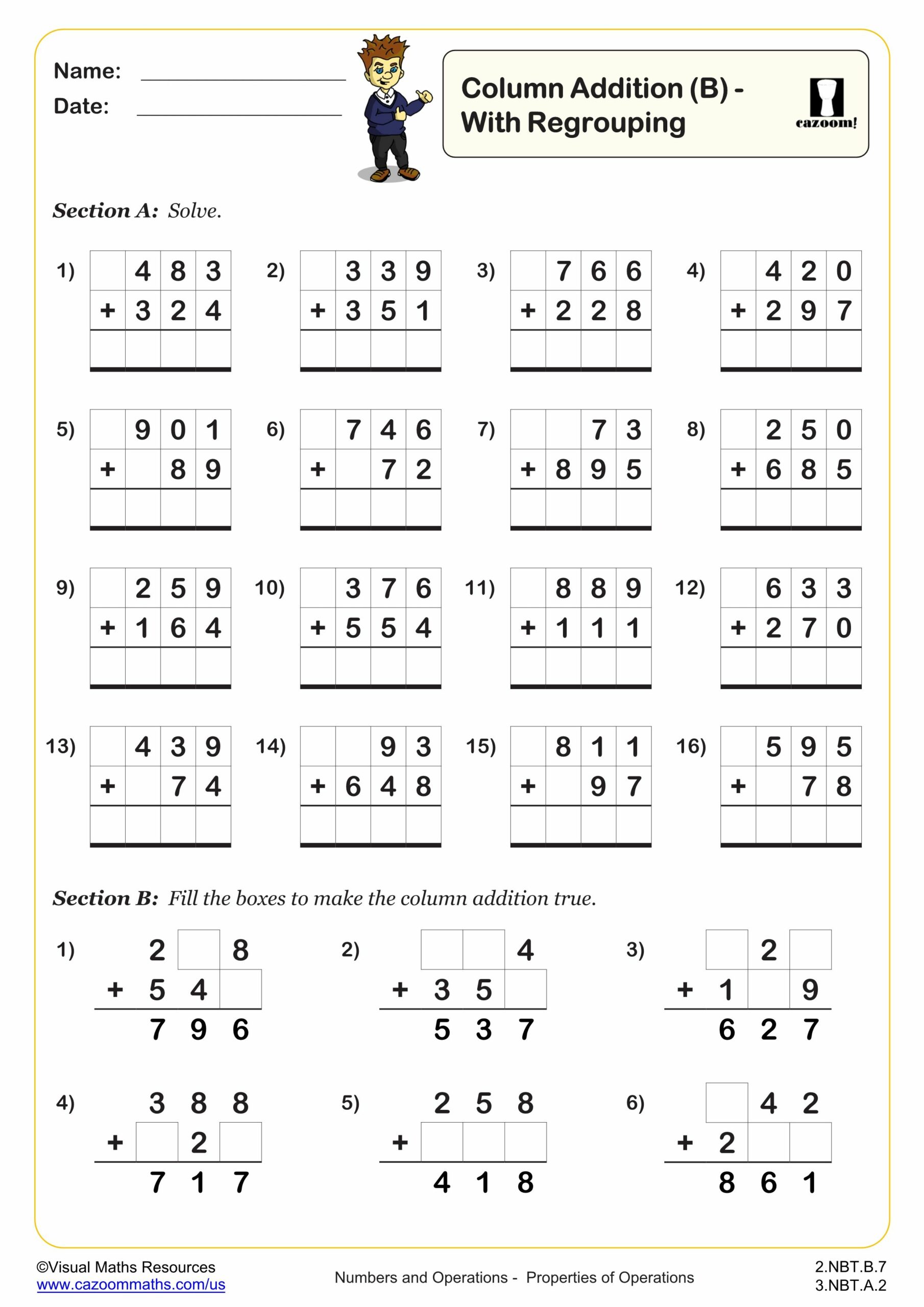
Column Addition (B)
Grades: 2nd Grade, 3rd Grade
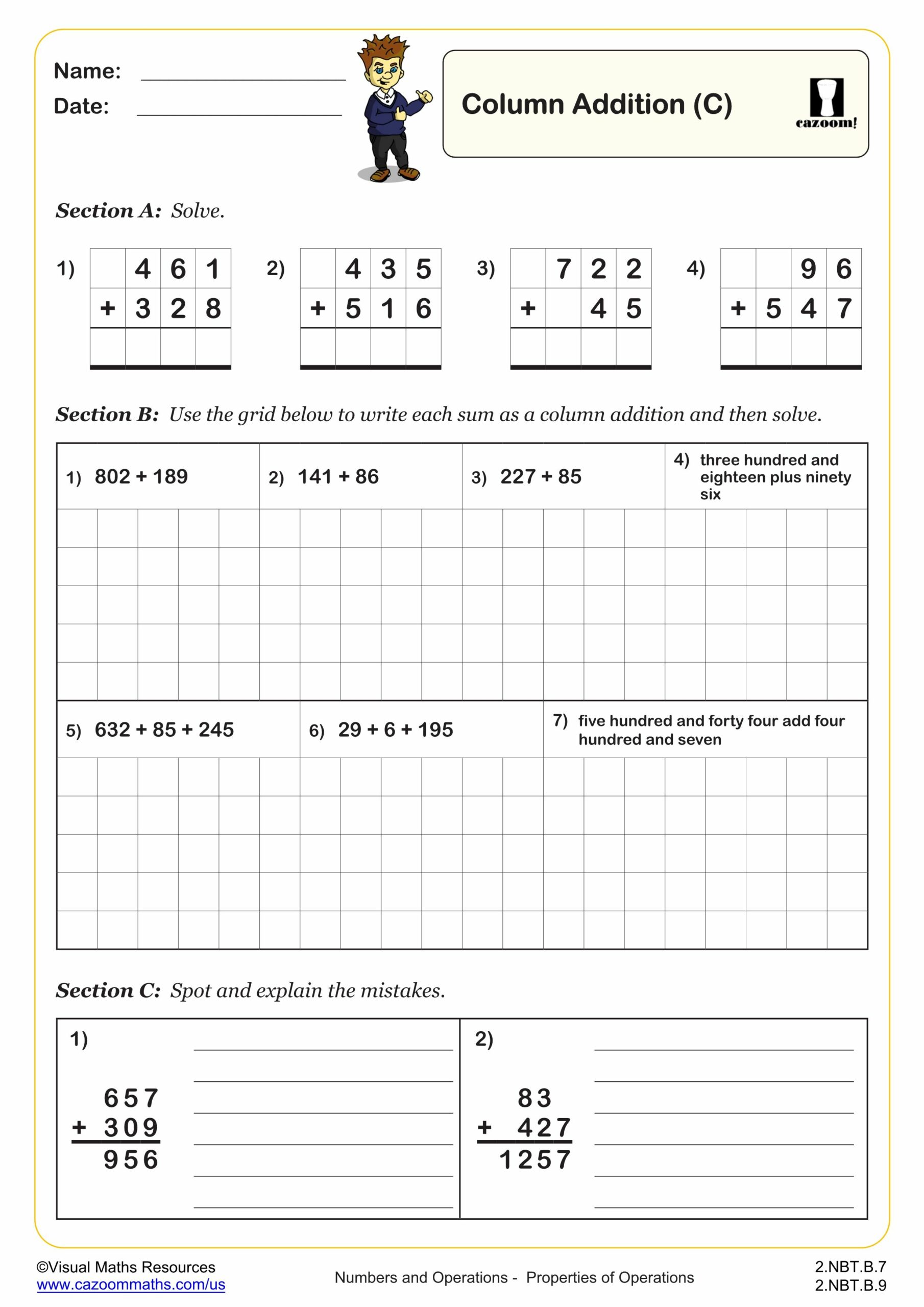
Column Addition (C)
Grades: 2nd Grade
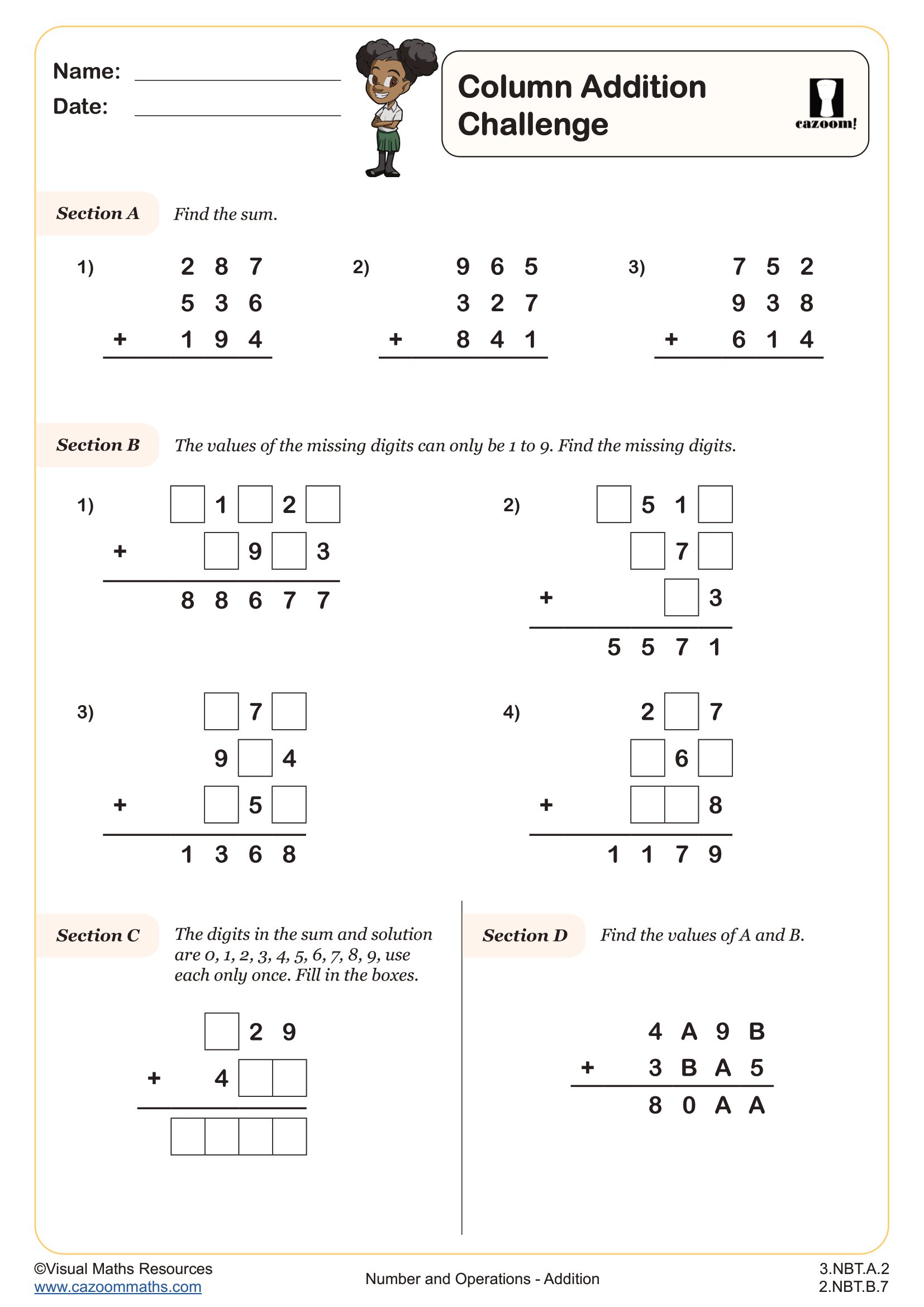
Column Addition Challenge
Grades: 2nd Grade, 3rd Grade
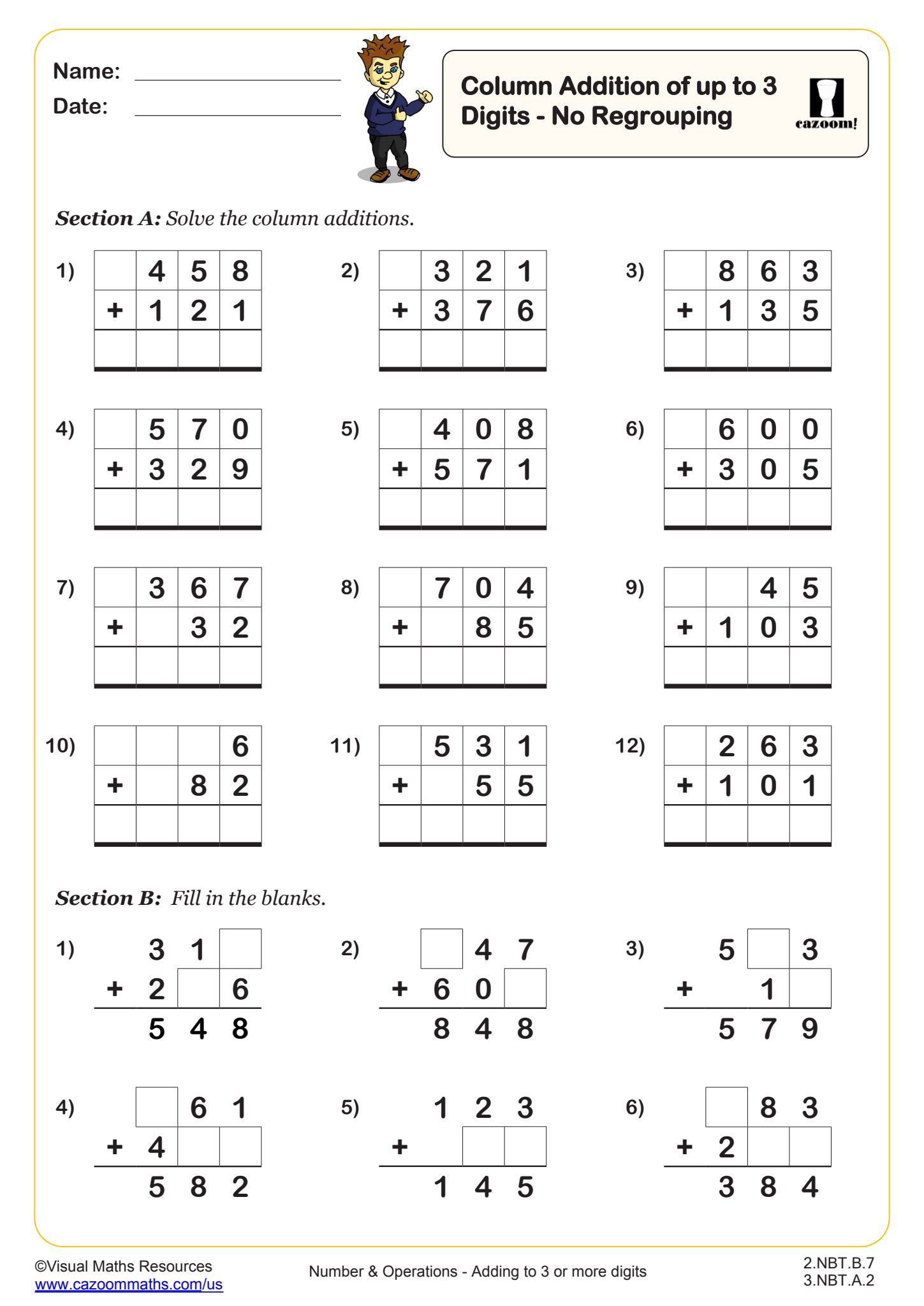
Column Addition of up to 3 Digits - No Regrouping
Grades: 2nd Grade, 3rd Grade
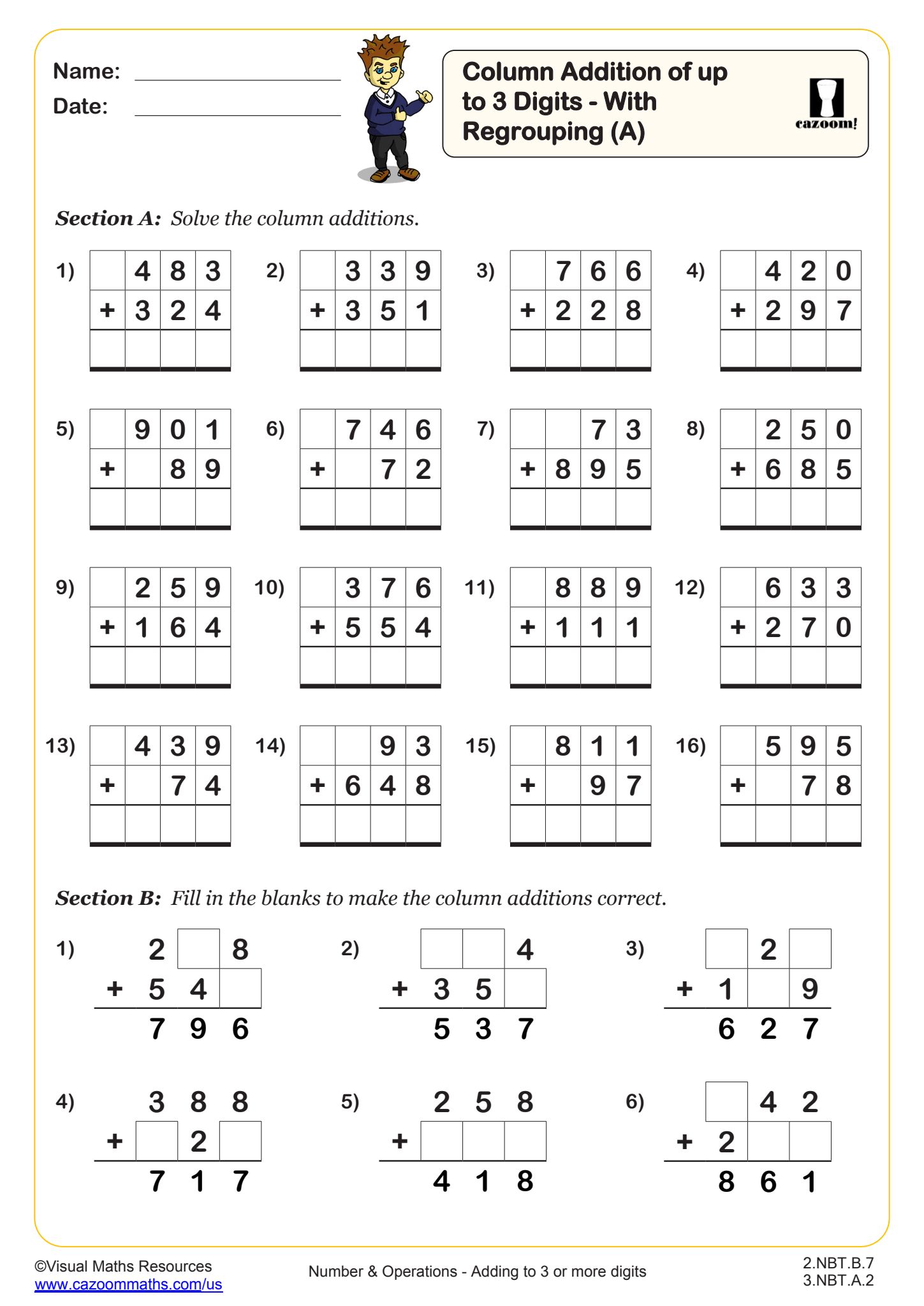
Column Addition of up to 3 Digits - With Regrouping (A)
Grades: 2nd Grade, 3rd Grade
Column Addition of up to 4 Digits (A)
Grades: 2nd Grade, 3rd Grade
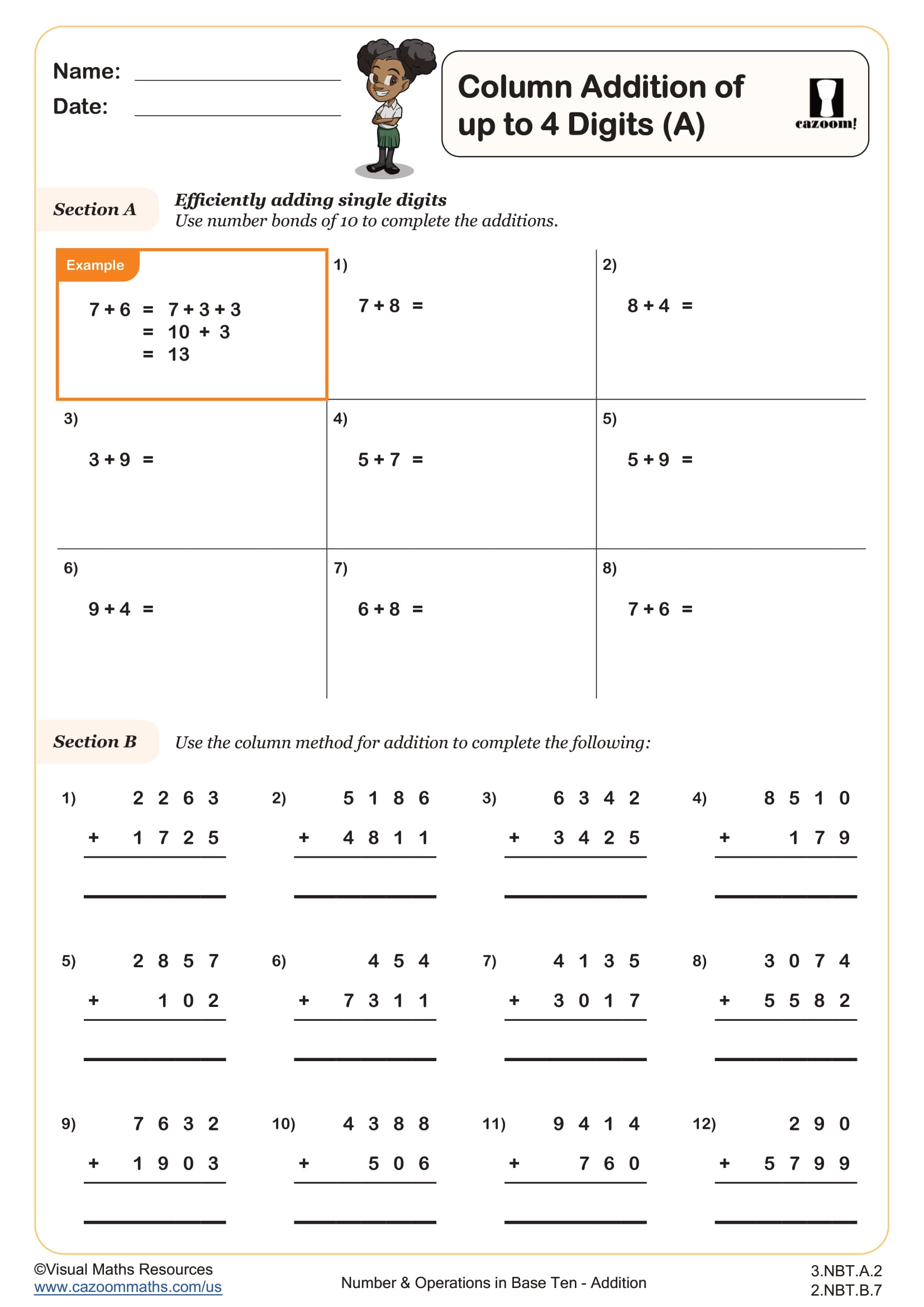
Column Addition of up to 4 Digits (B)
Grades: 2nd Grade, 3rd Grade
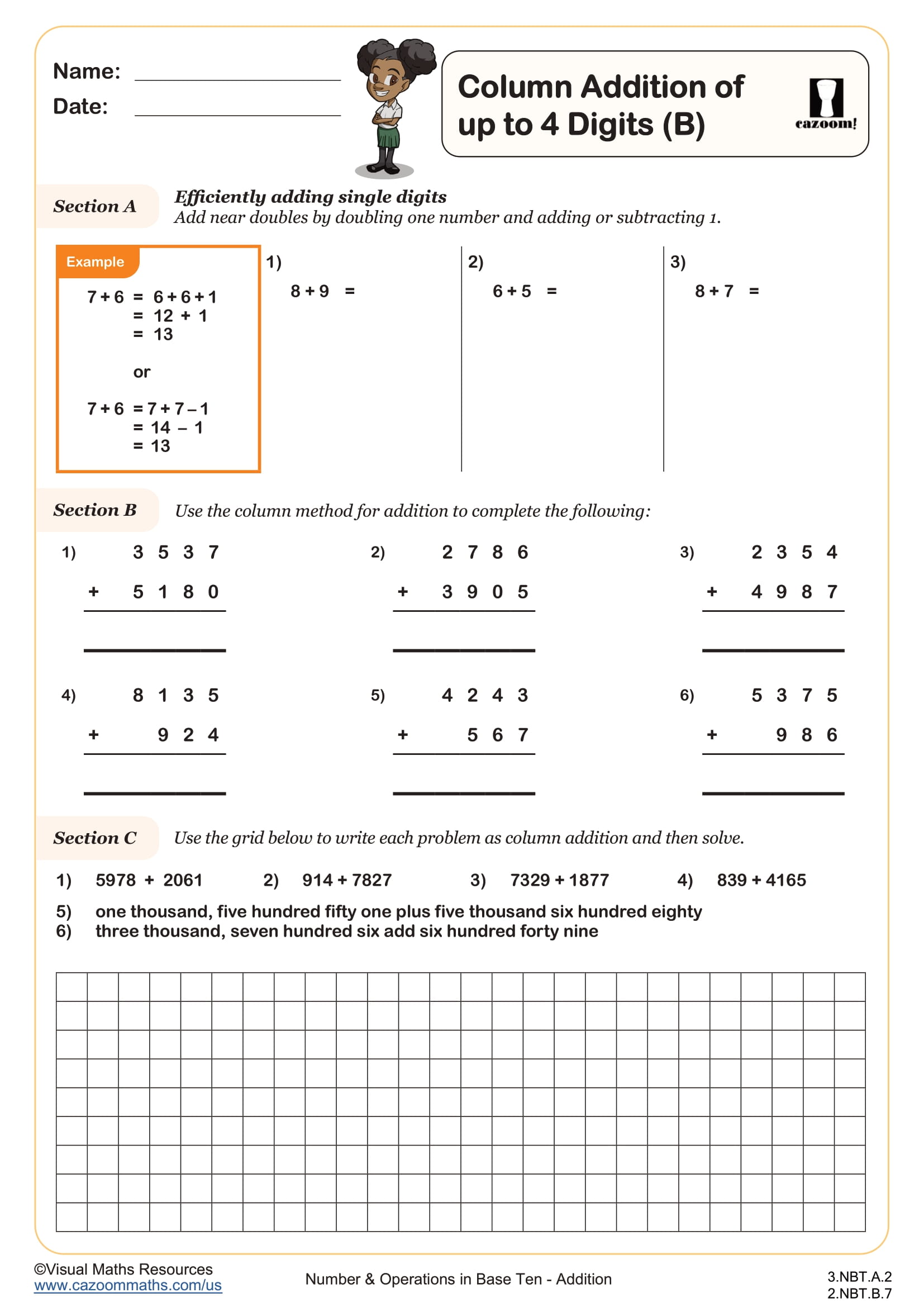
Use Formal Methods For Addition of Integers
Grades: 3rd Grade, 4th Grade
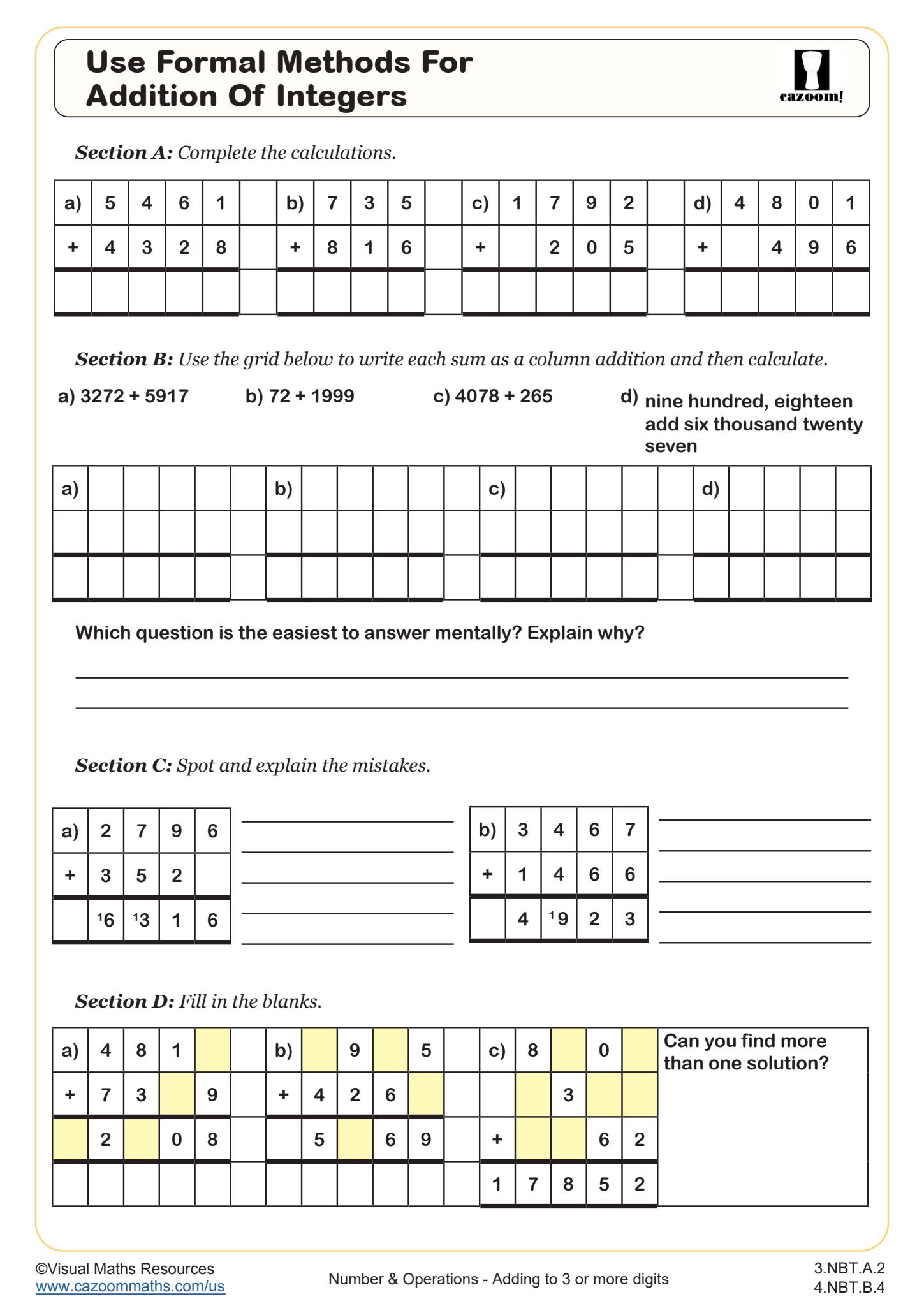
All worksheets are created by the team of experienced teachers at Cazoom Math.
What addition methods should students learn according to current standards?
Current math standards emphasize multiple addition methods to build computational fluency and conceptual understanding. Students should master the traditional algorithm alongside strategies like partial sums, compensation, and breaking apart numbers by place value. Common Core math frameworks particularly stress the importance of students explaining their reasoning and choosing appropriate methods.
Teachers frequently observe that students who learn only one method often struggle when that approach becomes inefficient with larger numbers. For example, students comfortable with partial sums can easily handle problems like 47 + 38 by adding 40 + 30 = 70, then 7 + 8 = 15, and combining for 85. This flexibility prevents the common error of rushing through problems without considering number relationships.
Which grade levels benefit most from structured addition practice?
Addition skills develop progressively from kindergarten through fourth grade, with different methods appropriate at various levels. Early elementary students focus on basic facts and single-digit combinations, while second and third graders tackle 2 digit addition and multi-step problems. Teachers often use 2nd grade partial sums addition worksheets to bridge concrete and abstract thinking.
Fourth grade students typically consolidate their understanding while working with larger numbers and decimal addition. Educators notice that students who receive consistent practice at each level show greater confidence and accuracy. The key is matching worksheet difficulty to student readiness rather than strictly following grade-level designations, as mathematical development varies significantly among learners.
How do partial sums help students understand place value in addition?
Partial sums break addition problems into manageable place value chunks, helping students see the relationship between digits in different positions. Instead of working column by column from right to left, students add all the tens together, then all the ones, and combine the results. This method makes the base-ten system visible and meaningful.
Many teachers report that students using partial sums make fewer regrouping errors because they're working with familiar benchmark numbers. For instance, when solving 56 + 38, students compute 50 + 30 = 80 and 6 + 8 = 14, then combine to get 94. This approach reduces the cognitive load while reinforcing place value concepts that support more advanced mathematical thinking.
How can teachers use these addition resources most effectively in their classrooms?
Effective implementation involves using worksheets strategically rather than as busy work. Teachers should introduce new methods with guided practice before assigning independent worksheet practice. The included answer keys allow for immediate feedback, which research shows significantly improves learning outcomes when students can self-check their work.
Successful educators often use these addition resources as warm-up activities, homework assignments, or differentiated practice stations. Some teachers create learning progressions where students advance through increasingly complex worksheets as they demonstrate mastery. The PDF format allows for easy printing and digital distribution, making the materials adaptable to various classroom management systems and remote learning situations.