Methods for Subtraction Worksheets
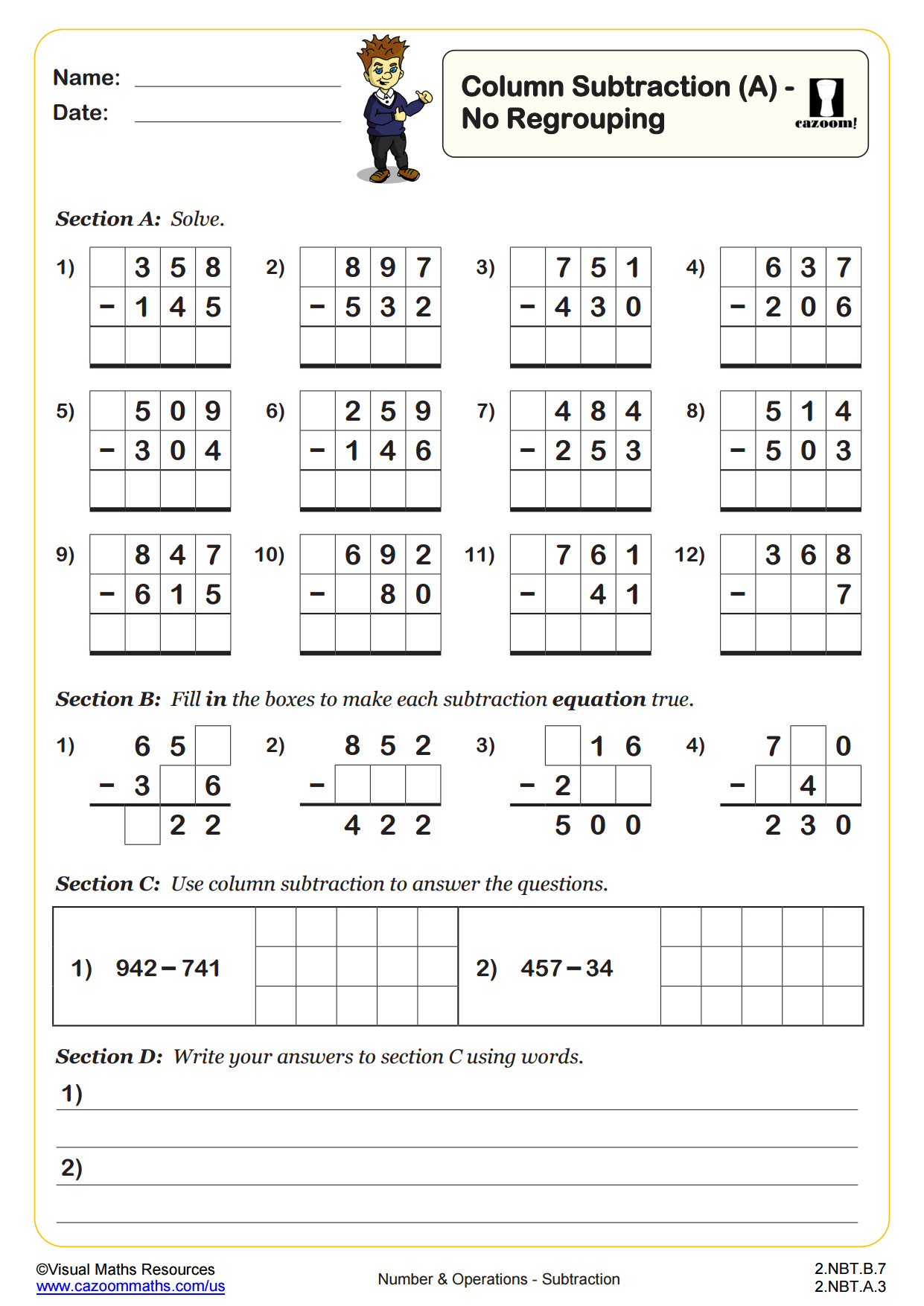
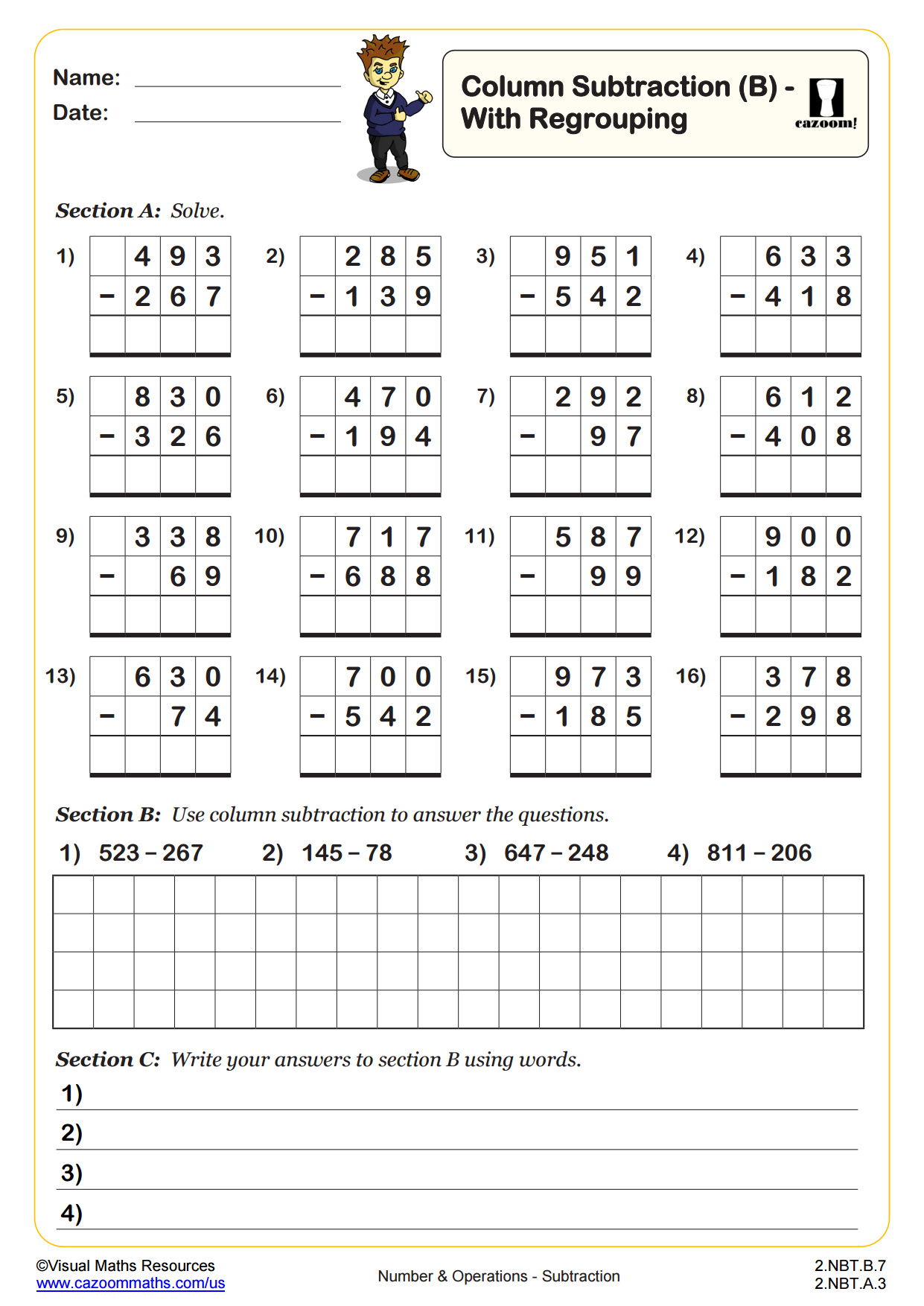
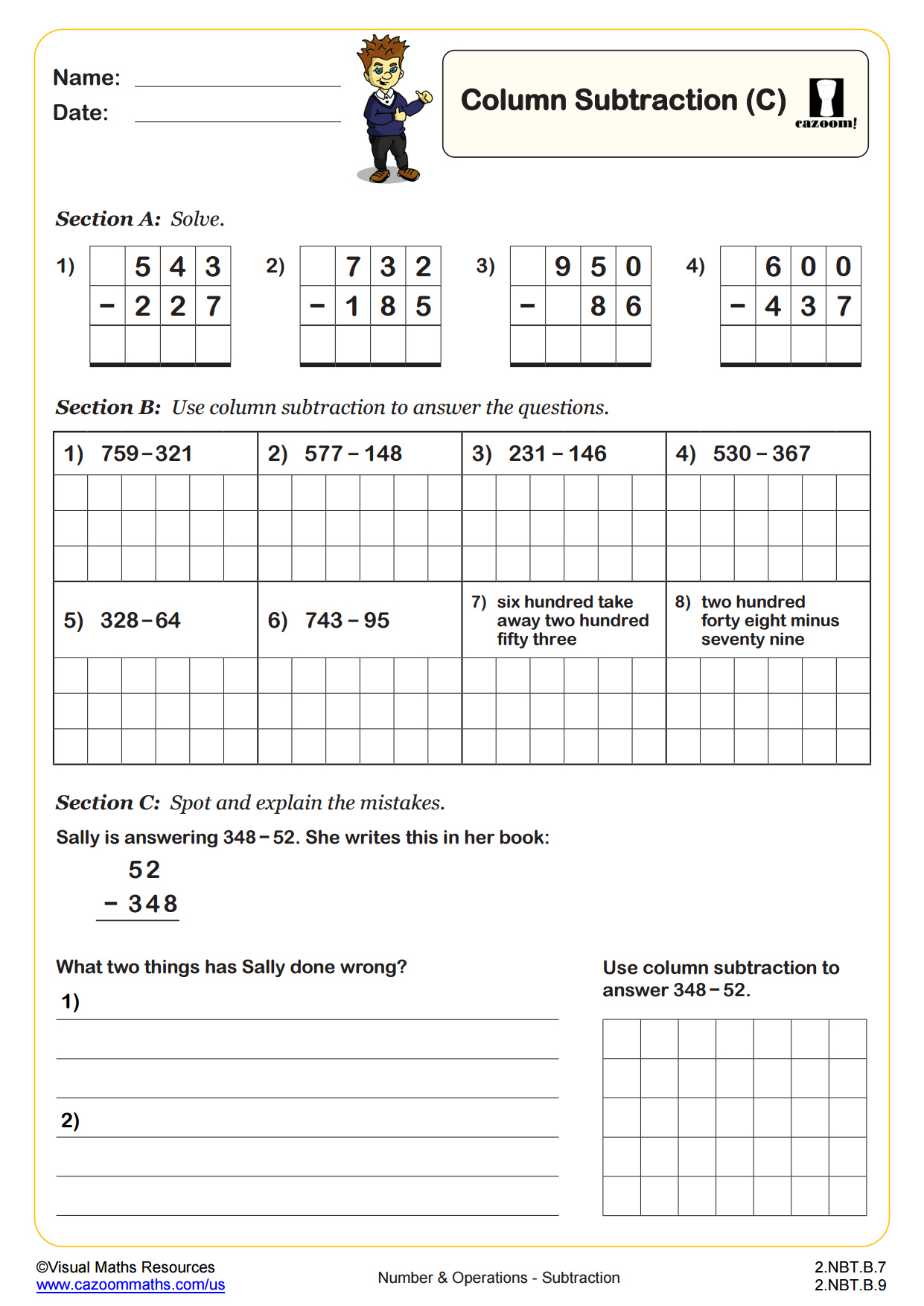
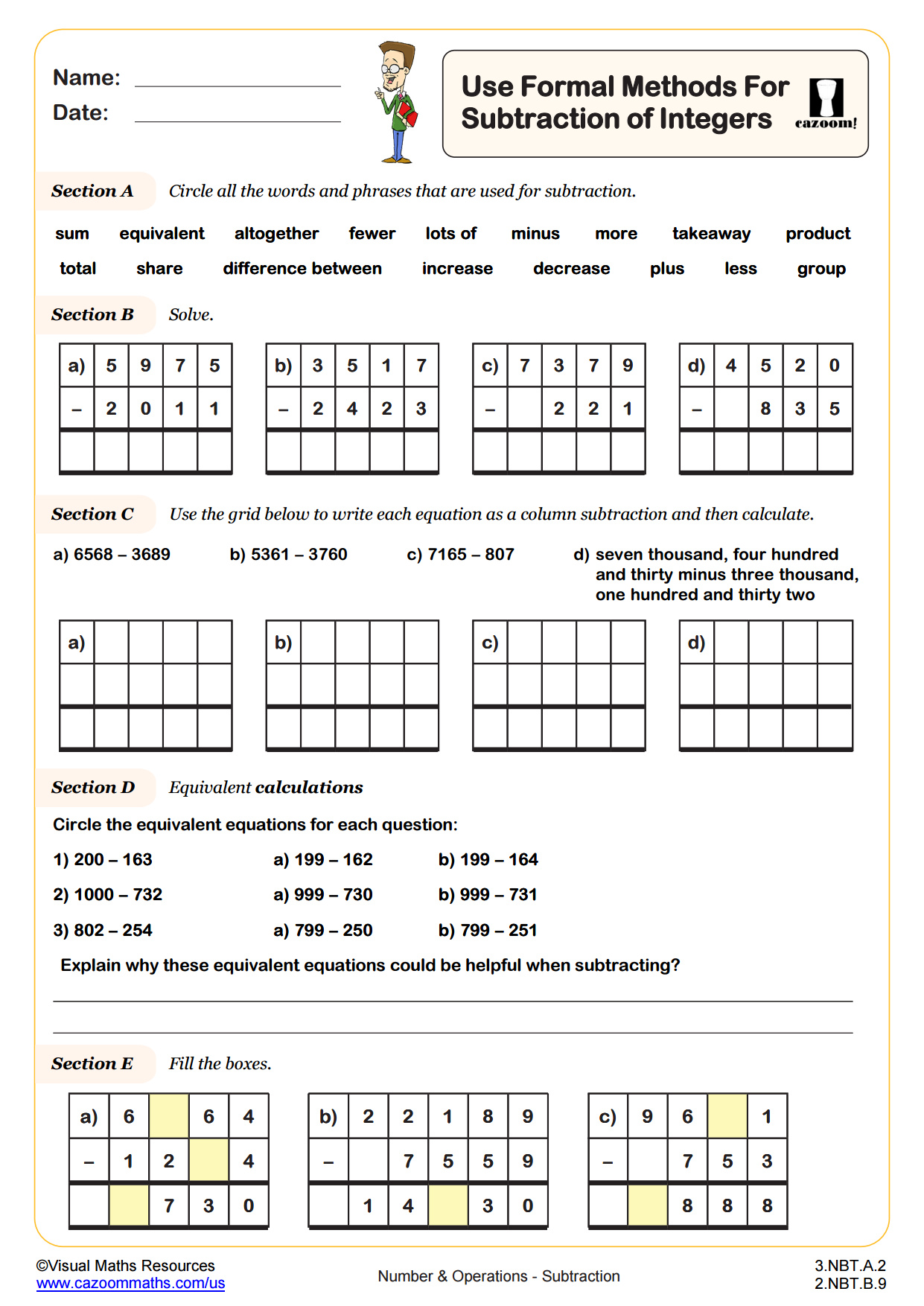
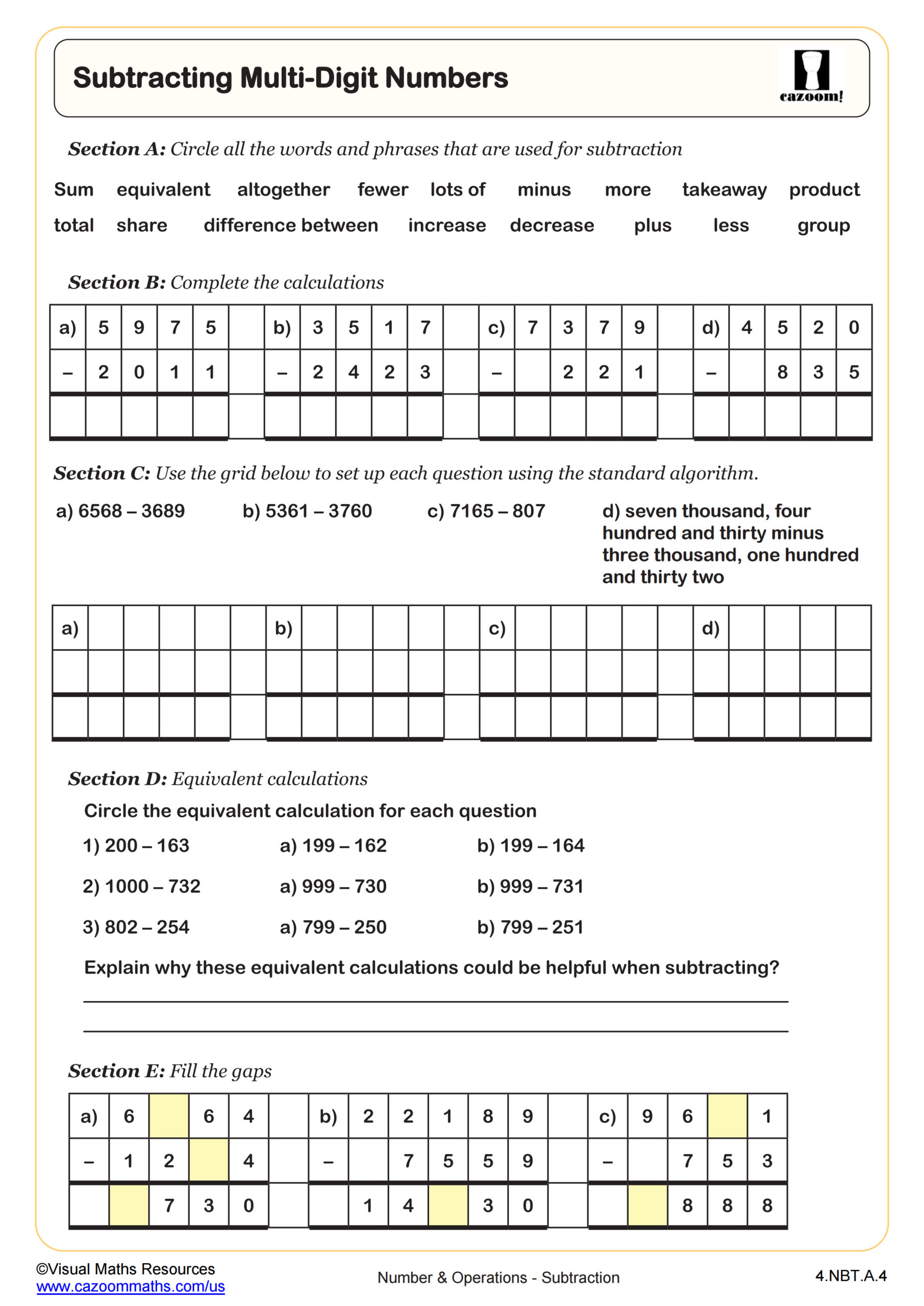
All worksheets are created by the team of experienced teachers at Cazoom Math.
What are subtraction sums with borrowing and why do students find them challenging?
Subtraction sums with borrowing are problems where students must regroup or borrow from a higher place value when the digit being subtracted is larger than the digit it's being subtracted from. This concept aligns with Common Core standards starting in grade 2, where students begin using place value understanding to solve two-digit subtraction problems.
The main challenge teachers observe is that students often forget to reduce the borrowed-from digit by one after regrouping. For example, in 52 - 28, after borrowing 1 ten to make 12 ones, students correctly compute 12 - 8 = 4 but forget to change the 5 tens to 4 tens, leading to an incorrect answer of 34 instead of 24.
Which grade levels should use subtraction worksheets with borrowing?
Subtraction worksheets for grade 2 with borrowing introduce basic regrouping with two-digit numbers, typically starting with problems like 34 - 18. Grade 2 students focus on understanding the concept using manipulatives and visual models before moving to the standard algorithm. Subtraction worksheets for grade 3 expand to three-digit problems and multiple borrowing situations.
Subtraction worksheets for grade 1 without borrowing should be used first to build foundational subtraction skills. Teachers find that rushing into borrowing before students master basic subtraction facts creates confusion and calculation errors. The progression from concrete models to abstract algorithms typically spans from late grade 1 through grade 3, with ongoing practice in higher grades for multi-digit problems.
How do students learn to borrow across zeros in subtraction problems?
Borrowing across zeros presents one of the most challenging aspects of subtraction for students. In problems like 300 - 47, students must borrow from the hundreds place since there are no tens available. This requires changing 300 to 2 hundreds, 10 tens, and 0 ones before borrowing 1 ten to create 10 ones for subtraction.
Teachers notice that students often get stuck at the zero and either skip the borrowing process entirely or incorrectly try to subtract from zero. Breaking down the process into clear steps and using place value blocks helps students visualize how 300 becomes 299 + 1, making the borrowing process more concrete and understandable.
How can teachers effectively use these subtraction worksheets in their classroom instruction?
These worksheets work best when teachers use them strategically after introducing borrowing concepts through hands-on activities and visual models. Start with guided practice where the class works through problems together, emphasizing the step-by-step borrowing process. Teachers find success using the answer keys to create worked examples on the board before independent practice.
The worksheets serve multiple instructional purposes: formative assessment to identify which students need reteaching, homework practice to reinforce classroom learning, and intervention materials for students who need additional support. Many teachers use different difficulty levels simultaneously, allowing advanced students to work on multi-digit problems while others focus on two-digit borrowing scenarios.
Real-Life Uses of Subtraction
Subtraction is used every day—from counting change at the store to figuring out how much time is left in a game. Kids use subtraction when sharing snacks, comparing scores, or tracking how many pages they’ve read in a book. It also helps when measuring, cooking, or planning. Our worksheets include real-life examples to make subtraction fun, meaningful, and practical for young learners at home or in school.