Multiplication Worksheets With Answers
Doubling using Pictorial Representation
Grades: 1st Grade, 2nd Grade
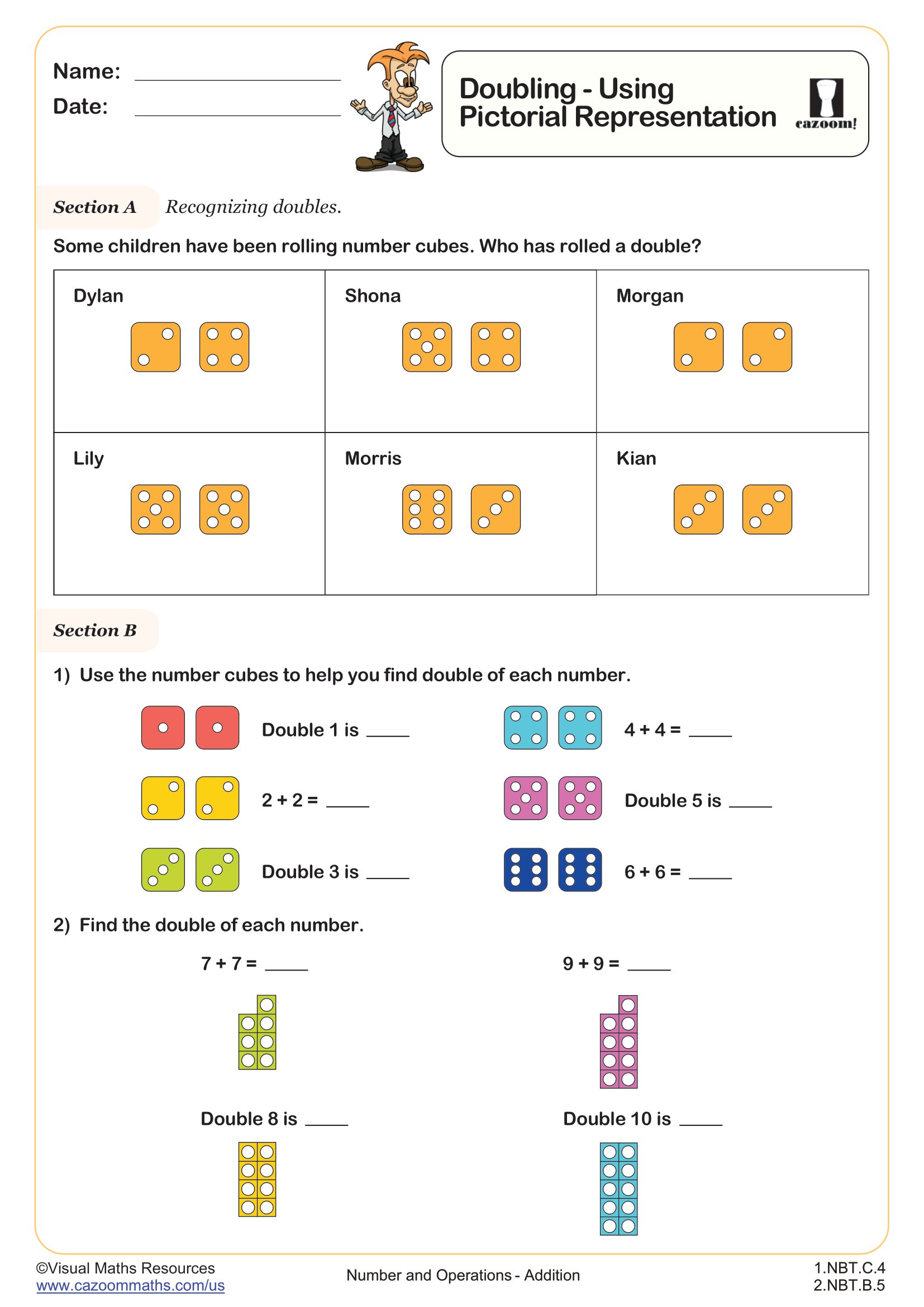
Count By Twos Maze (Odd Numbers)
Grades: 2nd Grade
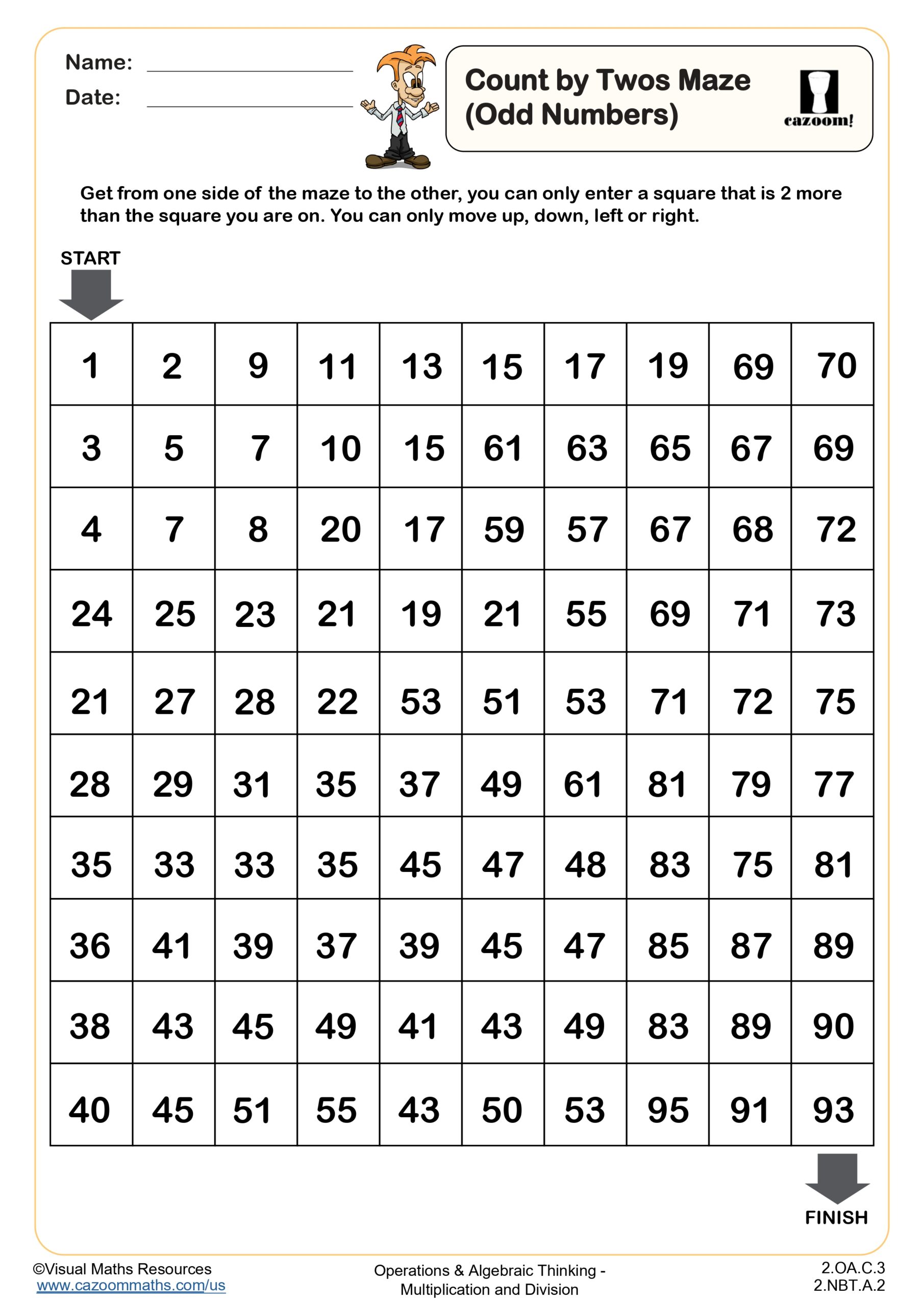
Rangoli Color by Number - Odd and Even Numbers
Grades: 2nd Grade
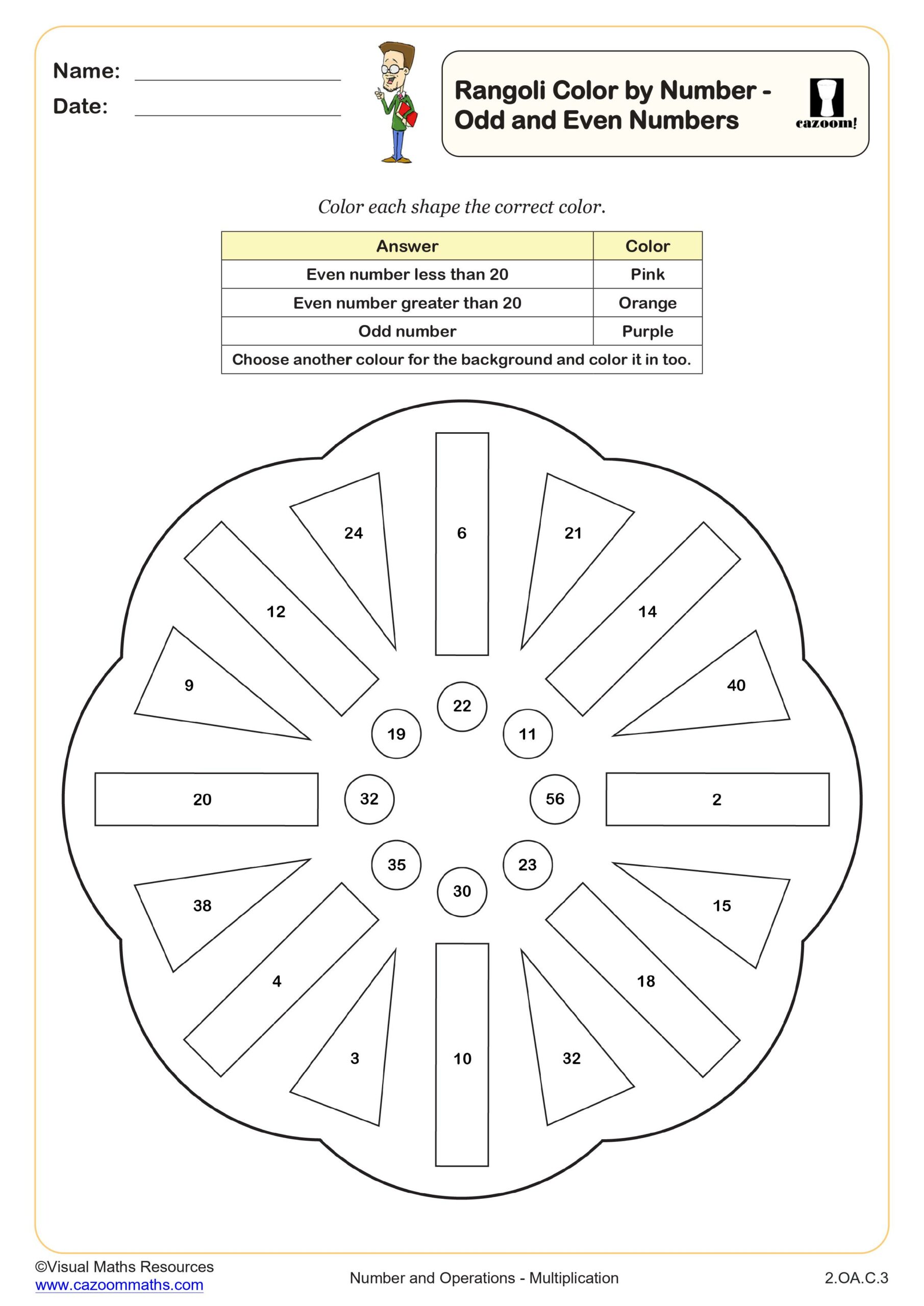
Skip Counting: Count By Twos (Odd Numbers)
Grades: 2nd Grade
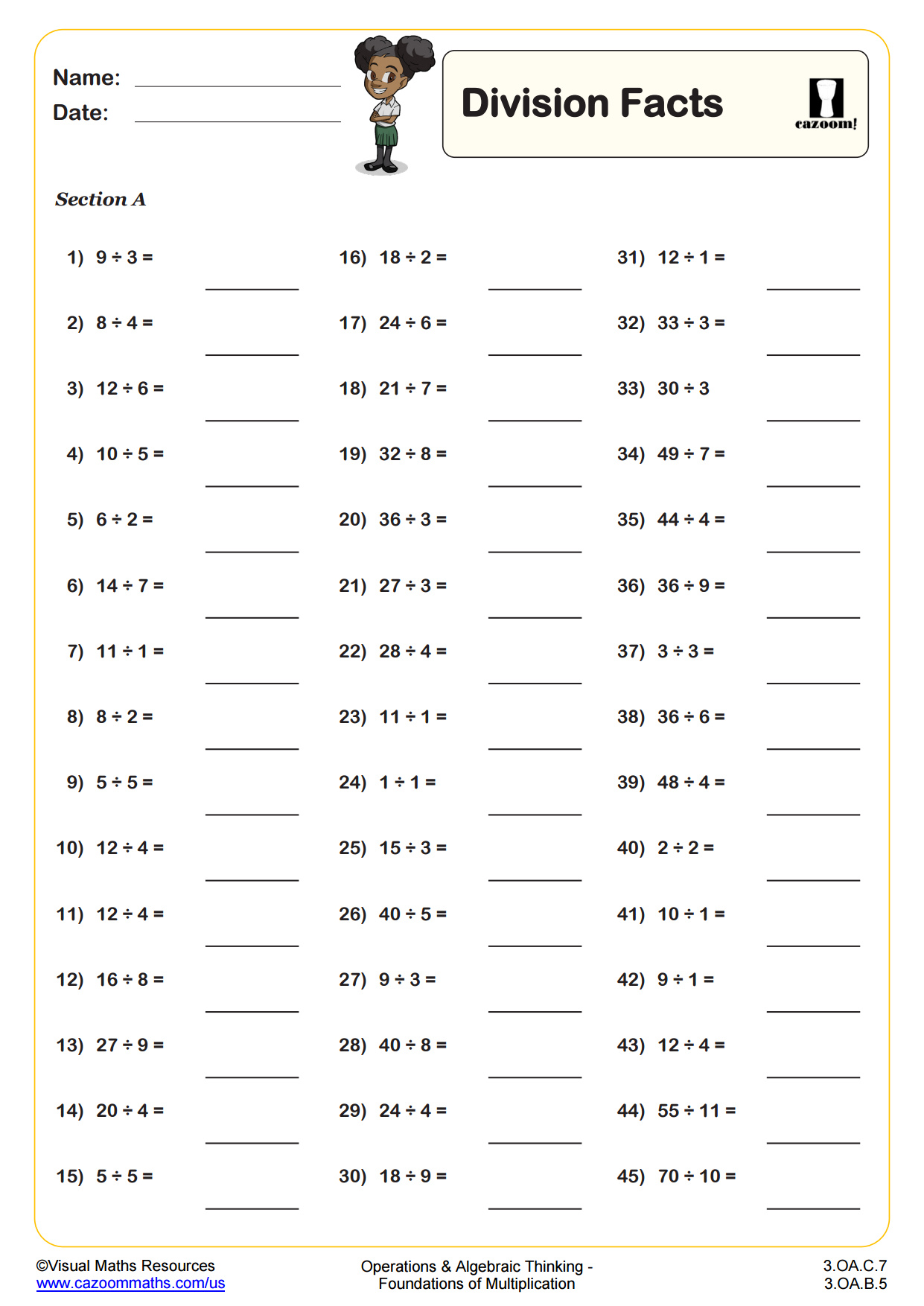
Division Facts
Grades: 3rd Grade
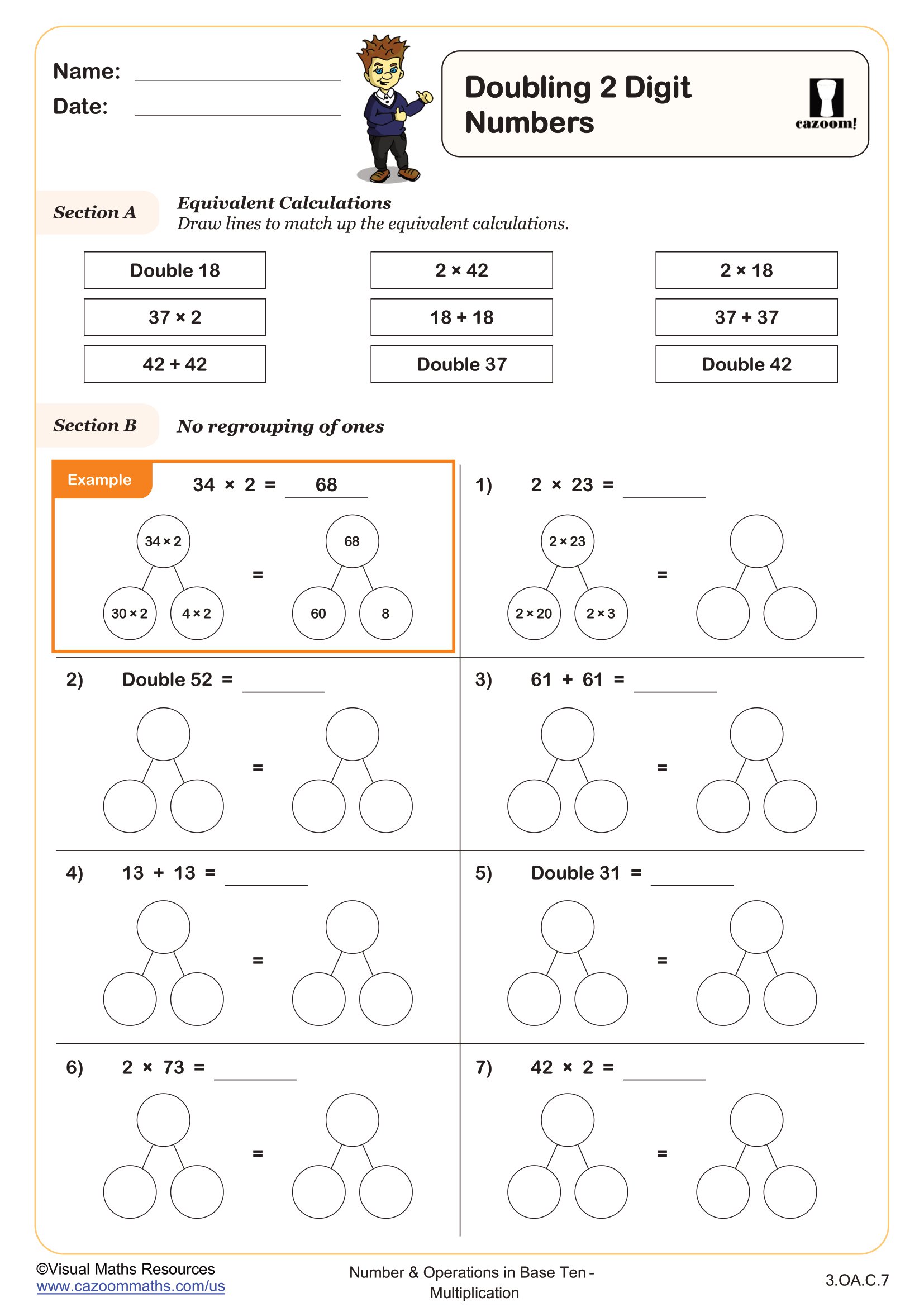
Doubling 2 Digit Numbers
Grades: 3rd Grade
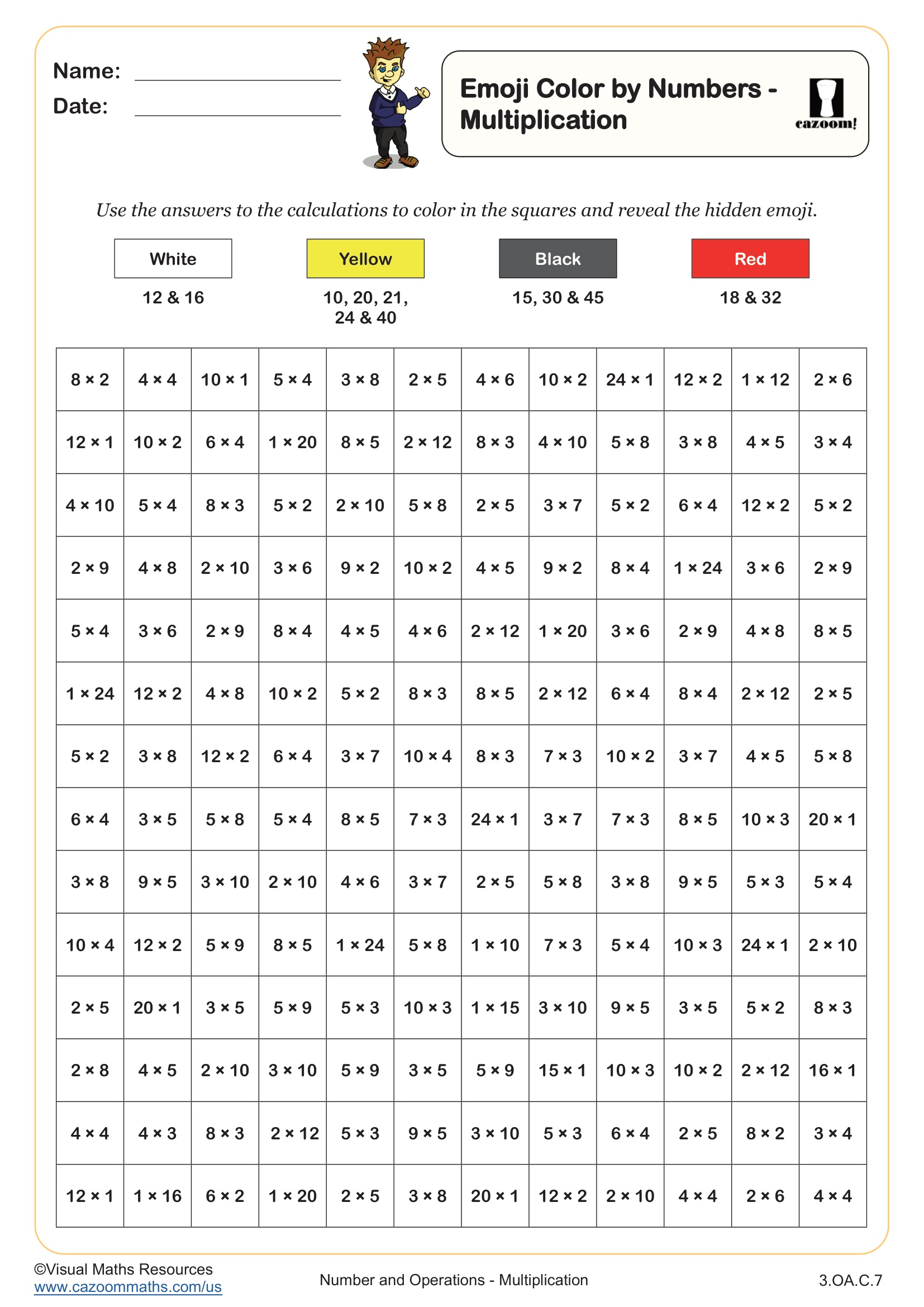
Emoji Colour by Numbers - Multiplication
Grades: 3rd Grade
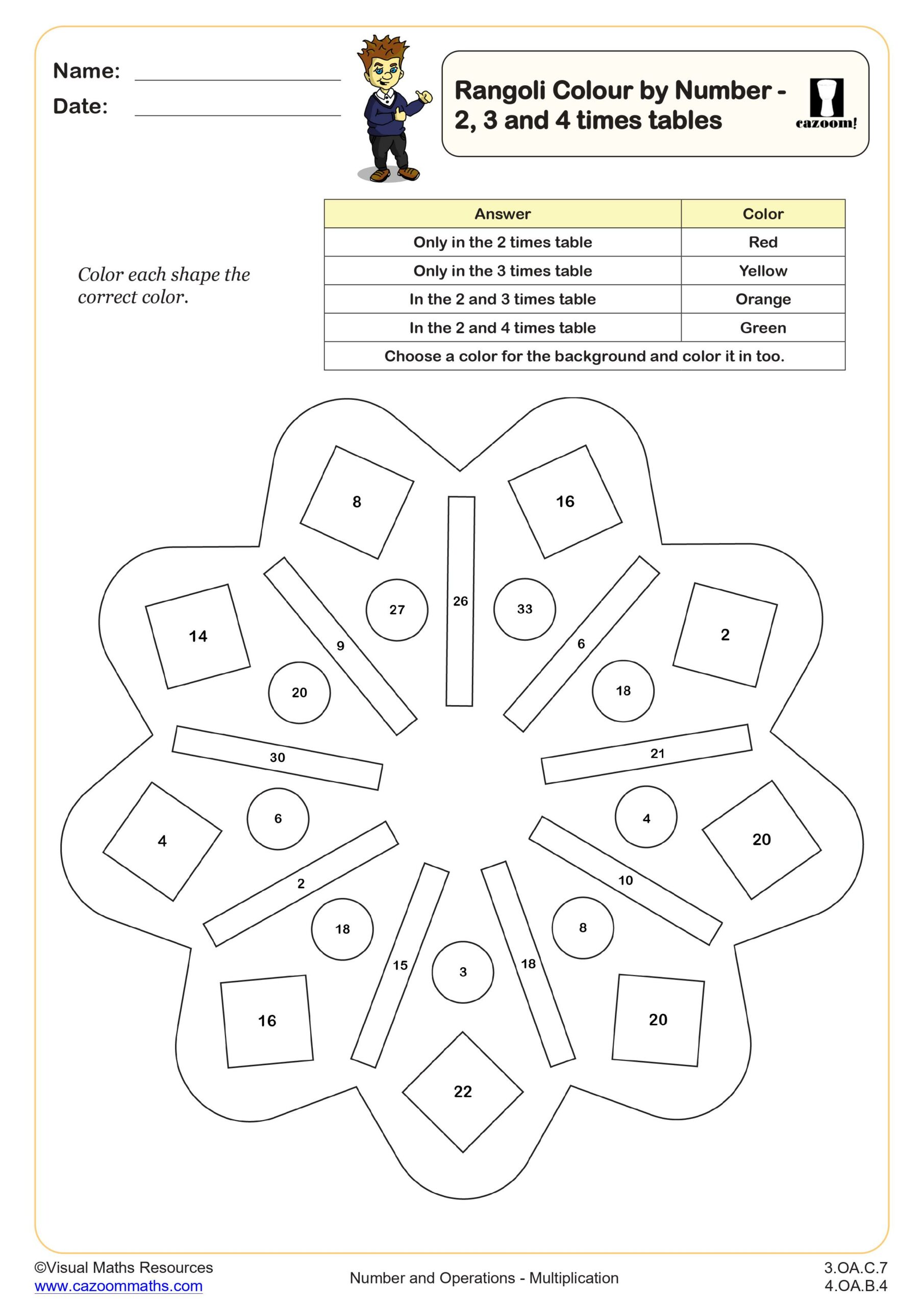
Rangoli Color by Number - 2, 3 and 4 times tables
Grades: 3rd Grade, 4th Grade
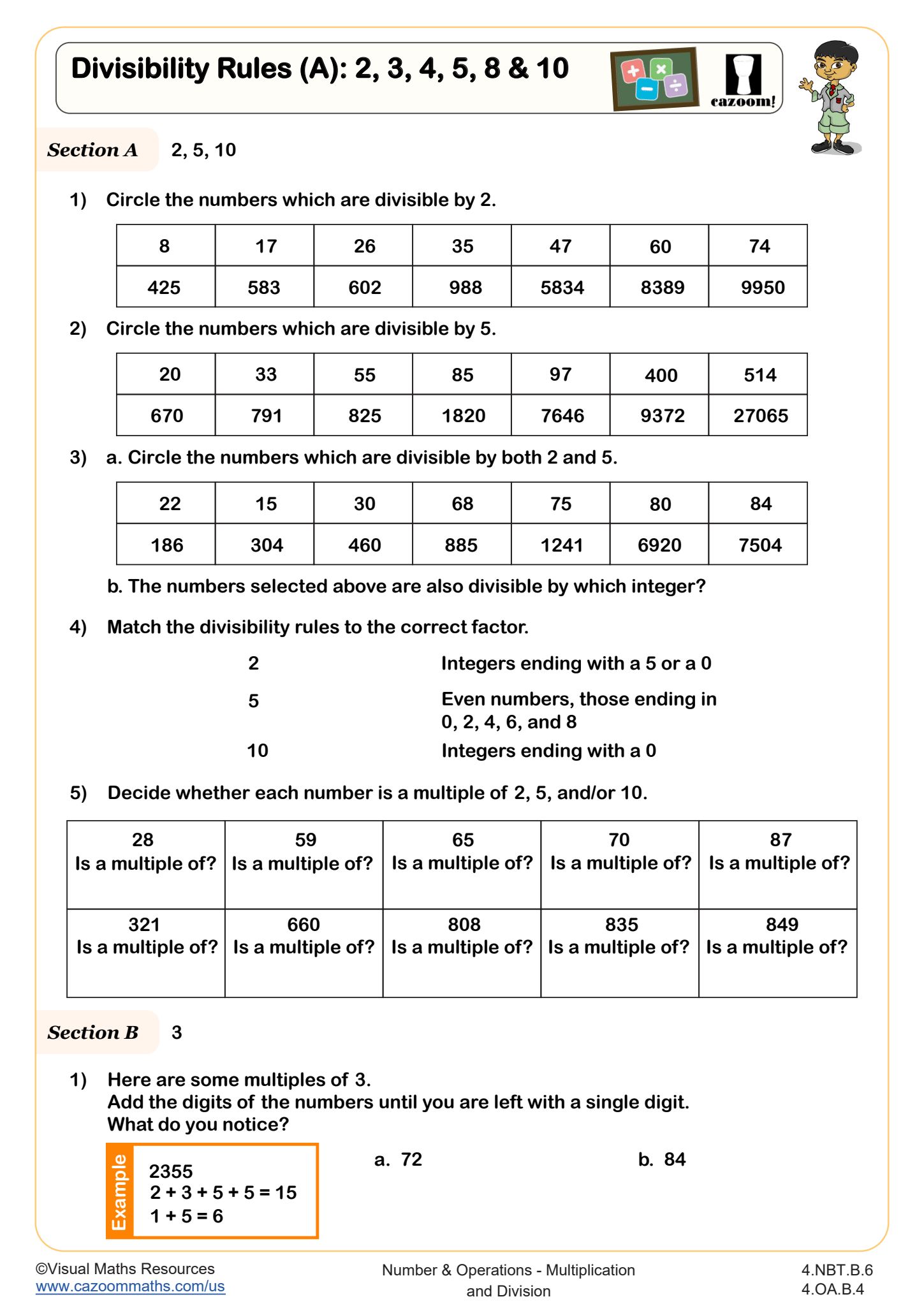
Rangoli Color by Number - 3, 6, 7, 8, 9 and 11 times tables
Grades: 3rd Grade, 4th Grade
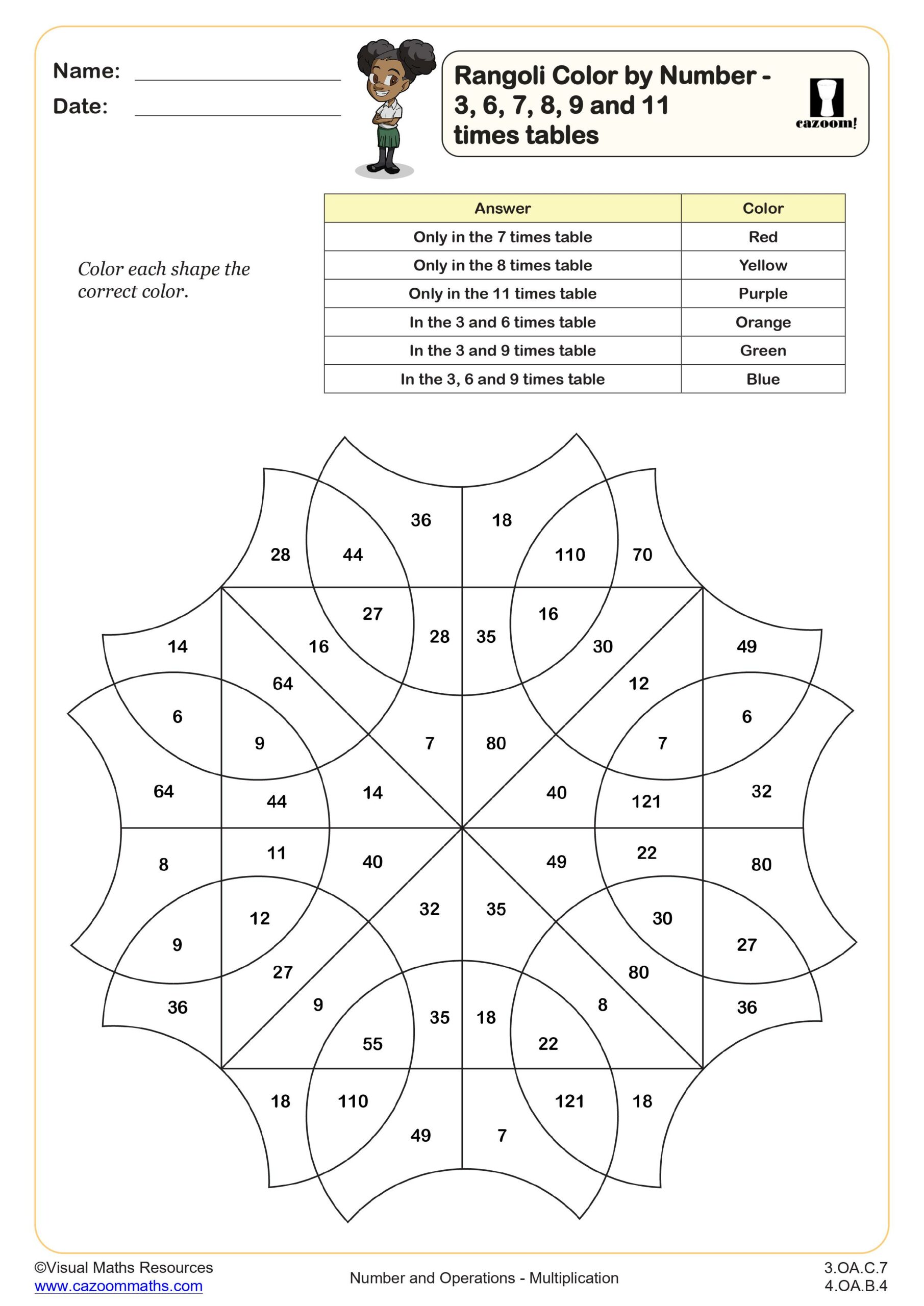
Times Tables 10 minute Challenge
Grades: 3rd Grade
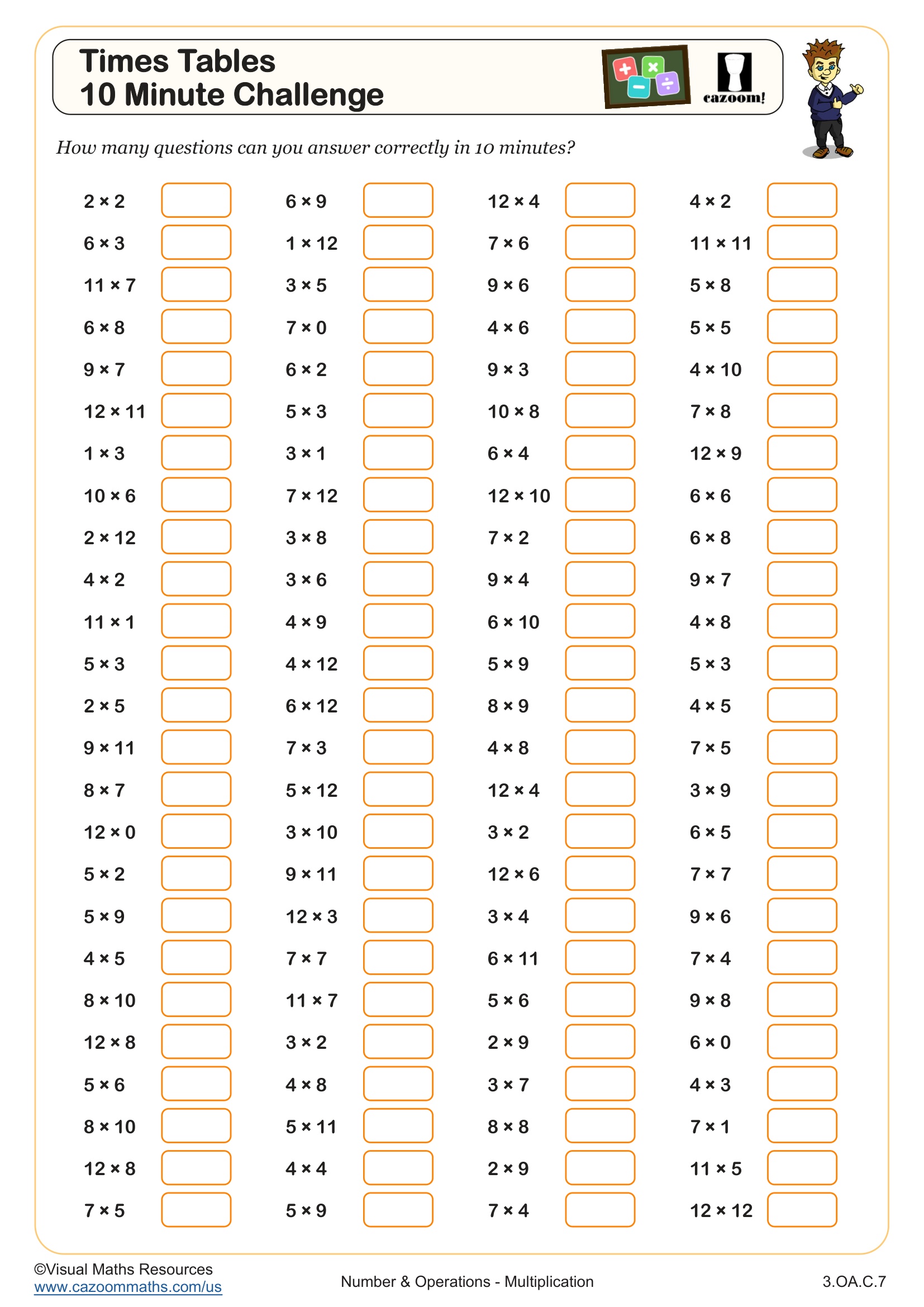
Column Method for Multiplying a 2 Digit Number by a Single Digit
Grades: 4th Grade
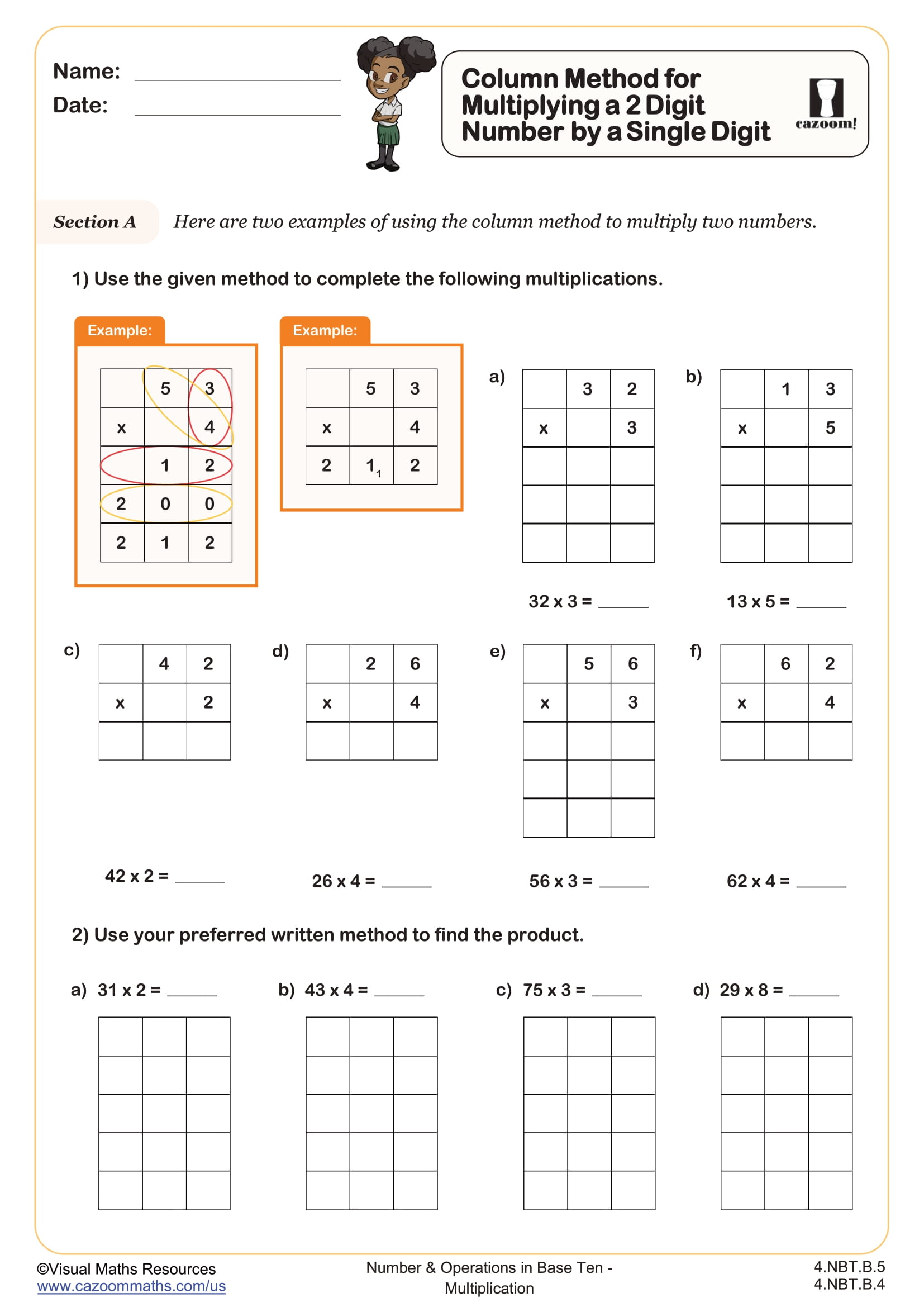
Divisibility Rules (A): 2, 3, 4, 5, 8 & 10
Grades: 4th Grade
Divisibility Rules (B): 7, 9, 11
Grades: 4th Grade
-7-9-11.jpg?w=3840)
Divisibility Rules (C): Combining Tests for Composite Factors
Grades: 4th Grade
-Combining-Test-%20for-Composite-Factors.jpg?w=3840)
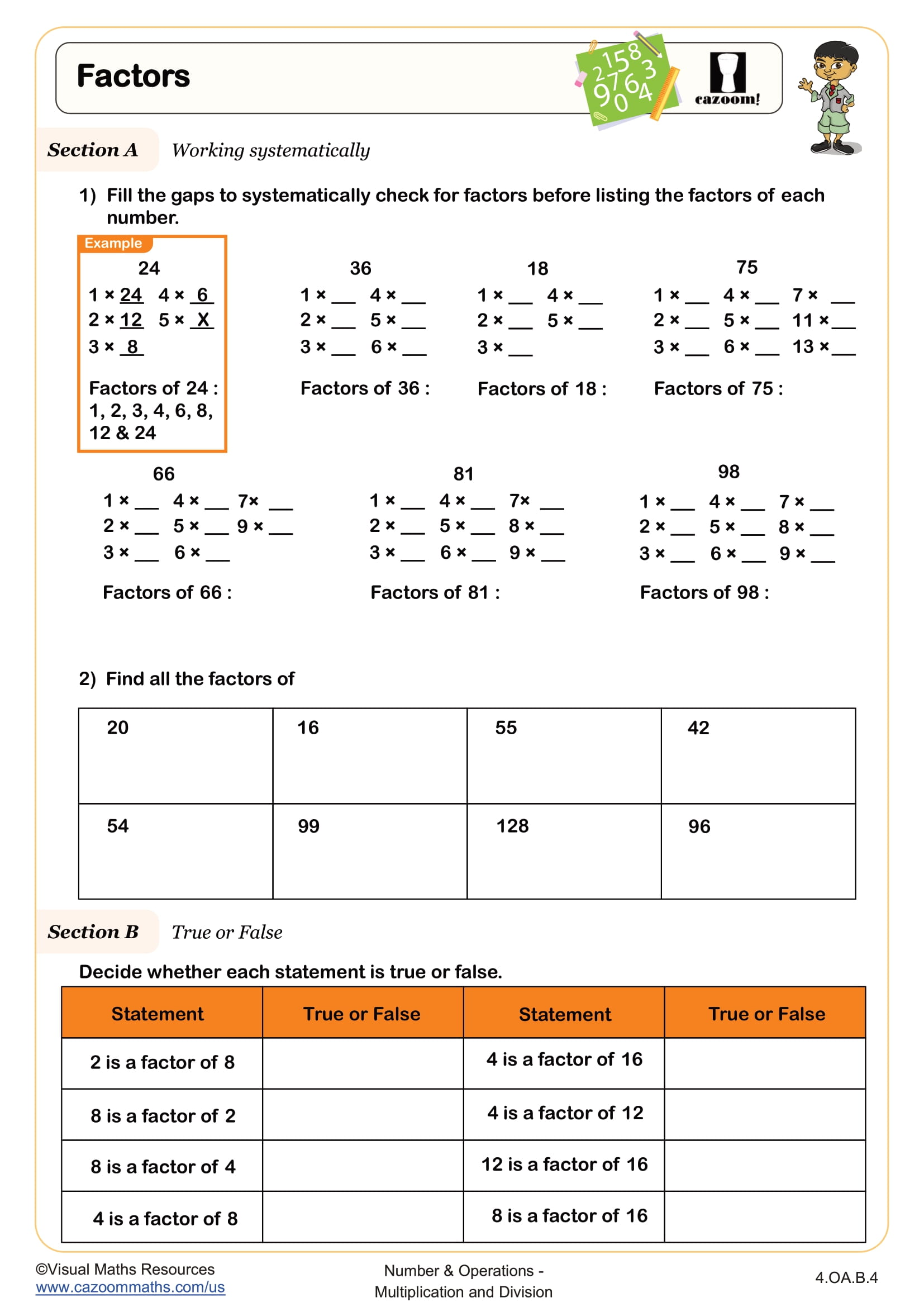
Factors
Grades: 4th Grade
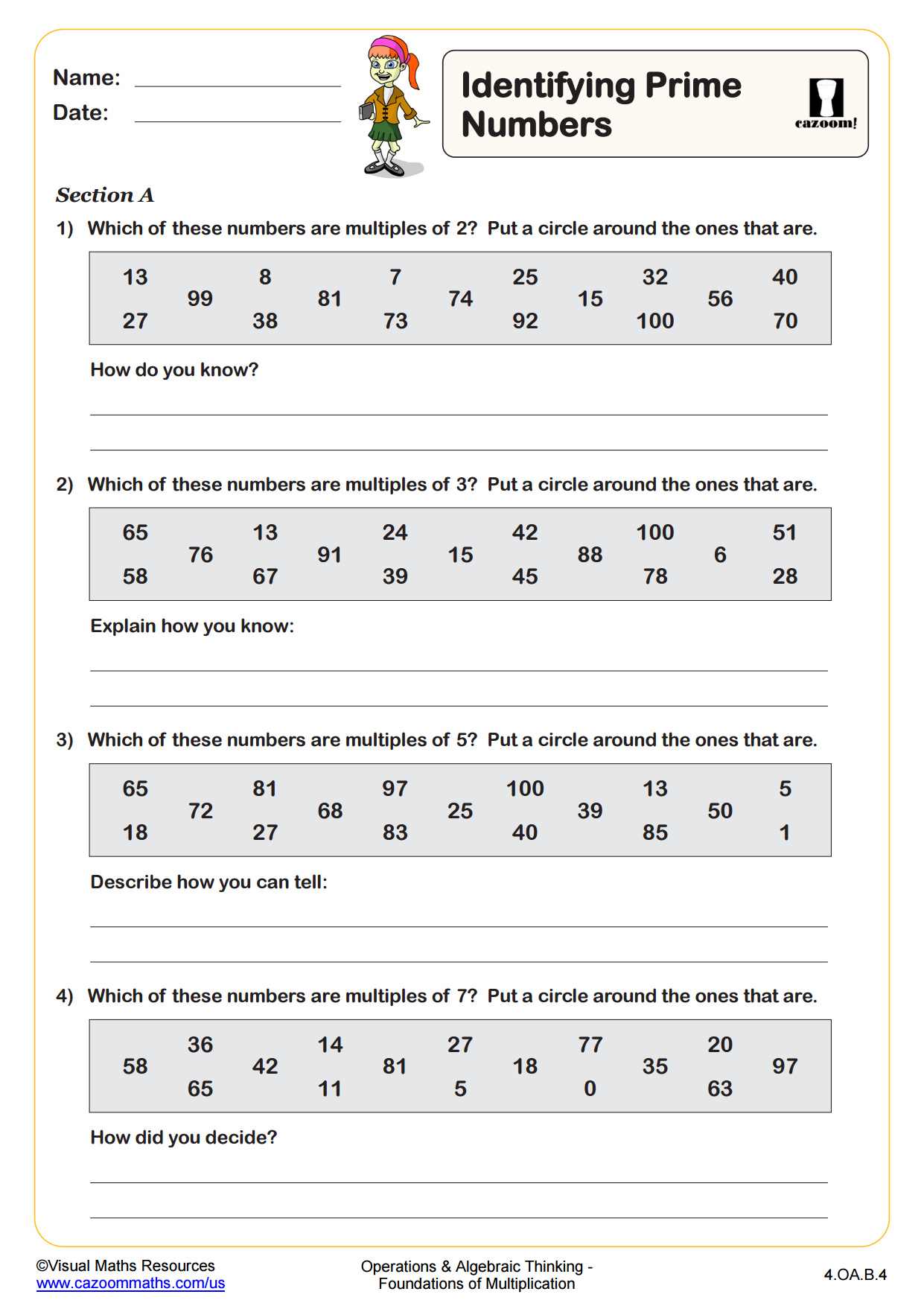
Identifying Prime Numbers
Grades: 4th Grade
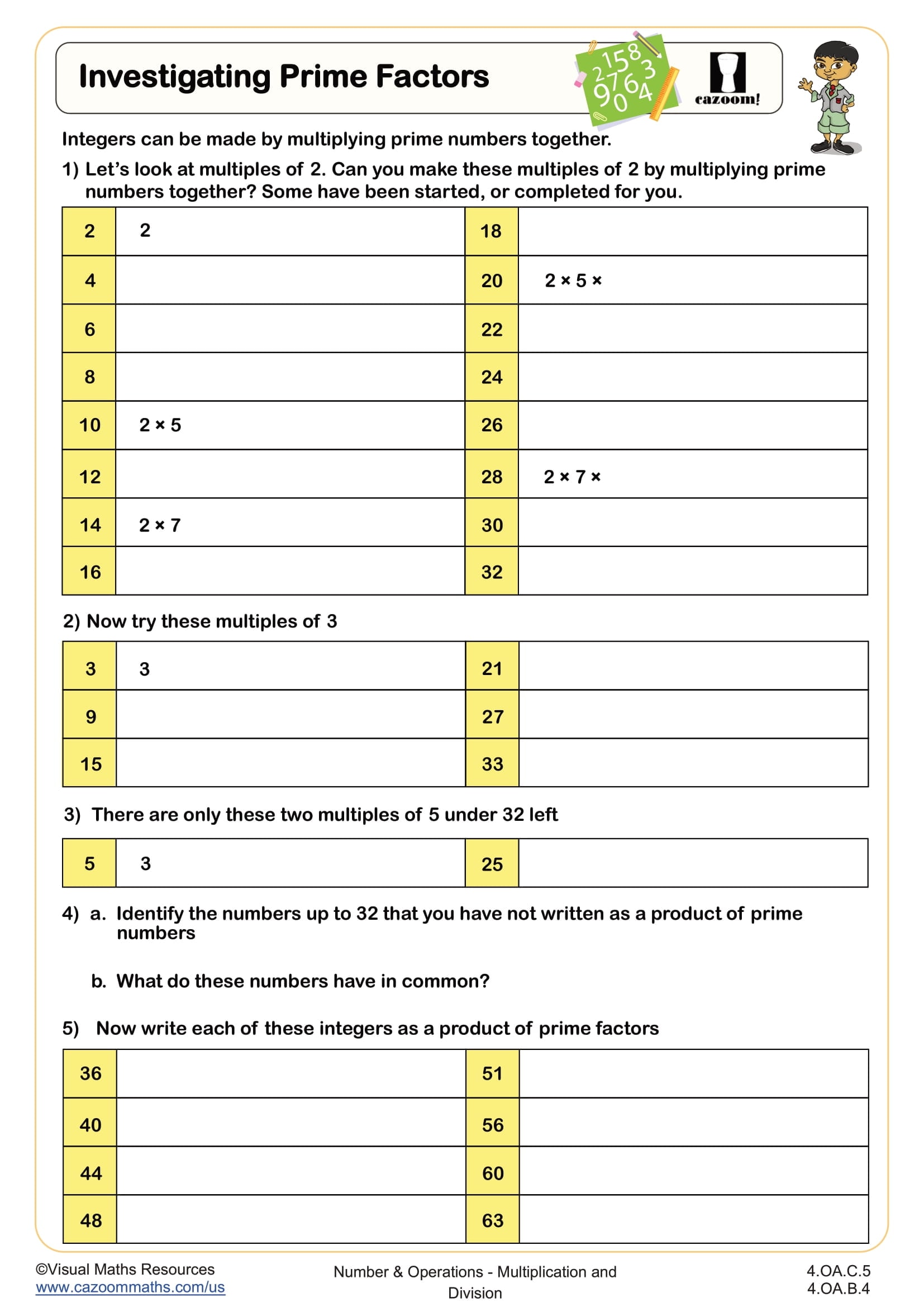
Investigating Prime Factors
Grades: 4th Grade
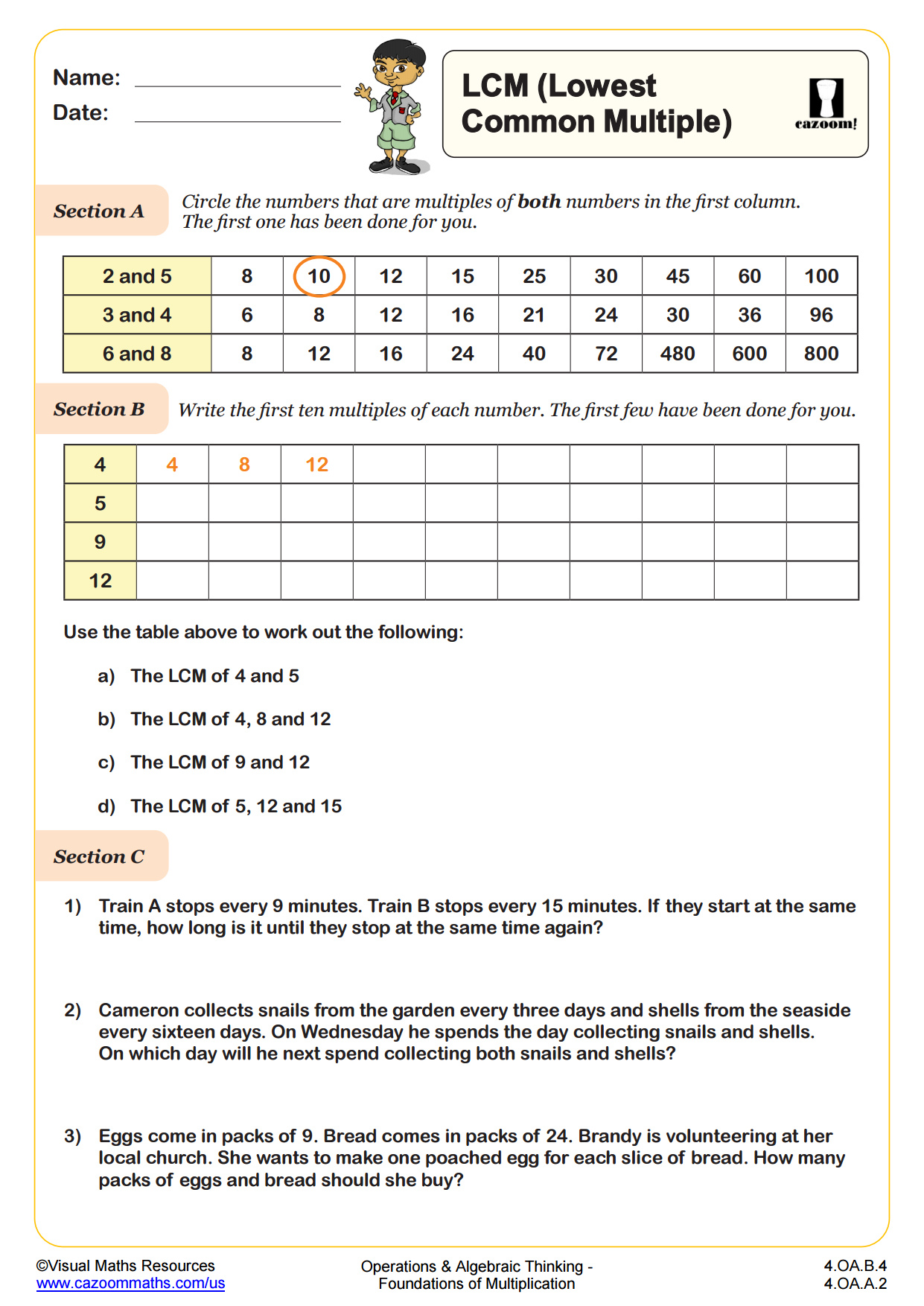
LCM (Lowest Common Multiple)
Grades: 4th Grade
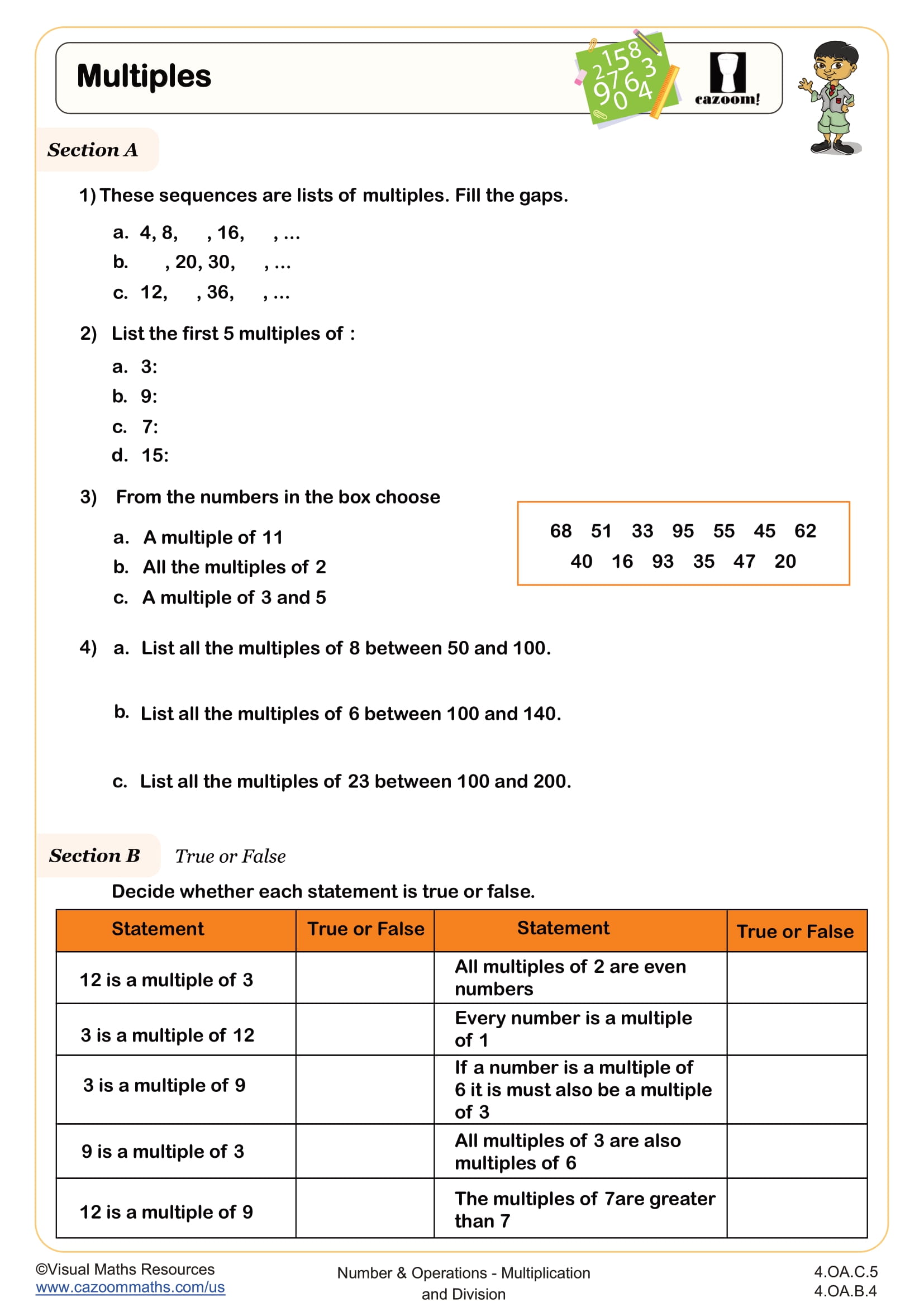
Multiples
Grades: 4th Grade
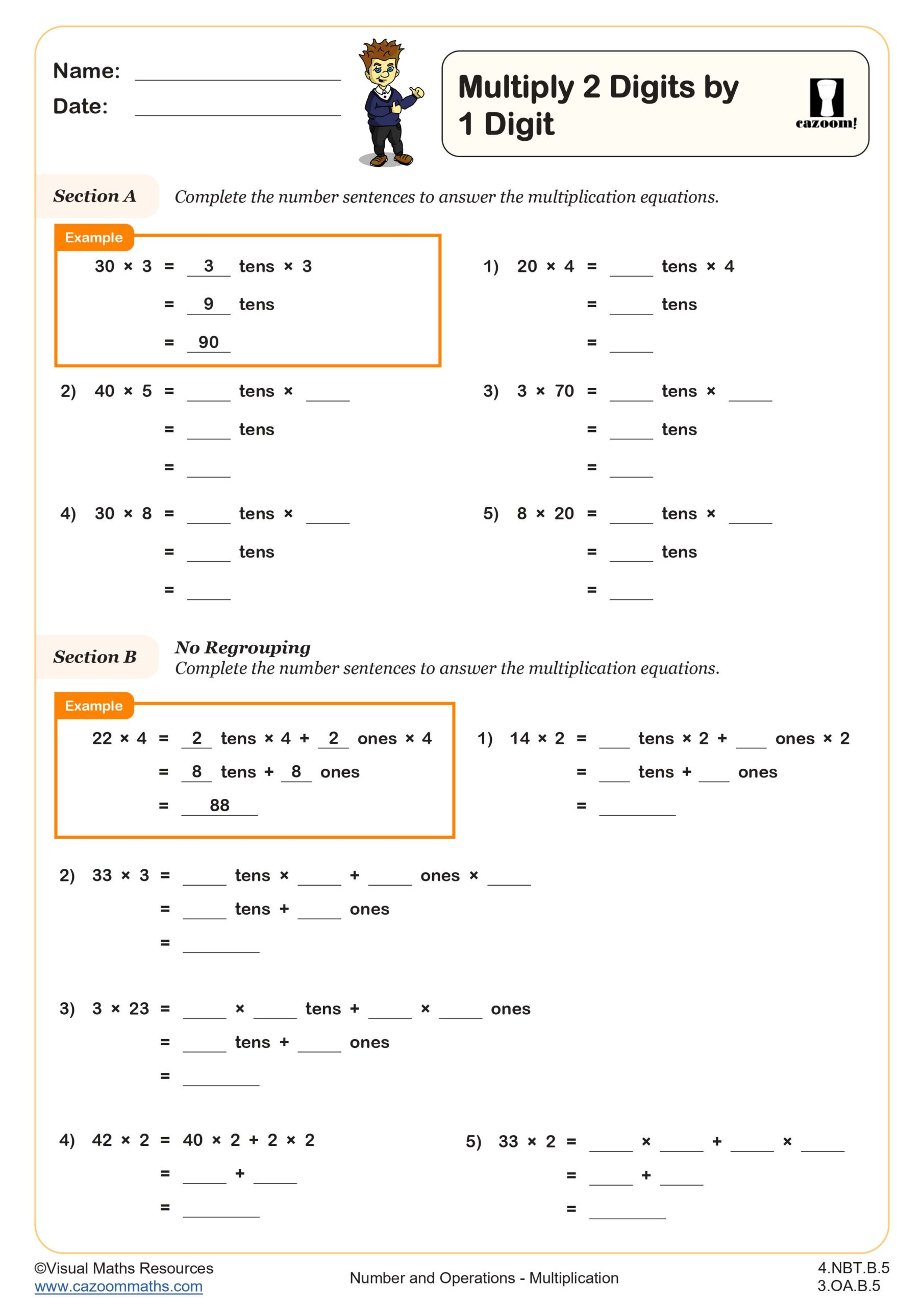
Multiply 2 Digits by 1 Digit
Grades: 4th Grade, 5th Grade
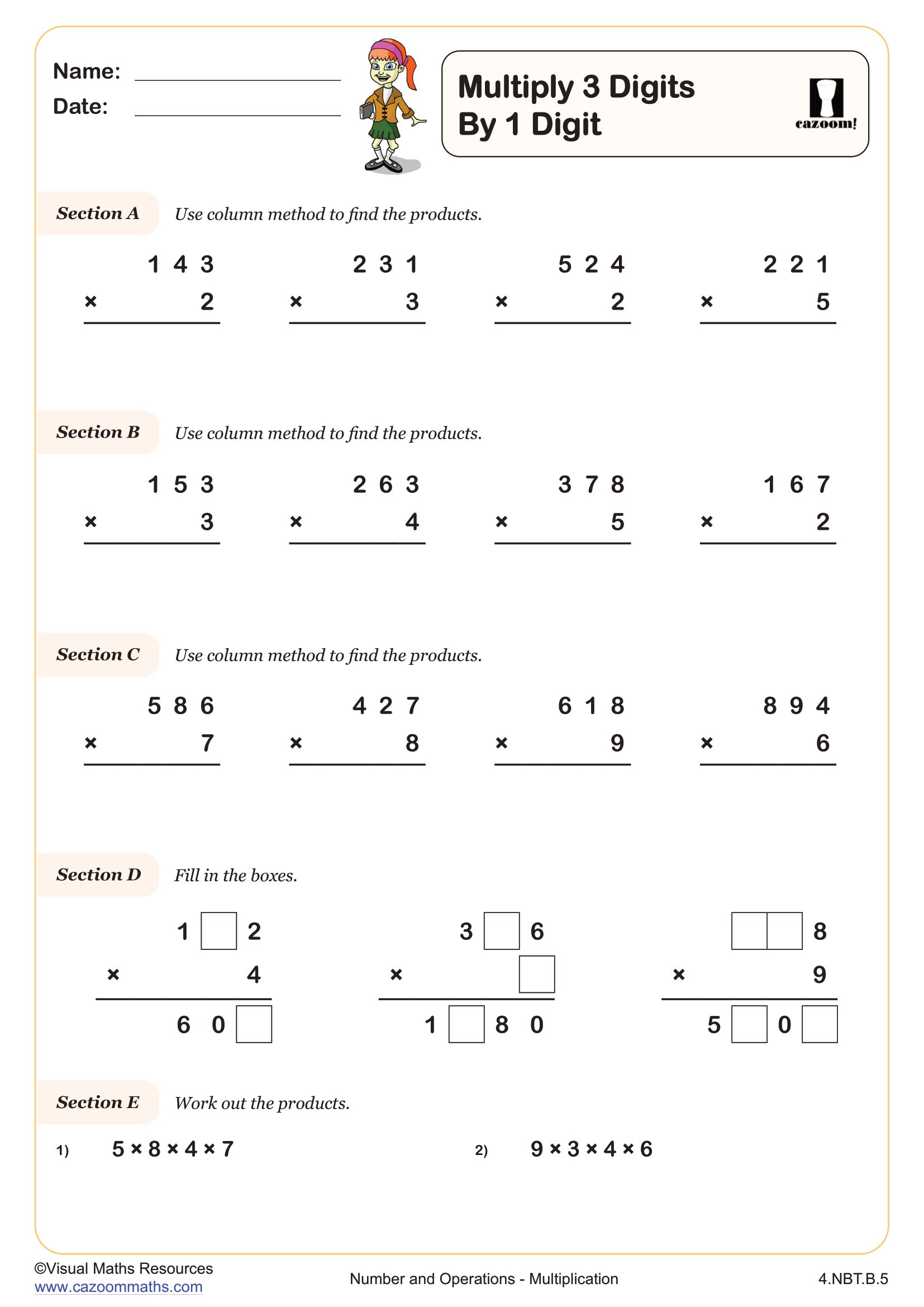
Multiplying 3 Digits by 1 Digit
Grades: 4th Grade
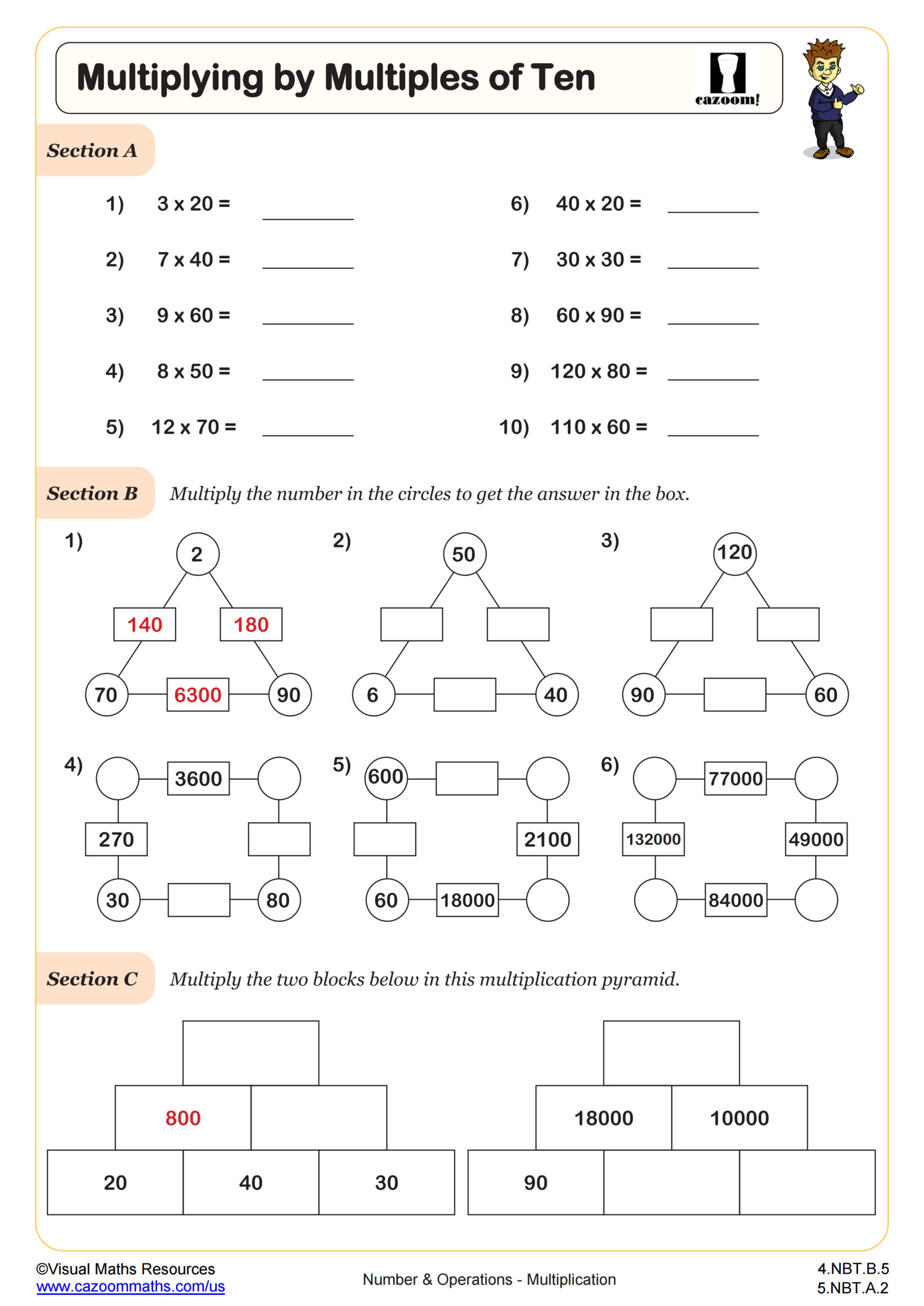
Multiplying by Multiples of Ten
Grades: 4th Grade, 5th Grade
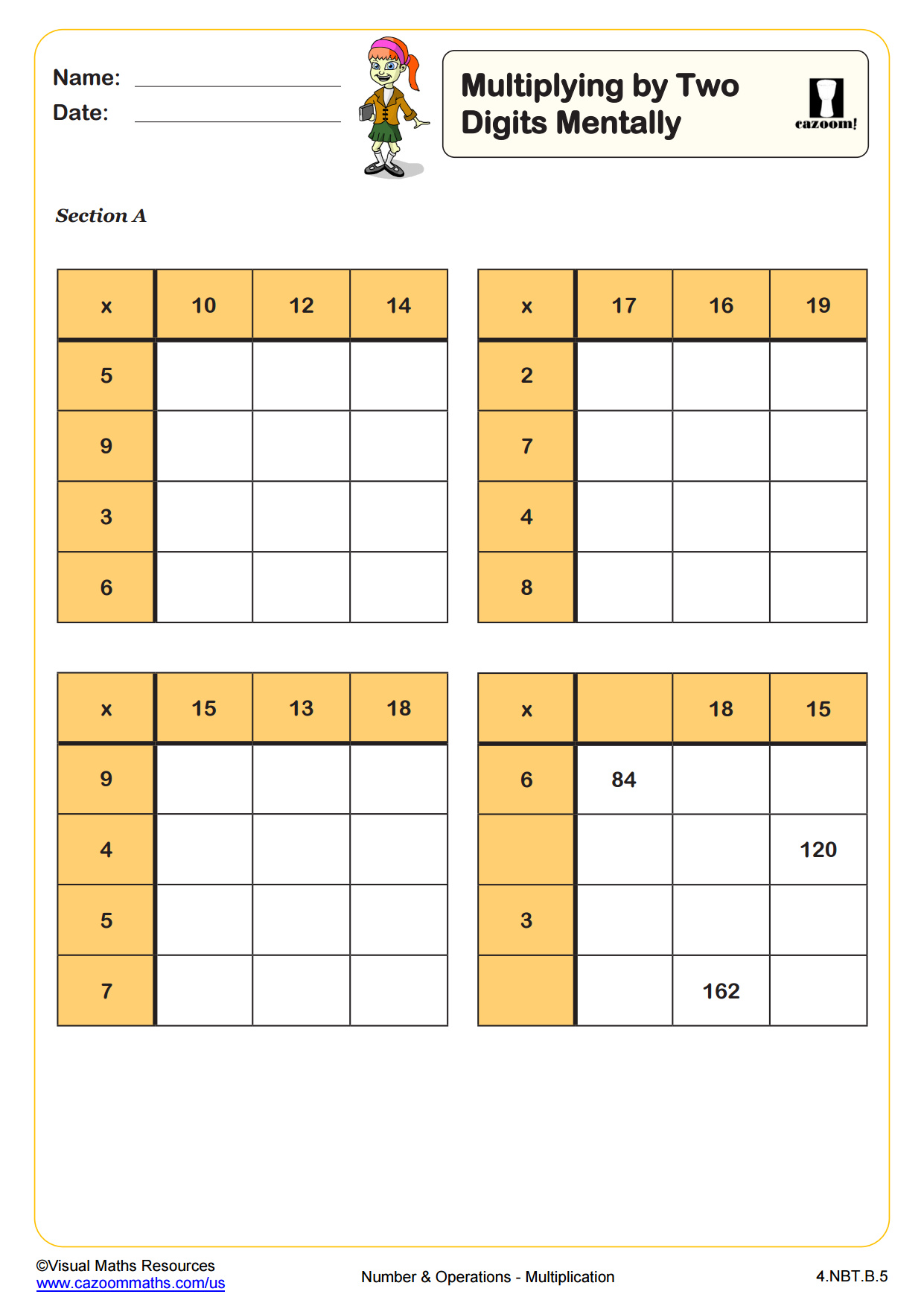
Multiplying by Two Digits Mentally
Grades: 4th Grade
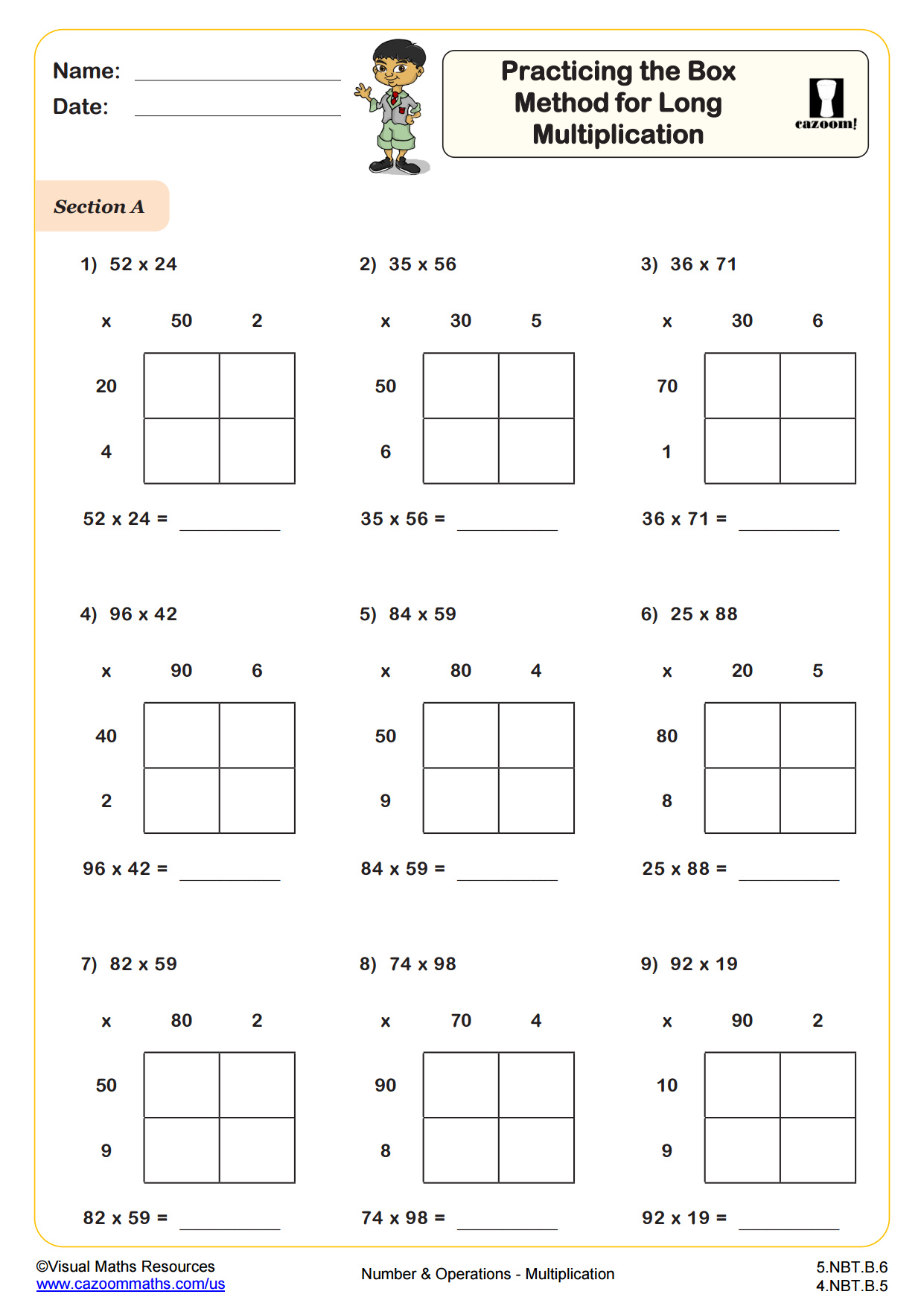
Practicing the box method for long multiplication
Grades: 4th Grade, 5th Grade
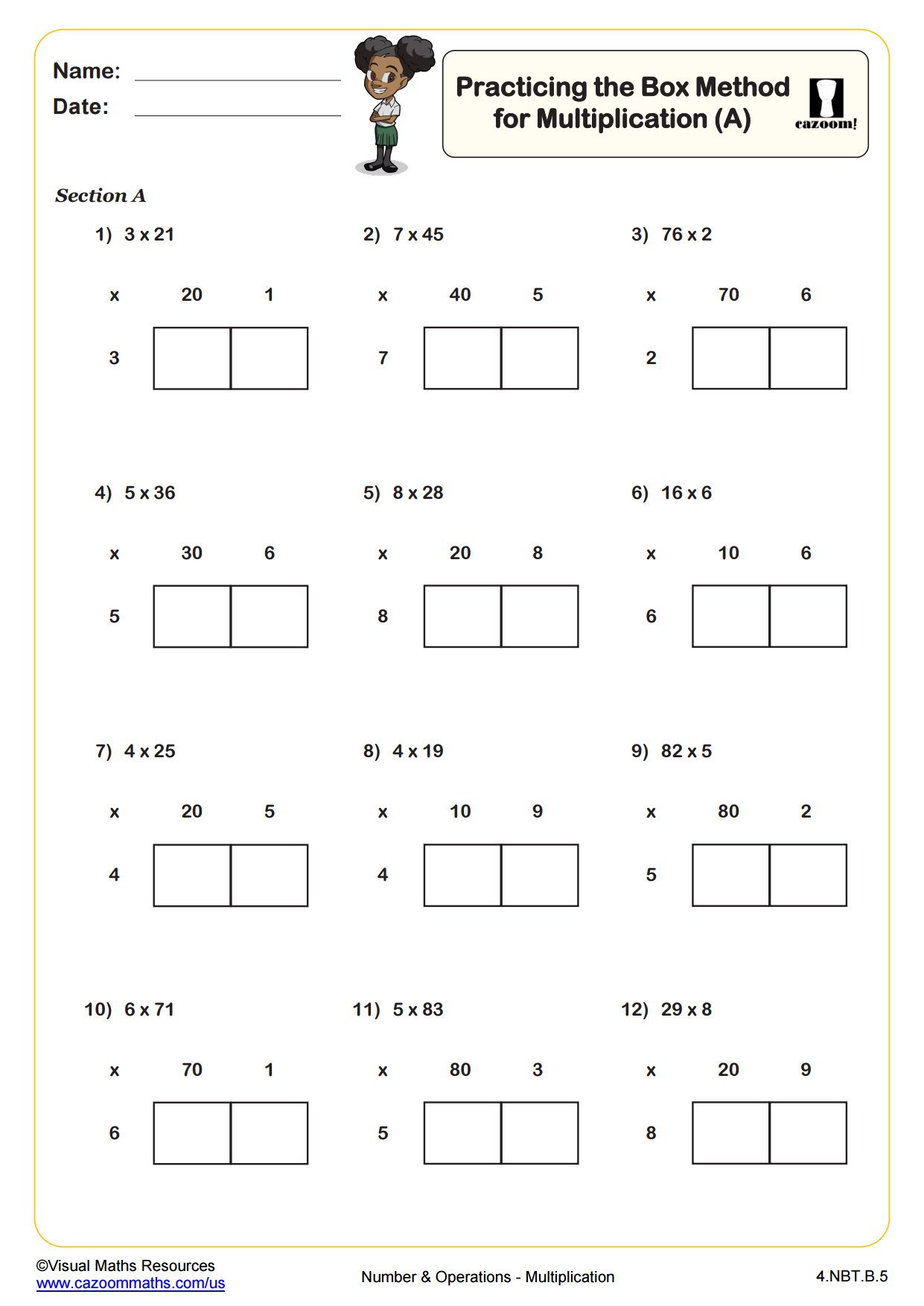
Practicing the Box Method for Multiplication (A)
Grades: 4th Grade
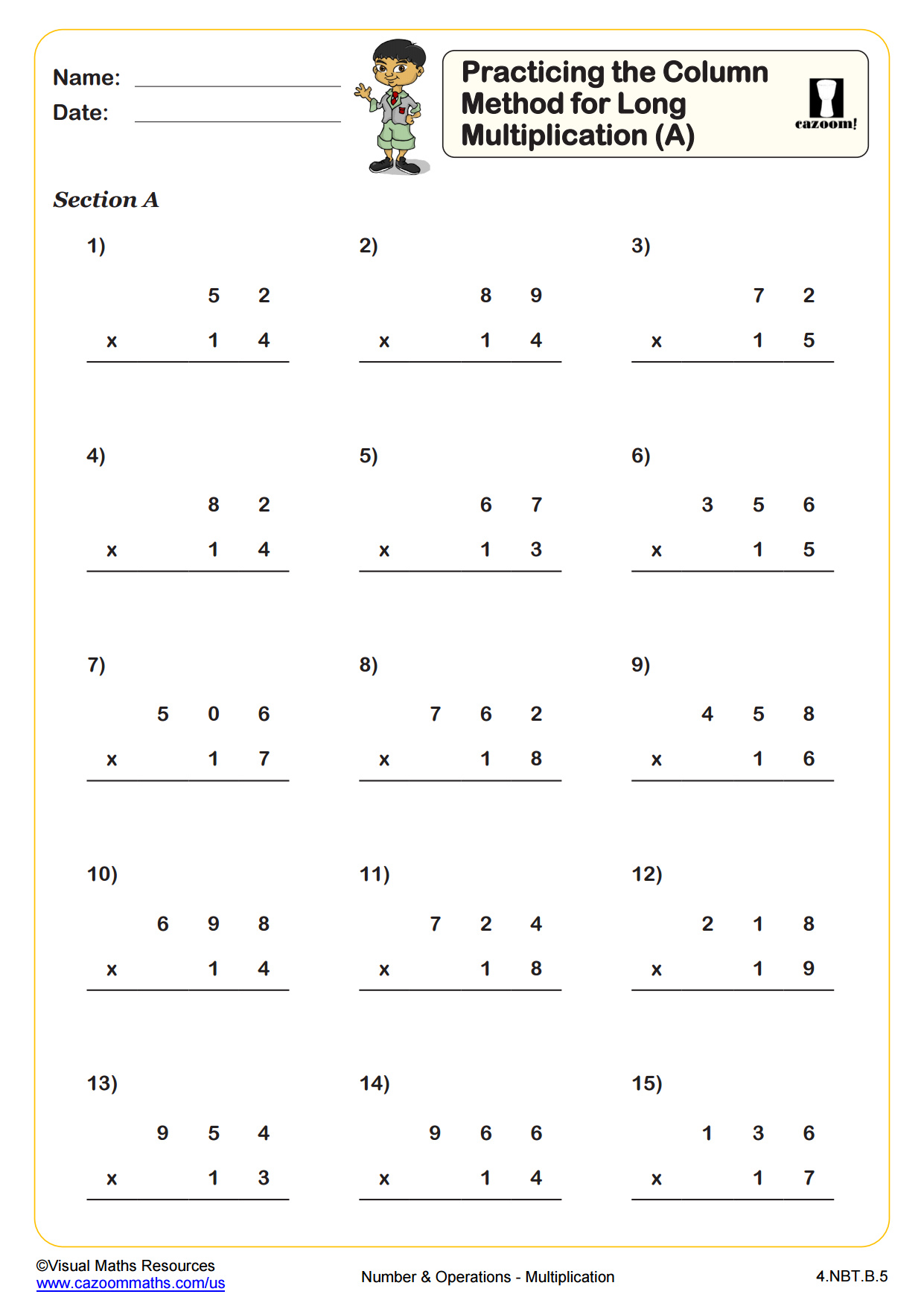
Practicing the Column Method for Long Multiplication (A)
Grades: 4th Grade
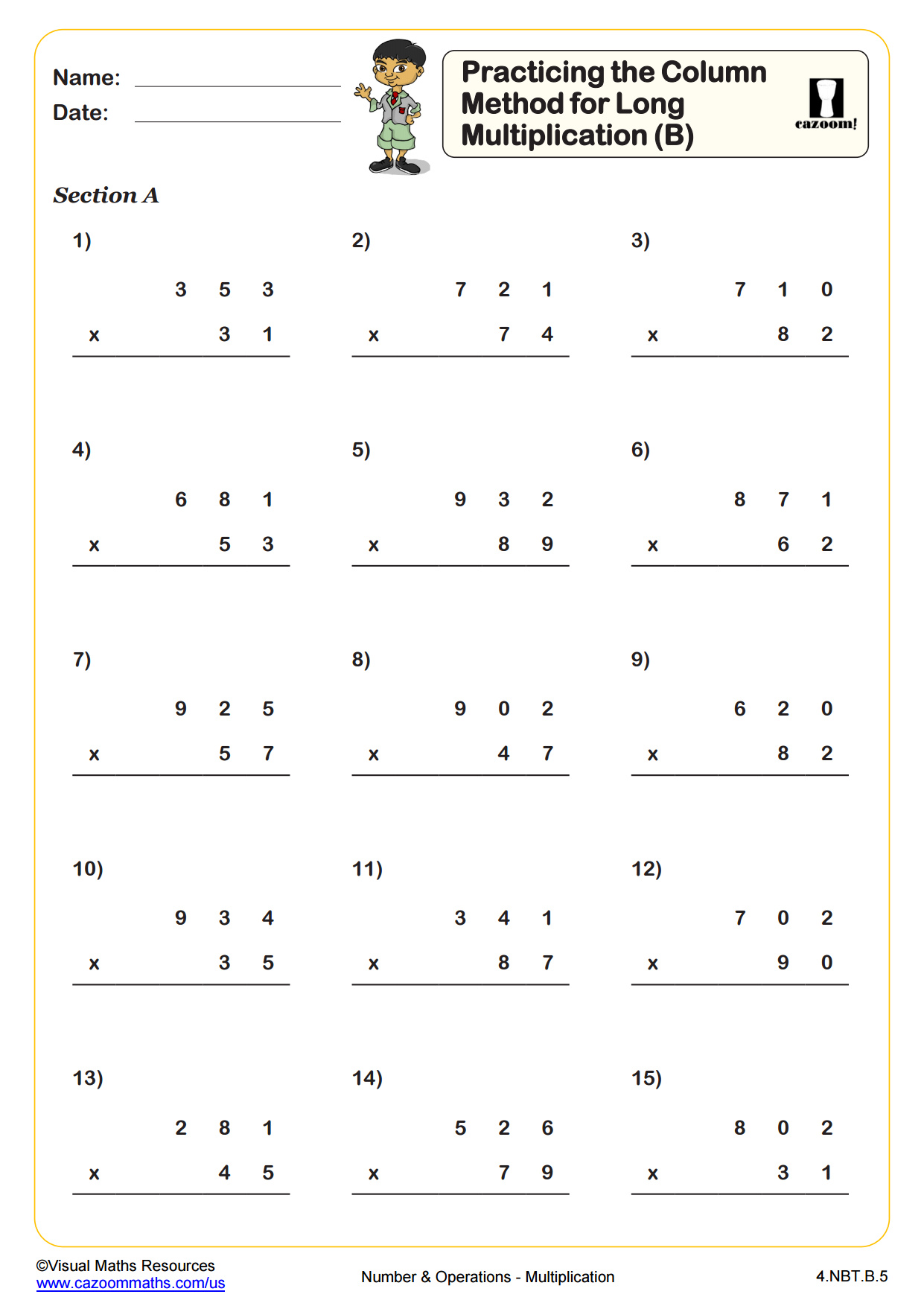
Practicing the Column Method for Long Multiplication (B)
Grades: 4th Grade
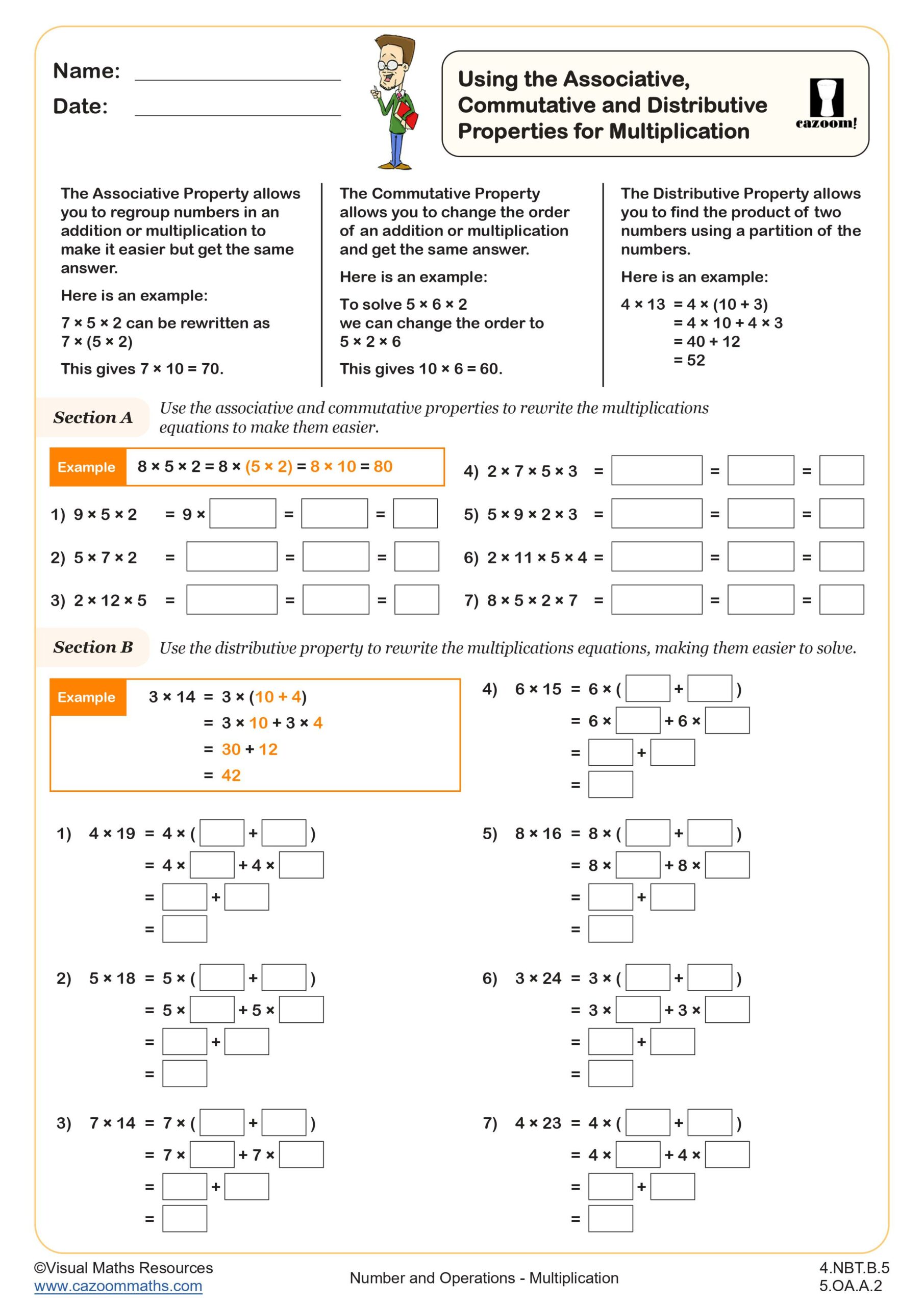
Using the Associative, Commutative and Distributive Properties for Multiplication
Grades: 4th Grade, 5th Grade
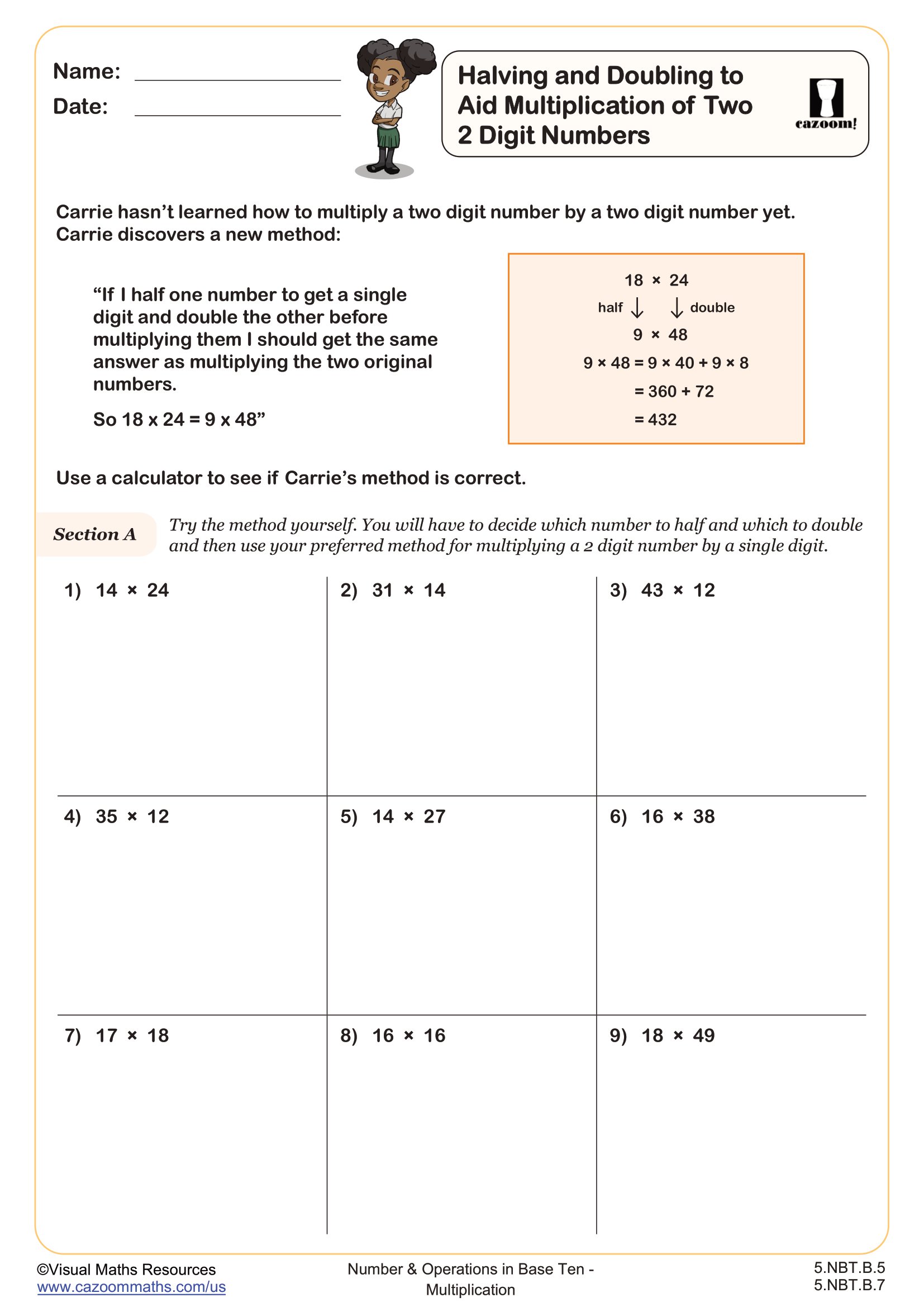
Halving and Doubling to Aid Multiplication of Two 2 Digit Numbers
Grades: 5th Grade
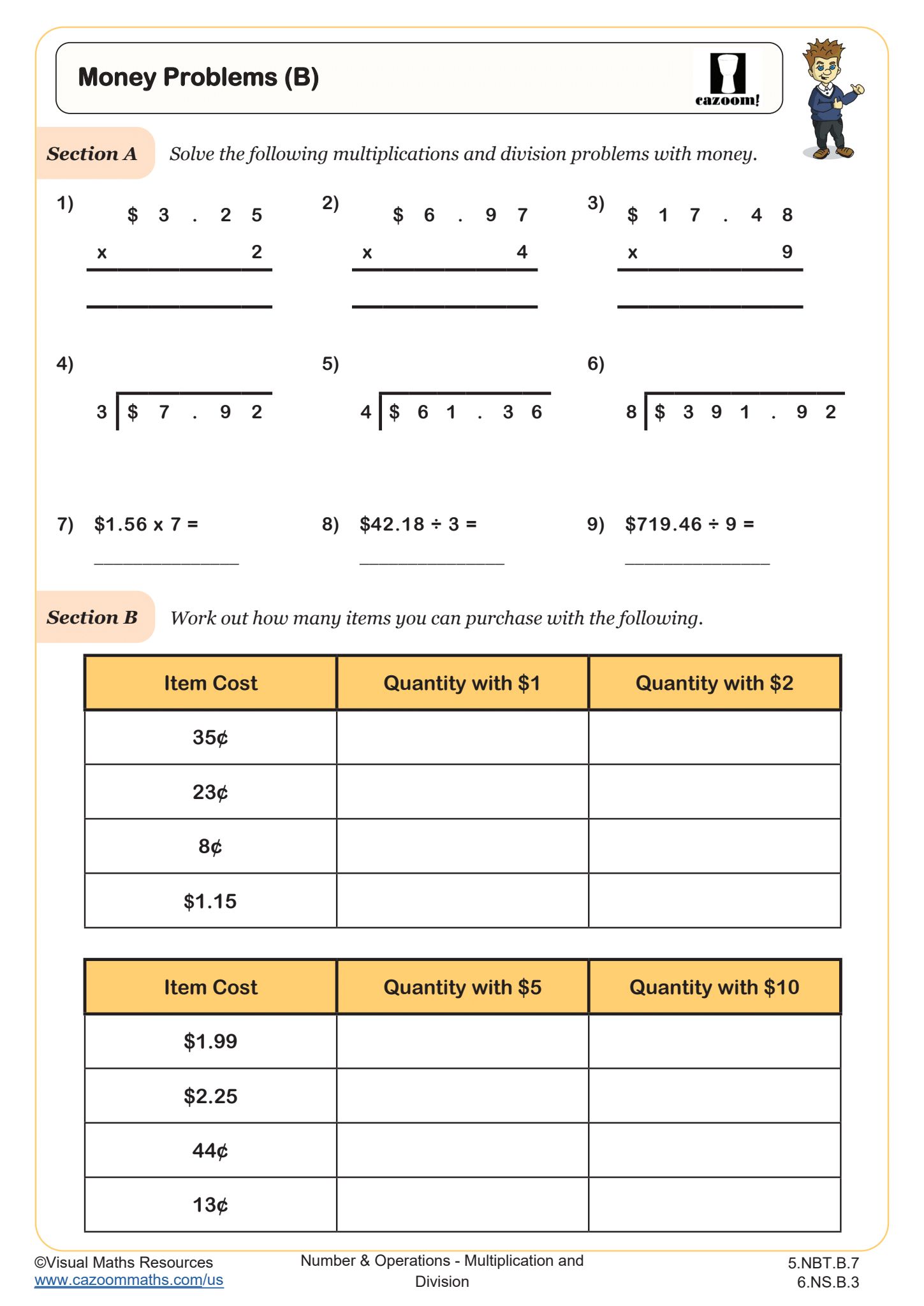
Money Problems (B)
Grades: 5th Grade, 6th Grade
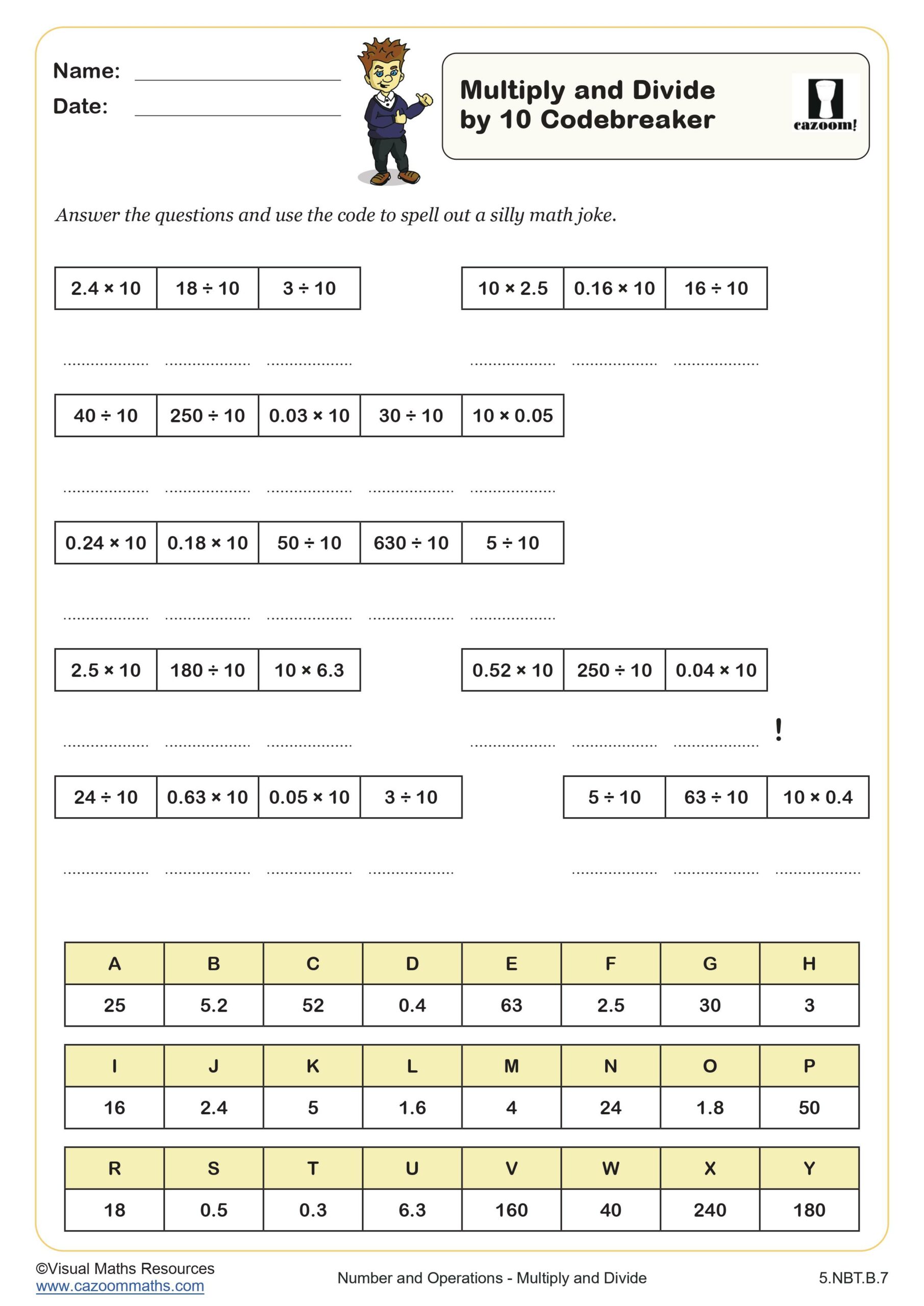
Multiply and Divide by 10 Codebreaker
Grades: 5th Grade
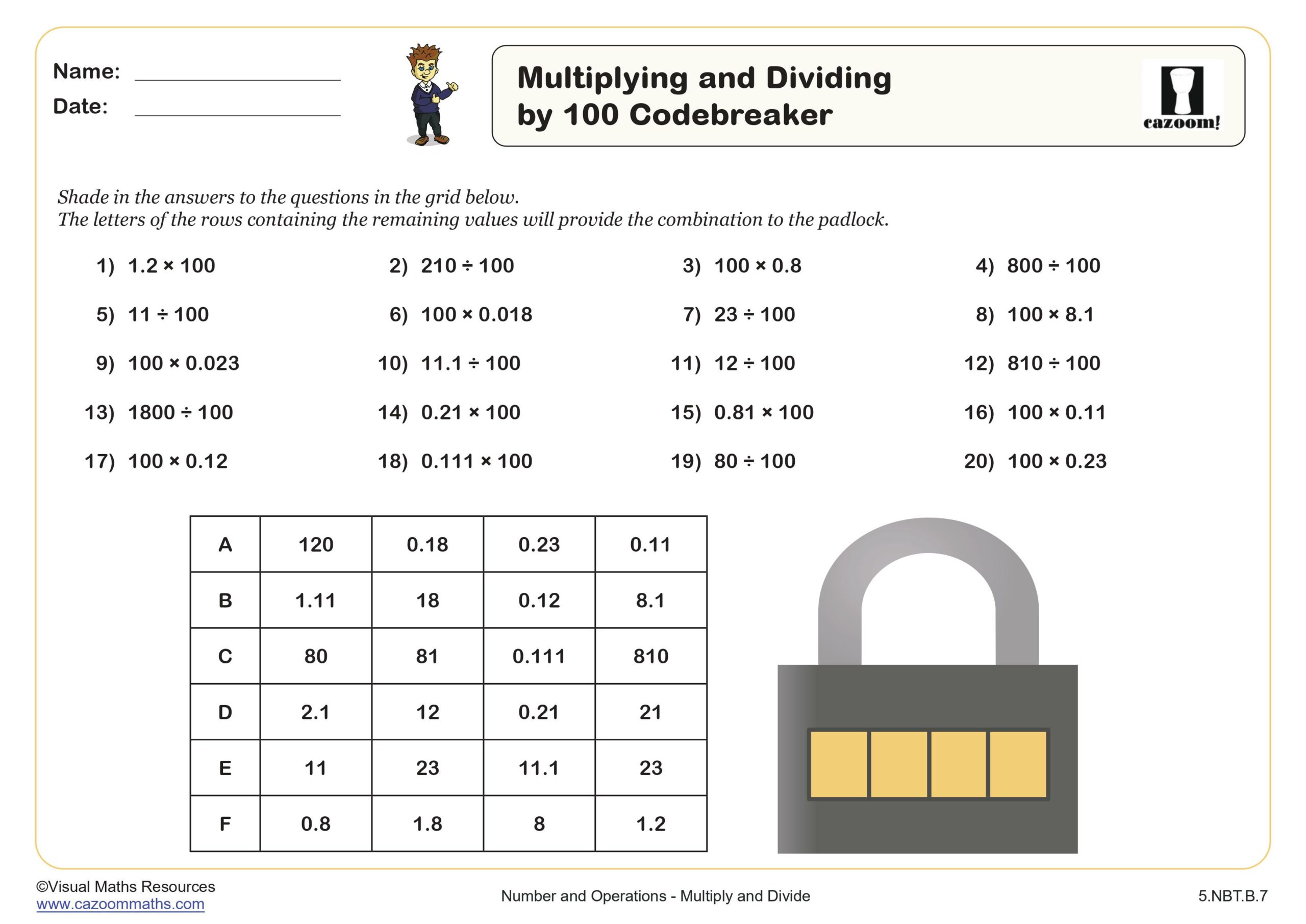
Multiply and Divide by 100 Codebreaker
Grades: 5th Grade
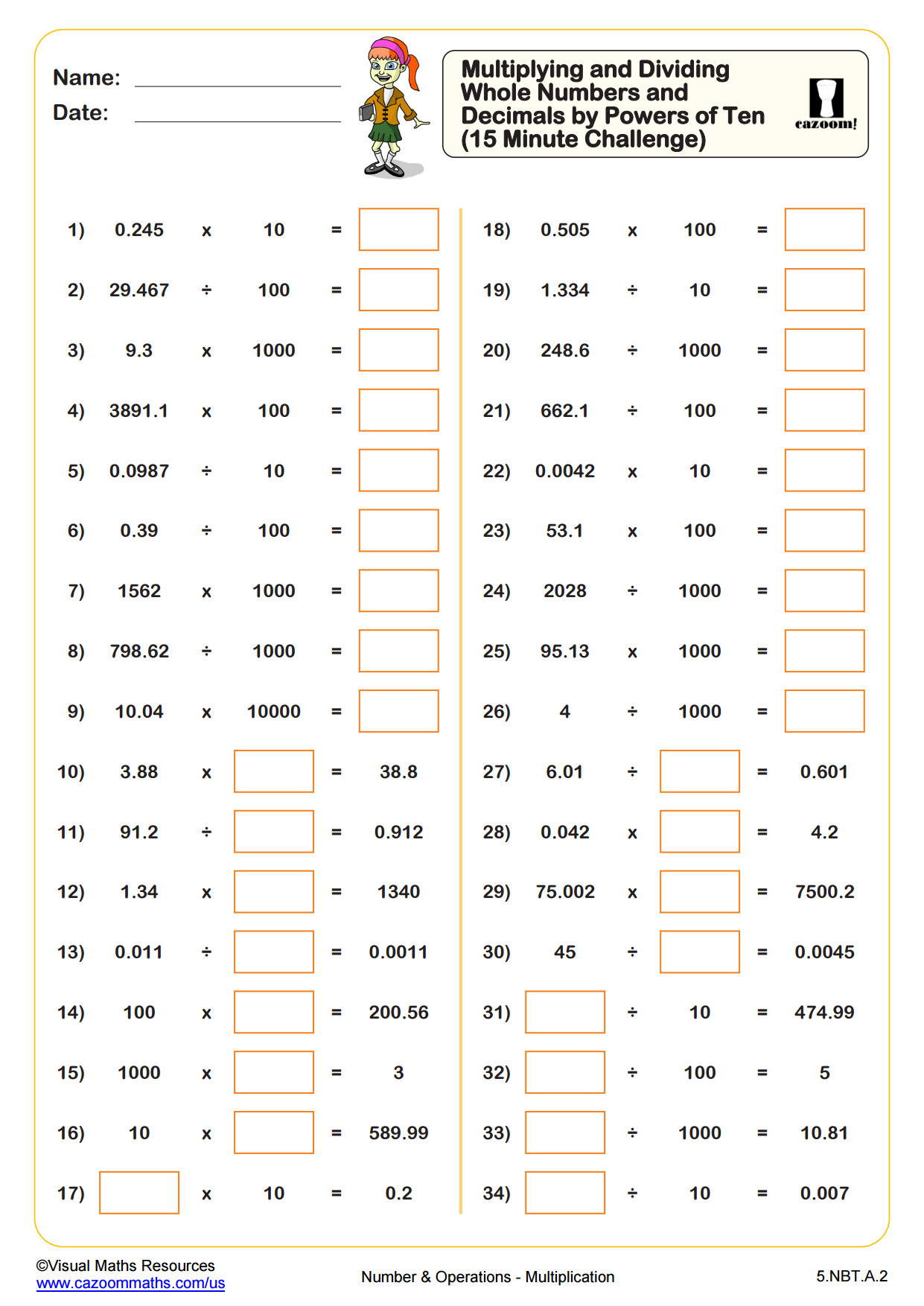
Multiply and Divide by Powers of Ten (15 Minute Challenge)
Grades: 5th Grade
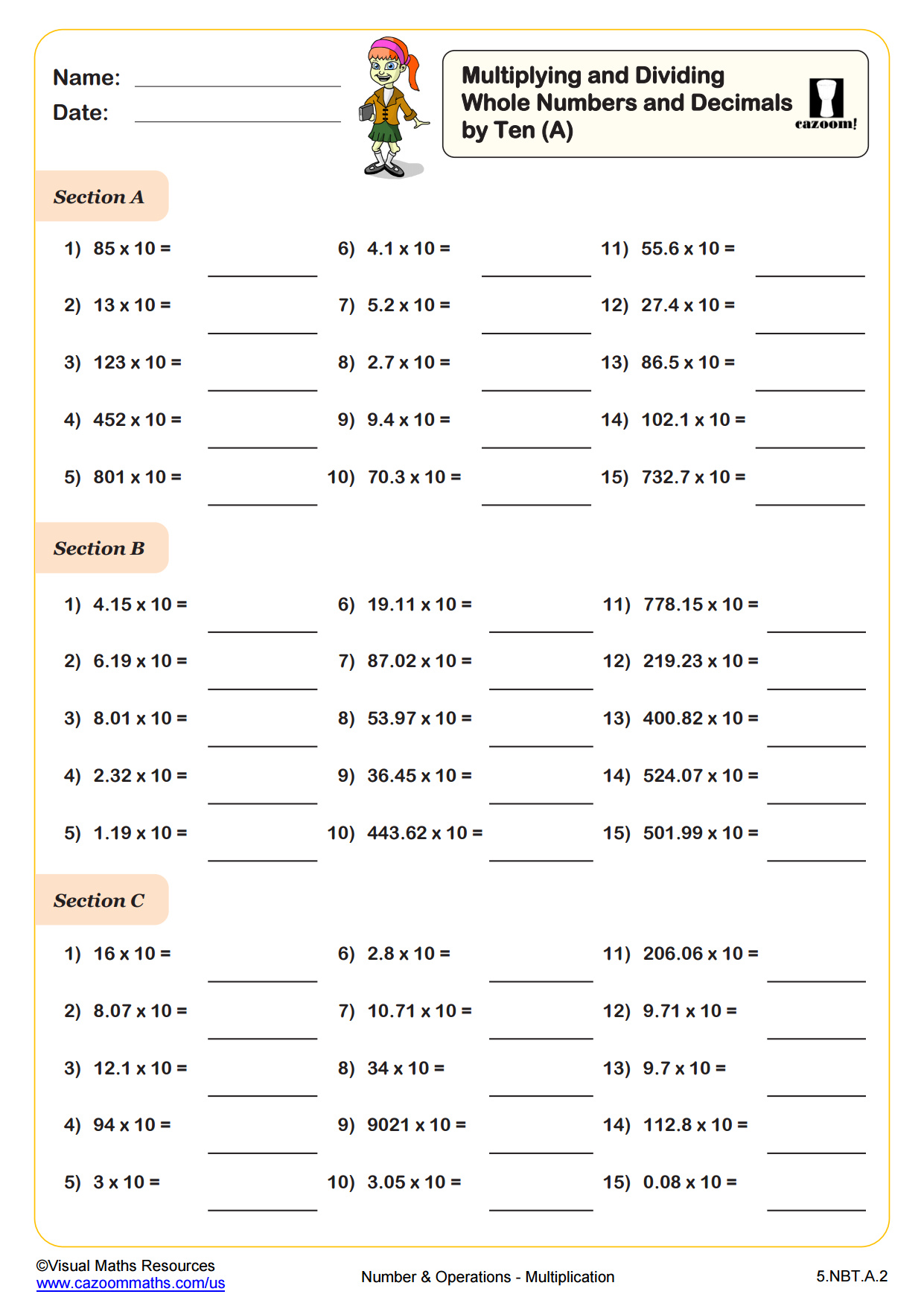
Multiply and Divide Whole Numbers and Decimals by Ten (A)
Grades: 5th Grade
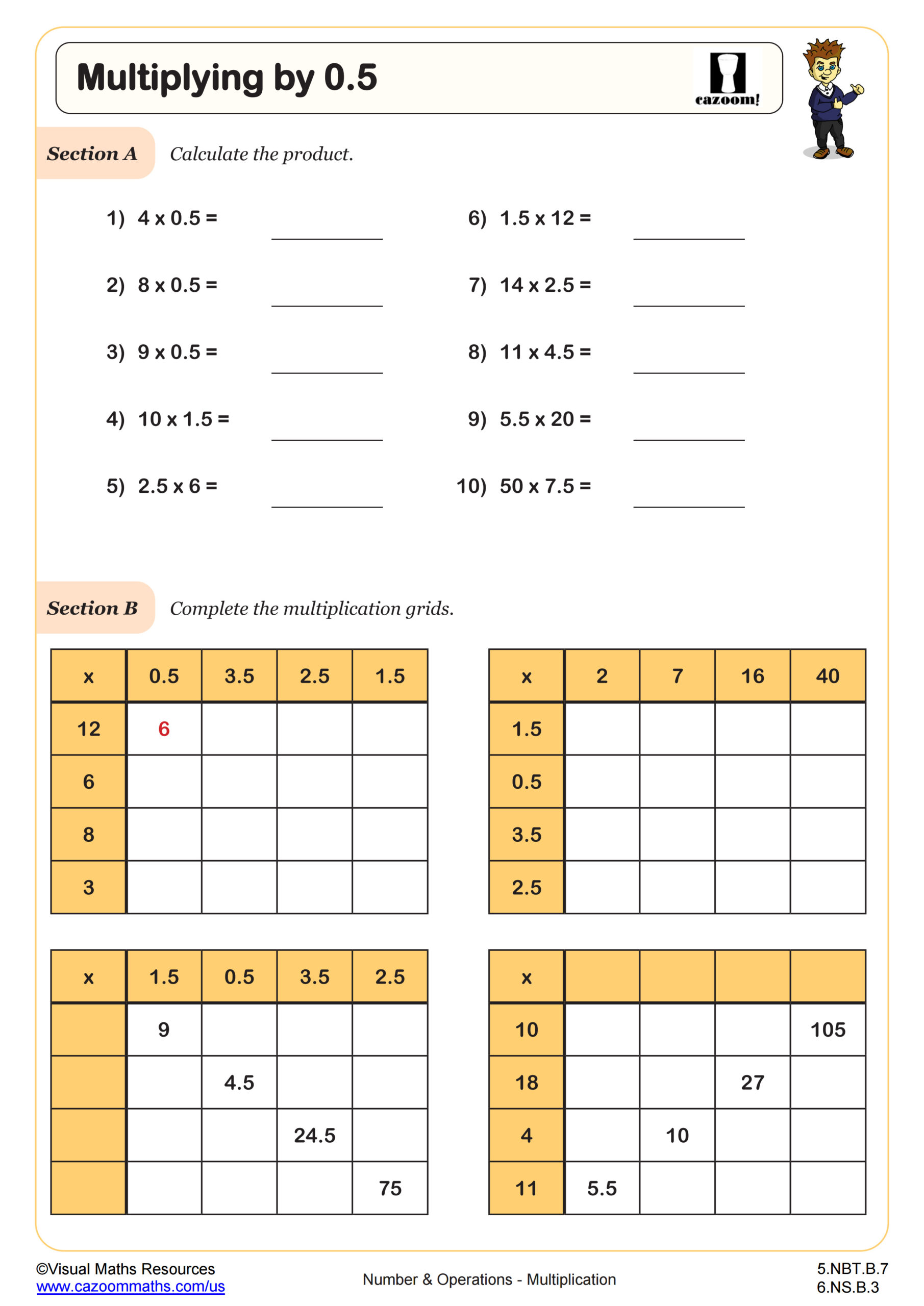
Multiplying by 0.5
Grades: 5th Grade, 6th Grade
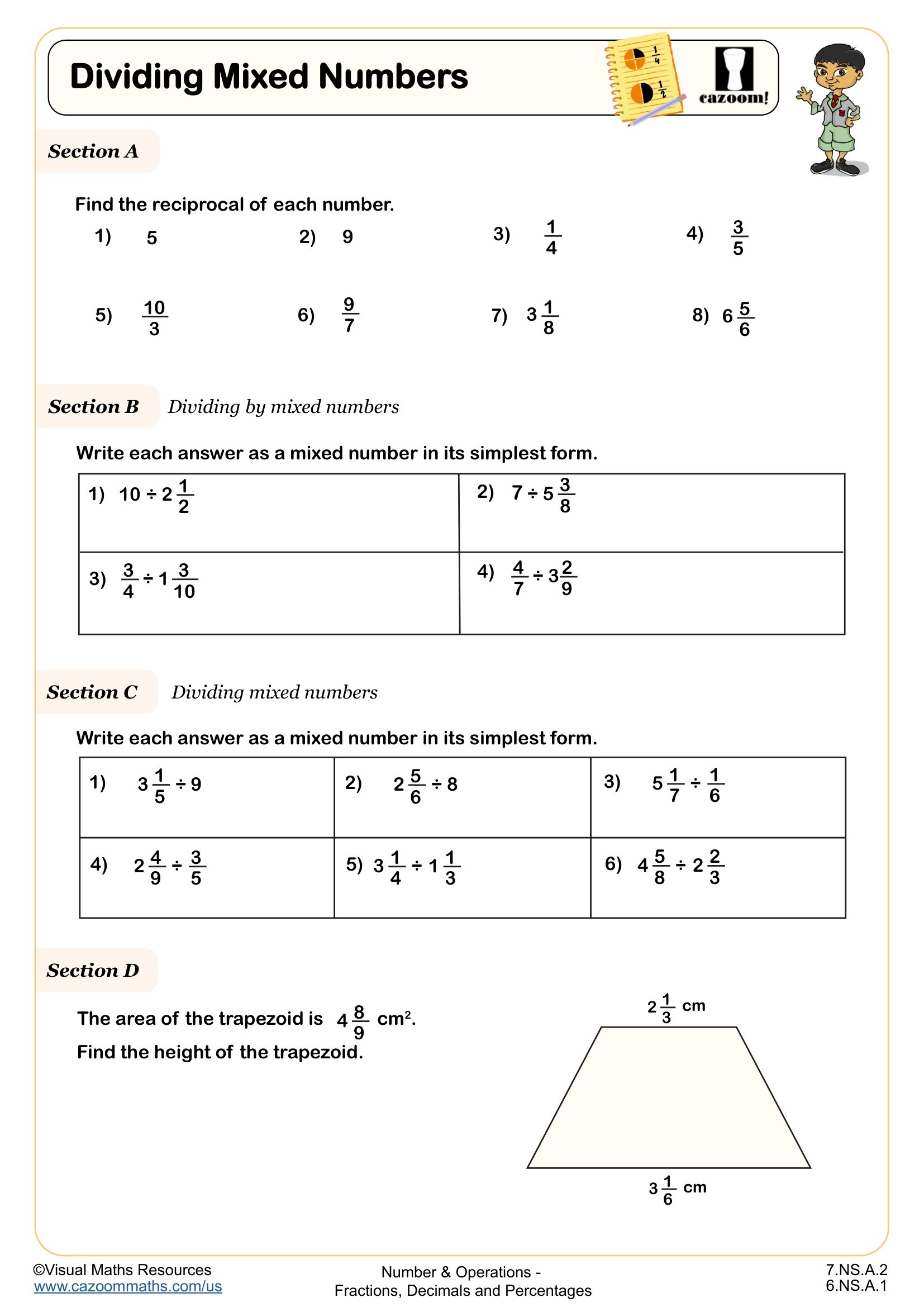
Dividing Mixed Numbers
Grades: 6th Grade, 7th Grade
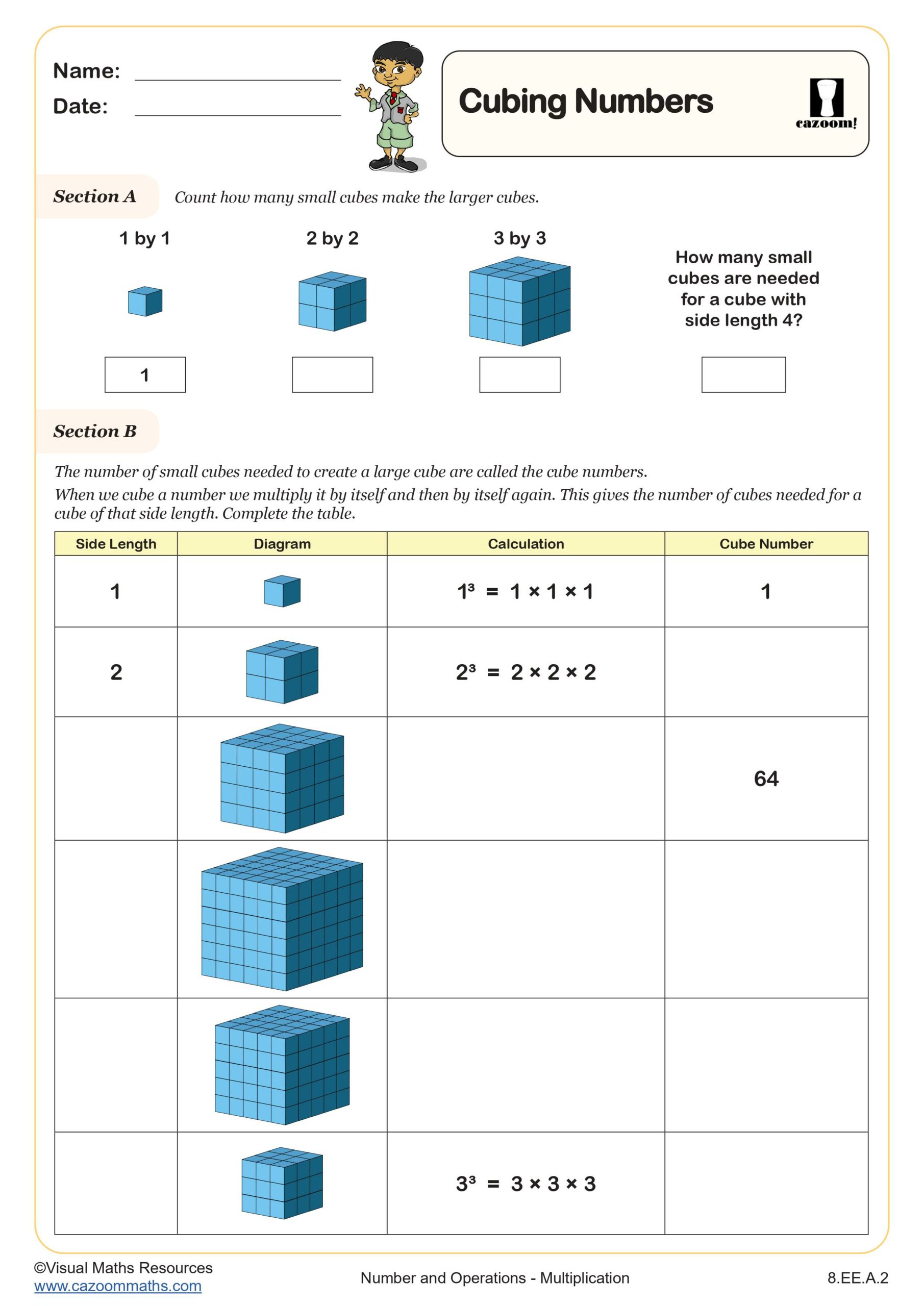
Cubing Numbers
Grades: 8th Grade
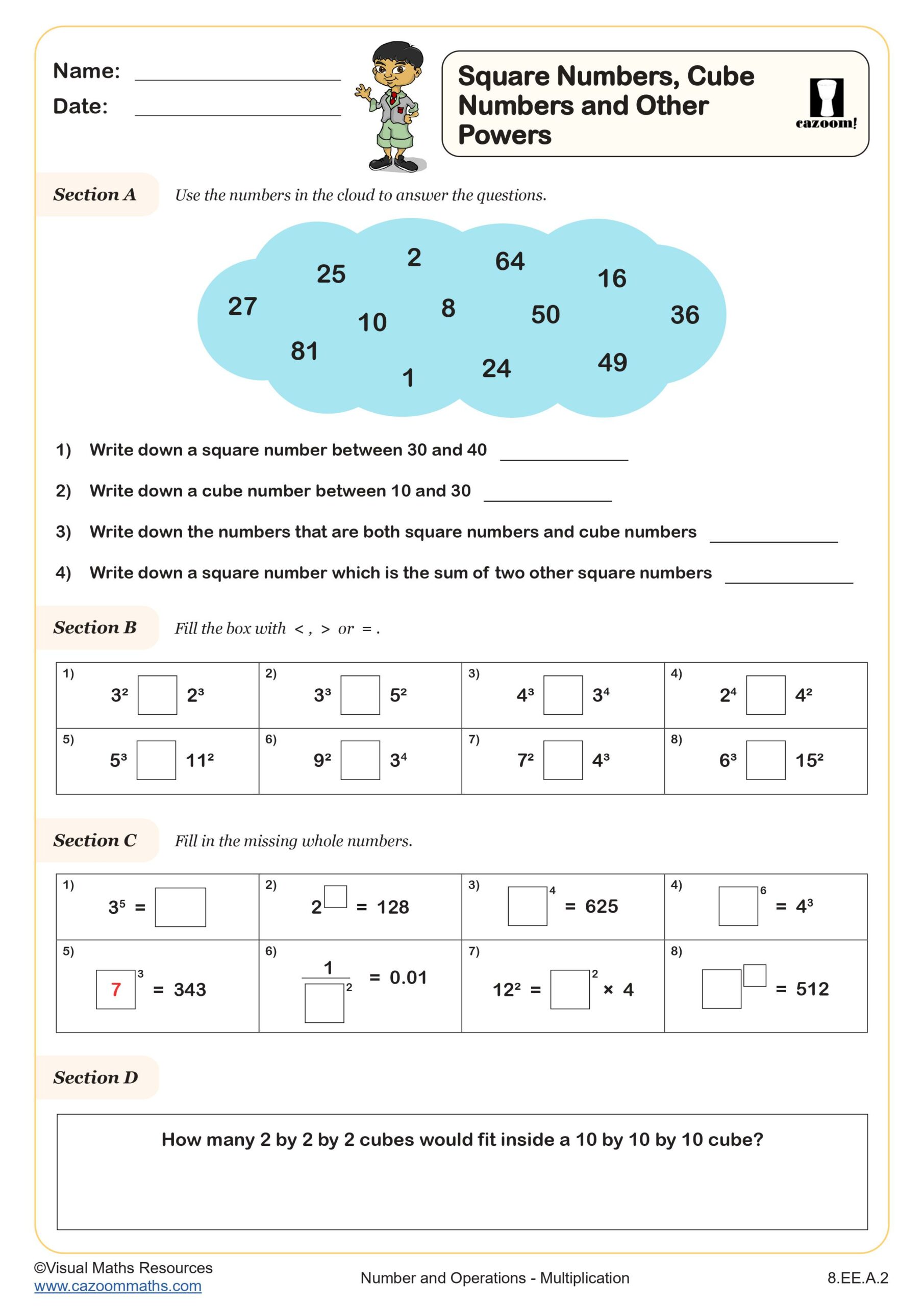
Square Numbers, Cube Numbers and Other Powers
Grades: 8th Grade
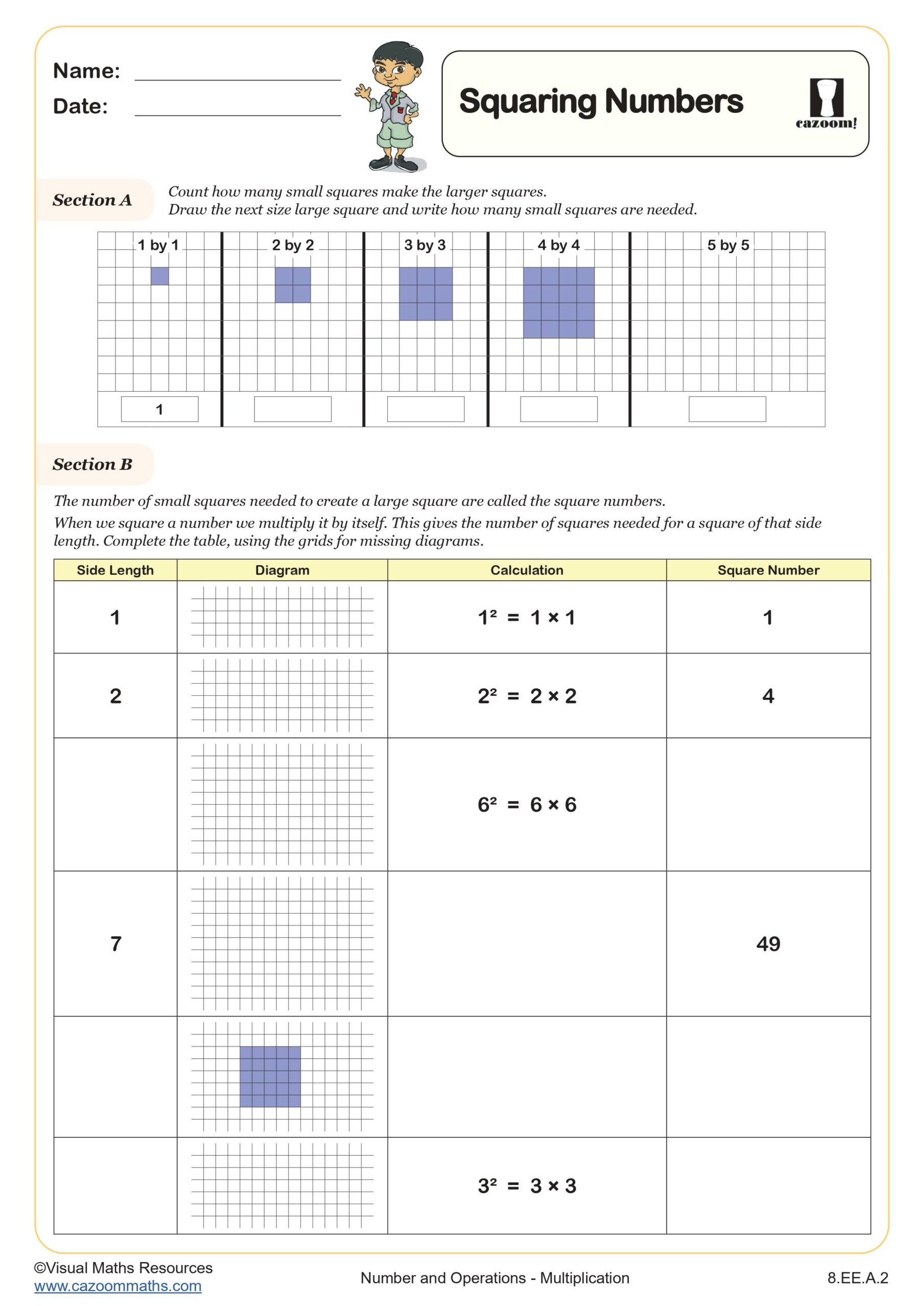
Squaring Numbers
Grades: 8th Grade
All worksheets are created by the team of experienced teachers at Cazoom Math.
What makes quality math multiplication worksheets effective for different grade levels?
Quality multiplication worksheets align with Common Core State Standards progression, starting with arrays and repeated addition in elementary grades, then advancing to standard algorithms and multi-digit computation in middle school. Teachers find that worksheets targeting multiplication worksheets grade 8 level should include rational number operations, scientific notation, and algebraic expressions.
Many educators notice that students who master basic facts early perform significantly better on advanced multiplication worksheets that involve fraction operations like one-fifth times two-ninths. The key is providing varied practice formats that reinforce conceptual understanding alongside procedural fluency, particularly when students transition from whole number multiplication to rational number operations.
How do multiplication worksheet requirements change across elementary and middle school grades?
Elementary multiplication focuses on building fact fluency through 12x12 tables, using visual models like area models and arrays to develop conceptual understanding. By fourth grade, students work with multi-digit multiplication using the standard algorithm, while fifth grade introduces decimal multiplication and basic fraction concepts.
Middle school multiplication worksheets expand to include negative integers, scientific notation, and complex fraction operations. Teachers report that sixth graders often struggle when transitioning from whole number algorithms to fraction multiplication, particularly with problems involving mixed numbers. Eighth-grade students need practice with exponential expressions and algebraic multiplication to prepare for high school algebra courses.
What specific multiplication skills do students need for fraction operations?
Fraction multiplication requires students to understand that multiplying fractions involves multiplying numerators together and denominators together, without finding common denominators like in addition. Students practice with problems involving unit fractions and proper fractions, building toward mixed number operations that appear in real-world contexts like cooking and construction.
Teachers consistently observe that students make errors when they apply addition strategies to multiplication problems, particularly with fractions like three-eighths multiplied by one-fourth. The rangoli master problems that combine geometric patterns with fraction calculations help students visualize why fraction multiplication often results in smaller products, connecting mathematical operations to artistic and cultural contexts.
How should teachers use multiplication worksheets to maximize student learning?
Effective implementation involves using worksheets as targeted practice after conceptual instruction, not as the primary teaching tool. Teachers report success when they assign specific problems based on diagnostic assessment results, allowing students to focus on particular skill gaps rather than completing entire worksheets uniformly.
The answer keys enable teachers to set up peer checking systems and self-assessment opportunities, building student metacognition about multiplication strategies. Many educators use worksheet problems as warm-up activities or exit tickets, selecting 3-4 problems that spiral review previous concepts while introducing new challenges. This approach helps maintain skill retention while building toward more complex applications.
What Should Students Know Before Starting Multiplication?
Before learning multiplication, students should:
• Be confident with addition
• Understand number patterns
• Recognize equal groups
• Know how to count by 2s, 5s, and 10s
These basic skills make it easier to understand multiplication and move on to advanced math. Our worksheets help students build from the basics toward more challenging problems with support at every step.