Place Value Worksheets
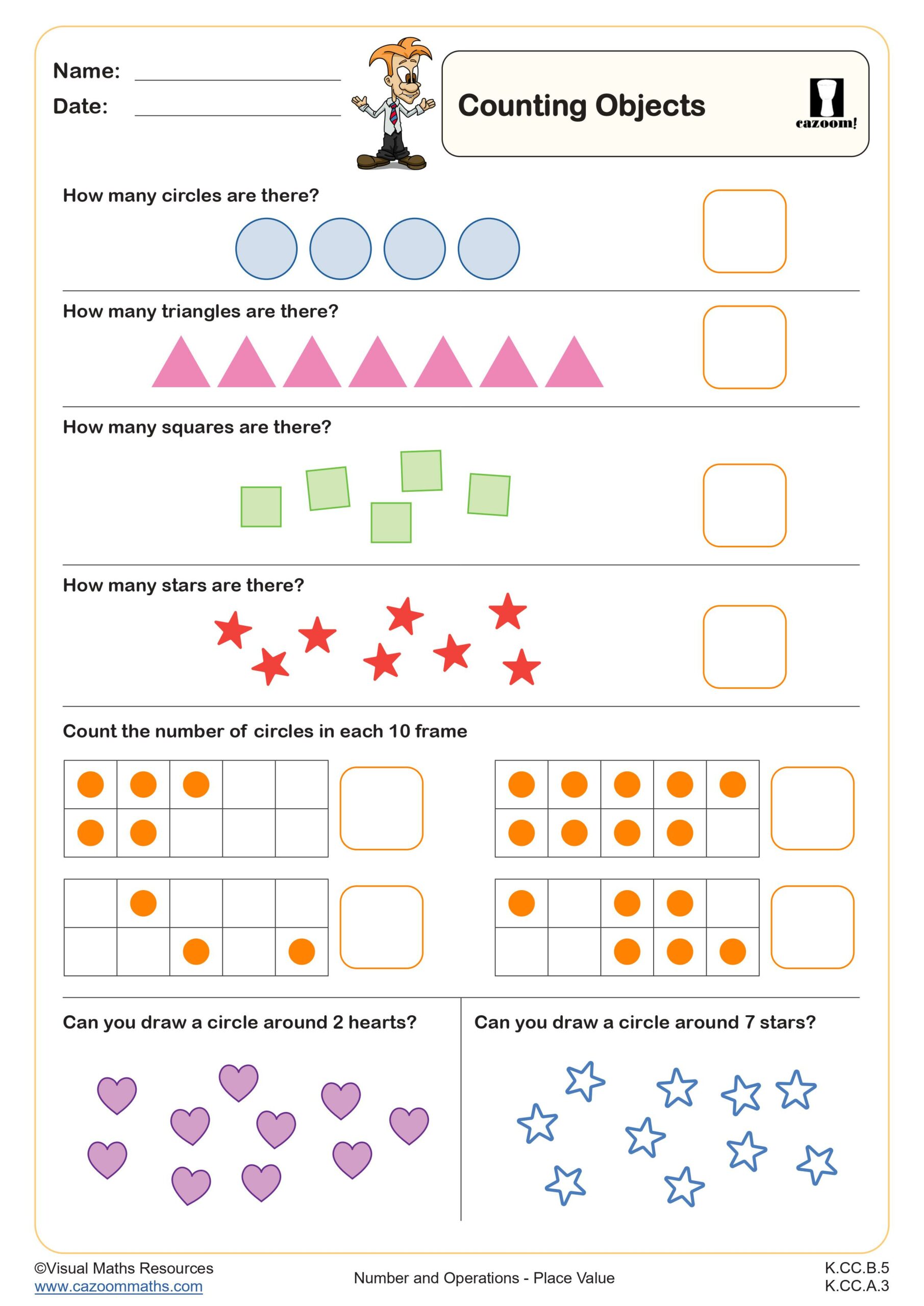
Counting Objects
Grades: Kindergarten
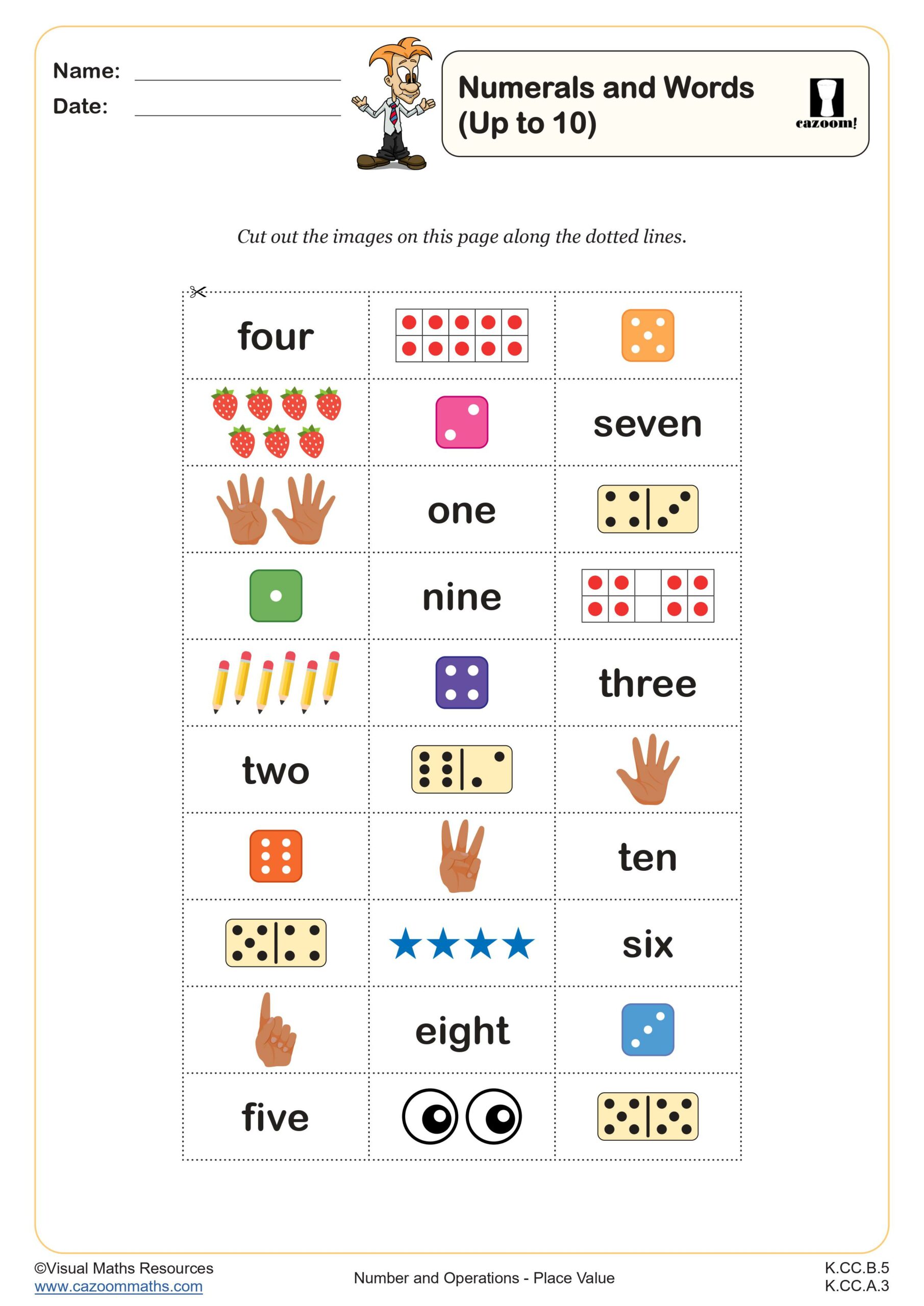
Numerals and Words (up to 10)
Grades: Kindergarten
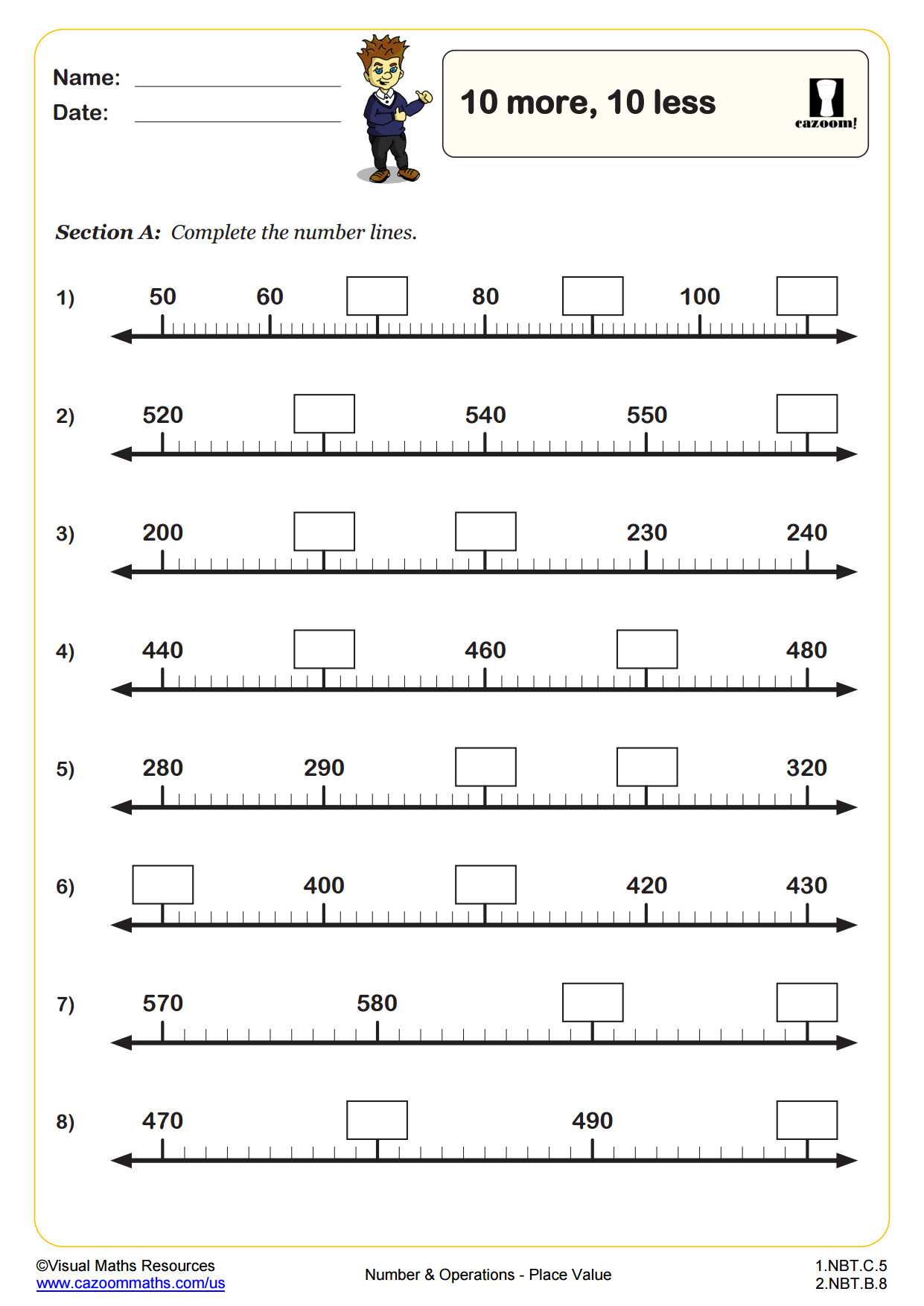
10 More 10 Less
Grades: 1st Grade, 2nd Grade
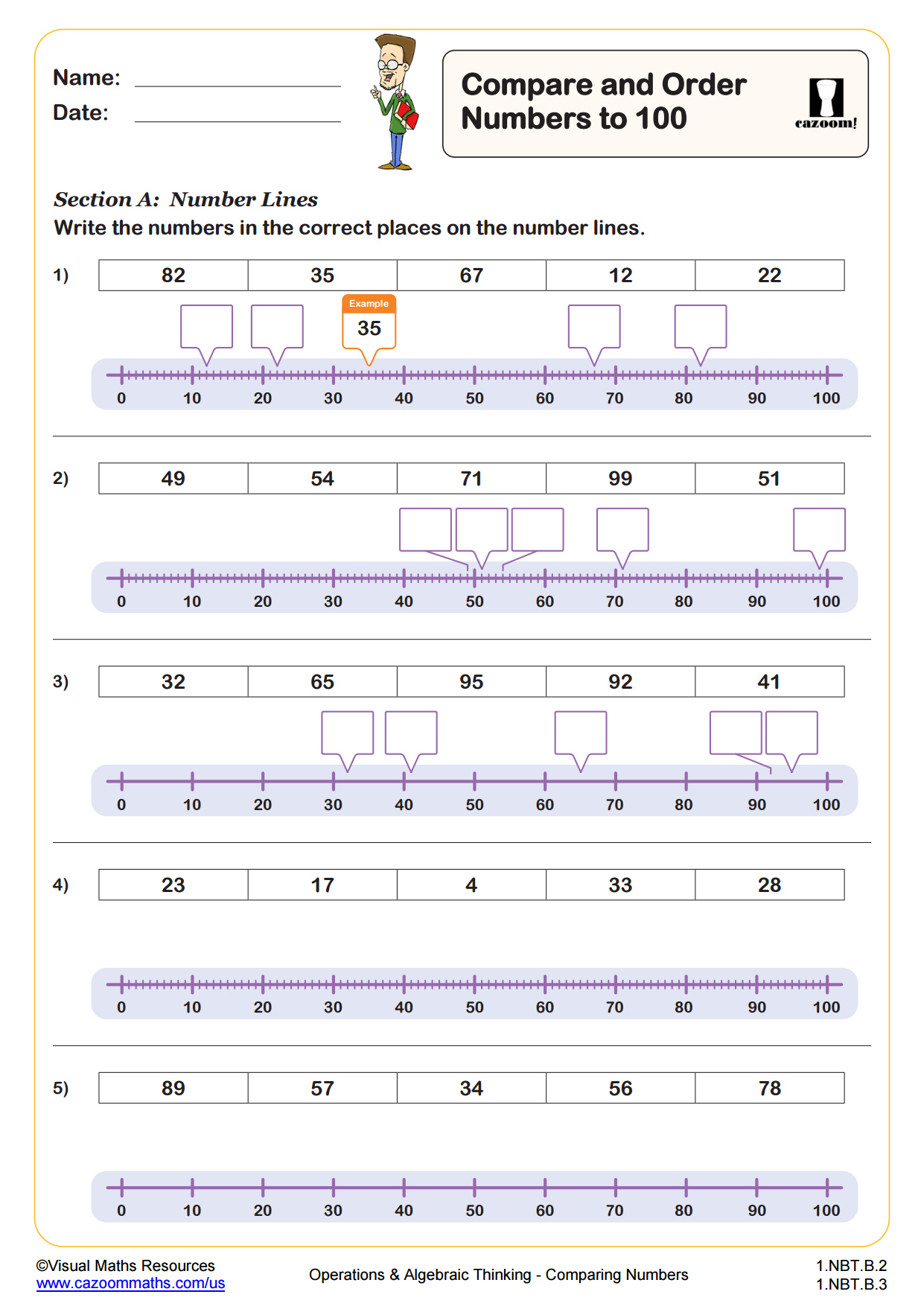
Compare and Order Numbers to 100
Grades: 1st Grade
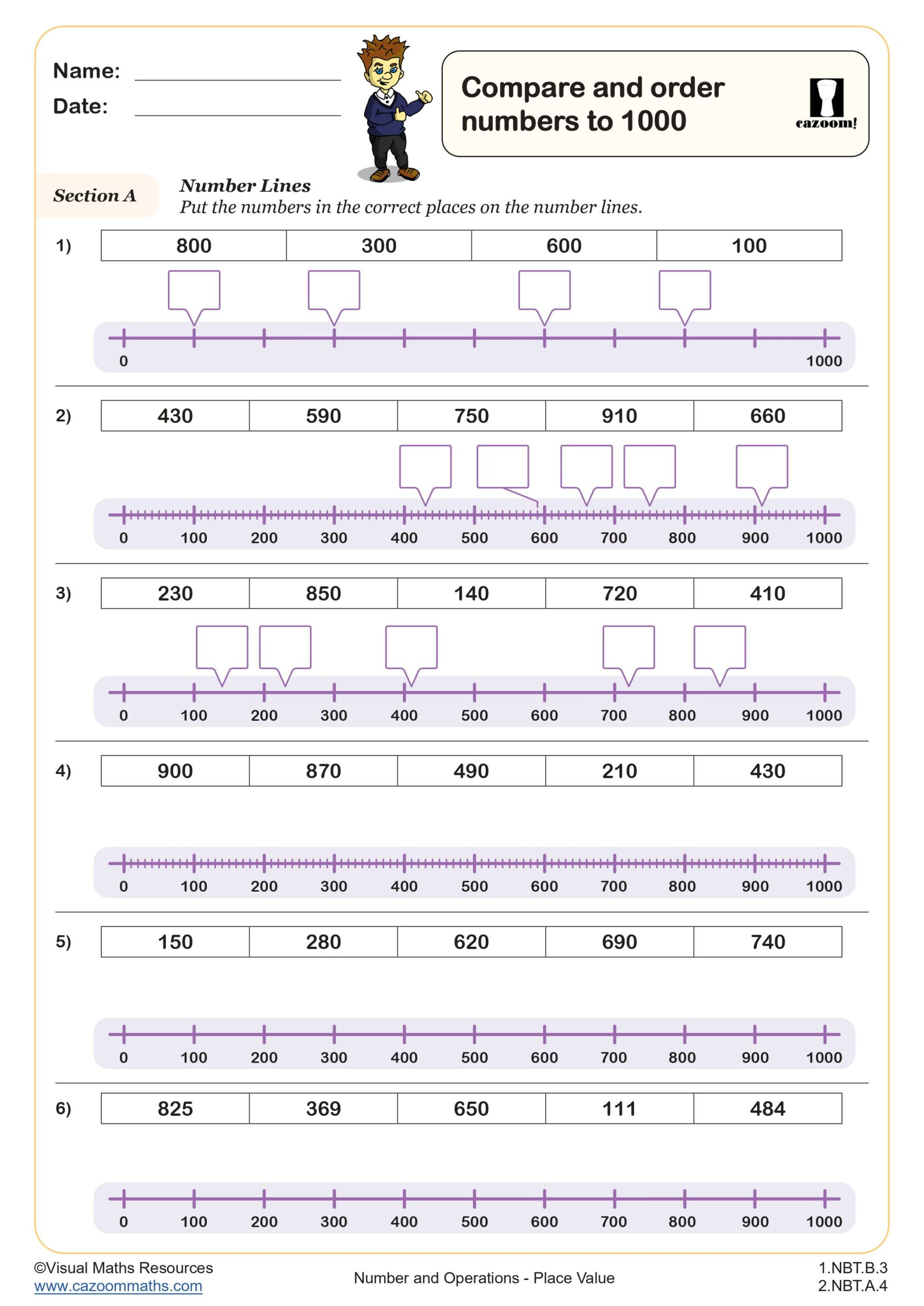
Compare and Order Numbers to 1000
Grades: 1st Grade, 2nd Grade
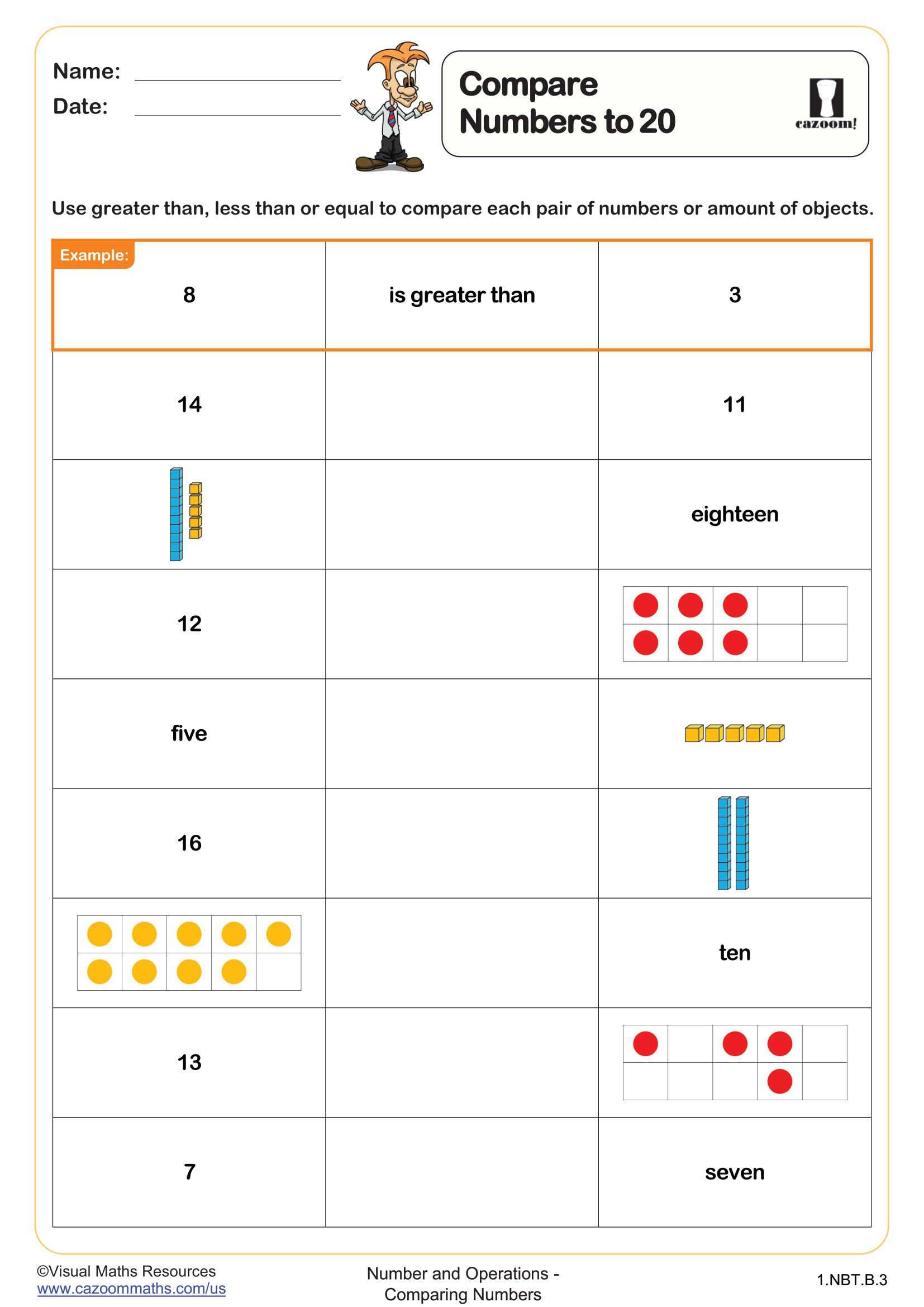
Compare Numbers to 20
Grades: 1st Grade
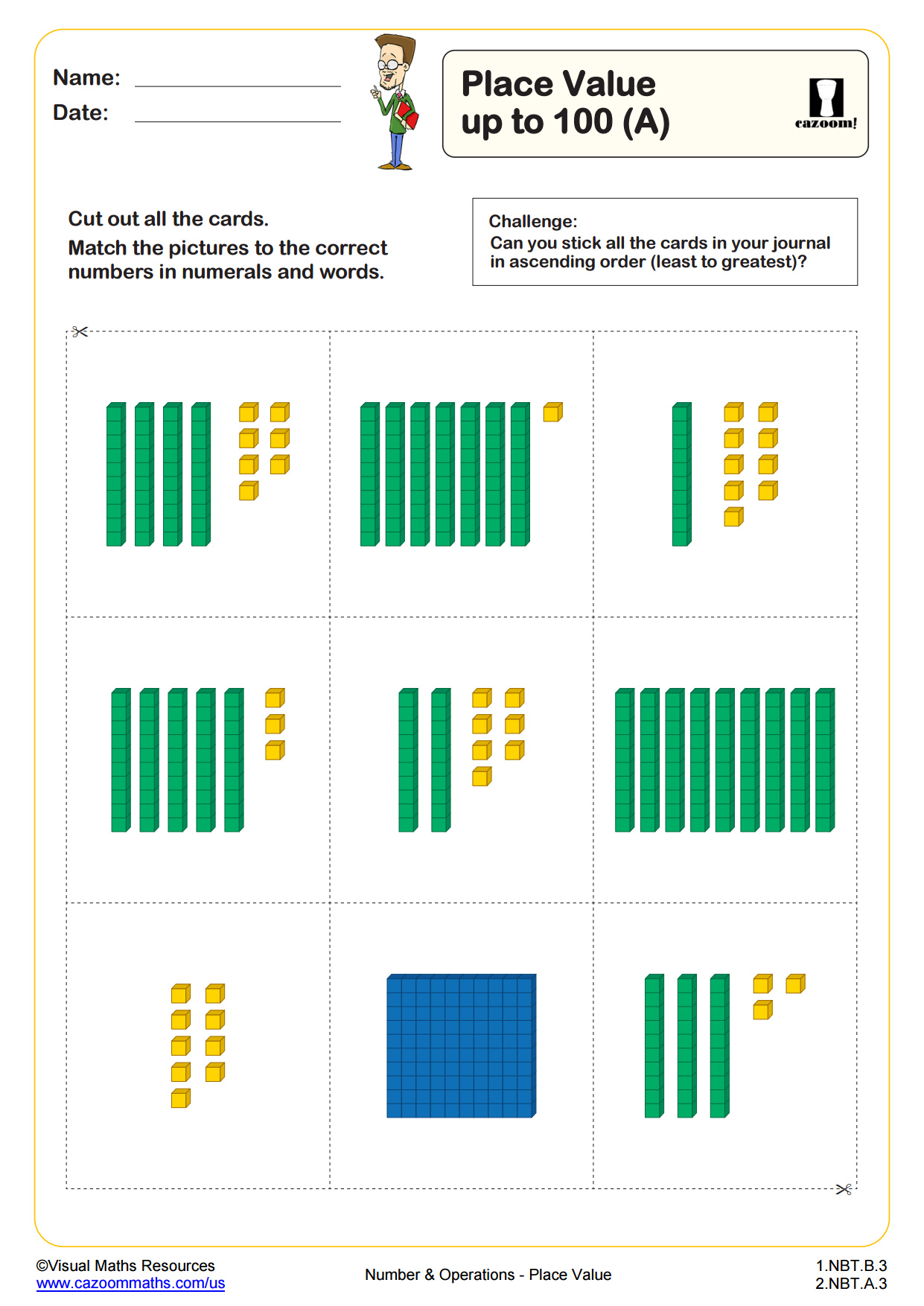
Place Value up to 100 (A)
Grades: 1st Grade, 2nd Grade
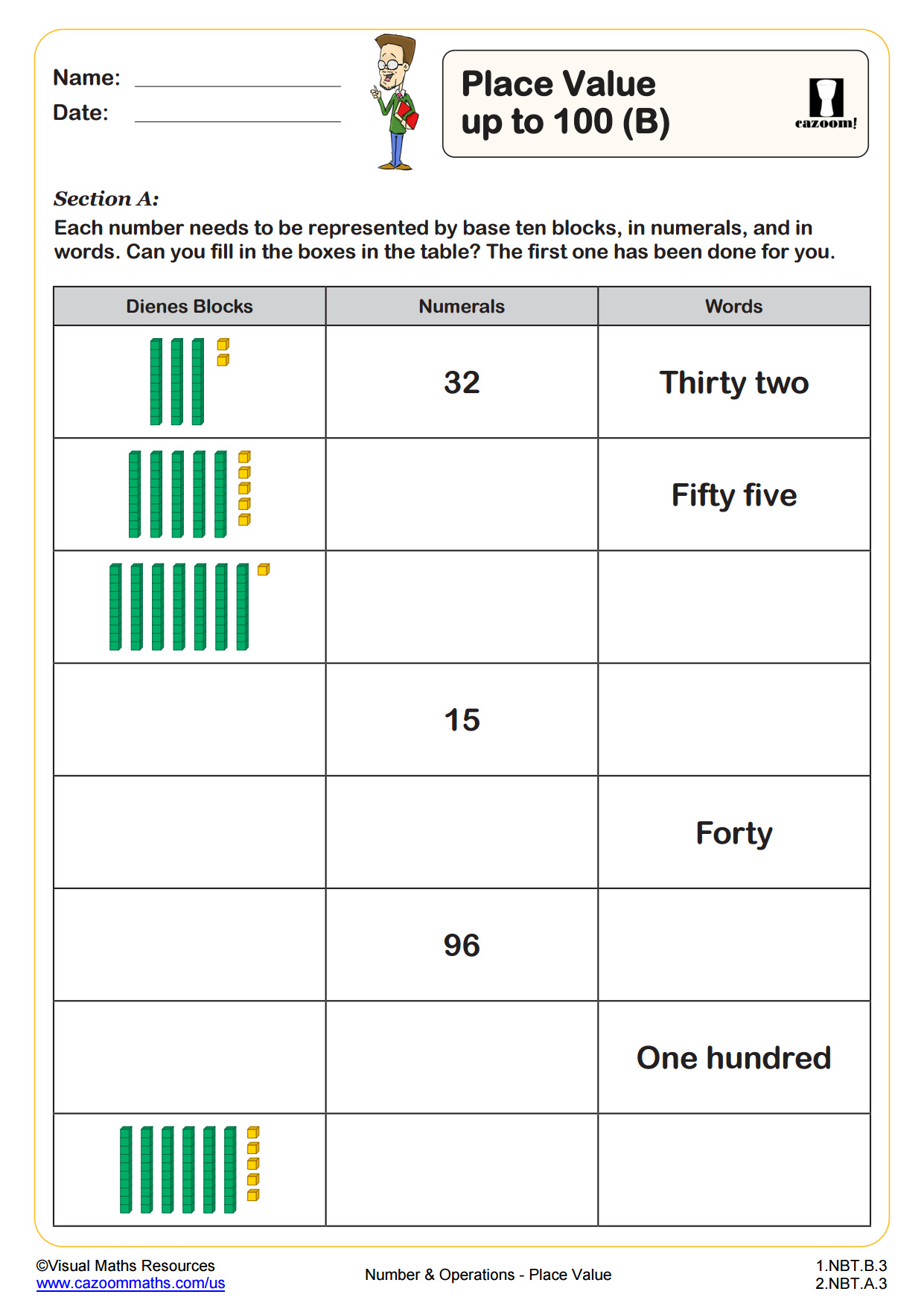
Place Value up to 100 (B)
Grades: 1st Grade, 2nd Grade
The Number Line (to 10)
Grades: 1st Grade
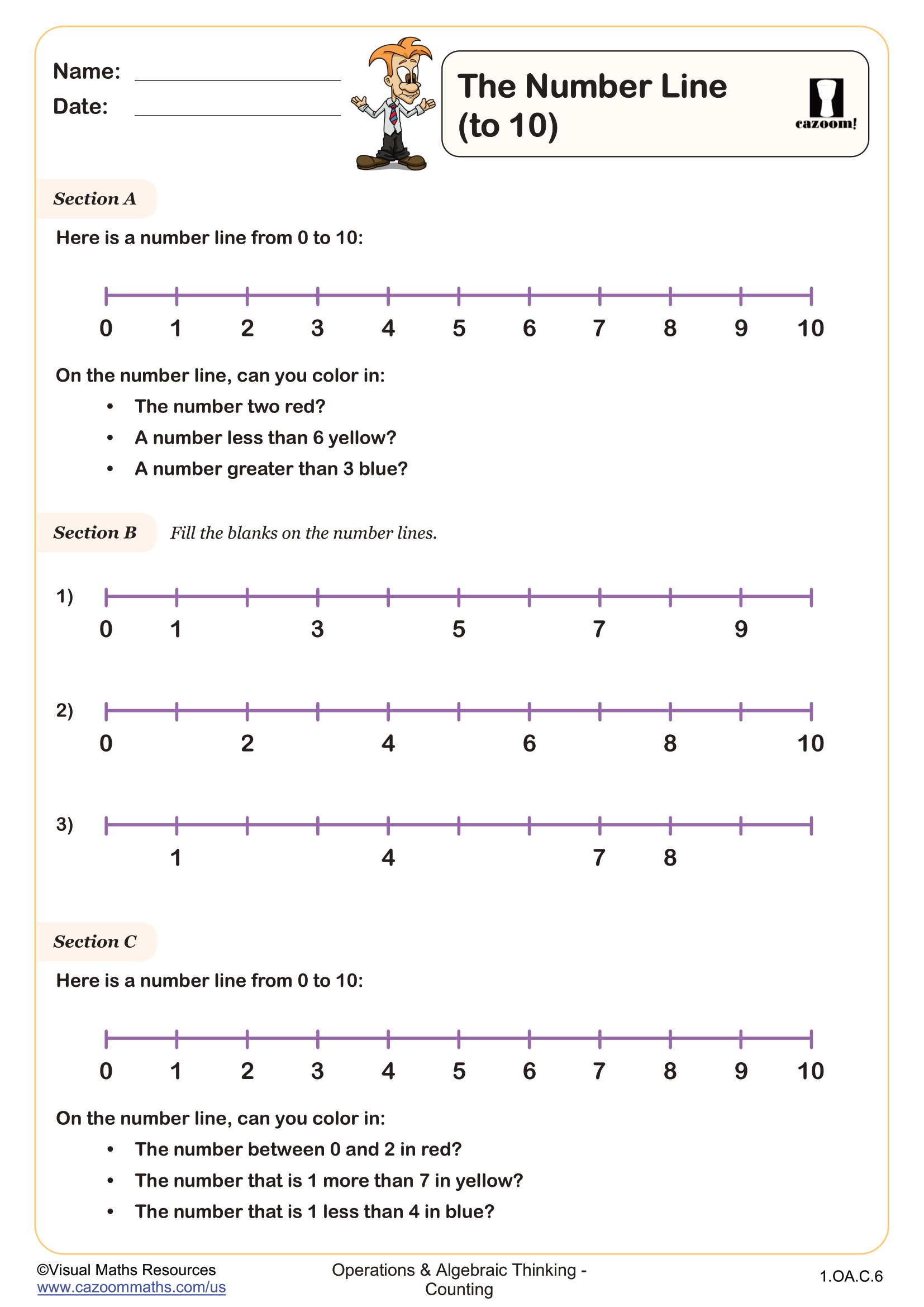
The Number Line (to 20)
Grades: 1st Grade, 2nd Grade
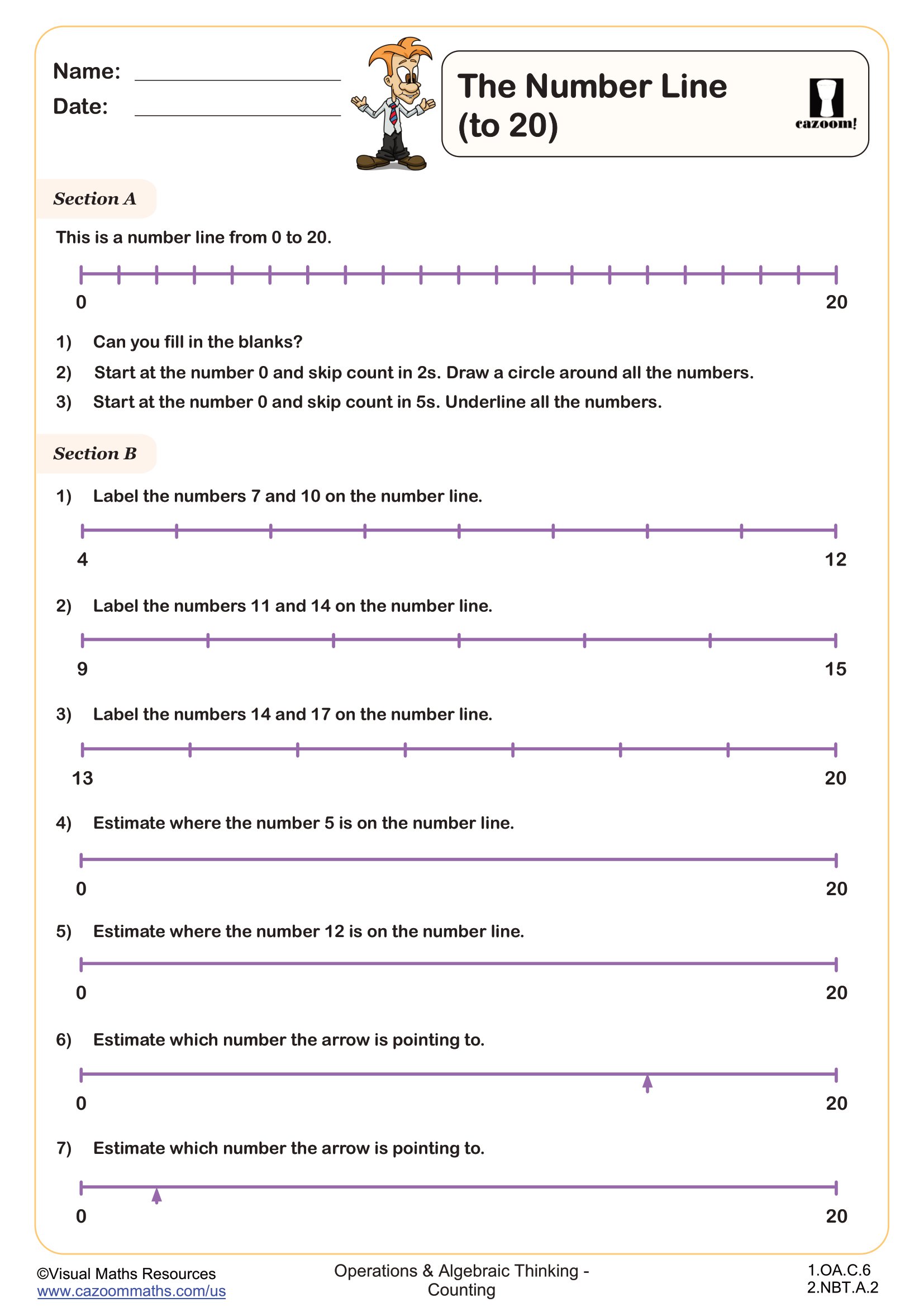
100 More 100 Less
Grades: 2nd Grade
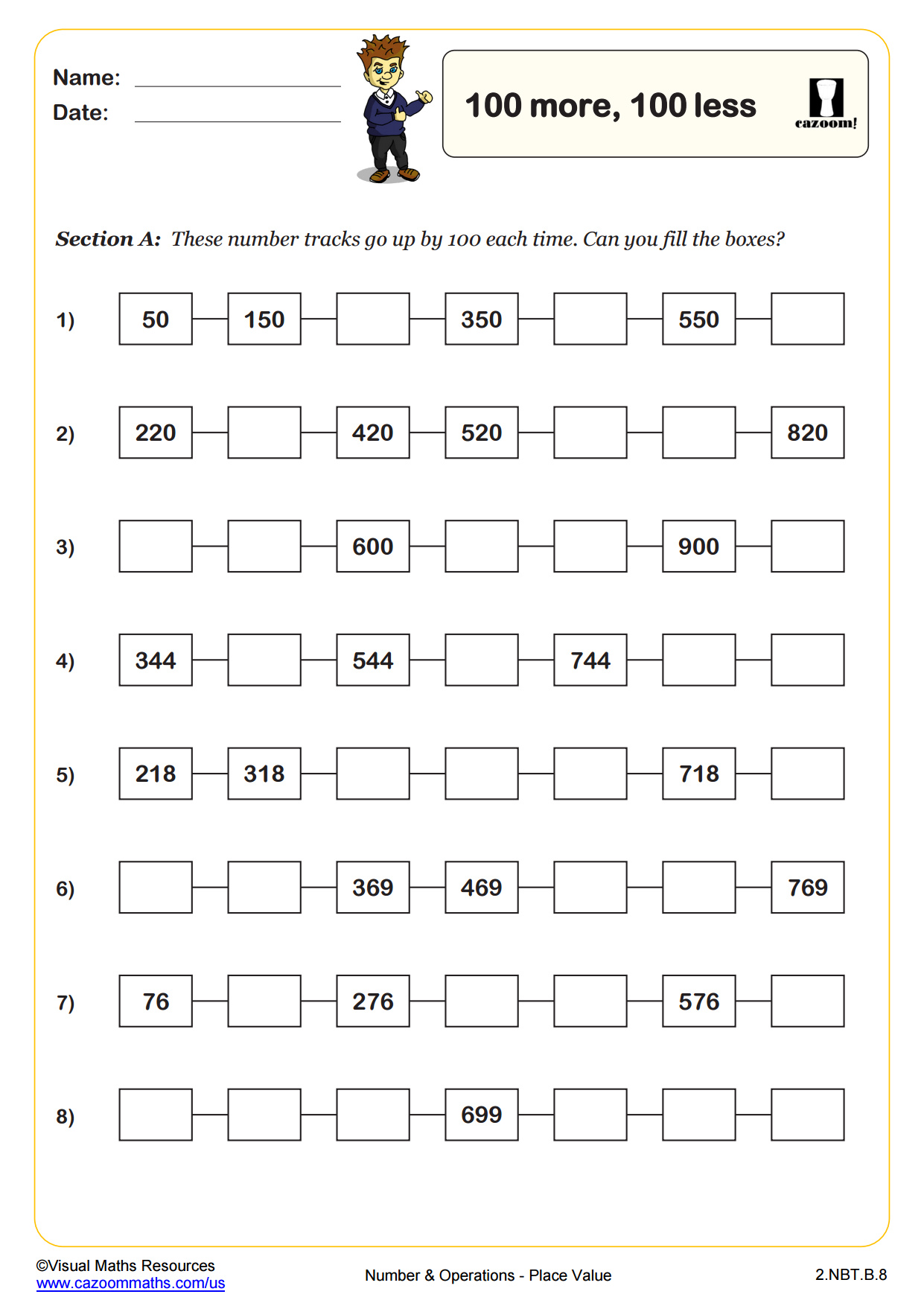
Expanding Numbers to 1,000
Grades: 2nd Grade
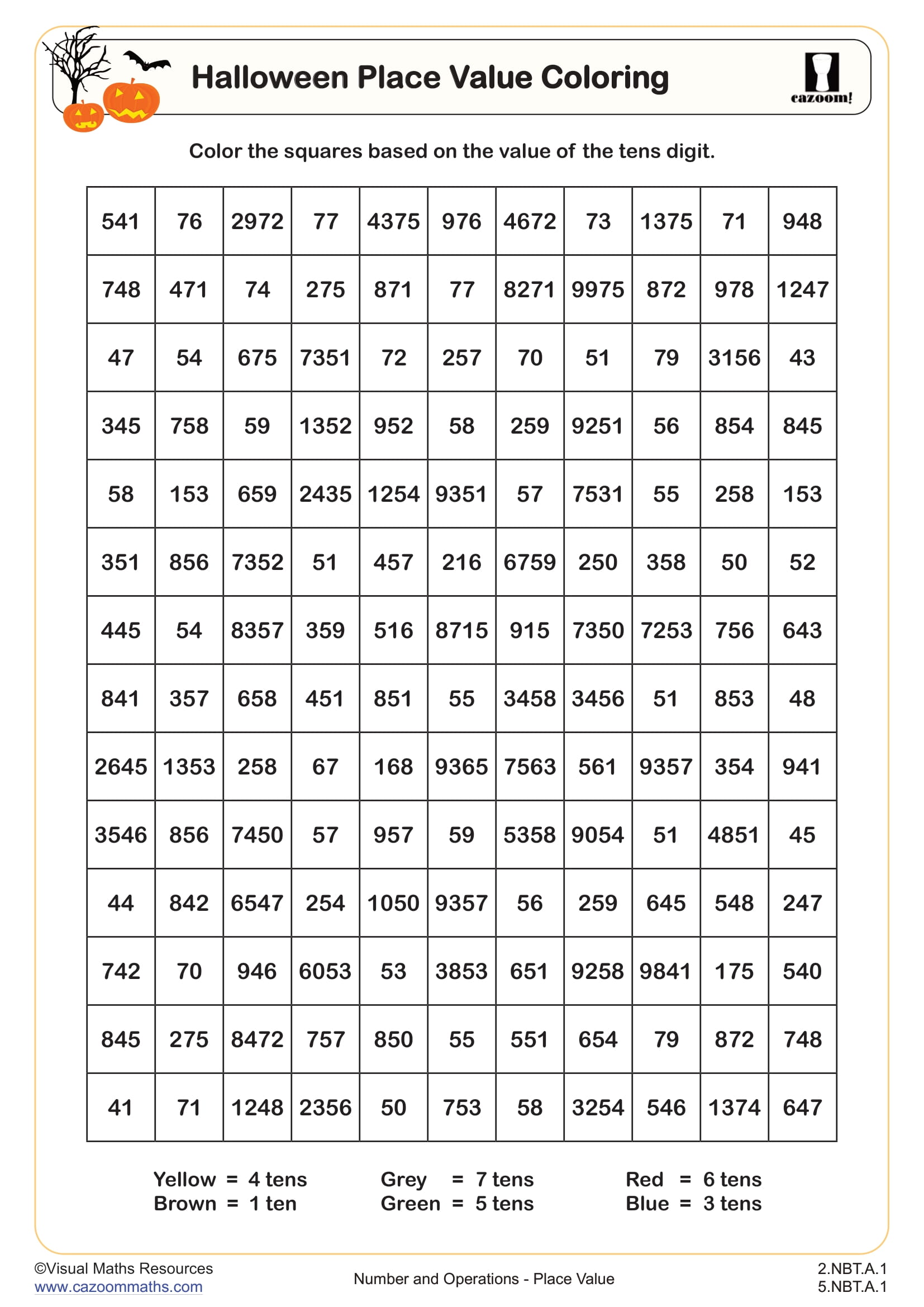
Halloween Place Value Coloring
Grades: 2nd Grade, 5th Grade
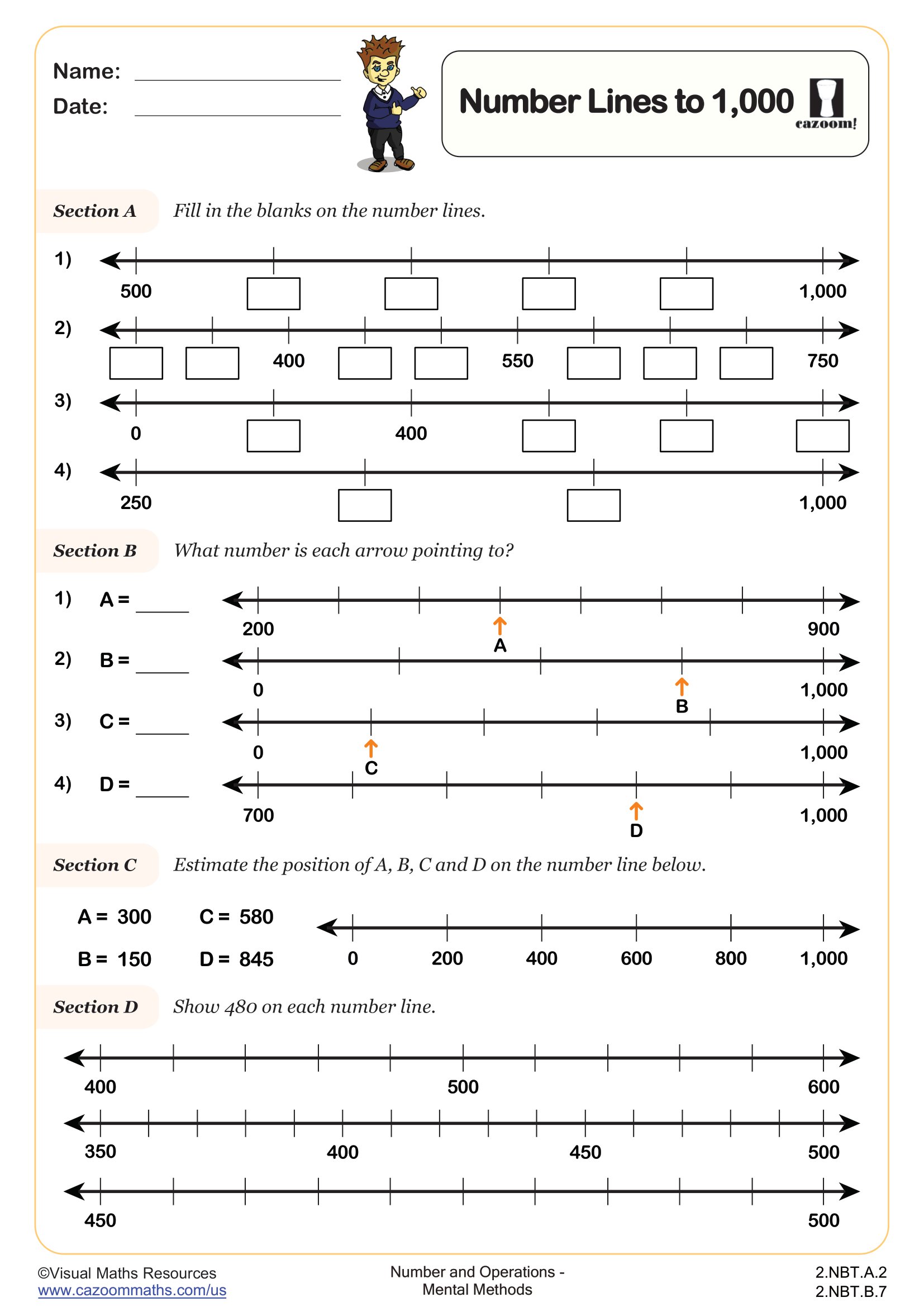
Number Lines to 1,000
Grades: 2nd Grade
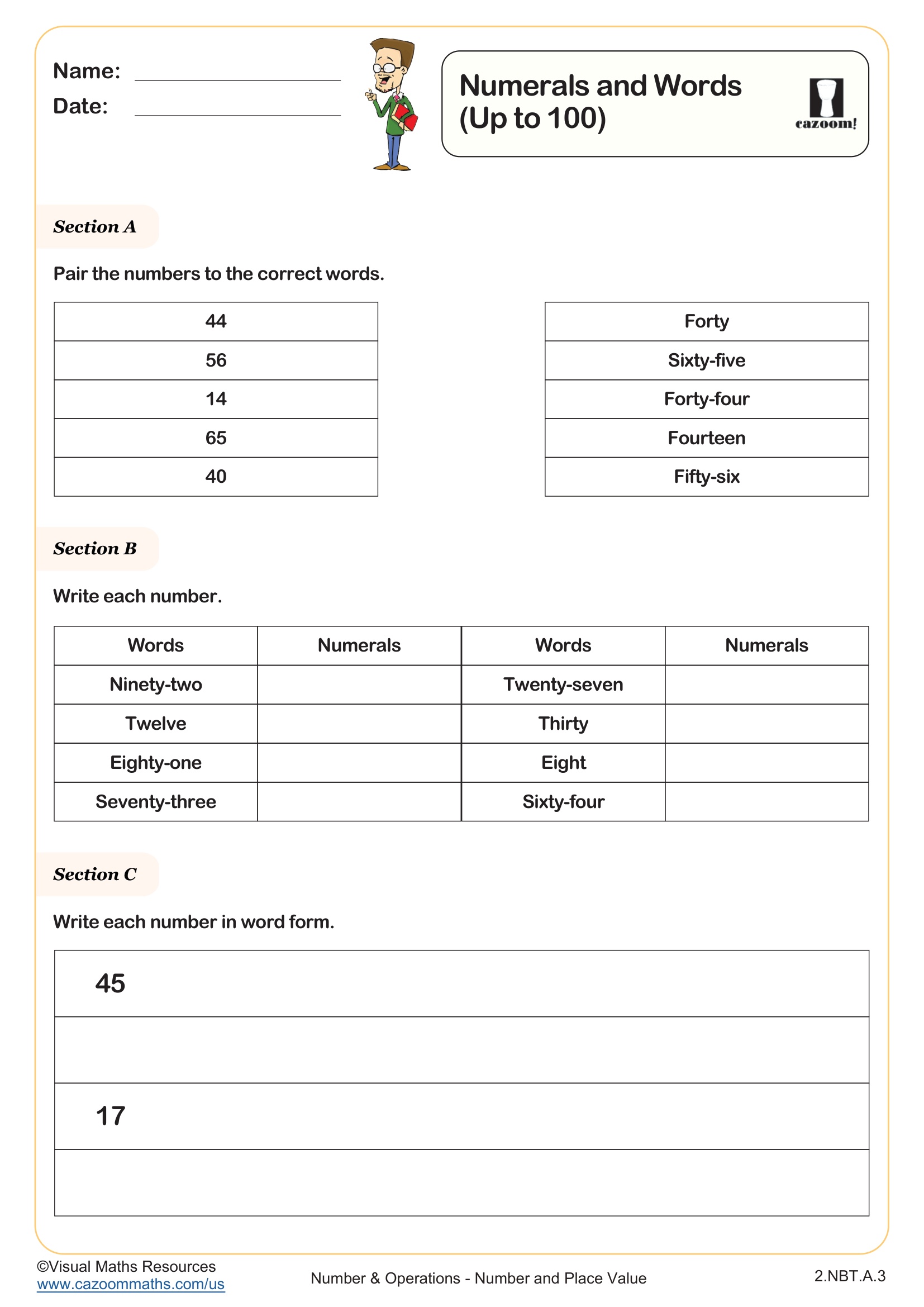
Numerals and Words (up to 100)
Grades: 2nd Grade
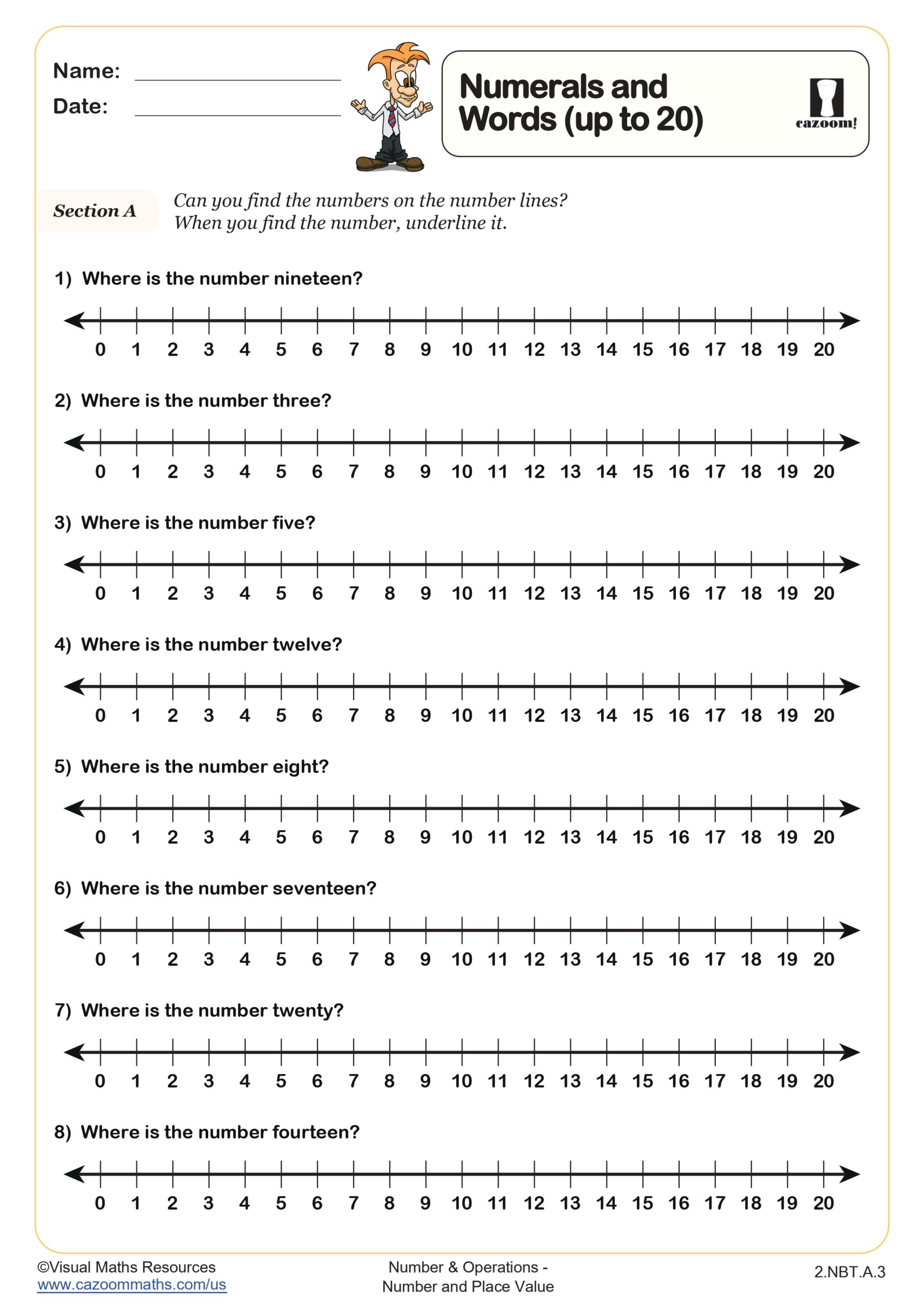
Numerals and Words (up to 20)
Grades: 2nd Grade
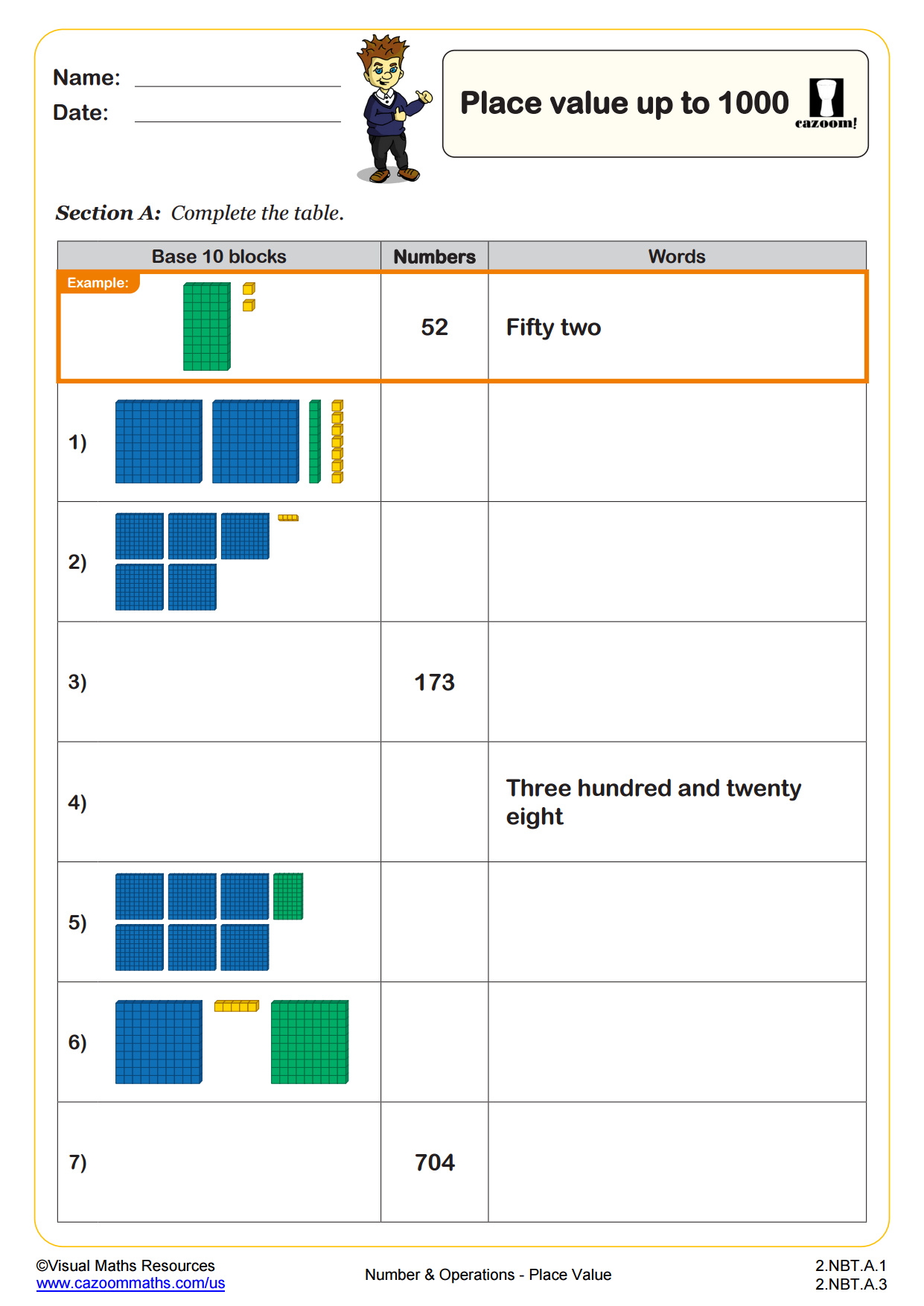
Place Value up to 1000
Grades: 2nd Grade
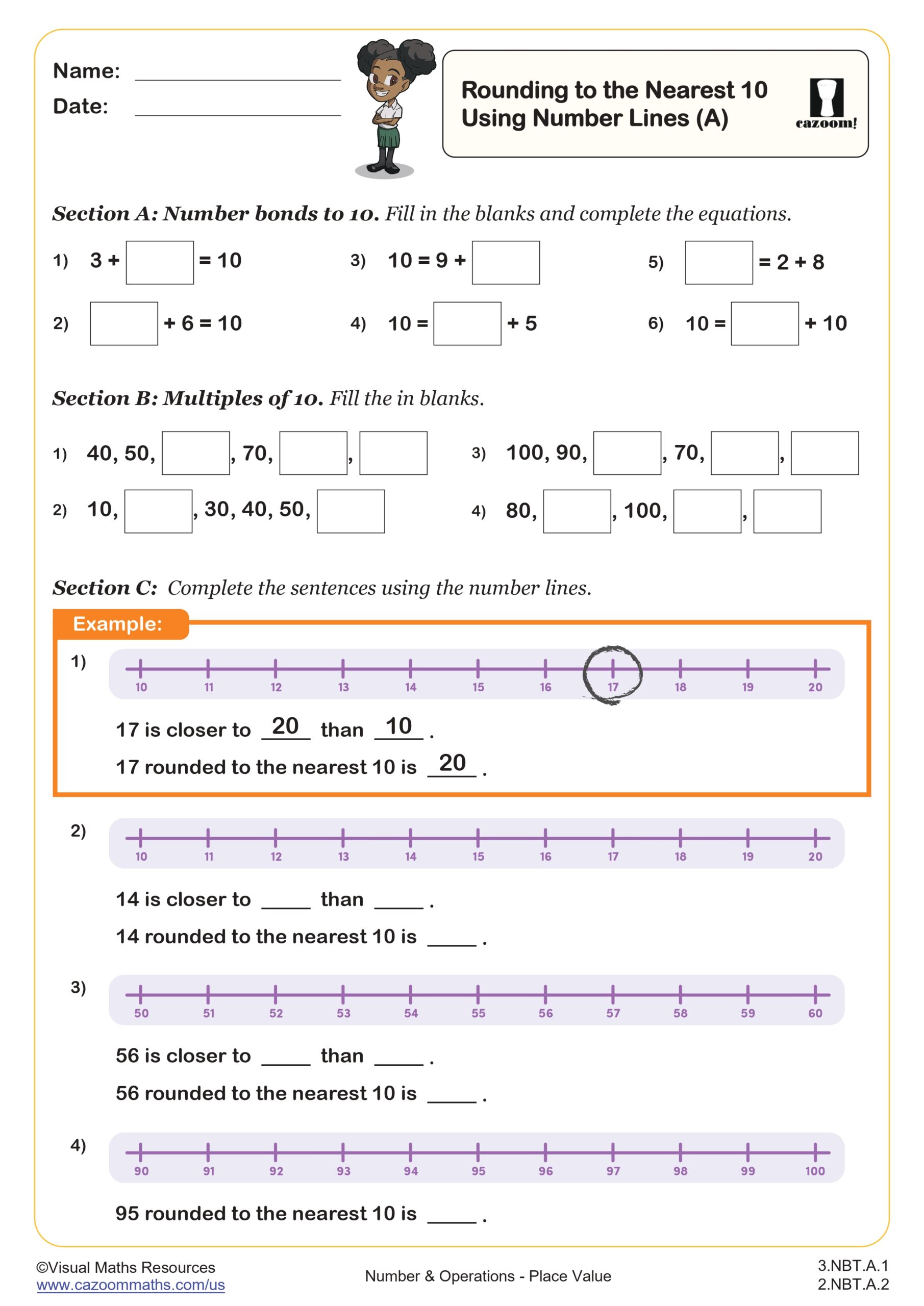
Rounding Numbers to the Nearest 10 Using Number Lines (A)
Grades: 2nd Grade, 3rd Grade
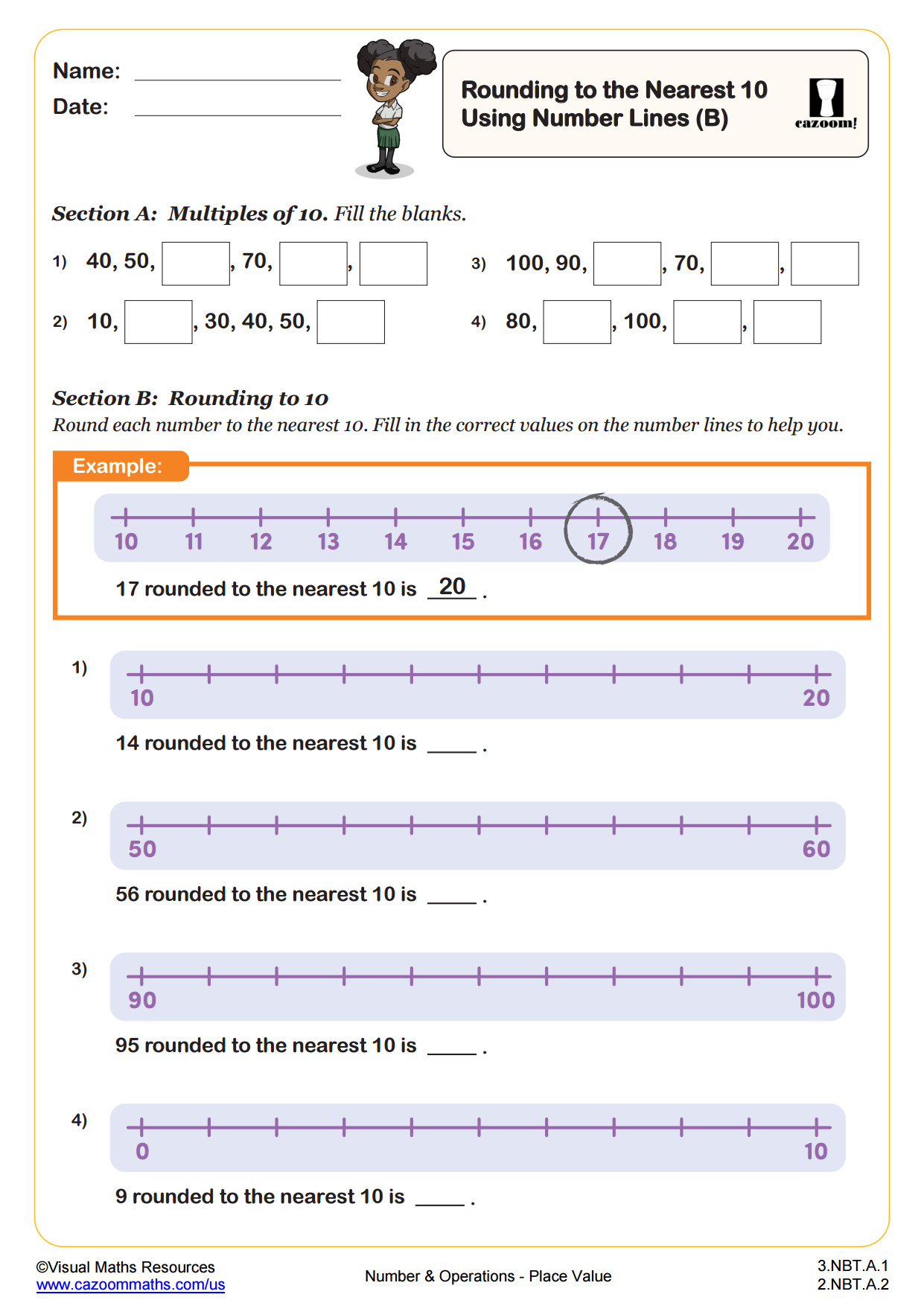
Rounding Numbers to the Nearest 10 Using Number Lines (B)
Grades: 2nd Grade, 3rd Grade
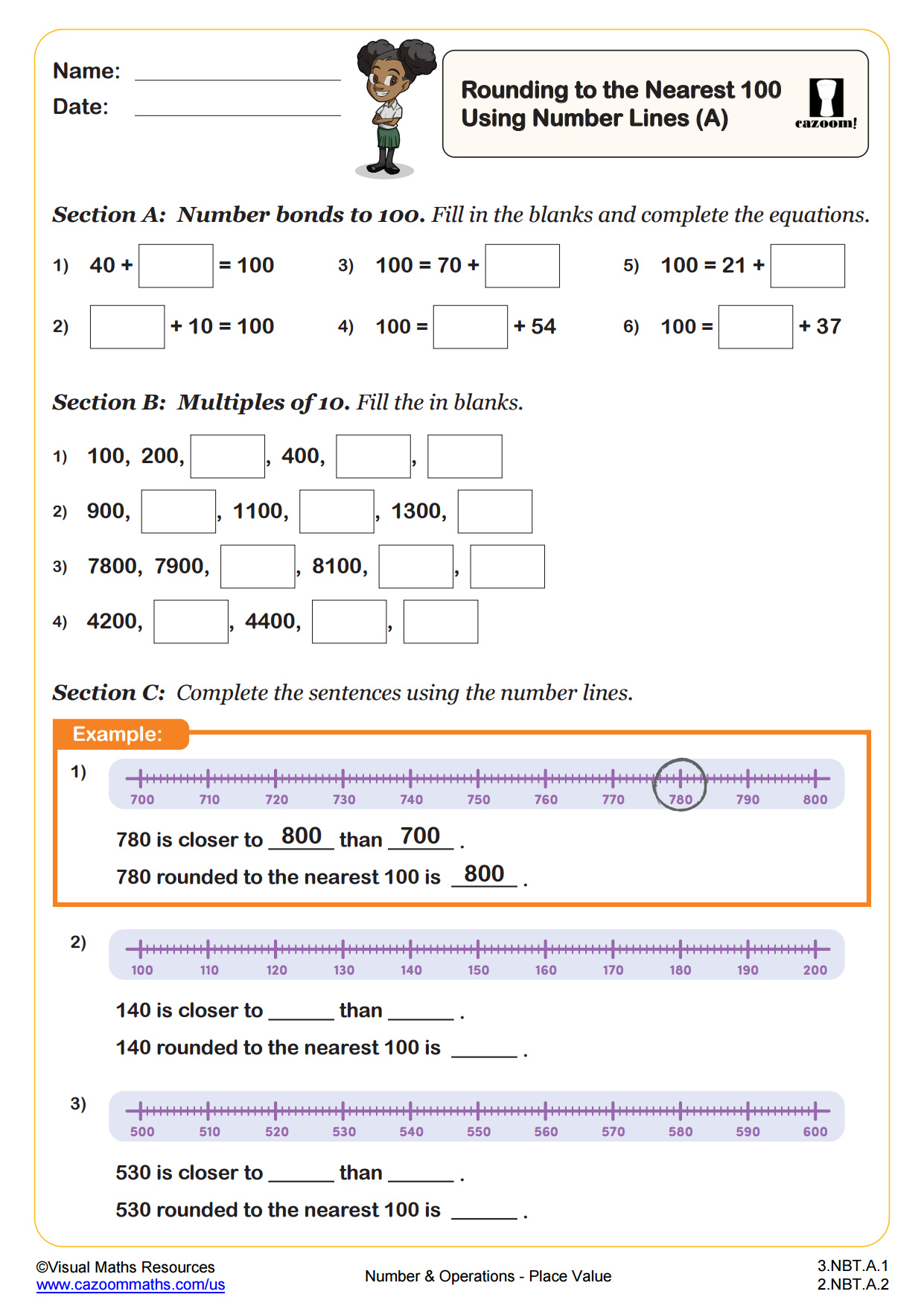
Rounding Numbers to the Nearest 100 Using Number Lines (A)
Grades: 2nd Grade, 3rd Grade
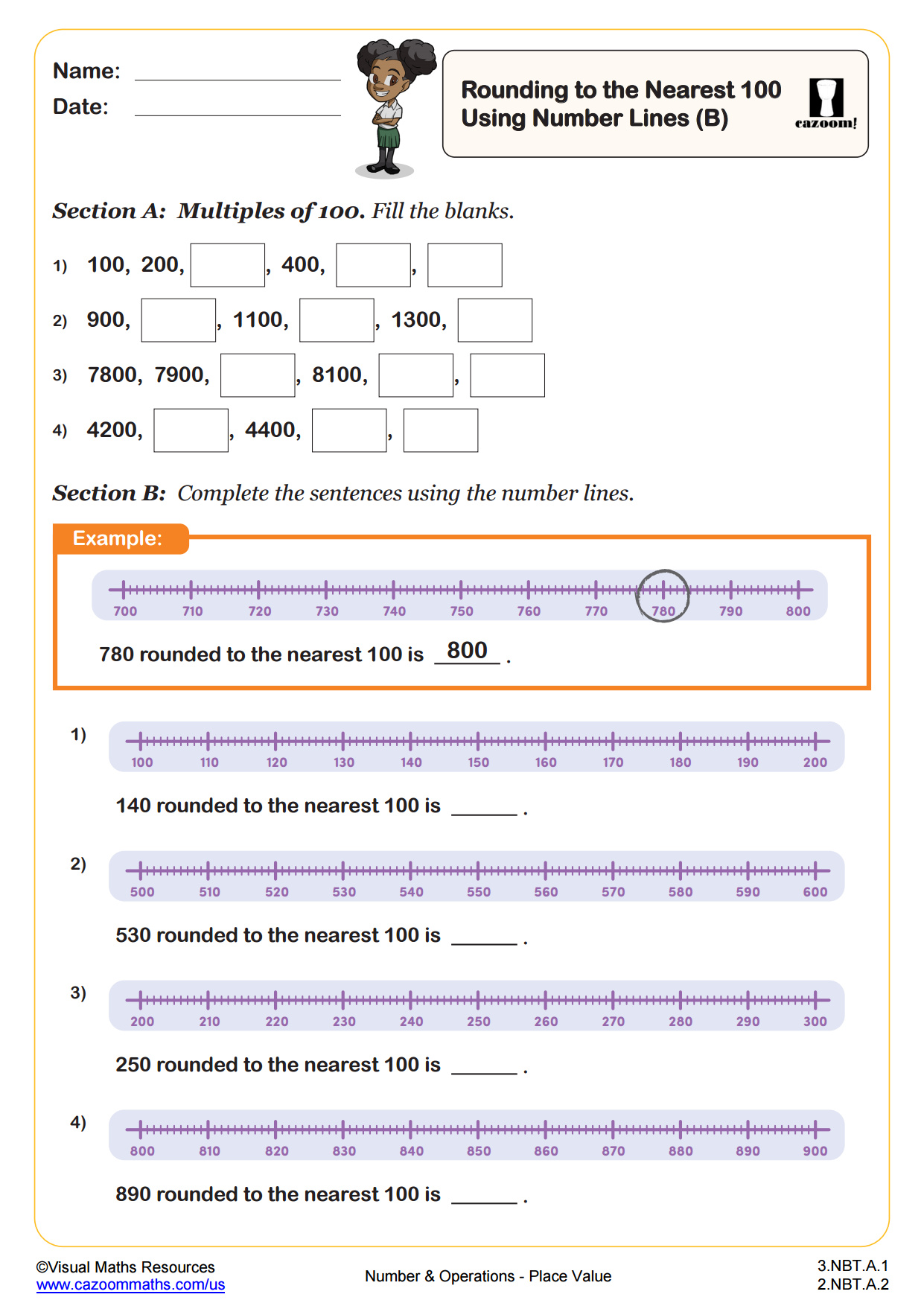
Rounding Numbers to the Nearest 100 Using Number Lines (B)
Grades: 2nd Grade, 3rd Grade
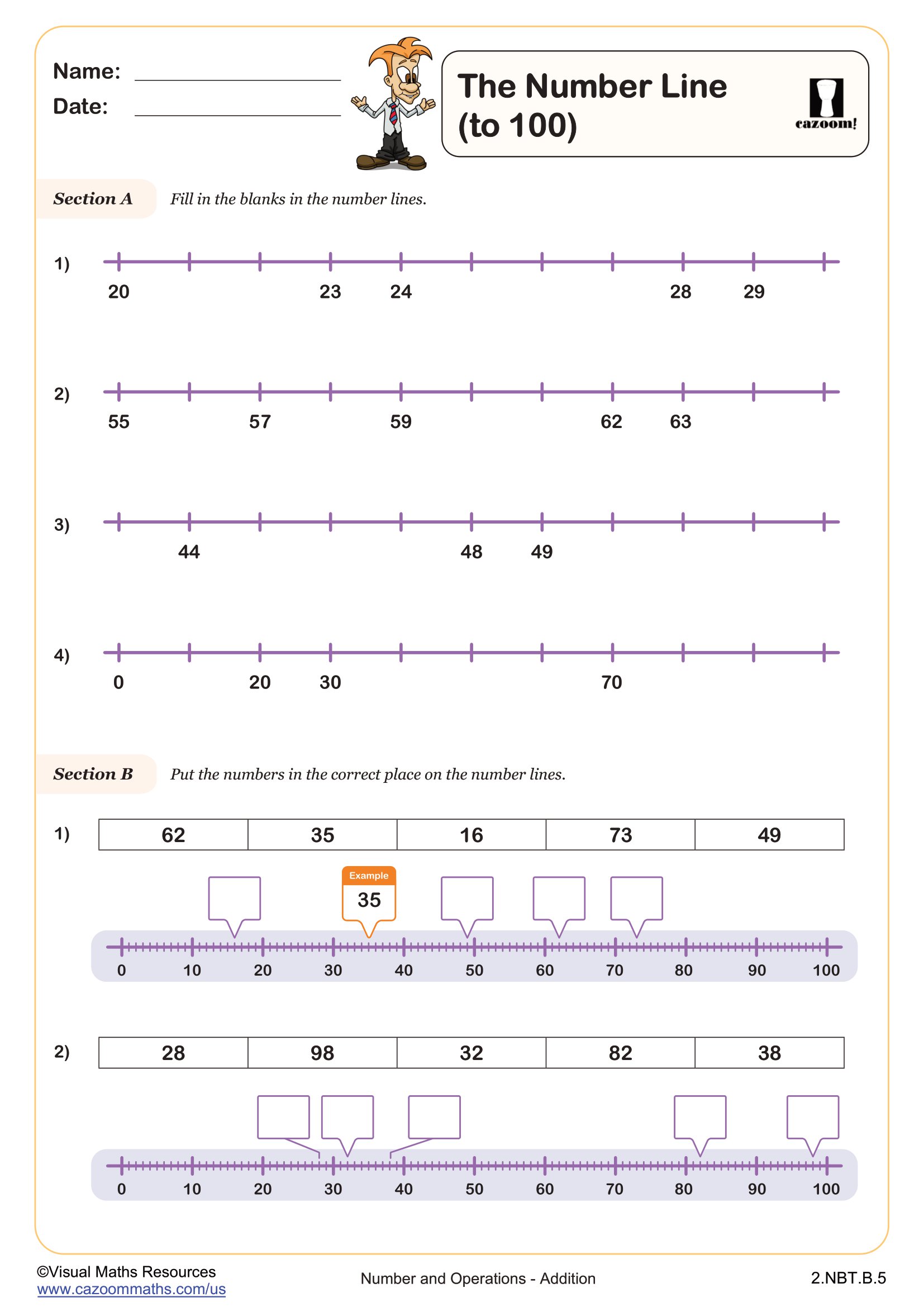
The Number Line to 100
Grades: 2nd Grade
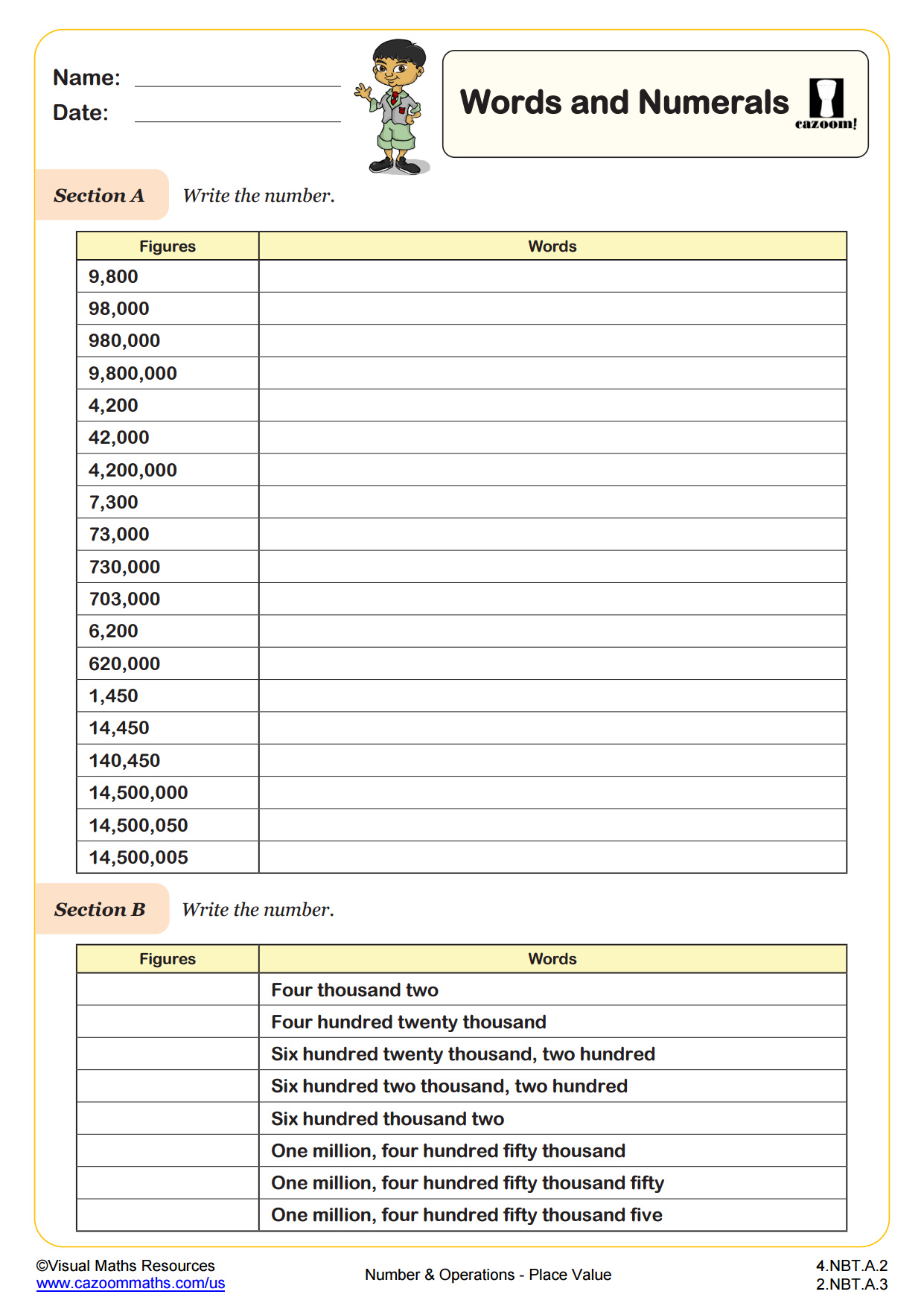
Words and Numerals
Grades: 2nd Grade, 4th Grade
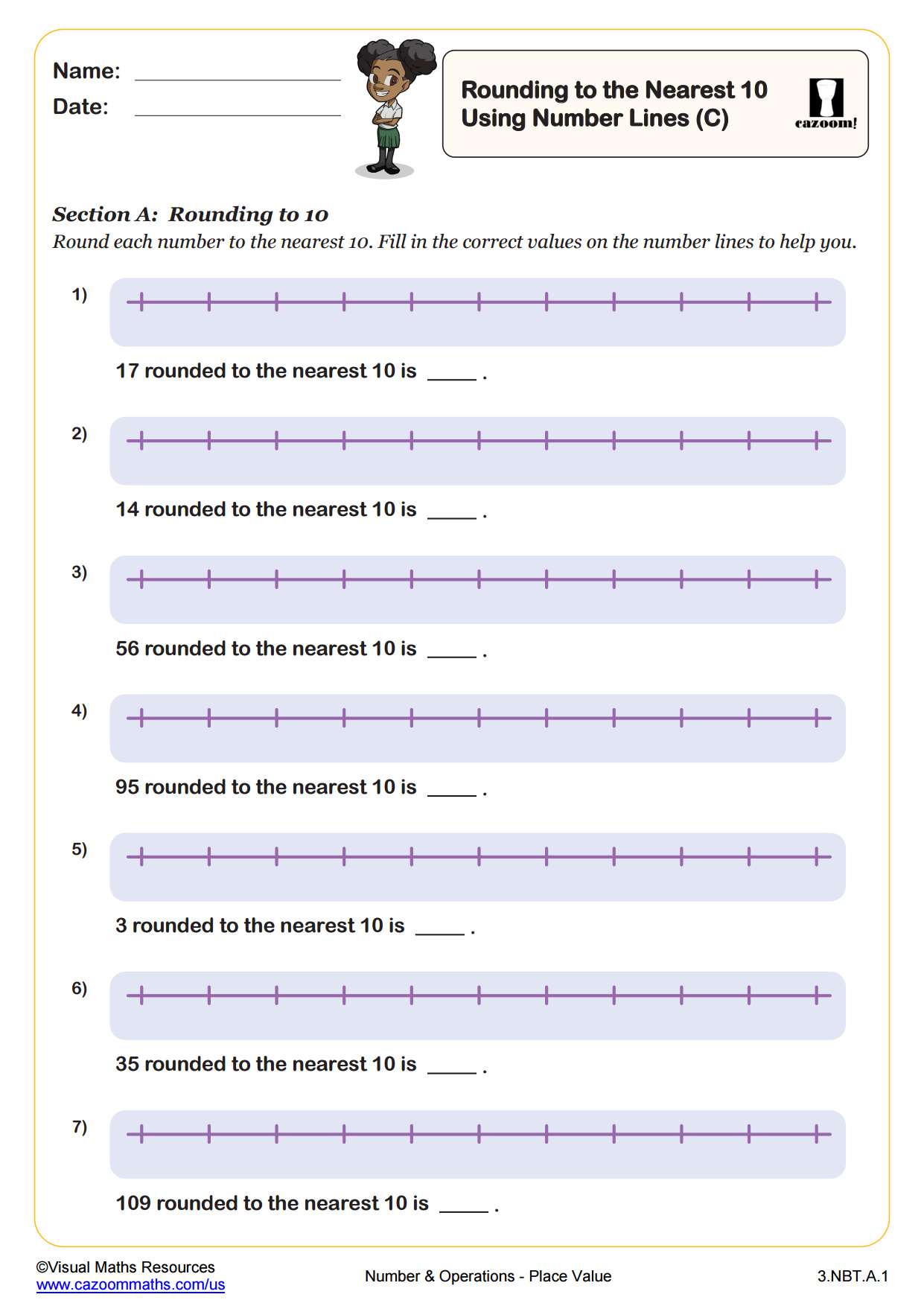
Rounding Numbers to the Nearest 10 Using Number Lines (C)
Grades: 3rd Grade
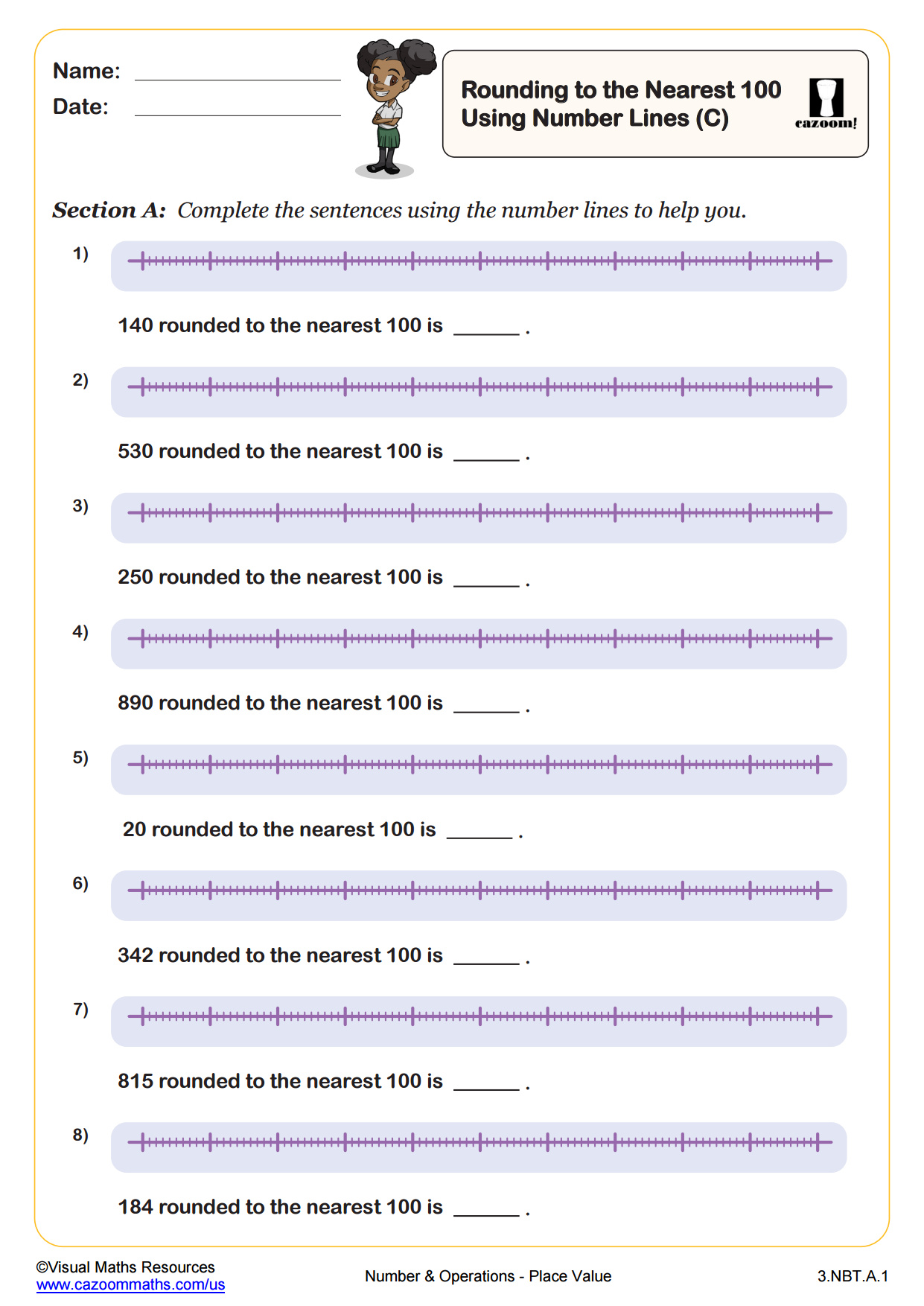
Rounding Numbers to the Nearest 100 Using Number Lines (C)
Grades: 3rd Grade
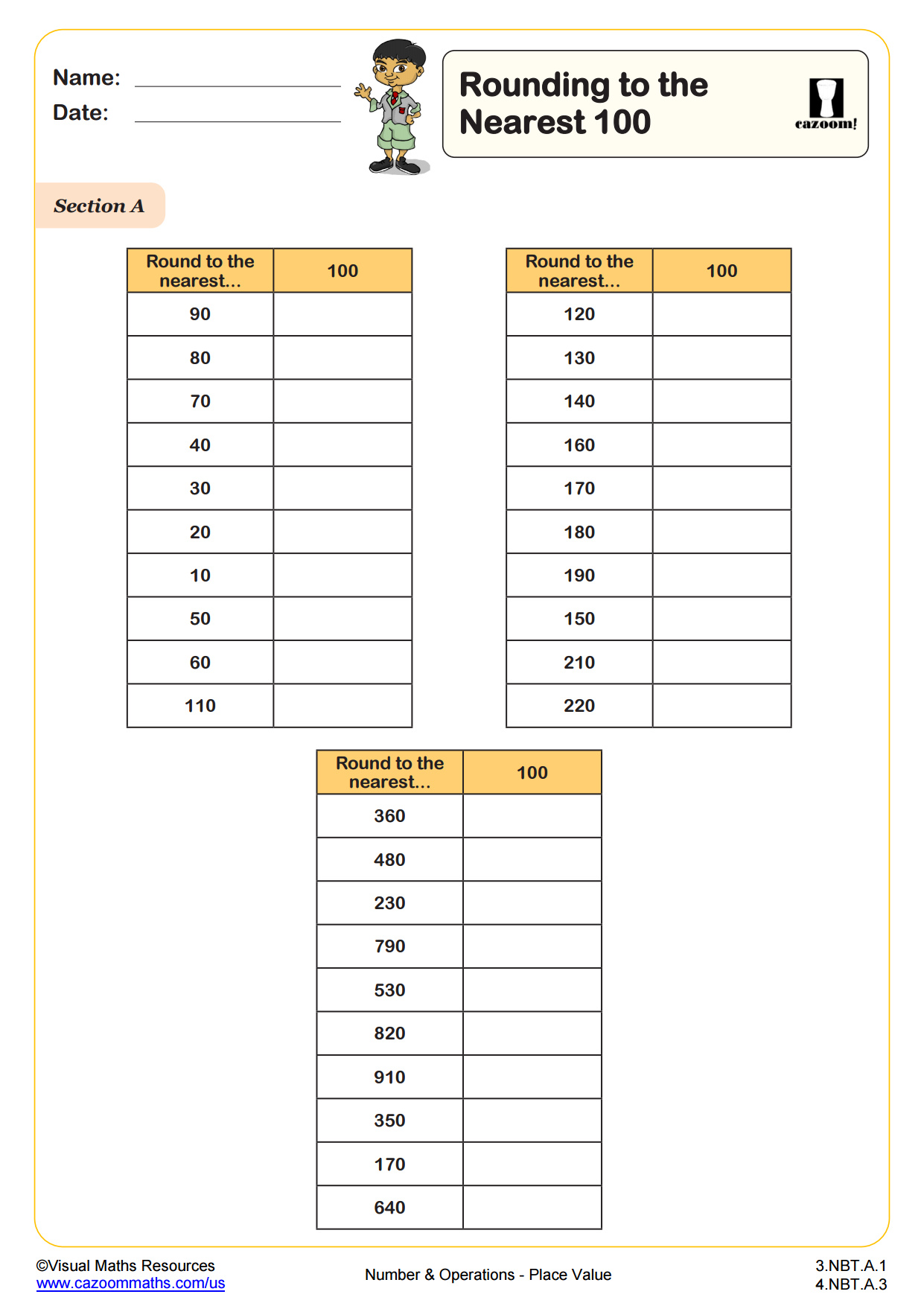
Rounding to the Nearest 100
Grades: 3rd Grade, 4th Grade
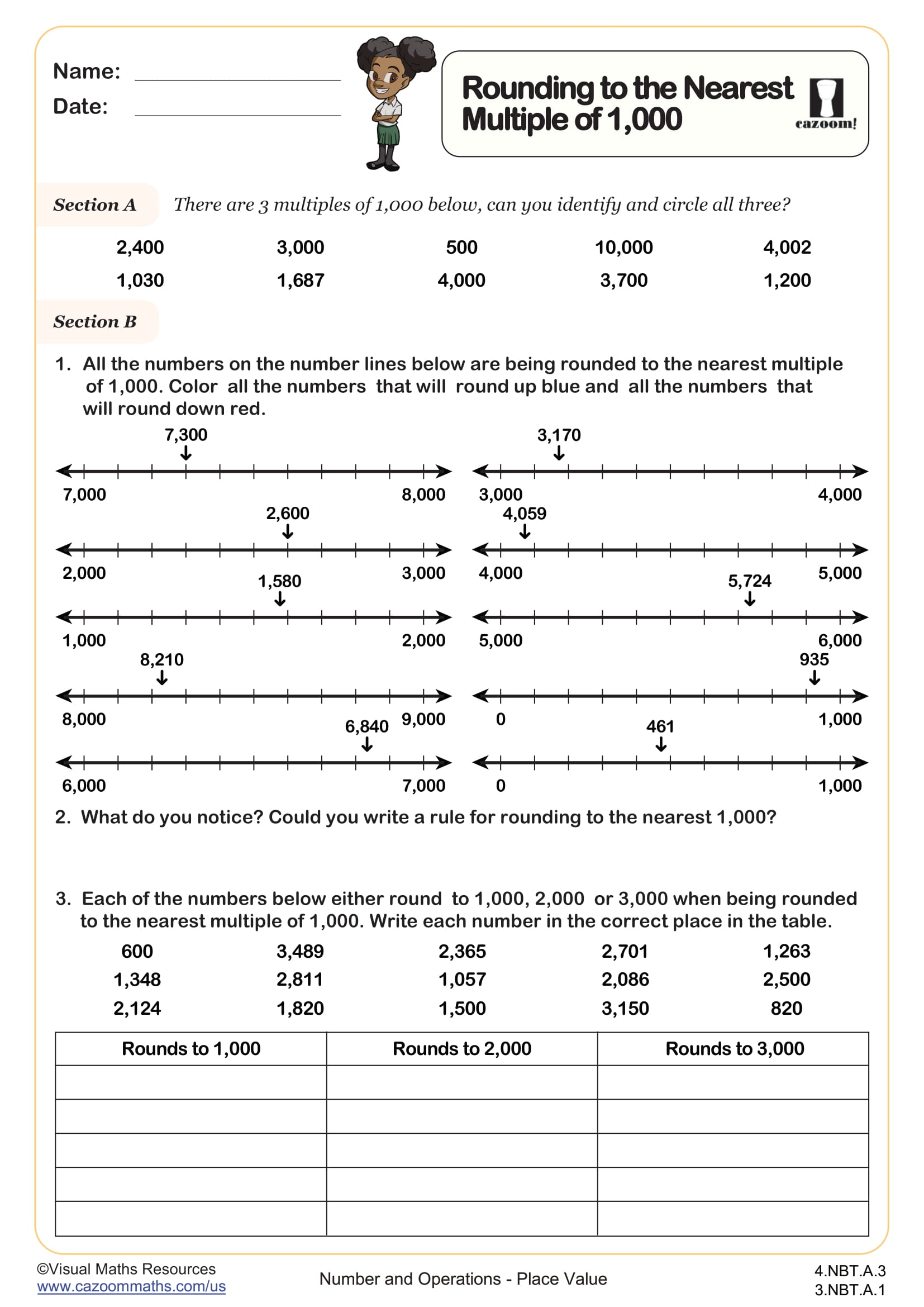
Rounding to the Nearest Multiple of 1,000
Grades: 3rd Grade, 4th Grade
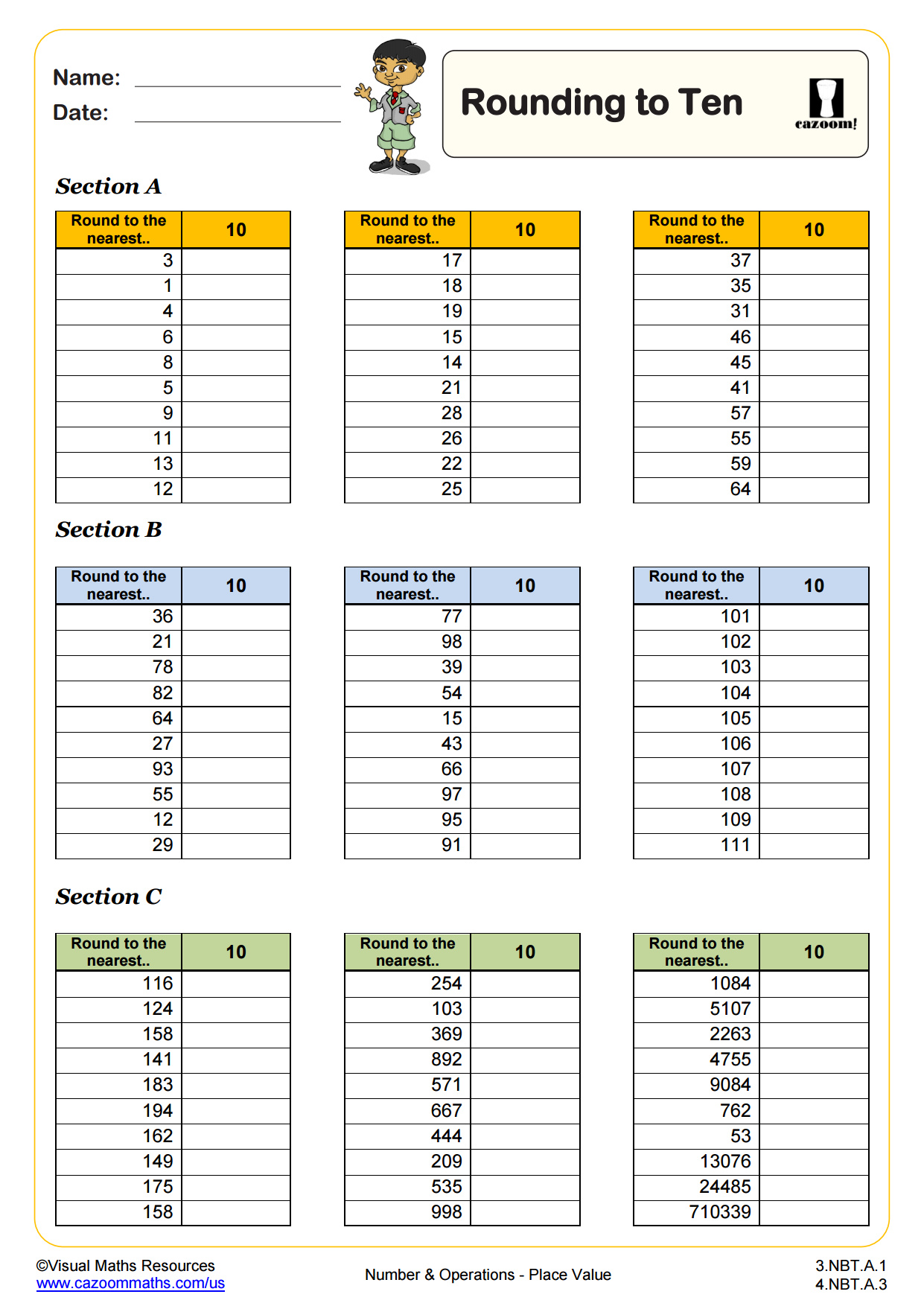
Rounding to the Nearest Ten
Grades: 3rd Grade, 4th Grade
1000 More 1000 Less (A)
Grades: 4th Grade
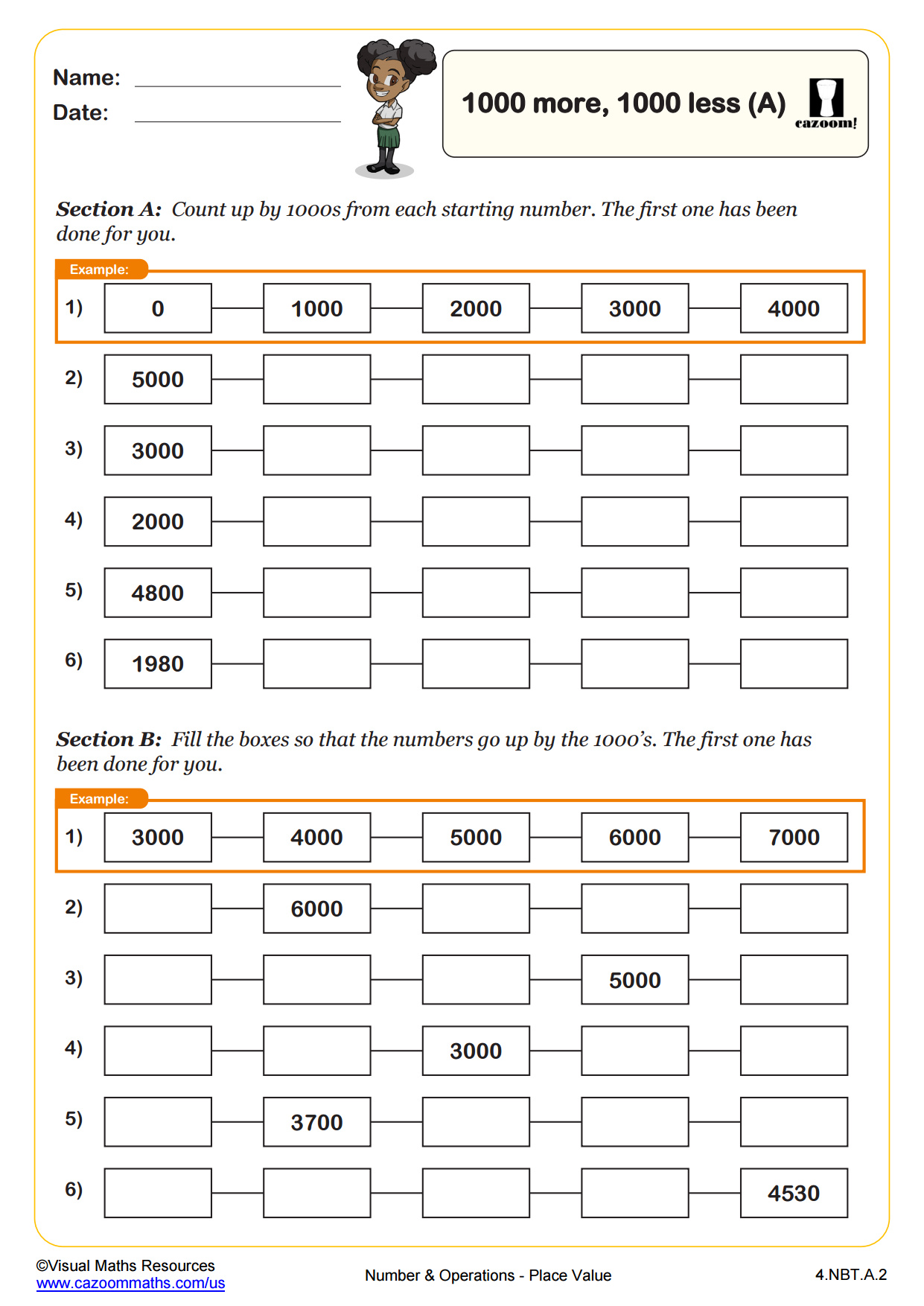
1000 More 1000 Less (B)
Grades: 4th Grade
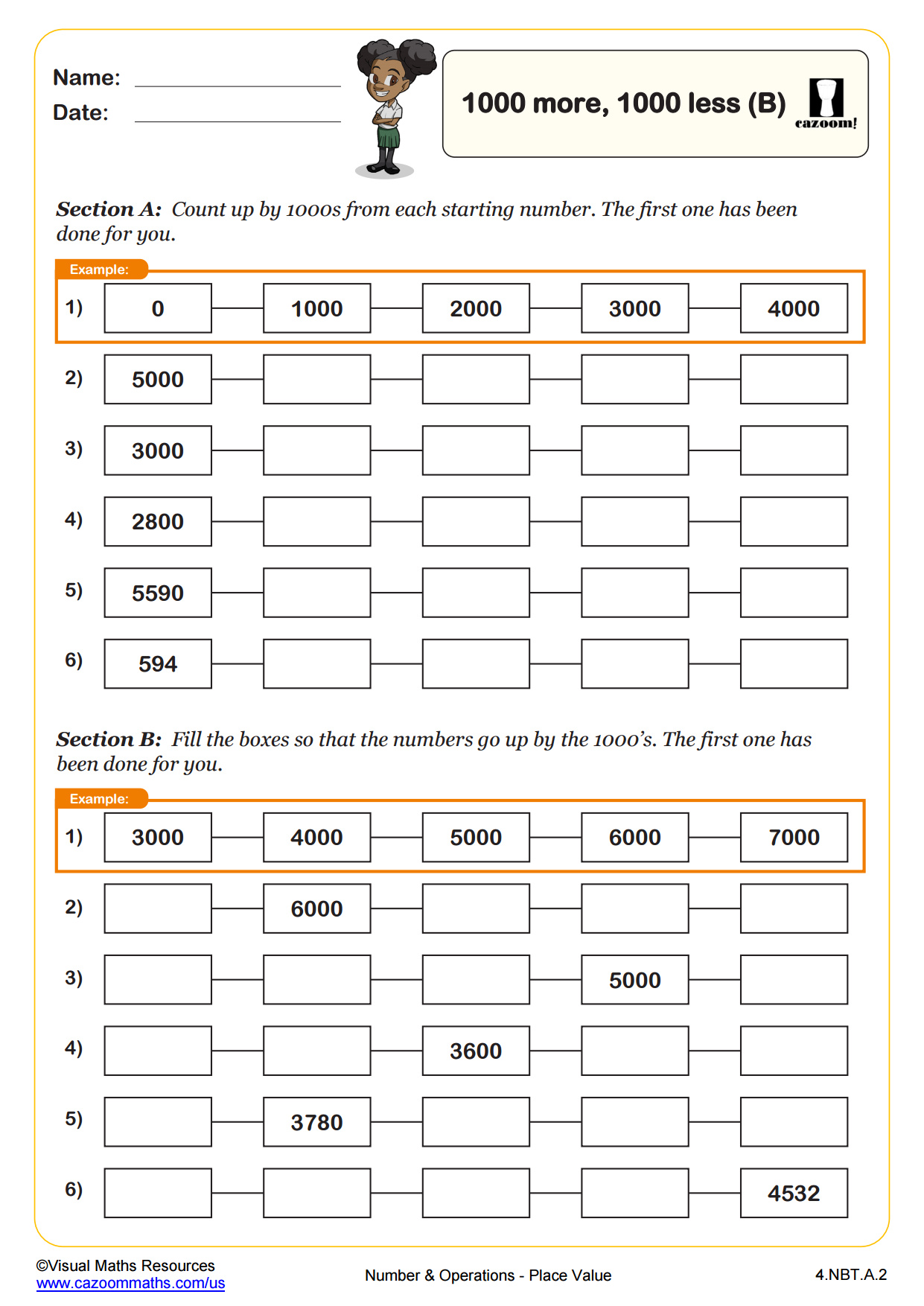
1000 More 1000 Less (C)
Grades: 4th Grade
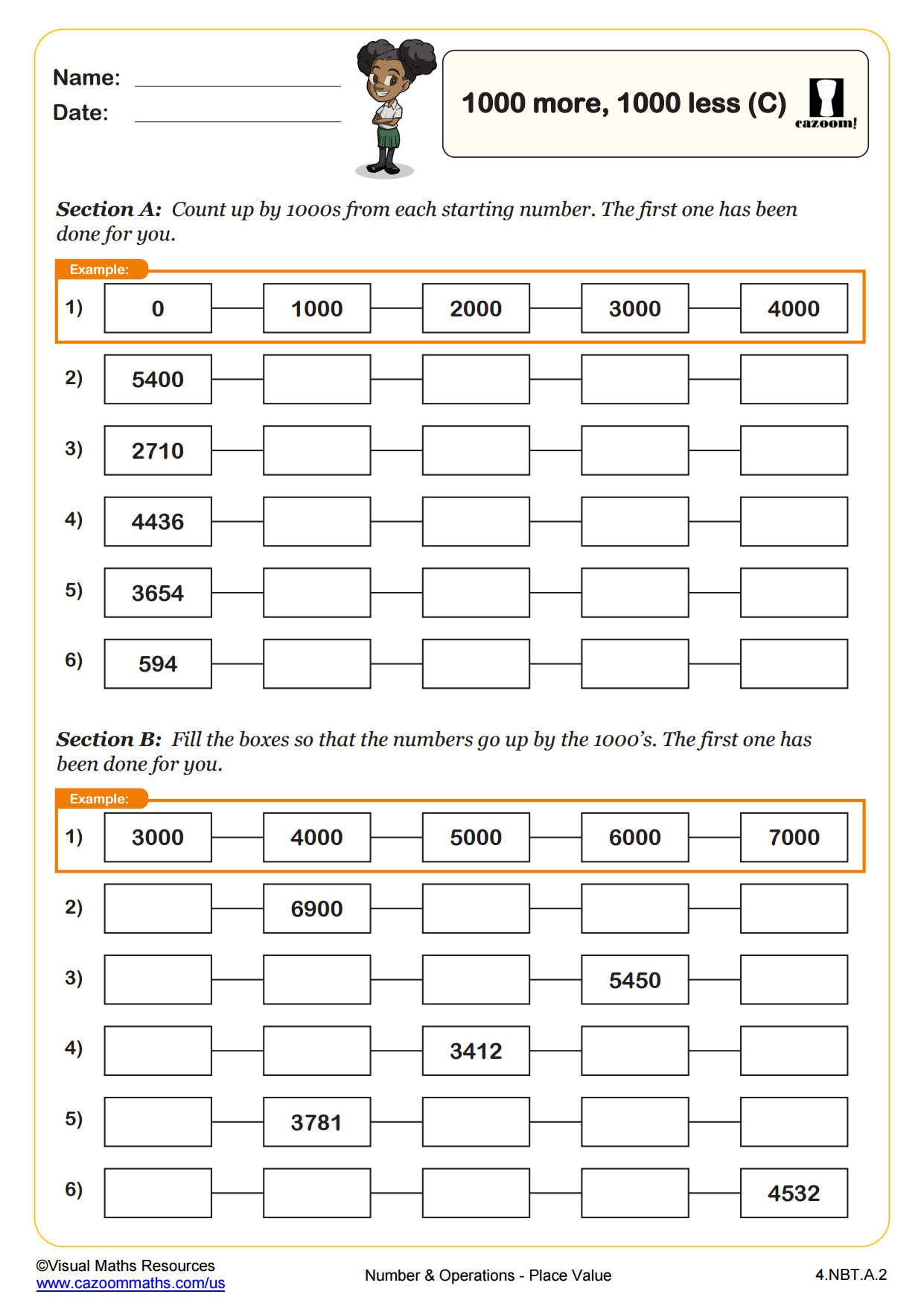
Compare and Order Numbers to 10,000
Grades: 4th Grade
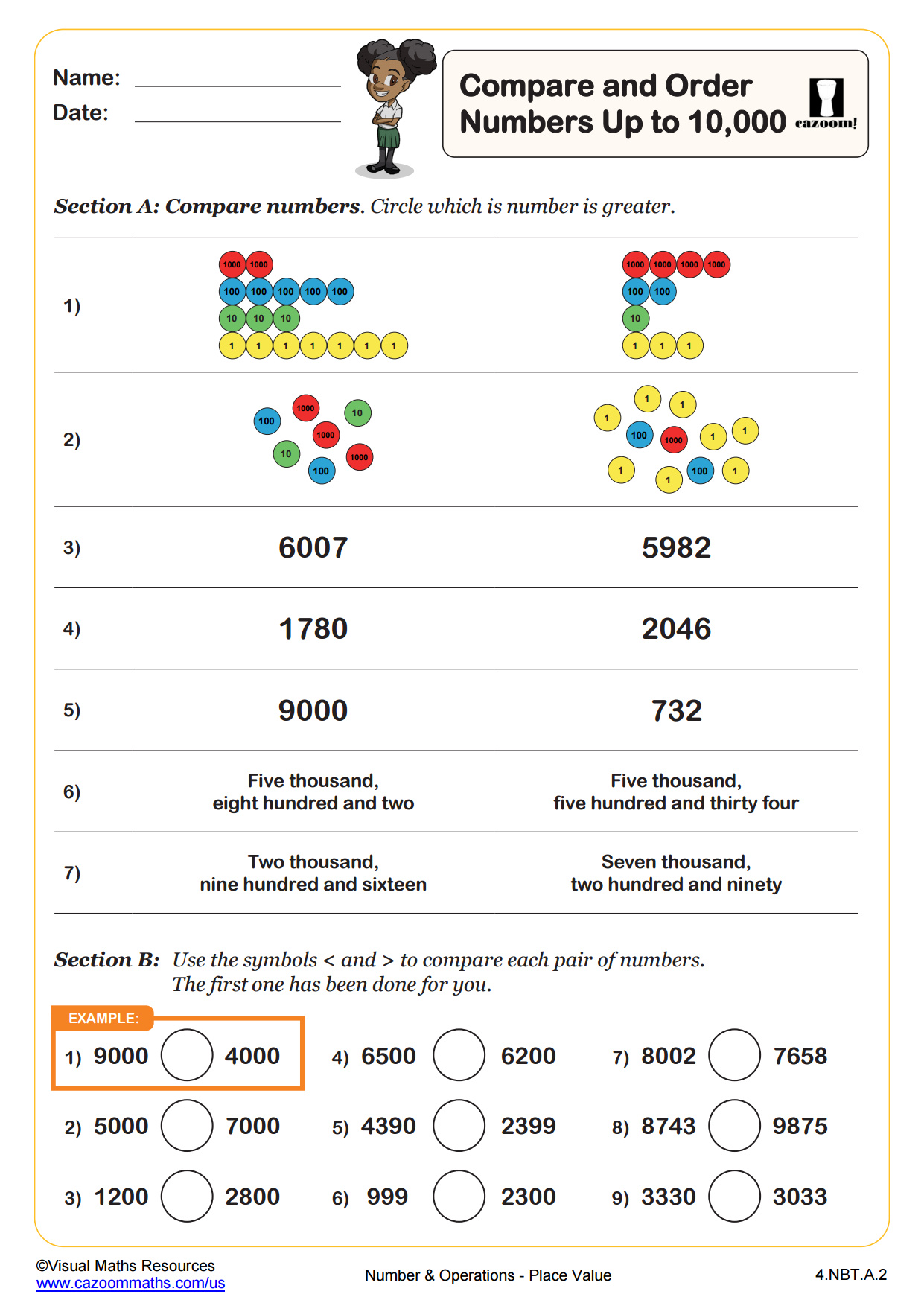
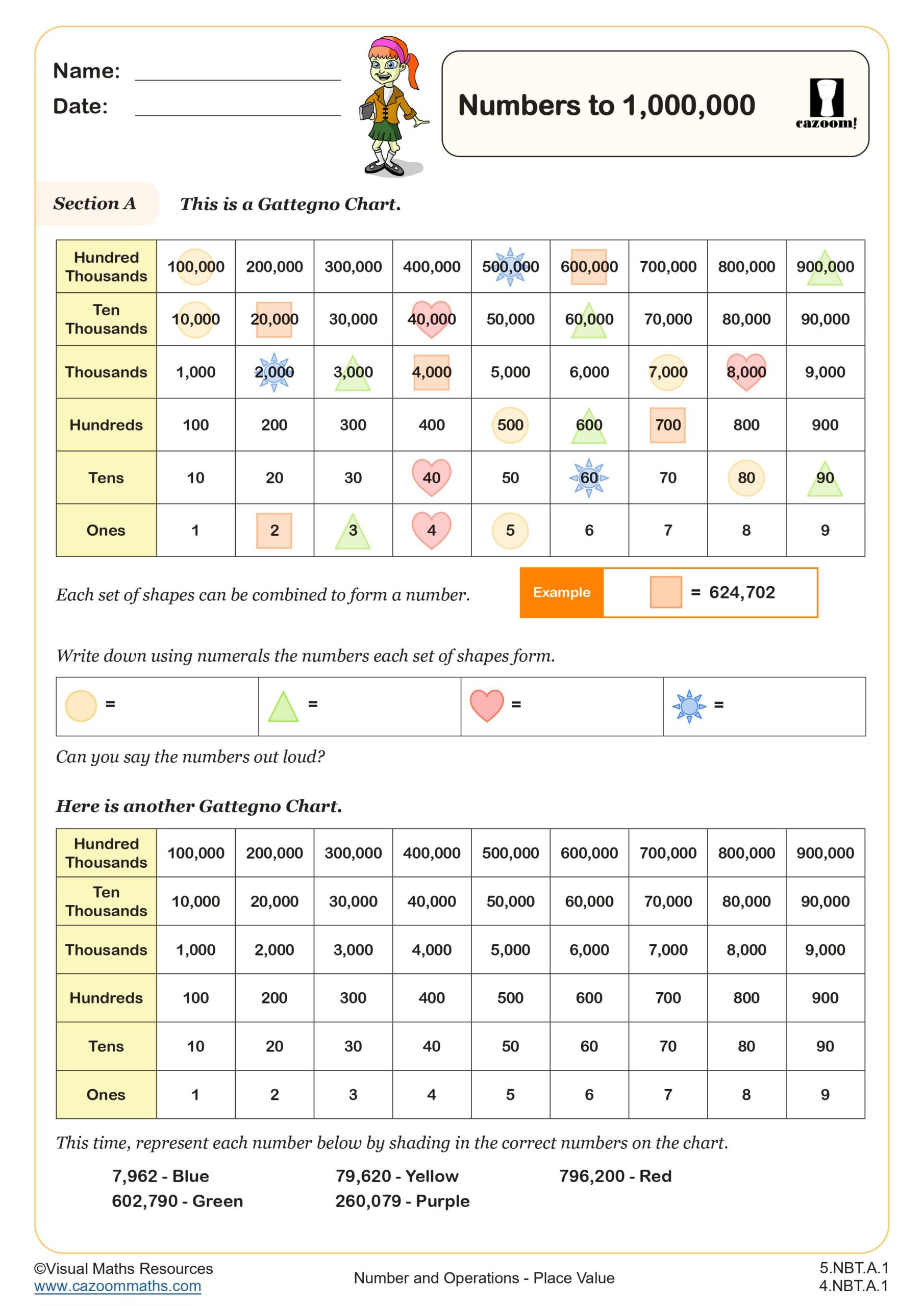
Numbers to 1,000,000
Grades: 4th Grade, 5th Grade
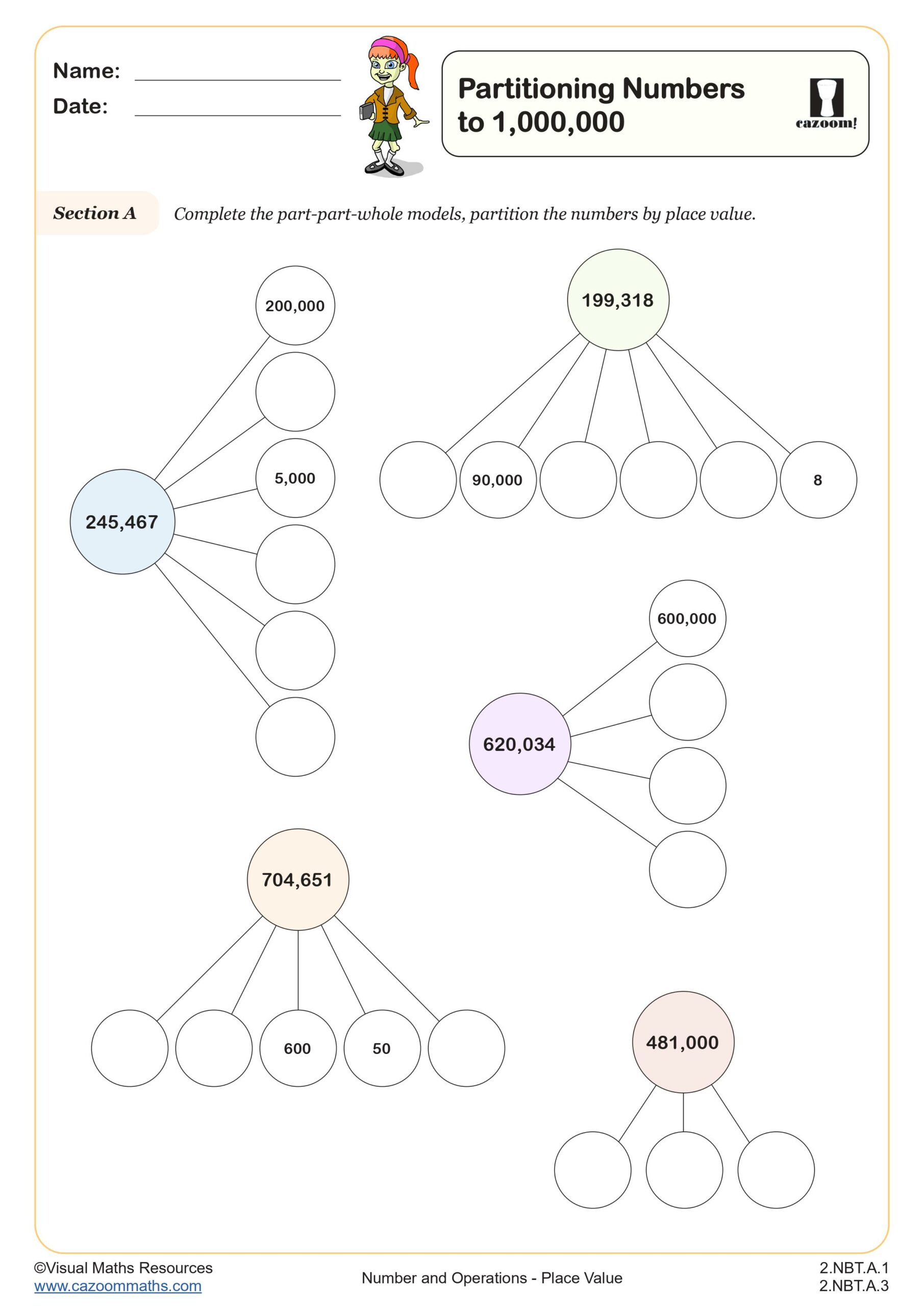
Partitioning Numbers to 1,000,000
Grades: 4th Grade
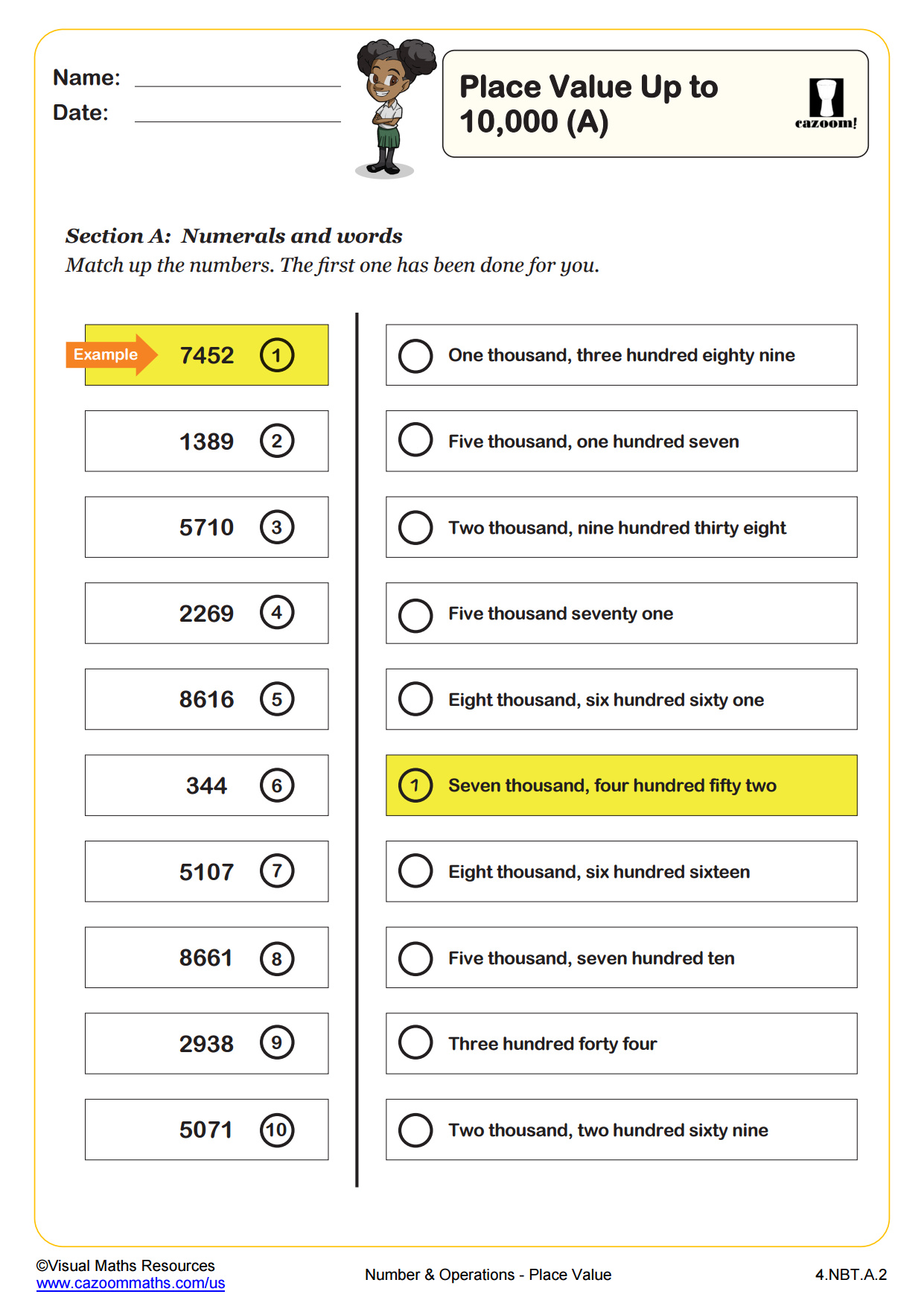
Place Value up to 10,000 (A)
Grades: 4th Grade
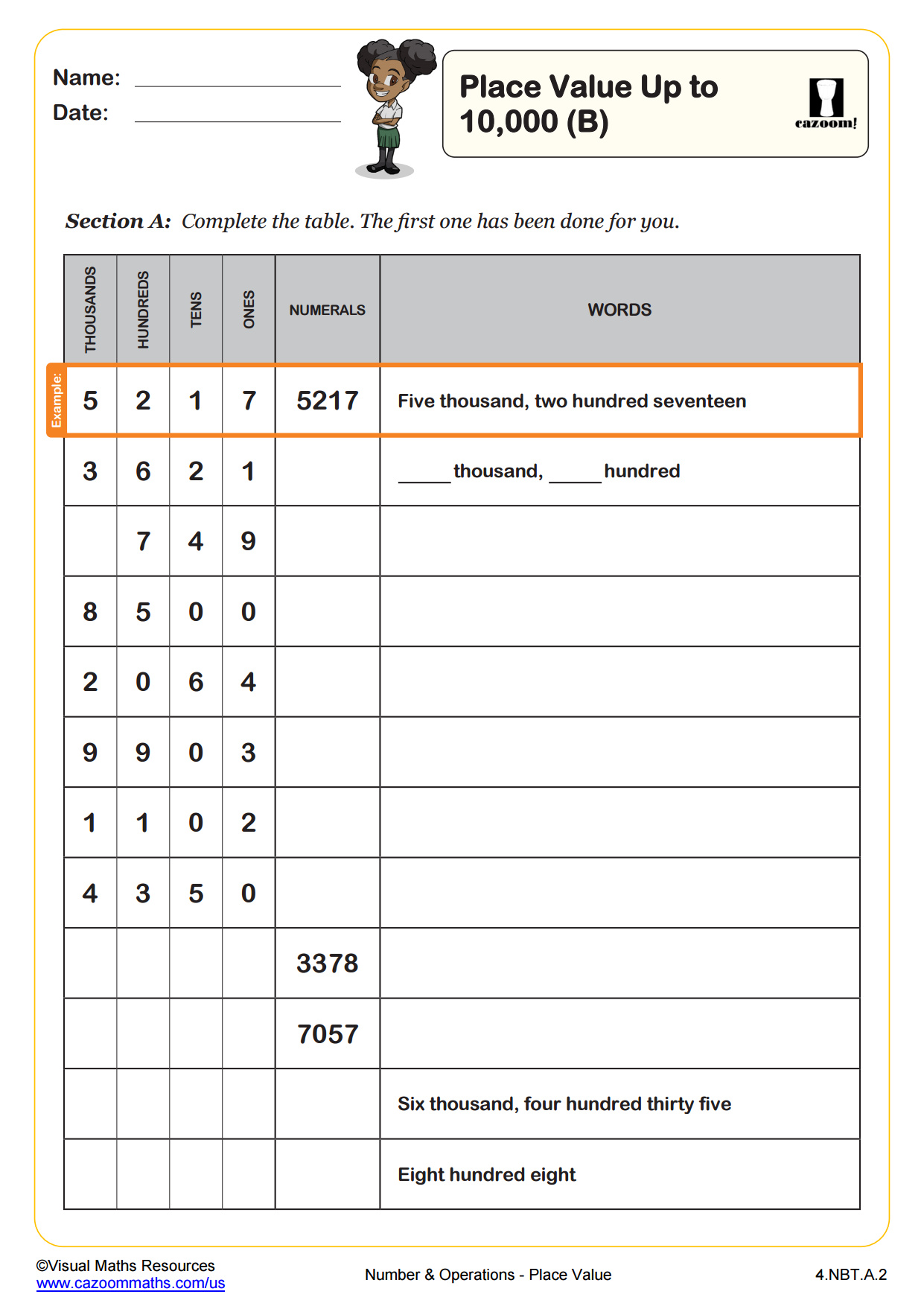
Place Value up to 10,000 (B)
Grades: 4th Grade
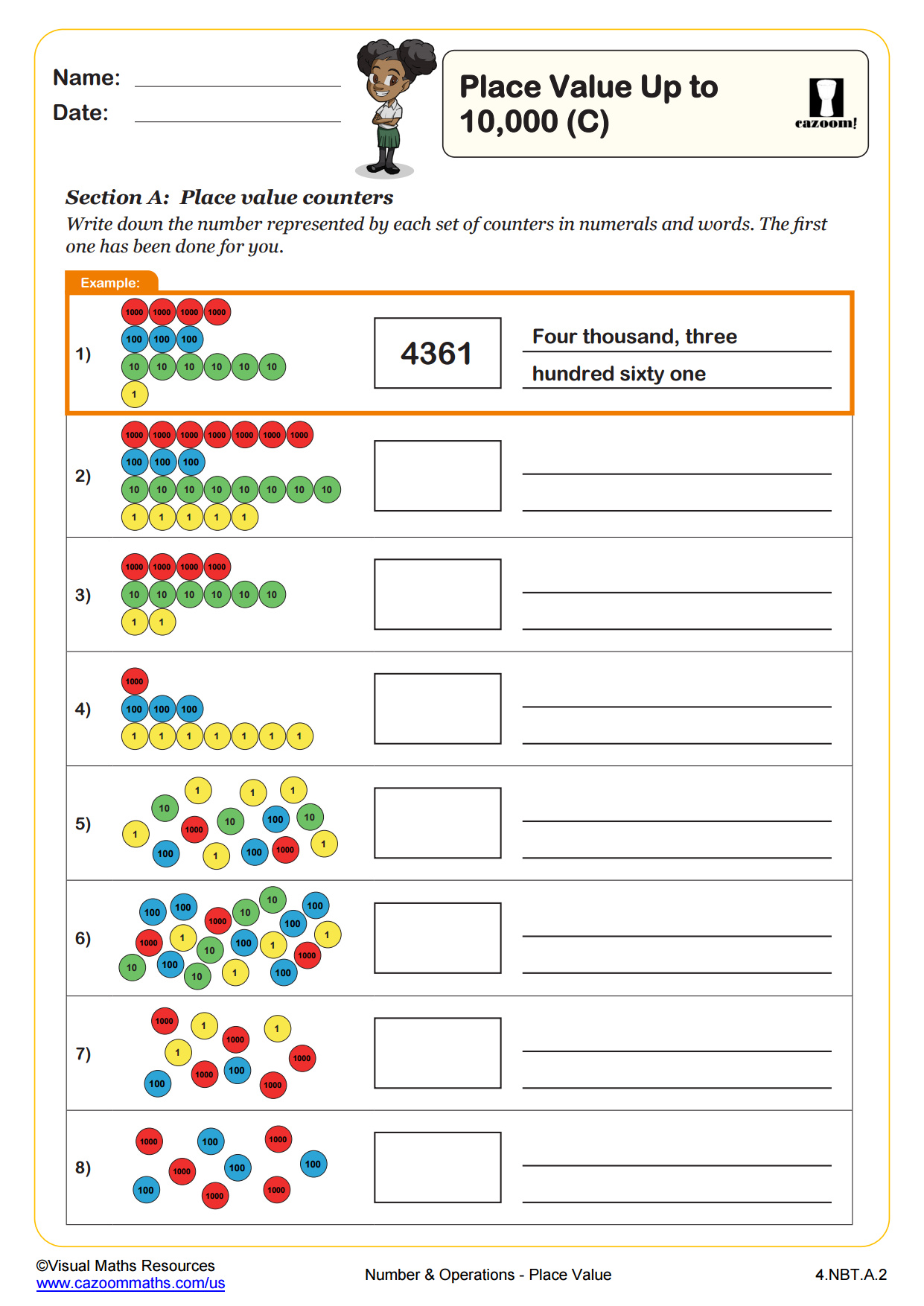
Place Value up to 10,000 (C)
Grades: 4th Grade
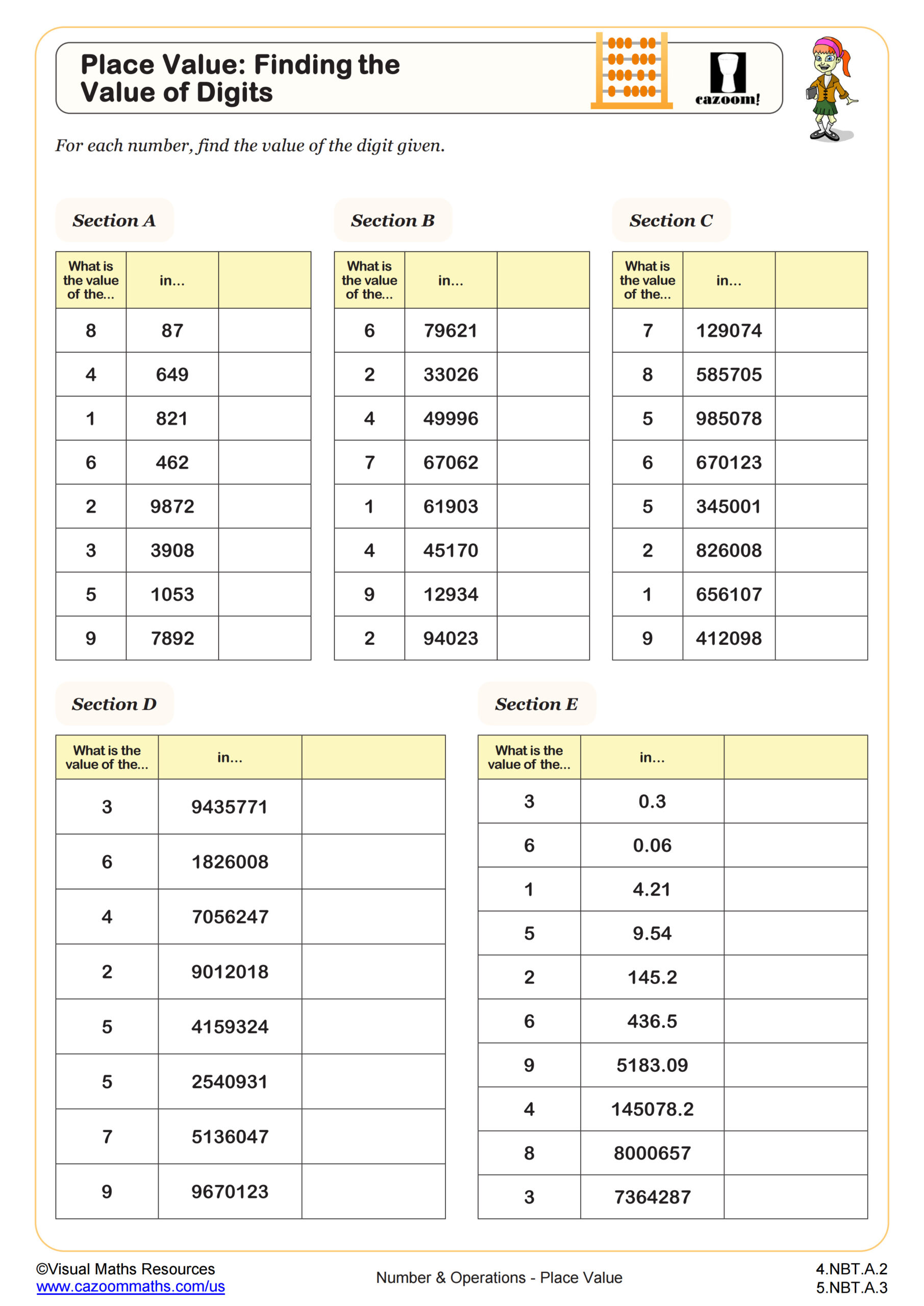
Place Value: Finding the Value of Digits
Grades: 4th Grade, 5th Grade
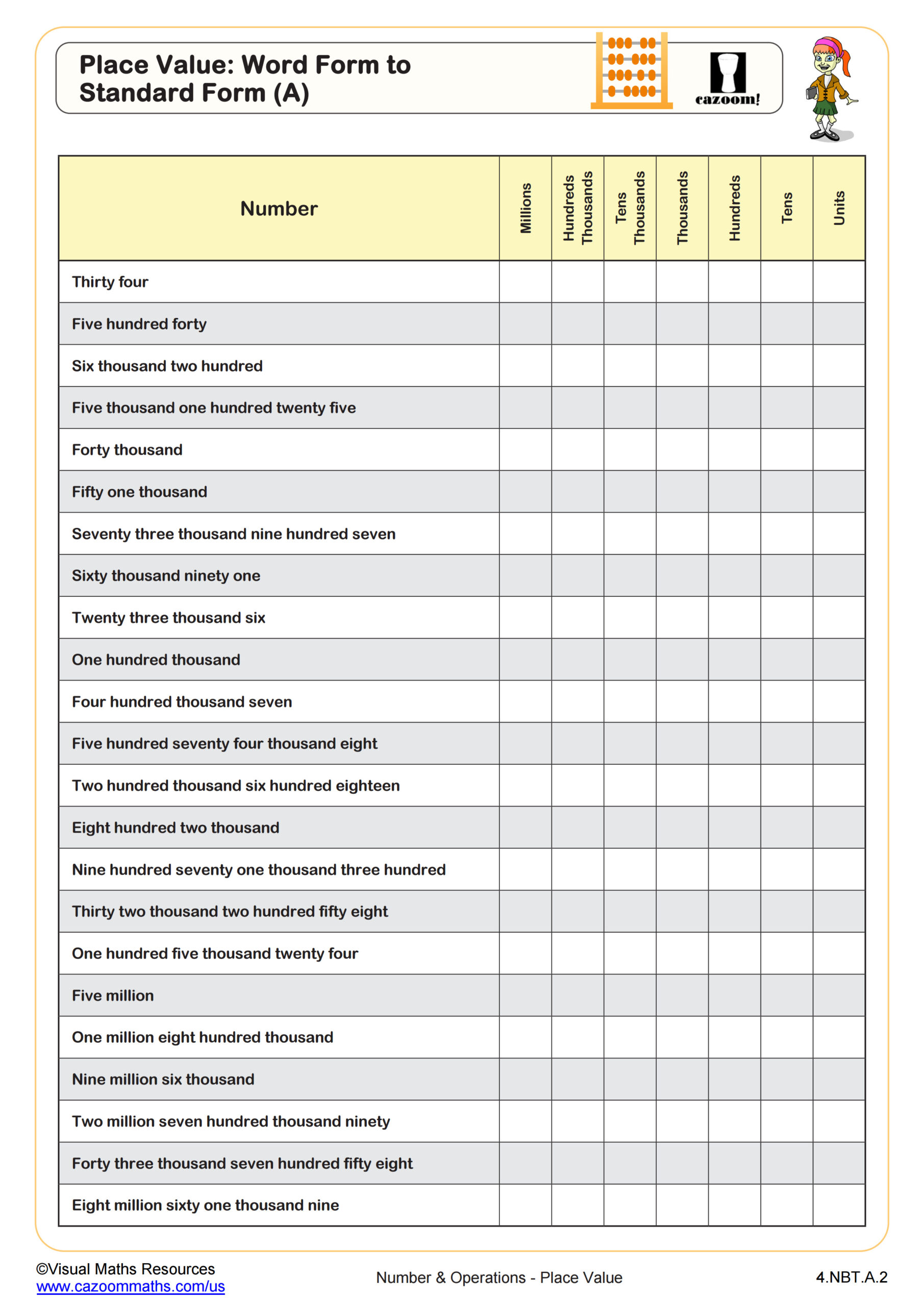
Place Value: Word Form to Standard Form (A)
Grades: 4th Grade
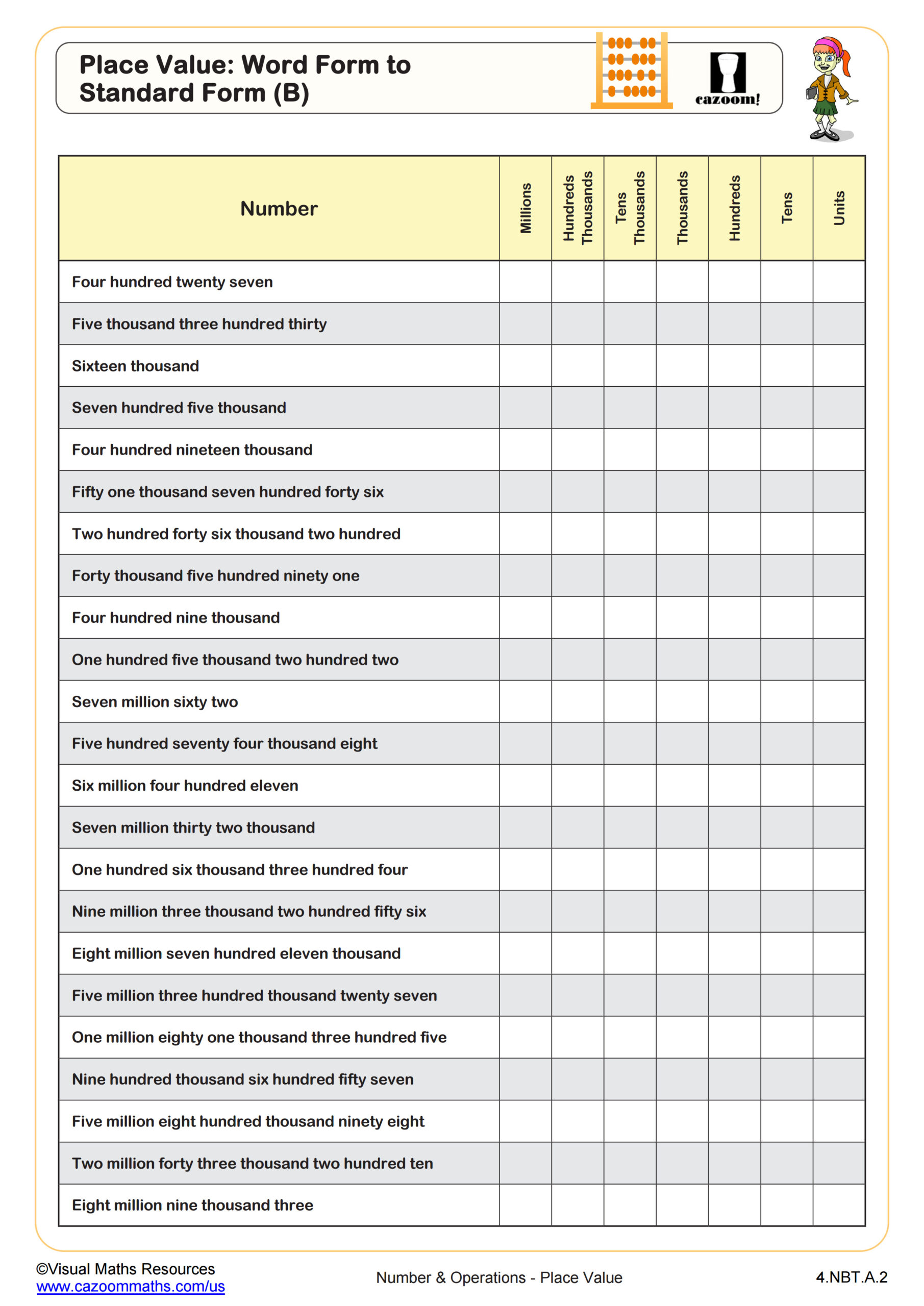
Place Value: Word Form to Standard Form (B)
Grades: 4th Grade
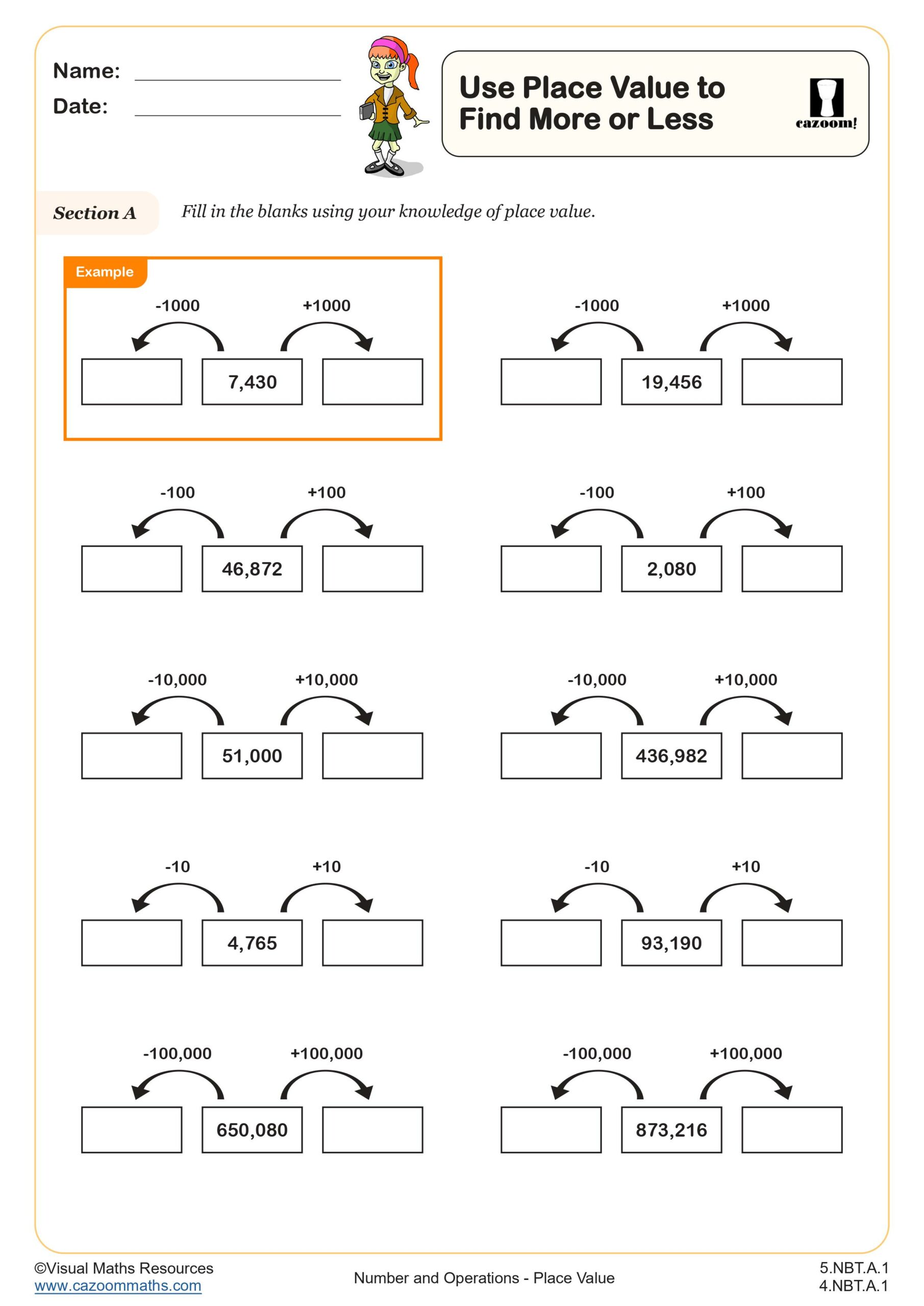
Use Place Value to Find More or Less
Grades: 4th Grade, 5th Grade
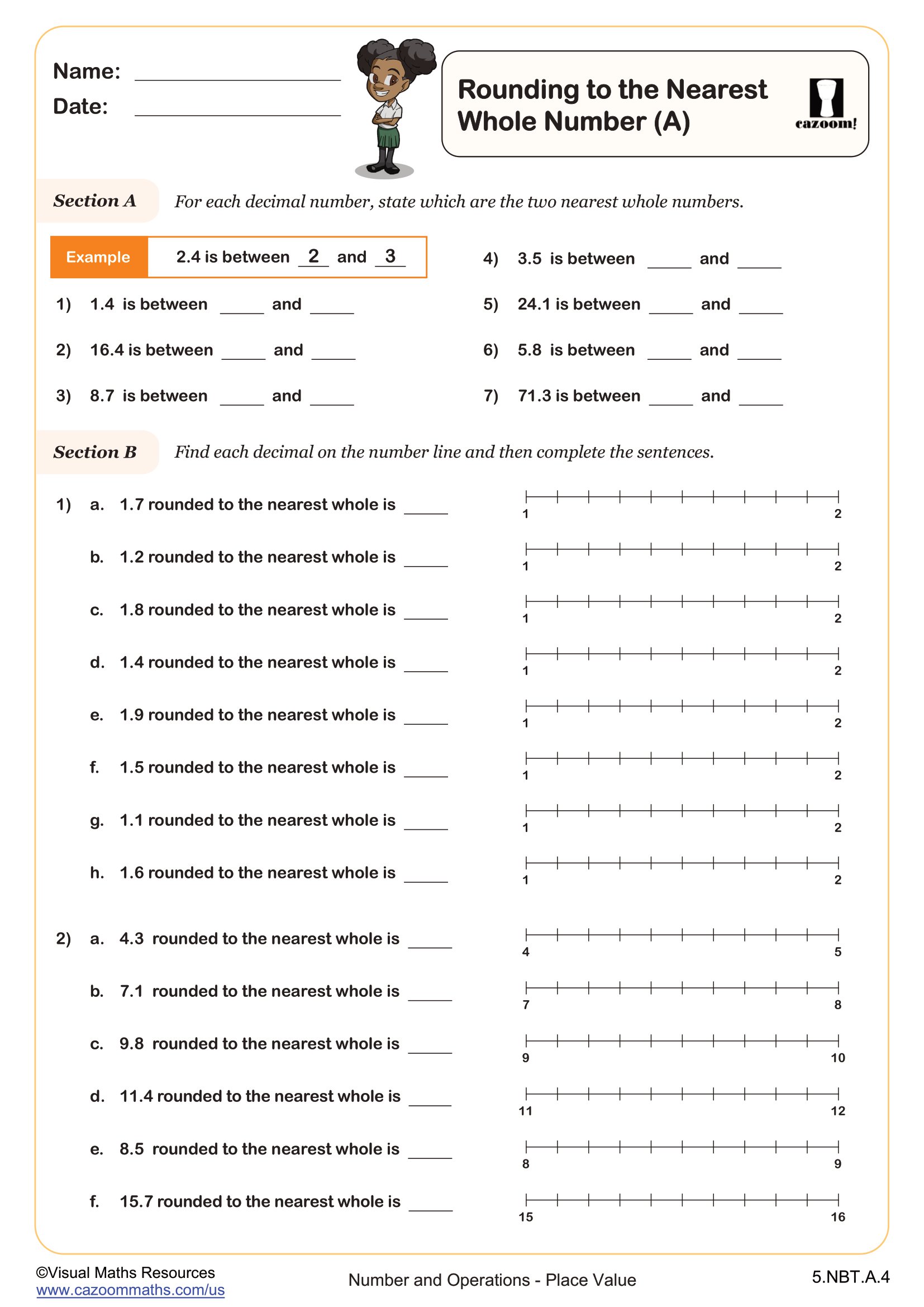
Rounding to the Nearest Whole Numbers (A)
Grades: 5th Grade
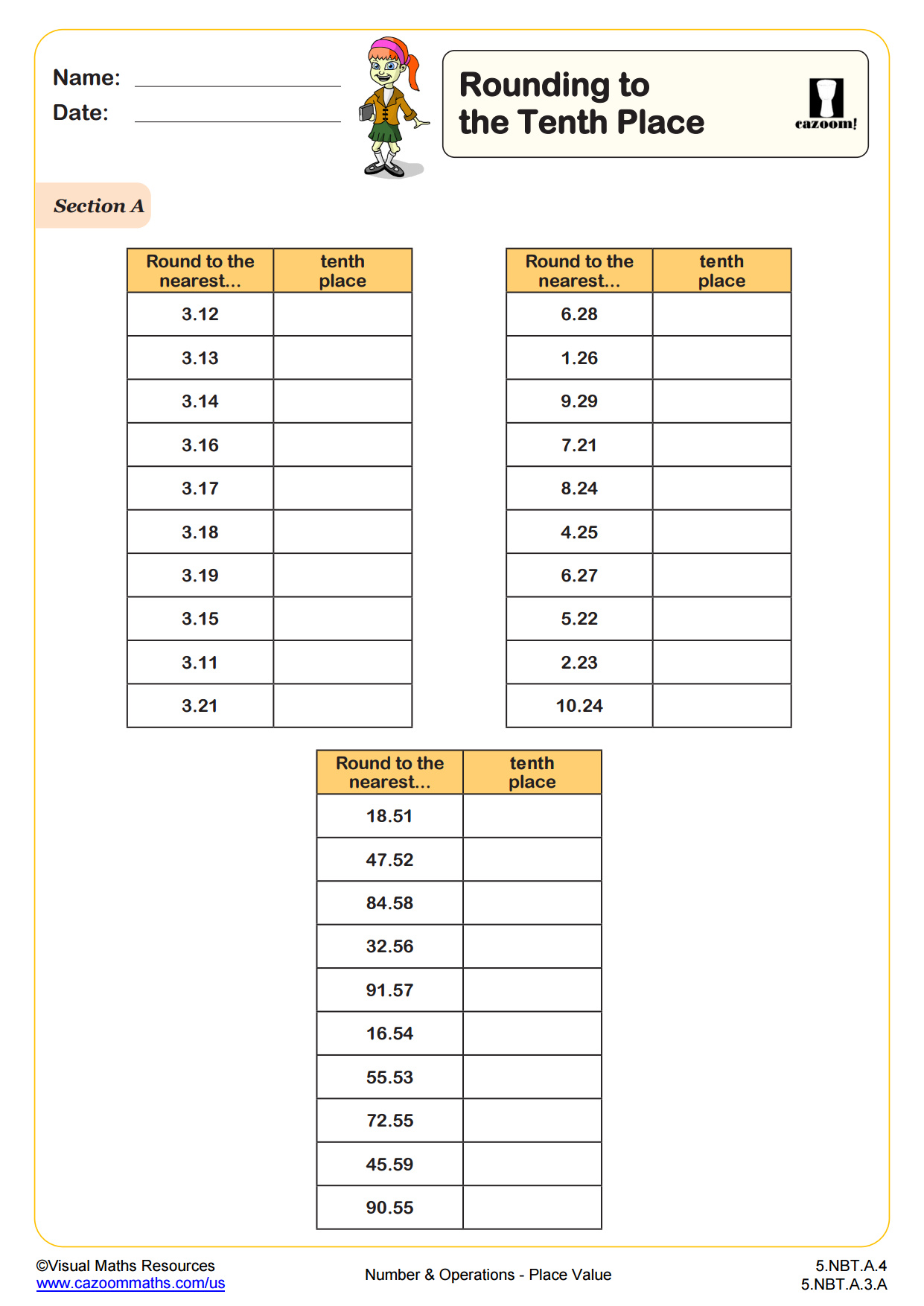
Rounding to the Tenth's Place
Grades: 5th Grade
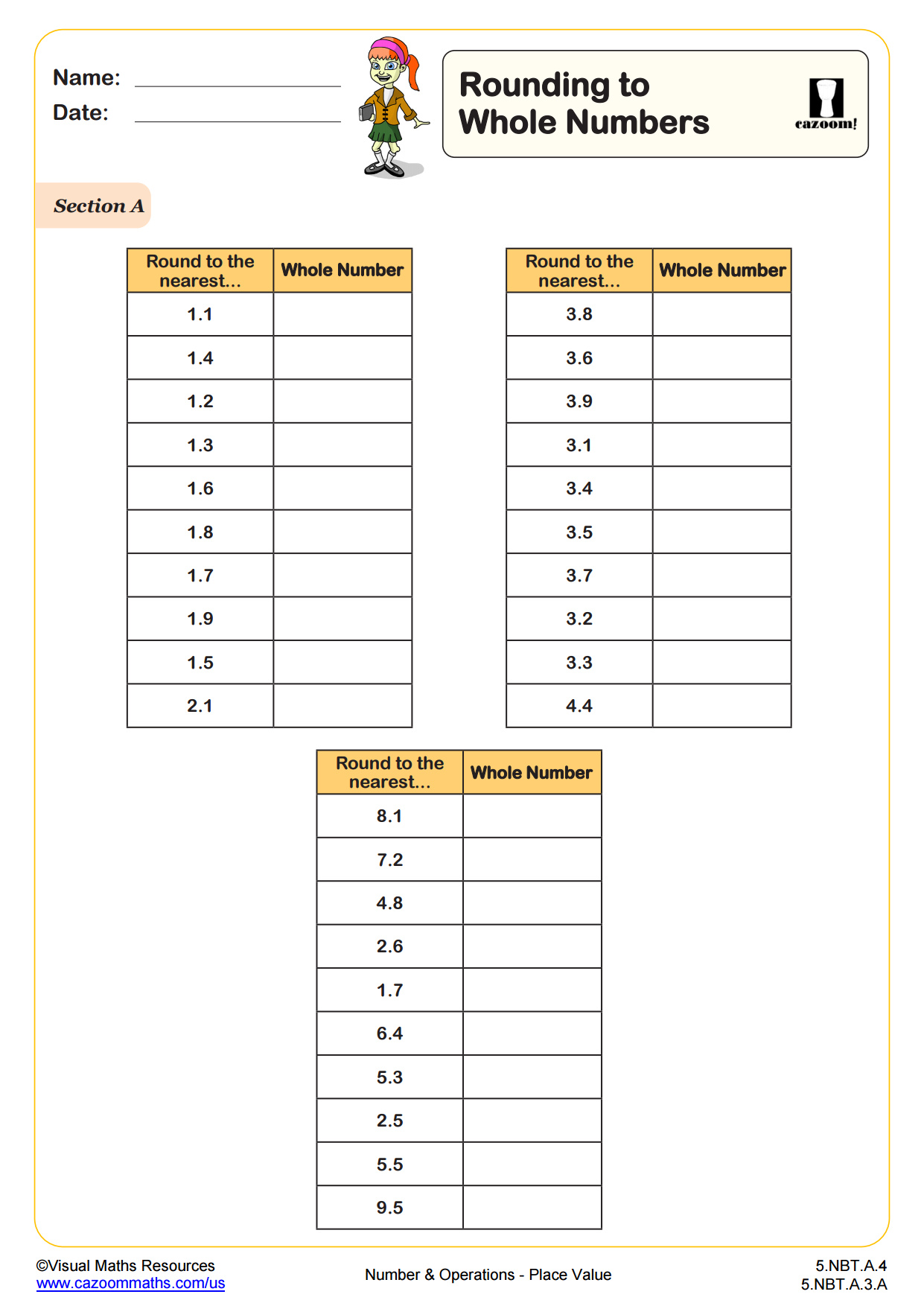
Rounding to Whole Numbers
Grades: 5th Grade
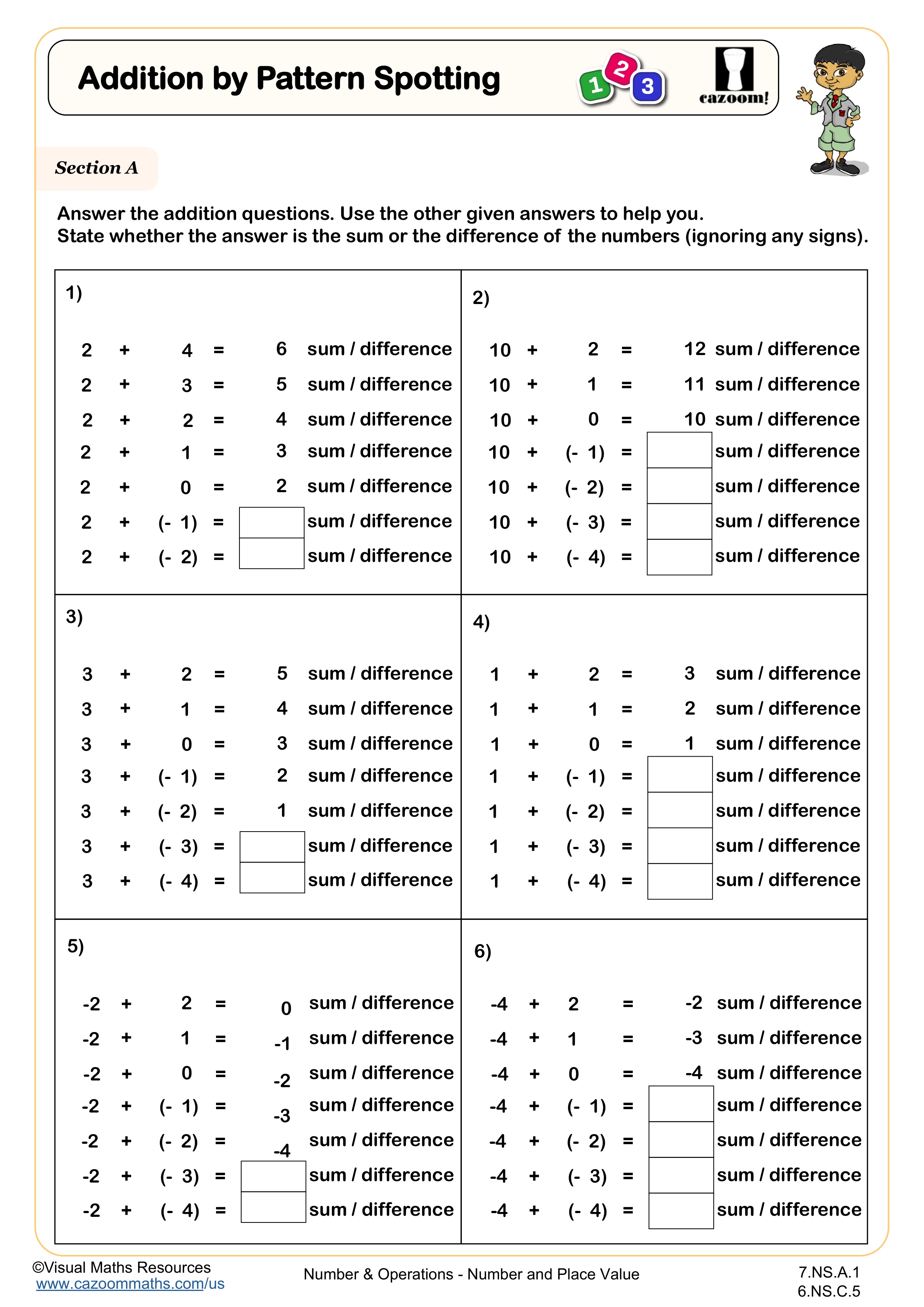
Addition by Pattern Spotting
Grades: 6th Grade, 7th Grade
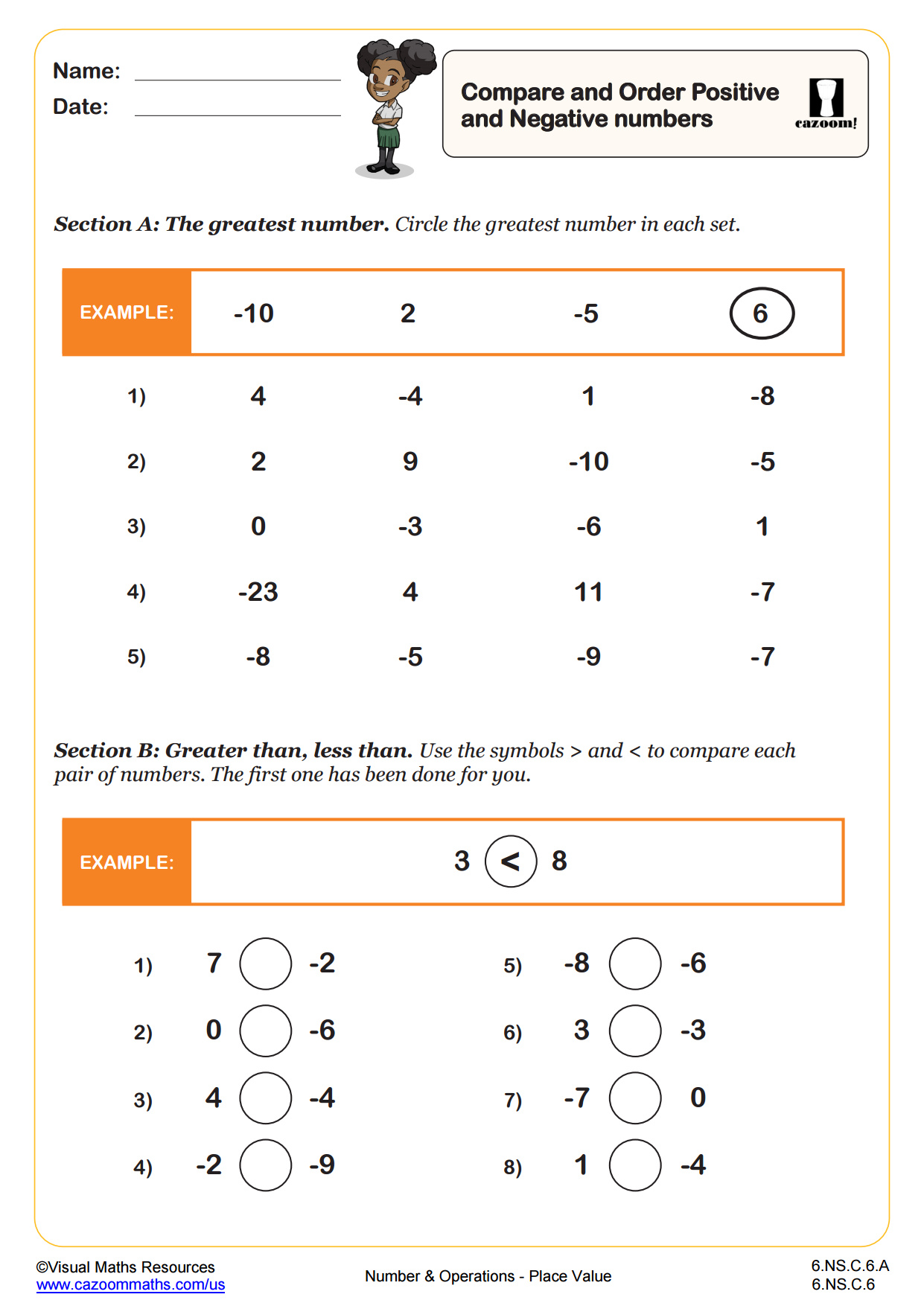
Compare and Order Positive and Negative Numbers
Grades: 6th Grade
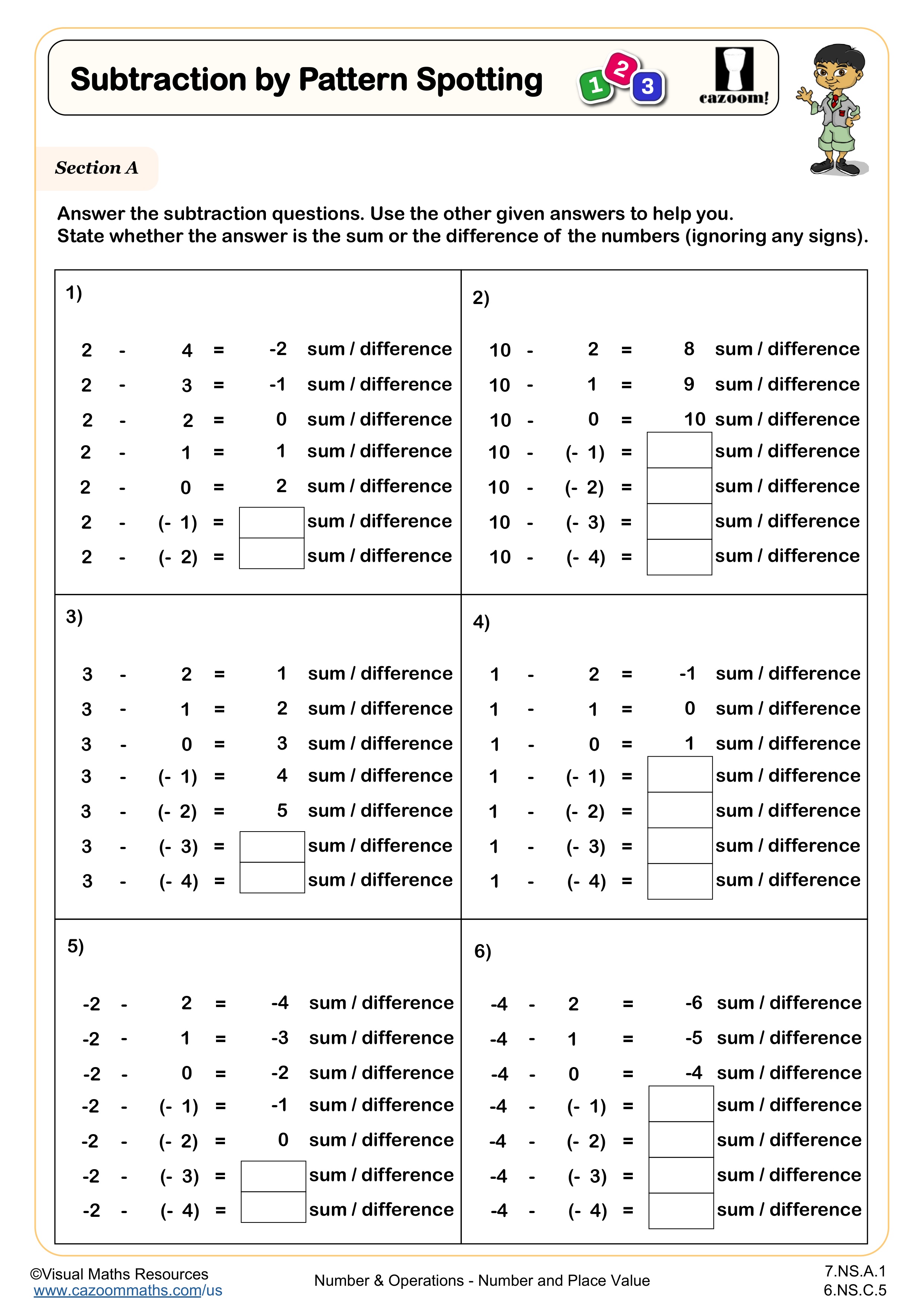
Subtraction by Pattern Spotting
Grades: 6th Grade, 7th Grade
All worksheets are created by the team of experienced teachers at Cazoom Math.
What specific skills do place value worksheets target for different grade levels?
Place value worksheets address foundational skills that align with Common Core standards from kindergarten through middle school. Early grades focus on counting sequences, number recognition, and basic place value concepts like tens and ones, while upper elementary introduces larger numbers, decimals, and expanded form notation.
Many teachers notice that students often confuse the digit with its place value, especially when working with numbers like 305 where the zero creates confusion. The worksheets progress systematically from concrete representations using base-ten blocks to abstract numerical exercises that prepare students for operations with multi-digit numbers.
How do place value concepts progress from elementary to middle school math?
The progression follows a clear developmental pathway starting with concrete counting and place recognition in early grades, then advancing to abstract understanding of positional notation systems. Elementary students master whole number place value before transitioning to decimal concepts and scientific notation in middle school grades.
Teachers often find that students who struggle with decimal placement missed foundational concepts about how place value works with whole numbers. The worksheets bridge this gap by connecting familiar whole number patterns to decimal representations, helping students understand that the same principles apply on both sides of the decimal point.
Why do students struggle with decimal place value chart concepts?
Decimal place value presents unique challenges because students must understand that places to the right of the decimal point represent fractional parts of one. A decimal place value chart with example problems helps students visualize how tenths, hundredths, and thousandths relate to each other and to whole numbers.
Classroom observations reveal that many students incorrectly assume that 0.7 is smaller than 0.15 because 7 is smaller than 15. The visual structure of place value charts helps students recognize that position, not the size of the digit, determines value. This understanding becomes crucial for comparing decimals and performing operations accurately.
How can teachers use these place value and value worksheets most effectively in math instruction?
Effective implementation involves using worksheets as targeted practice after introducing concepts through hands-on manipulatives and visual models. Teachers find success by starting each worksheet session with a quick warm-up that reviews the previous day's concept before introducing new material.
The answer keys enable teachers to provide immediate feedback and identify specific misconceptions quickly. Many educators use the worksheets for differentiated instruction, assigning different difficulty levels within the same classroom or using them for homework reinforcement. The variety of problem types helps maintain student engagement while building fluency with valuable number concepts.
What is expanded form?
In expanded form we break up the number according to their place value and extend it to show the value of each digit.
Example: The expanded form od 1,475 is: 1,000 + 400 + 70 + 5
What is expanded form?
In expanded form we break up the number according to their place value and extend it to show the value of each digit.
Example: The expanded form od 1,475 is: 1,000 + 400 + 70 + 5