Polygons Worksheet with Answers
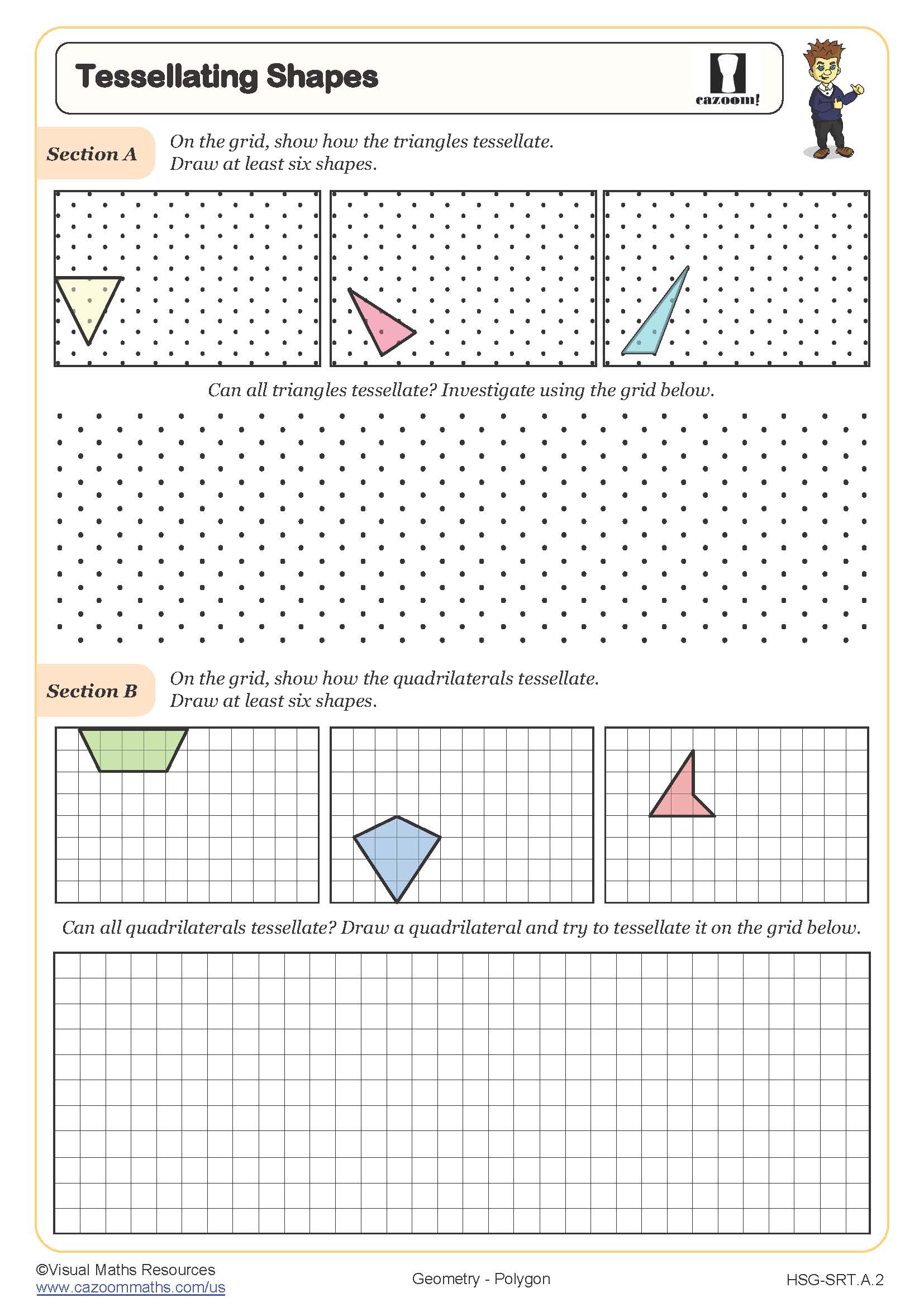
All worksheets are created by the team of experienced teachers at Cazoom Math.
What topics do polygon worksheets typically cover?
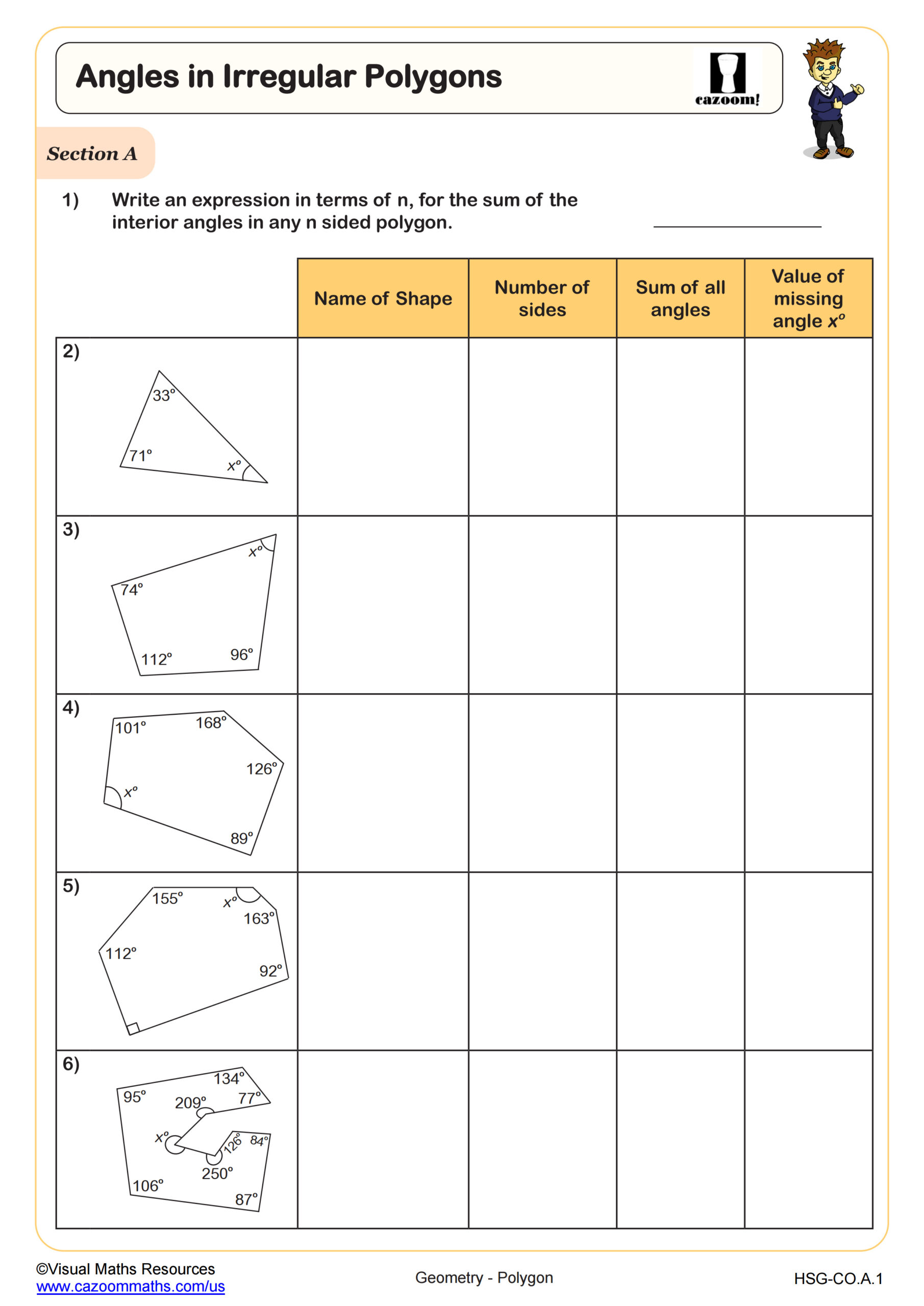
Polygon worksheets address fundamental concepts including polygon identification, naming conventions, angle calculations, and properties of regular versus irregular shapes. Students practice classifying polygons by the number of sides, from triangles through decagons and beyond, while learning proper mathematical terminology.
Teachers find that naming polygons worksheet pdf activities help students master vocabulary systematically, though many struggle initially with distinguishing between concave and convex polygons. The polygons and angles worksheet components reinforce the relationship between the number of sides and interior angle measures, connecting geometric properties to algebraic formulas that students will use in advanced mathematics courses.
Which grade levels benefit most from polygon worksheet practice?
Elementary students typically begin with basic polygon identification in grades 3-5, focusing on triangles, quadrilaterals, pentagons, and hexagons. Middle school students in grades 6-8 advance to angle calculations, polygon classification, and understanding properties of regular polygons through more complex problem-solving scenarios.
High school geometry courses extend polygon concepts to include coordinate geometry applications, transformations, and connections to trigonometry. Teachers observe that students who master polygon fundamentals in earlier grades show stronger performance in advanced topics like polygon similarity, area calculations, and proof-writing involving polygonal shapes.
How do students learn to calculate polygon angles effectively?
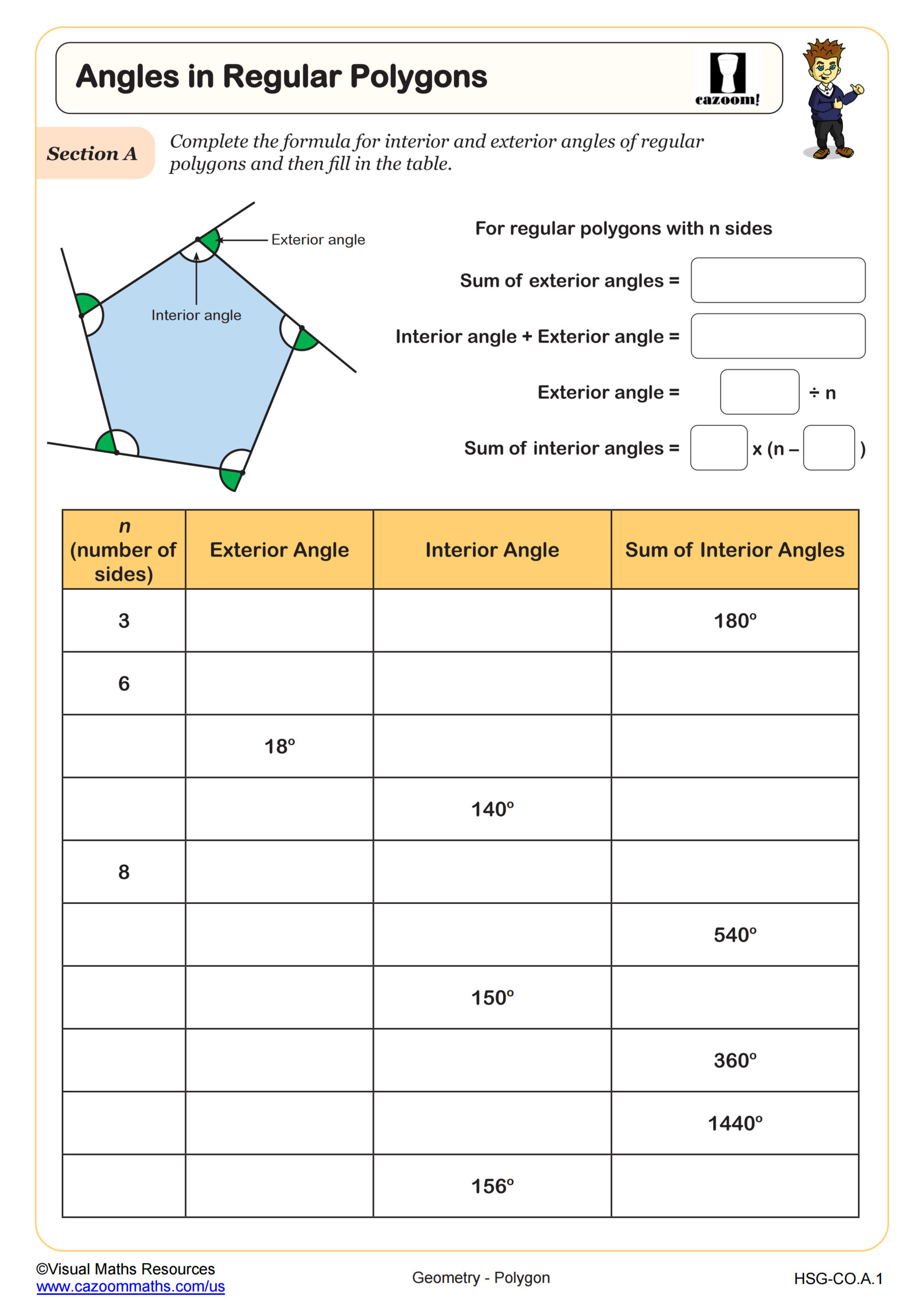
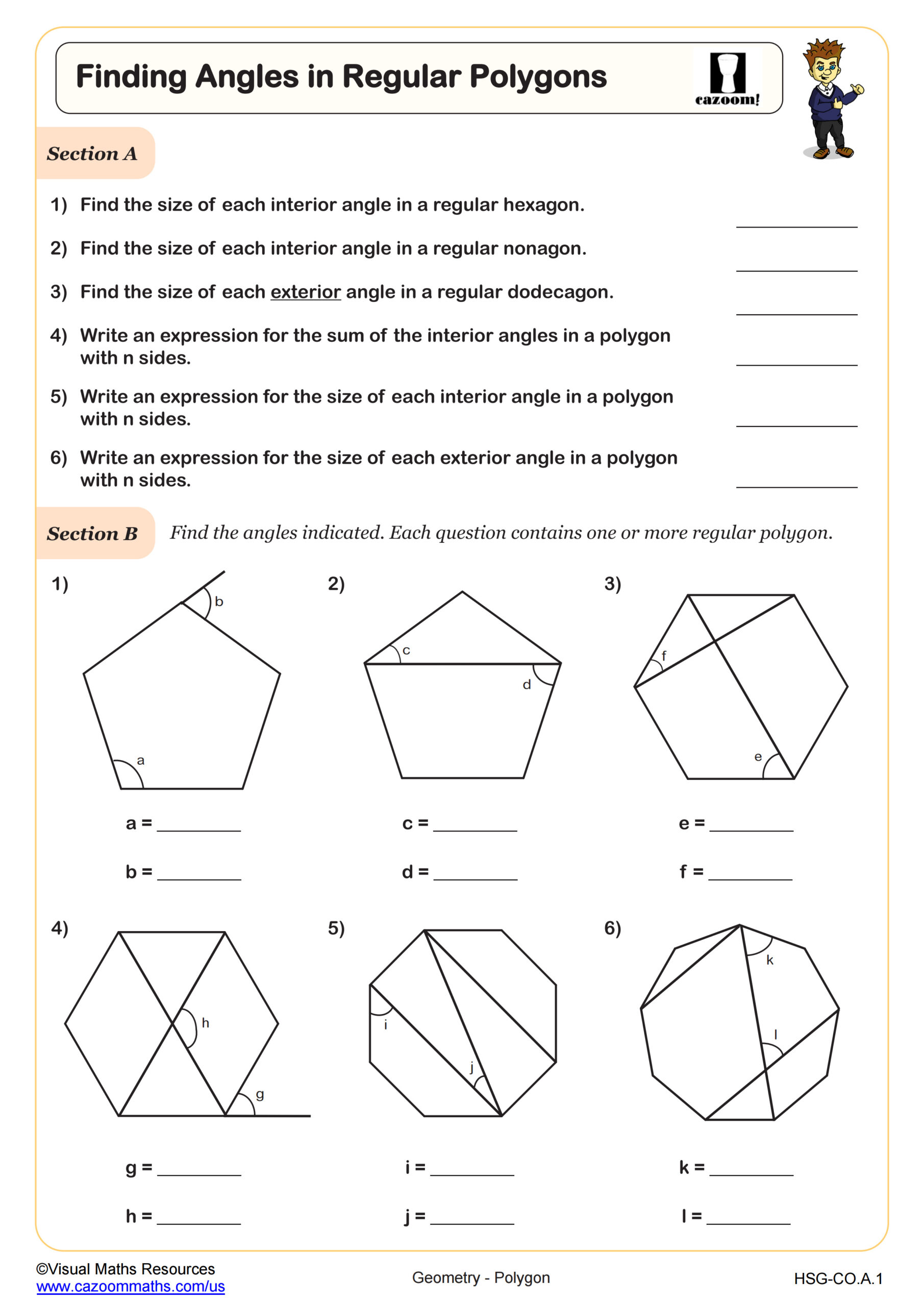
Students begin with the interior angle sum formula (n-2) × 180°, then progress to finding individual angle measures in regular polygons. Teachers notice that students often forget to subtract 2 from the number of sides, leading to incorrect calculations that compound throughout multi-step problems.
Exterior angle concepts prove challenging because students must understand that exterior angles always sum to 360° regardless of the polygon type. Worksheet practice helps reinforce this relationship through varied problem types, from basic calculations to real-world applications in architecture and engineering design where precise angle measurements determine structural integrity.
What strategies help teachers use polygon worksheets most effectively?
Teachers find success by introducing polygon worksheets gradually, starting with visual identification before moving to numerical calculations. Providing manipulatives alongside worksheet practice helps students connect abstract concepts to concrete shapes they can touch and manipulate during problem-solving.
Answer keys enable immediate feedback, but teachers report better results when students check their work after completing entire sections rather than after each problem. This approach encourages persistence and helps students recognize patterns in their mistakes, particularly with angle calculations where systematic errors often reveal gaps in understanding fundamental formulas.
DIFFERENCE BETWEEN SIMPLE AND A COMPLEX POLYGON
The border of a simple polygon has only one boundary and isn’t crossing over itself, while the complex one does.
HOW TO CALCULATE THE SIZE OF THE ANGLES IN A REGULAR POLYGON
It is really important to always remember that the sides and angles of a regular polygon are all equal.
The formula for calculating the size of the angles is really easy.
Formula = (n-2) x 180° : n
n = number of sides
Example: Calculate the size of the angles in a regular octagon
(8-2) x 180° : 8 = 6 x 180° : 8 = 135°
Check our polygons geometry worksheets and enjoy having fun practicing this topic.