Position and Direction Worksheets With Answers
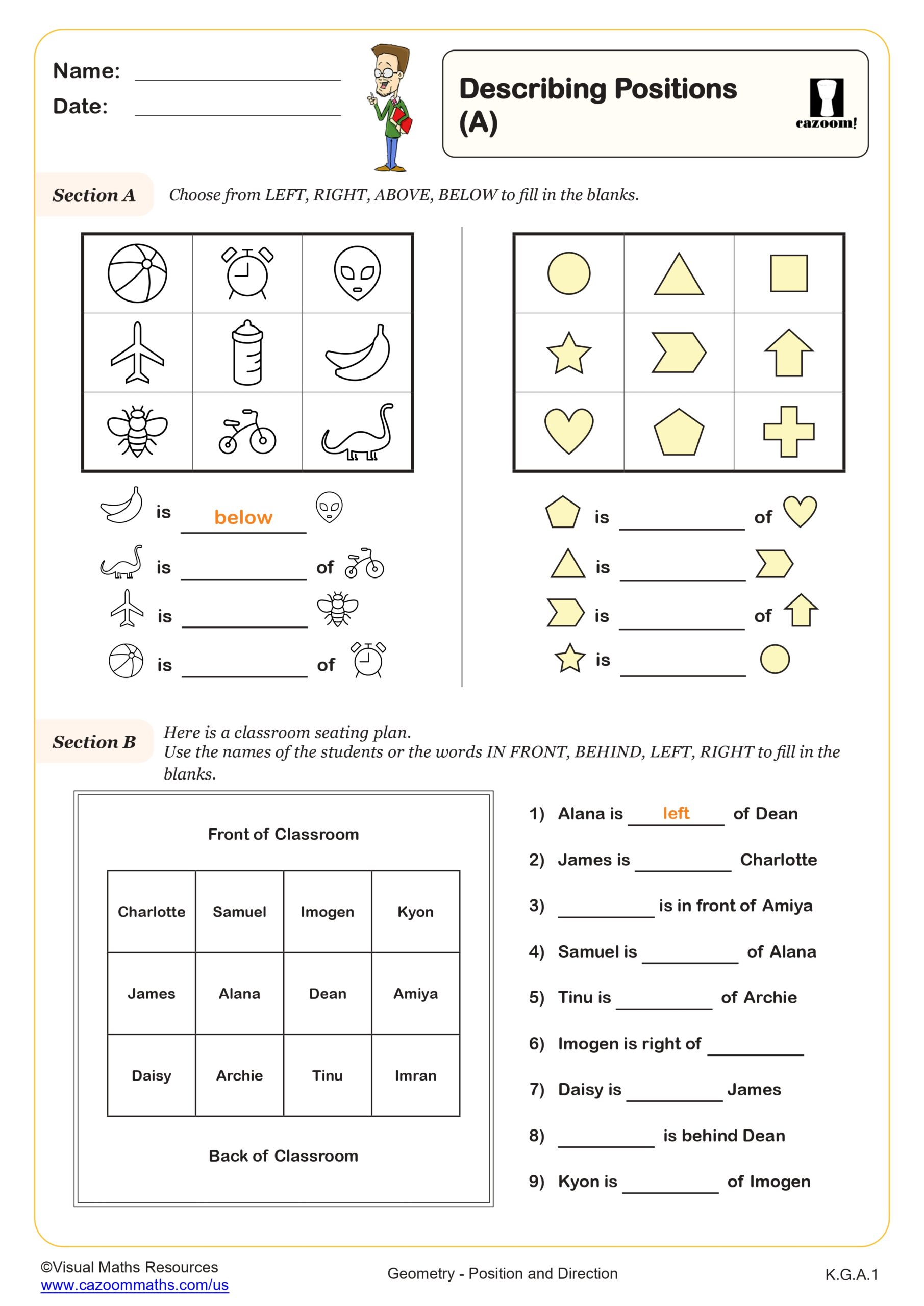
Describing Positions (A)
Grades: Kindergarten
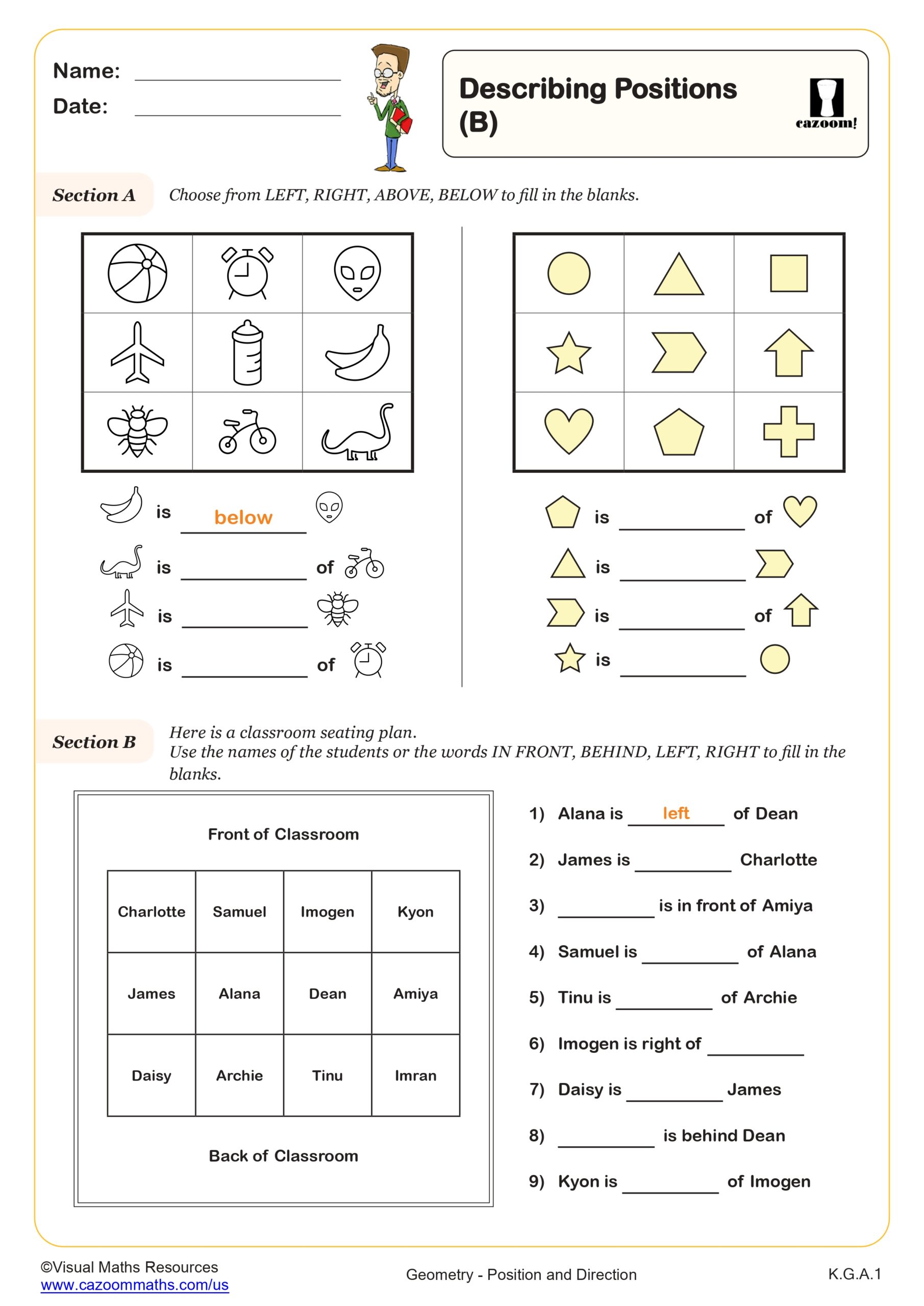
Describing Positions (B)
Grades: Kindergarten
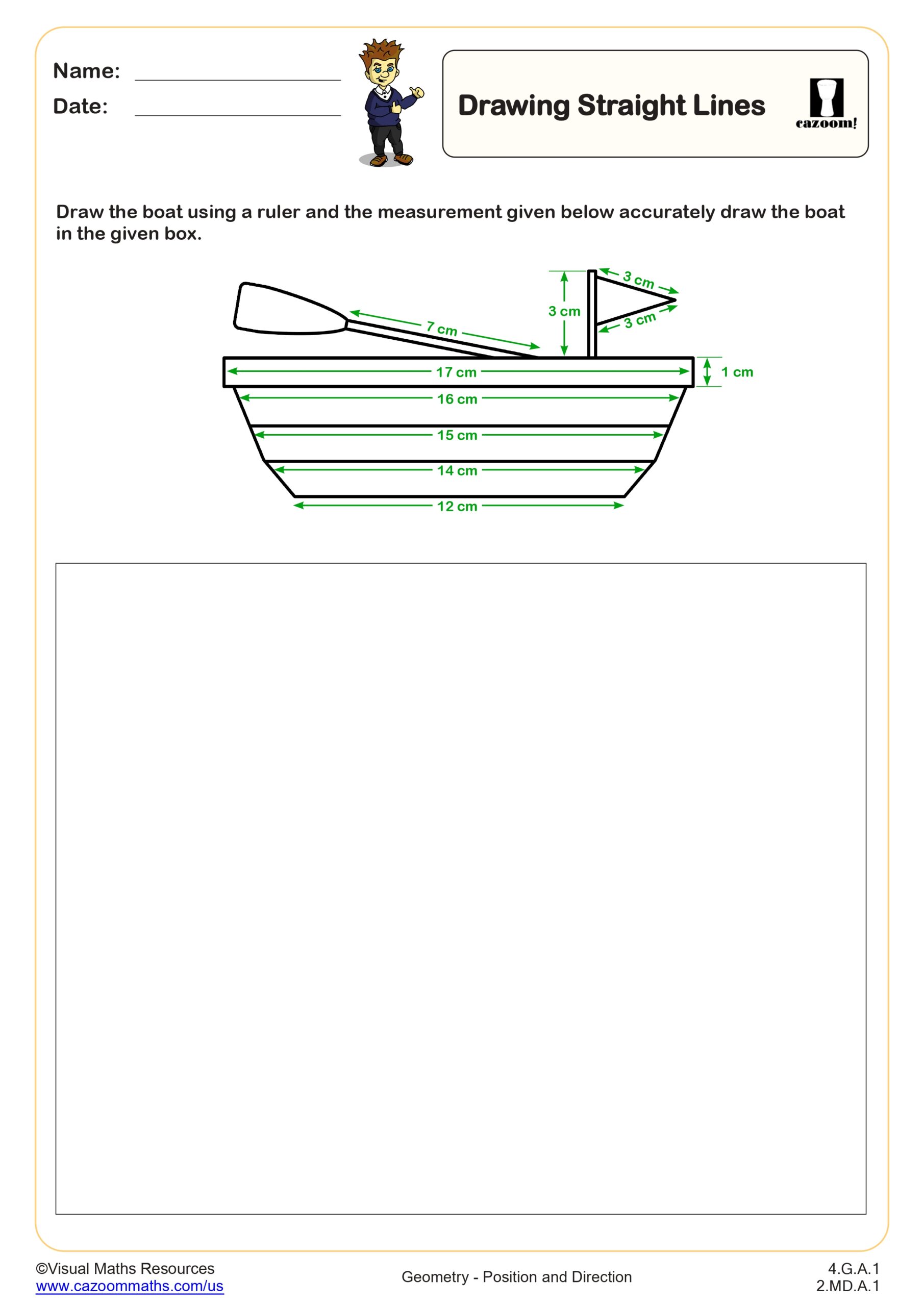
Drawing Straight Lines
Grades: 2nd Grade, 4th Grade
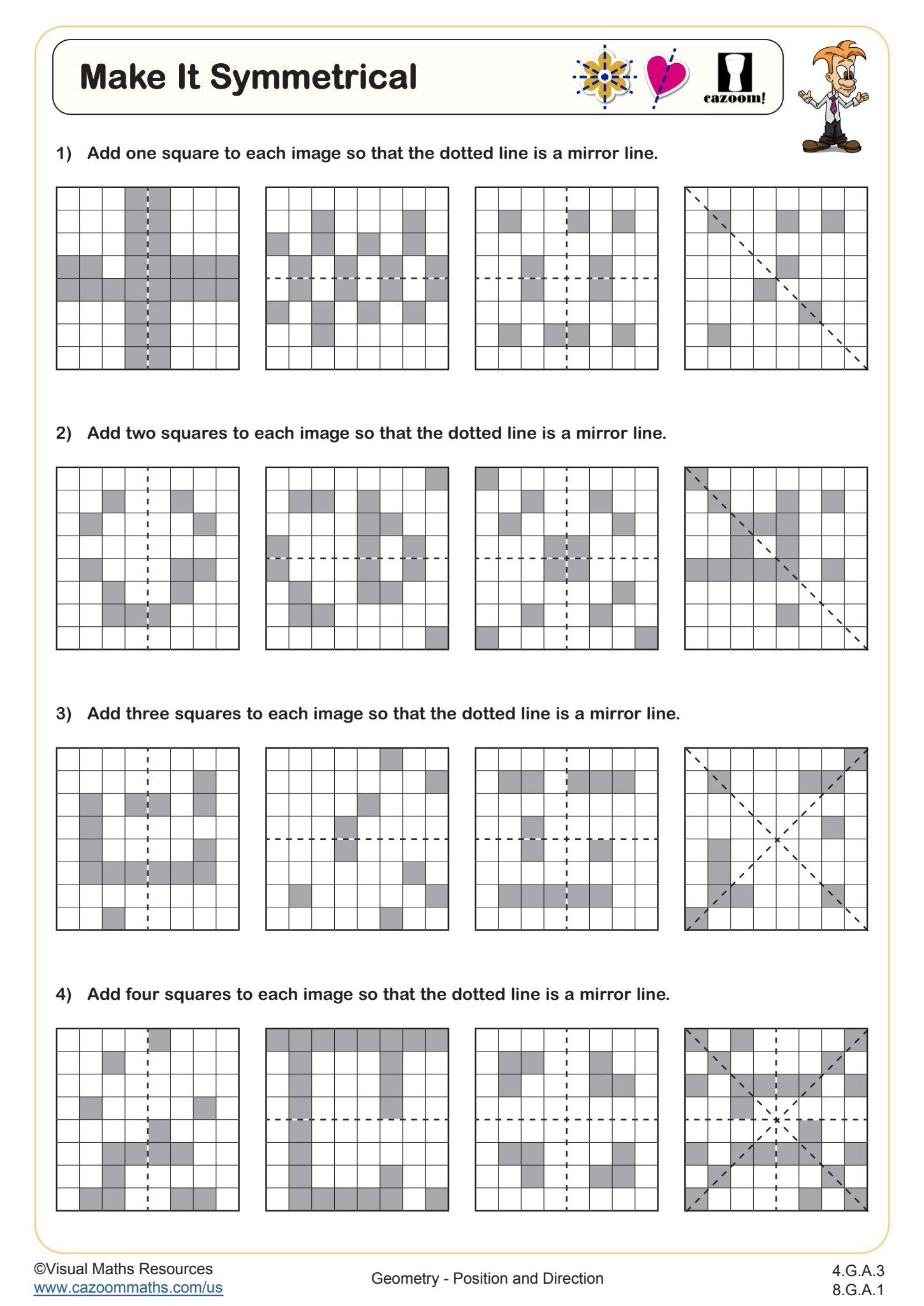
Make it Symmetrical
Grades: 4th Grade, 8th Grade
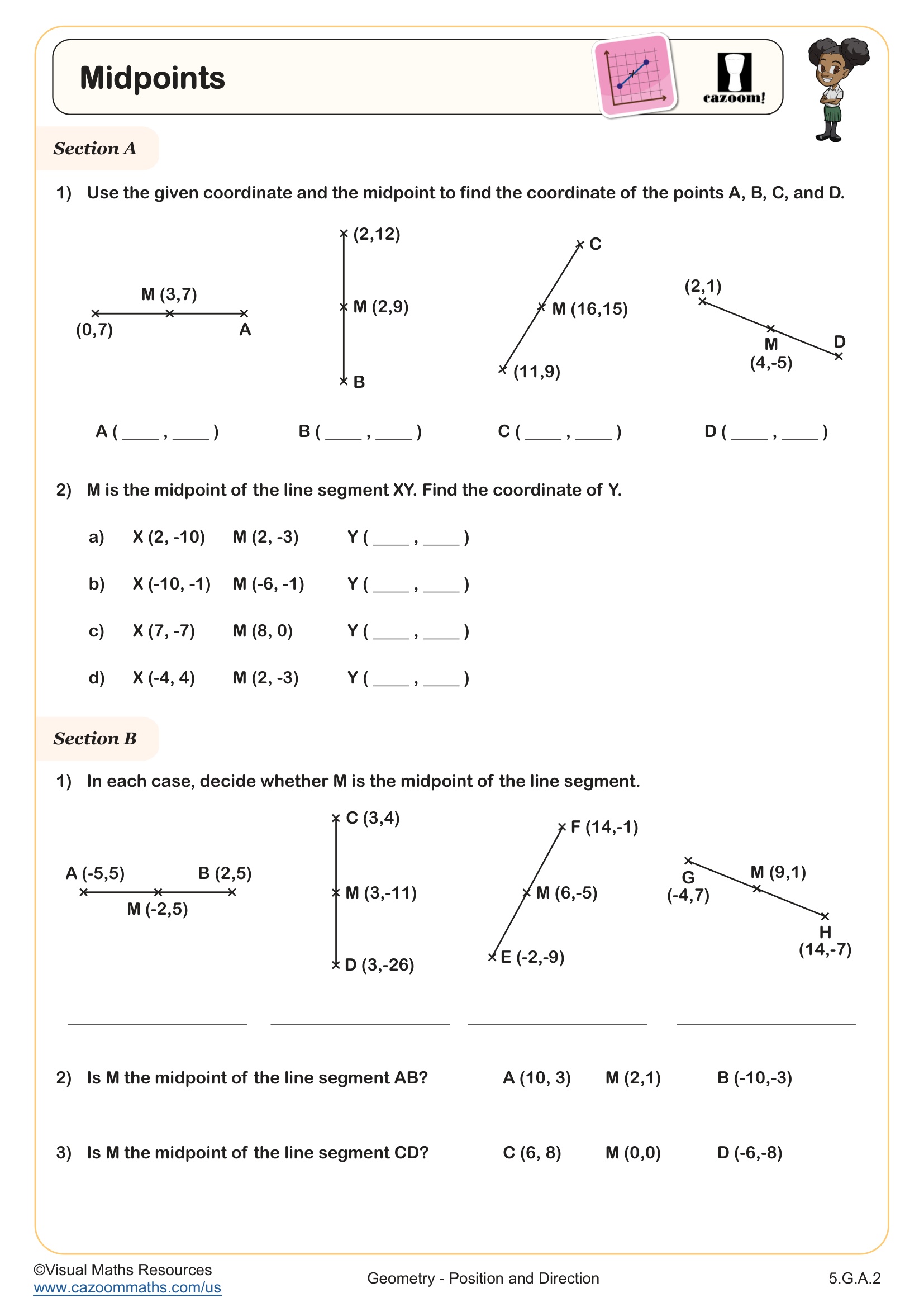
Midpoints
Grades: 5th Grade
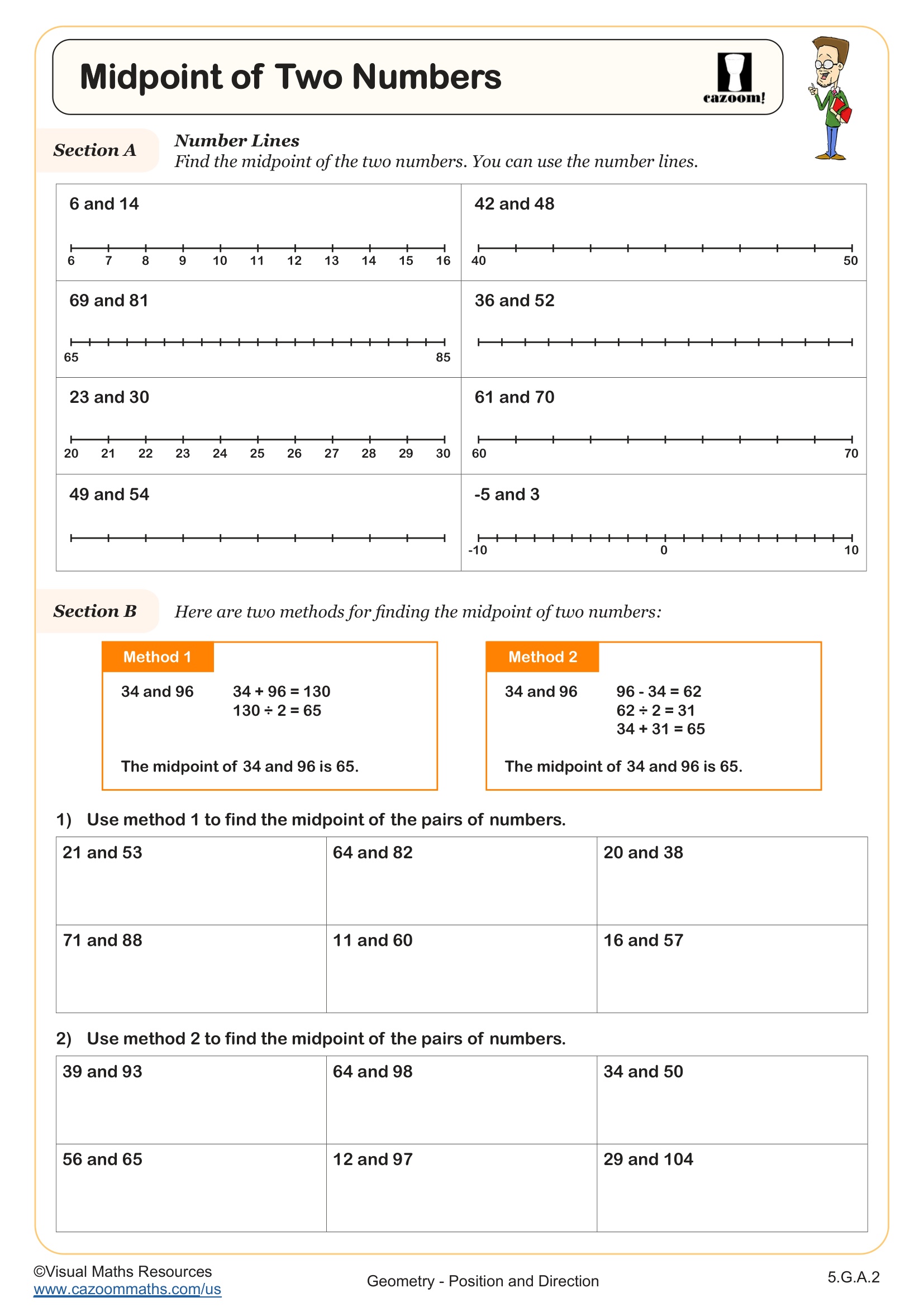
Midpoints of Two Numbers
Grades: 5th Grade
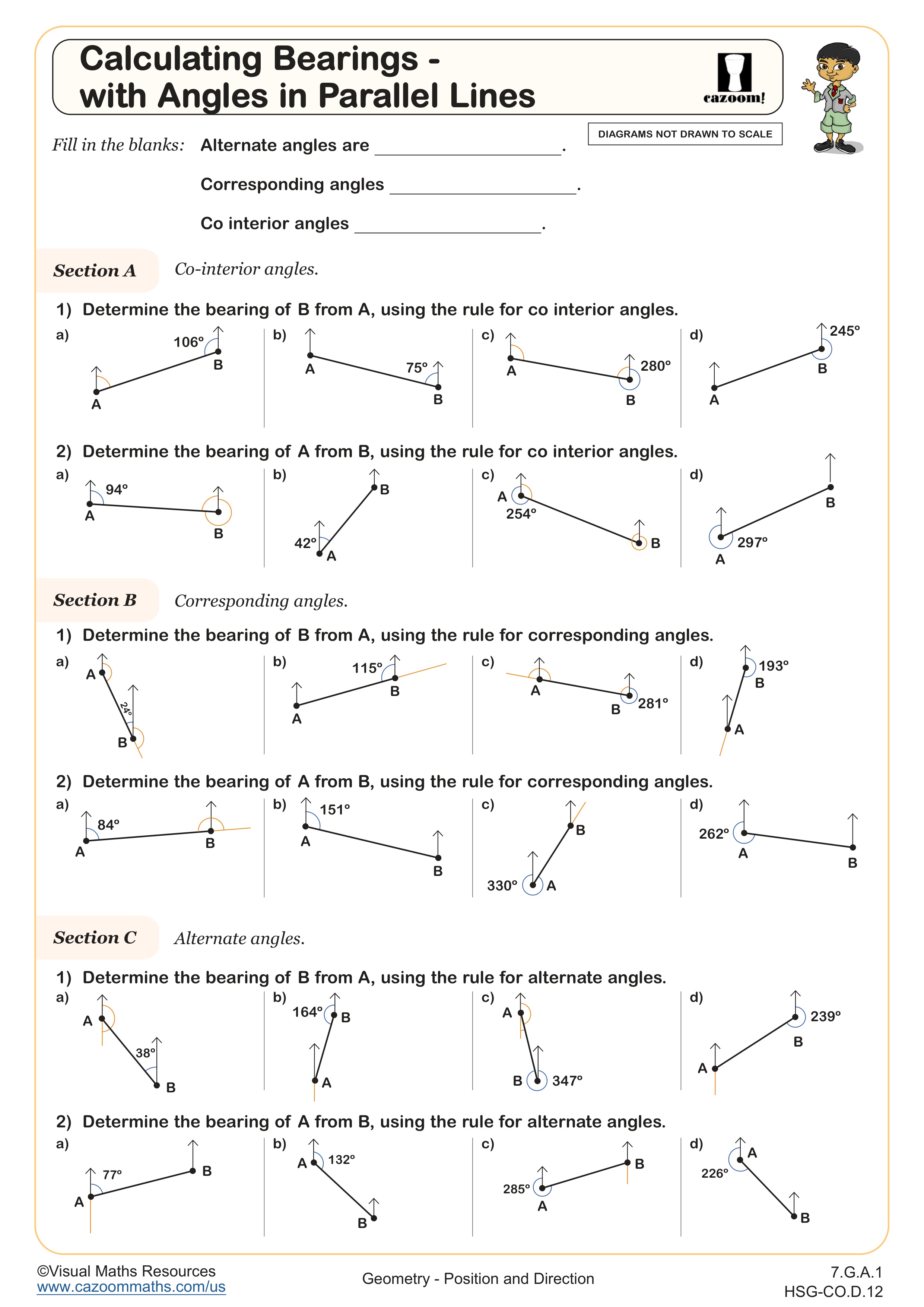
Calculating Bearings - with Angles in Parallel Lines
Grades: 7th Grade, Geometry
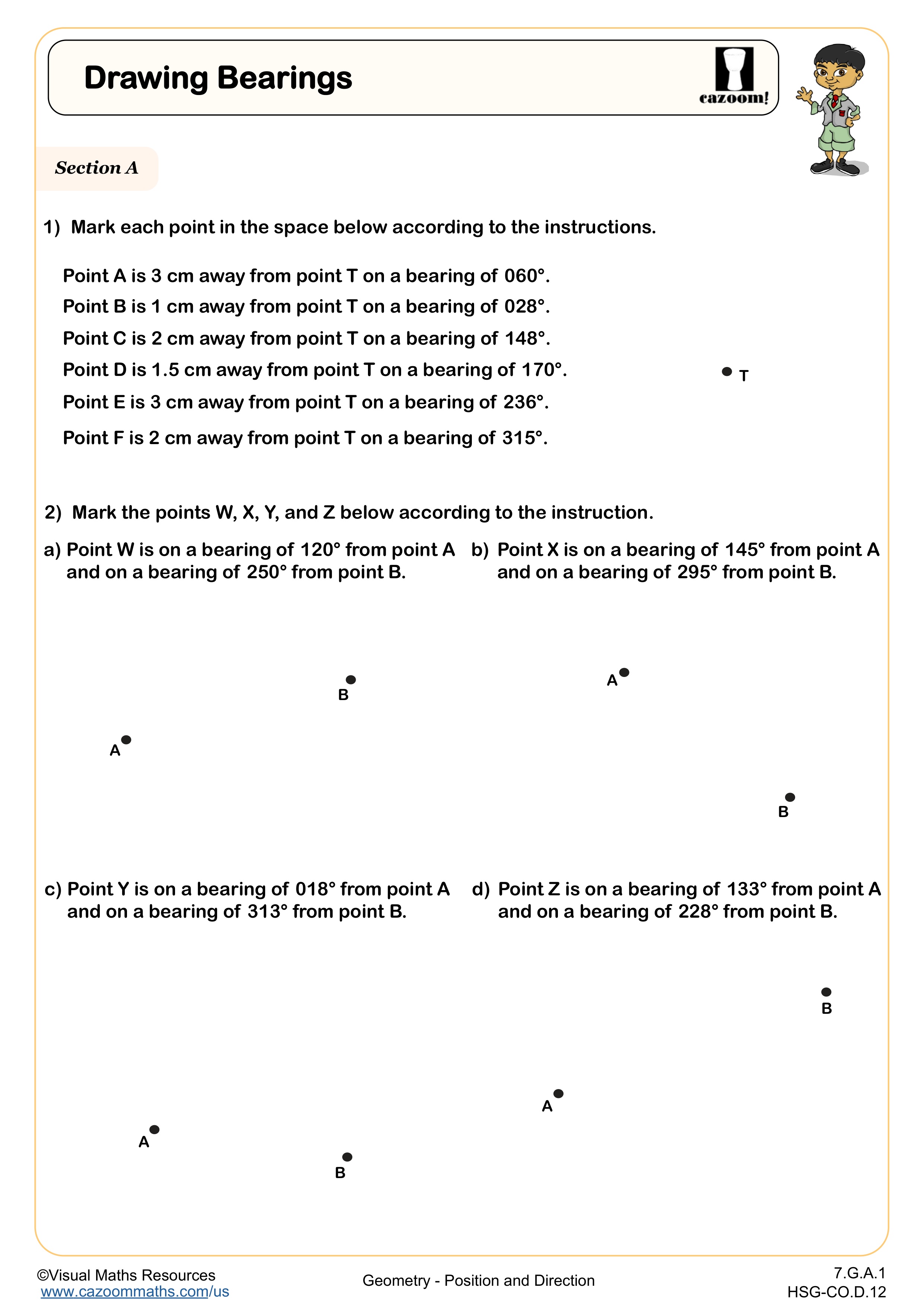
Drawing Bearings
Grades: 7th Grade, Geometry
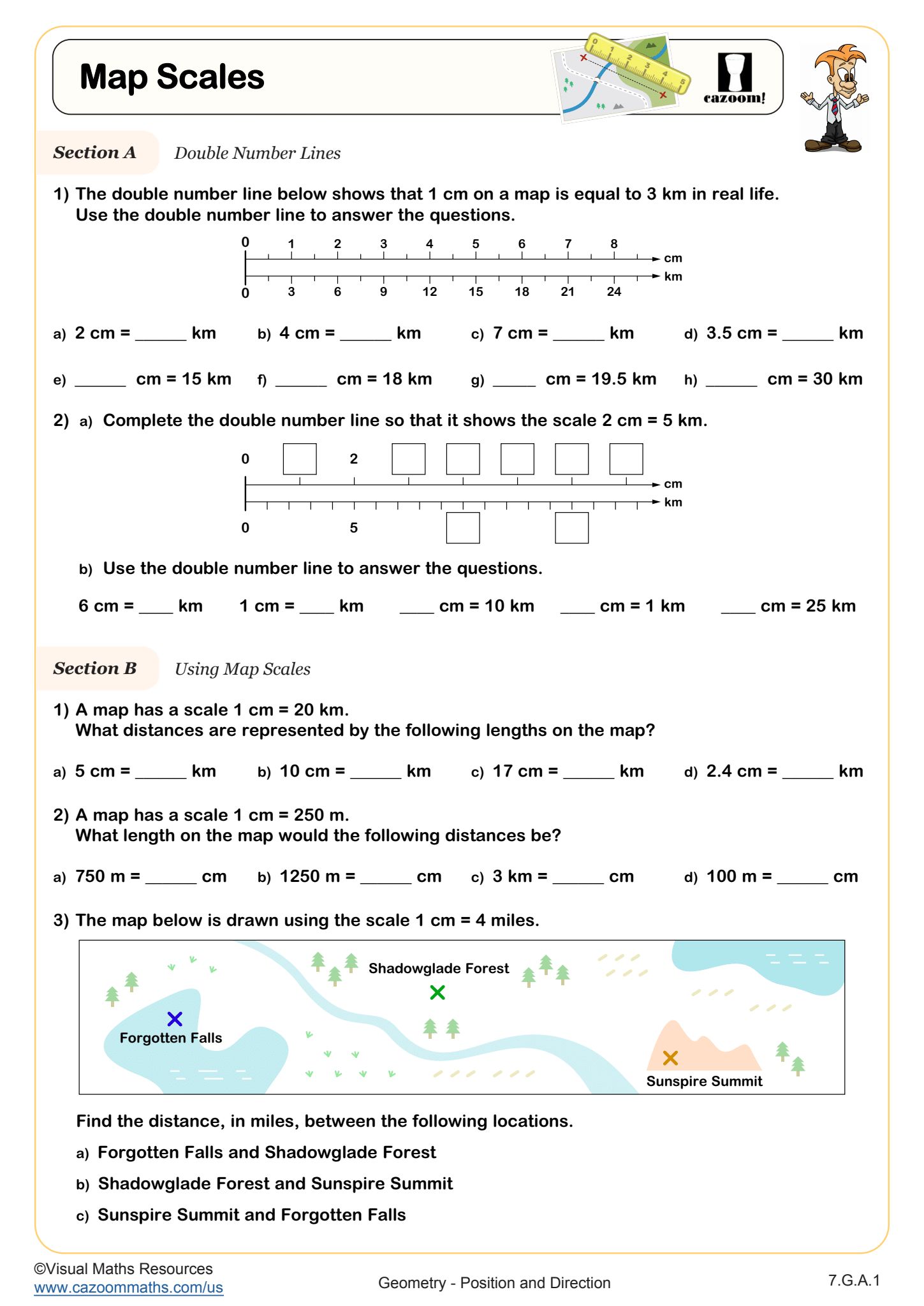
Map Scales
Grades: 7th Grade
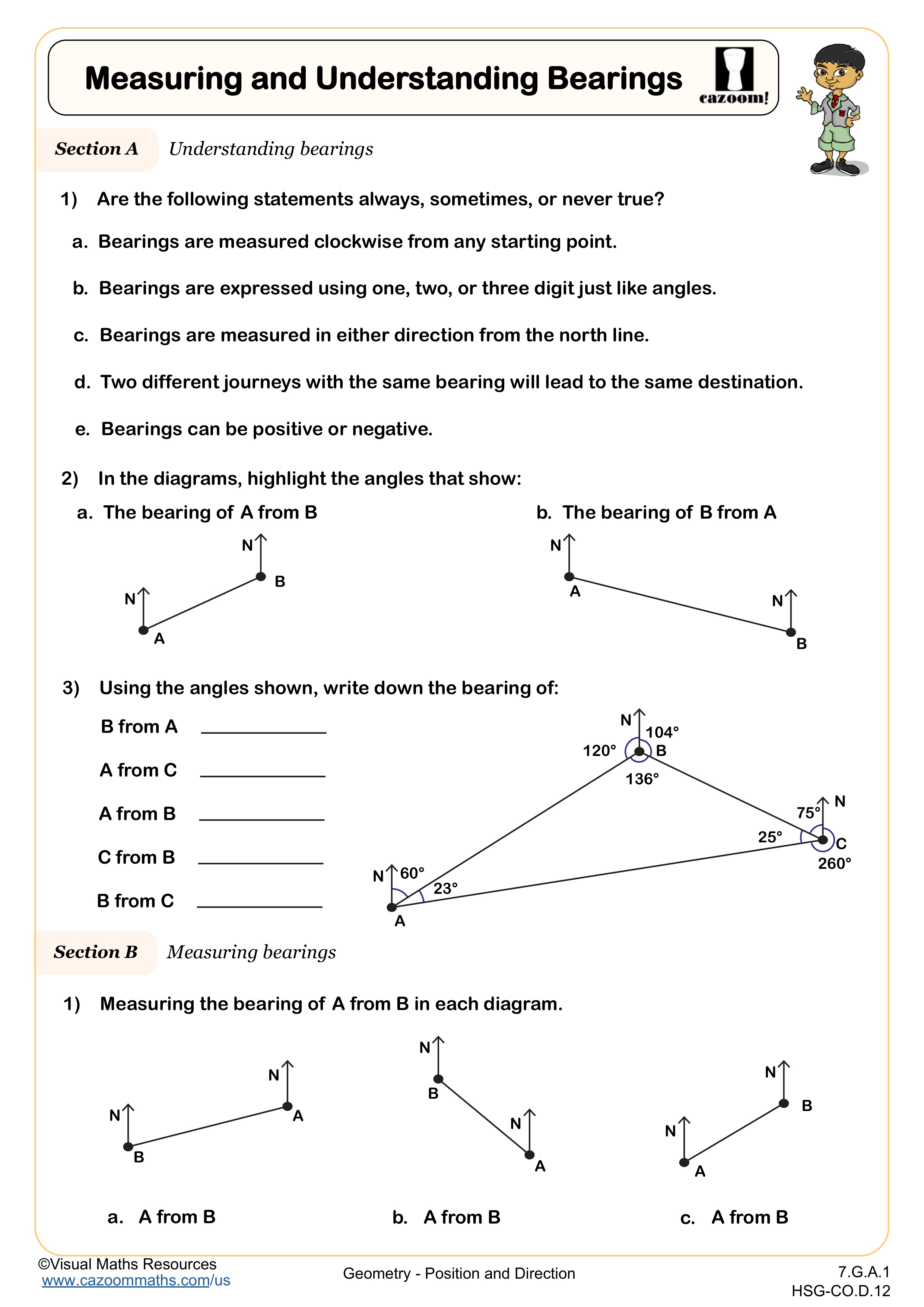
Measuring and Understanding Bearings
Grades: 7th Grade, Geometry
All worksheets are created by the team of experienced teachers at Cazoom Math.
What skills do students practice with a position and direction worksheet?
A position and direction worksheet typically covers directional vocabulary (up, down, left, right, above, below), relative positioning, compass directions, and basic mapping skills. Students practice describing locations, following directional sequences, and interpreting spatial relationships through various activities aligned with geometry standards across elementary grades.
Many teachers observe that students initially confuse their left and right when asked to describe someone else's position facing them. This common misconception requires explicit instruction about perspective-taking, where students learn to consider directions from different viewpoints rather than only from their own position.
Which grade levels benefit most from position and direction worksheets?
Position and direction worksheets span grades K-5, with content complexity increasing at each level. Early elementary focuses on basic directional vocabulary and simple positioning, while upper elementary introduces coordinate grids, compass directions, and multi-step directional sequences. Position and direction grade 3 typically bridges concrete positioning with more abstract grid work.
Teachers notice significant developmental differences in spatial reasoning abilities. Kindergarten and first-grade students need concrete manipulatives and physical movement activities alongside worksheets, while fourth and fifth graders can handle complex map interpretation and coordinate plane introductions that prepare them for middle school geometry concepts.
How do position and direction activities connect to real-world applications?
Position and direction skills directly relate to navigation, architecture, engineering, and computer programming. Students use these concepts when reading maps, giving directions, playing sports, and later when learning coordinate geometry or programming spatial algorithms. Many STEM careers require strong spatial reasoning abilities developed through early position and direction work.
Classroom teachers often incorporate real-world contexts like treasure hunts, classroom layouts, or neighborhood maps to make abstract concepts concrete. These connections help students understand why directional accuracy matters, especially when they see how GPS systems or architectural blueprints rely on precise positional language and spatial relationships.
What teaching strategies work best with direction worksheets?
Effective instruction combines worksheet practice with physical movement and manipulative activities. Teachers should model directional language while physically demonstrating movements, then transition to pencil-and-paper activities. Using consistent vocabulary and providing visual reference points helps students internalize spatial concepts before independent worksheet completion.
Many educators find success in pairing students for direction-giving activities before individual worksheet practice. This peer interaction reveals misconceptions early and allows students to verbalize their spatial thinking. Teachers also report better outcomes when they explicitly connect worksheet activities to familiar classroom or school locations, making abstract directional concepts more meaningful and memorable.
Prerequisite Knowledge for Position and Direction
Before starting with these worksheets, students should be able to:
• Understand basic direction words like “left,” “right,” “up,” and “down”
• Follow the simple two-step directions
• Recognize and name common shapes
• Count and identify positions on a number line or basic grid
Our worksheets gently guide students through more complex directional tasks once these basics are in place.
FAQs: Position and Direction Worksheets
Q: What grade level are these worksheets for?
A: These worksheets are best suited for Kindergarten to 2nd grade learners.
Q: Do they include answer keys?
A: Yes, every worksheet comes with a full answer key for easy checking.
Q: Can these worksheets be used for homework?
A: Absolutely. They’re great for extra practice, classwork, or revision.
Q: Are the worksheets aligned with Common Core standards?
A: Yes, they support early geometry and measurement standards in Common Core.