Properties of Shapes Worksheets With Answers
Finding Shapes In Everyday Objects
Grades: 2nd Grade
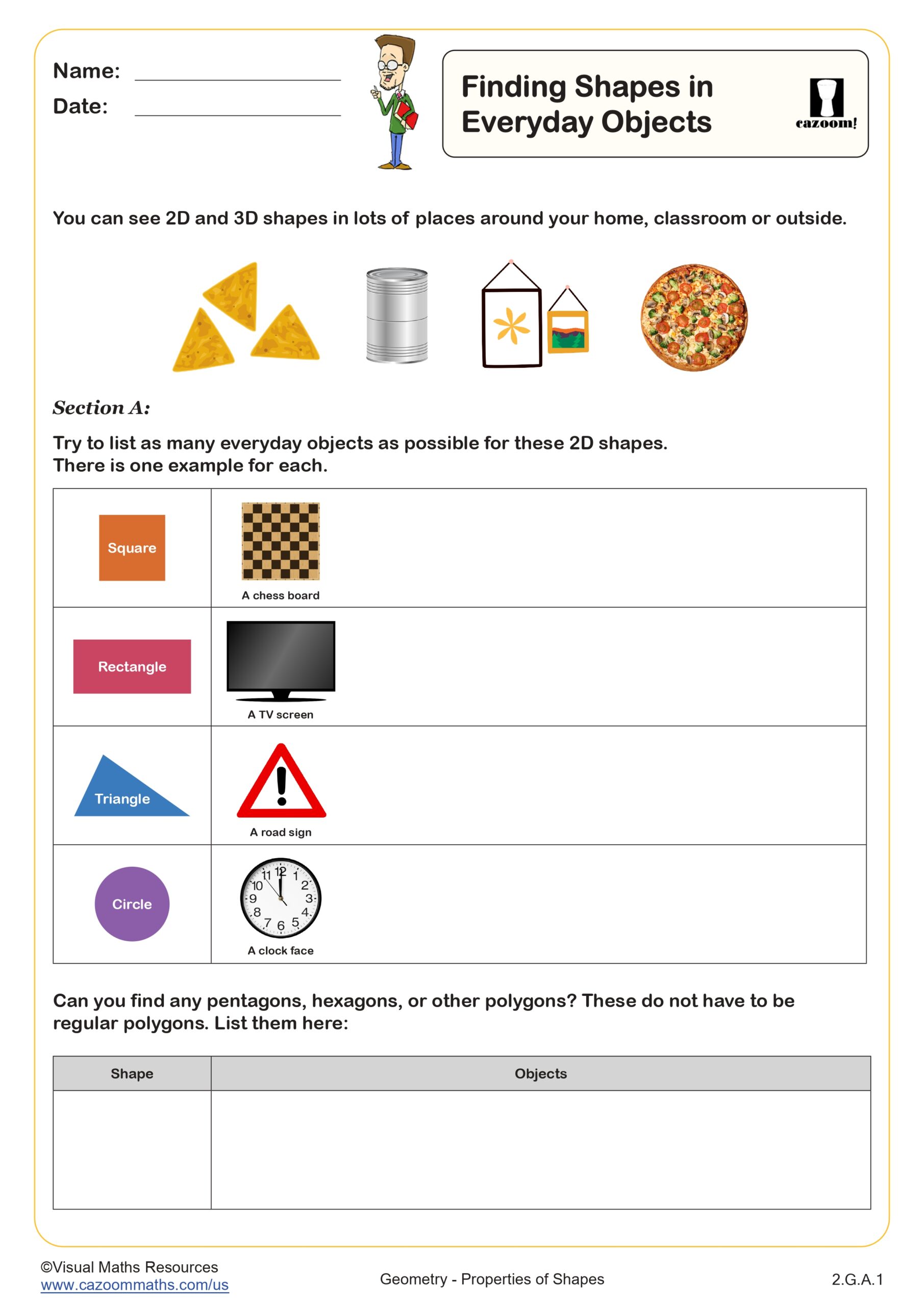
Lines of Symmetry (A)
Grades: 2nd Grade, 4th Grade
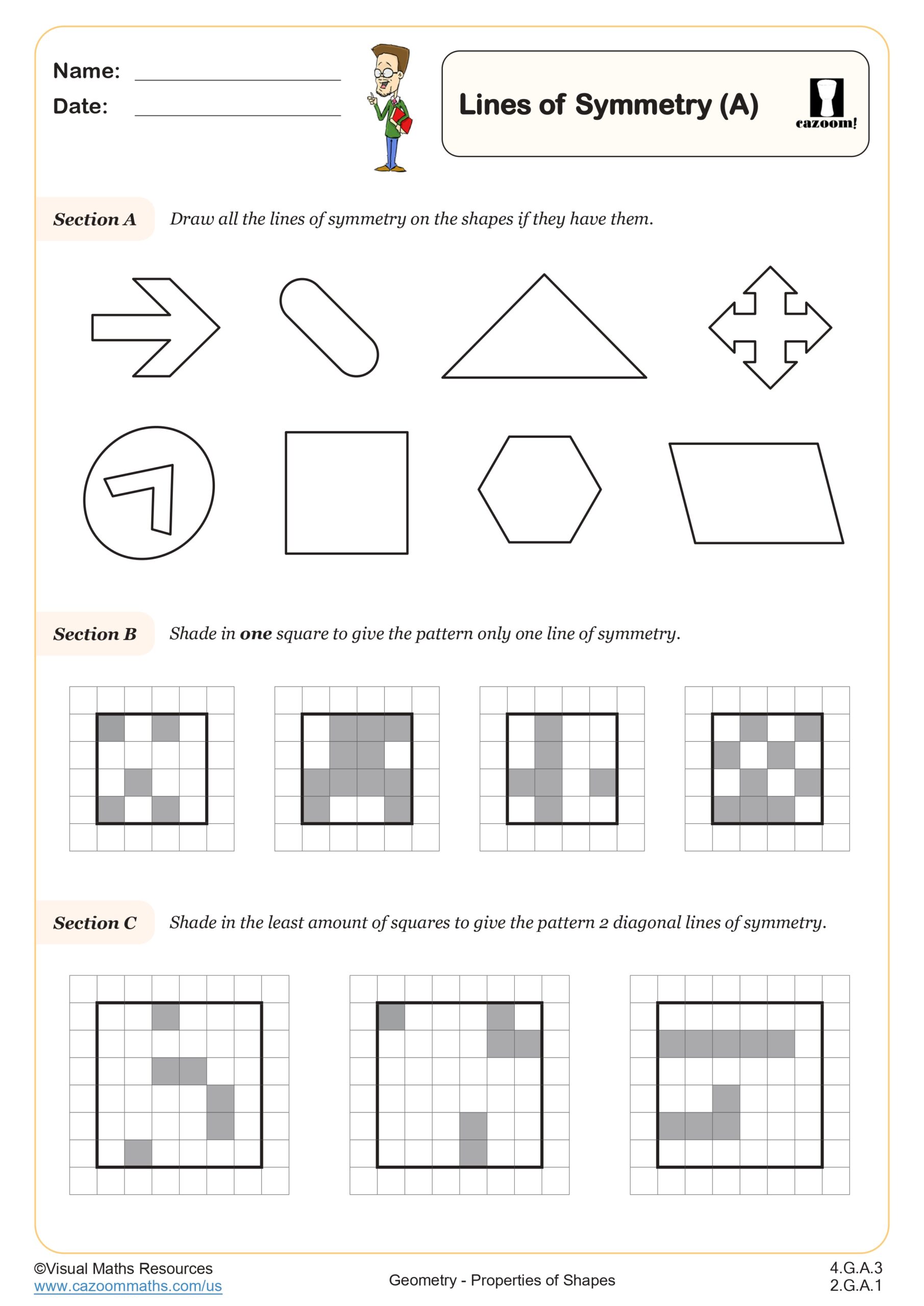
Vertical Lines of Symmetry (A)
Grades: 2nd Grade, 4th Grade
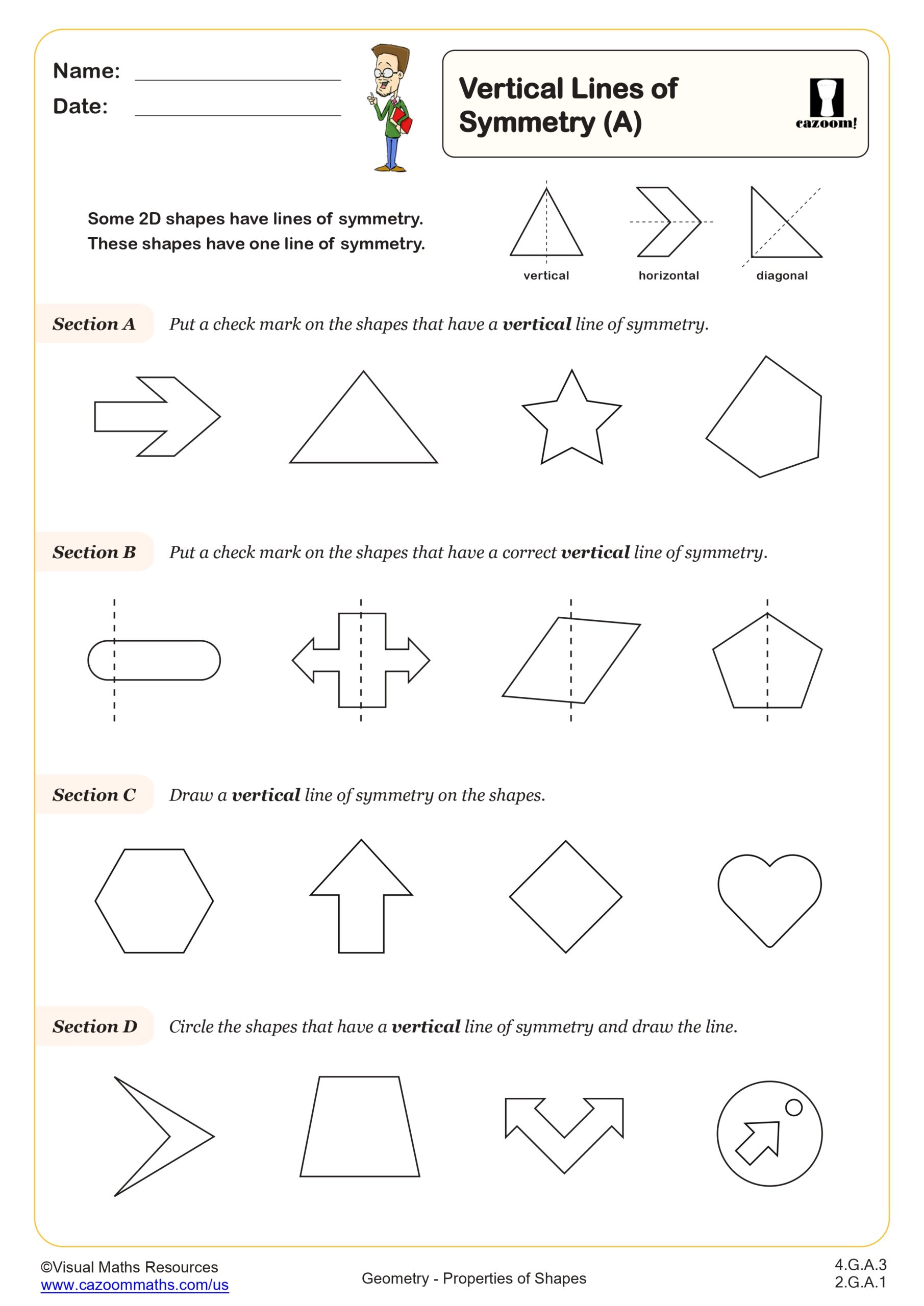
Vertical Lines of Symmetry (B)
Grades: 2nd Grade, 4th Grade
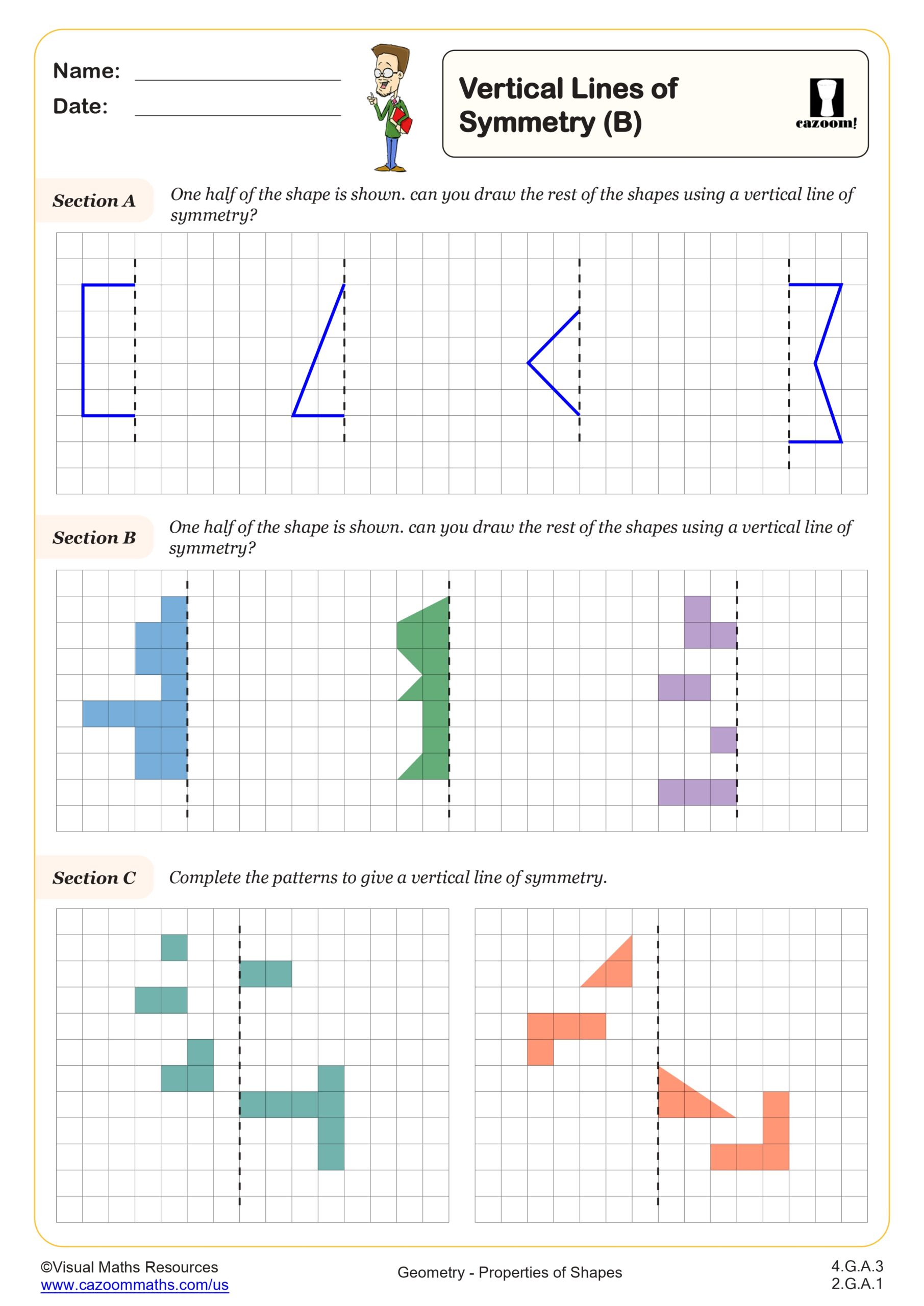
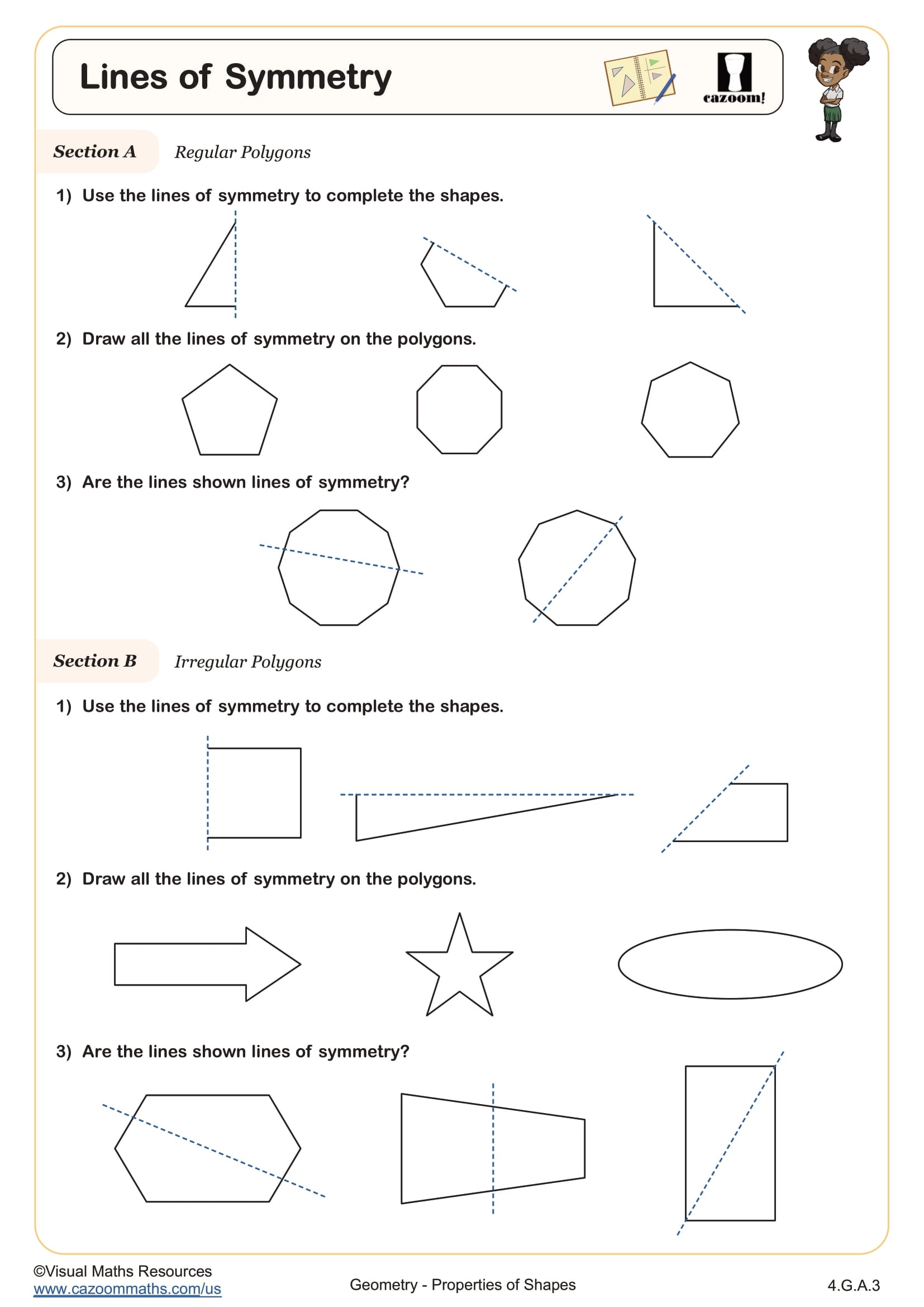
Lines of Symmetry
Grades: 4th Grade
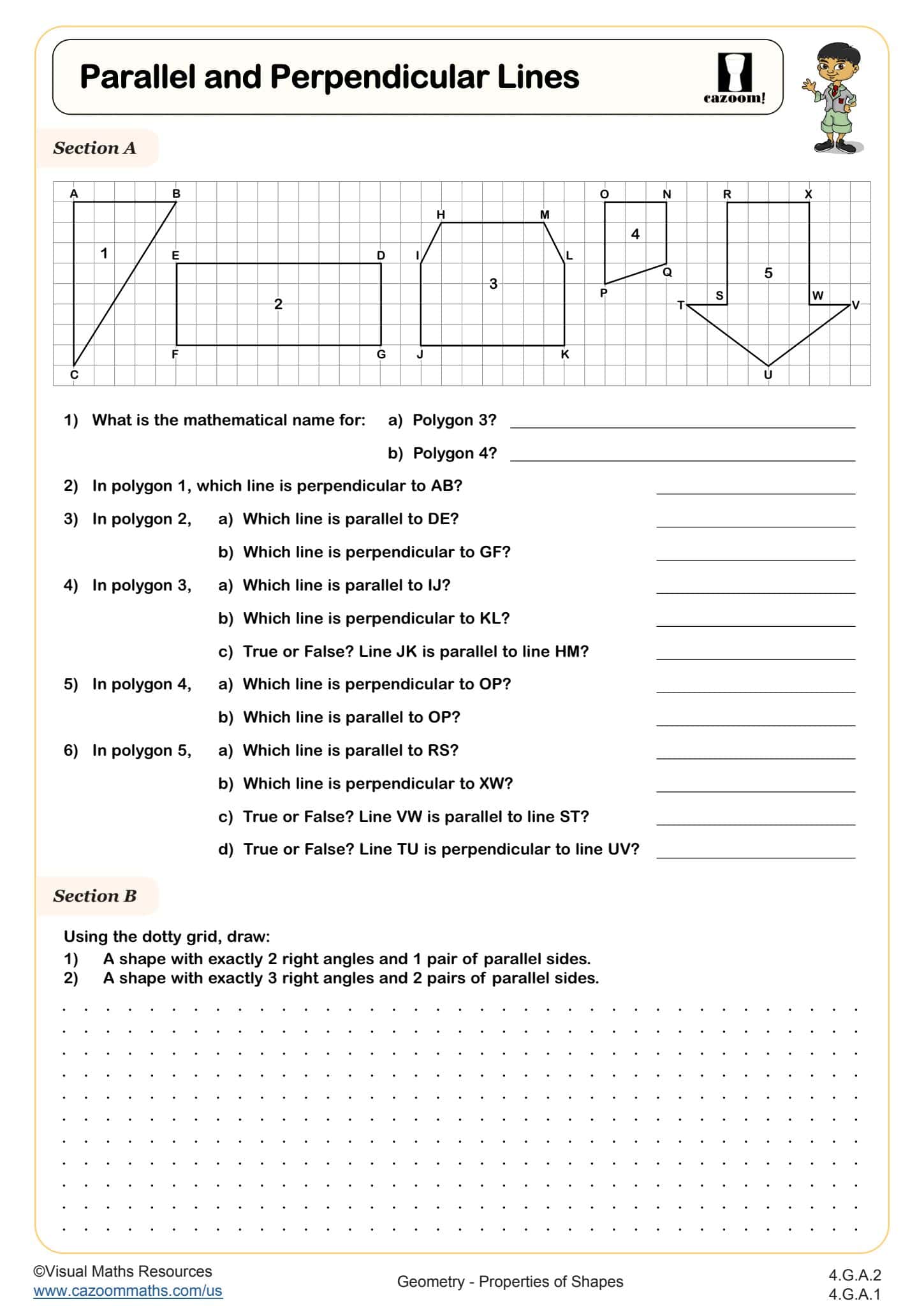
Parallel and Perpendicular Lines
Grades: 4th Grade
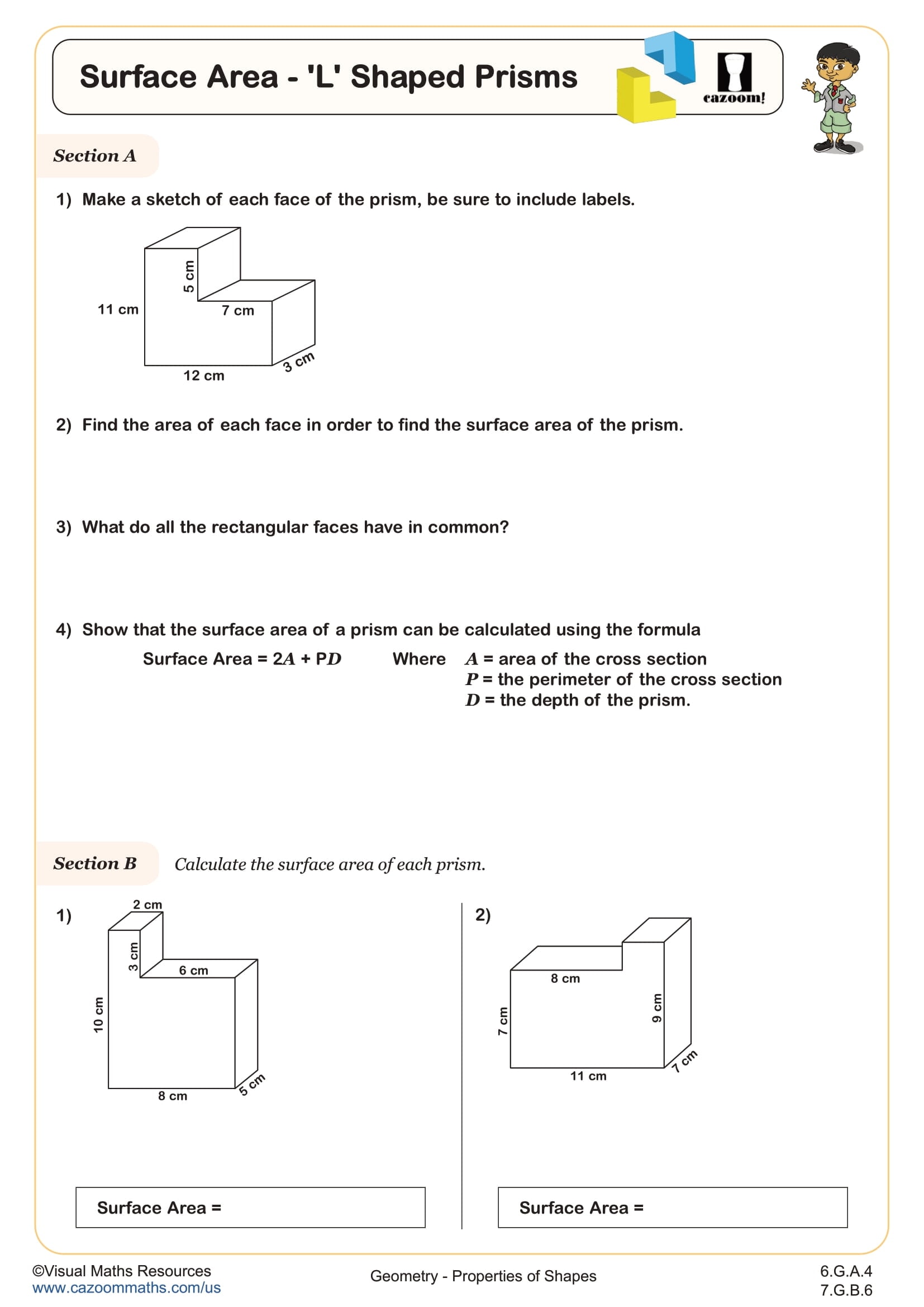
Surface Area - 'L' Shaped Prisms
Grades: 6th Grade, 7th Grade
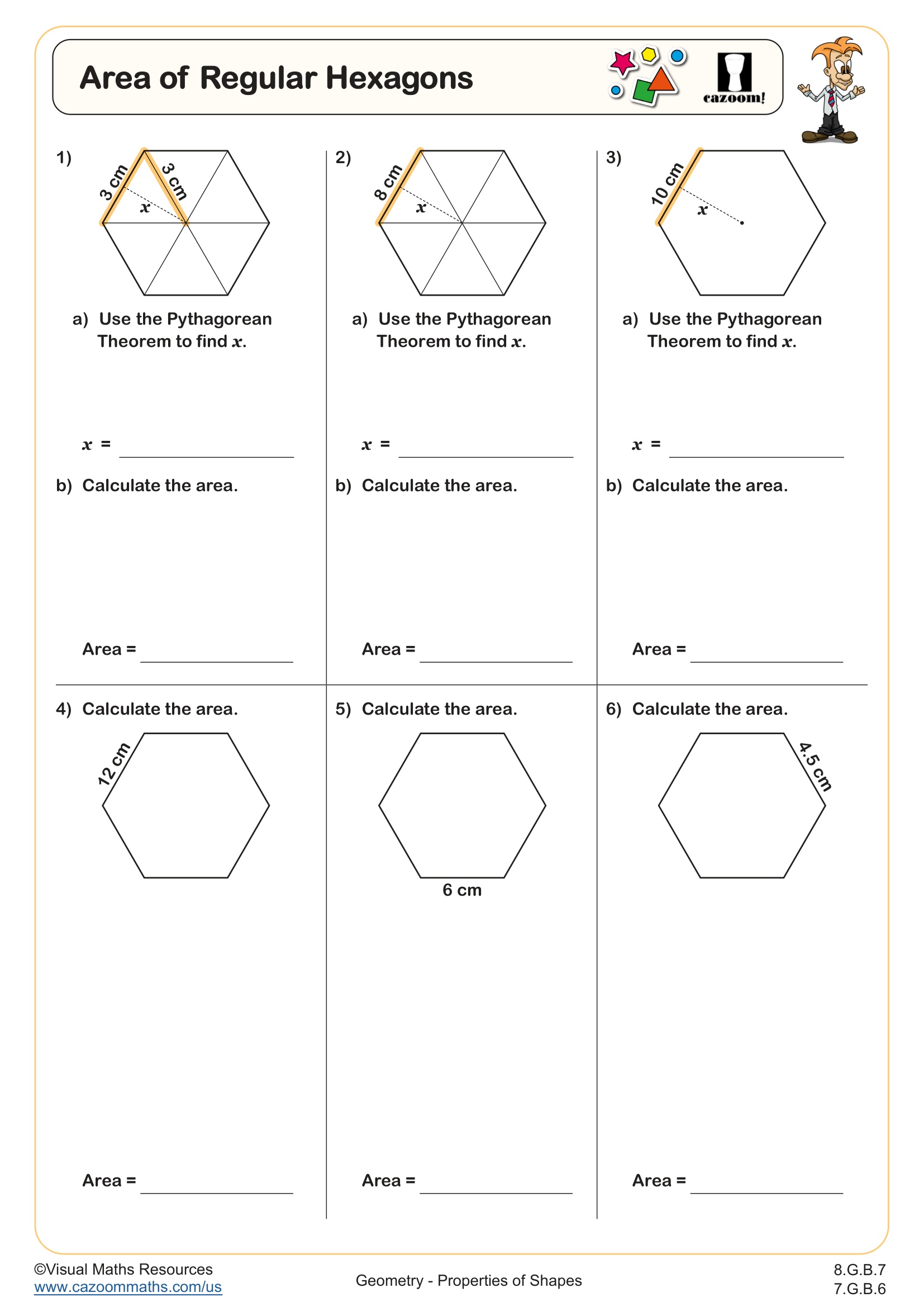
Area of Regular Hexagons
Grades: 7th Grade, 8th Grade
Cross Sections
Grades: 7th Grade
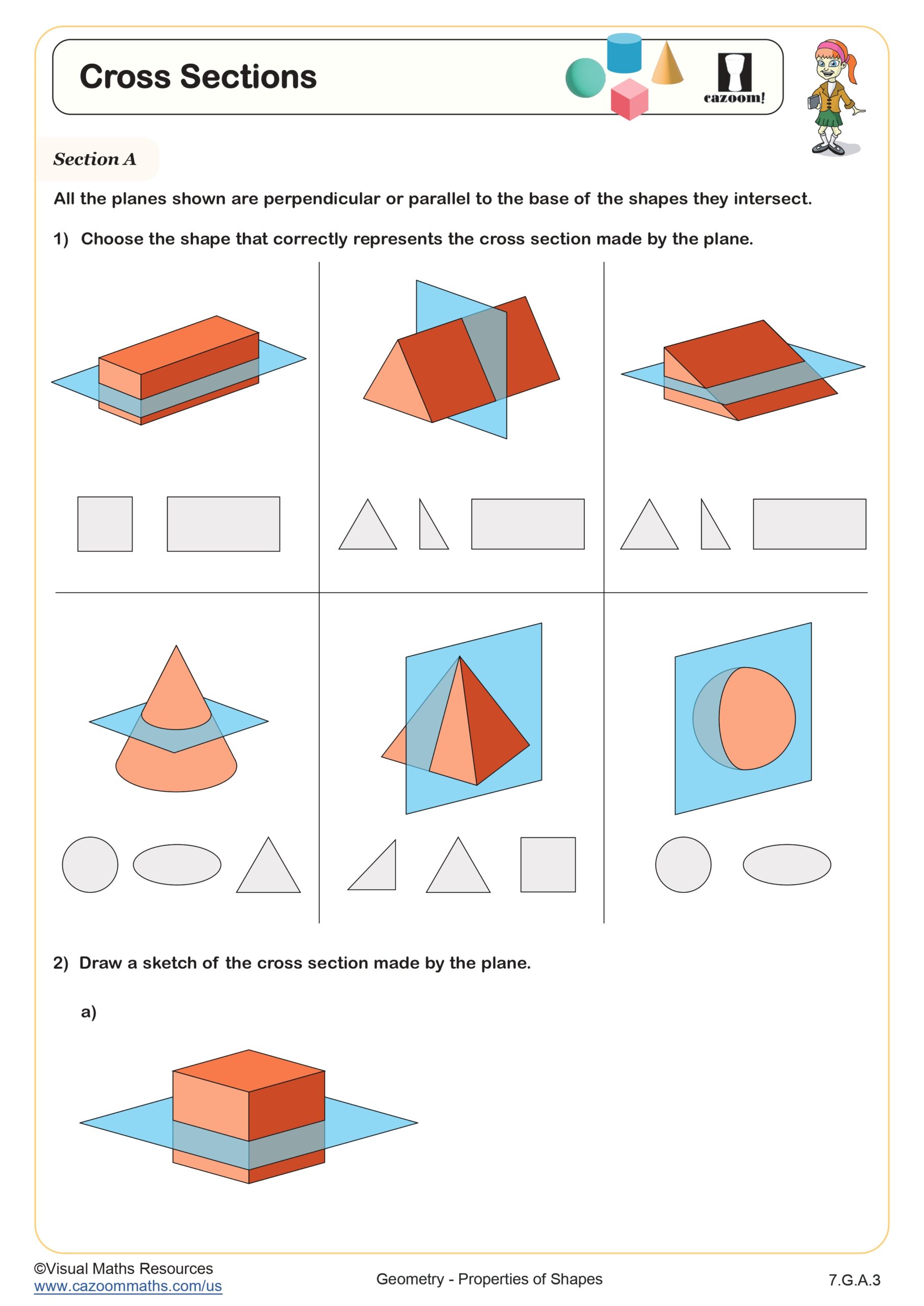
Describing Enlargements (A)
Grades: 8th Grade
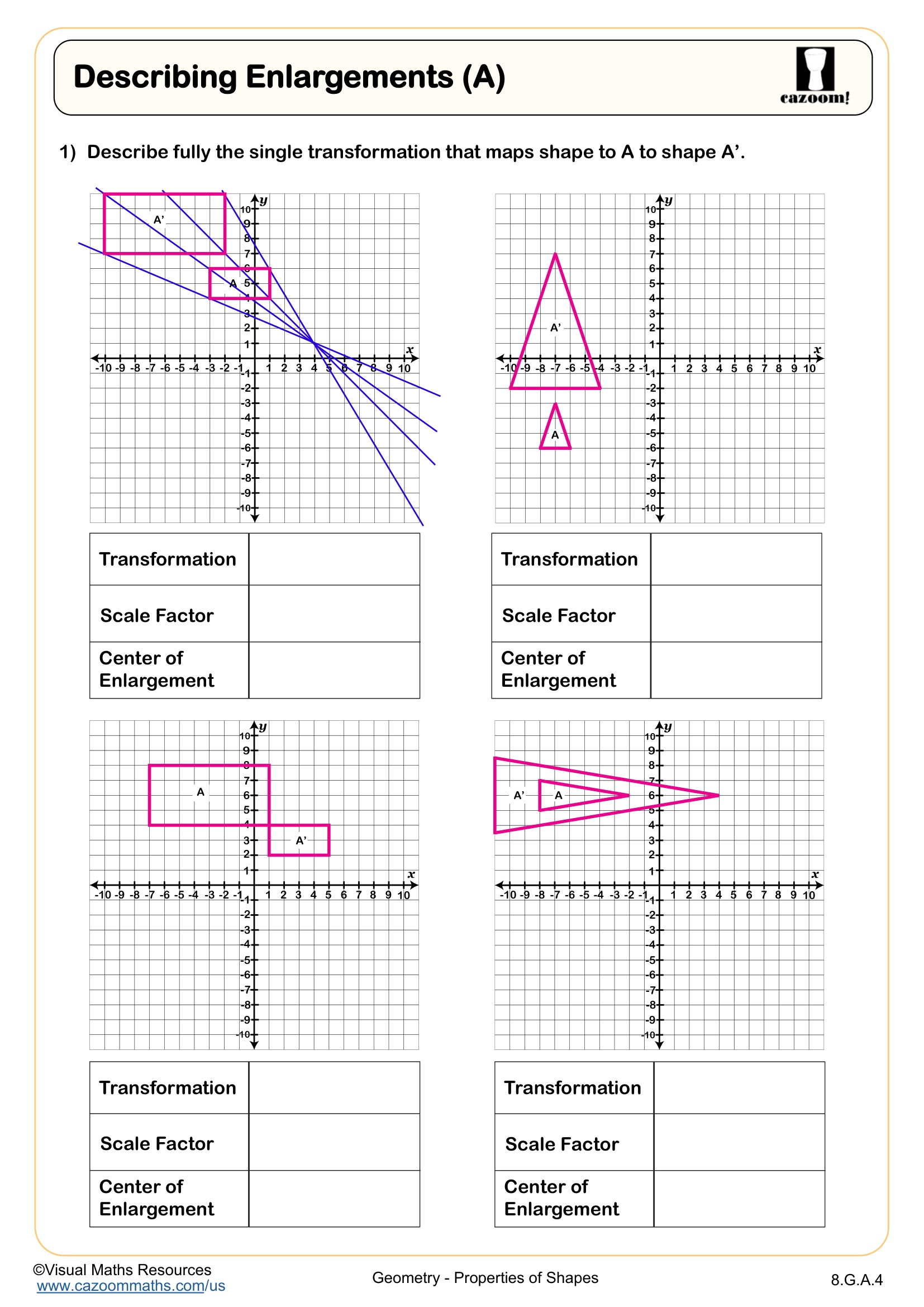
Describing Enlargements (B)
Grades: 8th Grade
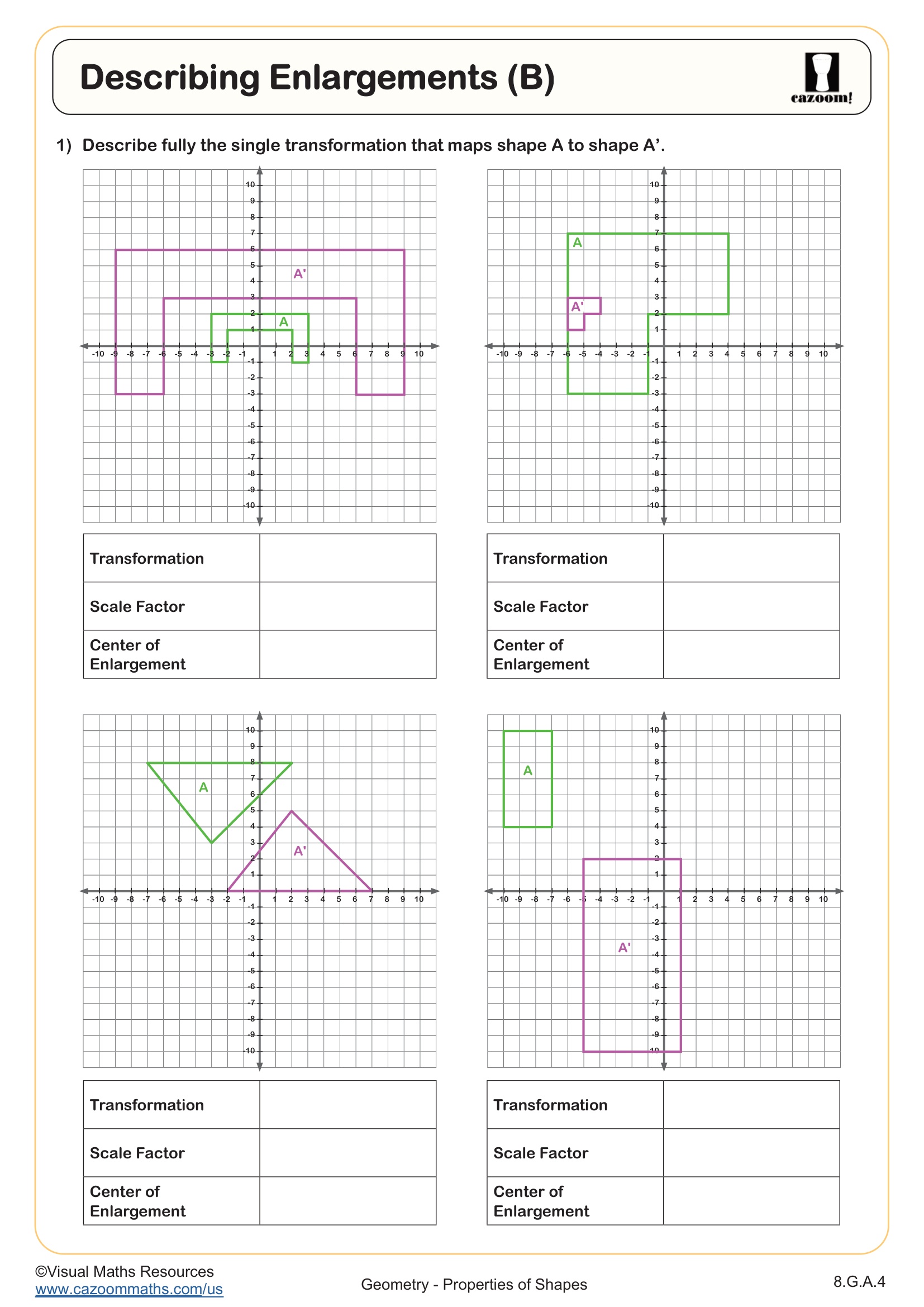
Enlargements Using Column Vectors
Grades: 8th Grade
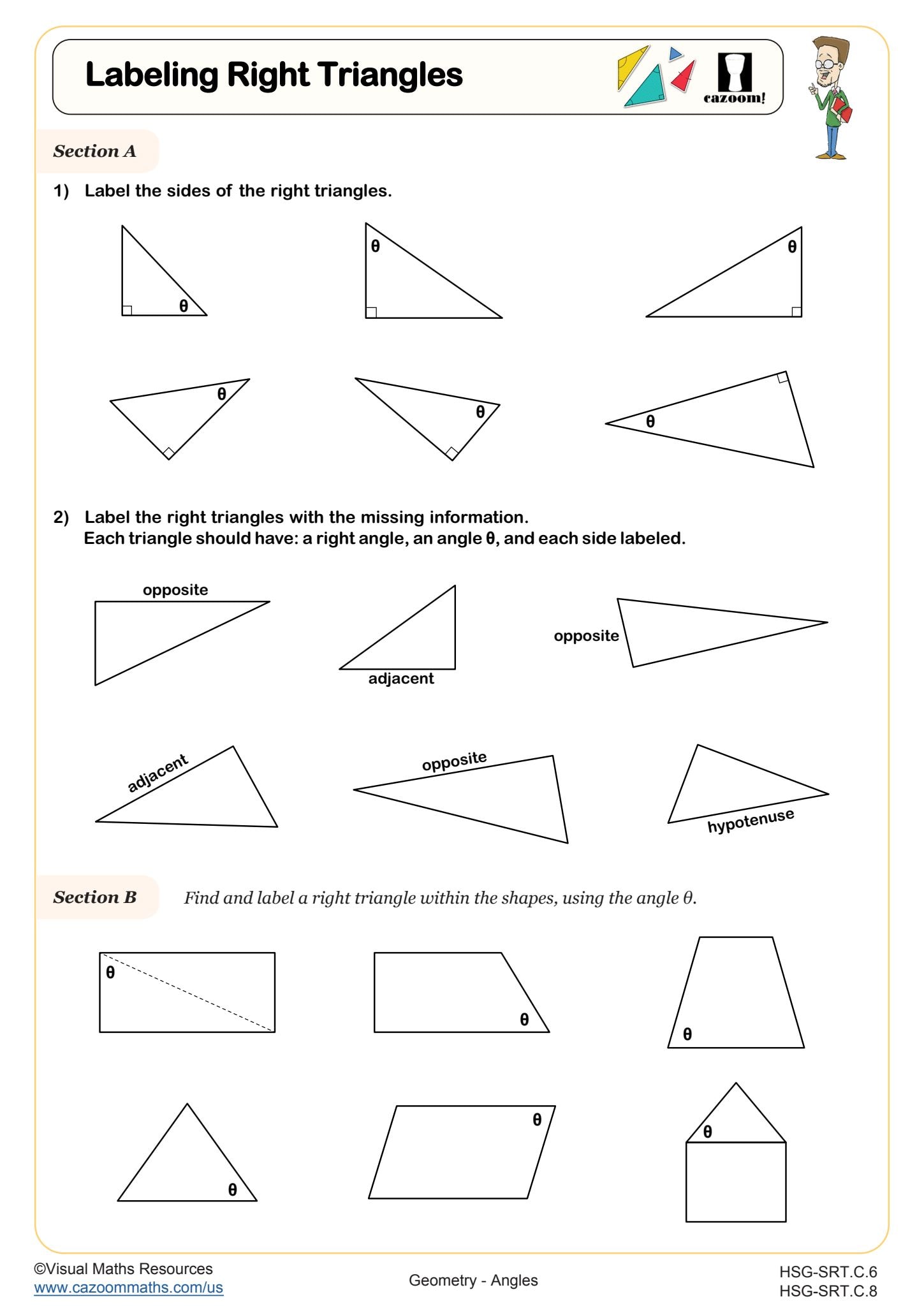
Labeling Right Triangles
Grades: Geometry, IM 3
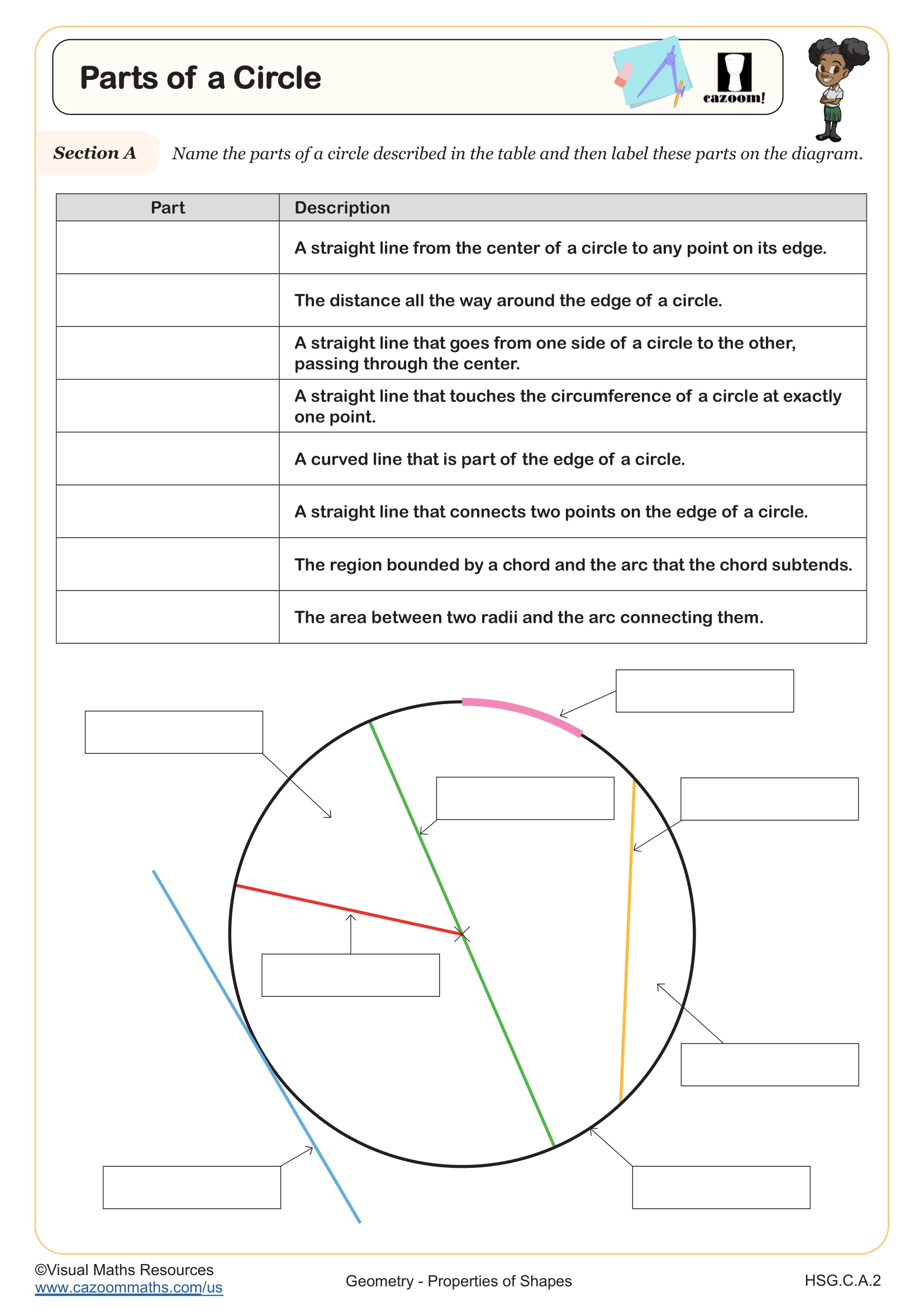
Parts of a Circle
Grades: Geometry, IM 1
All worksheets are created by the team of experienced teachers at Cazoom Math.
What does a properties of shapes worksheet typically include?
A thorough properties of shapes worksheet covers both 2D and 3D shapes, focusing on identifying and classifying geometric properties. Students work with angles (right, acute, obtuse), side lengths, parallel and perpendicular lines, faces, edges, vertices, and lines of symmetry. The worksheets align with Common Core geometry standards across multiple grade levels, progressing from basic shape recognition to complex property analysis.
Teachers frequently observe that students struggle most with distinguishing between similar quadrilaterals - particularly confusing rhombus and square properties, or mixing up trapezoid and parallelogram characteristics. The answer keys help teachers quickly identify these common misconceptions and provide targeted feedback to strengthen students' geometric vocabulary and reasoning skills.
Which grade levels use properties of shapes worksheets?
Properties of shapes worksheets span from elementary through high school, with complexity increasing at each level. Elementary students focus on basic 2D shape properties like counting sides and corners, while middle school students analyze angle relationships and symmetry. High school students work with more advanced concepts like congruence, similarity, and coordinate geometry applications.
The progression allows teachers to scaffold learning effectively - third graders might identify triangles by their three sides, while eighth graders classify triangles by both side lengths and angle measures. Teachers notice that students who master basic shape properties in elementary grades show stronger performance in later geometry courses, particularly when working with proofs and transformations.
How do these worksheets help students understand 2D and 3D shapes?
These worksheets bridge the gap between flat 2D shapes and solid 3D figures by highlighting how properties change with dimension. Students learn that a square has 4 sides and 4 vertices, while a cube has 6 faces, 12 edges, and 8 vertices. The visual components help students make these connections systematically rather than memorizing isolated facts.
Teachers report that students initially struggle to visualize 3D shapes from 2D representations, often undercounting faces or edges on complex polyhedra. The worksheets with answers allow students to self-check their work, building confidence as they develop spatial reasoning skills. This foundation proves valuable in architecture, engineering, and design fields where understanding dimensional properties is crucial.
How can teachers use these worksheets most effectively in math class?
Teachers find success using these worksheets as diagnostic tools before introducing new geometric concepts, helping identify which properties students already understand. They work well for differentiated instruction - advanced students can tackle complex classification problems while struggling learners focus on basic property identification. The answer keys enable quick formative assessment during independent work time.
Many teachers pair these worksheets with hands-on activities using geometric manipulatives or real-world objects. Students might examine classroom items to identify geometric properties, then complete worksheet problems to reinforce their observations. This approach helps students see that shape properties appear everywhere - from the hexagonal patterns in honeycomb structures to the triangular supports in bridge construction.
Prerequisite Knowledge Before Learning Shape Properties
Before starting these worksheets, students should know basic 2D and 3D shape names. They should also be able to count, identify shapes by sight, and understand position words like edge, corner, and side. Knowing how to sort objects by simple features helps too. Our worksheets guide learners step by step into more detailed shape properties as they build their geometry skills.
FAQs: Properties of Shapes Worksheets
Q: What grades are these worksheets designed for?
A: They are best for students in 1st through 4th grade.
Q: Are answer sheets included?
A: Yes, every worksheet comes with a complete answer key.
Q: Can these worksheets be used at home?
A: Absolutely. They’re ideal for both classroom and home learning.
Q: Do these support Common Core standards?
A: Yes, they align with Common Core geometry standards for early grades.: They are best for students in 1st through 4th grade.
Q: Are answer sheets included?
A: Yes, every worksheet comes with a complete answer key.
Q: Can these worksheets be used at home?
A: Absolutely. They’re ideal for both classroom and home learning.
Q: Do these support Common Core standards?
A: Yes, they align with Common Core geometry standards for early grades.