Properties of Operations Worksheets With Answers
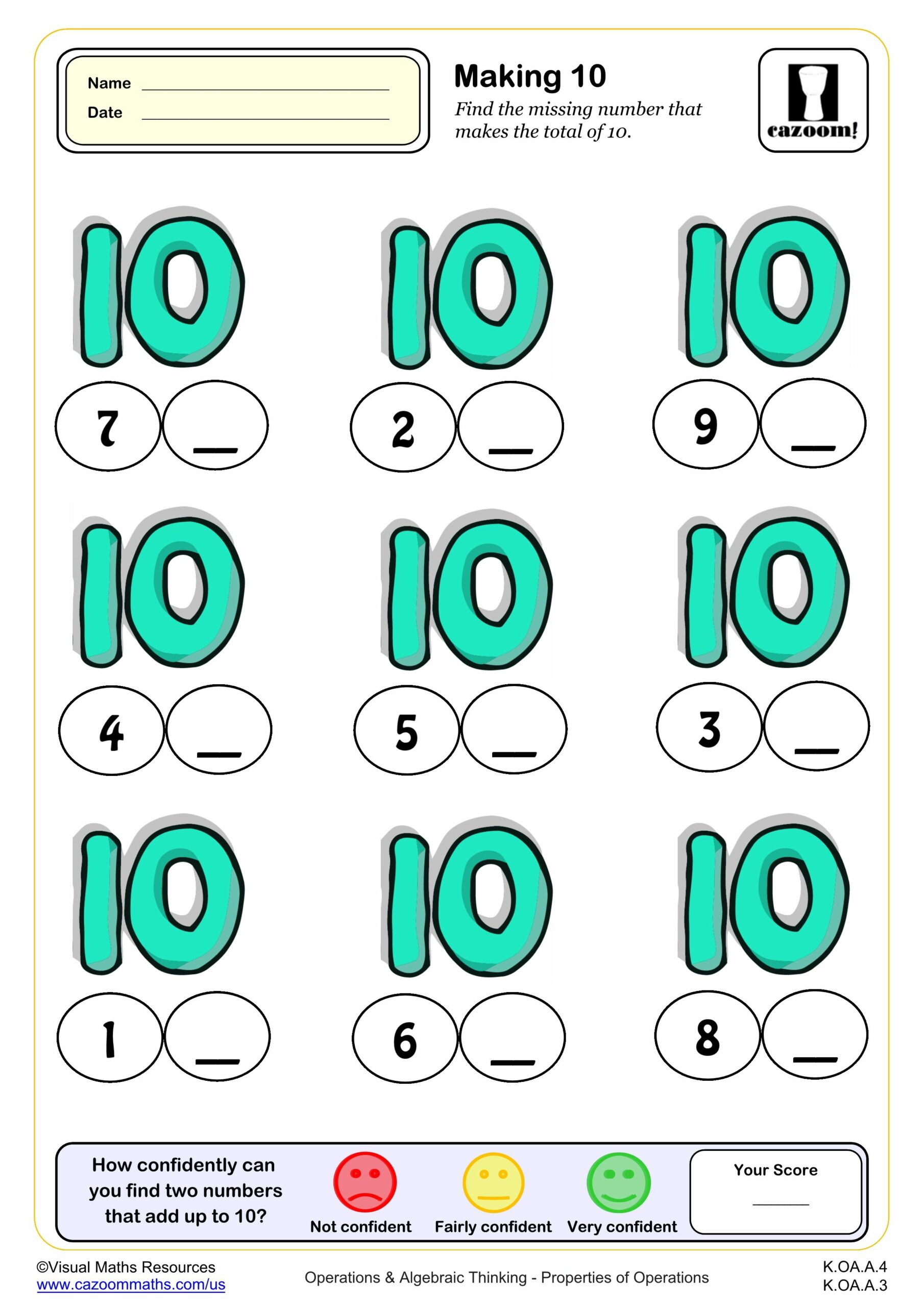
Making 10
Grades: Kindergarten
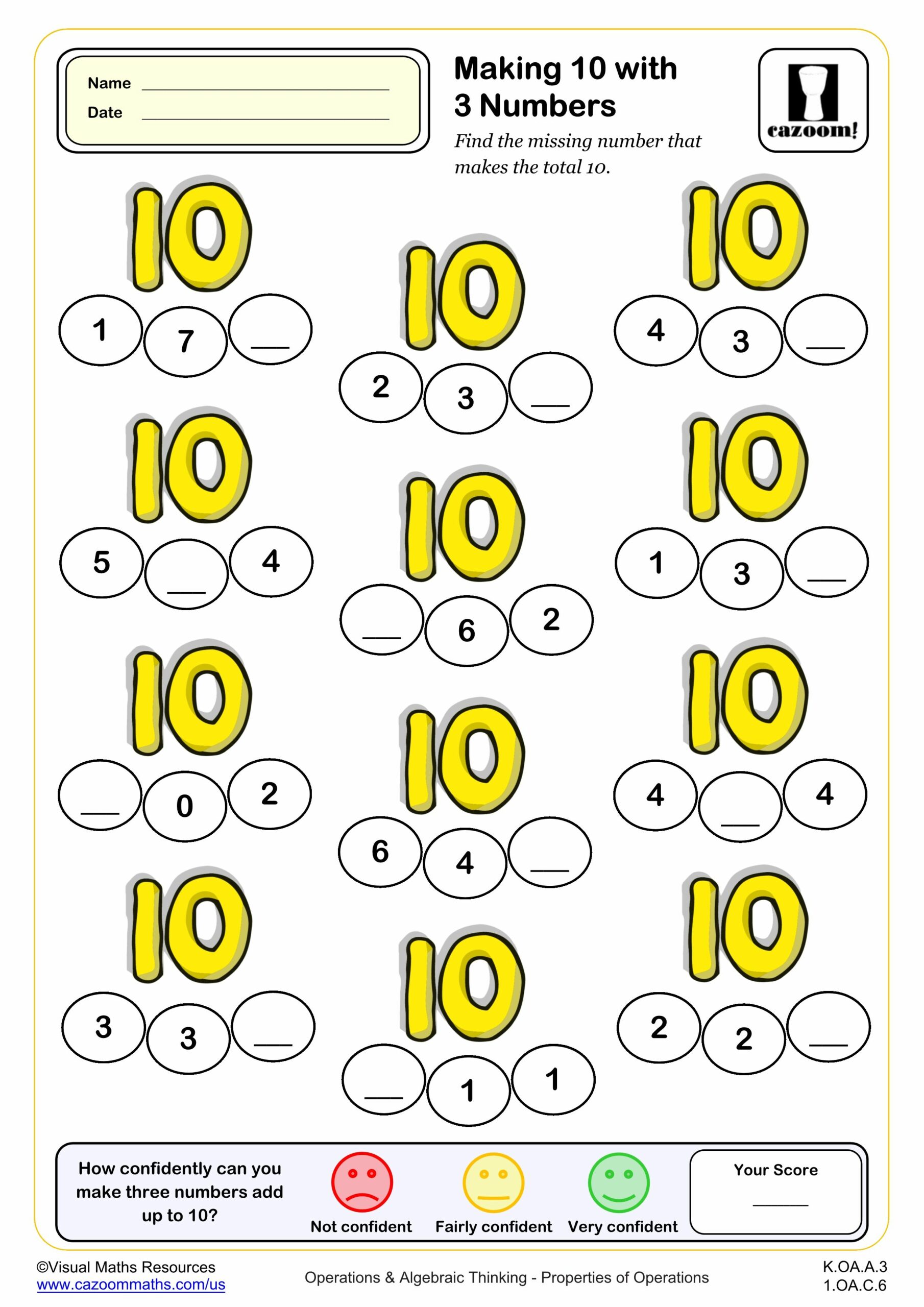
Making 10 with three numbers
Grades: Kindergarten, 1st Grade
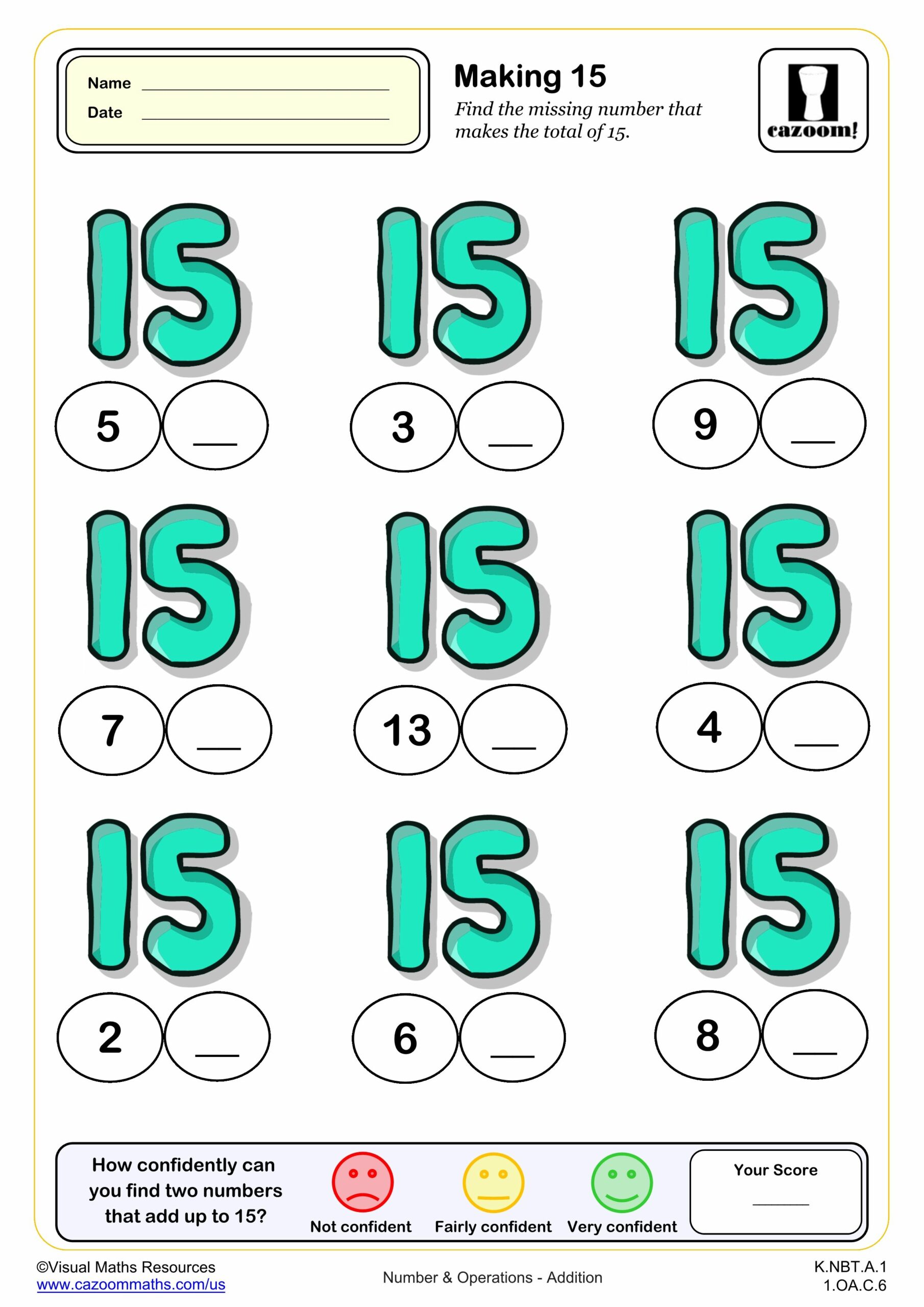
Making 15
Grades: Kindergarten, 1st Grade
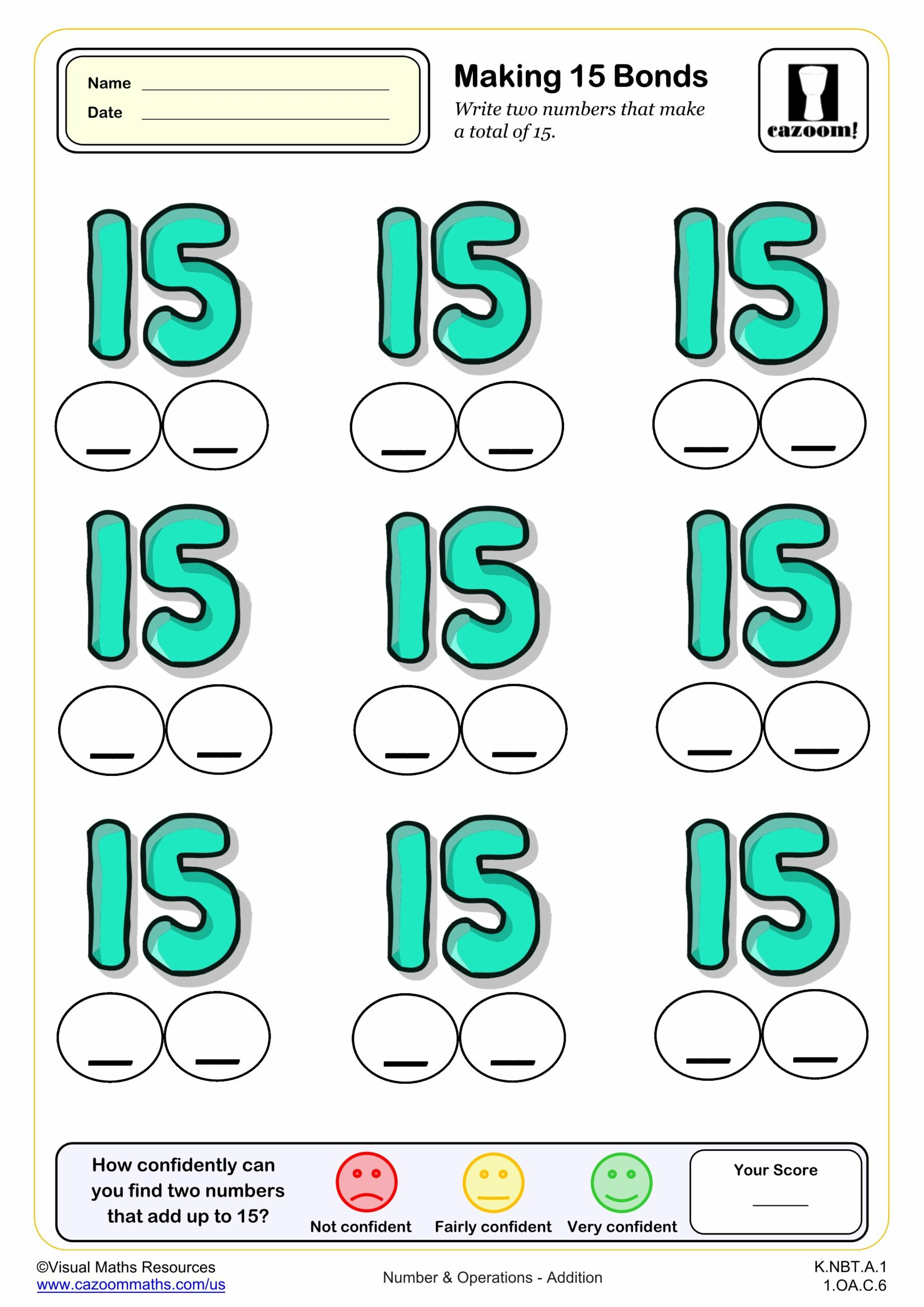
Making 15 (BONDS)
Grades: Kindergarten, 1st Grade
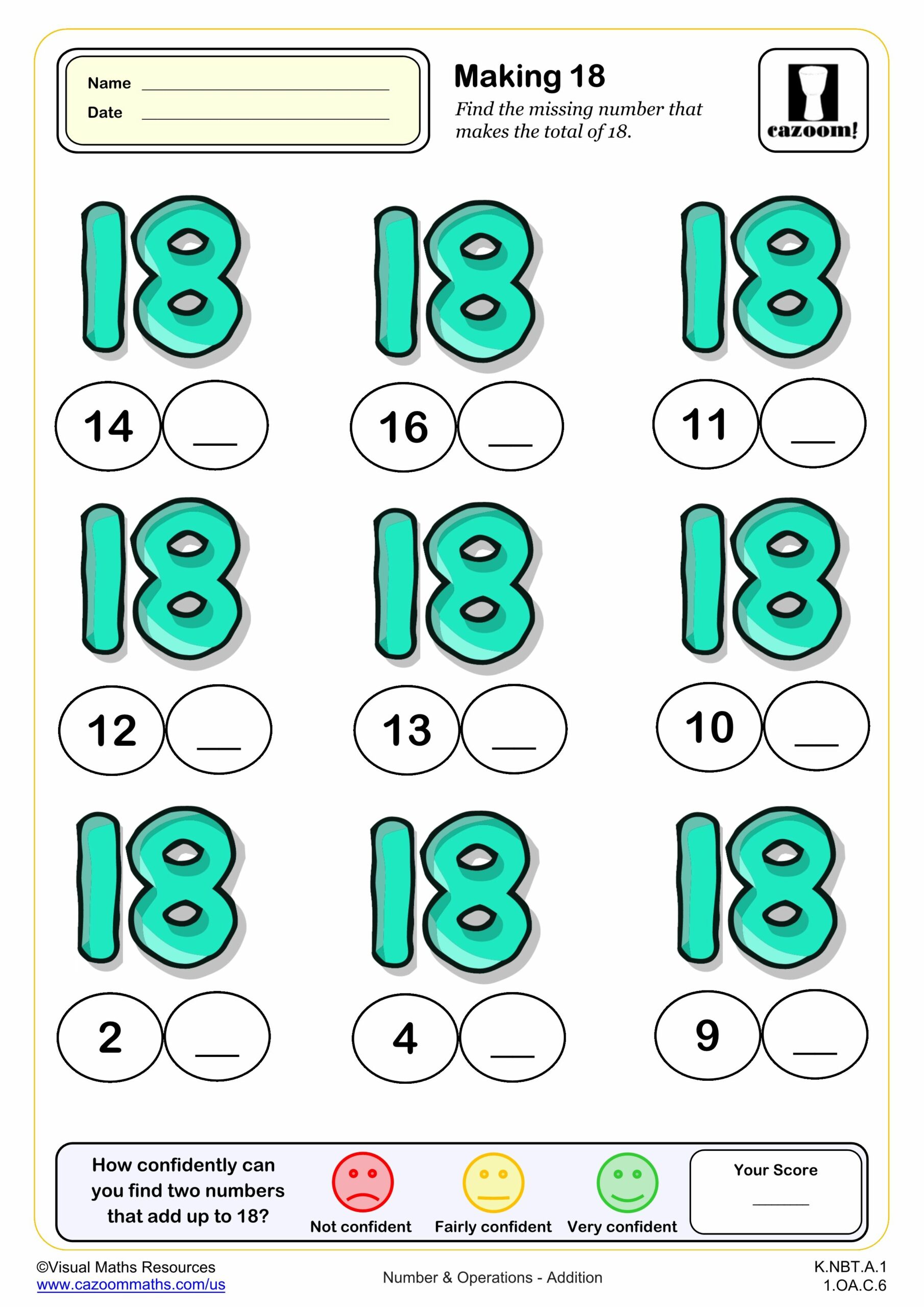
Making 18
Grades: Kindergarten, 1st Grade
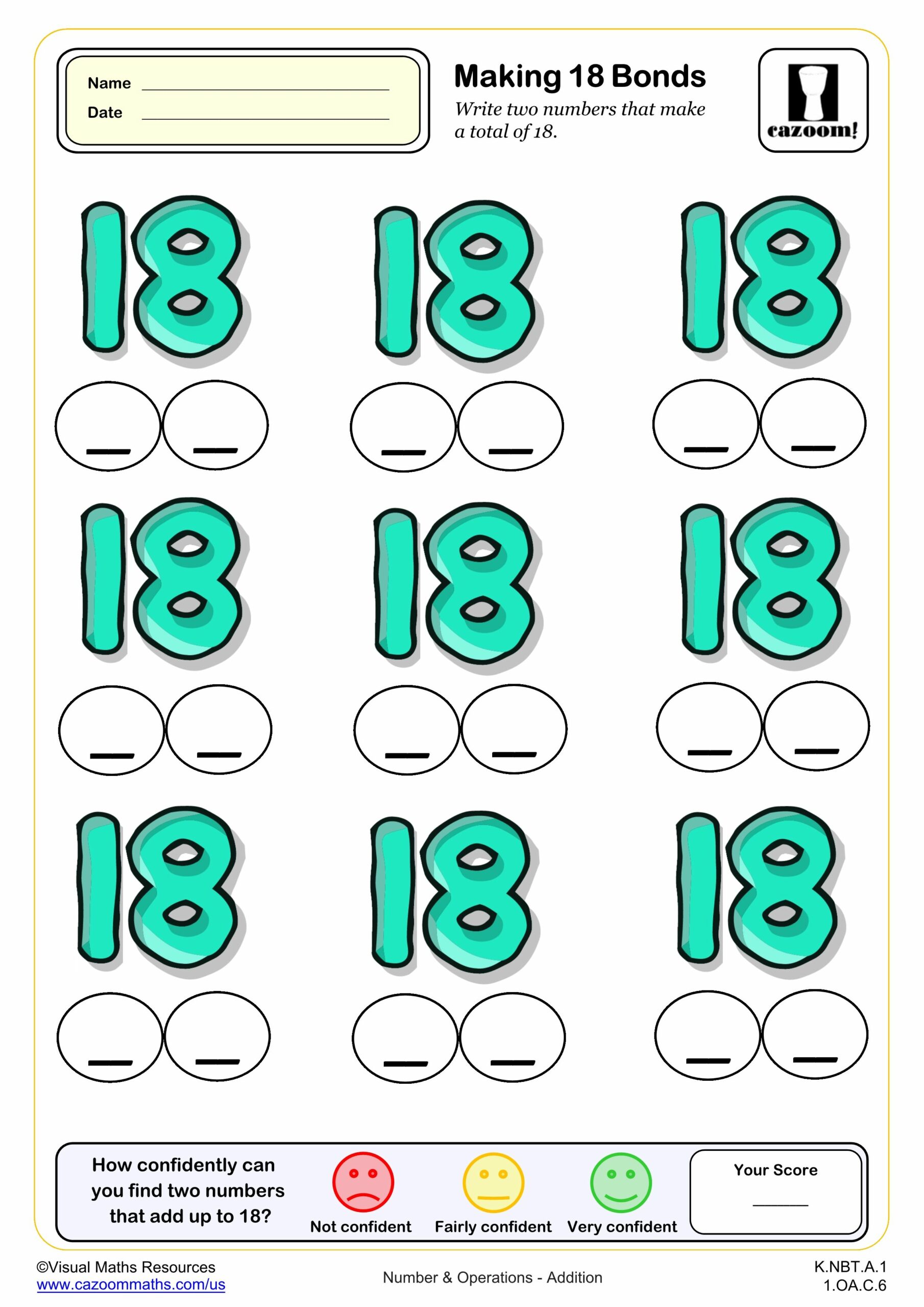
Making 18 (BONDS)
Grades: Kindergarten, 1st Grade
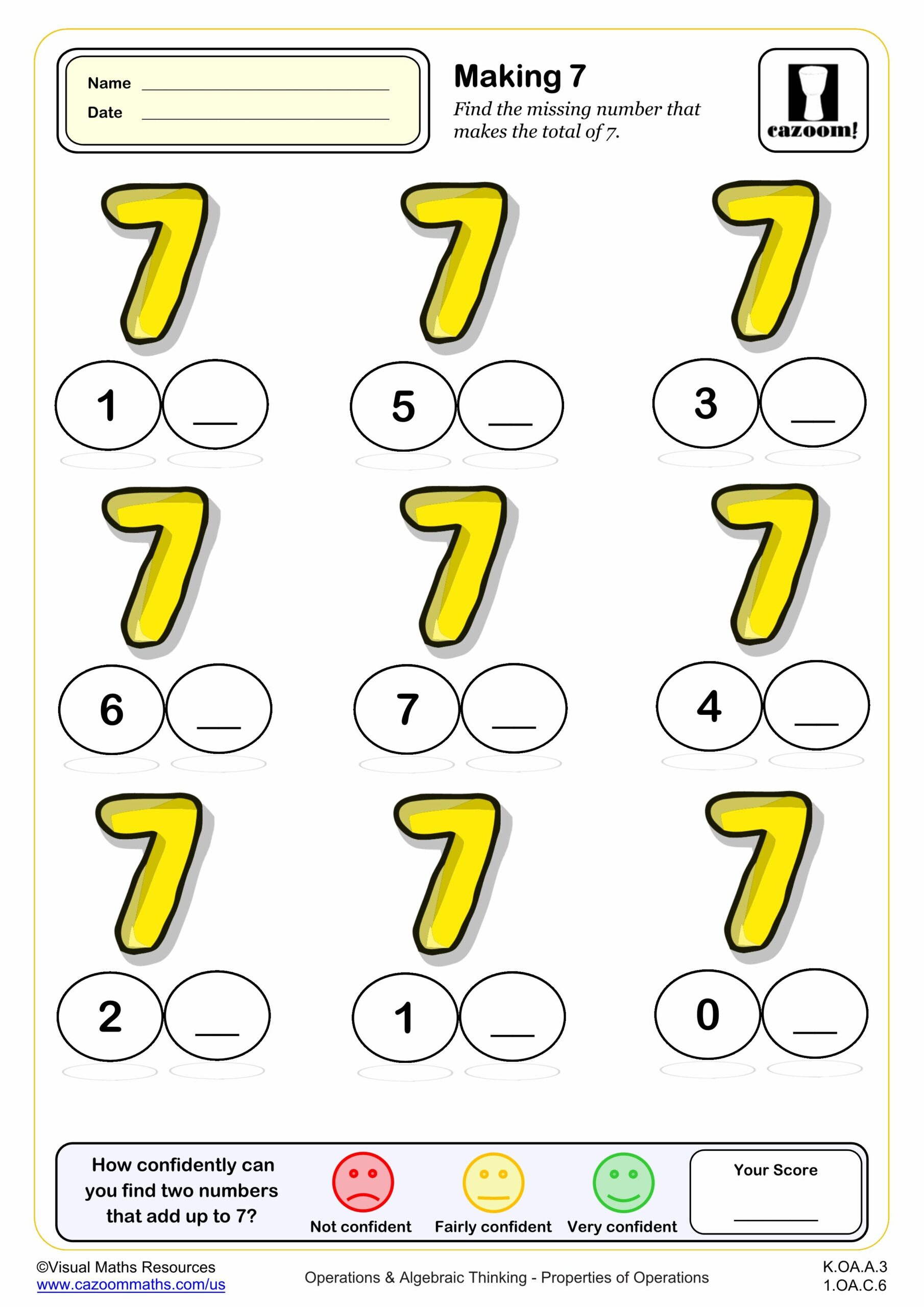
Making 7
Grades: Kindergarten, 1st Grade
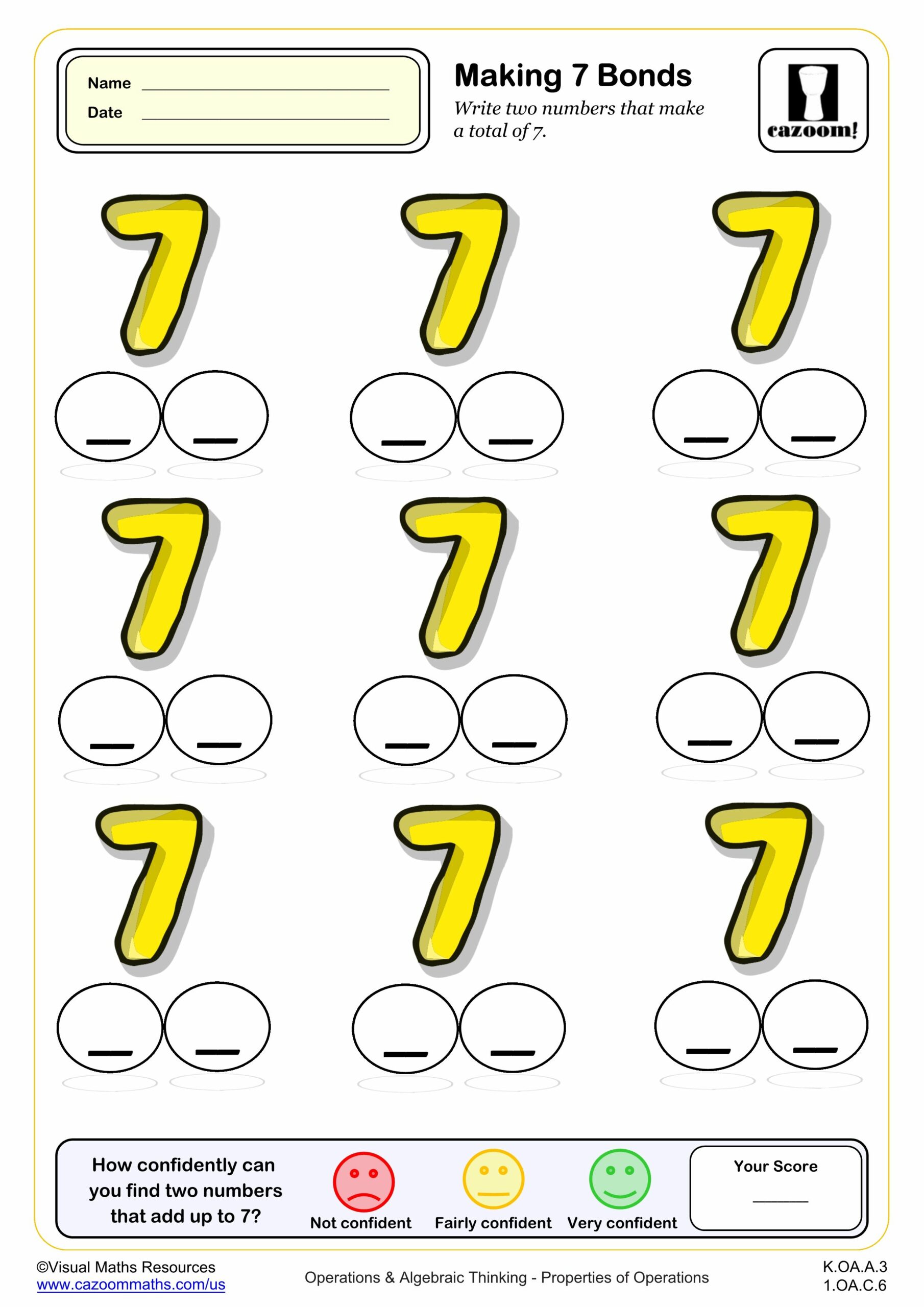
Making 7 (Bonds)
Grades: Kindergarten, 1st Grade
Making 8 (BONDS)
Grades: Kindergarten, 1st Grade
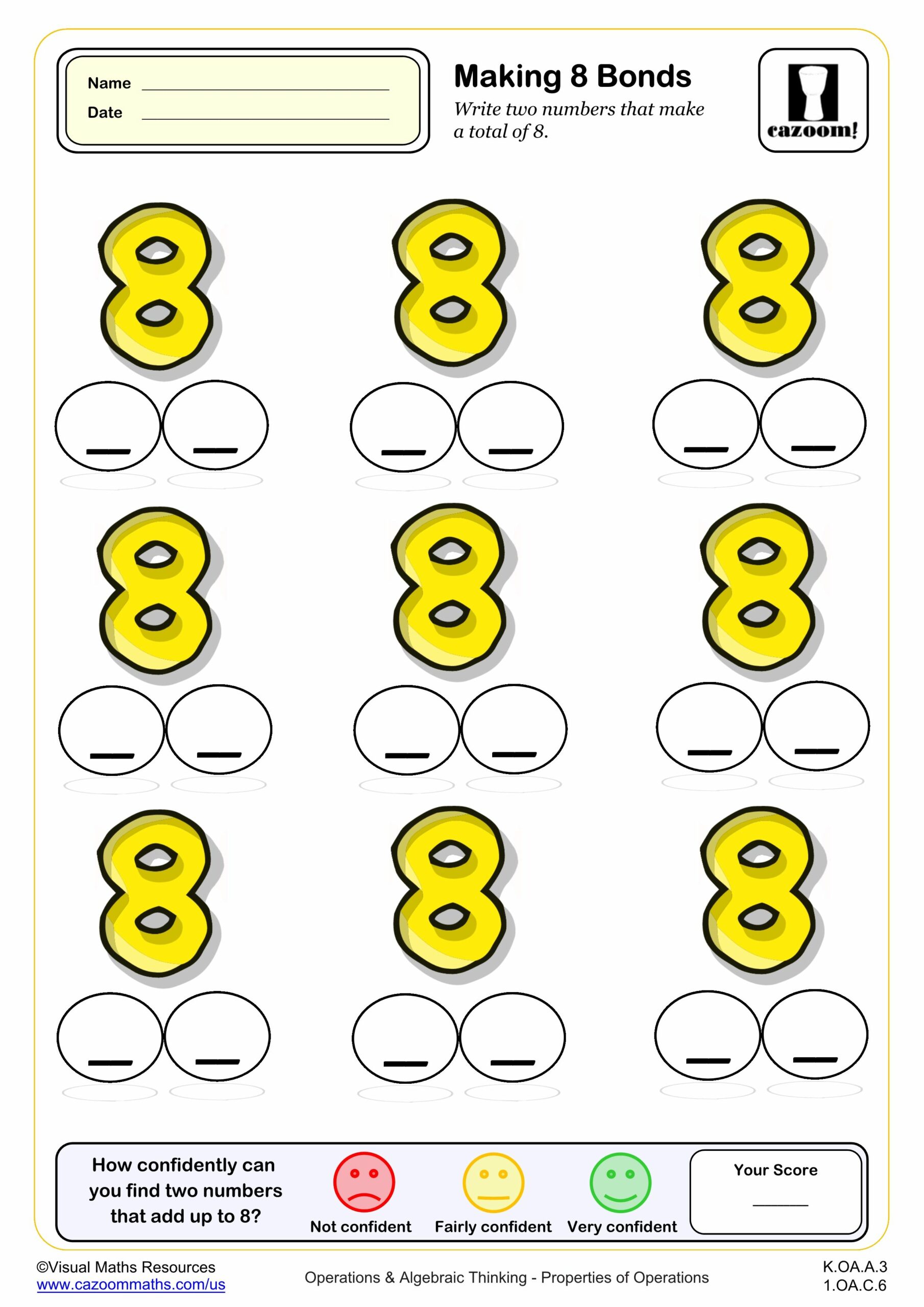
Making 9 (BONDS)
Grades: Kindergarten, 1st Grade
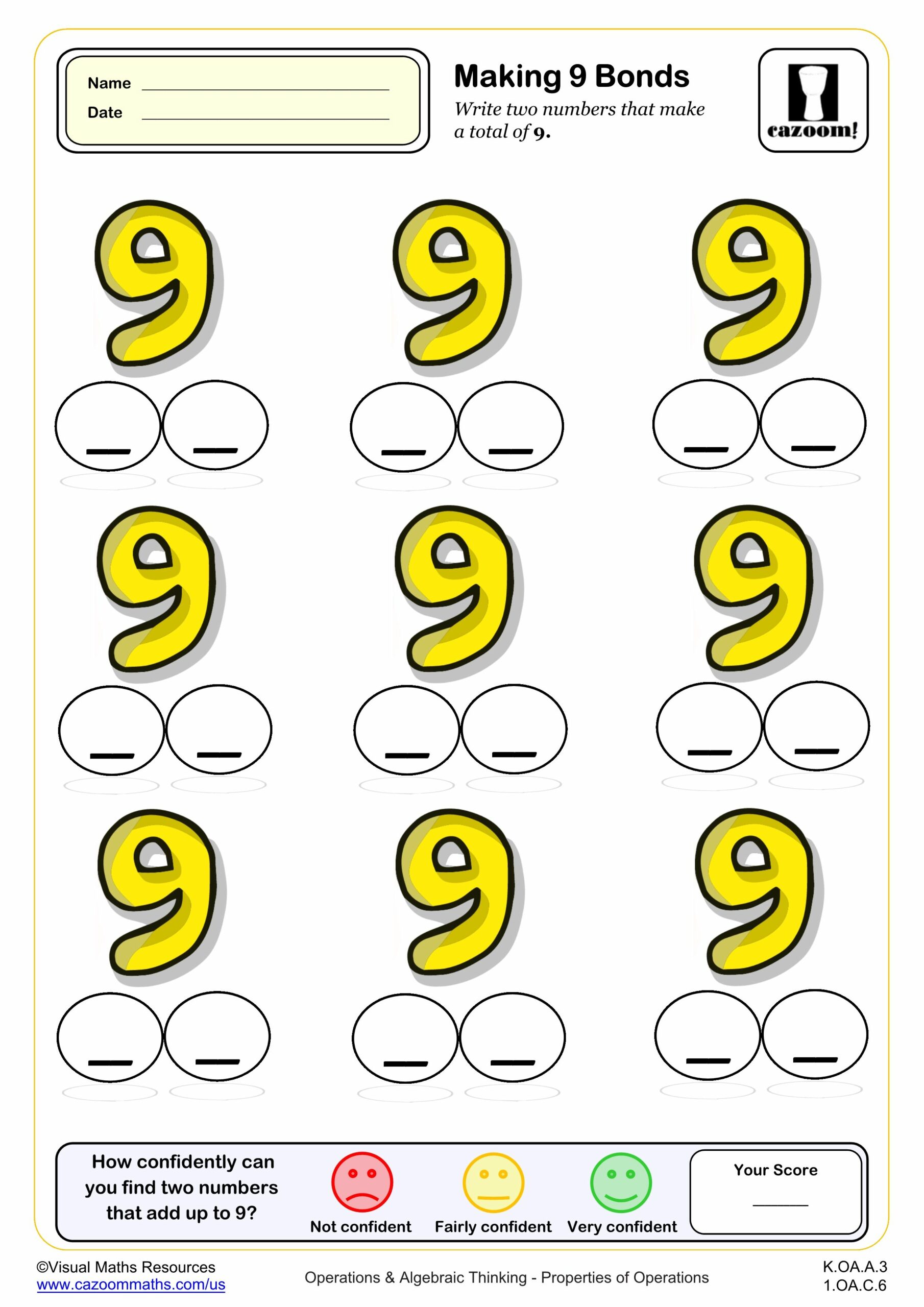
Matching Sums (to 10)
Grades: Kindergarten
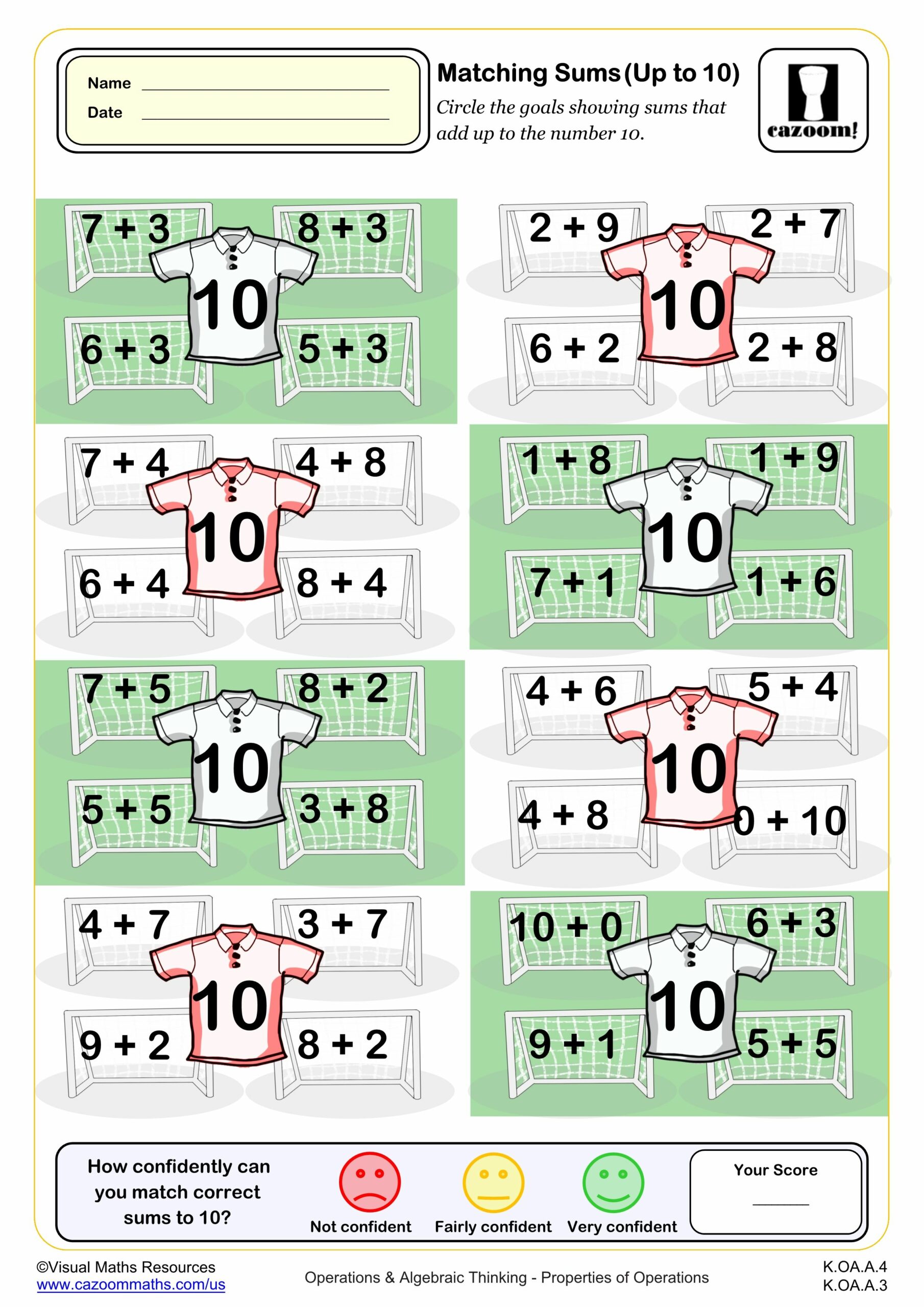
Number Bonds to 10 drills (10 questions)
Grades: Kindergarten, 1st Grade
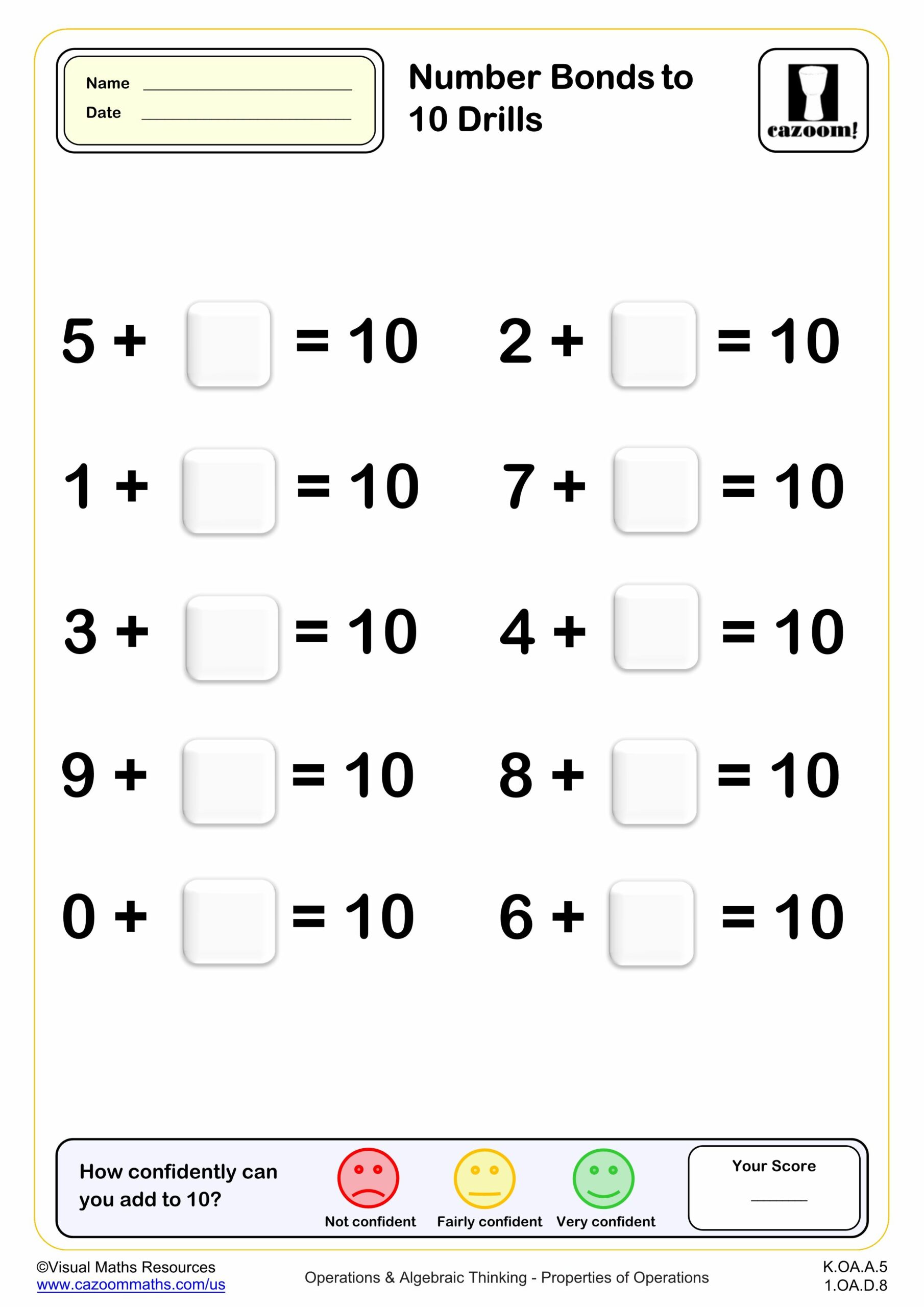
Number Bonds to 10 drills (20 questions)
Grades: Kindergarten, 1st Grade
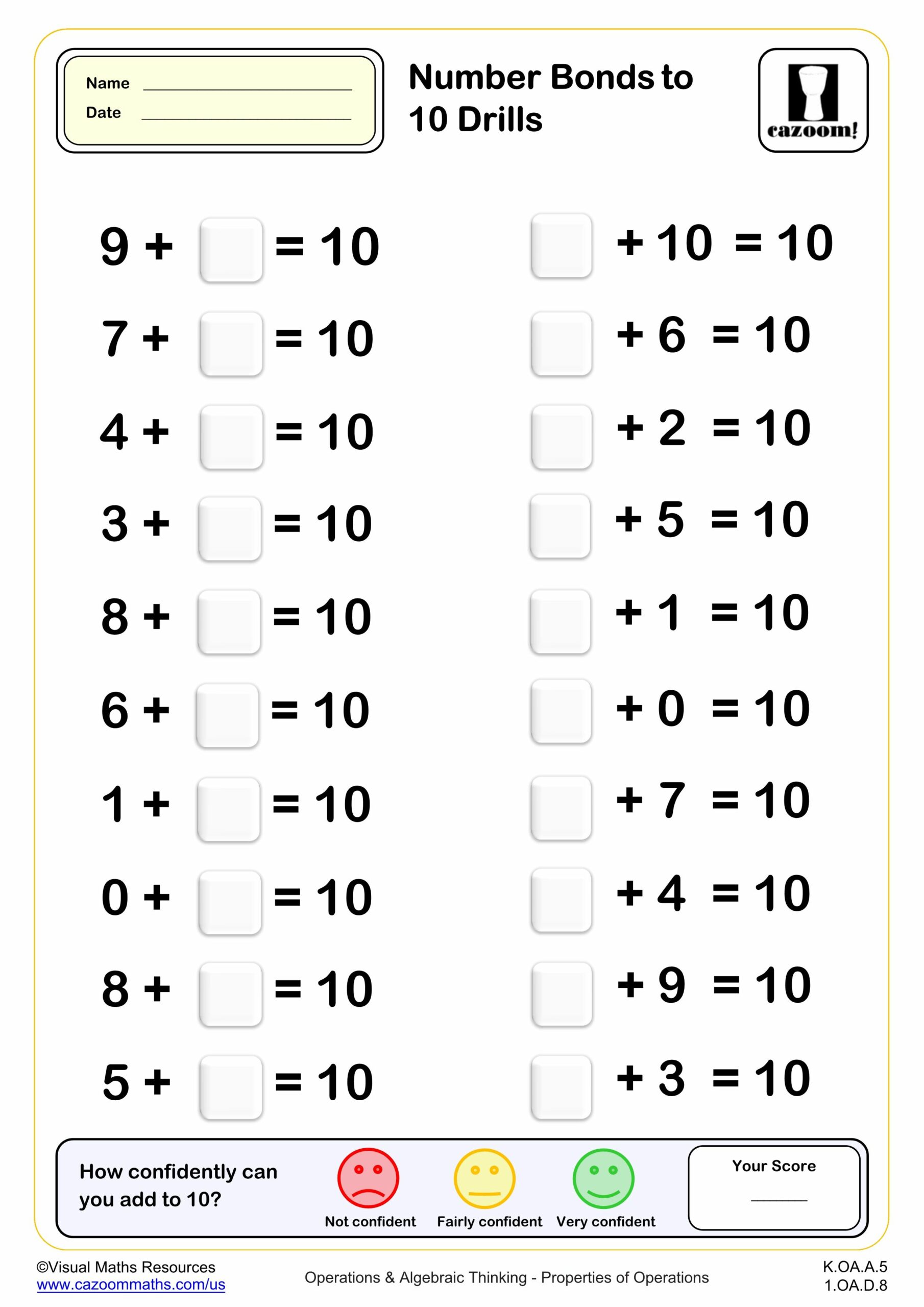
Number Bonds to 10 drills (50 questions)
Grades: Kindergarten, 1st Grade
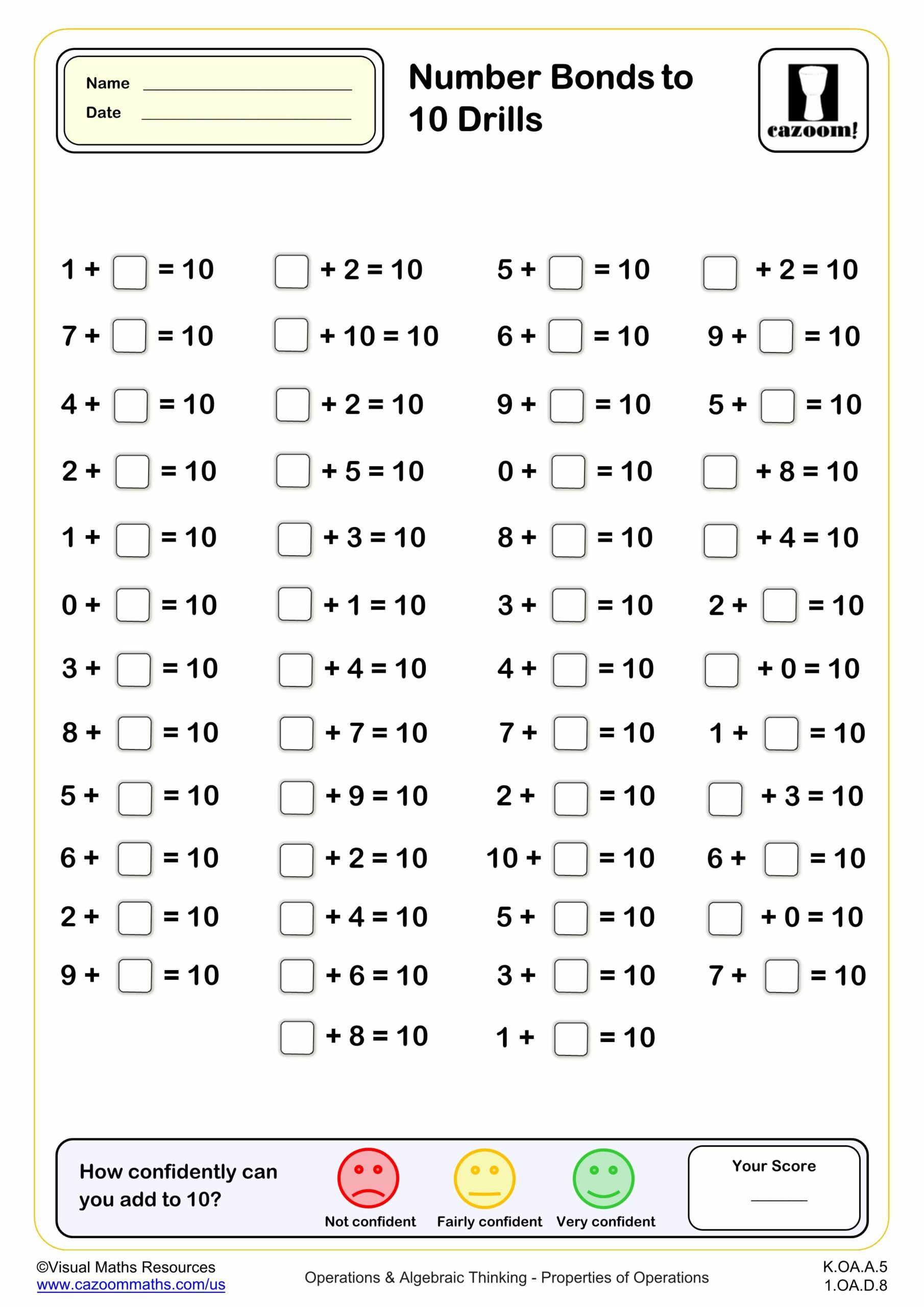
Number Bonds to 10 with Dots
Grades: Kindergarten, 1st Grade
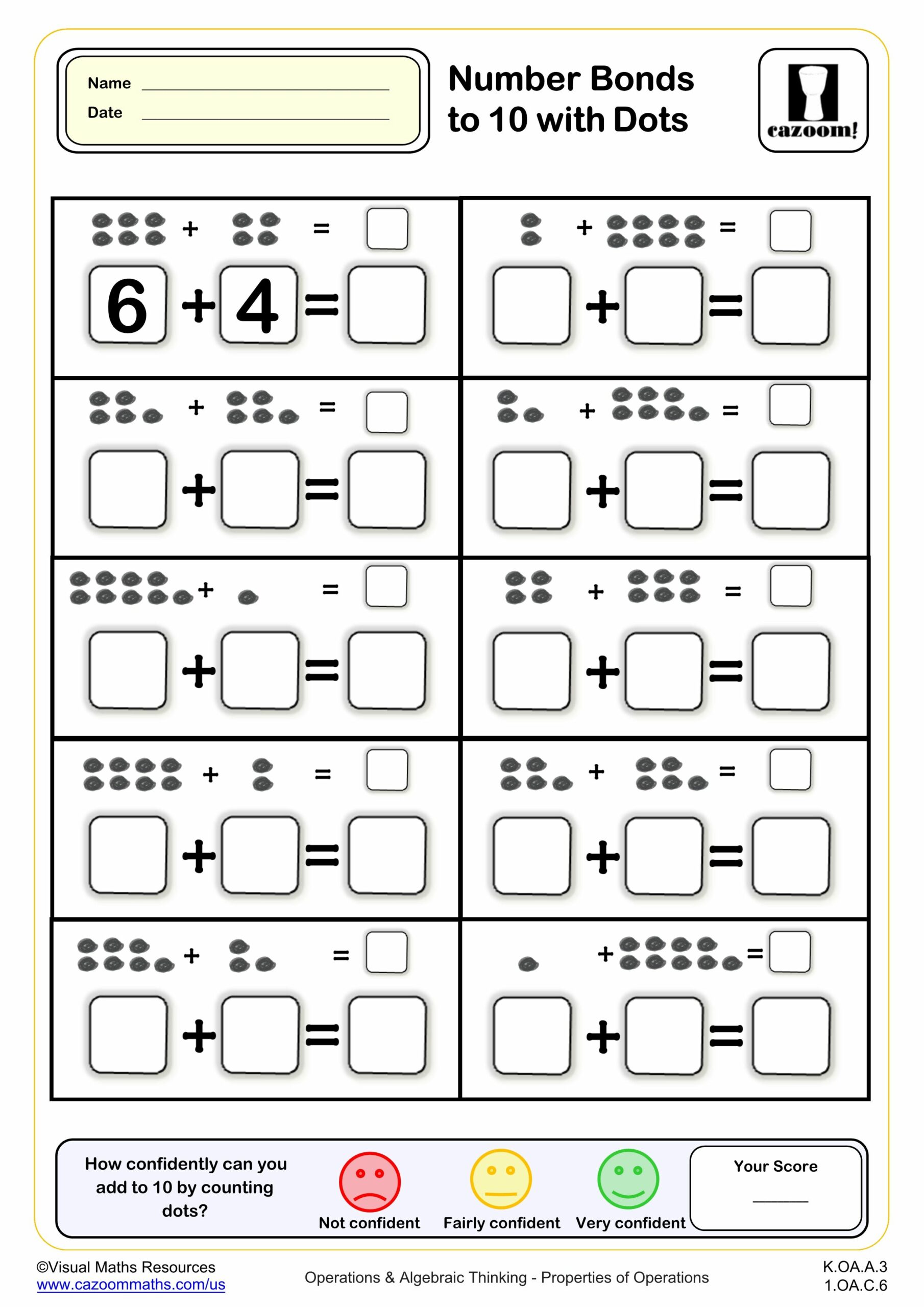
Number bonds to 10 with number lines
Grades: Kindergarten, 1st Grade
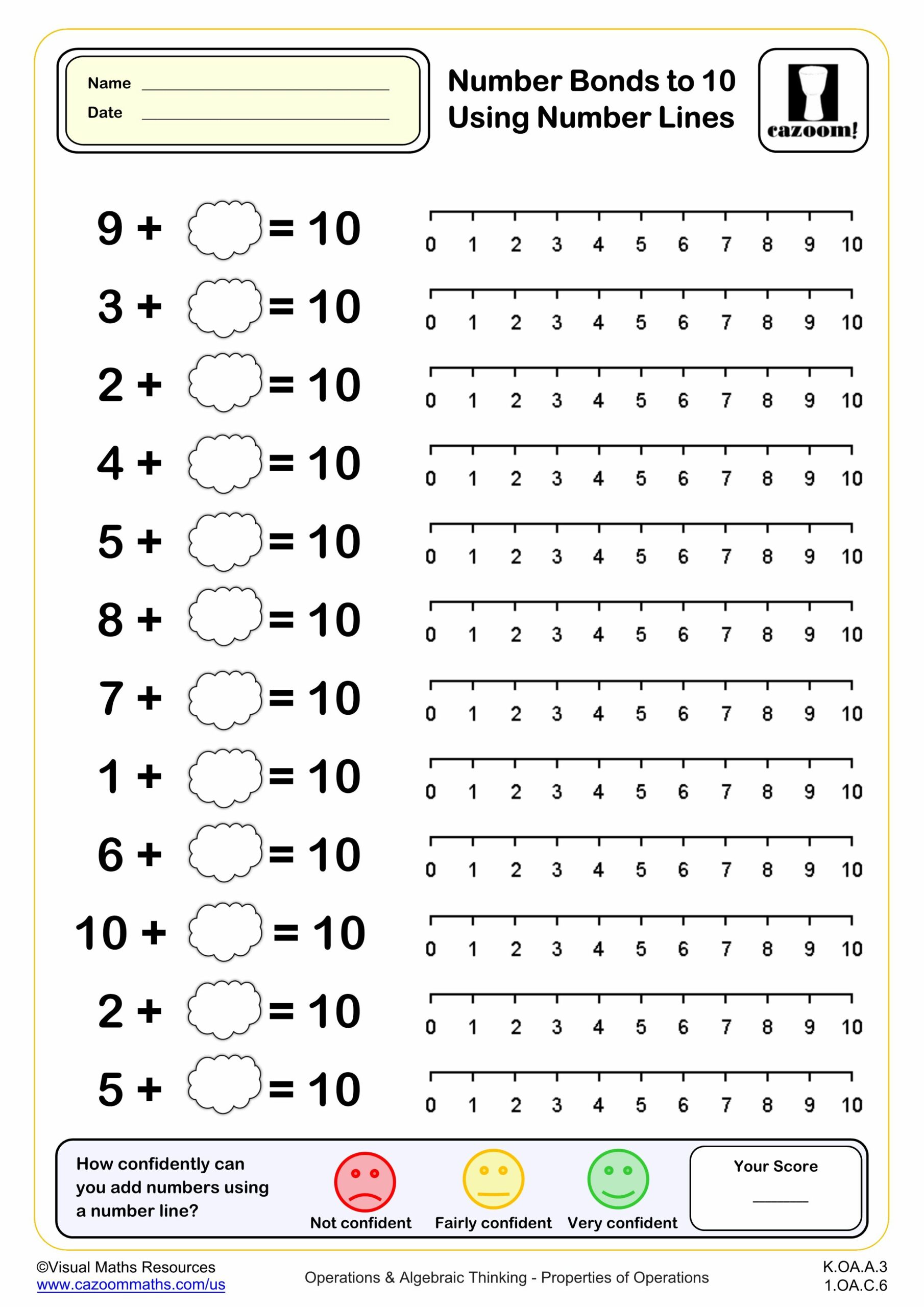
Number Bonds to 5 drills (10 questions)
Grades: Kindergarten
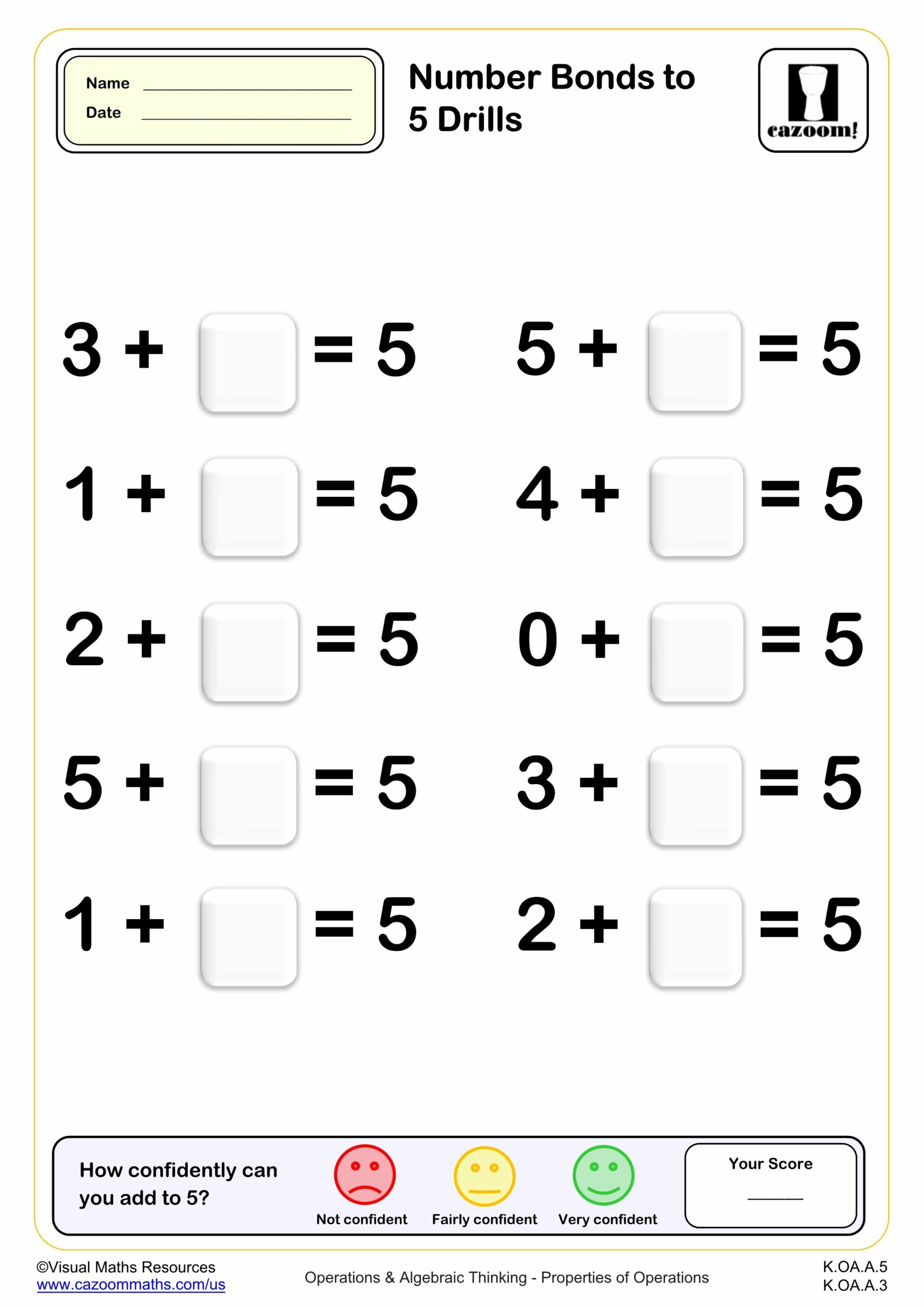
Number Bonds to 5 drills (20 questions)
Grades: Kindergarten
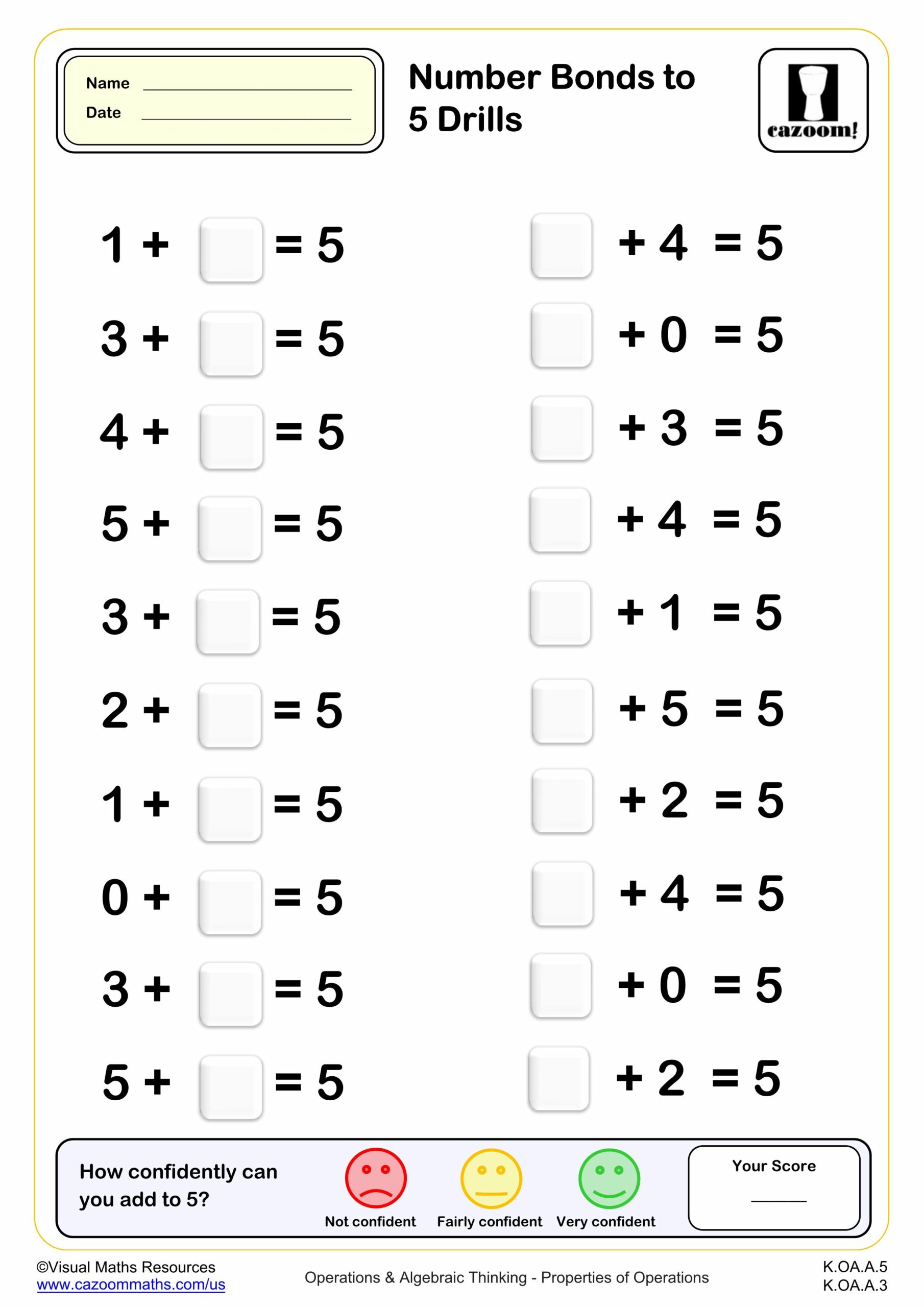
Number Bonds to 5 drills (50 questions)
Grades: Kindergarten, 1st Grade
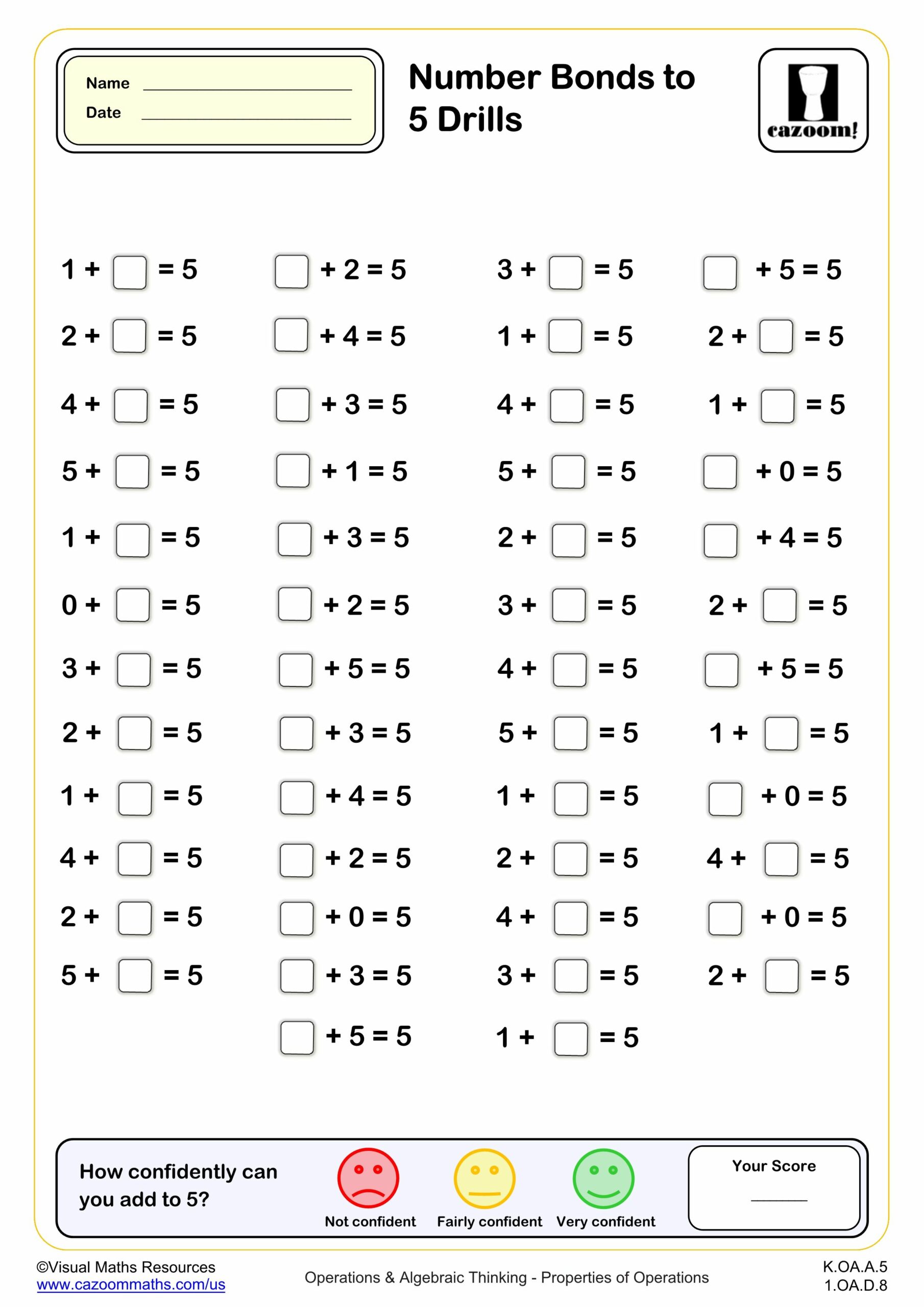
Subtracting 1 (10 questions)
Grades: Kindergarten, 1st Grade
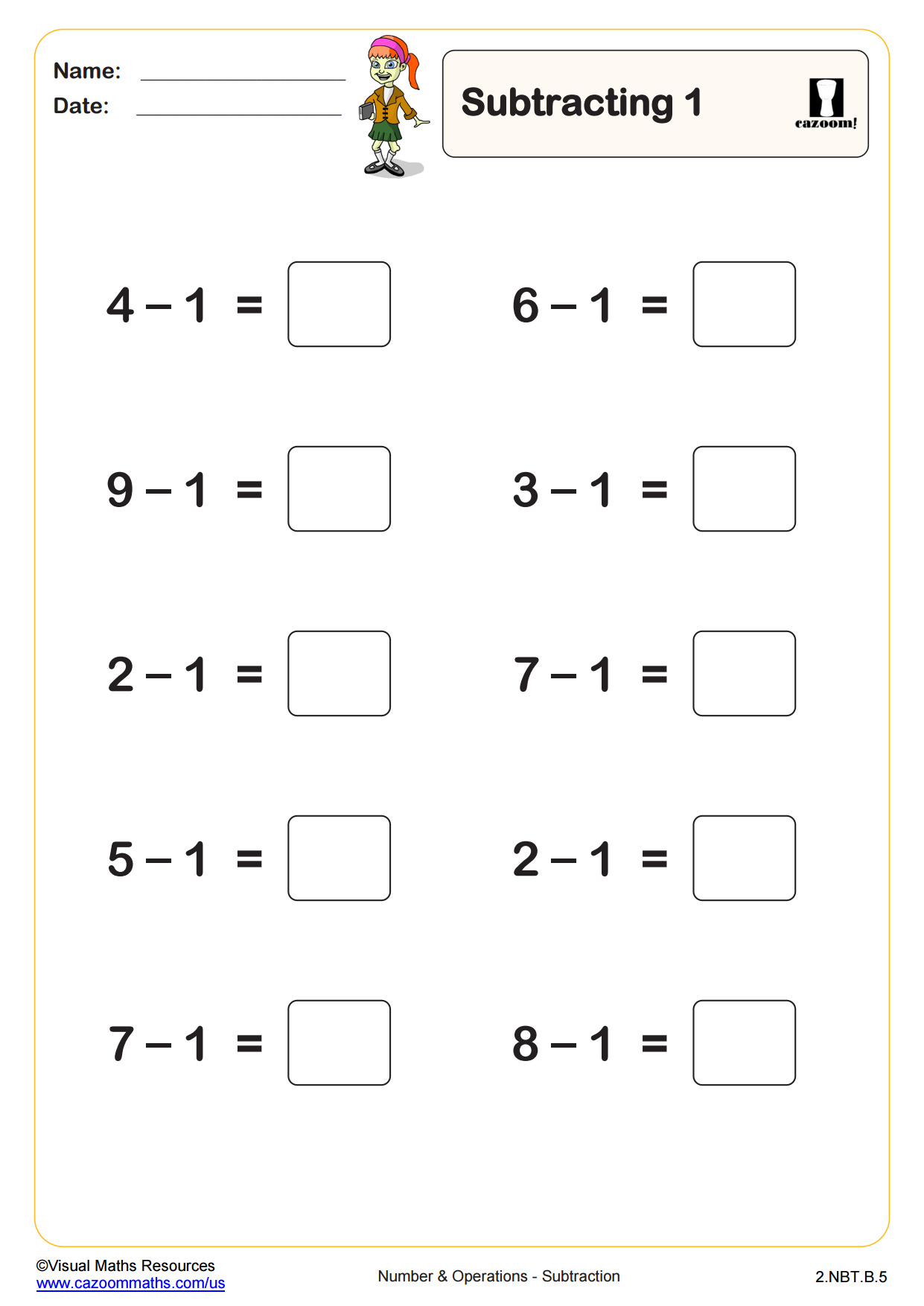
Subtracting 1 (20 questions)
Grades: Kindergarten, 1st Grade
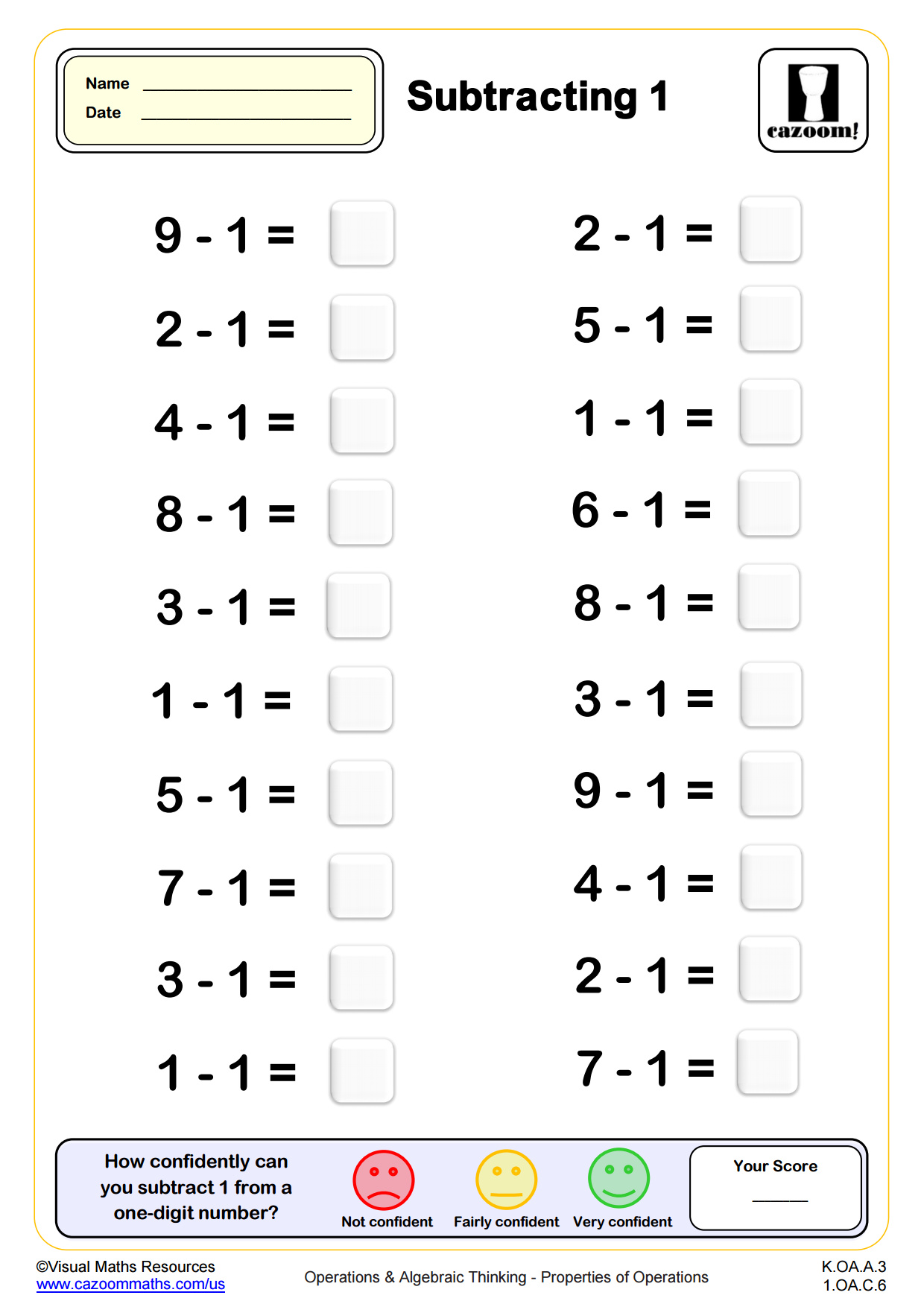
Subtracting 1 (50 questions)
Grades: Kindergarten, 1st Grade
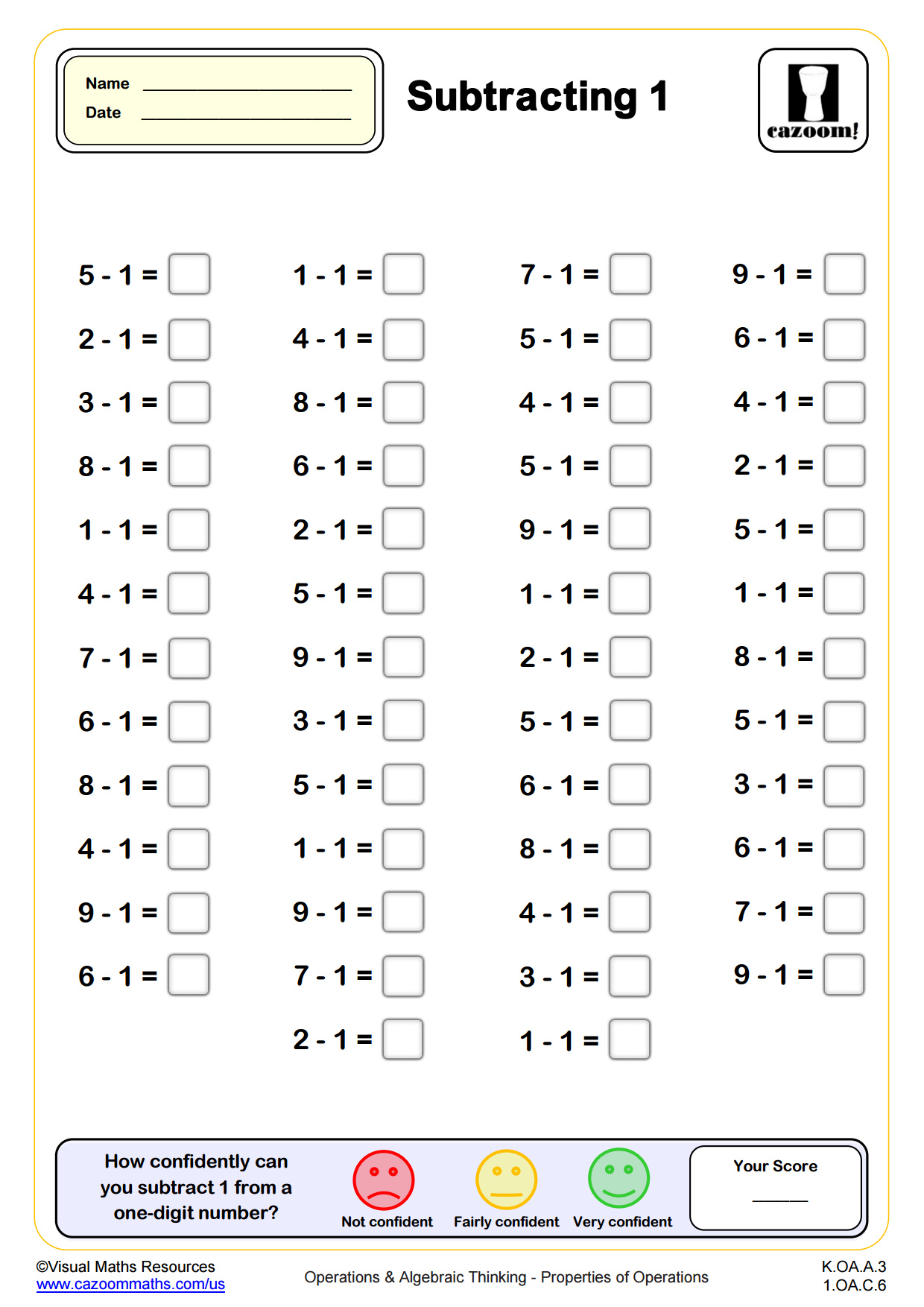
Subtracting 2 (10 questions)
Grades: Kindergarten, 1st Grade
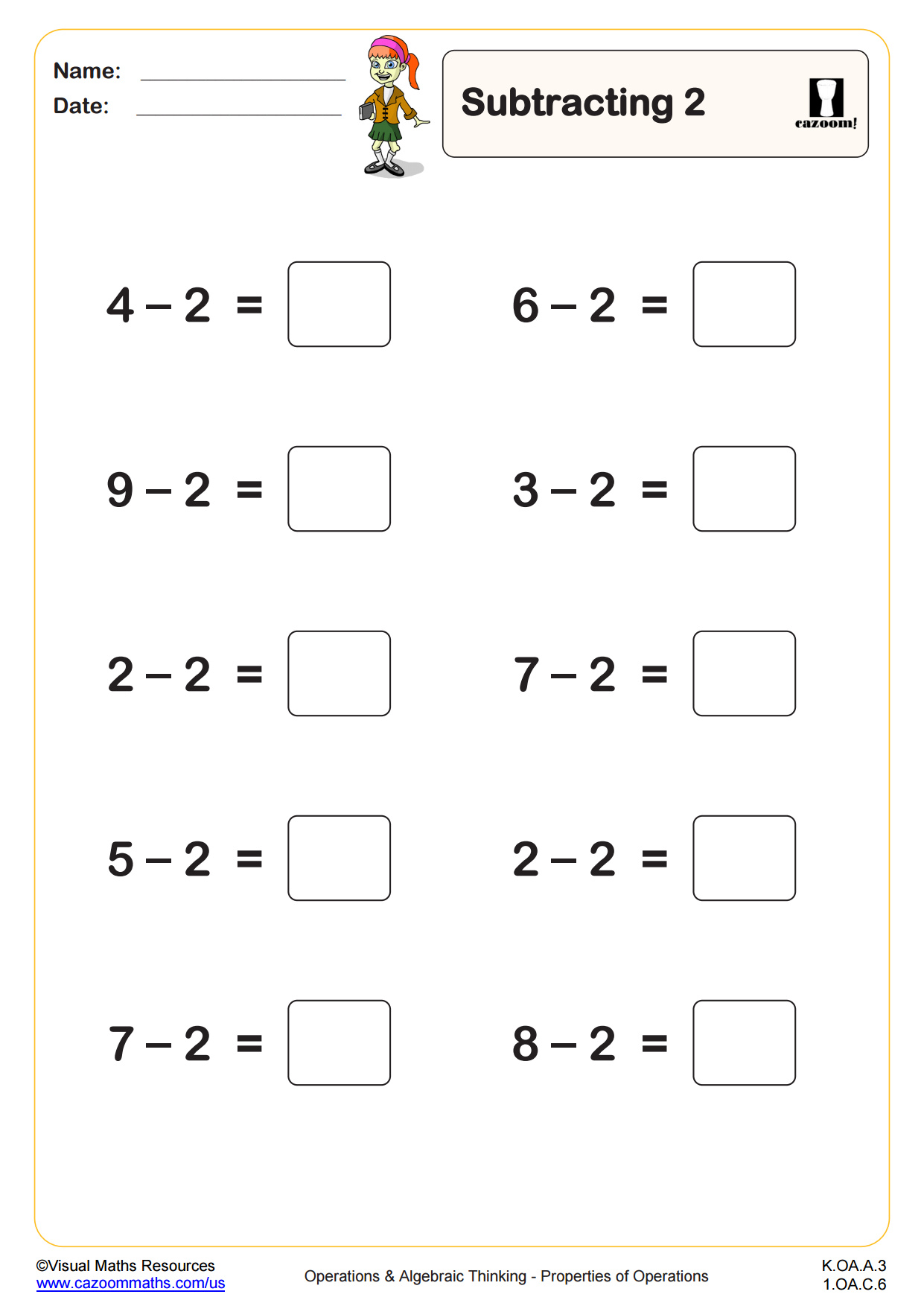
Subtracting 2 (20 questions)
Grades: Kindergarten, 1st Grade
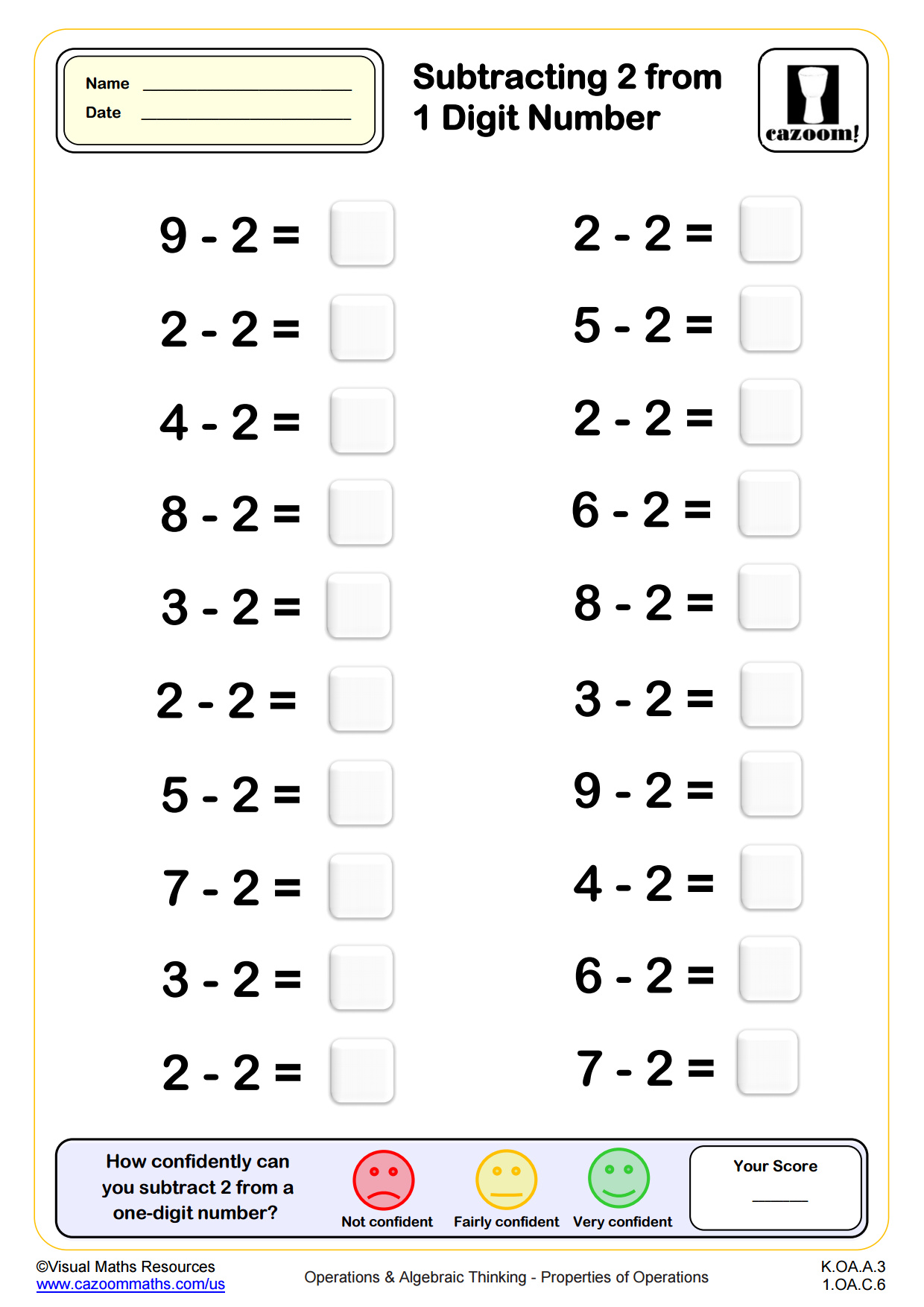
Subtracting 2 (50 questions)
Grades: Kindergarten, 1st Grade
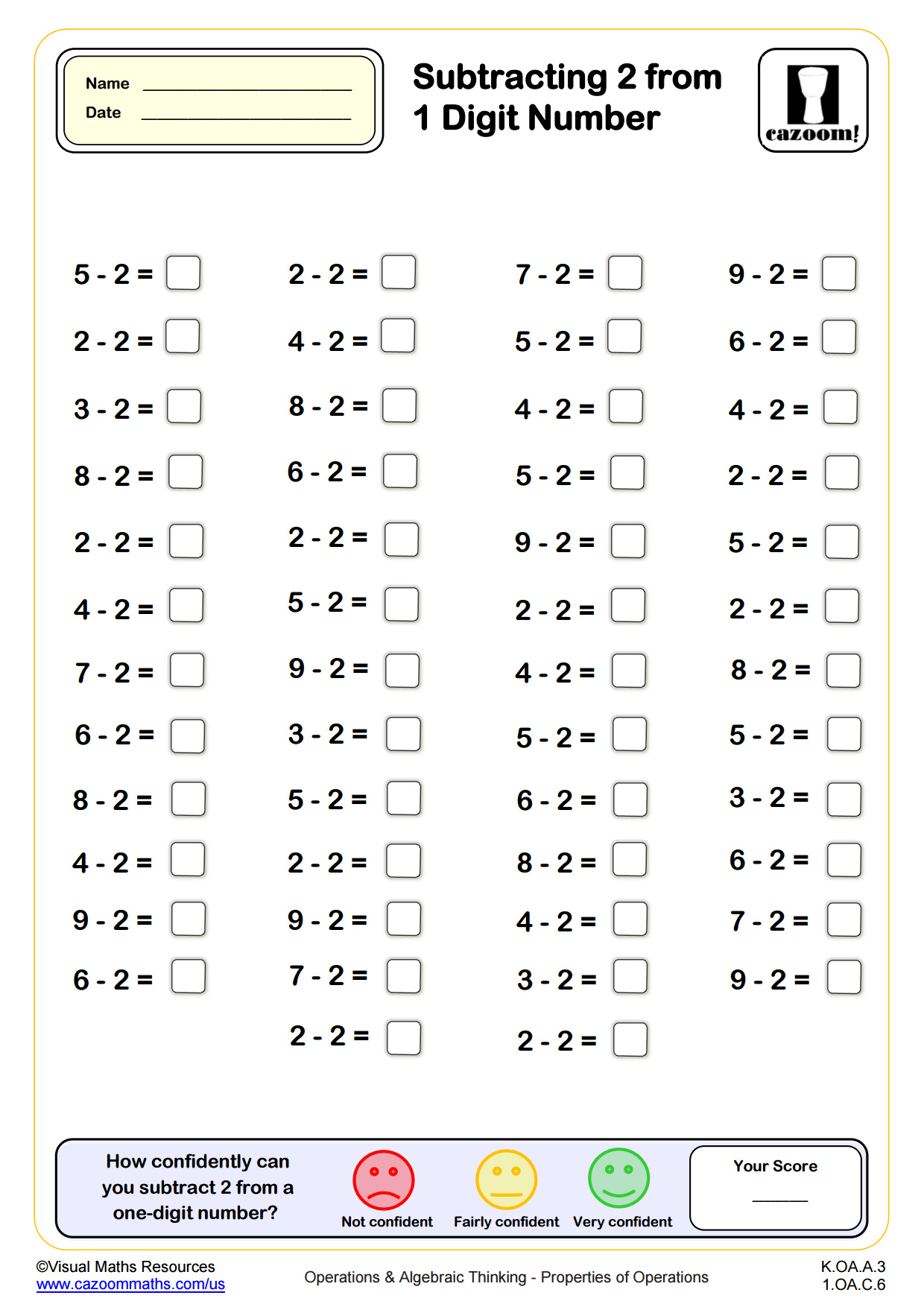
Subtracting Numbers Less Than 10 (A)
Grades: Kindergarten, 1st Grade
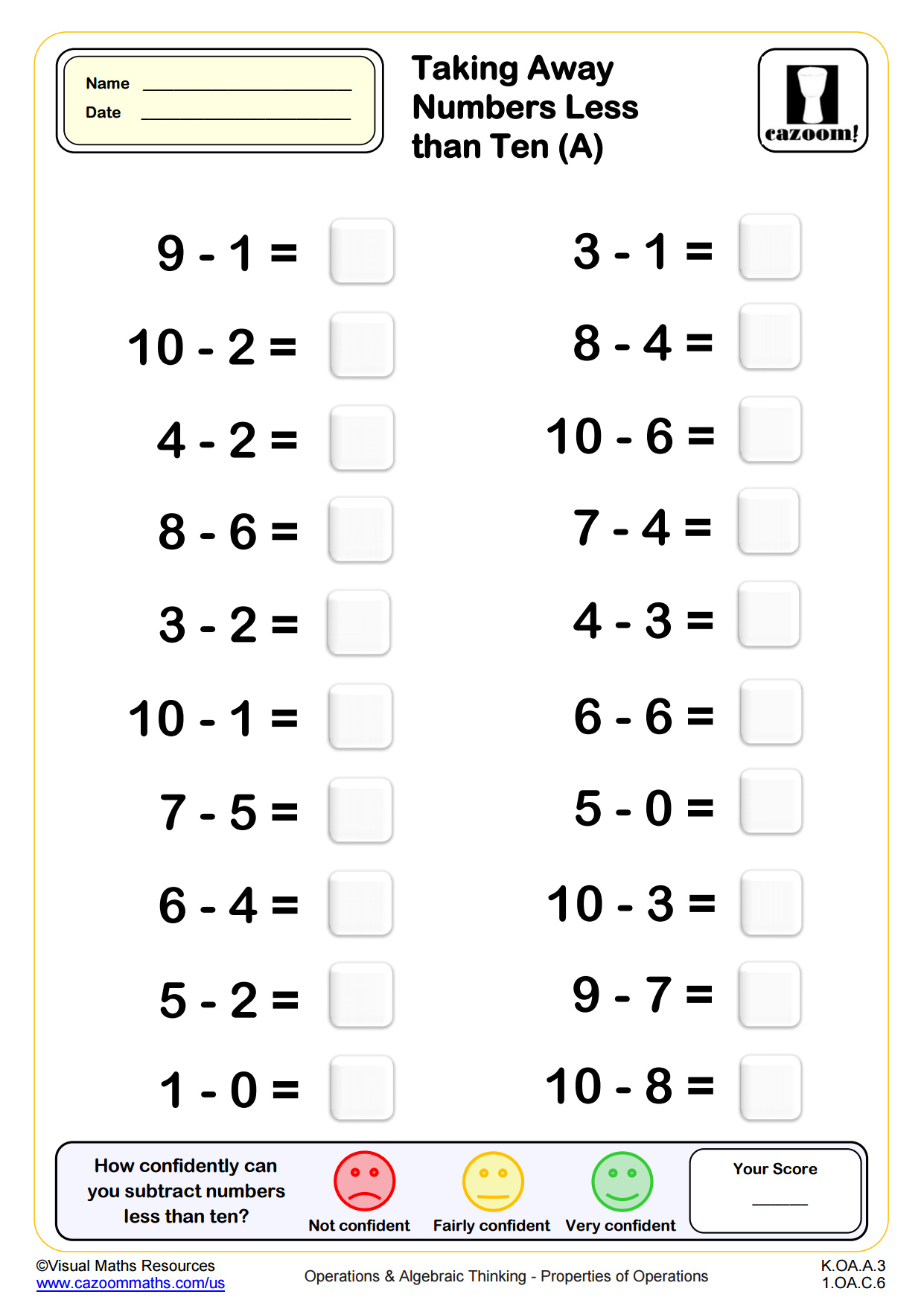
Subtracting Numbers Less Than 10 (B)
Grades: Kindergarten, 1st Grade
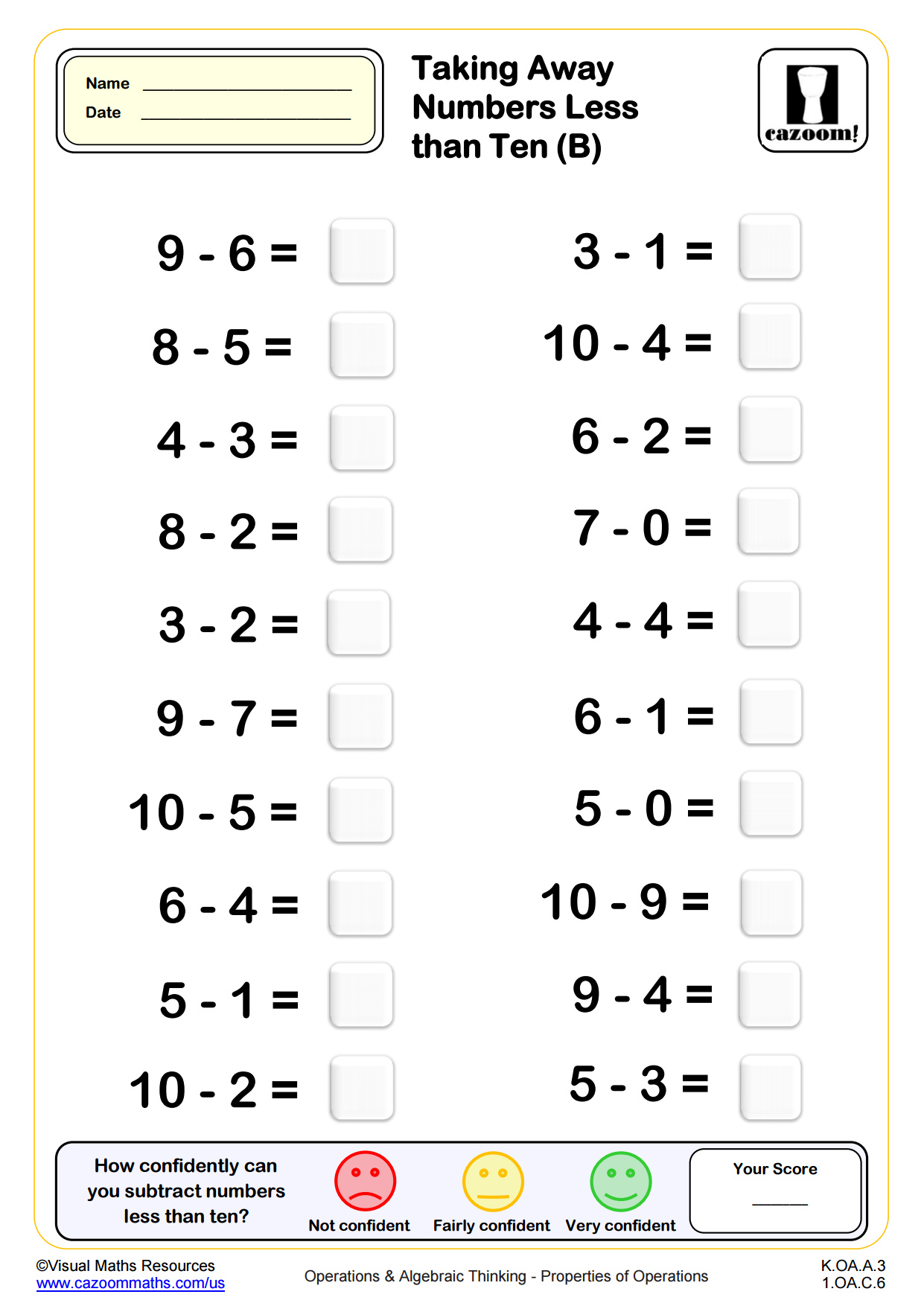
Subtracting Numbers Less Than 10 (C)
Grades: Kindergarten, 1st Grade
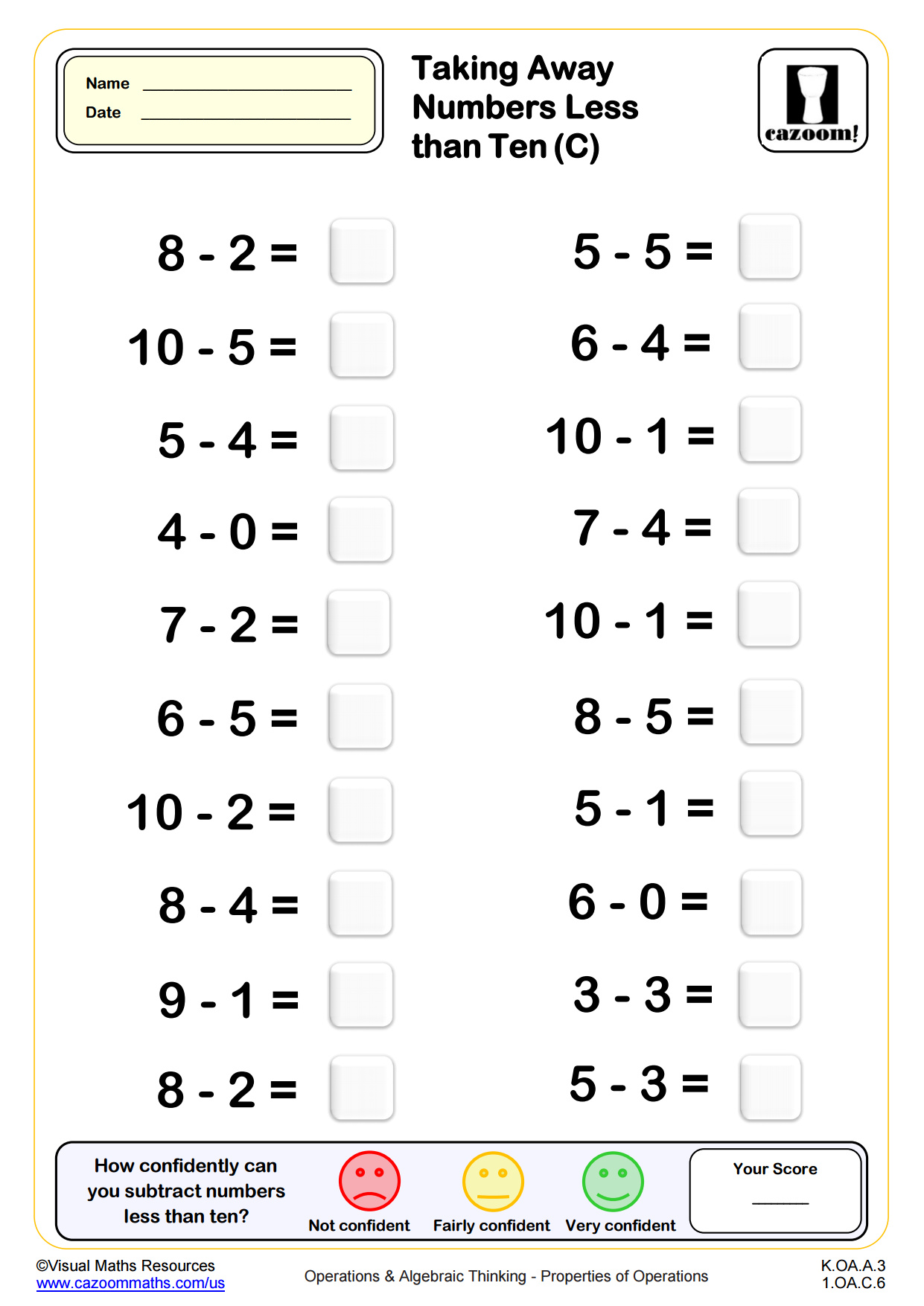
Subtraction Wheels (Subtracting 1)
Grades: Kindergarten, 1st Grade
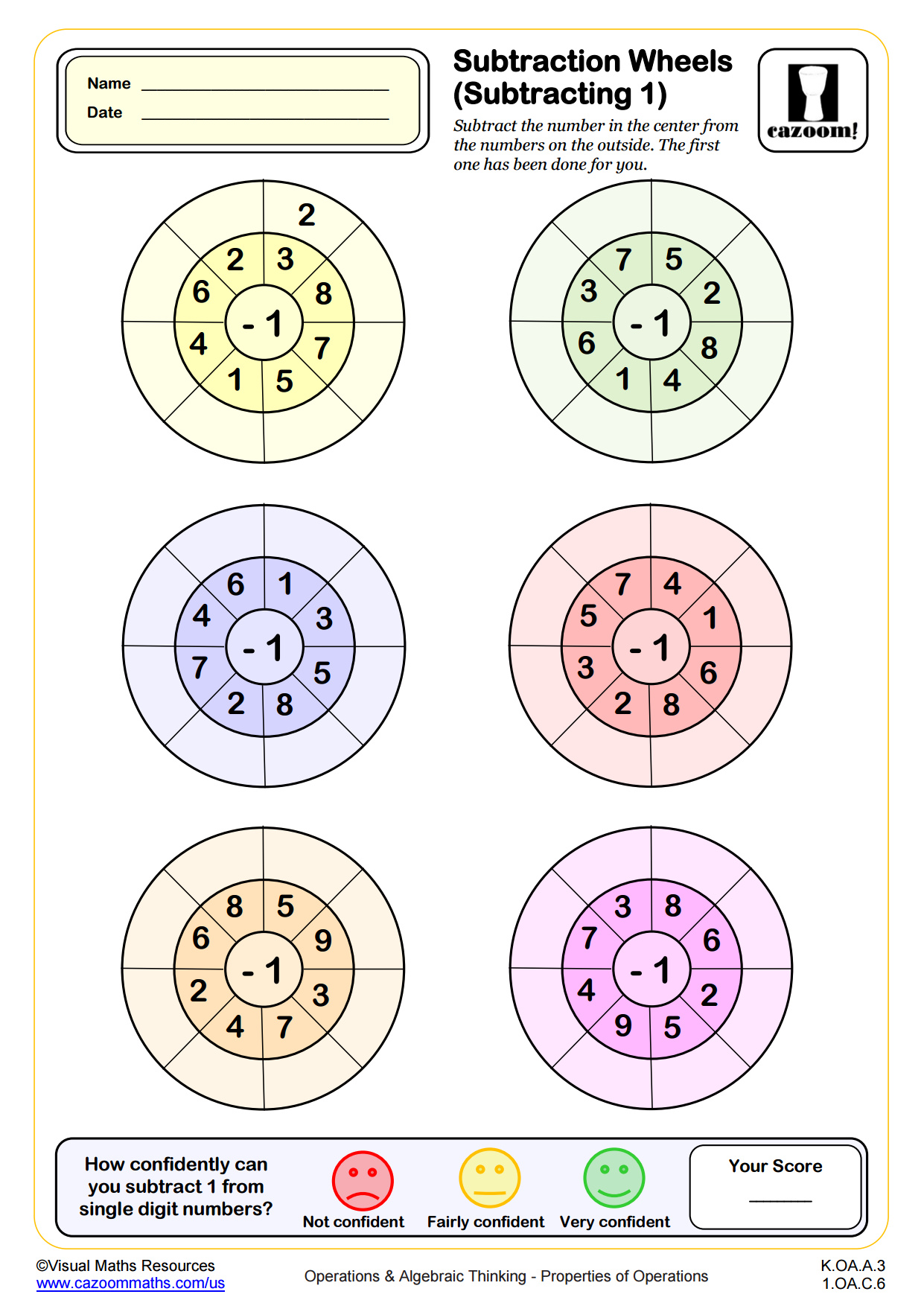
Subtraction Wheels (Subtracting 2)
Grades: Kindergarten, 1st Grade
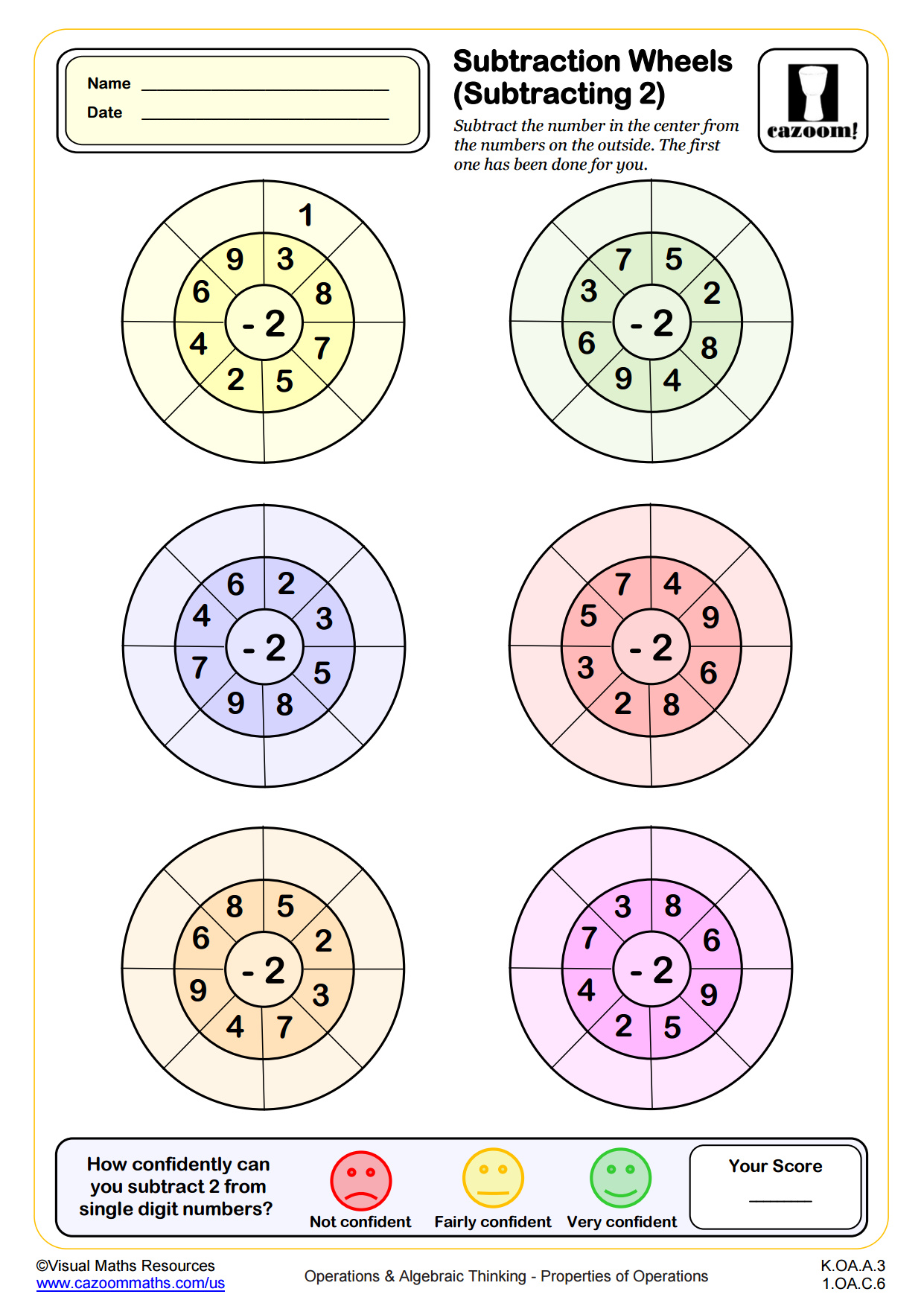
Subtraction Wheels (Subtracting 5)
Grades: Kindergarten, 1st Grade
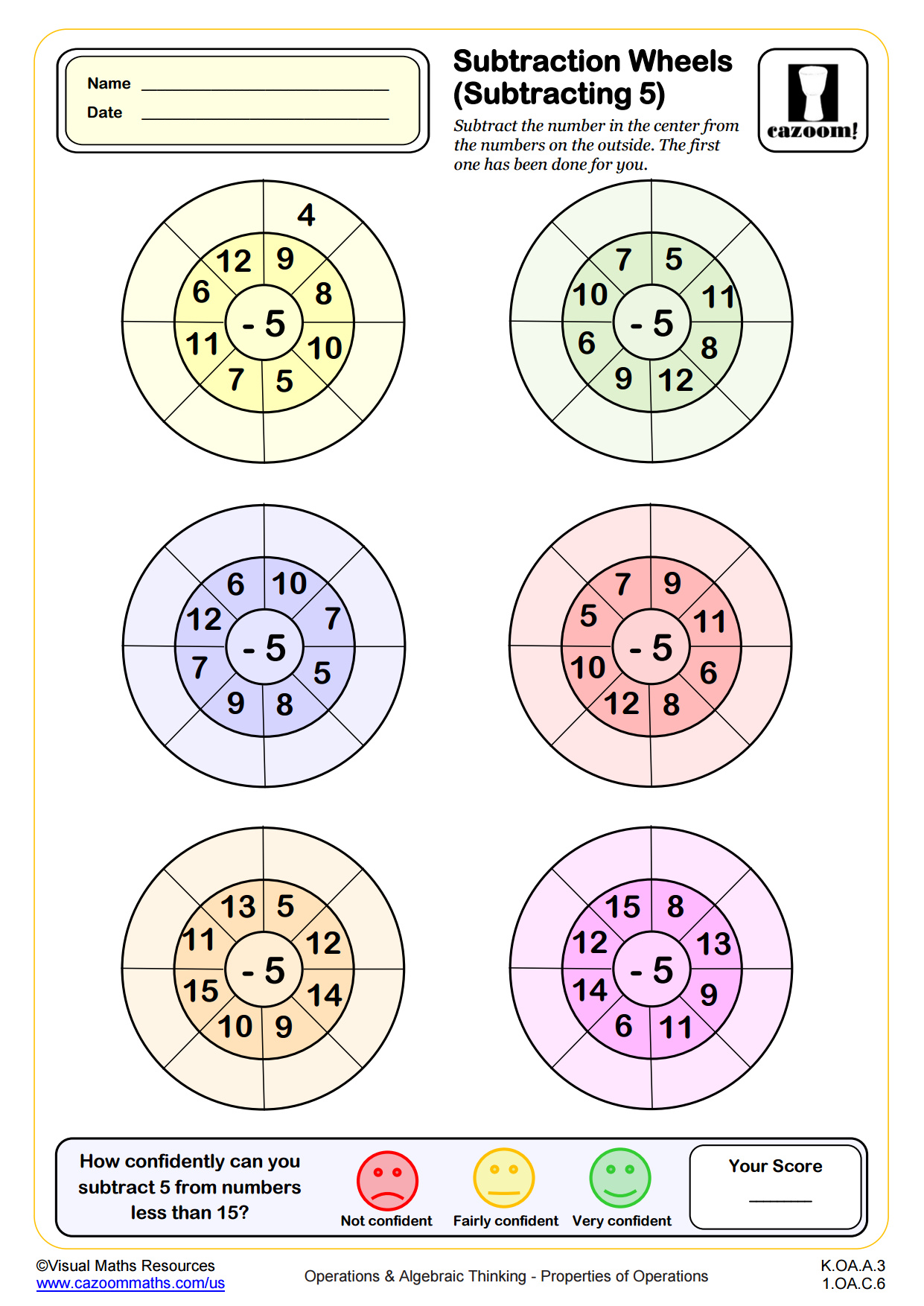
Subtraction Wheels (Subtracting up to 10) A
Grades: Kindergarten, 1st Grade
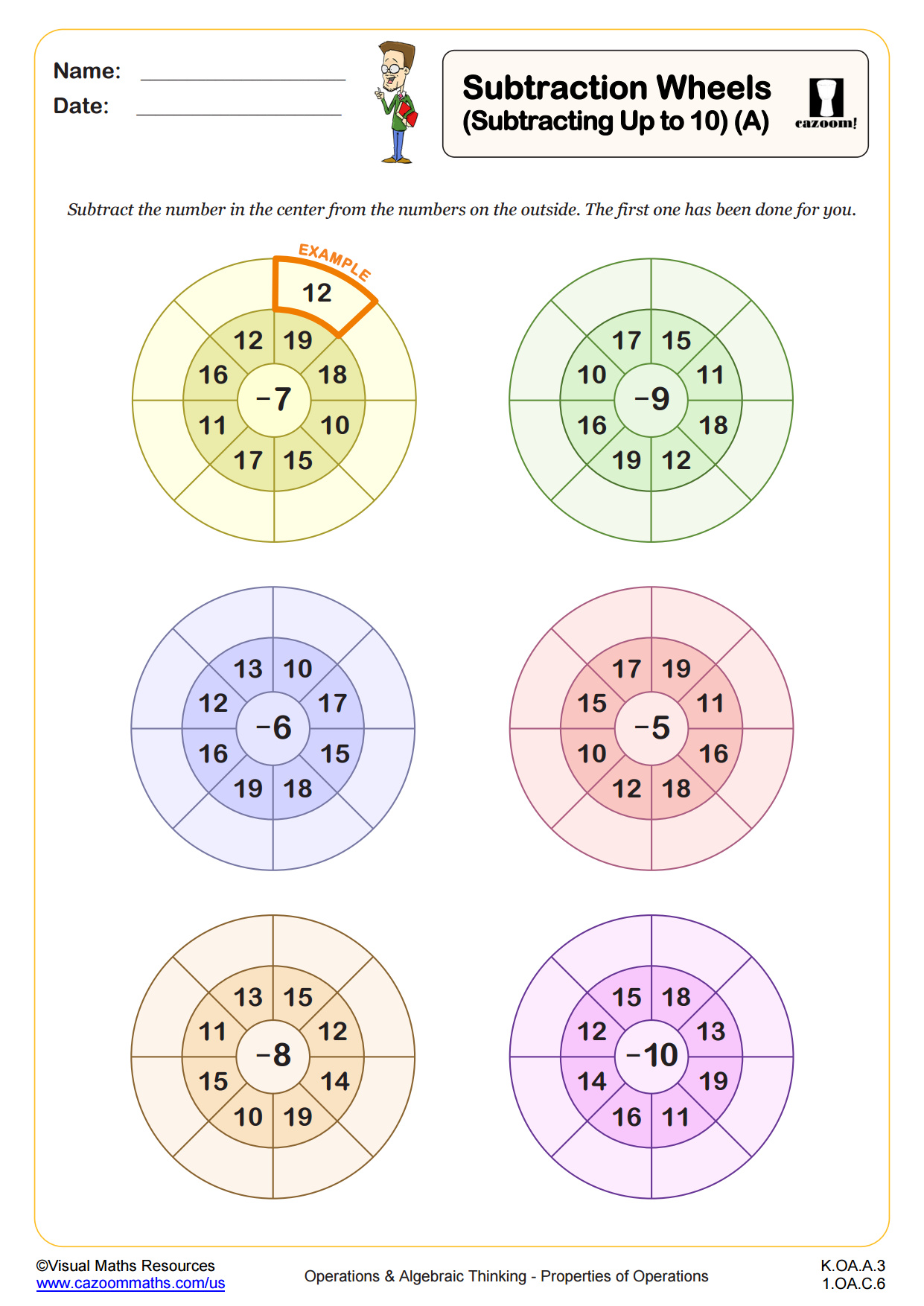
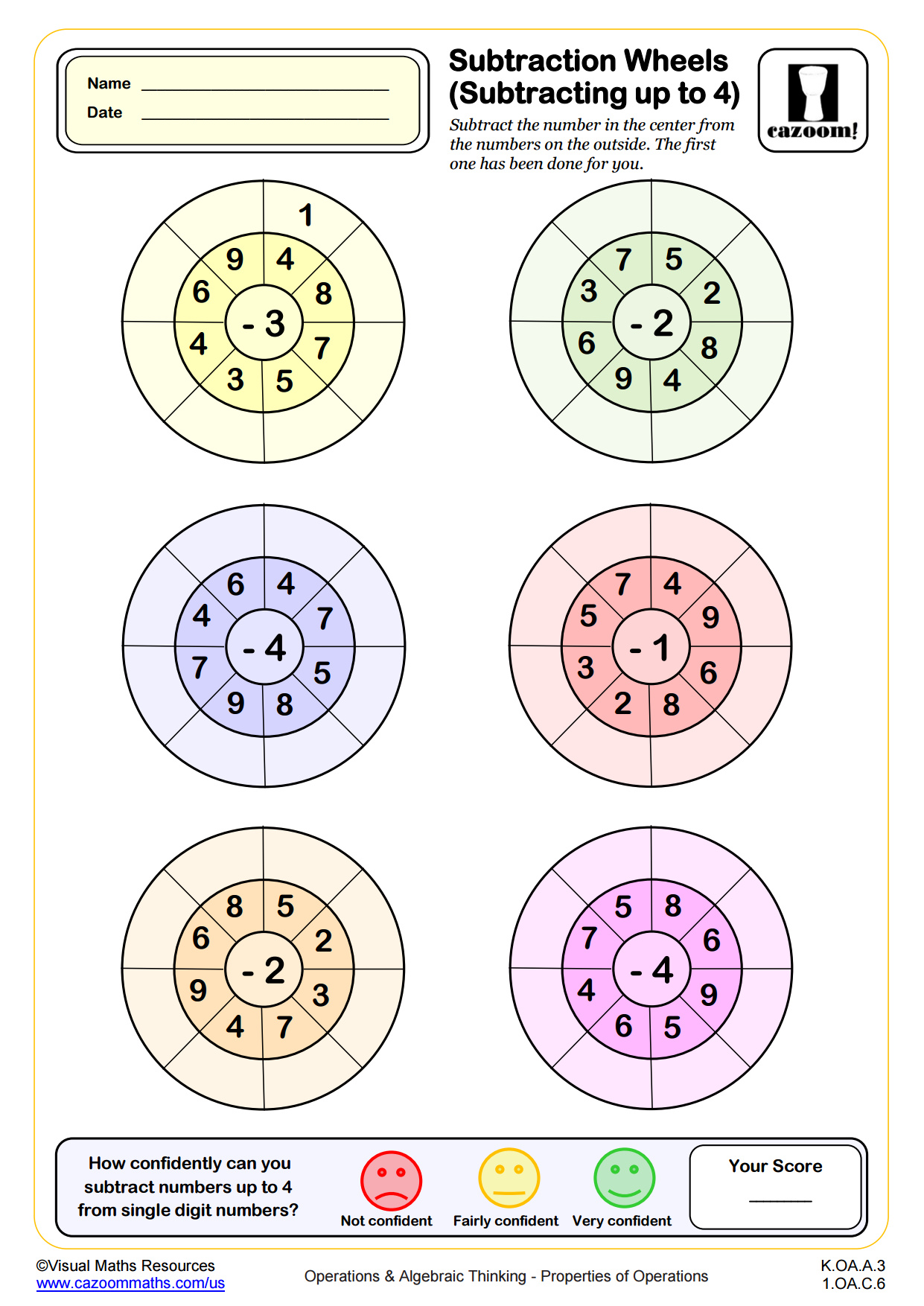
Subtraction Wheels (Subtracting up to 4)
Grades: Kindergarten, 1st Grade
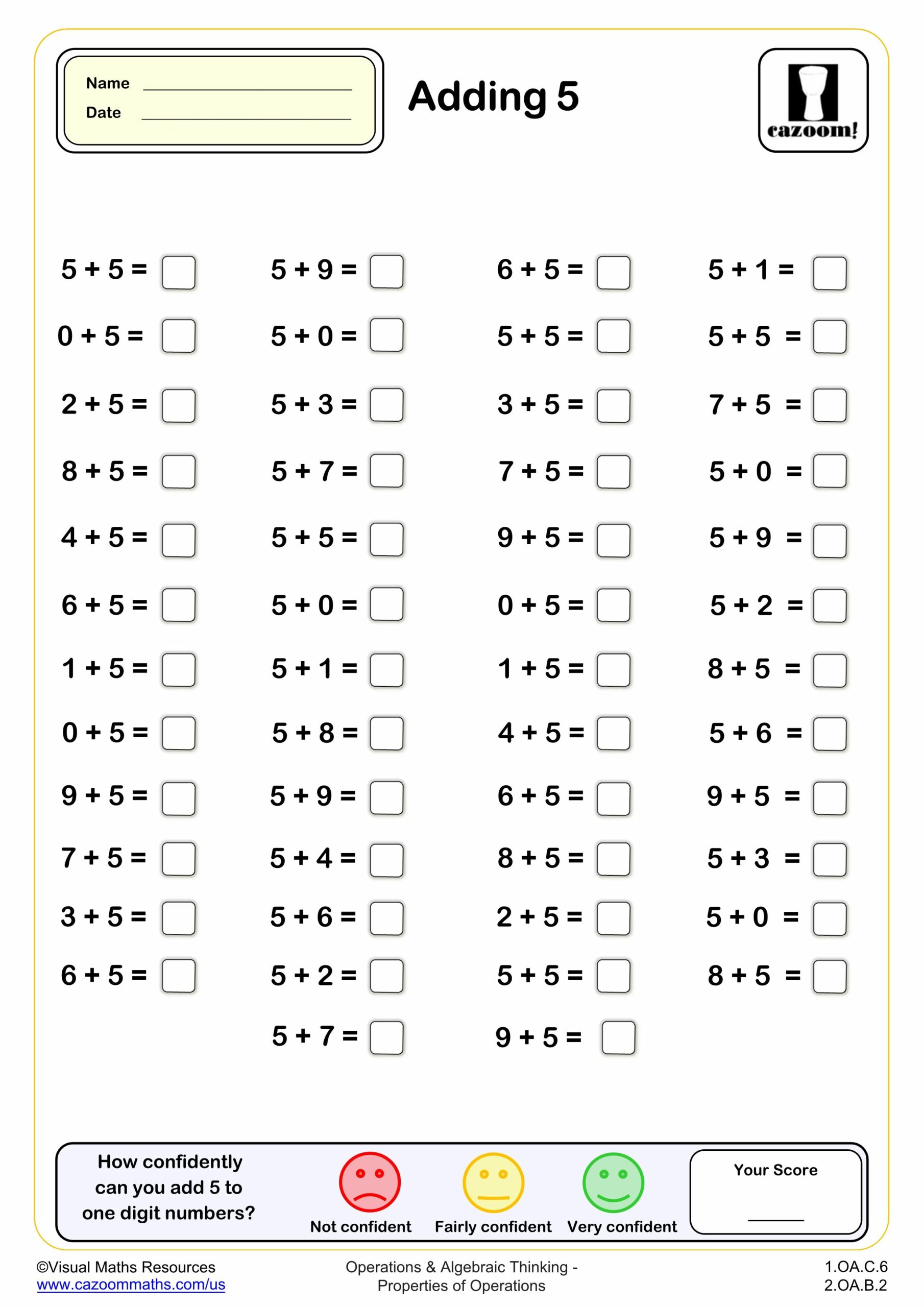
Adding 5 (50 questions)
Grades: 1st Grade, 2nd Grade
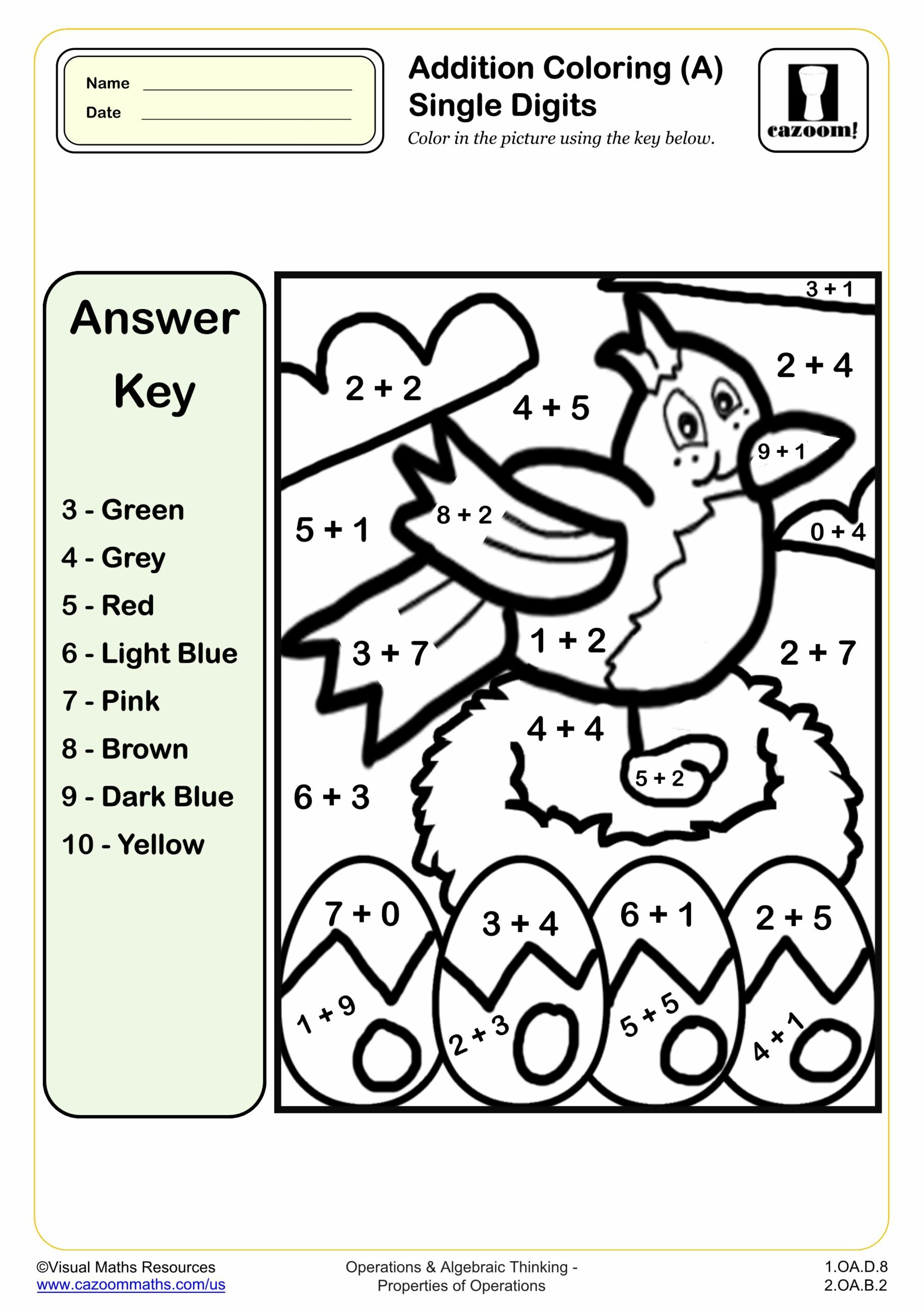
Addition Coloring (A) Single Digits
Grades: 1st Grade, 2nd Grade
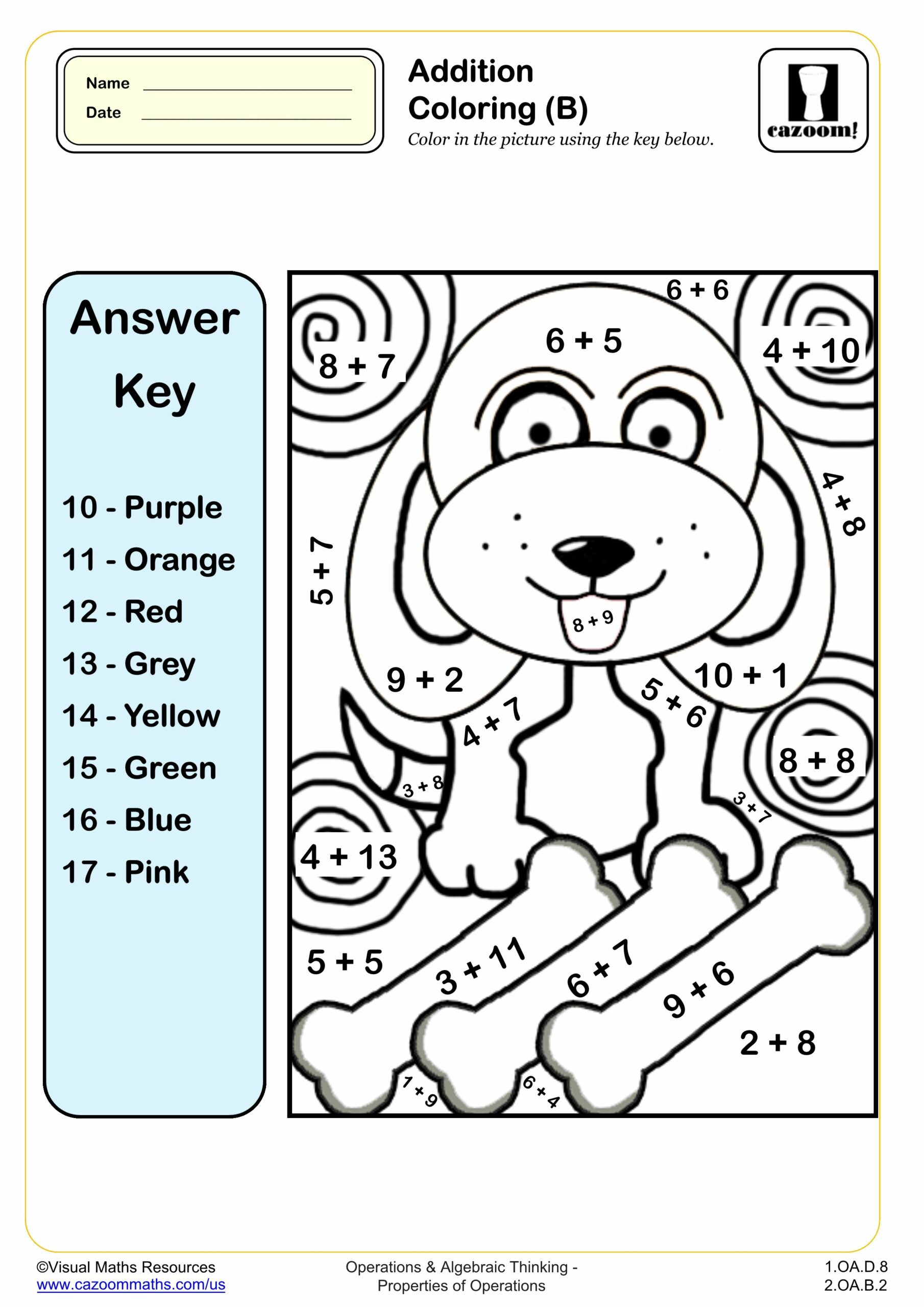
Addition Coloring (B)
Grades: 1st Grade, 2nd Grade
Addition Tables up to 10
Grades: 1st Grade, 2nd Grade
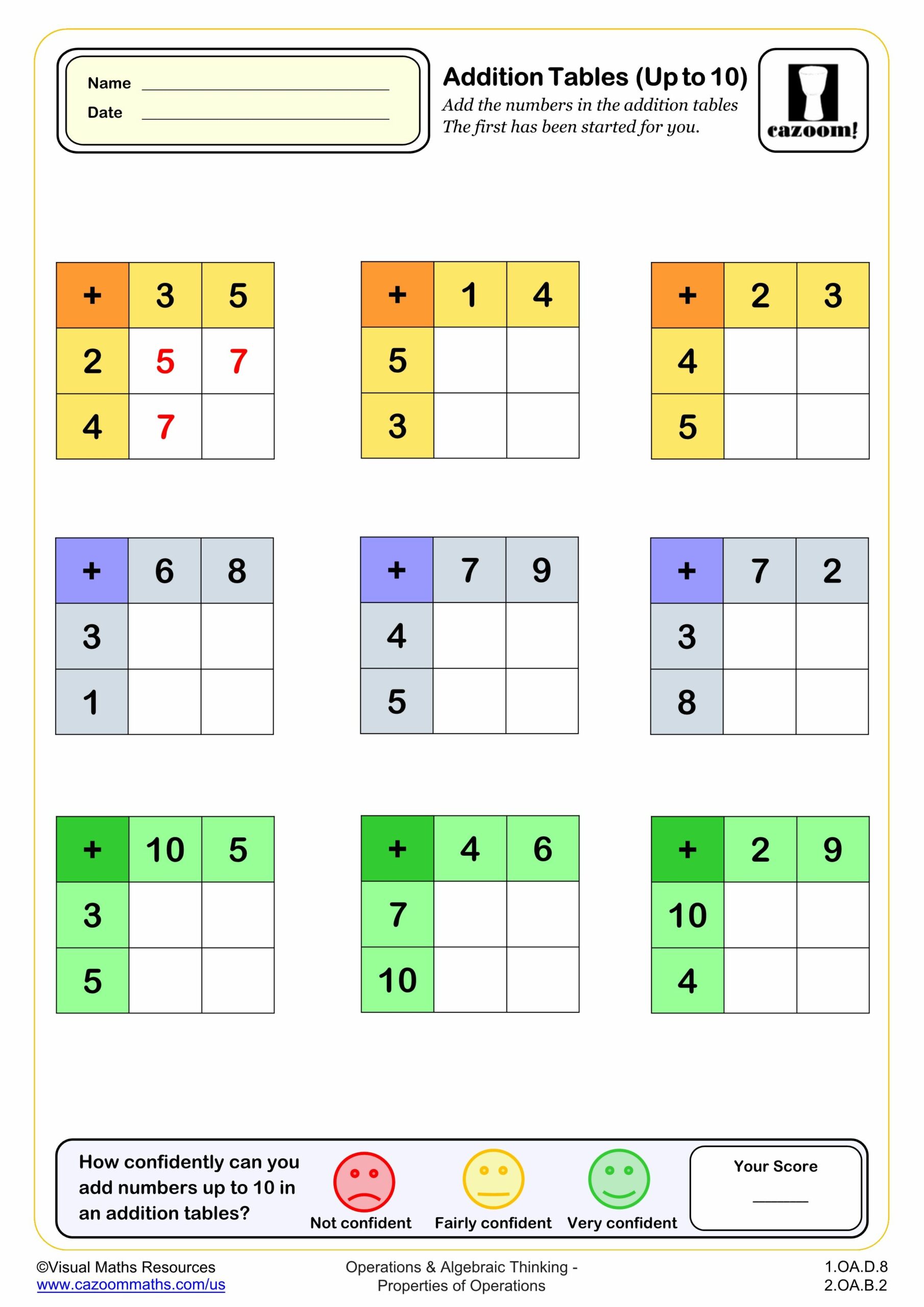
Addition Wheels (adding 1)
Grades: 1st Grade, 2nd Grade
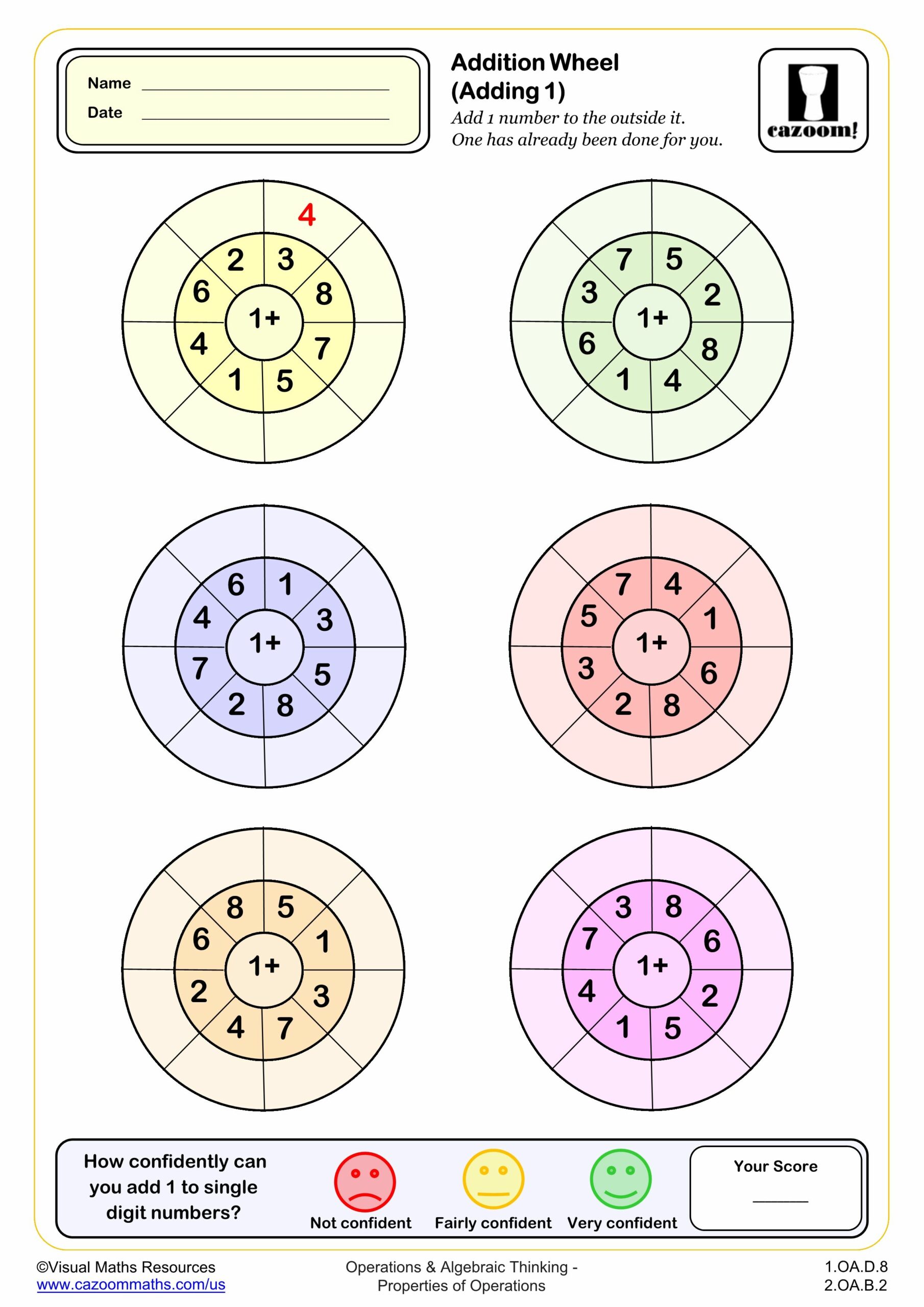
Addition Wheels (adding 2)
Grades: 1st Grade, 2nd Grade
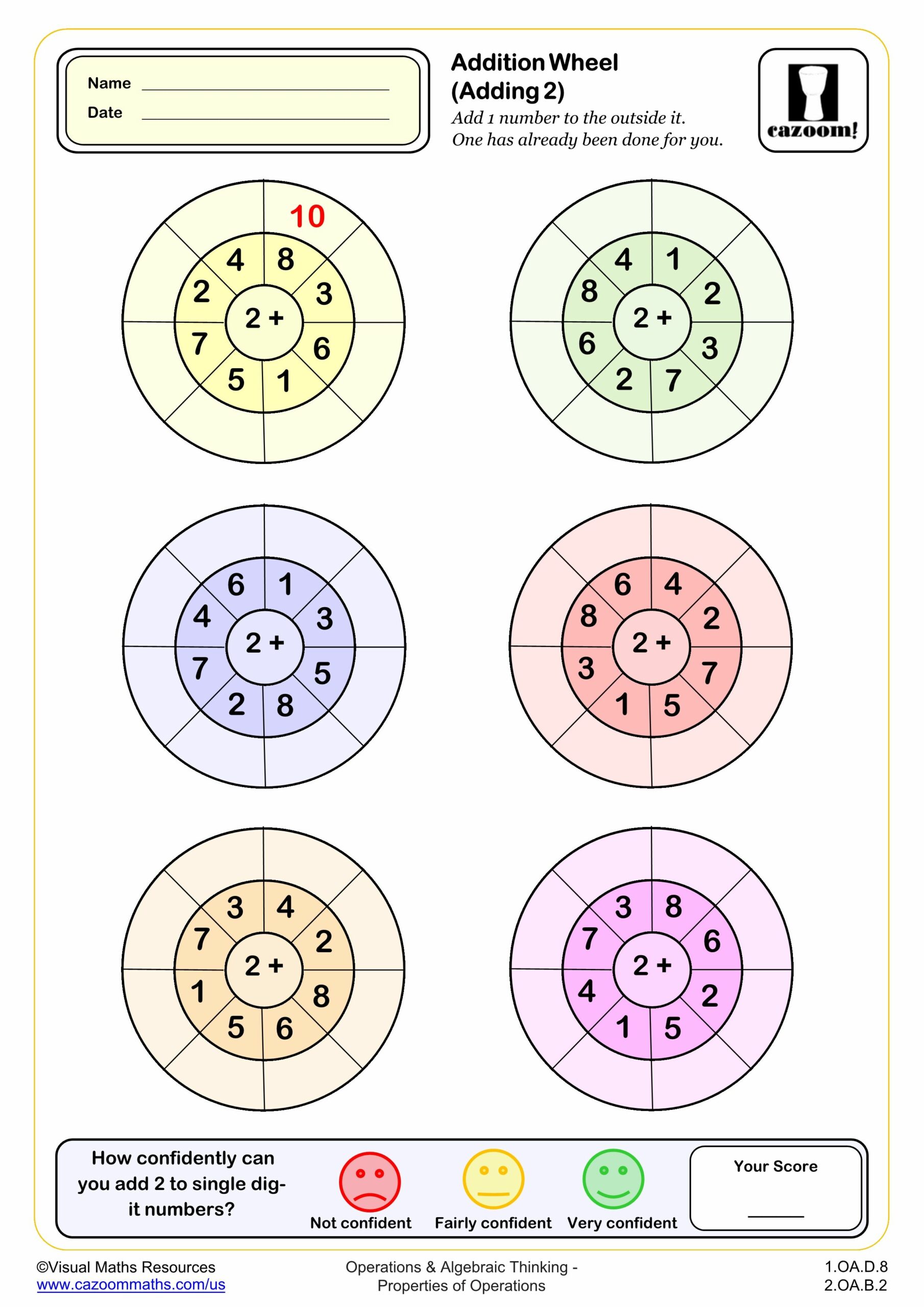
Addition Wheels (Up to 10)
Grades: 1st Grade, 2nd Grade
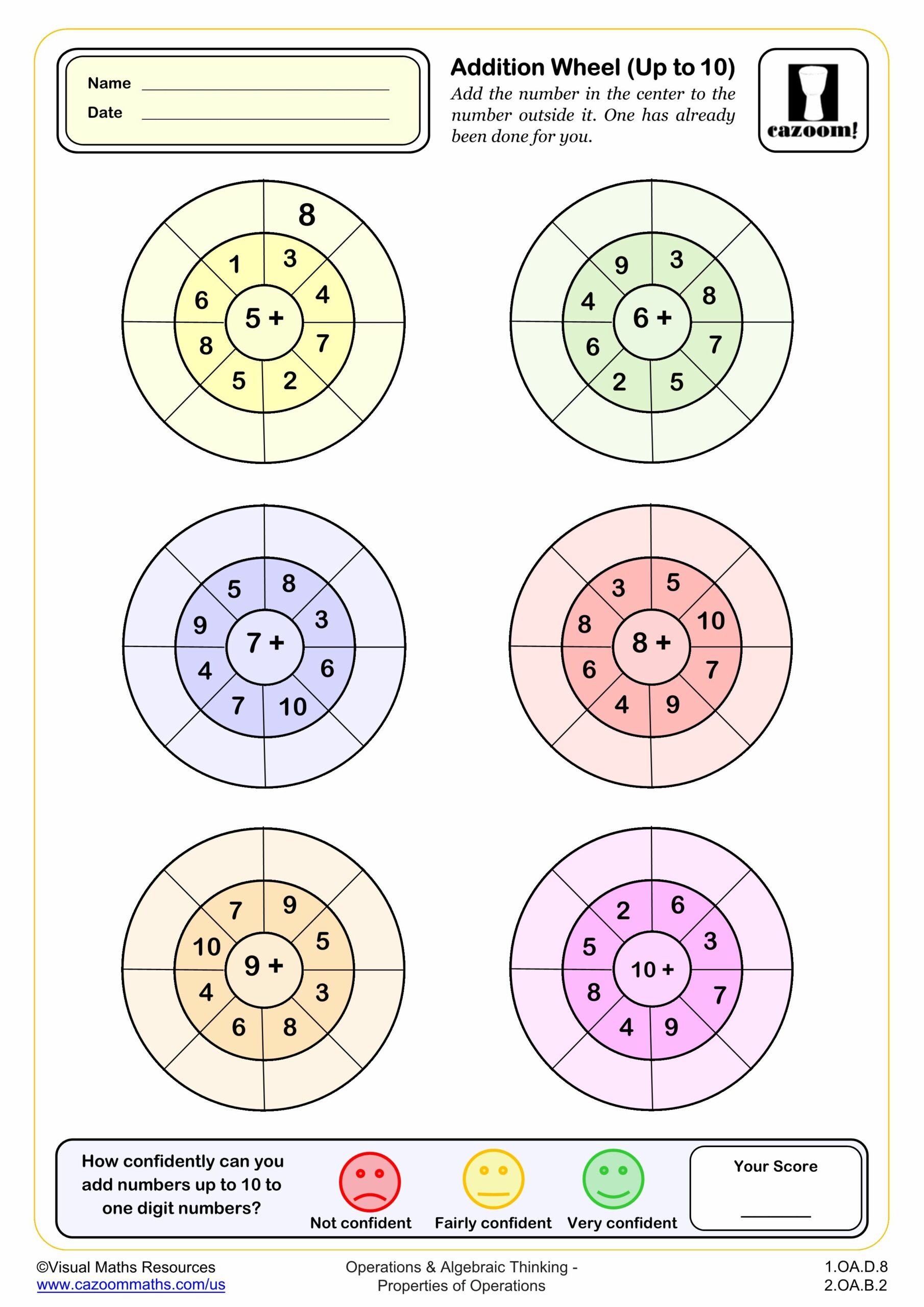
Addition Wheels (Up to 17)
Grades: 1st Grade, 2nd Grade
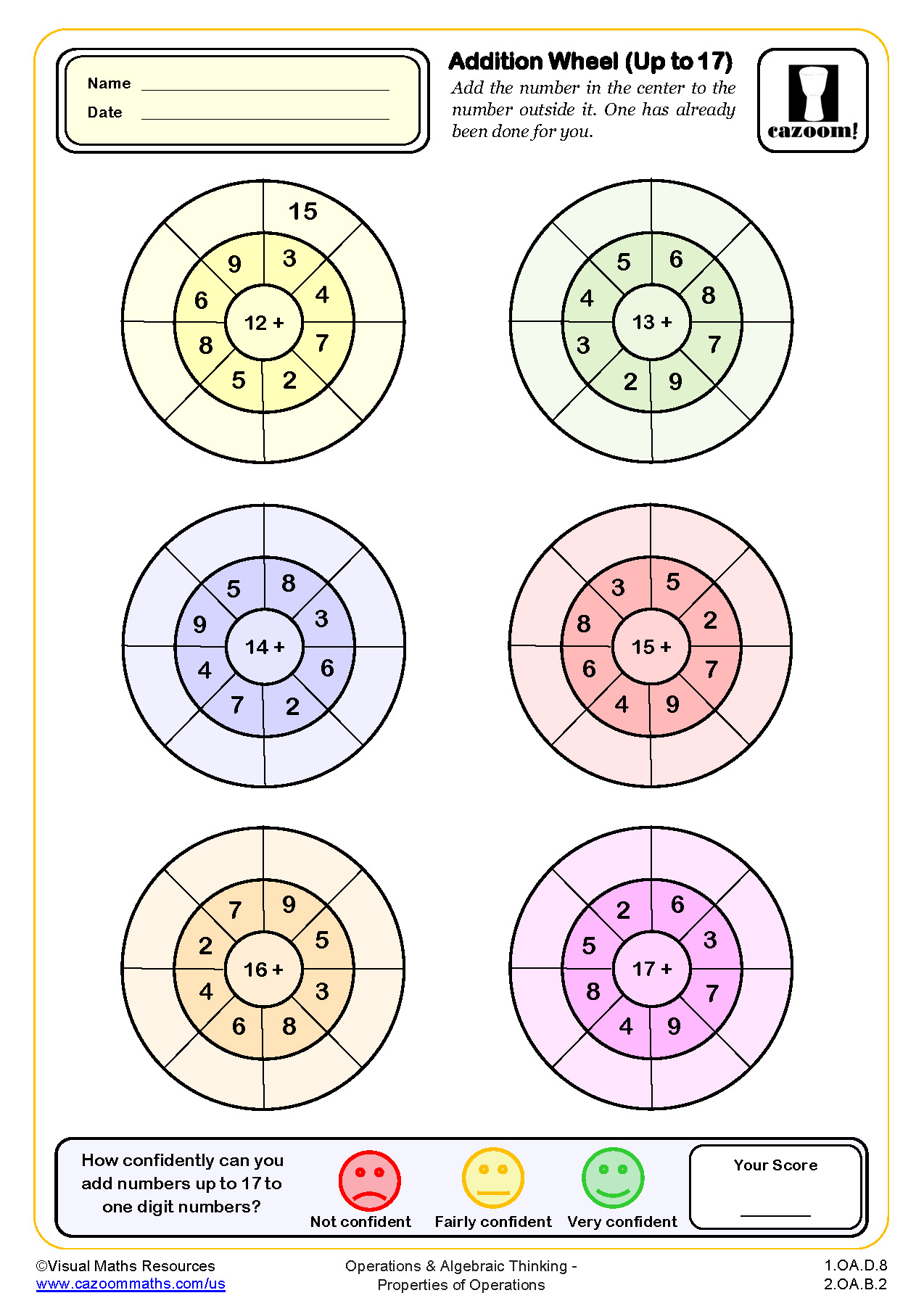
Addition Wheels (Up to 3)
Grades: 1st Grade, 2nd Grade
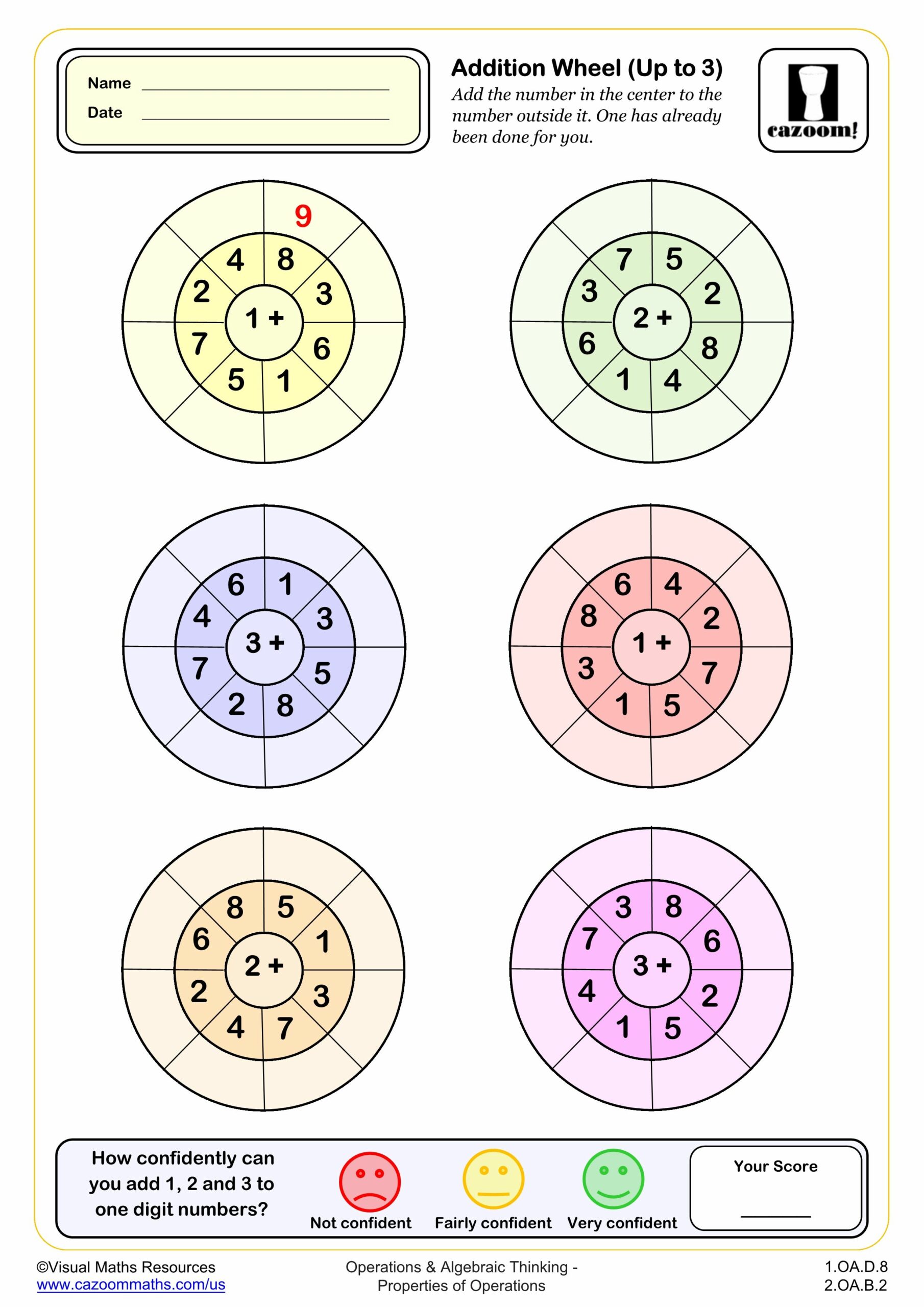
Addition Wheels (Up to 7)
Grades: 1st Grade, 2nd Grade
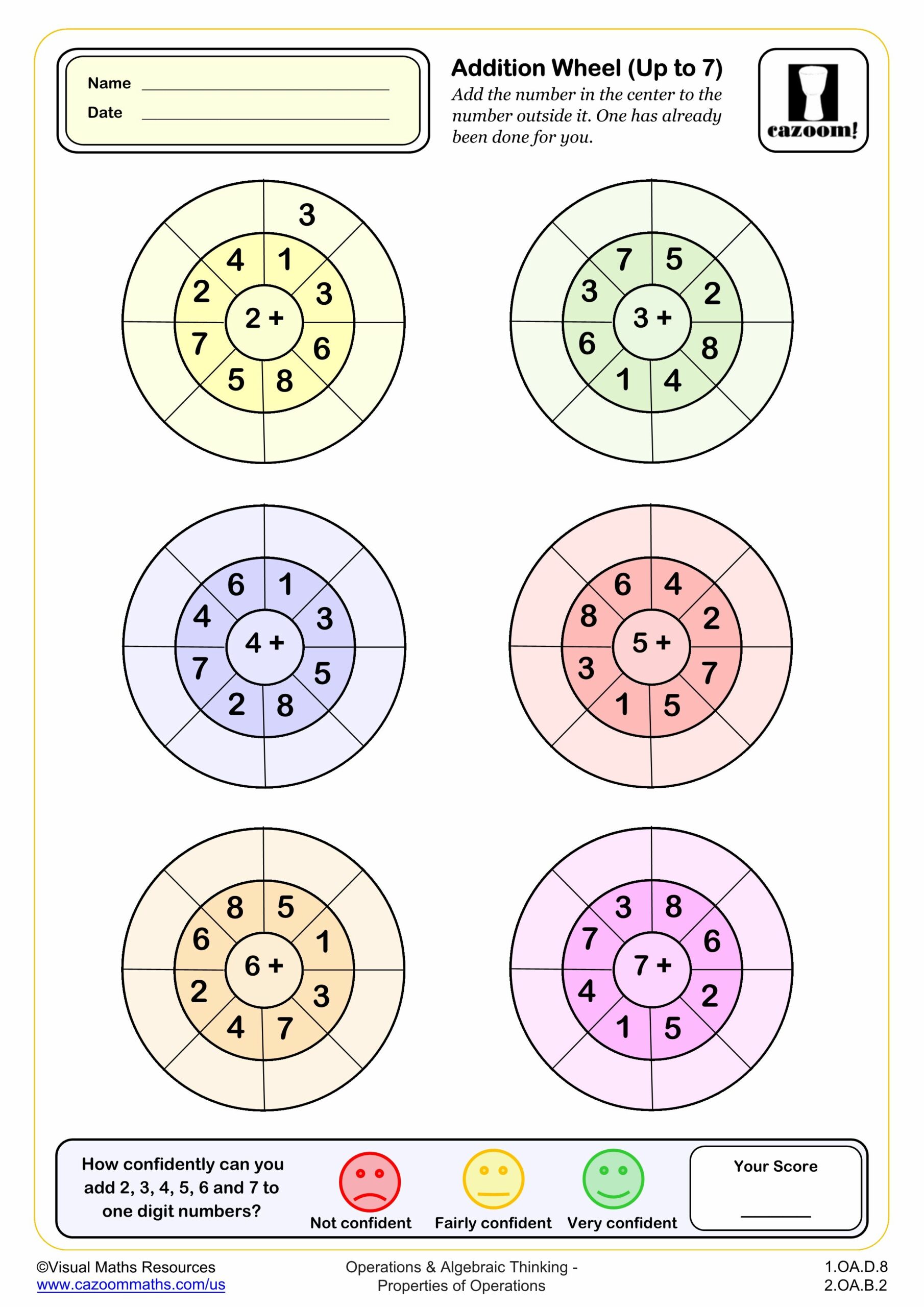
Addition Wheels (Up to 9)
Grades: 1st Grade, 2nd Grade
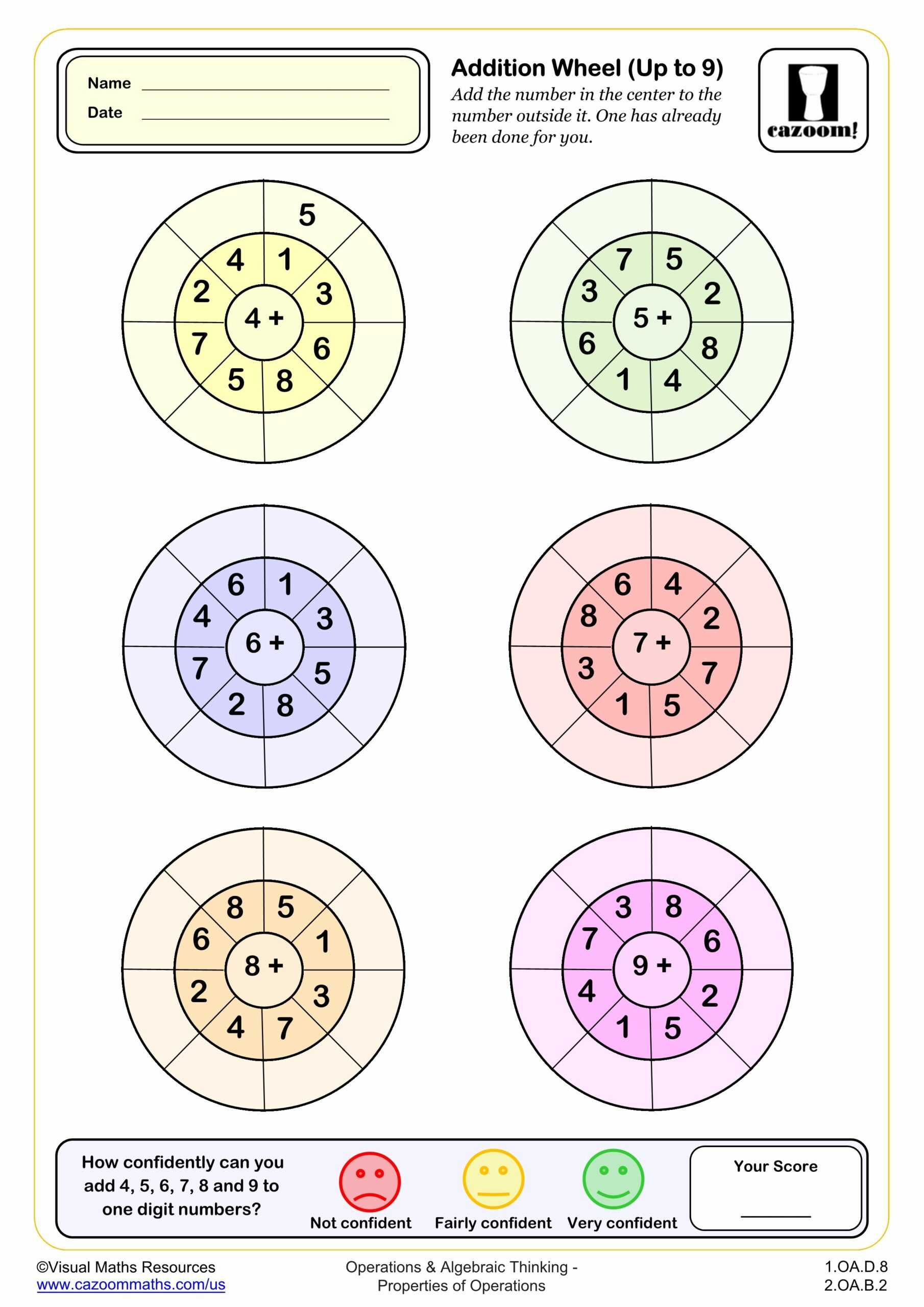
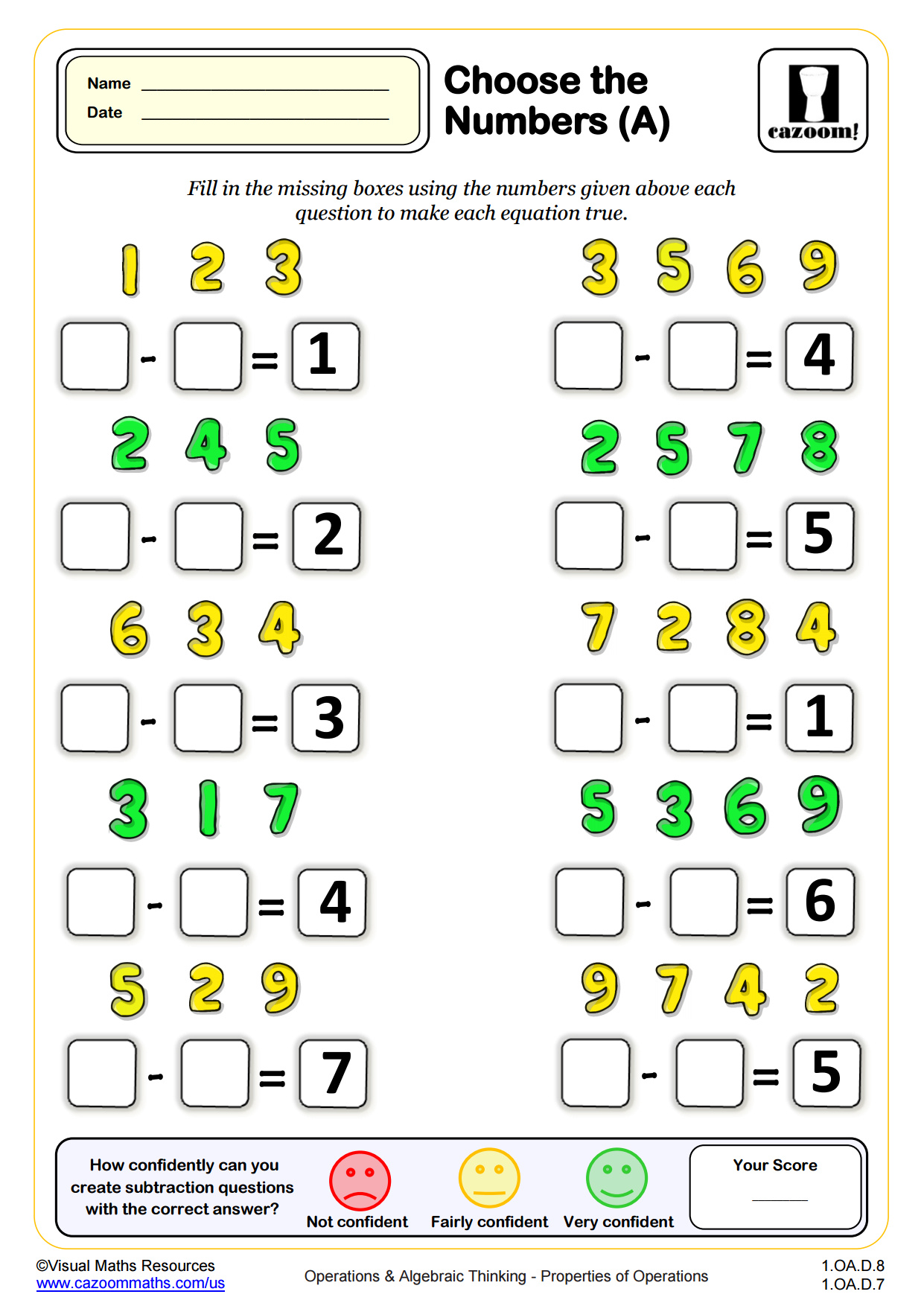
Choose the Numbers (A)
Grades: 1st Grade
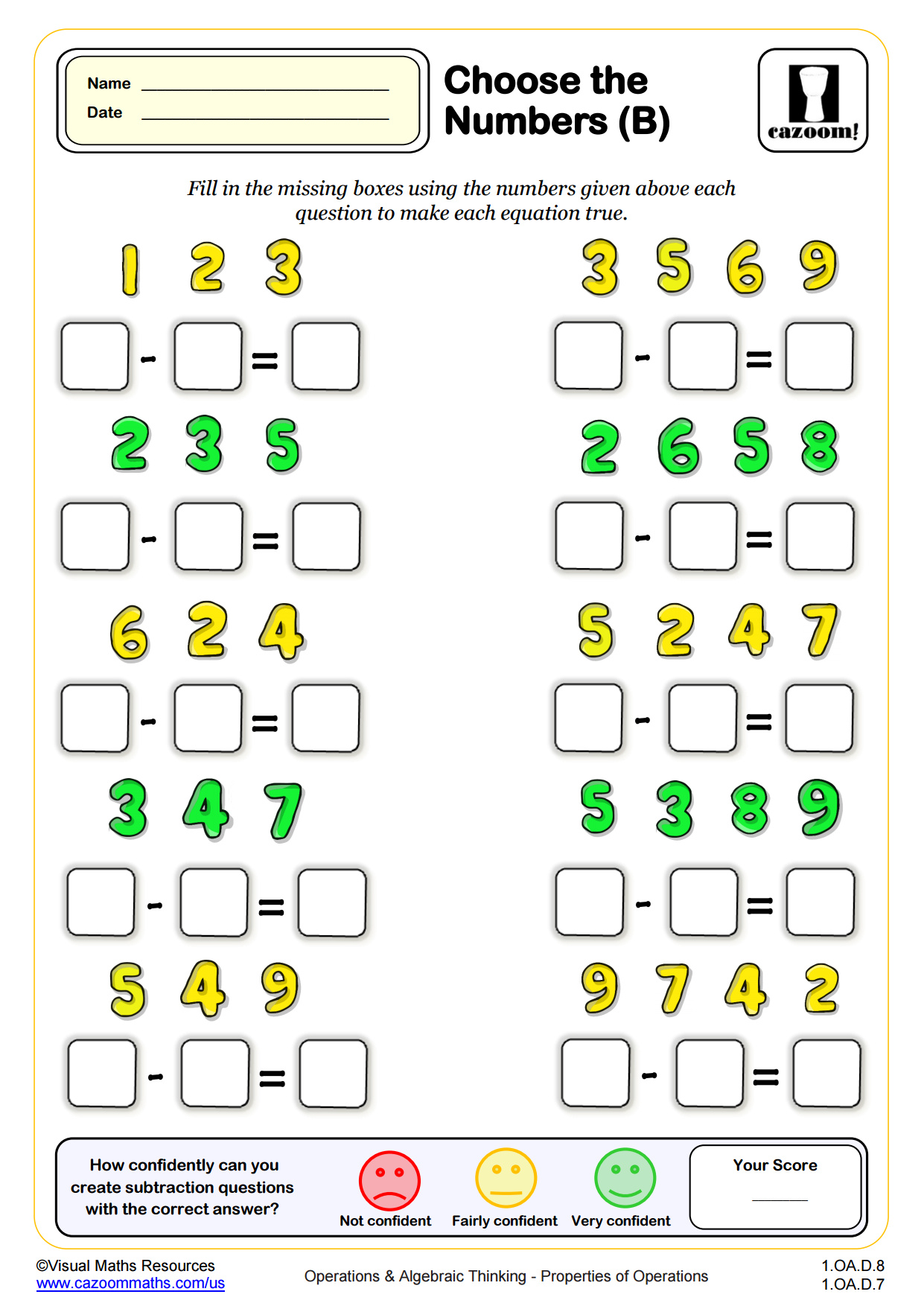
Choose the Numbers (B)
Grades: 1st Grade
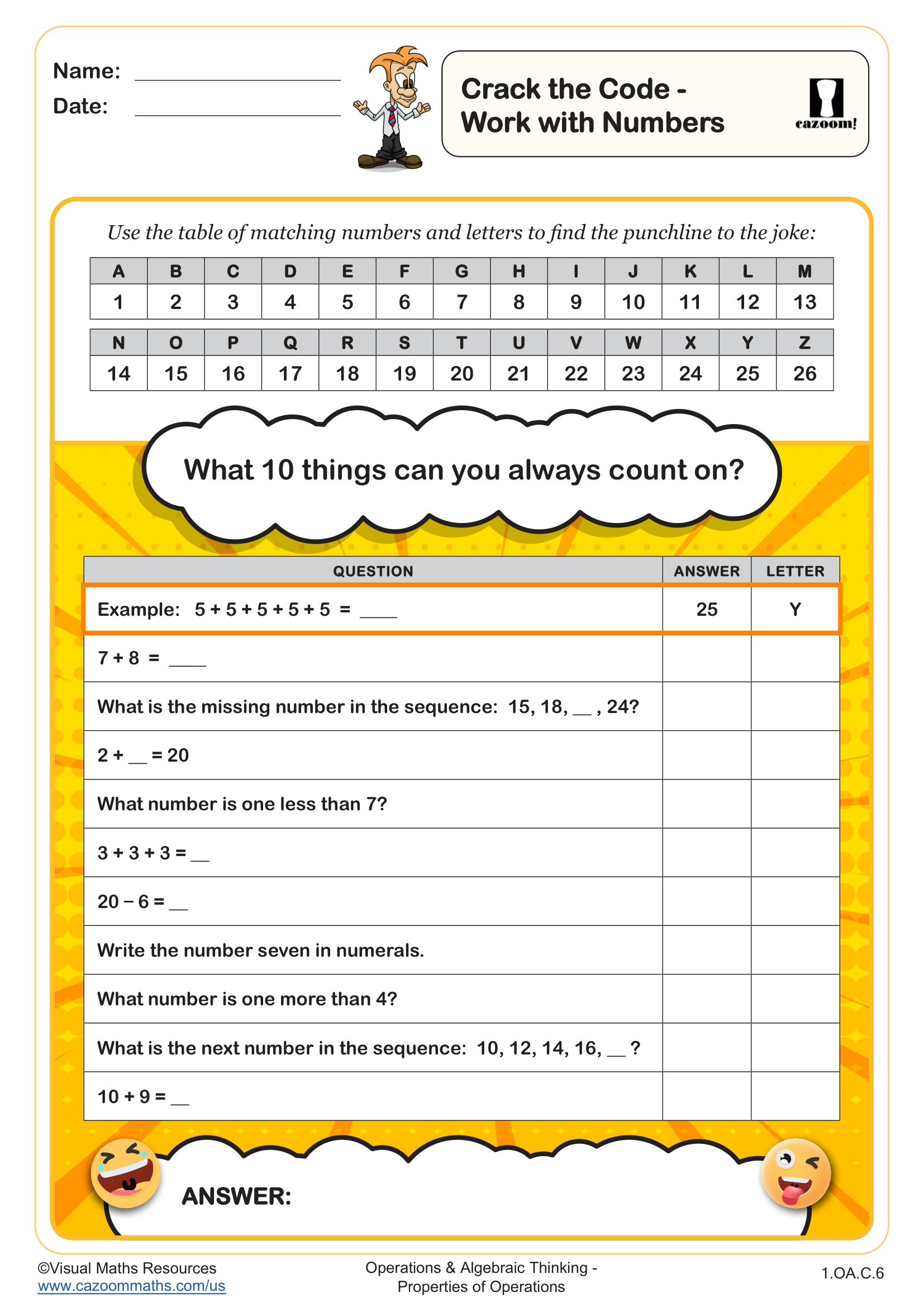
Crack the Code - Work with Numbers
Grades: 1st Grade
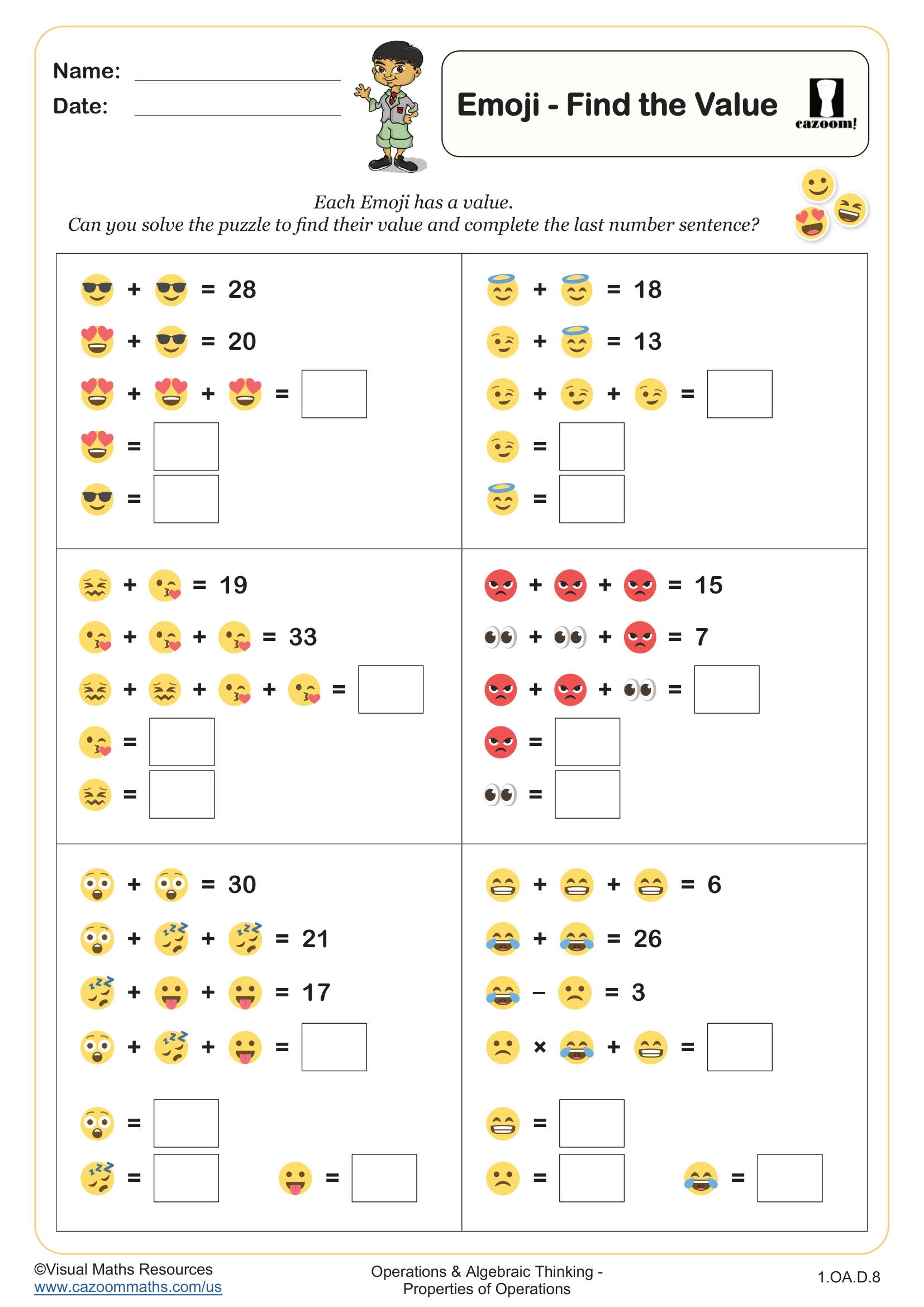
Emoji - Find the Value
Grades: 1st Grade
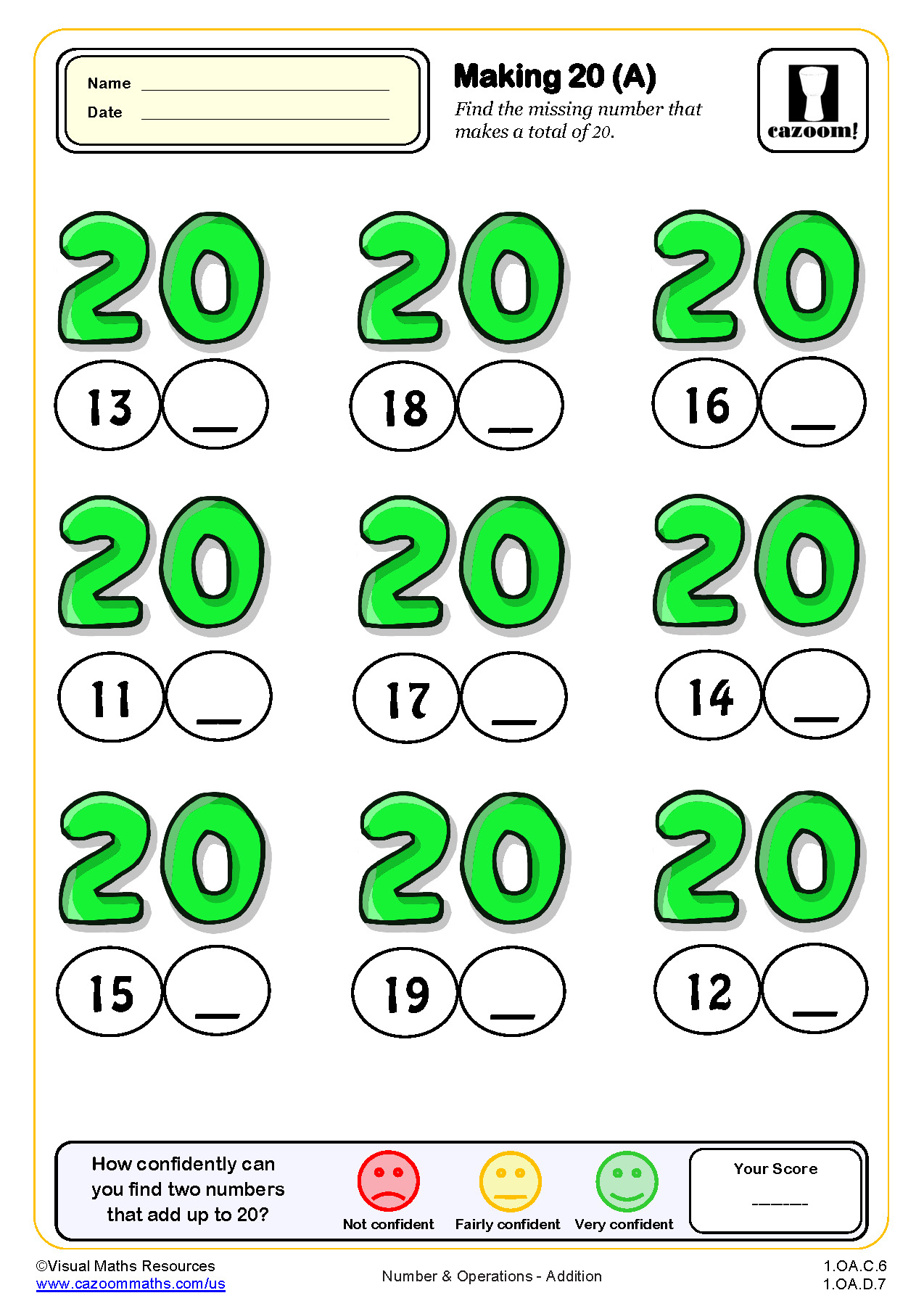
Making 20 (A)
Grades: 1st Grade
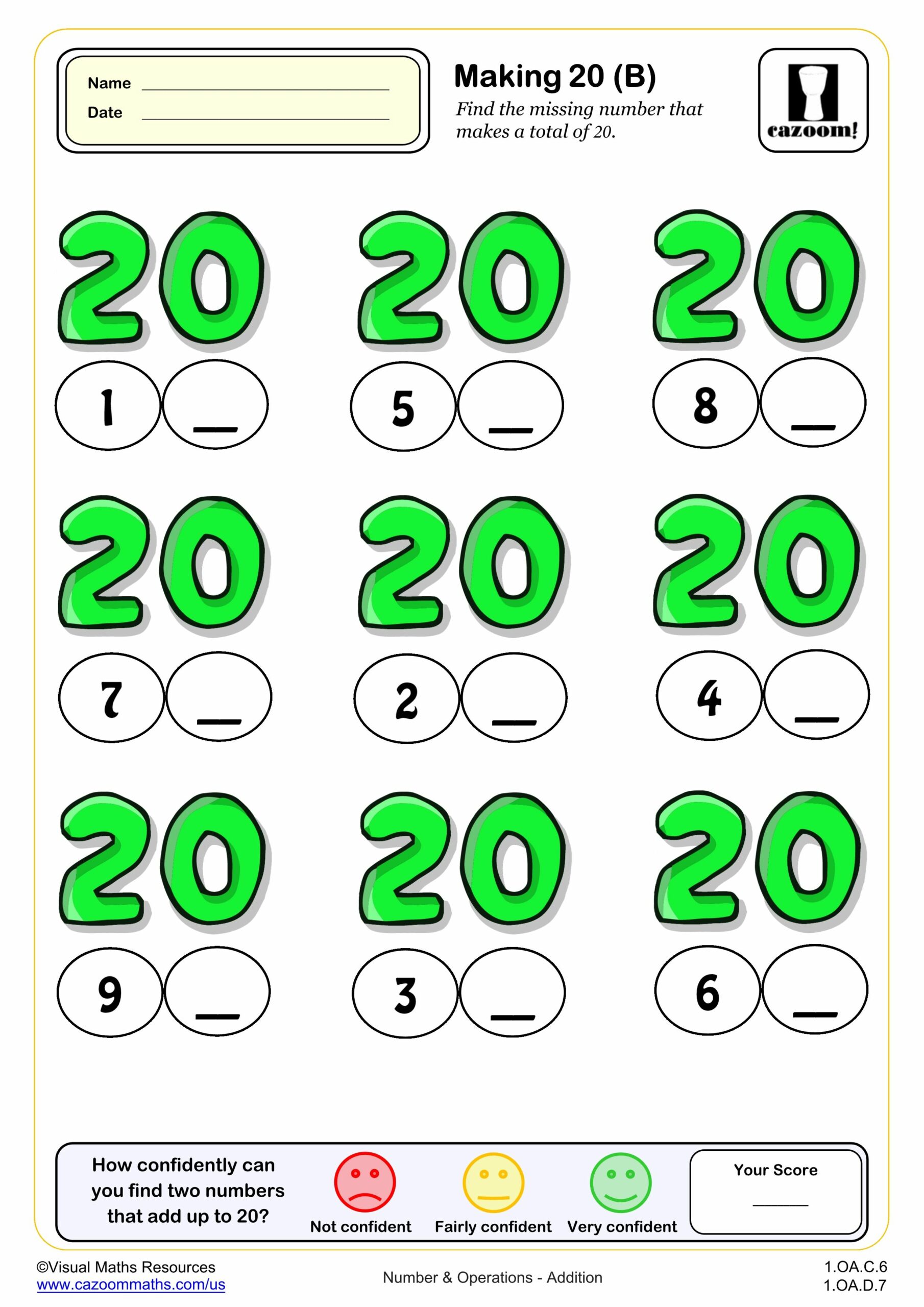
Making 20 (B)
Grades: 1st Grade
Making 20 (BONDS)
Grades: 1st Grade
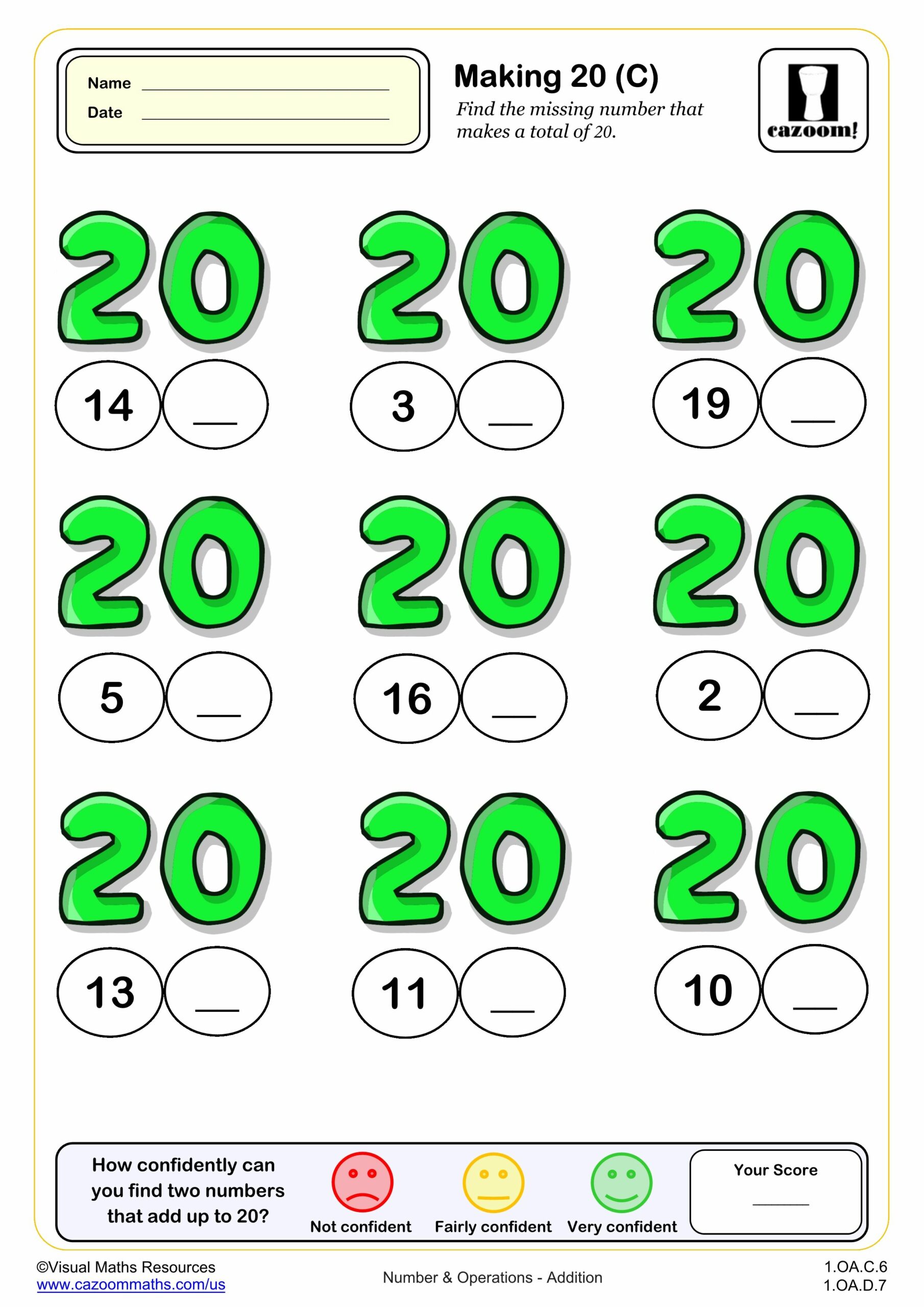
Making 20 (C)
Grades: 1st Grade
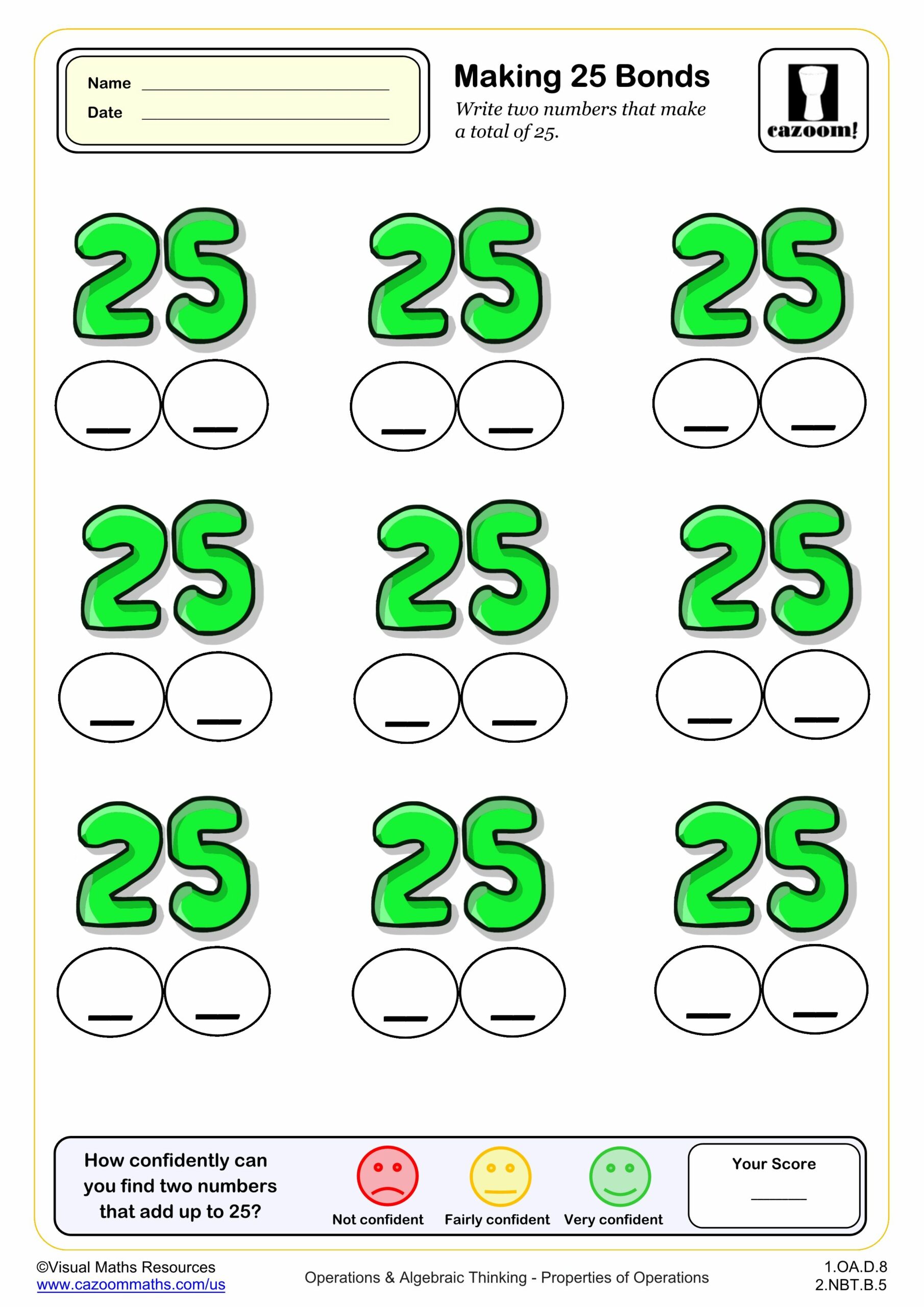
Making 25 (Blanks)
Grades: 1st Grade, 2nd Grade
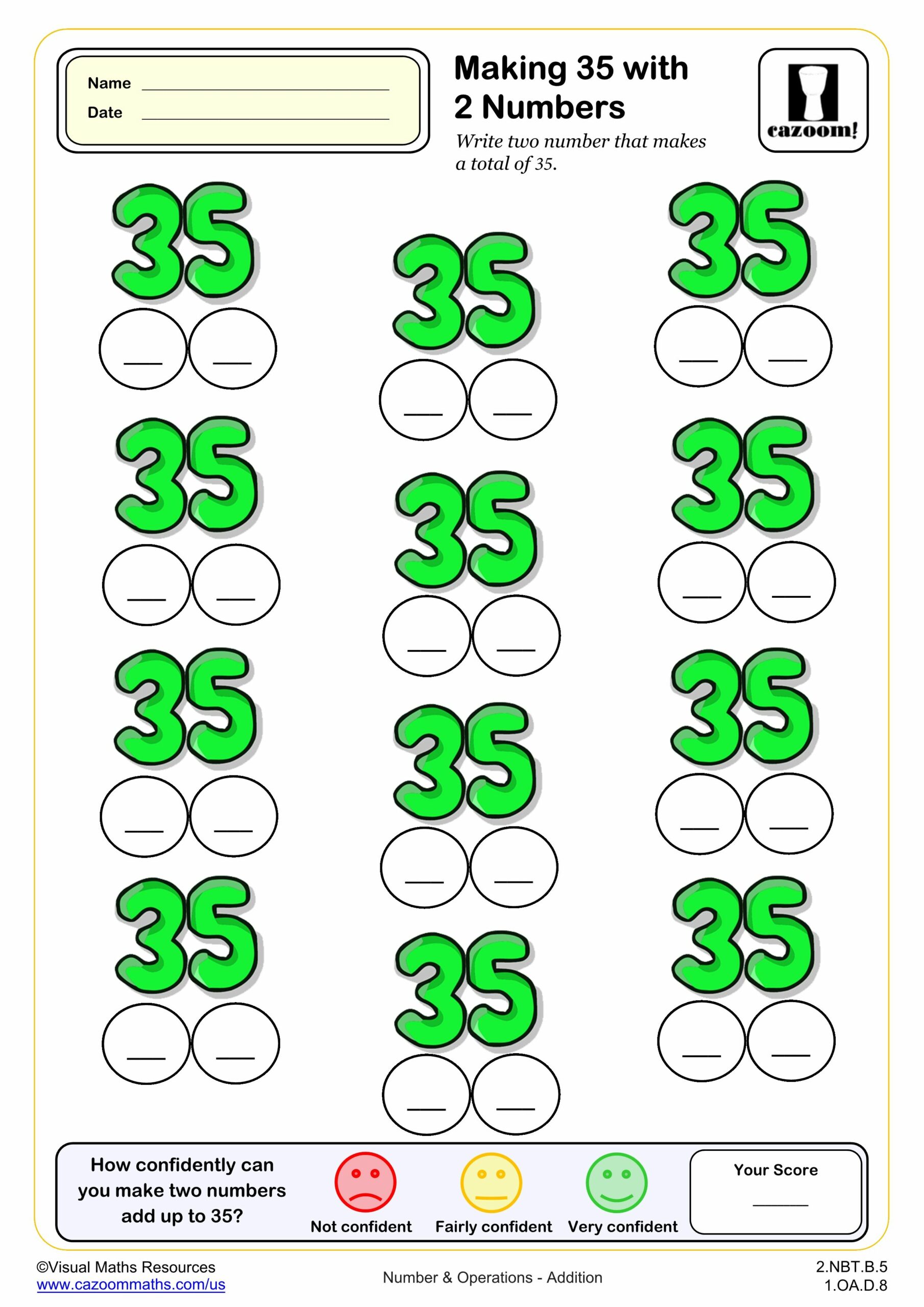
Making 35 (blanks)
Grades: 1st Grade, 2nd Grade
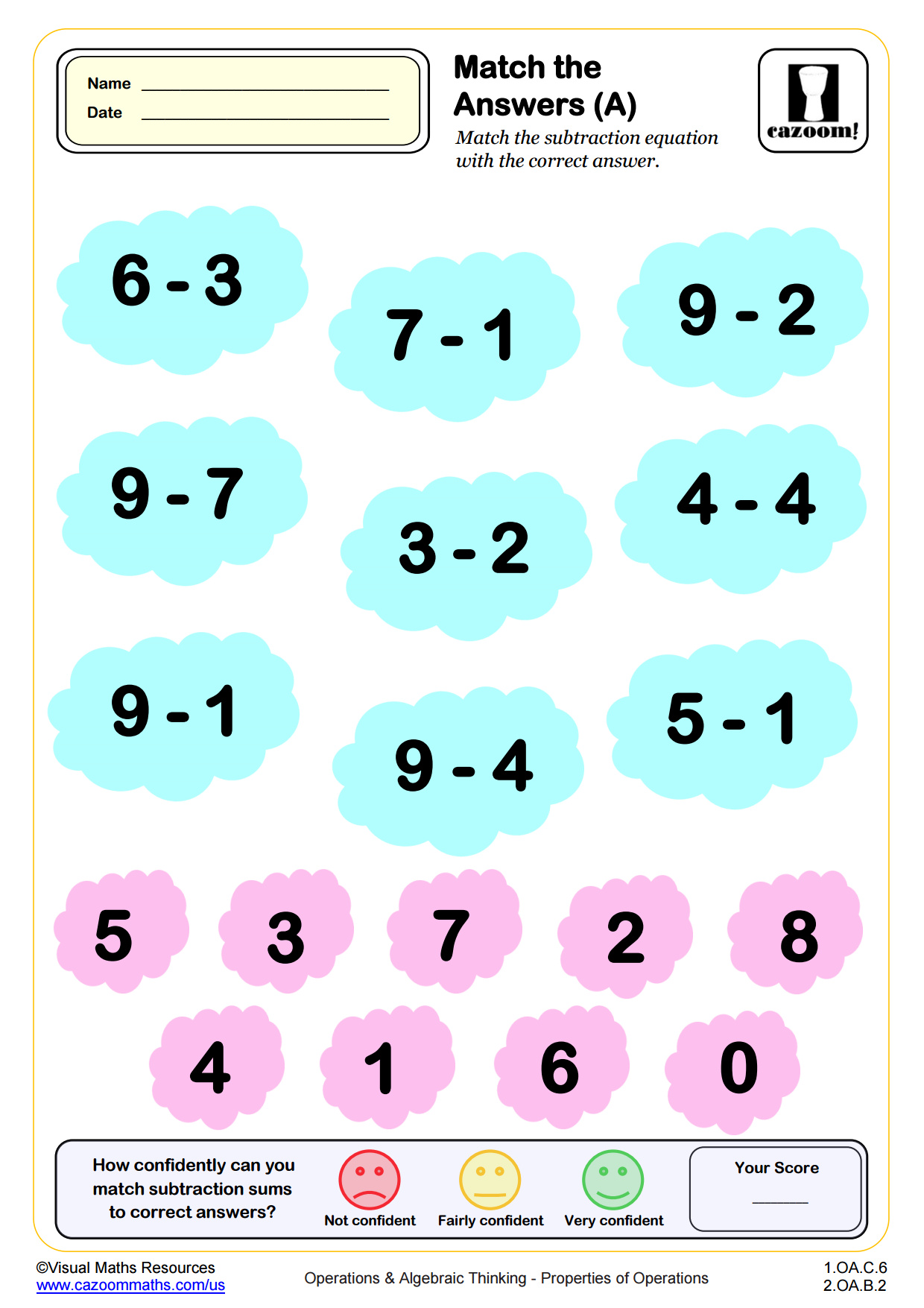
Match the Answers (A)
Grades: 1st Grade, 2nd Grade
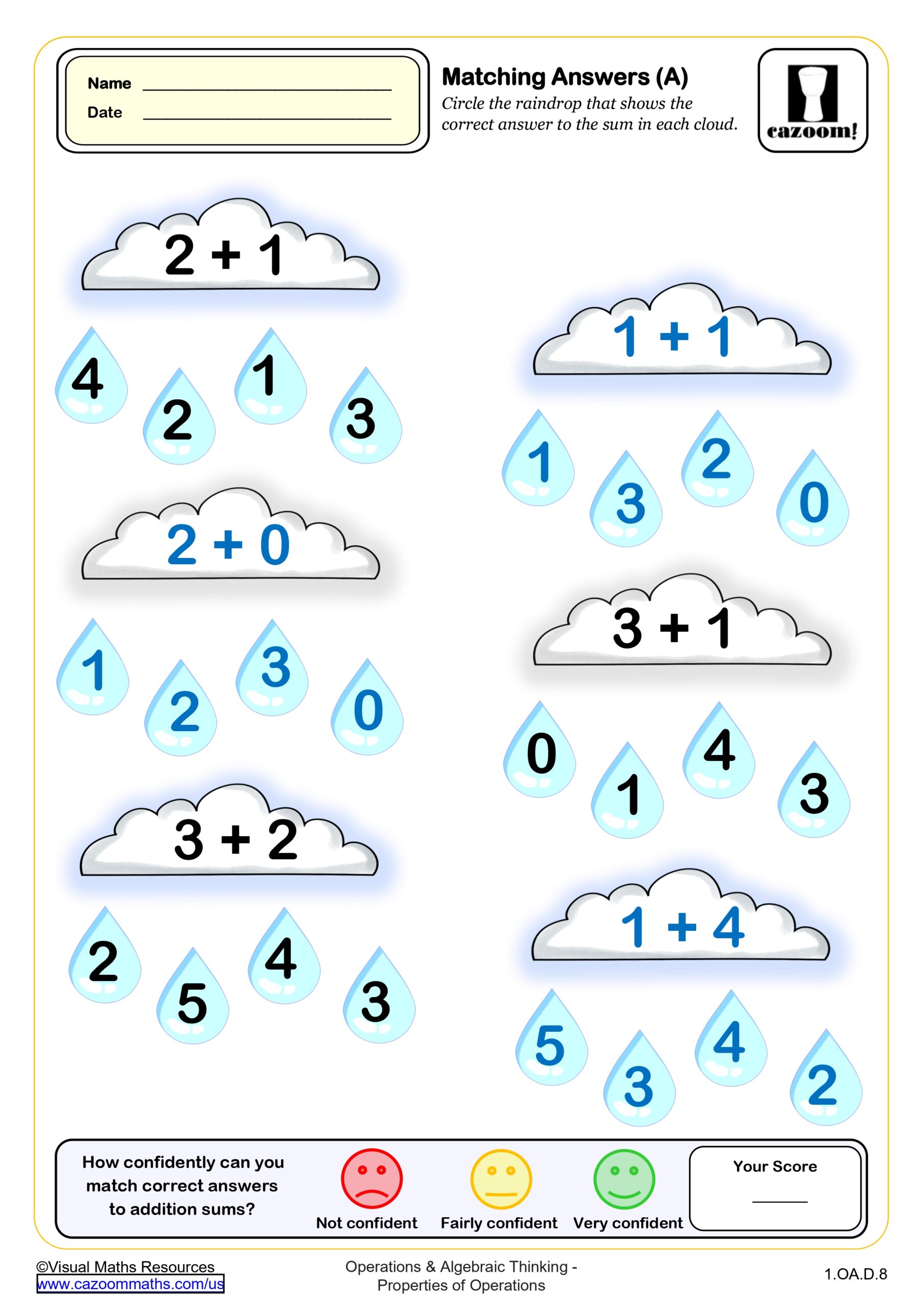
Matching Answers (A)
Grades: 1st Grade, 2nd Grade
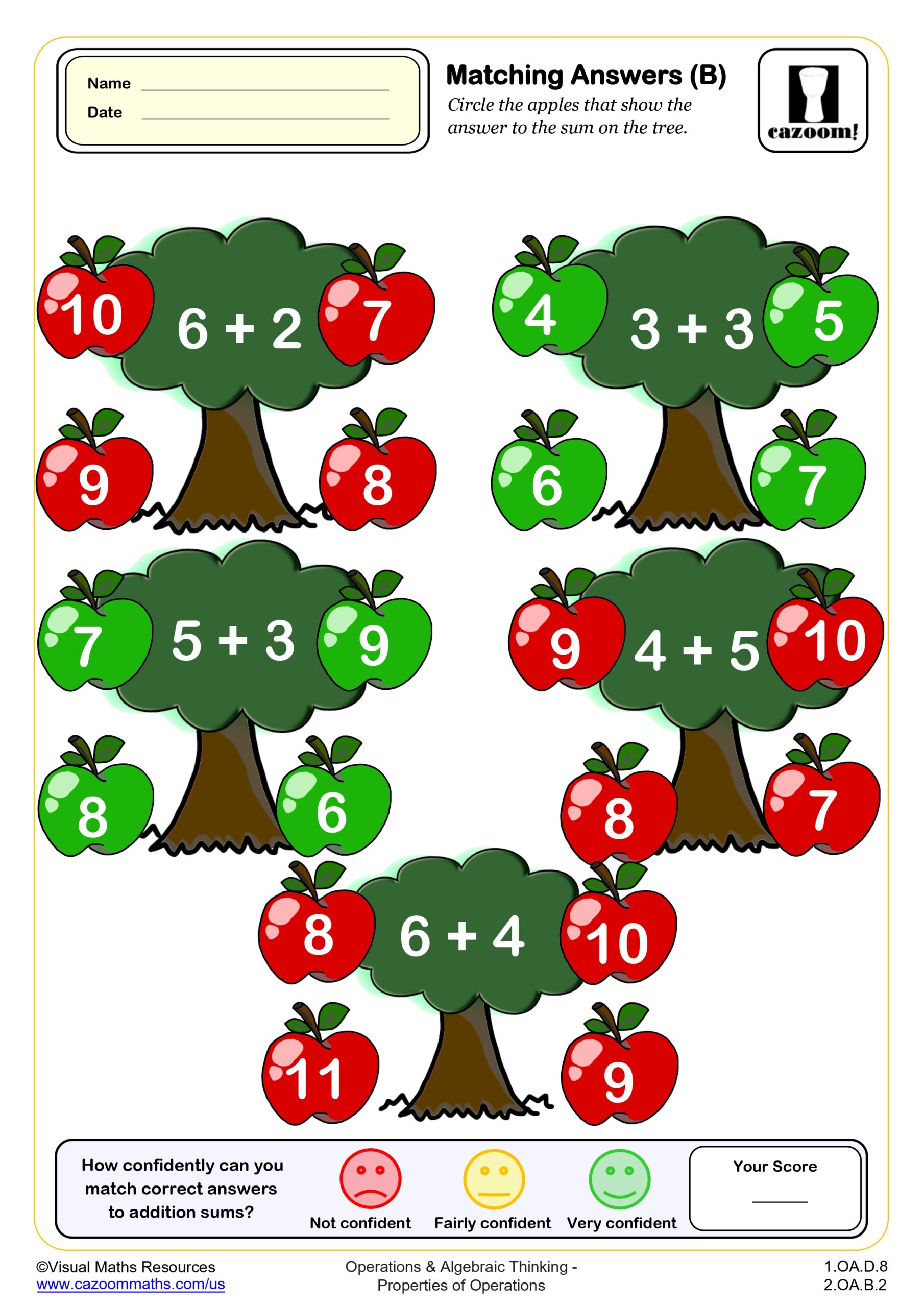
Matching Answers (B)
Grades: 1st Grade, 2nd Grade
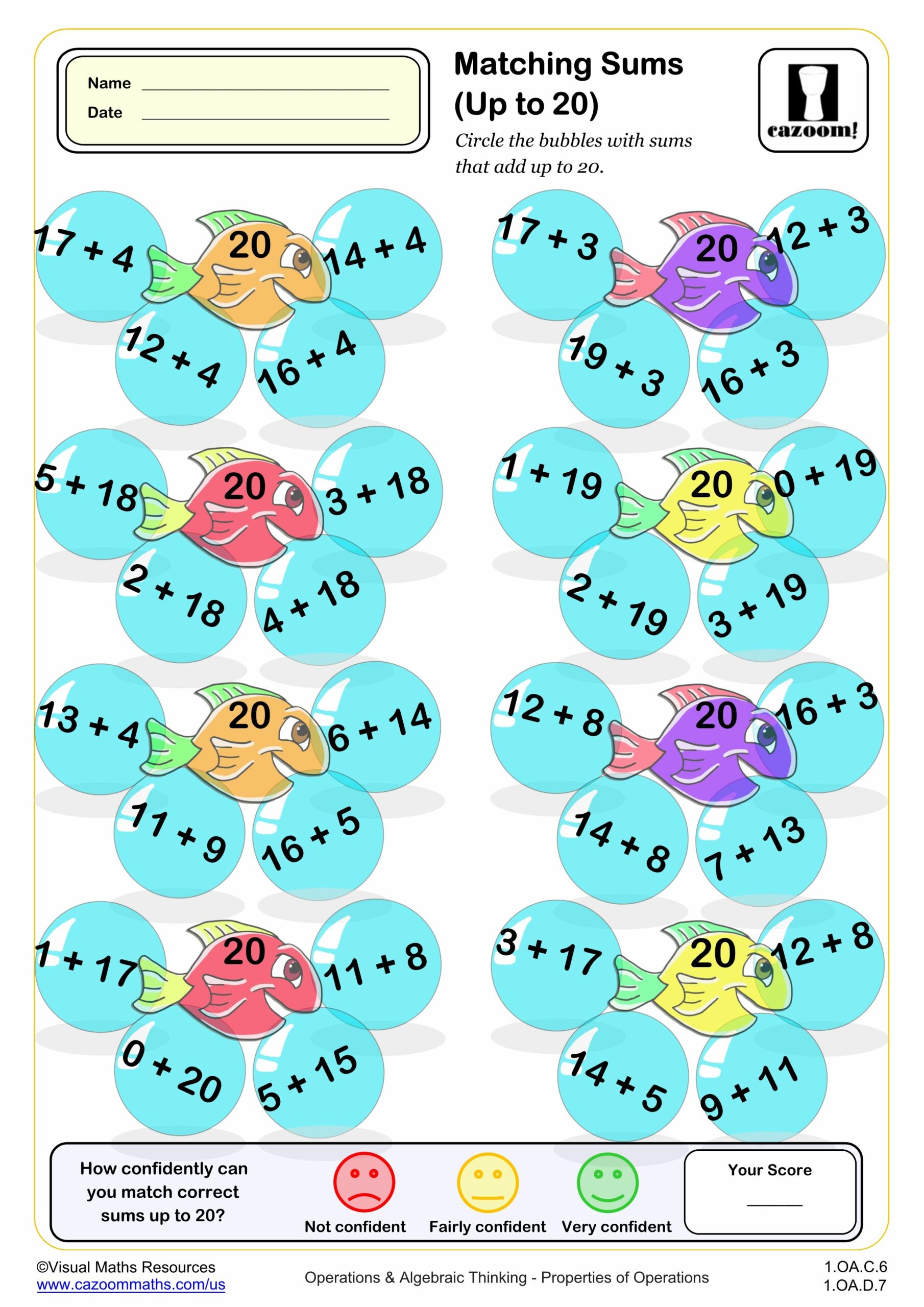
Matching sums (20 only)
Grades: 1st Grade
Misisng Gaps (B) (Without a Number Line)
Grades: 1st Grade
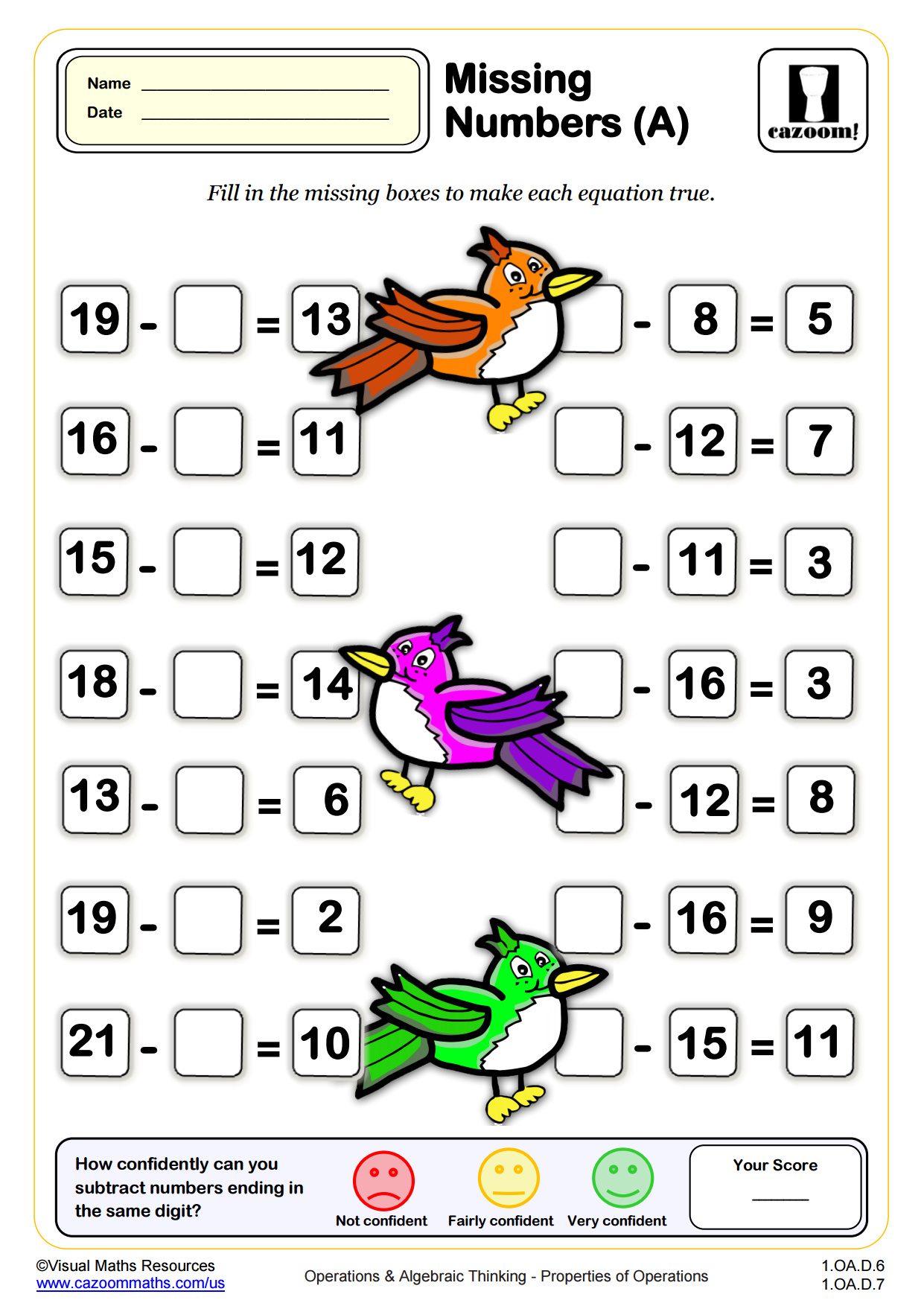
Missing Numbers (A)
Grades: 1st Grade
Missing Numbers (A) (With a Number Line)
Grades: 1st Grade
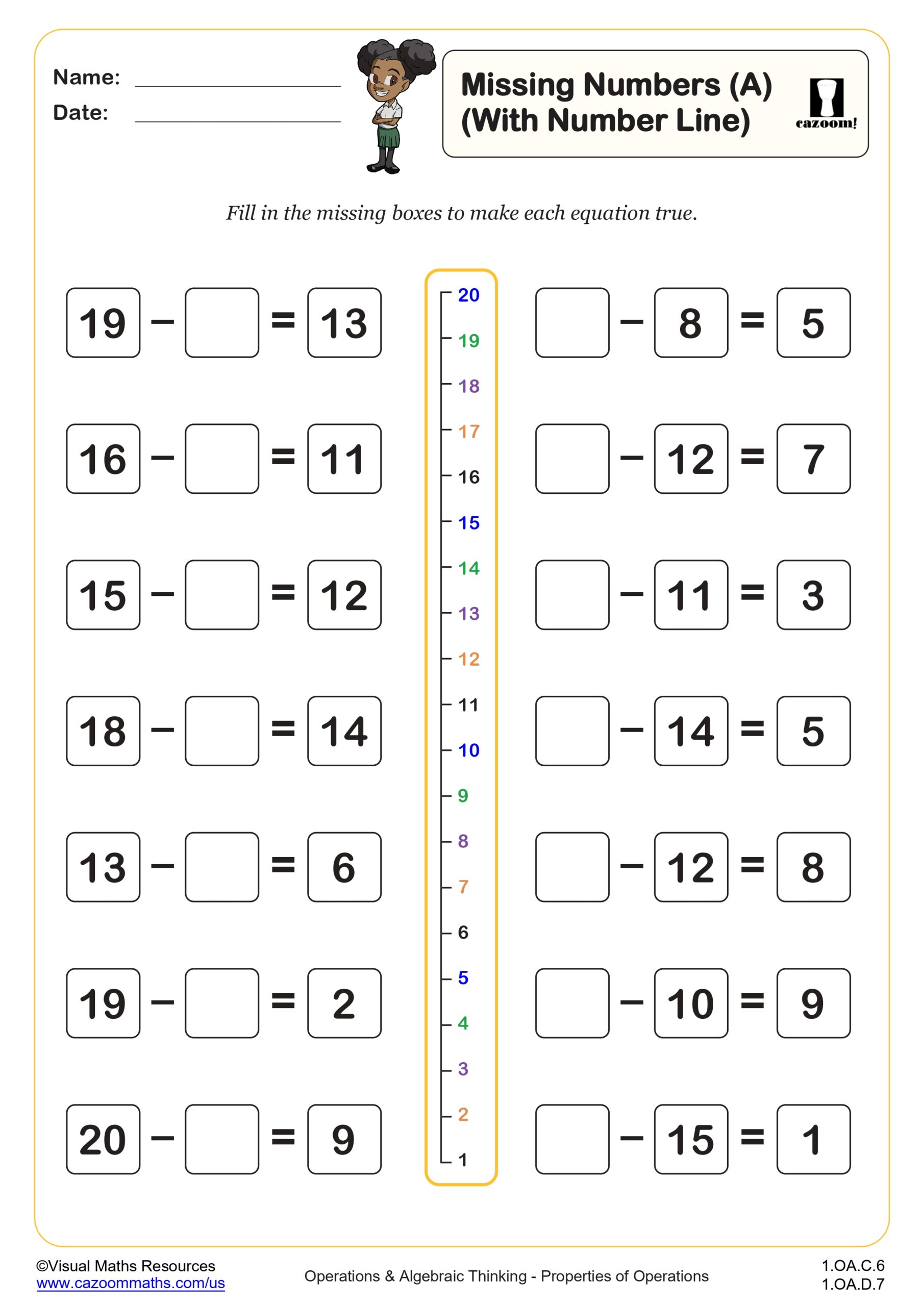
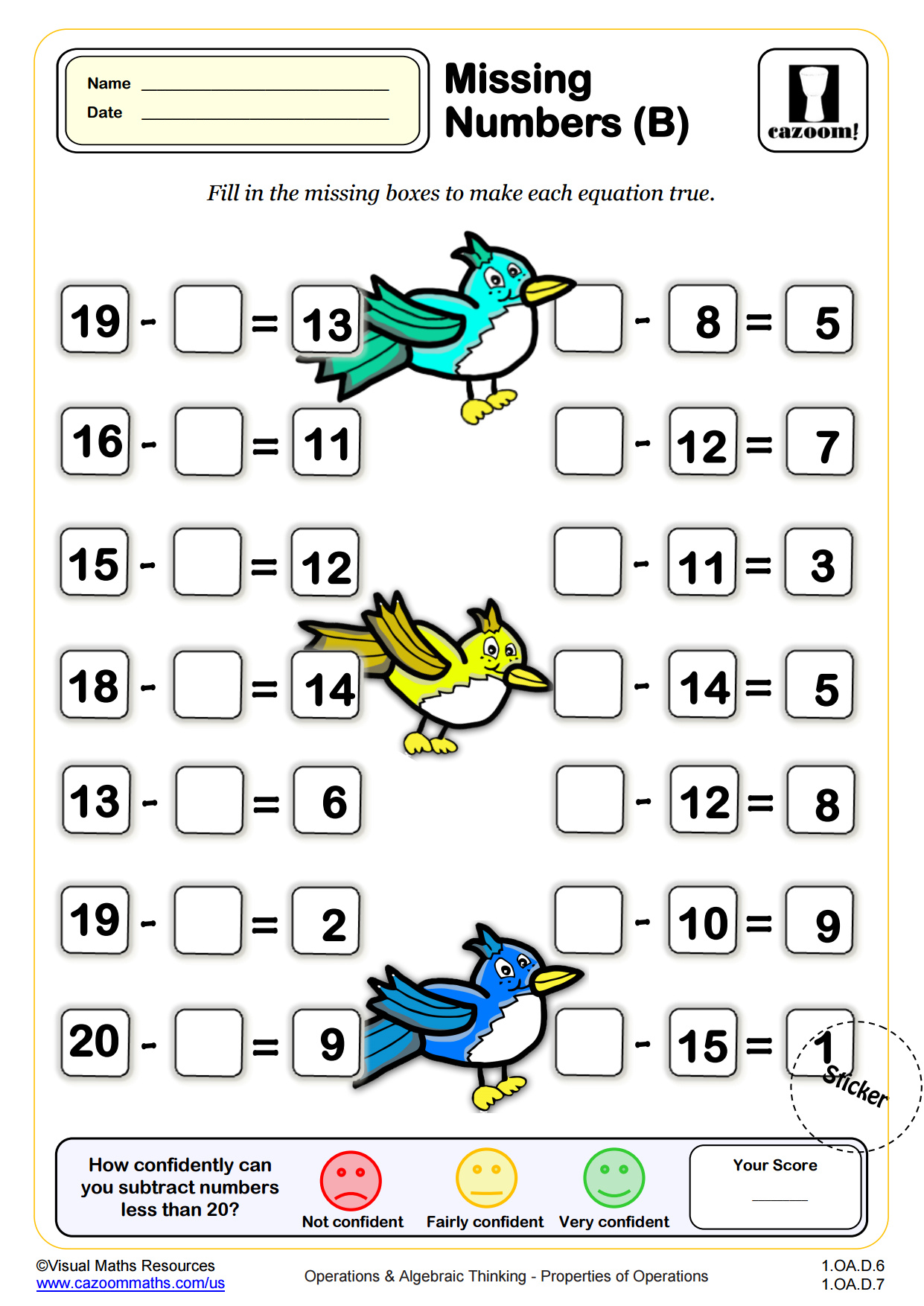
Missing Numbers (B)
Grades: 1st Grade
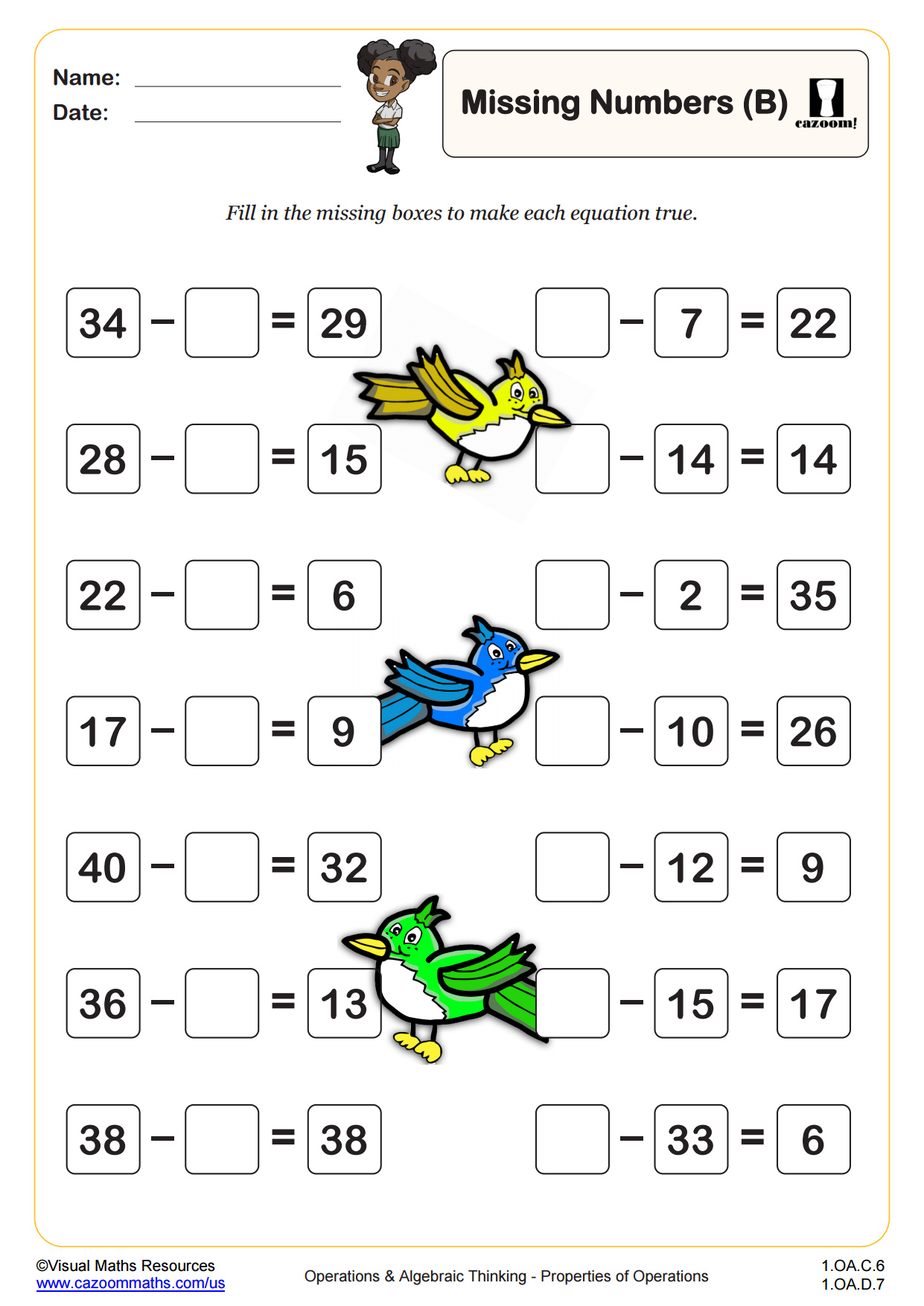
Missing Numbers (B) (With a Number Line)
Grades: 1st Grade
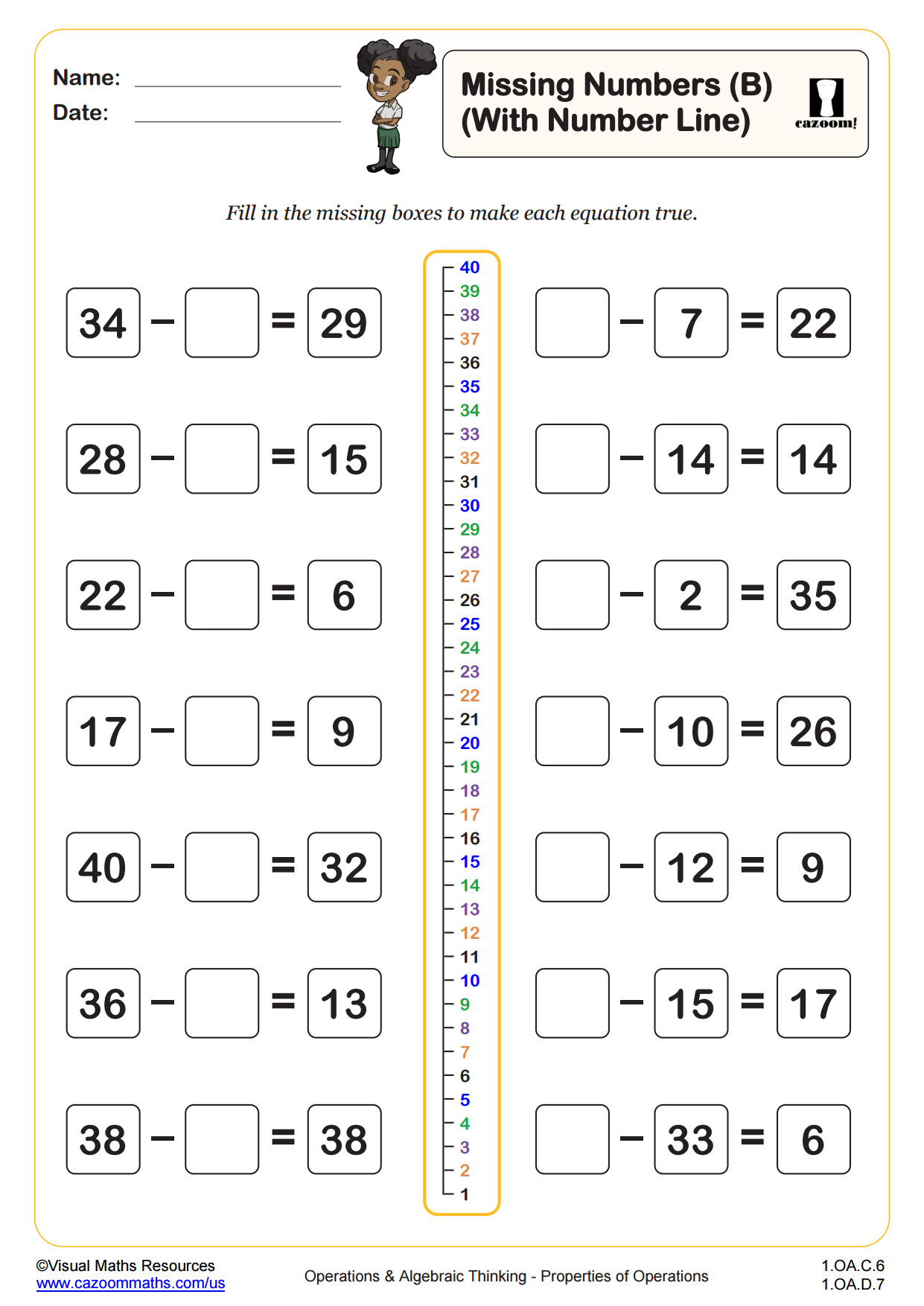
Number Bonds to 20 drills (10 questions)
Grades: 1st Grade
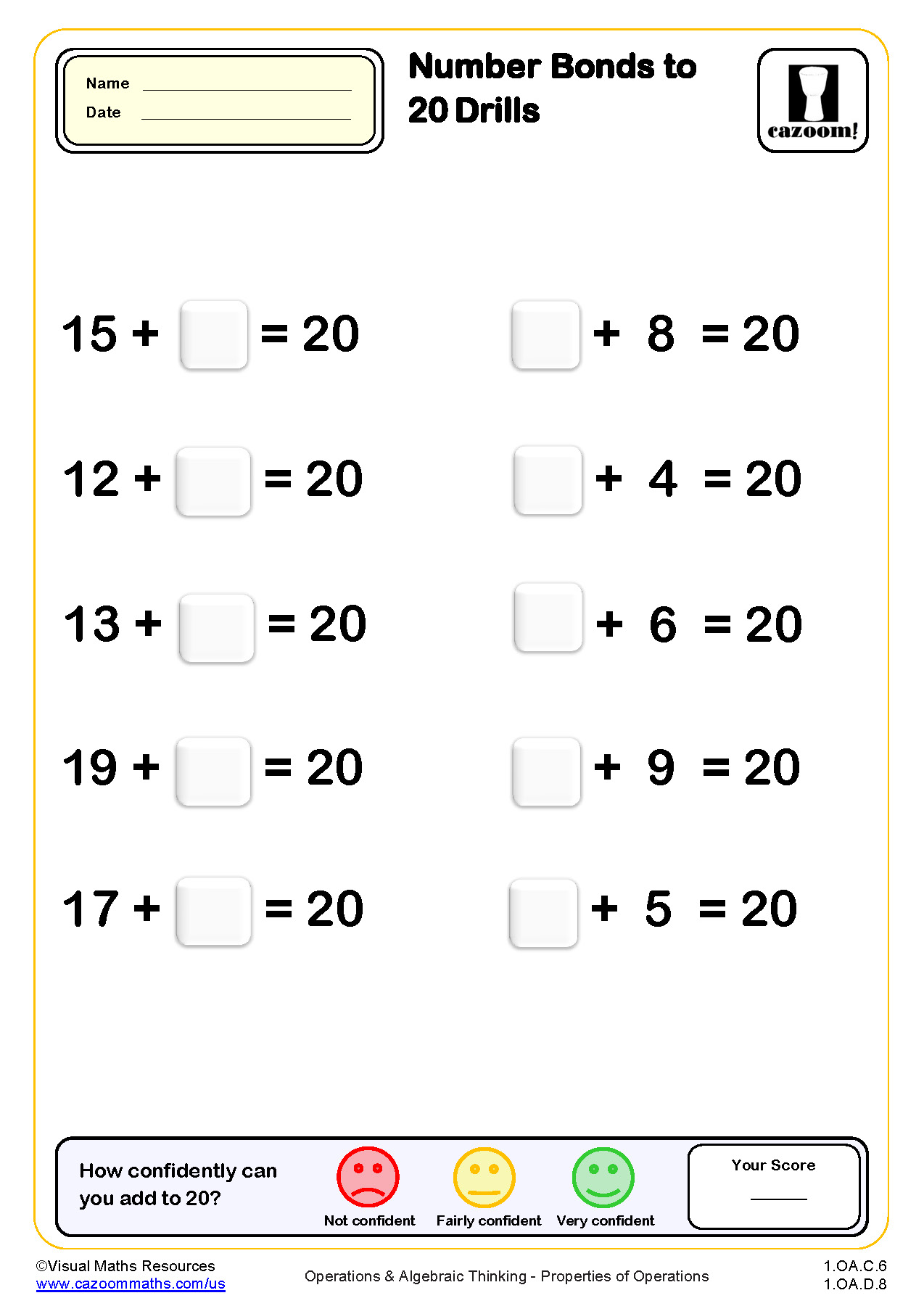
Number Bonds to 20 drills (20 questions)
Grades: 1st Grade
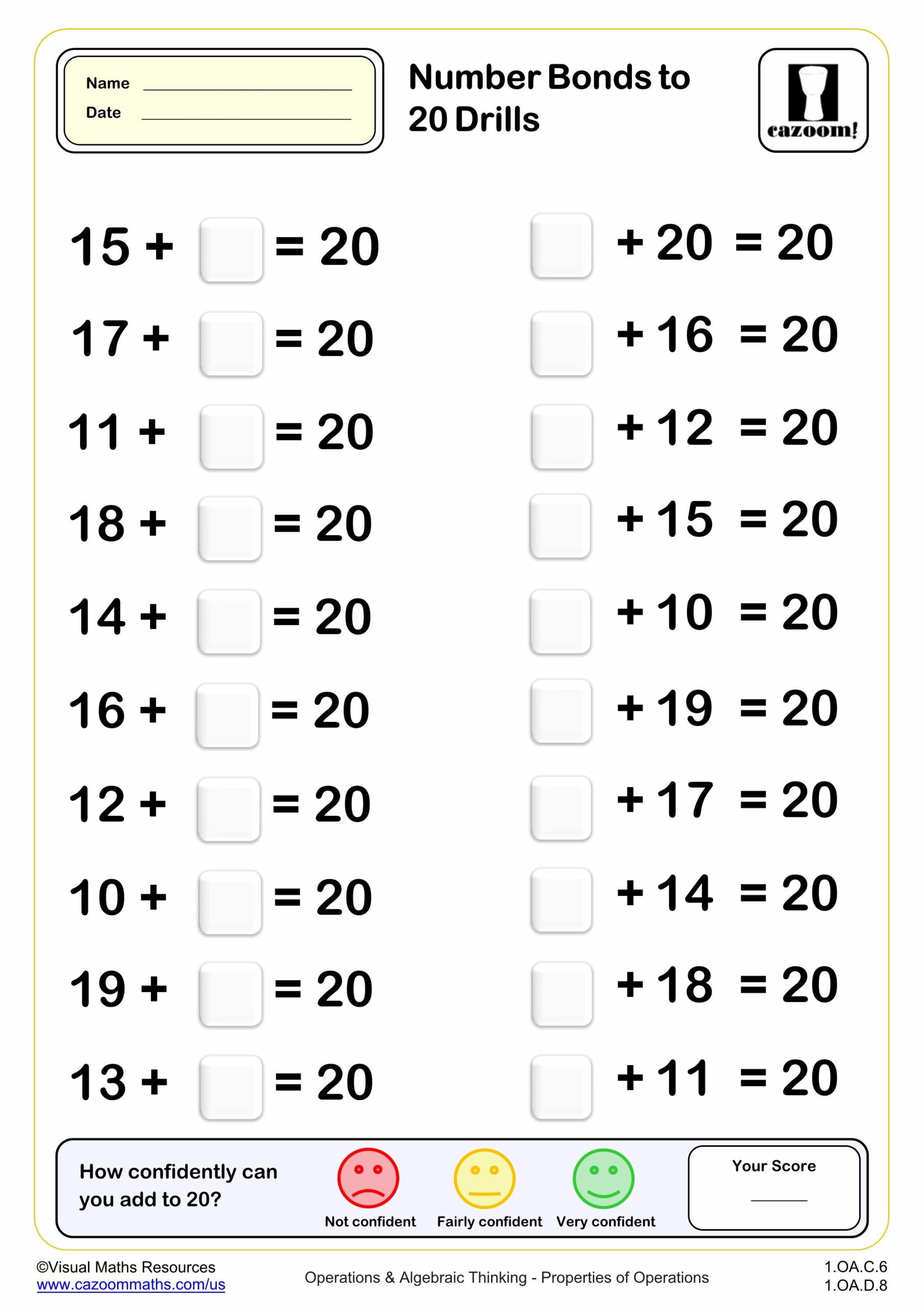
Number Bonds to 20 drills (50 questions)
Grades: 1st Grade
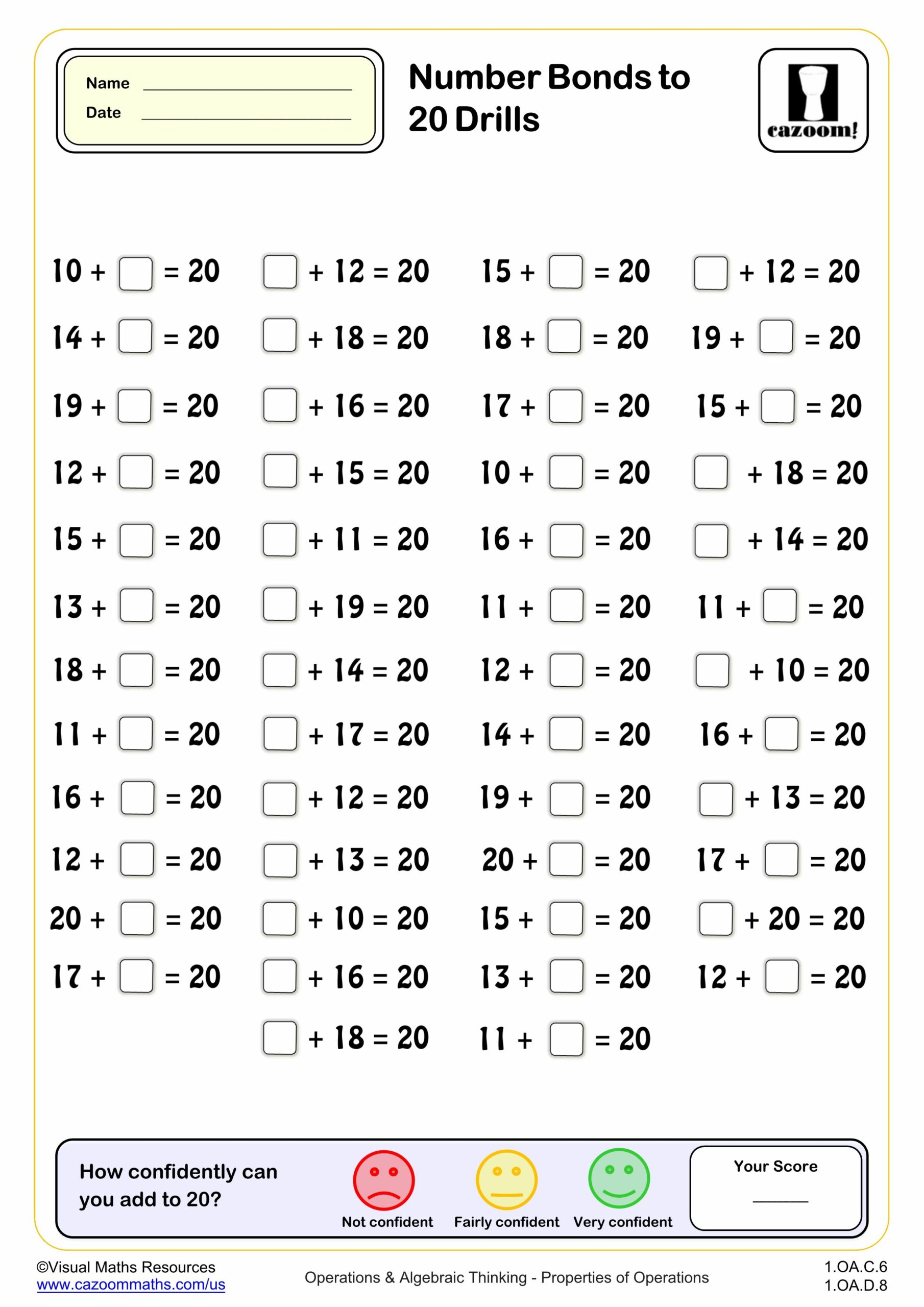
Number Bonds to 20 drills (B) (20 questions)
Grades: 1st Grade
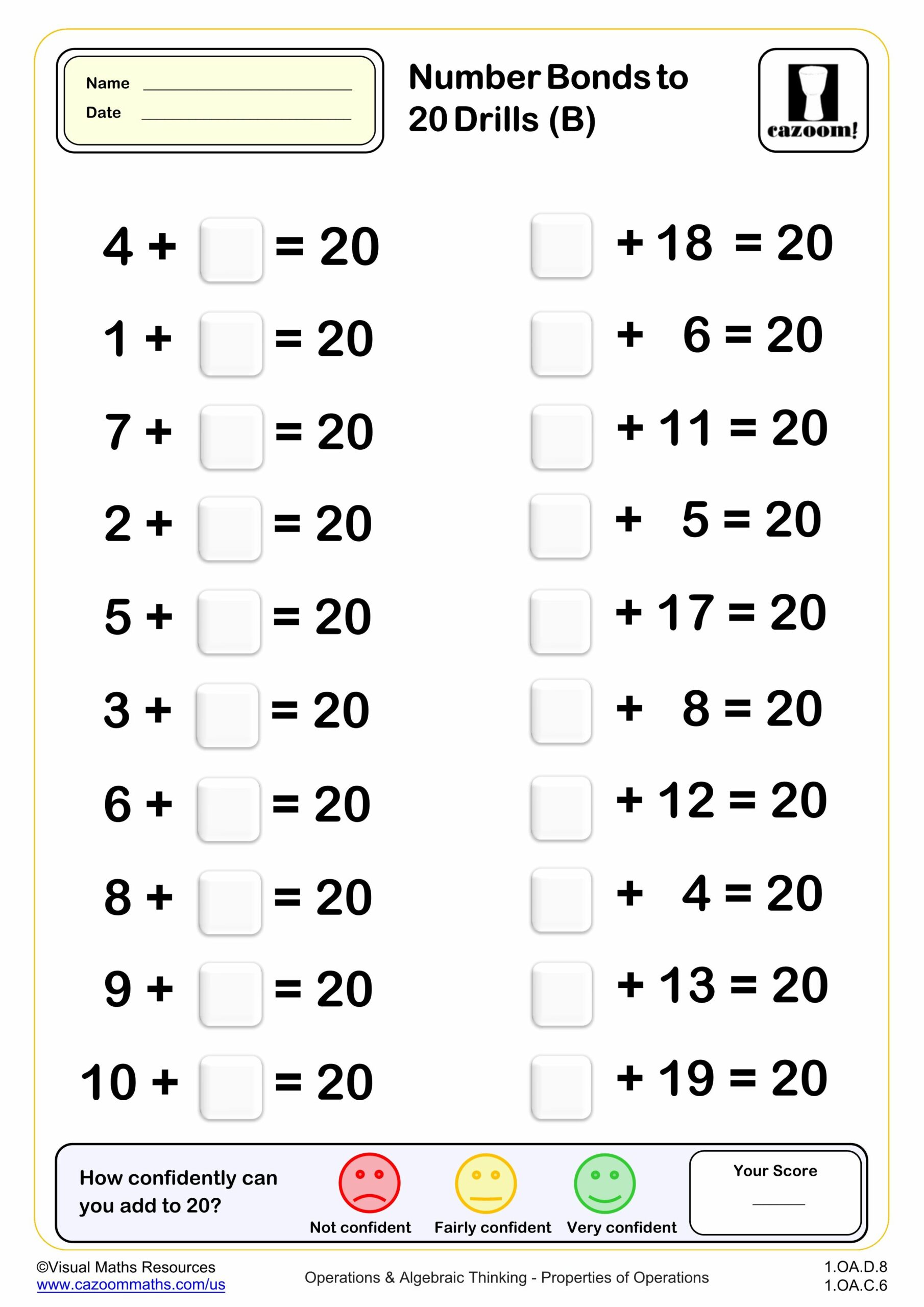
Number Bonds to 20 drills (B) (50 questions)
Grades: 1st Grade
Number bonds to 20 with dots
Grades: 1st Grade
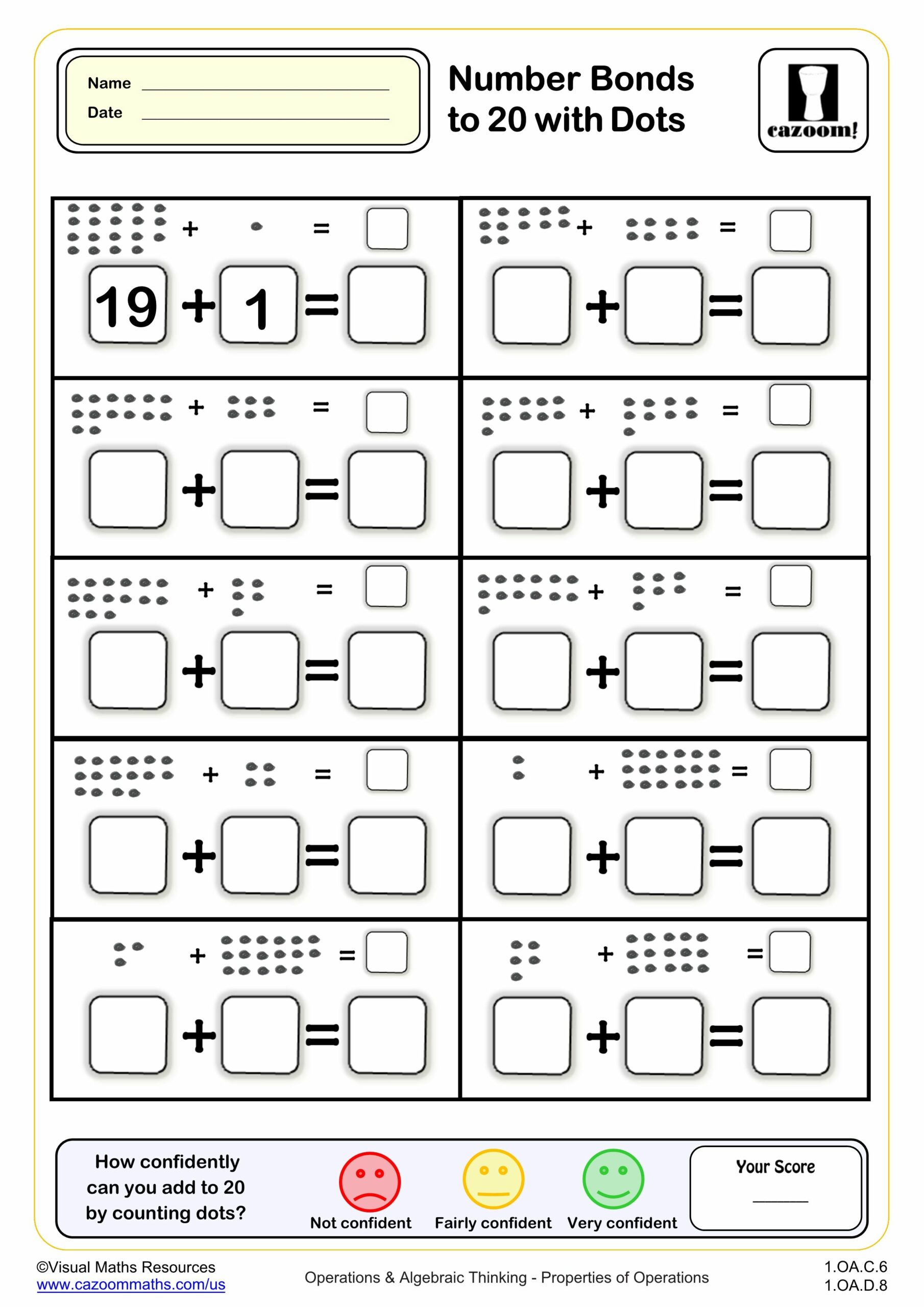
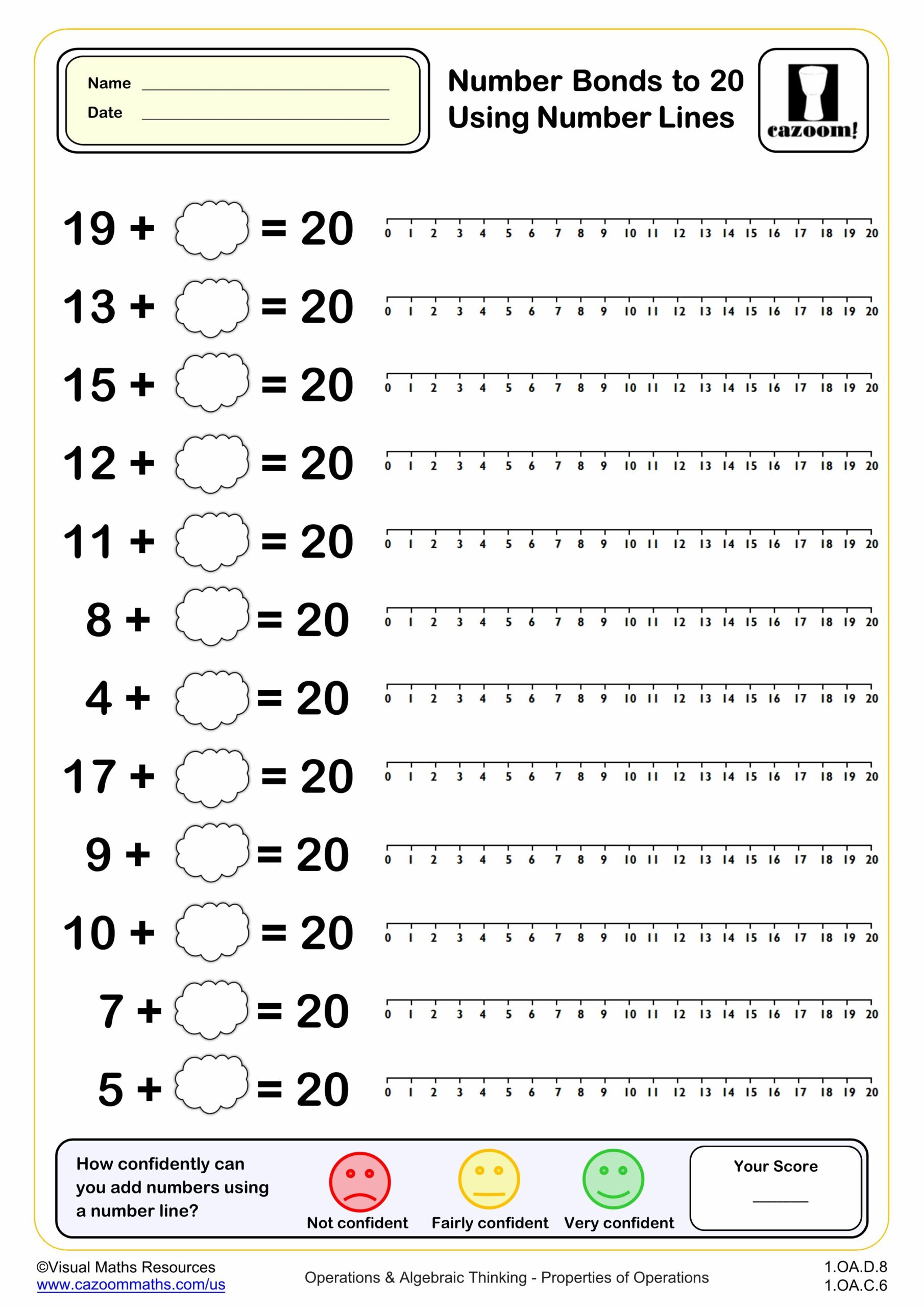
Number bonds to 20 with number lines
Grades: 1st Grade
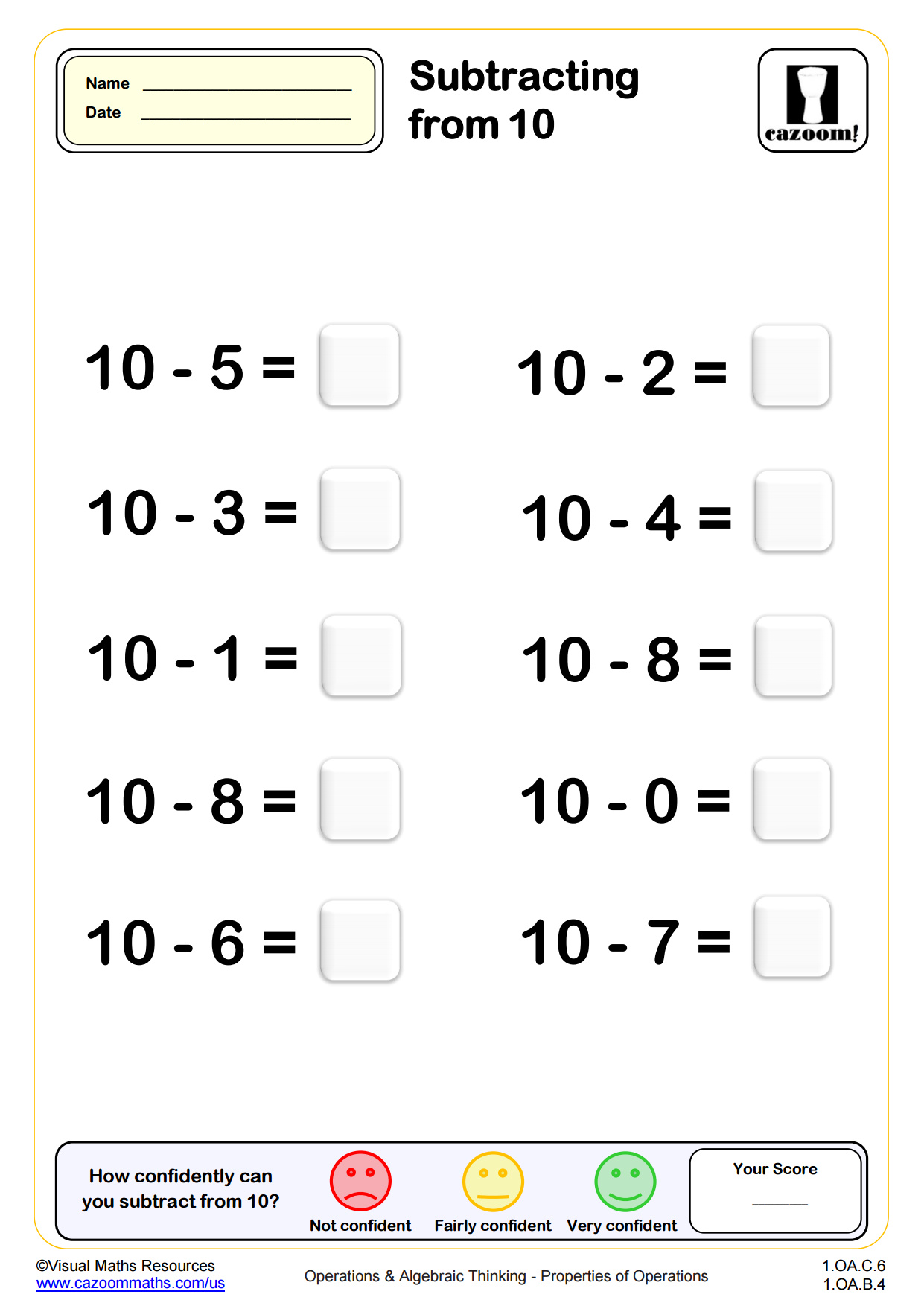
Subtracting from 10 Drills (10 questions)
Grades: 1st Grade
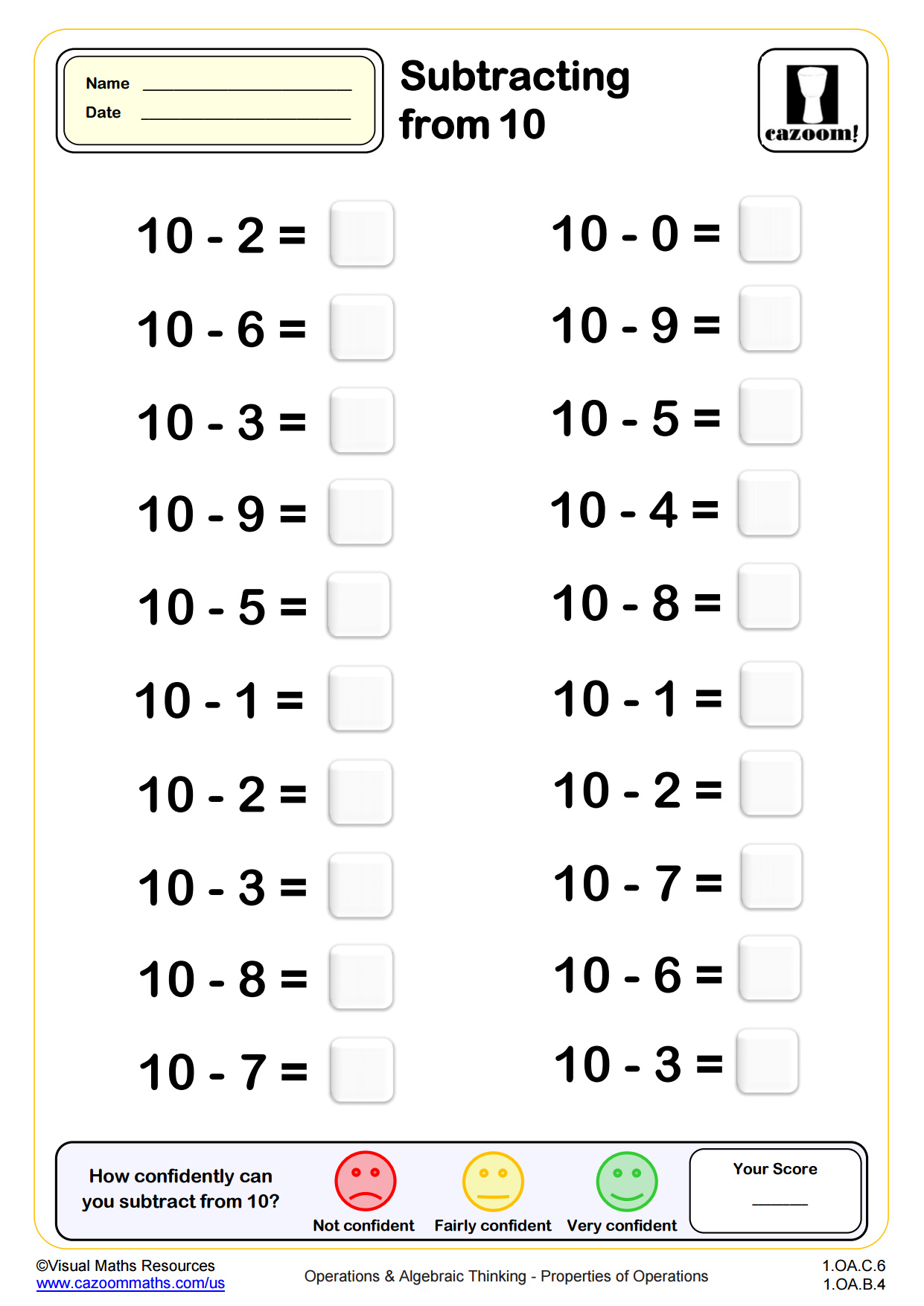
Subtracting from 10 Drills (20 questions)
Grades: 1st Grade
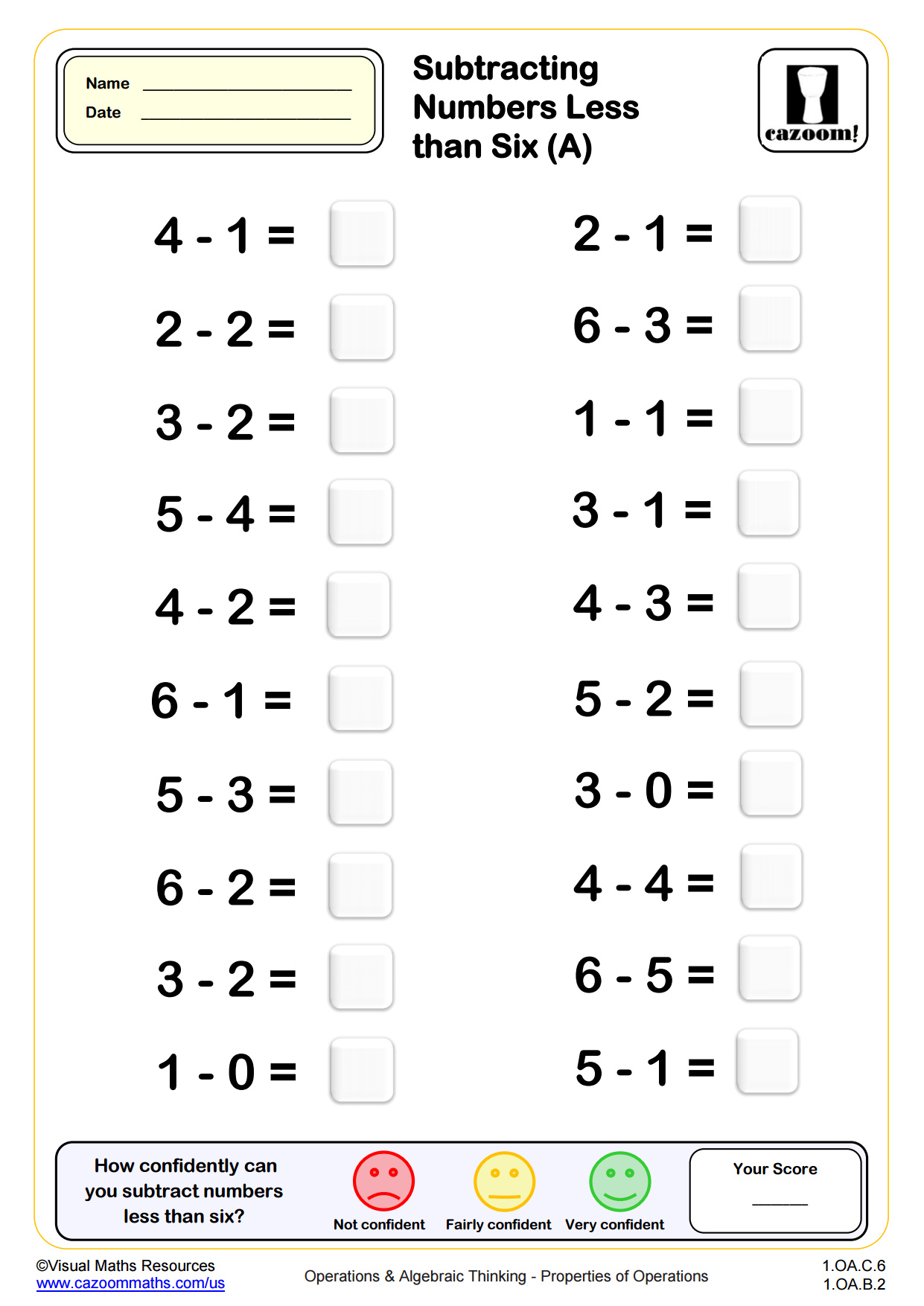
Subtracting Numbers Less Than 6 (A)
Grades: 1st Grade, 2nd Grade
Subtracting Numbers Less Than 6 (B)
Grades: 1st Grade, 2nd Grade
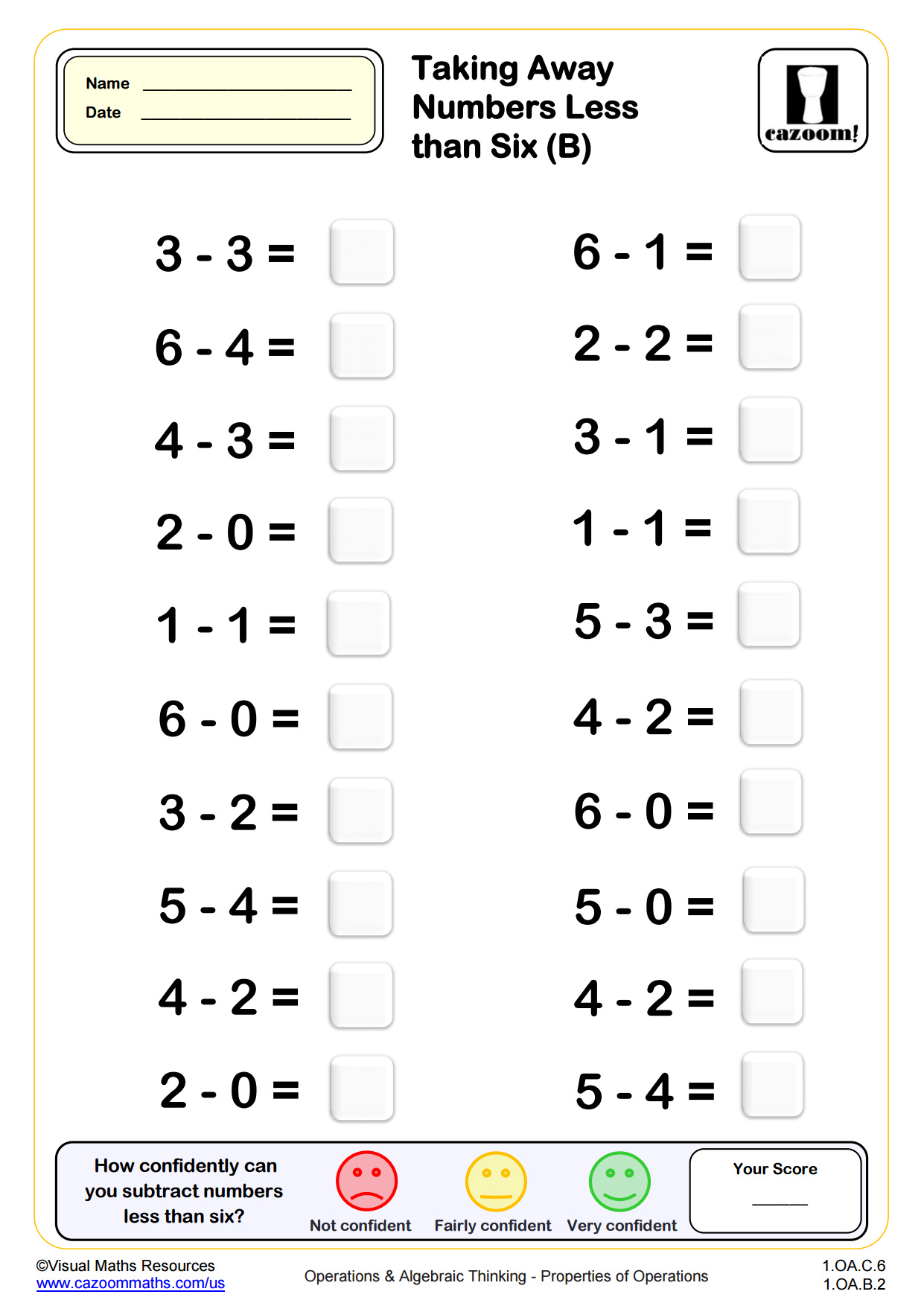
Subtracting Numbers Less Than 6 (C)
Grades: 1st Grade, 2nd Grade
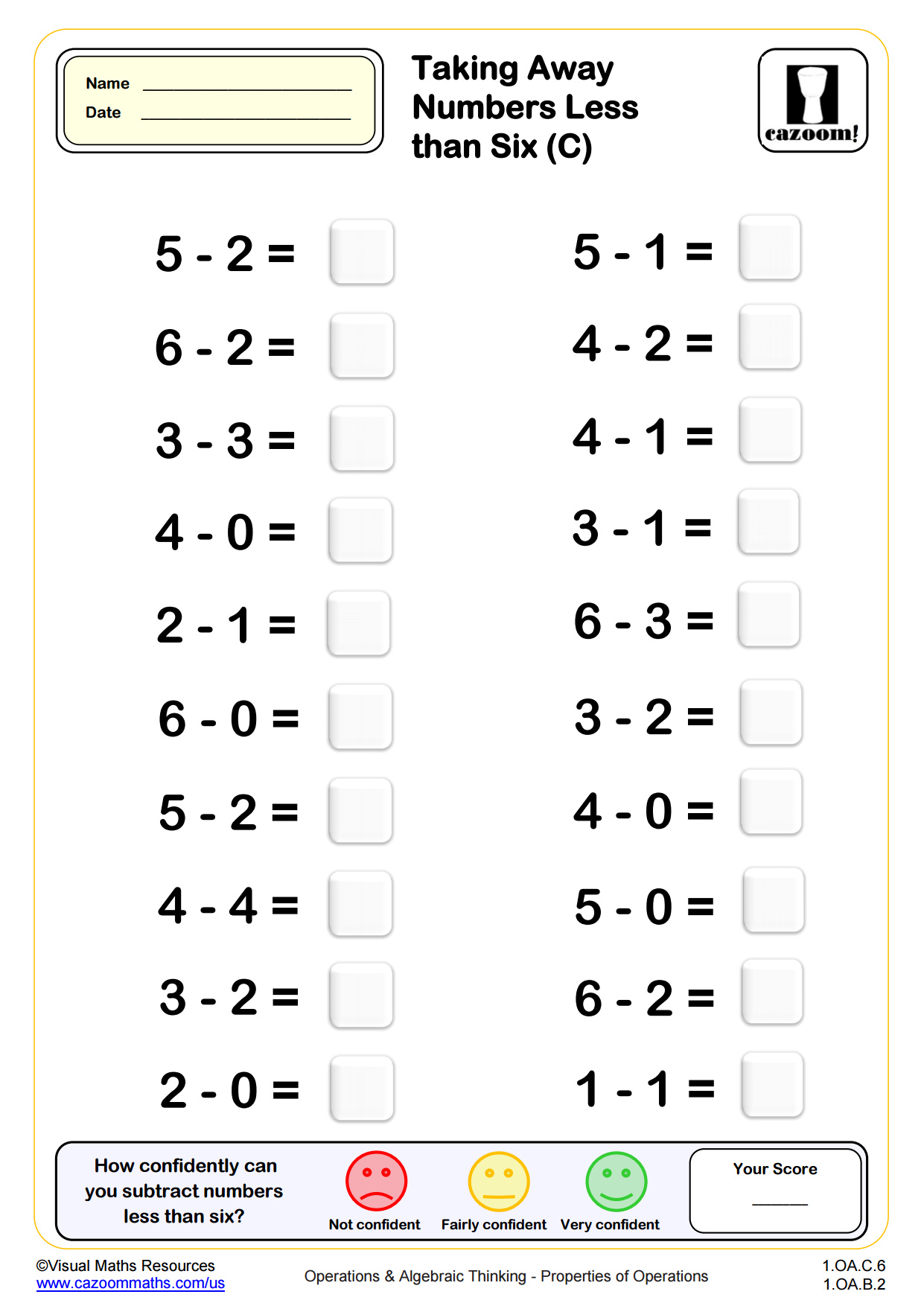
Subtracting Single Digits from Two Digit Numbers (Using Number Lines)
Grades: 1st Grade
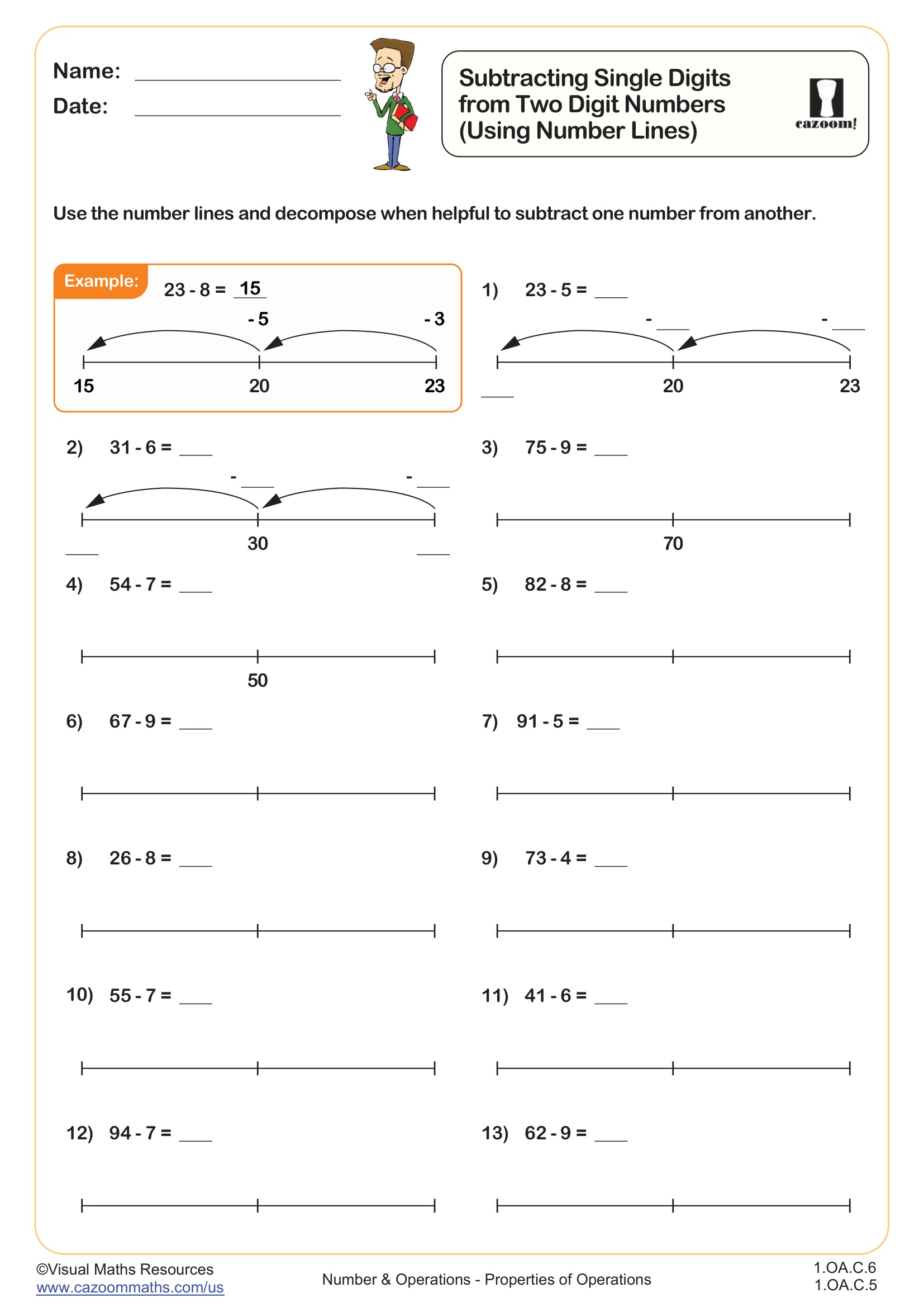
Adding and Subtracting Multiples of 1,000
Grades: 2nd Grade, 3rd Grade
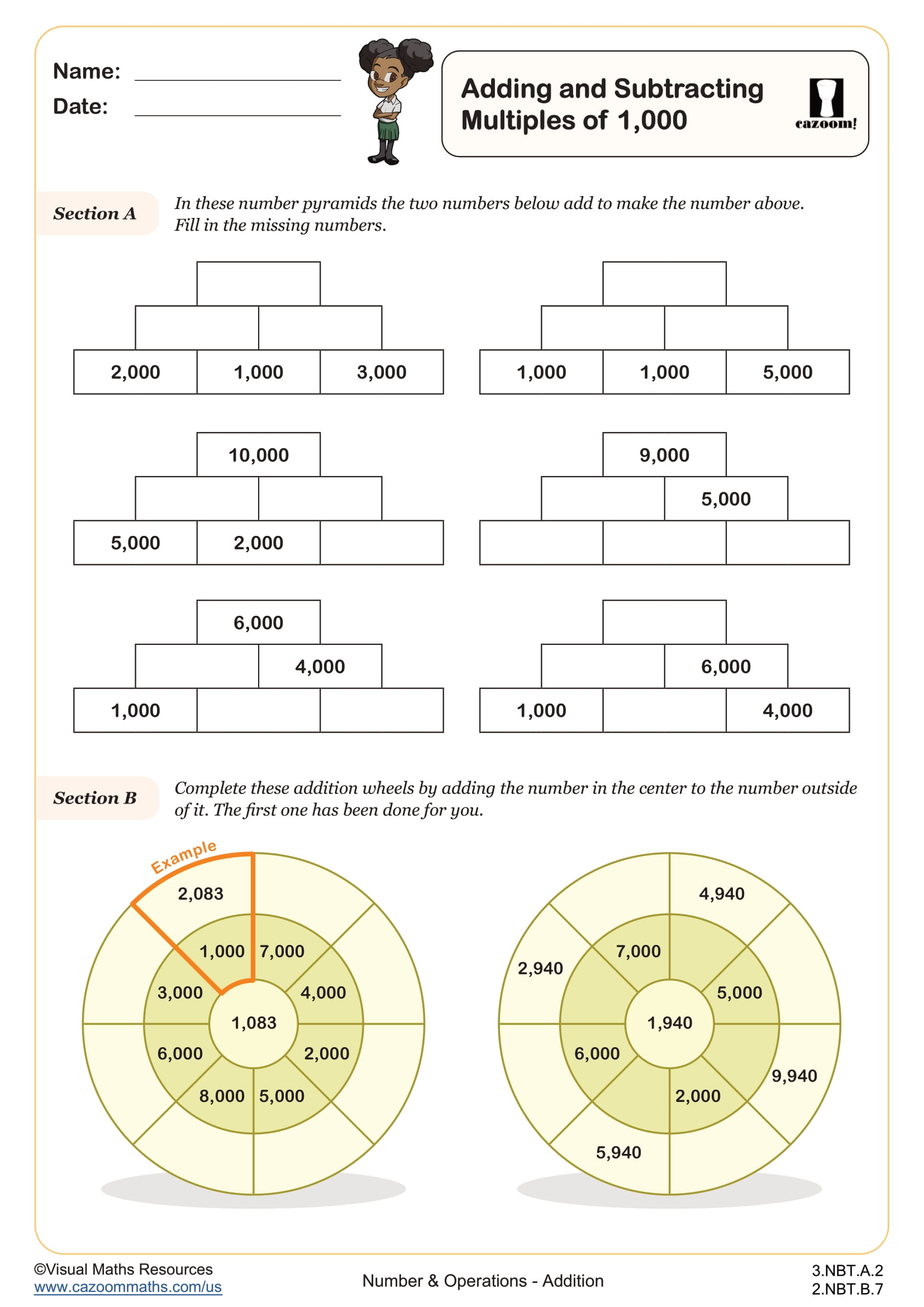
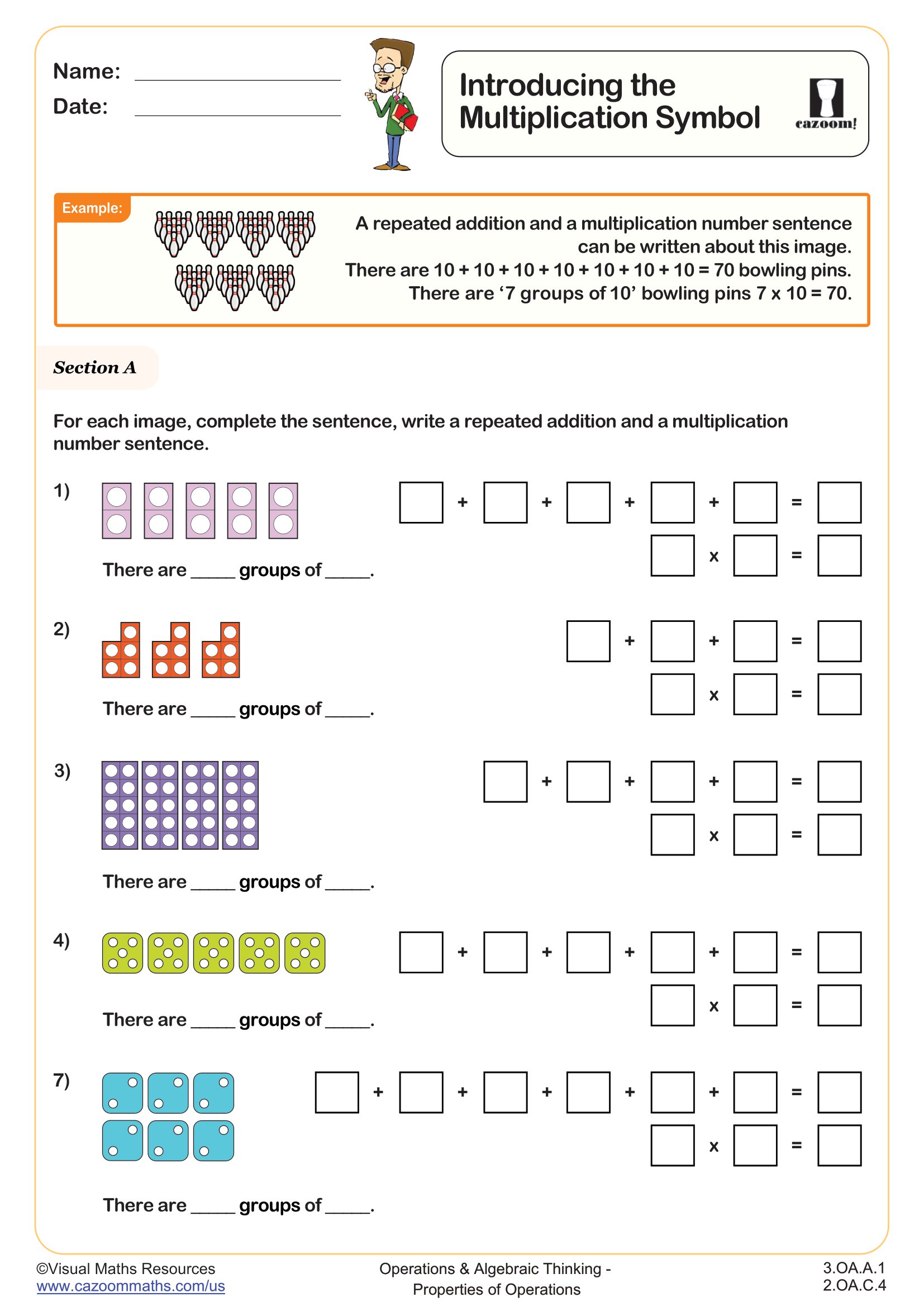
Introducing the Multiplication Symbol
Grades: 2nd Grade, 3rd Grade
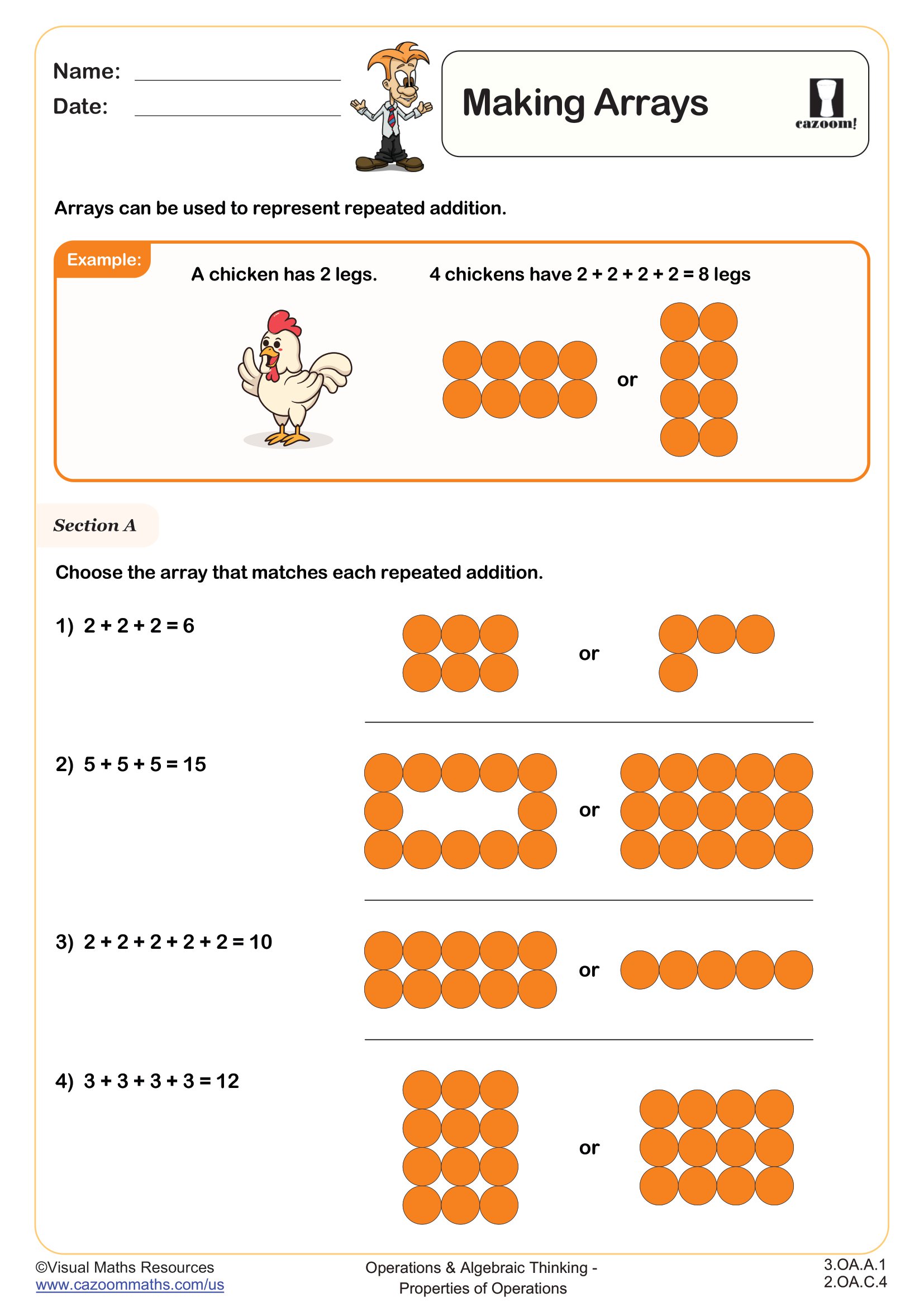
Making Arrays
Grades: 2nd Grade, 3rd Grade
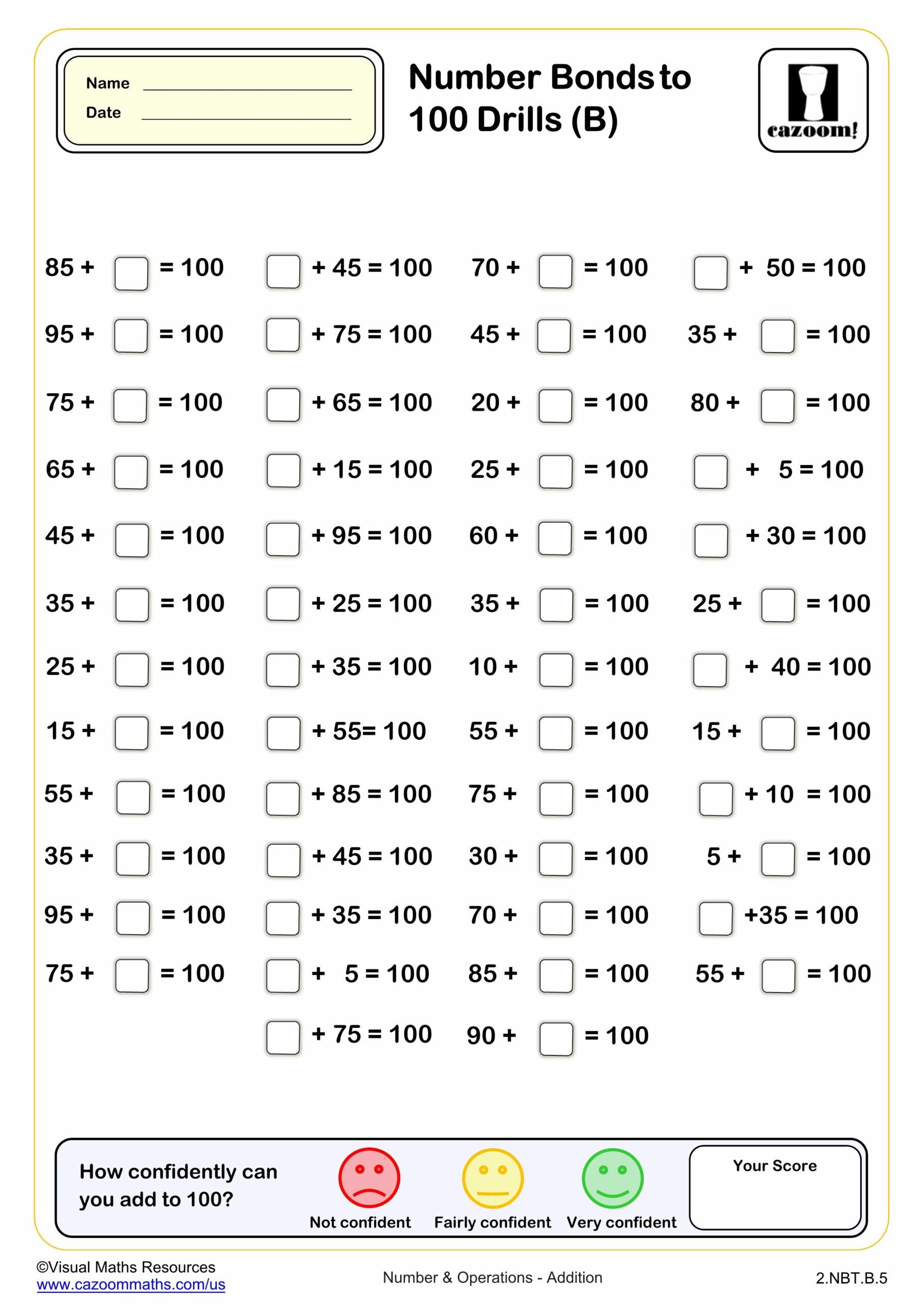
Number bond to 100 Drills (B) (50 questions)
Grades: 2nd Grade
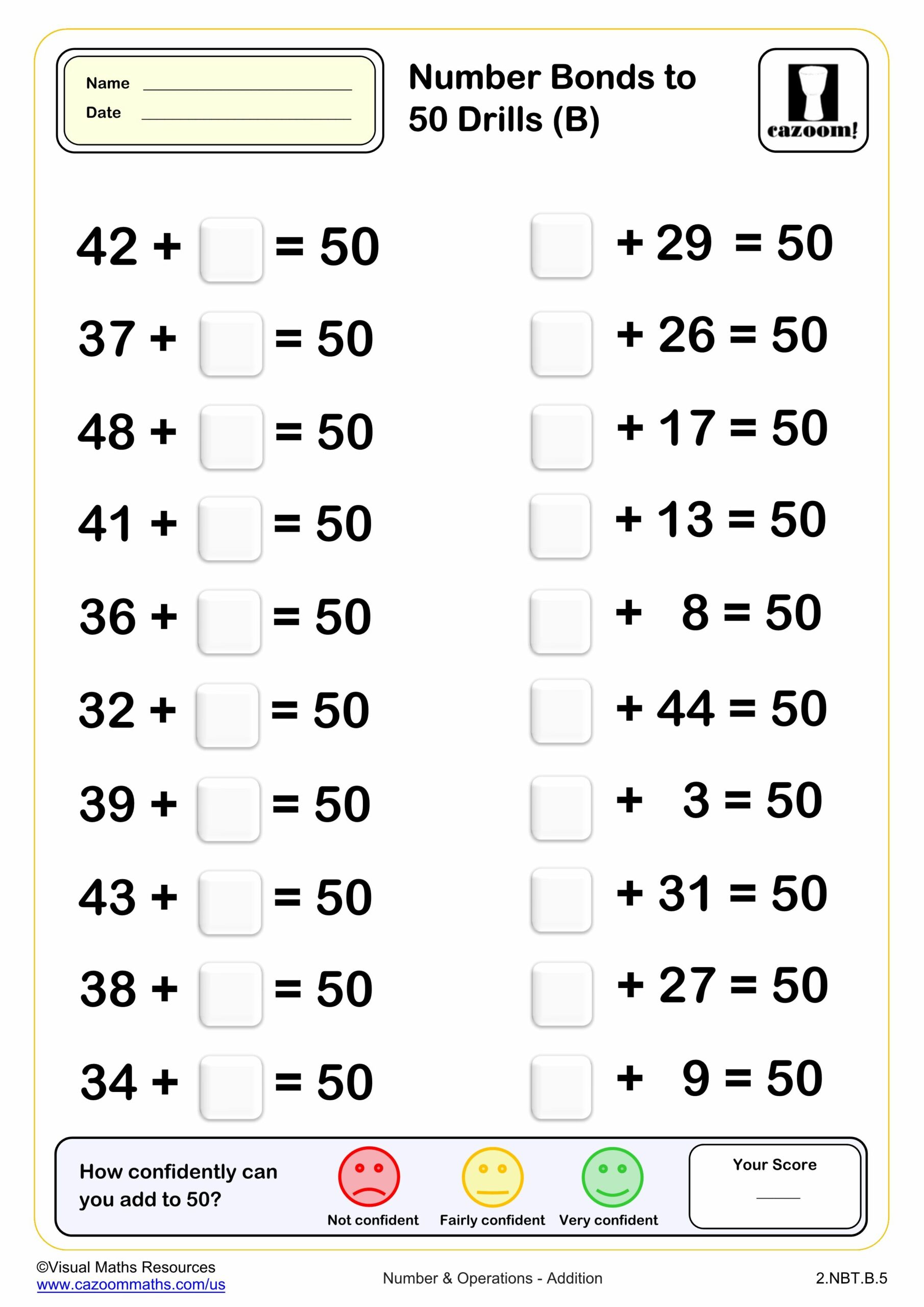
Number bond to 50 Drills (B) (20 questions)
Grades: 2nd Grade
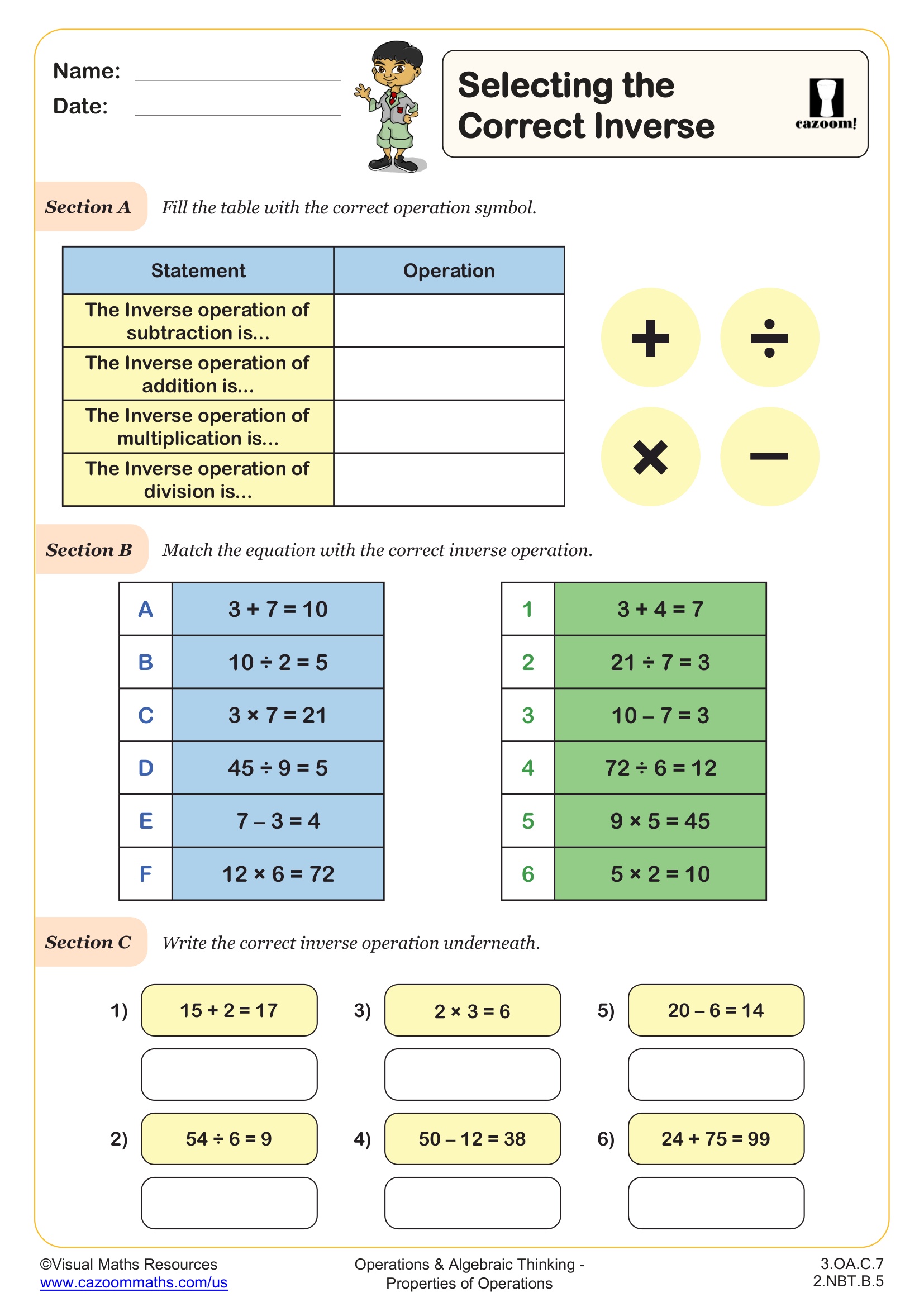
Selecting the Correct Inverse
Grades: 2nd Grade, 3rd Grade
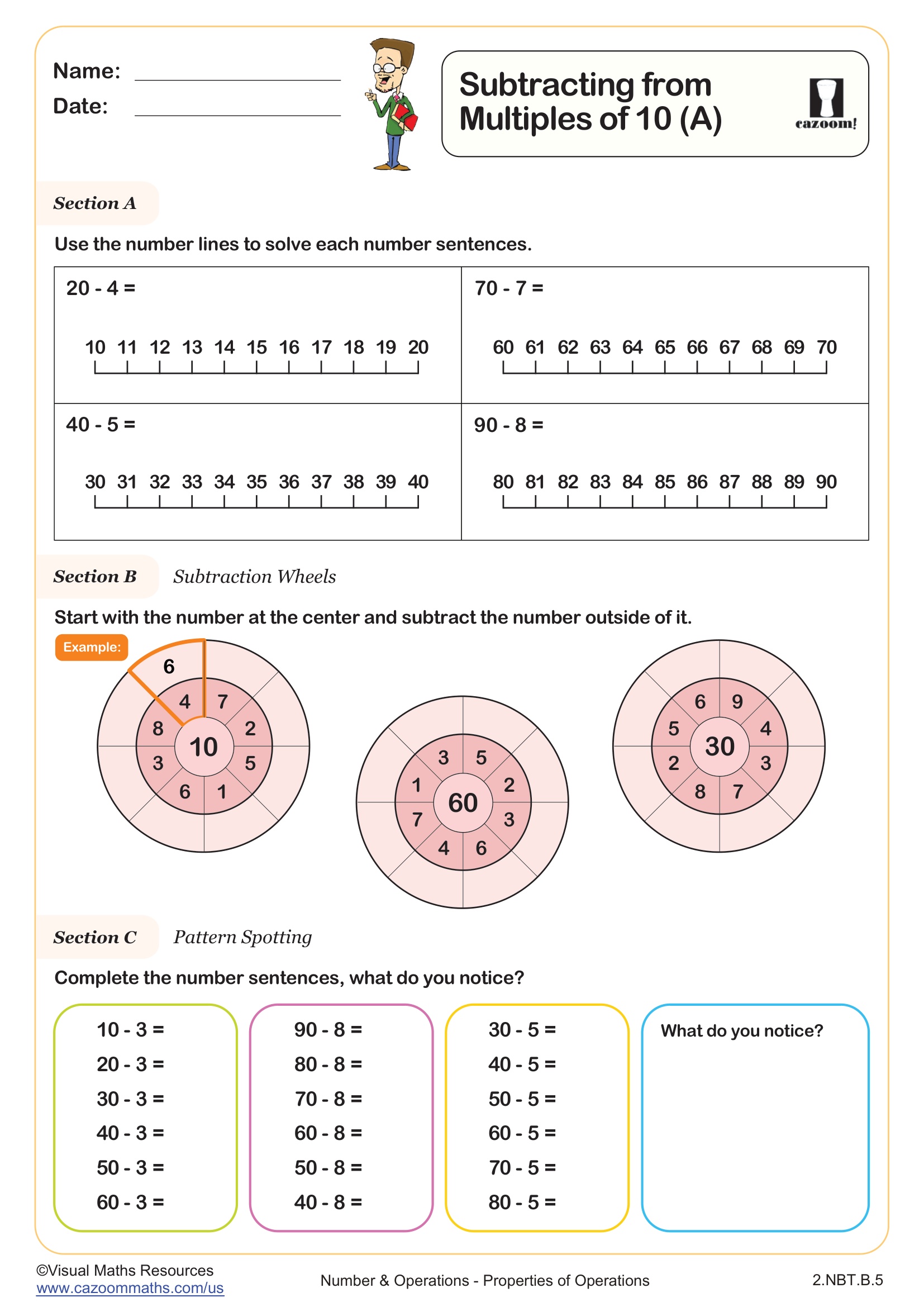
Subtracting from Multiples of 10 (A)
Grades: 2nd Grade
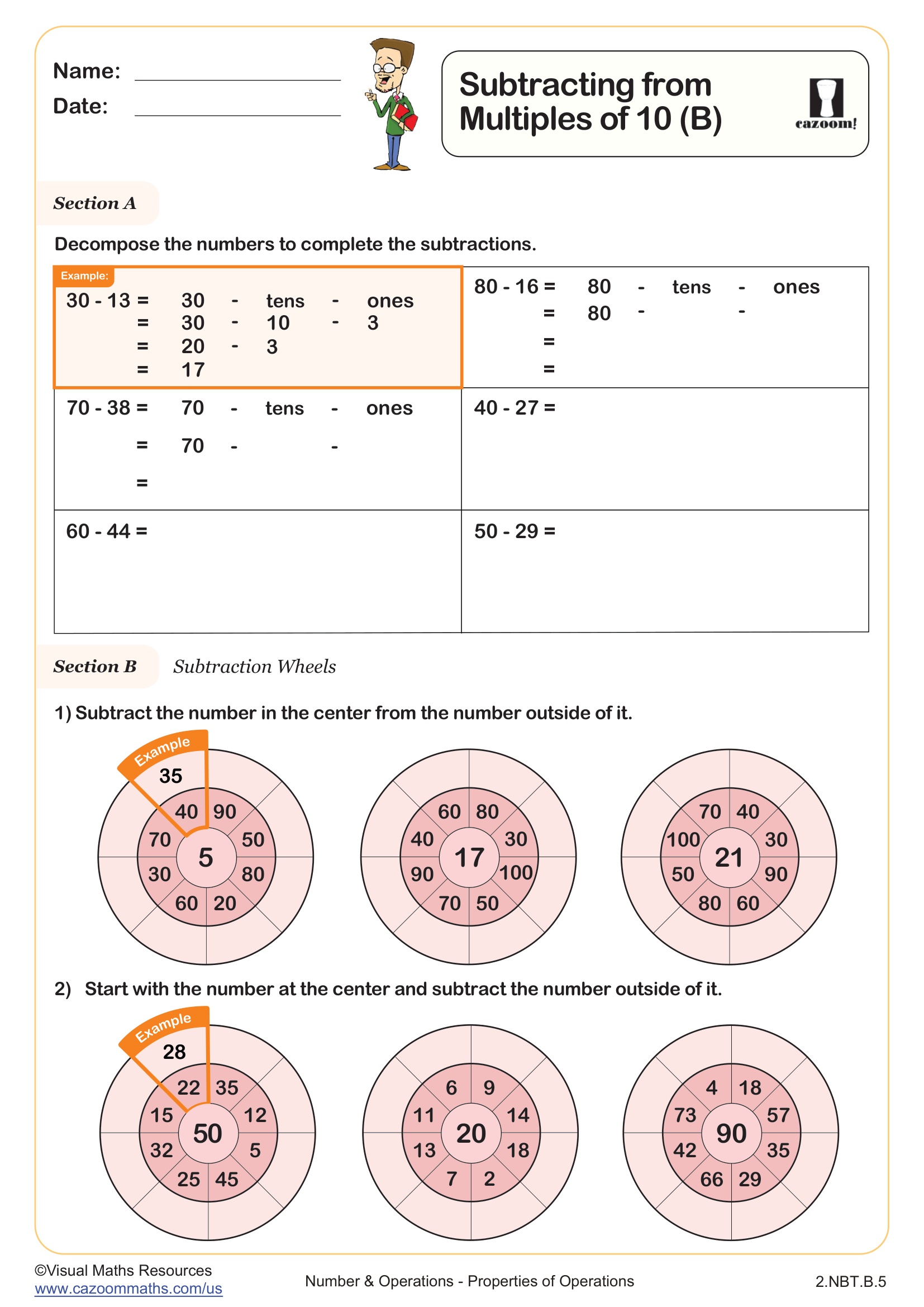
Subtracting from Multiples of 10 (B)
Grades: 2nd Grade
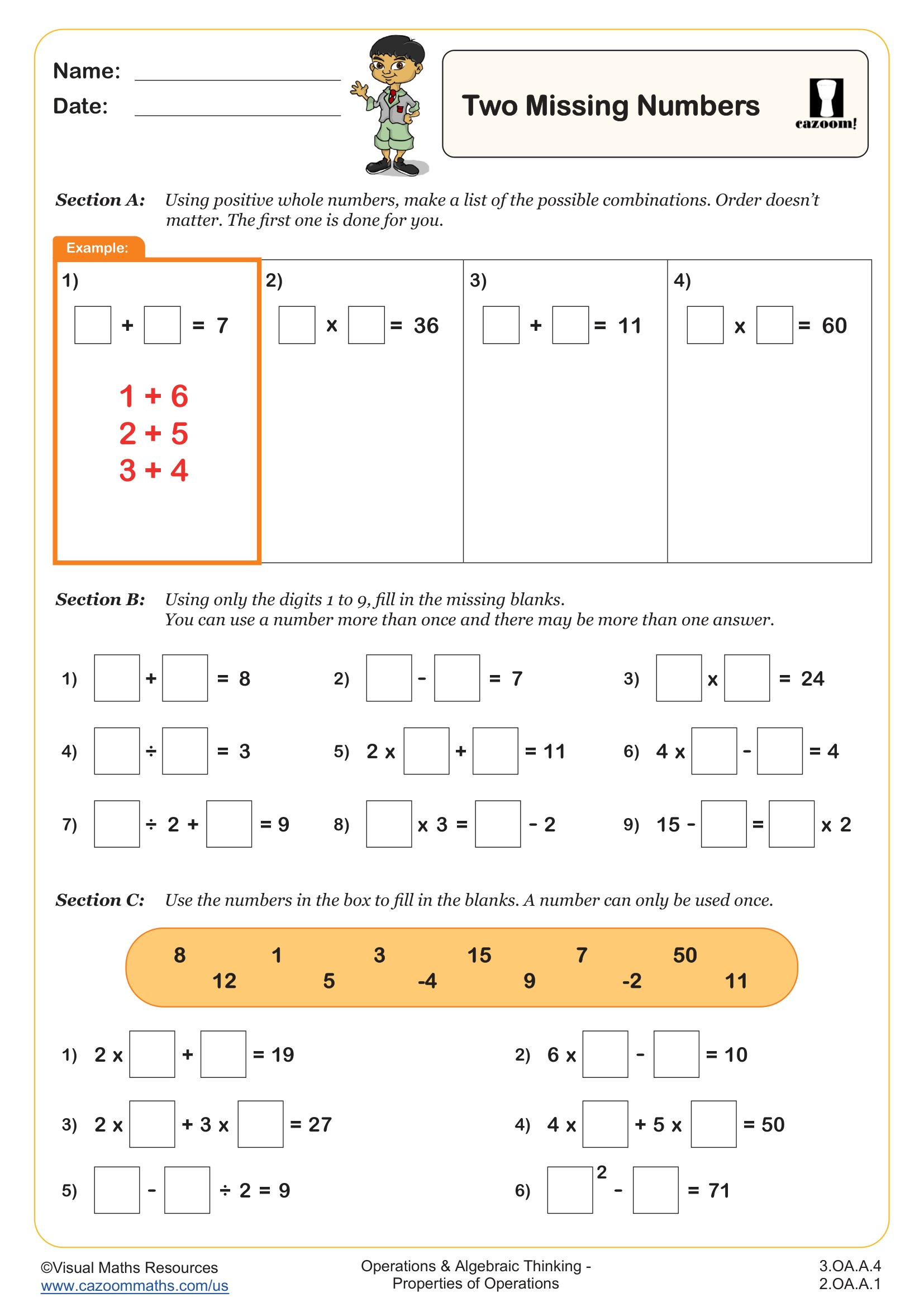
Two Missing Numbers
Grades: 2nd Grade, 3rd Grade
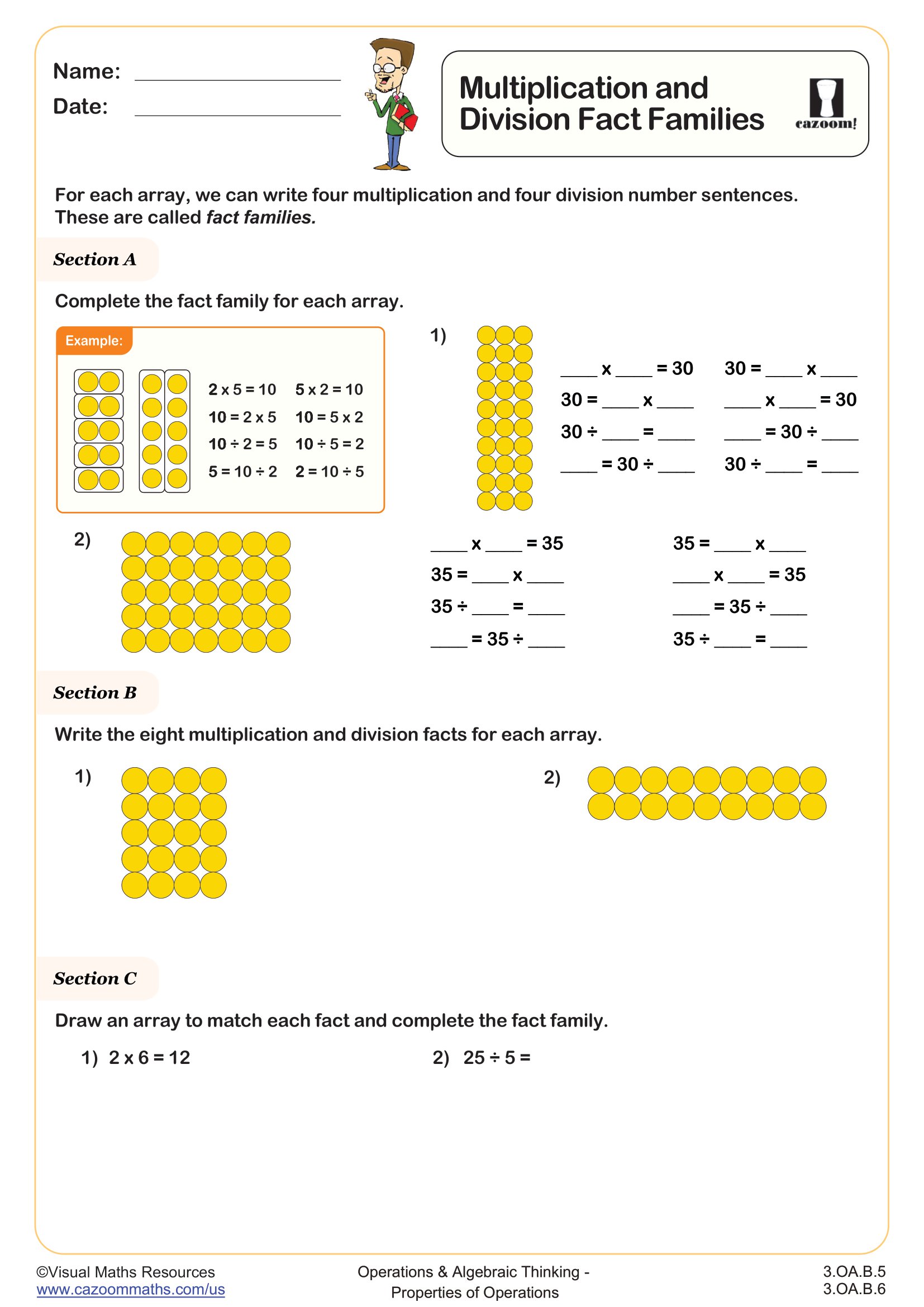
Using Arrays
Grades: 2nd Grade, 3rd Grade
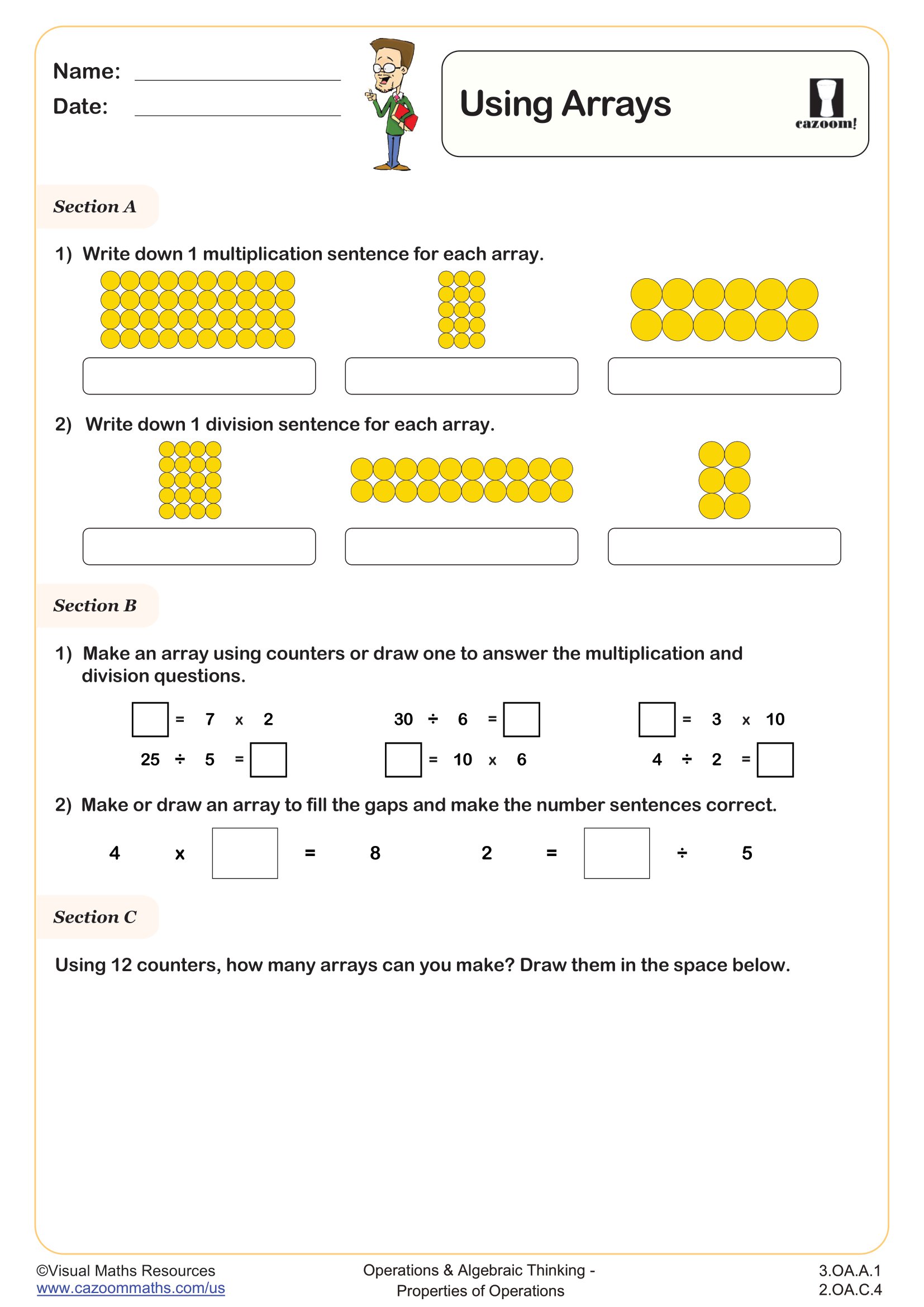
Column Method for Multiplying a 3 Digit Number by a Single Digit
Grades: 3rd Grade
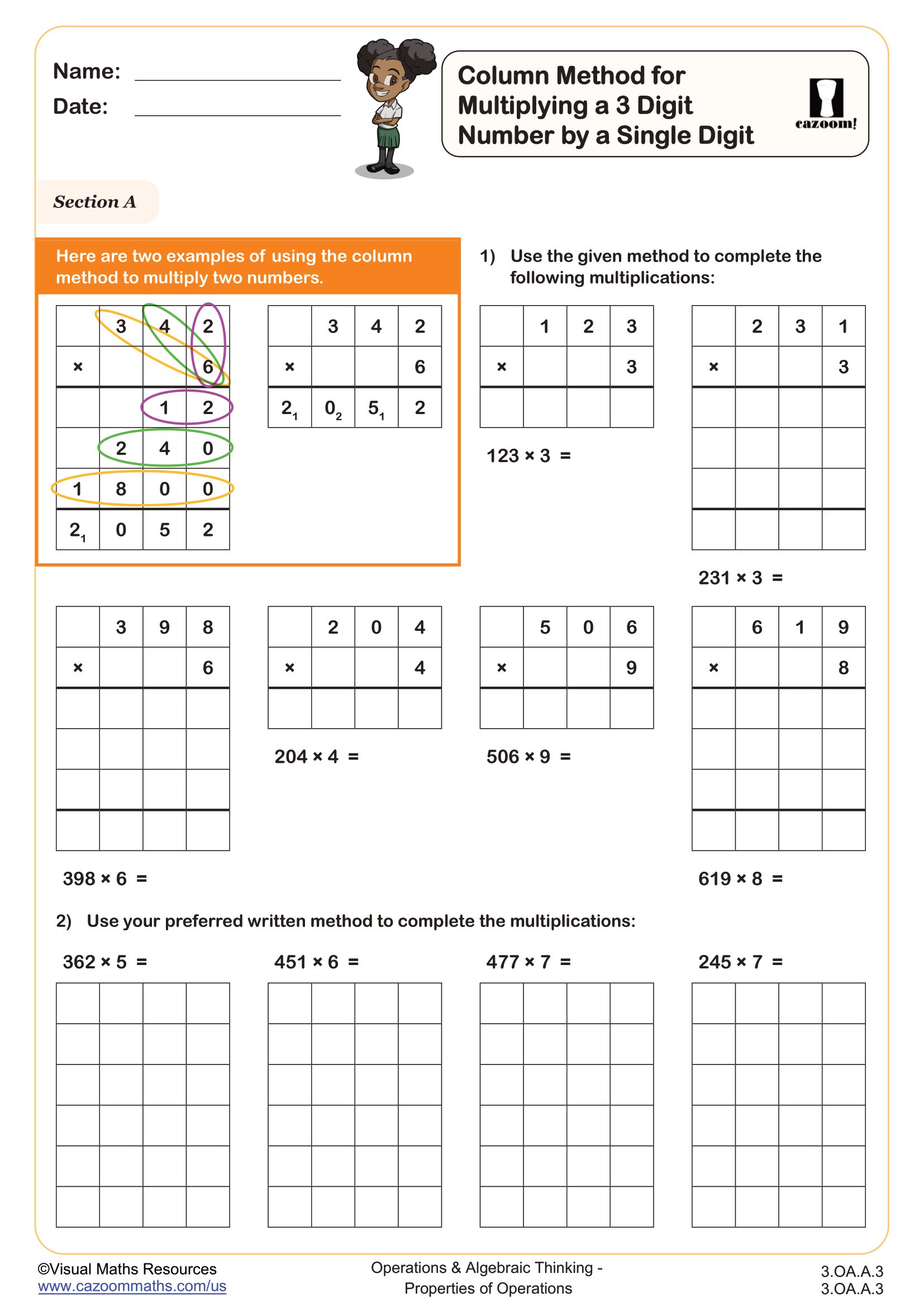
Dividing a Number by 1 and Itself
Grades: 3rd Grade
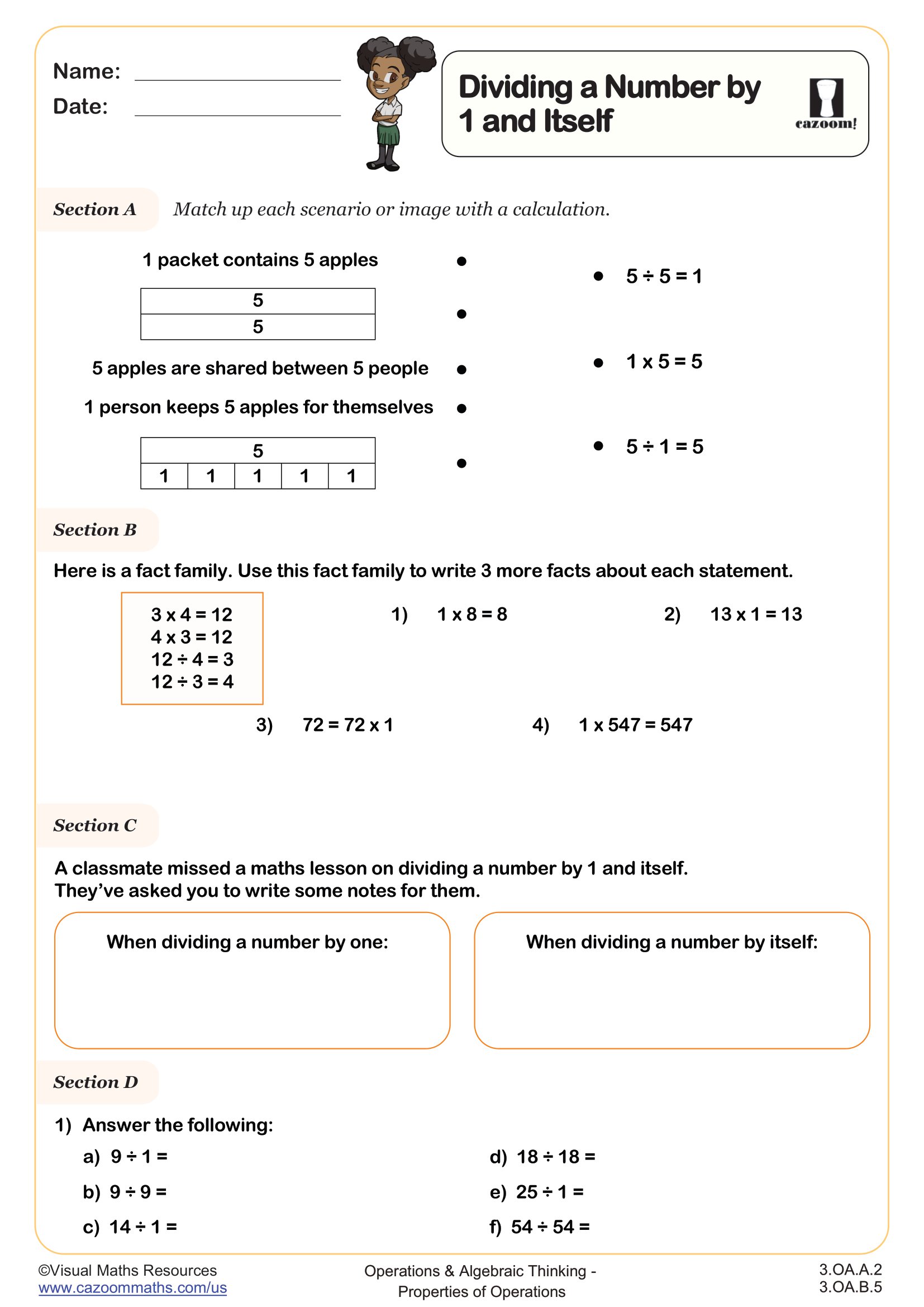
Multiplication and Division Fact Families
Grades: 3rd Grade
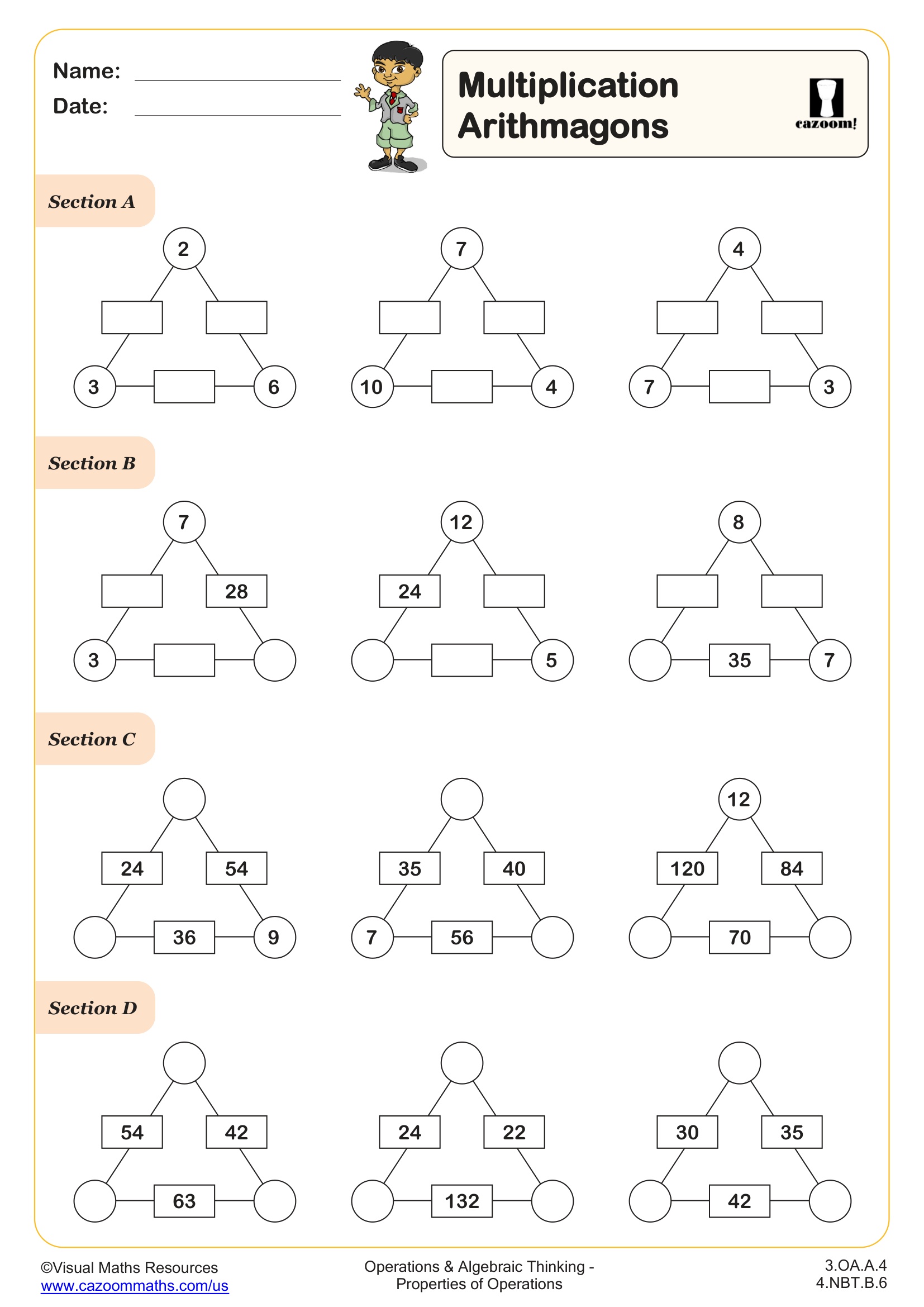
Multiplication Arithmagons
Grades: 3rd Grade, 4th Grade
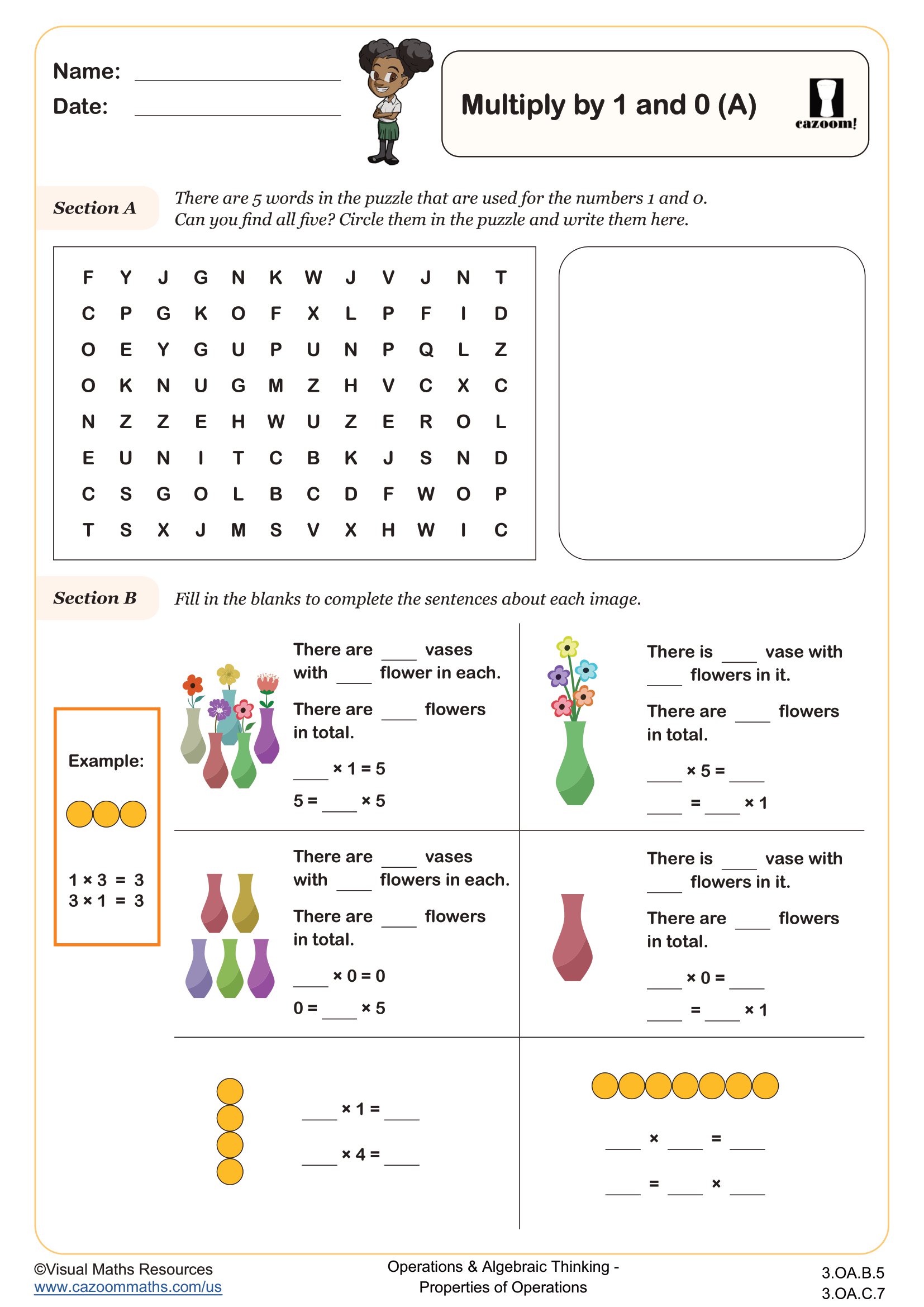
Multiplying by 1 and 0 (A)
Grades: 3rd Grade
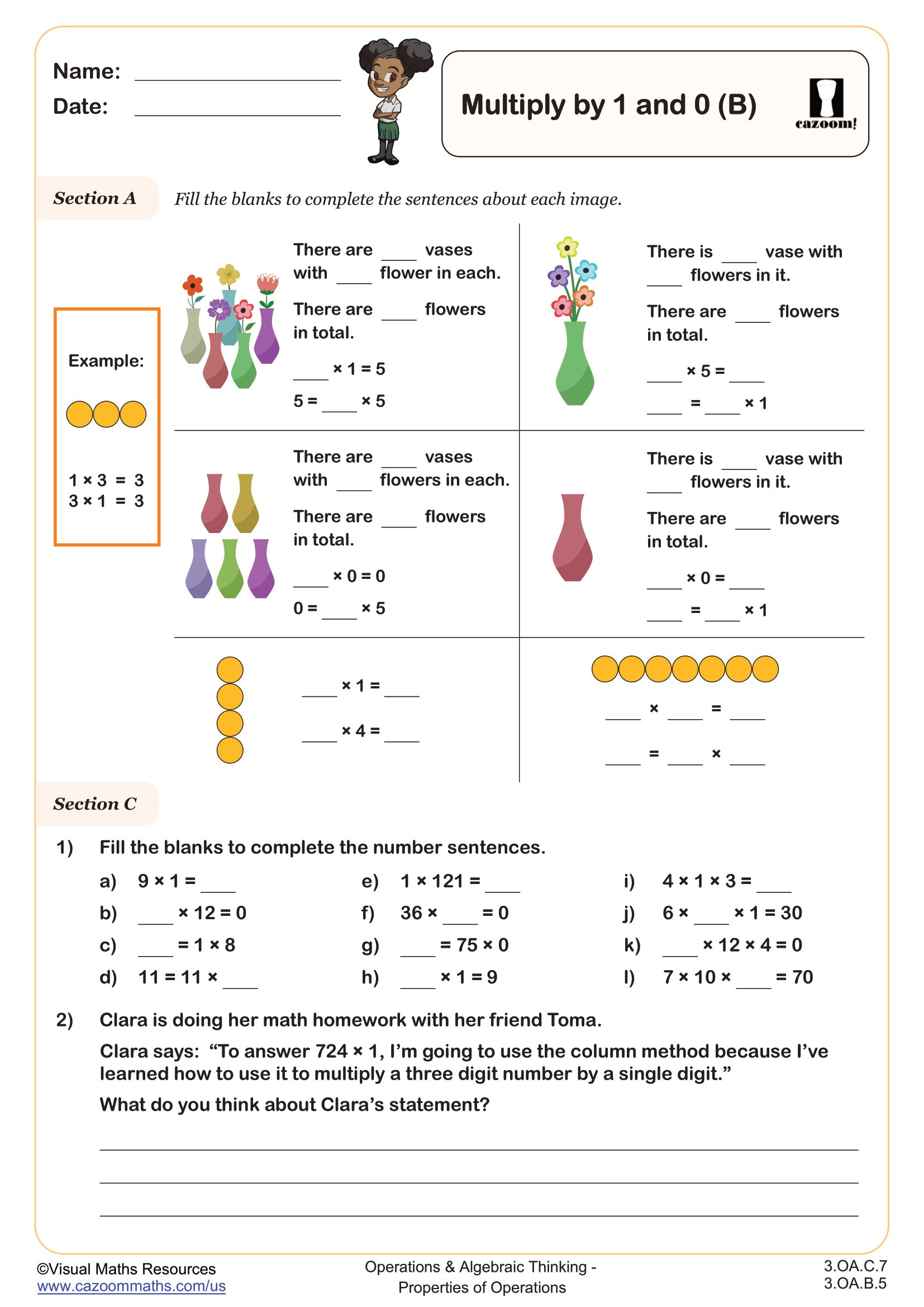
Multiplying by 1 and 0 (B)
Grades: 3rd Grade
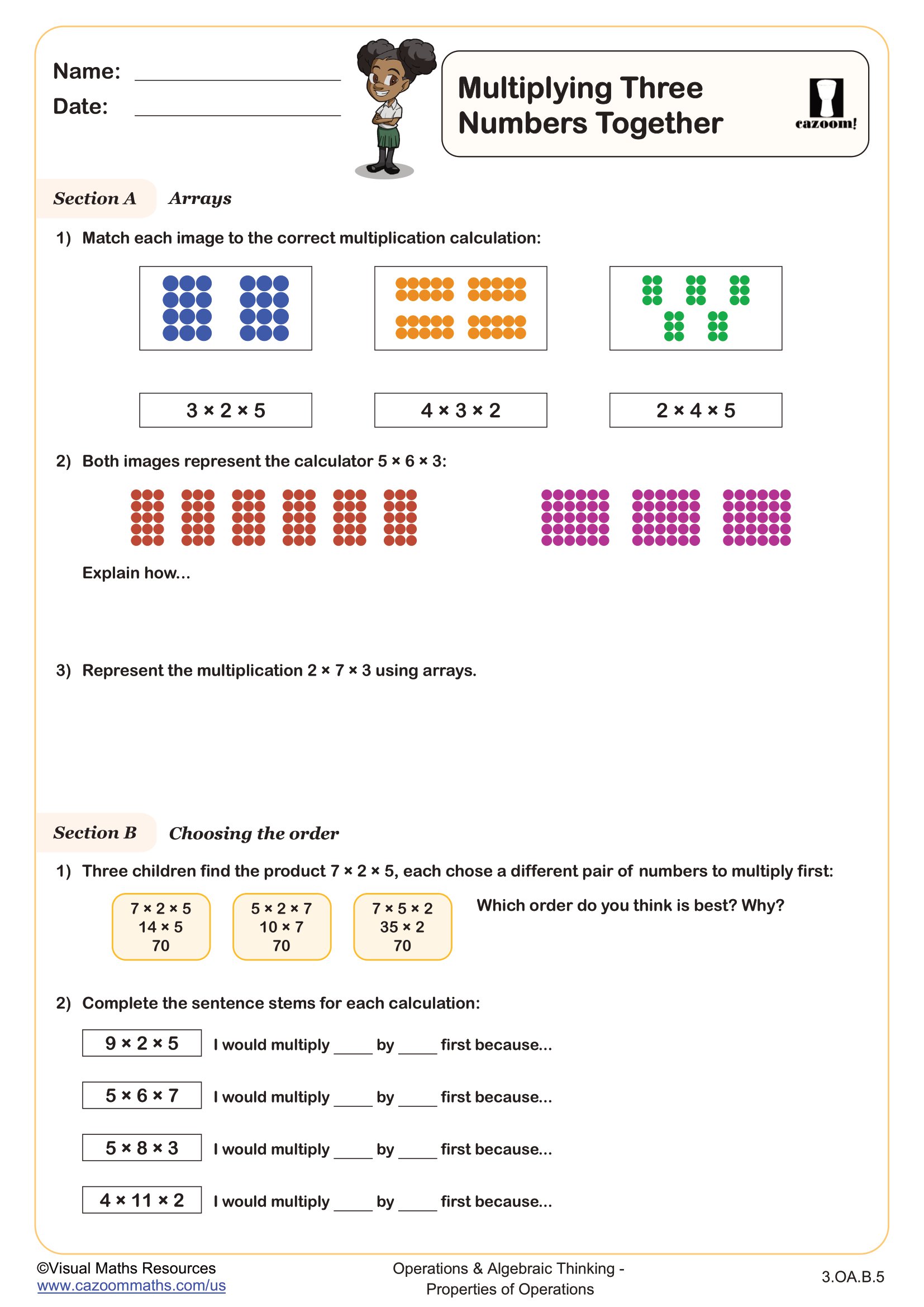
Multiplying Three Numbers Together
Grades: 3rd Grade
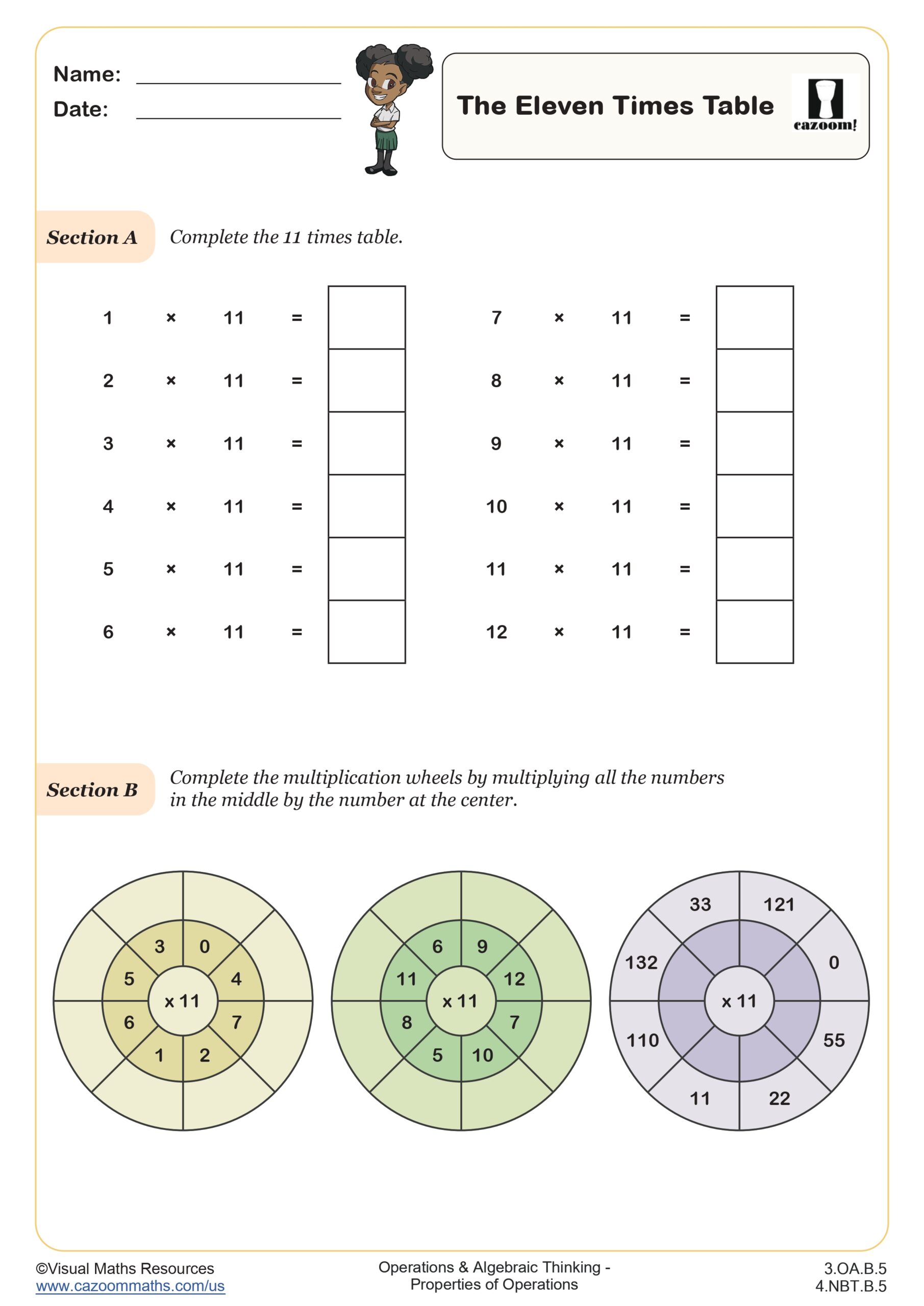
The 11 Times Table
Grades: 3rd Grade, 4th Grade
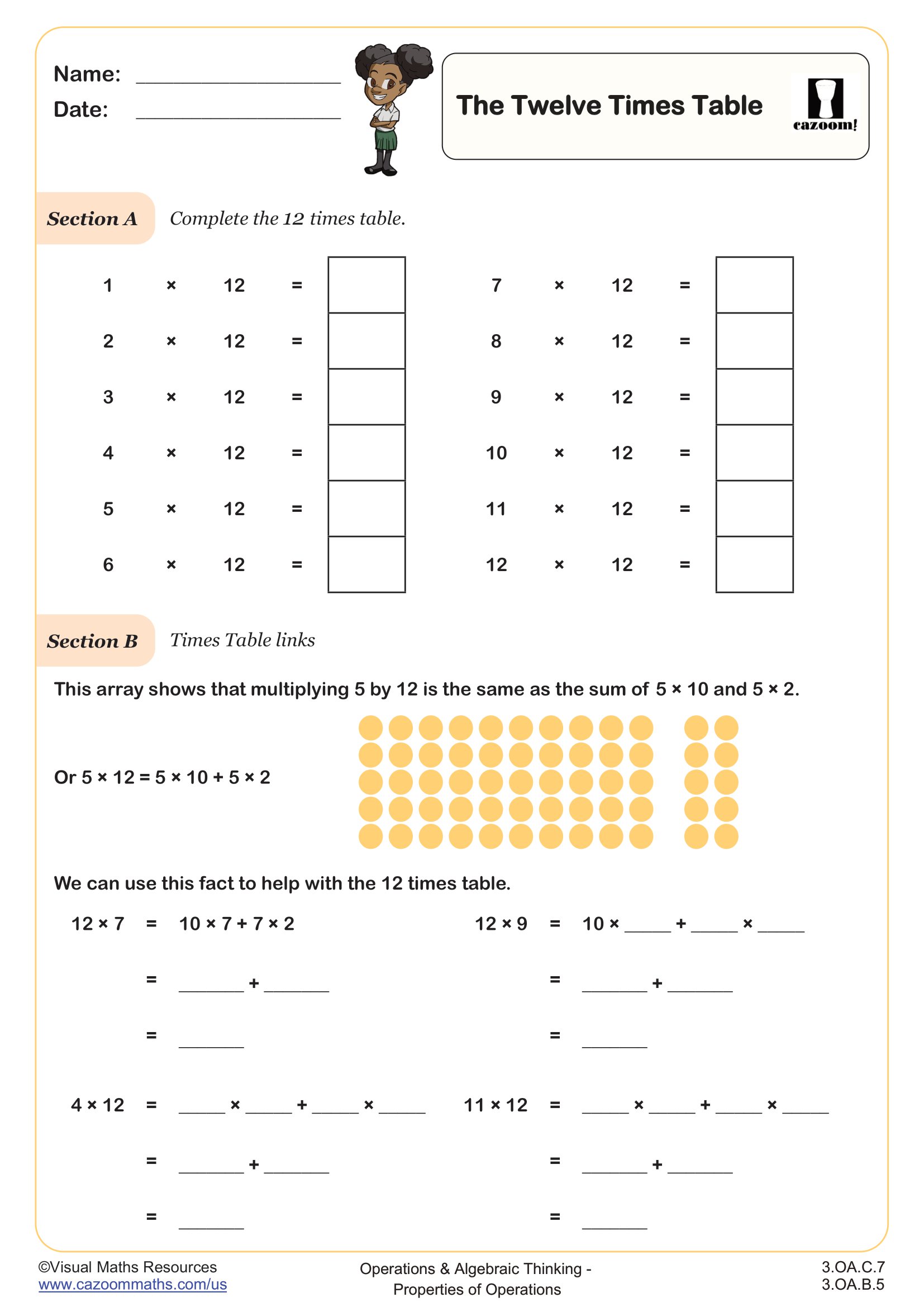
The 12 Times Table
Grades: 3rd Grade
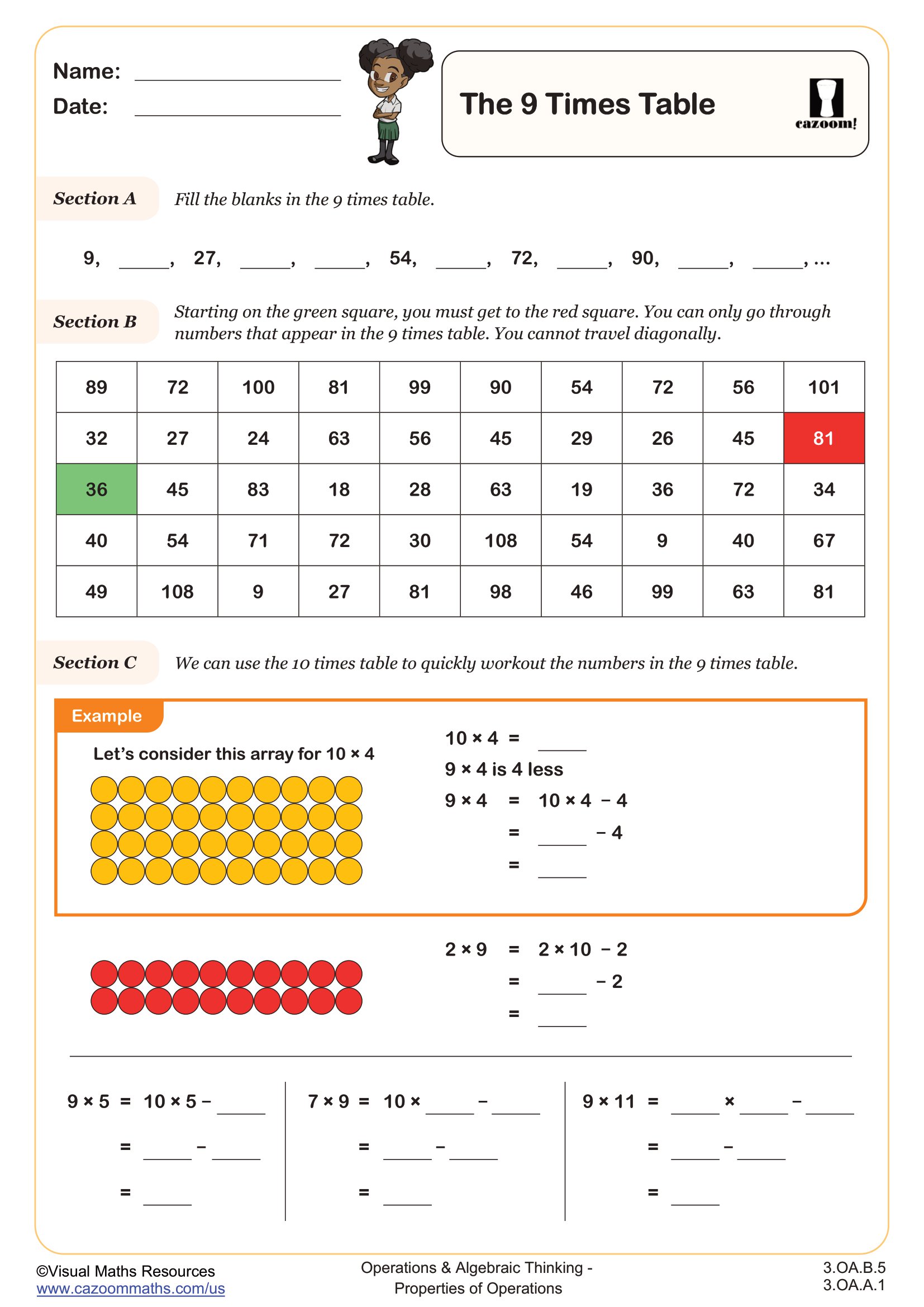
The 9 Times Table
Grades: 3rd Grade
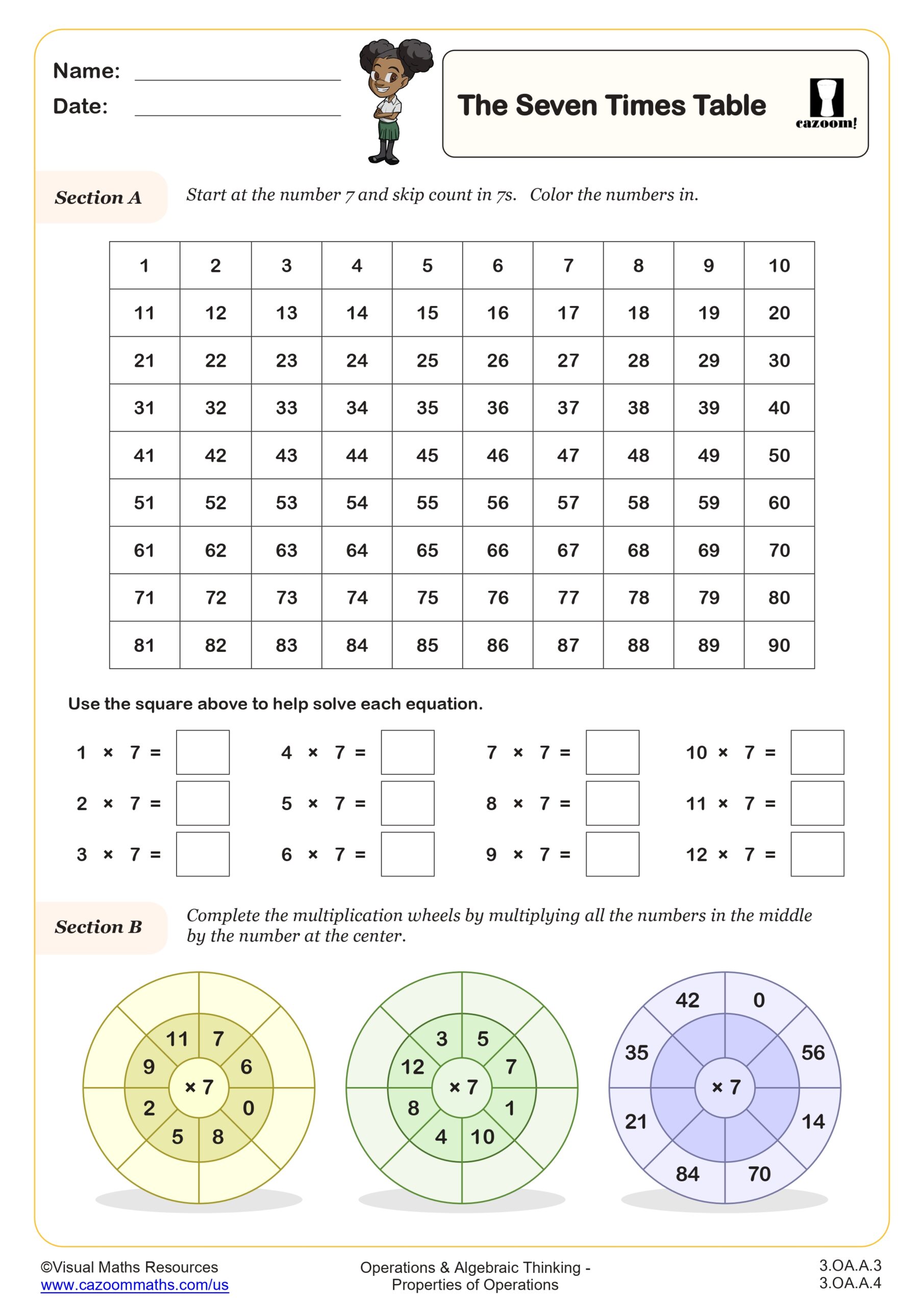
The Seven Times Table
Grades: 3rd Grade
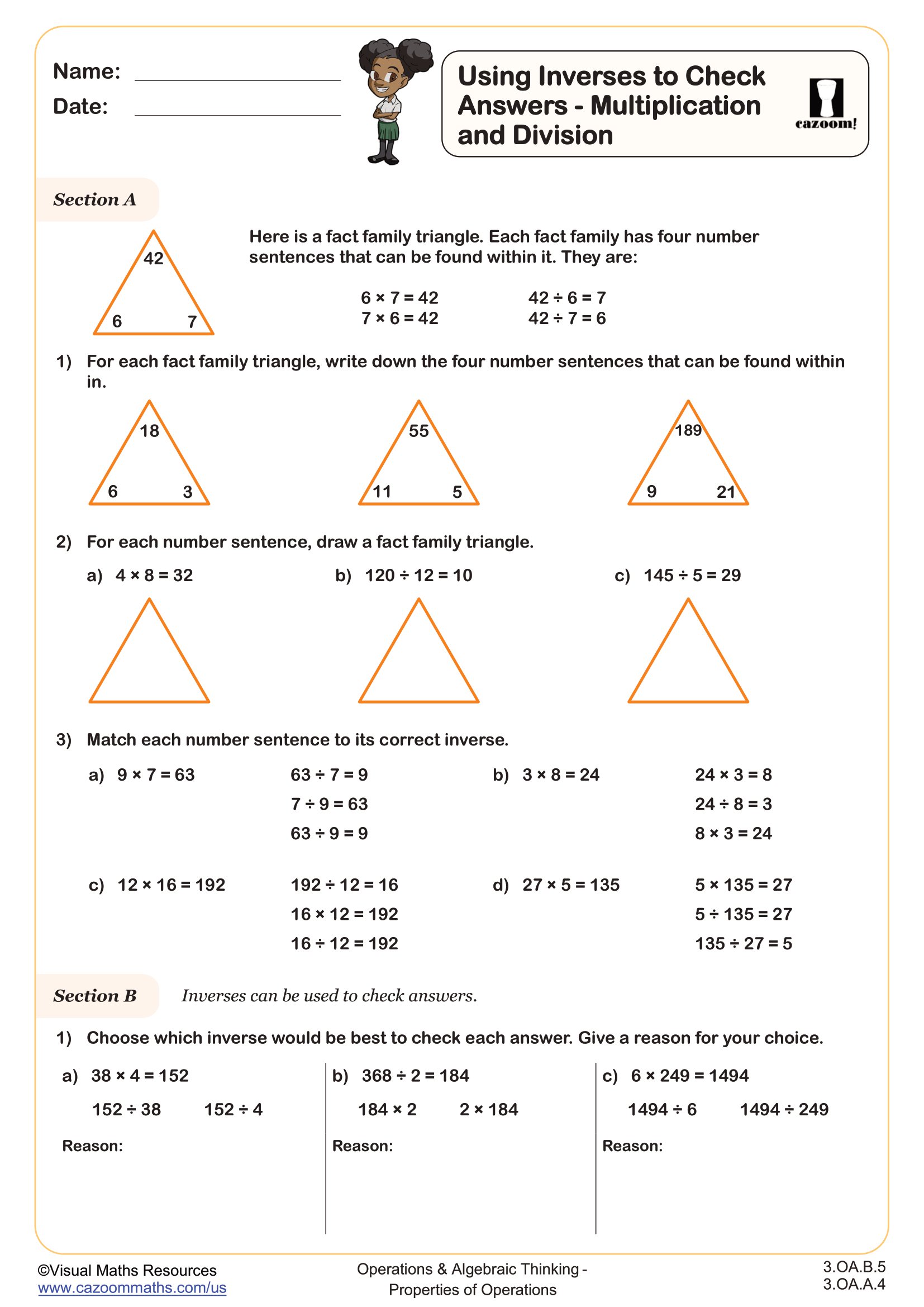
Using Inverses to Check Answers - Multiplication and Division
Grades: 3rd Grade
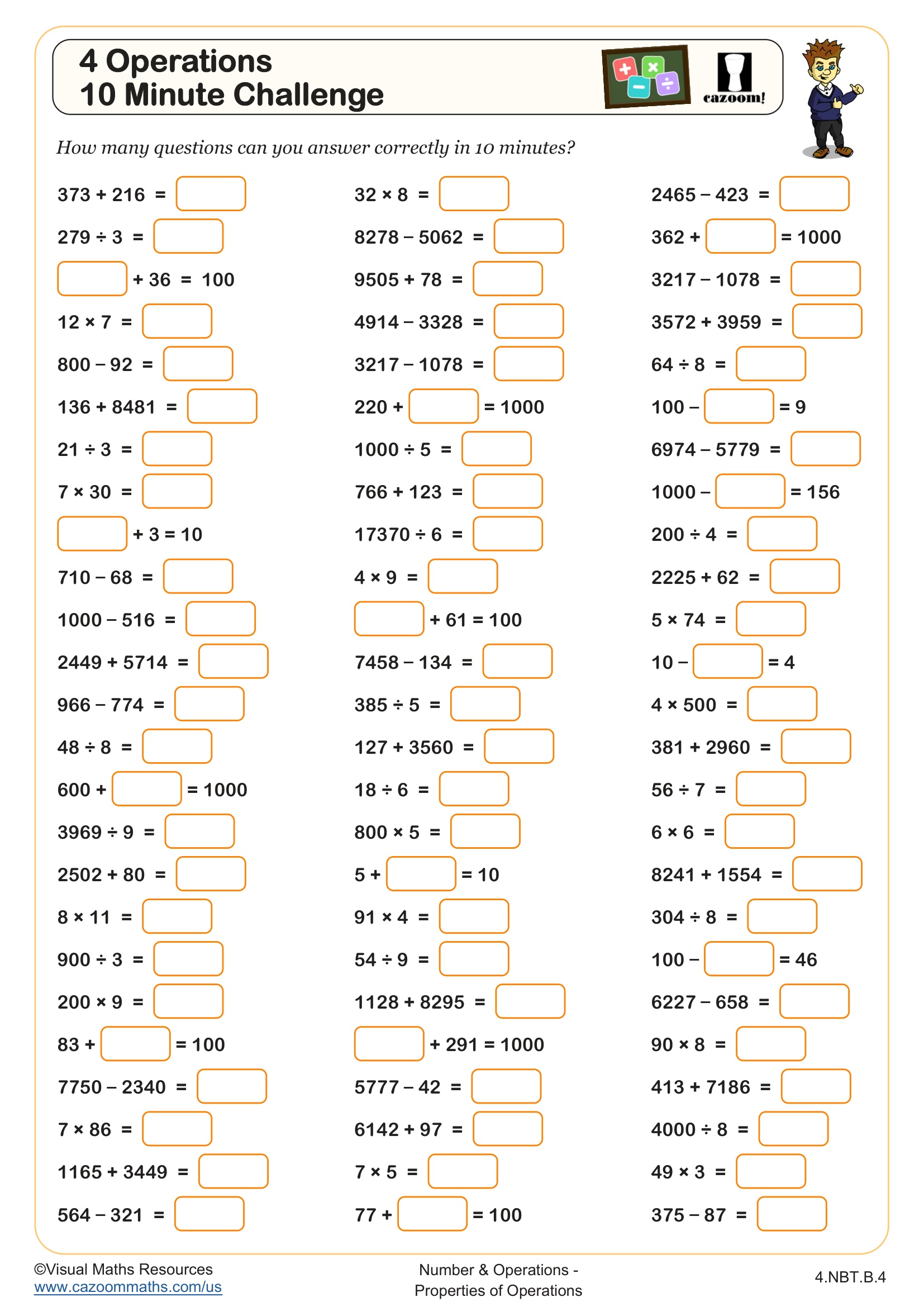
4 Operations 10 Minute Challenge
Grades: 4th Grade
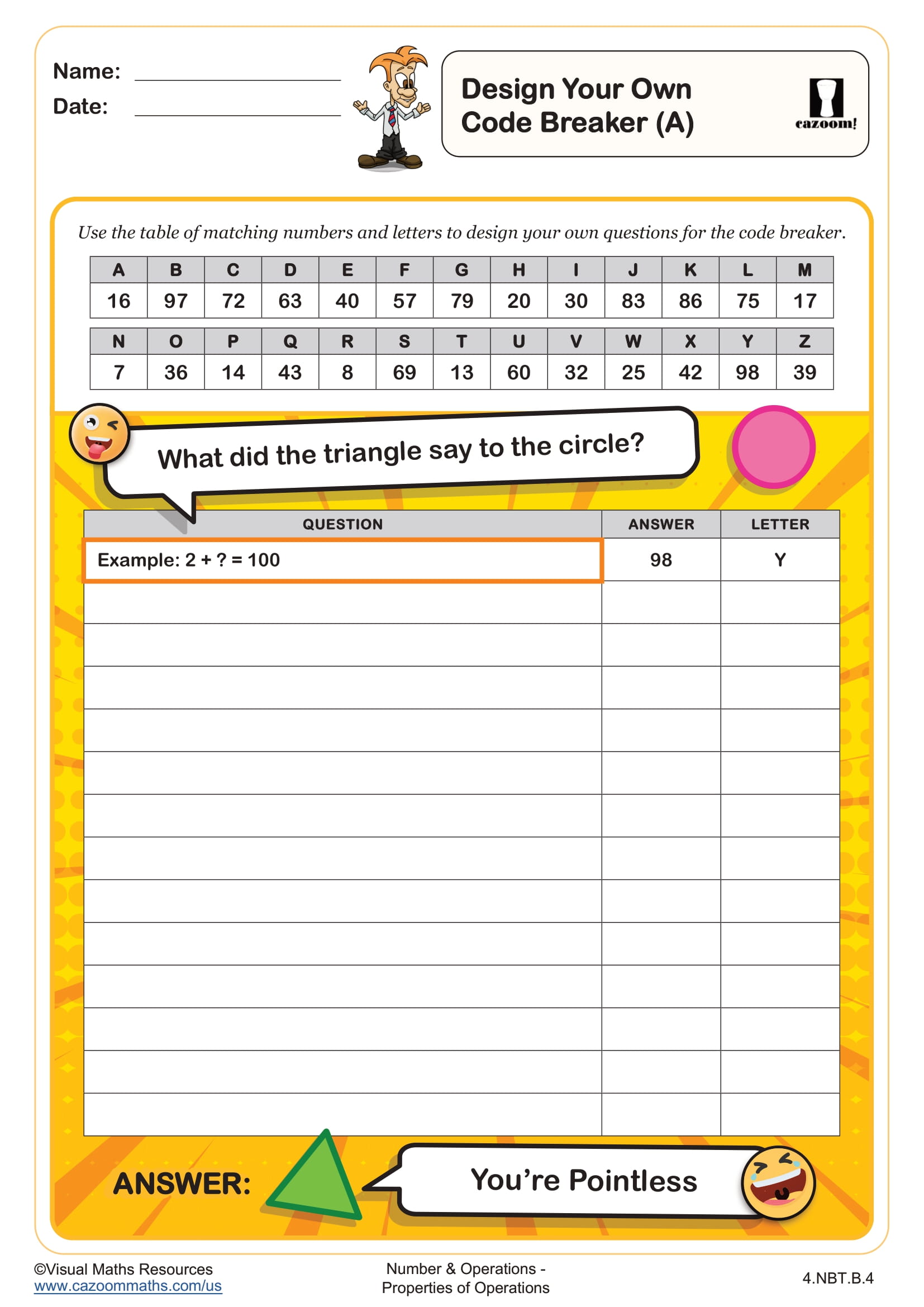
Design Your Own Code Breaker (A)
Grades: 4th Grade
All worksheets are created by the team of experienced teachers at Cazoom Math.
What makes an effective properties of operations worksheet?
An effective properties of operations worksheet should include a mix of identification exercises, application problems, and real-world scenarios that demonstrate why these properties matter. The best worksheets progress from concrete examples using simple numbers to more abstract applications with variables and complex expressions. Teachers find that worksheets work best when they include visual representations and require students to explain their reasoning in words.
Many teachers observe that students initially memorize property names without understanding their purpose. A quality properties of operations worksheet grade 4 resource addresses this by including problems where students must choose the most efficient calculation method, showing them that properties are tools for making math easier, not just rules to memorize.
How do properties of operations concepts progress across grade levels?
Properties of operations instruction typically begins in third grade with informal exploration of commutative and associative properties during mental math activities. Fourth grade formalizes these concepts, with students learning property names and applying them systematically to whole number operations. By fifth grade, students extend these properties to decimal and fraction calculations.
Middle school teachers report that students who solidly understand properties of operations in elementary grades transition more smoothly to algebraic thinking. A properties of operations grade 4 worksheet often serves as a diagnostic tool for identifying students who need additional support before advancing to more complex applications involving variables and negative numbers in later grades.
Why do students often confuse the distributive property with other operations properties?
The distributive property stands apart from commutative and associative properties because it involves two different operations working together, which creates confusion for many students. Teachers frequently see students attempt to distribute incorrectly, such as writing 3(x + 5) = 3x + 5 instead of 3x + 15, or trying to apply distributive reasoning to situations where it doesn't apply.
This confusion stems from the distributive property being the only property that changes the appearance of expressions significantly. While commutative and associative properties simply rearrange terms, the distributive property requires students to multiply each term inside parentheses separately. Math properties worksheets that provide plenty of practice with visual models help students see why 3(4 + 2) equals both 3 × 6 and 3 × 4 + 3 × 2.
How can teachers use these worksheets to address common misconceptions?
Teachers report success using properties of operations worksheets as both diagnostic tools and intervention resources. Having students work through problems while explaining their thinking aloud reveals misconceptions that multiple-choice assessments might miss. The answer keys allow teachers to identify patterns in student errors and address them systematically through targeted instruction.
Many educators use these worksheets for differentiated practice, giving struggling students problems with smaller numbers and visual supports while challenging advanced learners with algebraic expressions. Teachers also find value in having students create their own property examples, which demonstrates deeper understanding than simply identifying given examples. This approach helps students see properties as mathematical tools rather than arbitrary rules to memorize.
What Should Students Know Before Starting?
Before working on the properties of operations, students should:
• Know basic addition and multiplication facts
• Understand number order and simple equations
• Be familiar with parentheses in math
• Recognize equal values and number relationships
With these foundational skills, students are ready to understand how and why math rules work. Our worksheets provide the step-by-step practice they need to master these important concepts.
FAQs: Properties of Operations Worksheets
Q: What grade level are these worksheets best for?
A: These worksheets are most suitable for 2nd to 5th grade, but they can also be used for 6th grade students who need extra review or practice with foundational algebra skills.
Q: Do these worksheets cover all three main properties?
A: Yes! The worksheets include practice with the commutative, associative, and distributive properties, with examples and guided questions for each.
Q: Can students use these worksheets independently?
A: Absolutely. Each worksheet includes clear instructions and examples, making them perfect for independent work, homework, or small group practice.
Q: Are answer keys included with each worksheet?
A: Yes, every worksheet includes a separate answer key for quick and easy checking by students, teachers, or parents.
Q: How do these worksheets help with real math skills?
A: Understanding math properties helps students solve problems more efficiently, check their work, and build skills for mental math, algebra, and multi-step problem solving.
Q: Can these worksheets be used for review before a test?
A: Yes! They are excellent for test prep, classroom review, or reinforcing concepts learned during lessons.
Q: Do students need to know multiplication first?
A: It helps to know basic addition and multiplication facts, but some worksheets include visual aids and step-by-step examples to support learners who are still developing these skills.