Proportion Worksheets with Answers
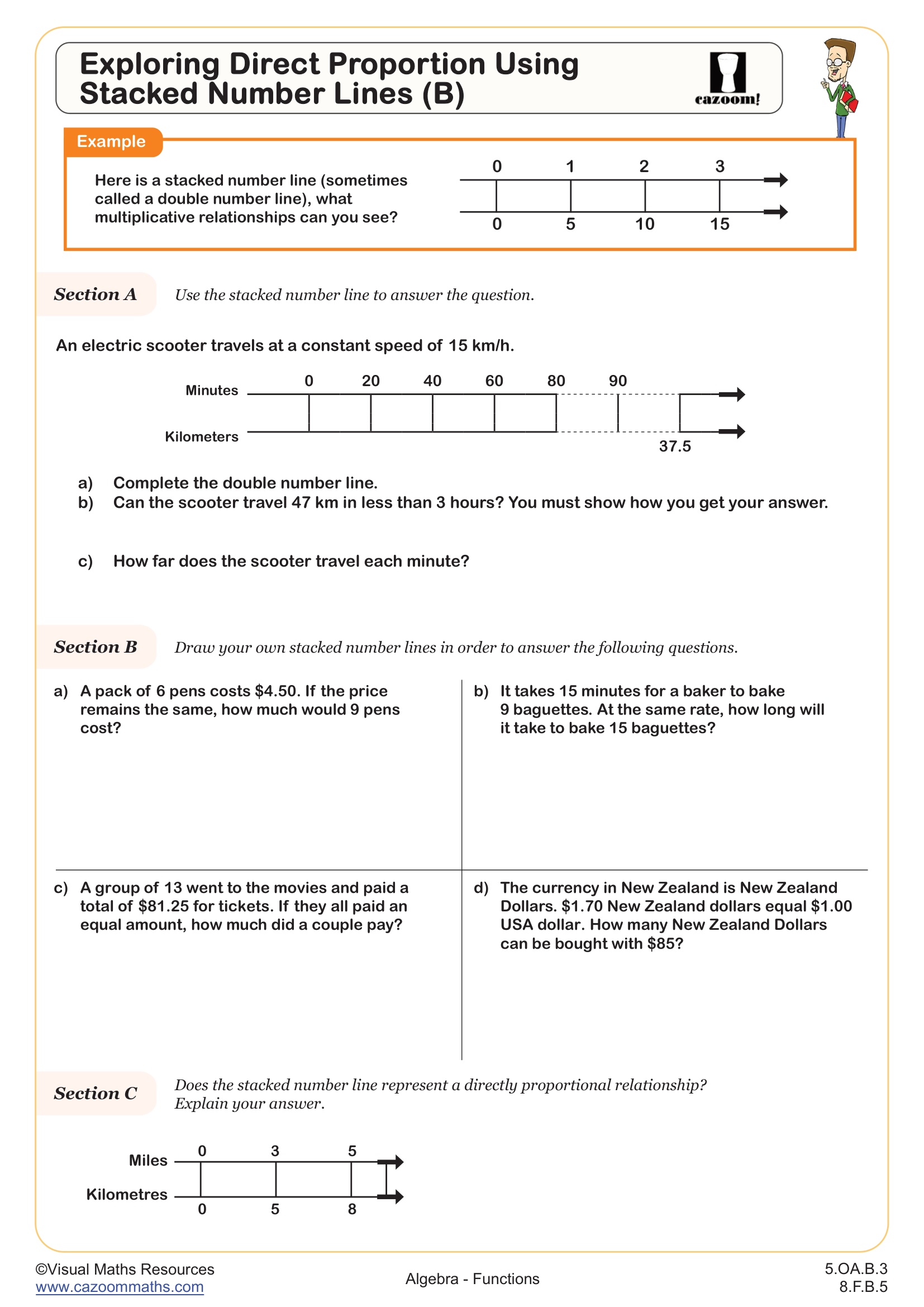
Exploring Direct Proportion Using Stacked Number Lines (B)
Grades: 5th Grade, 8th Grade
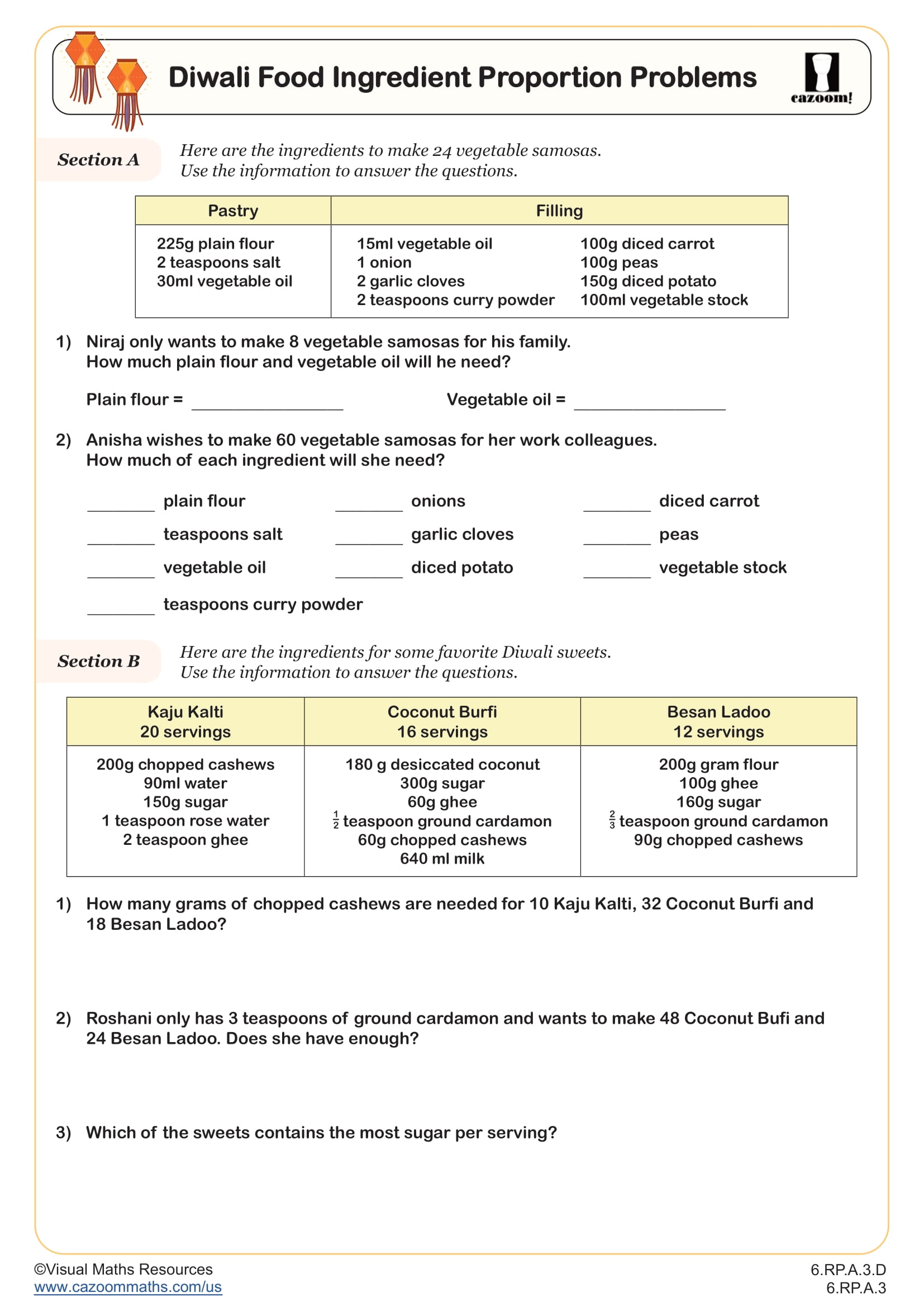
Diwali Food Ingredient Proportion Problems
Grades: 6th Grade
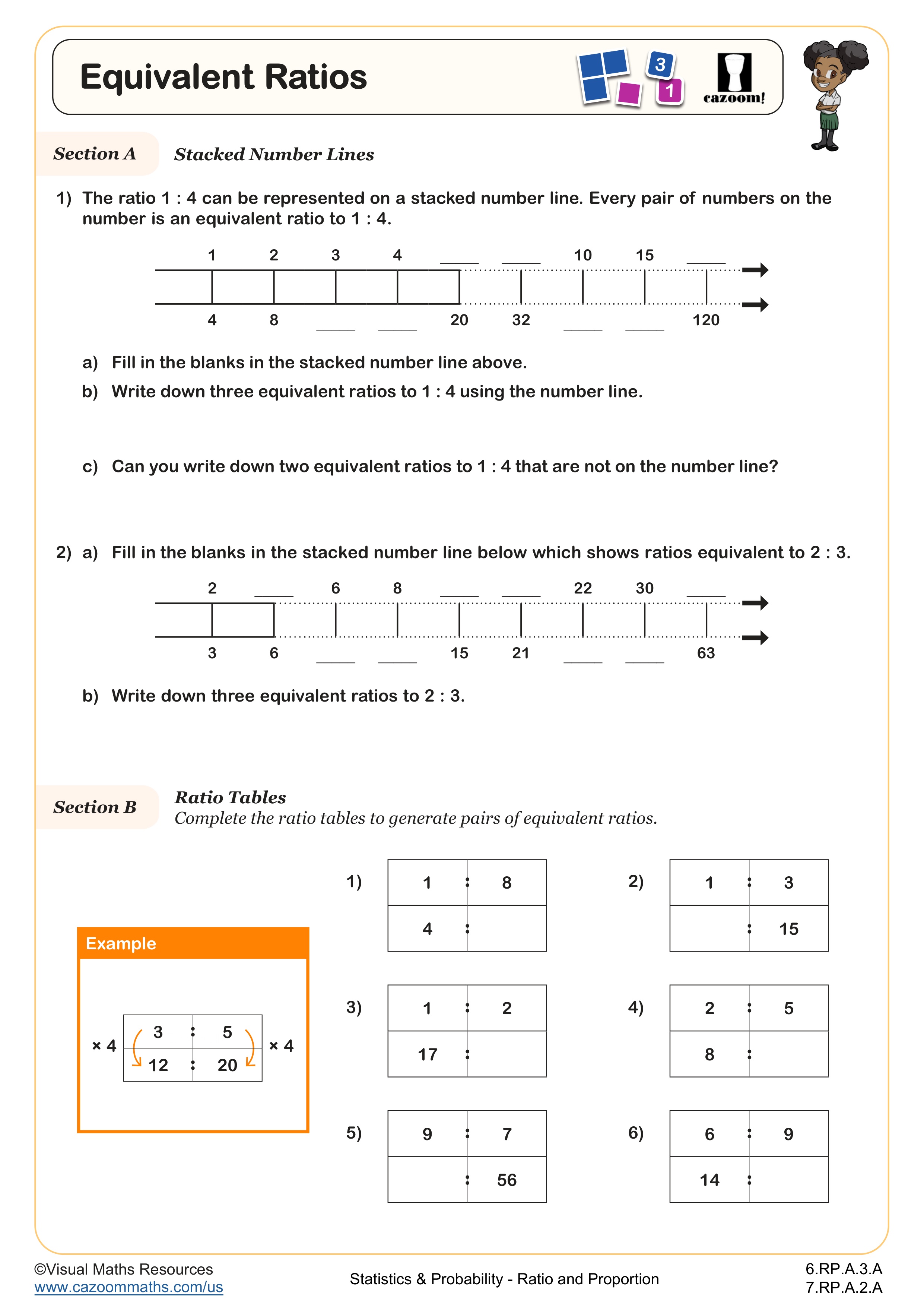
Equivalent Ratios
Grades: 6th Grade, 7th Grade
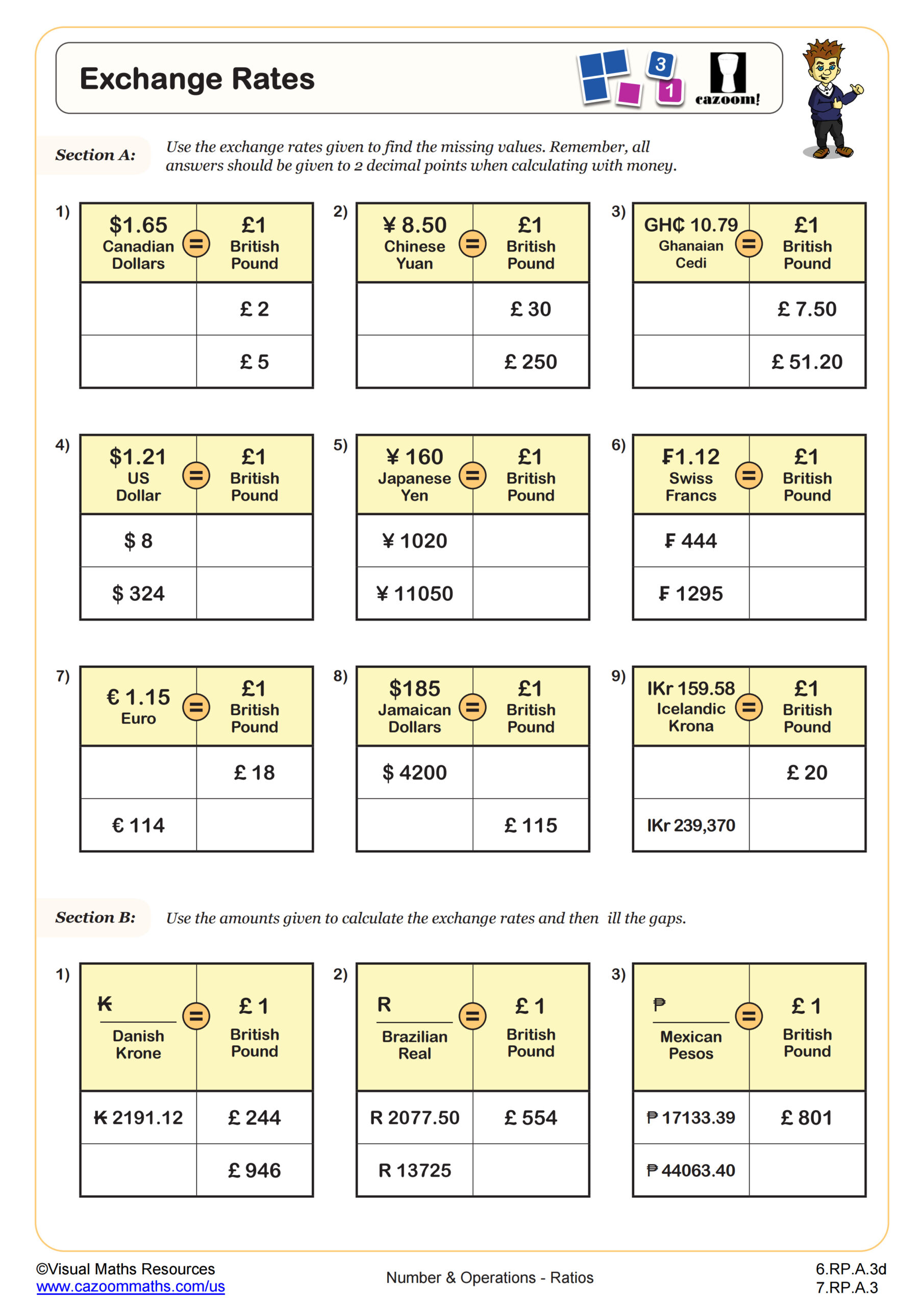
Exchange Rates
Grades: 6th Grade, 7th Grade
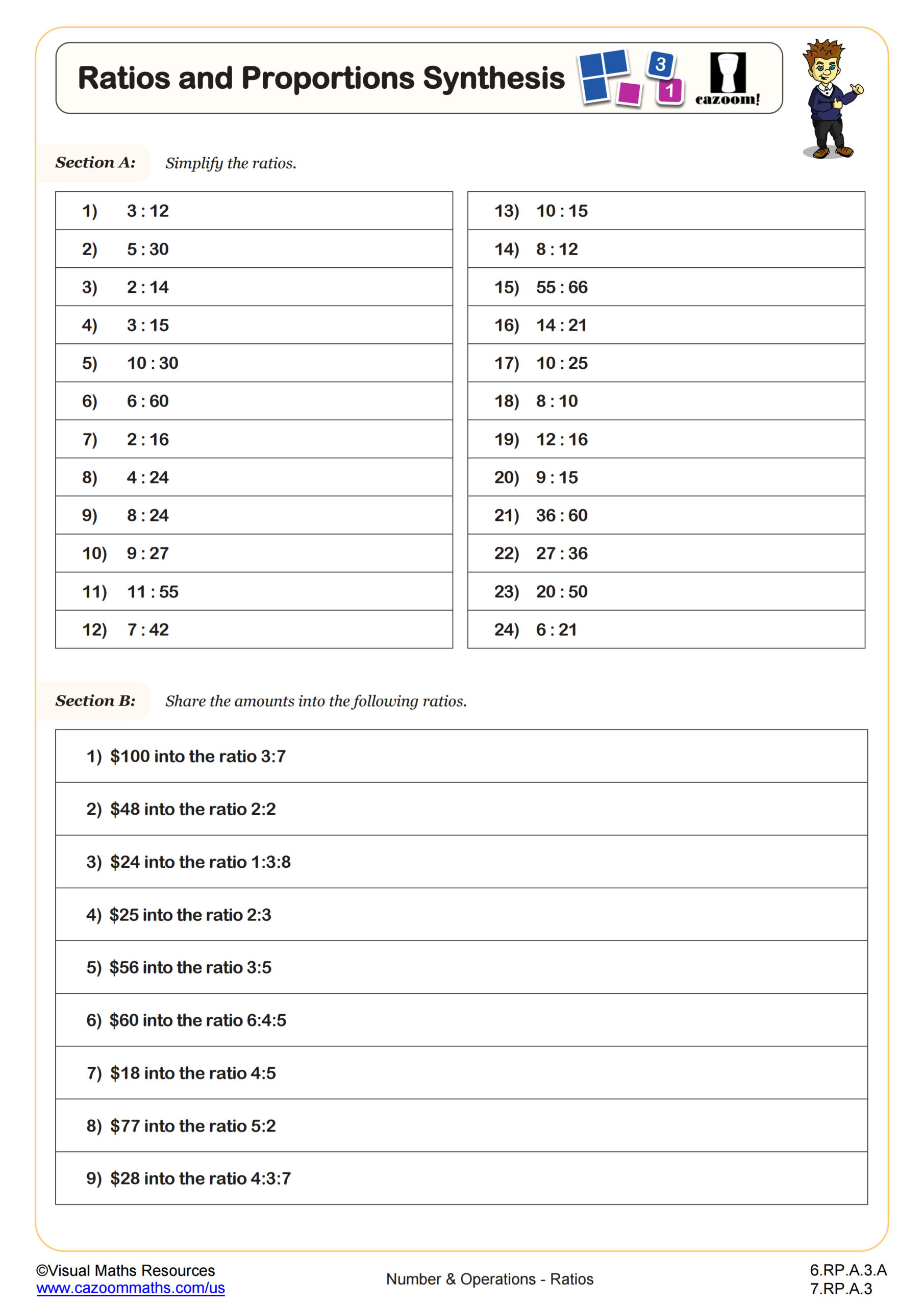
Ratios and Proportions Synthesis
Grades: 6th Grade, 7th Grade
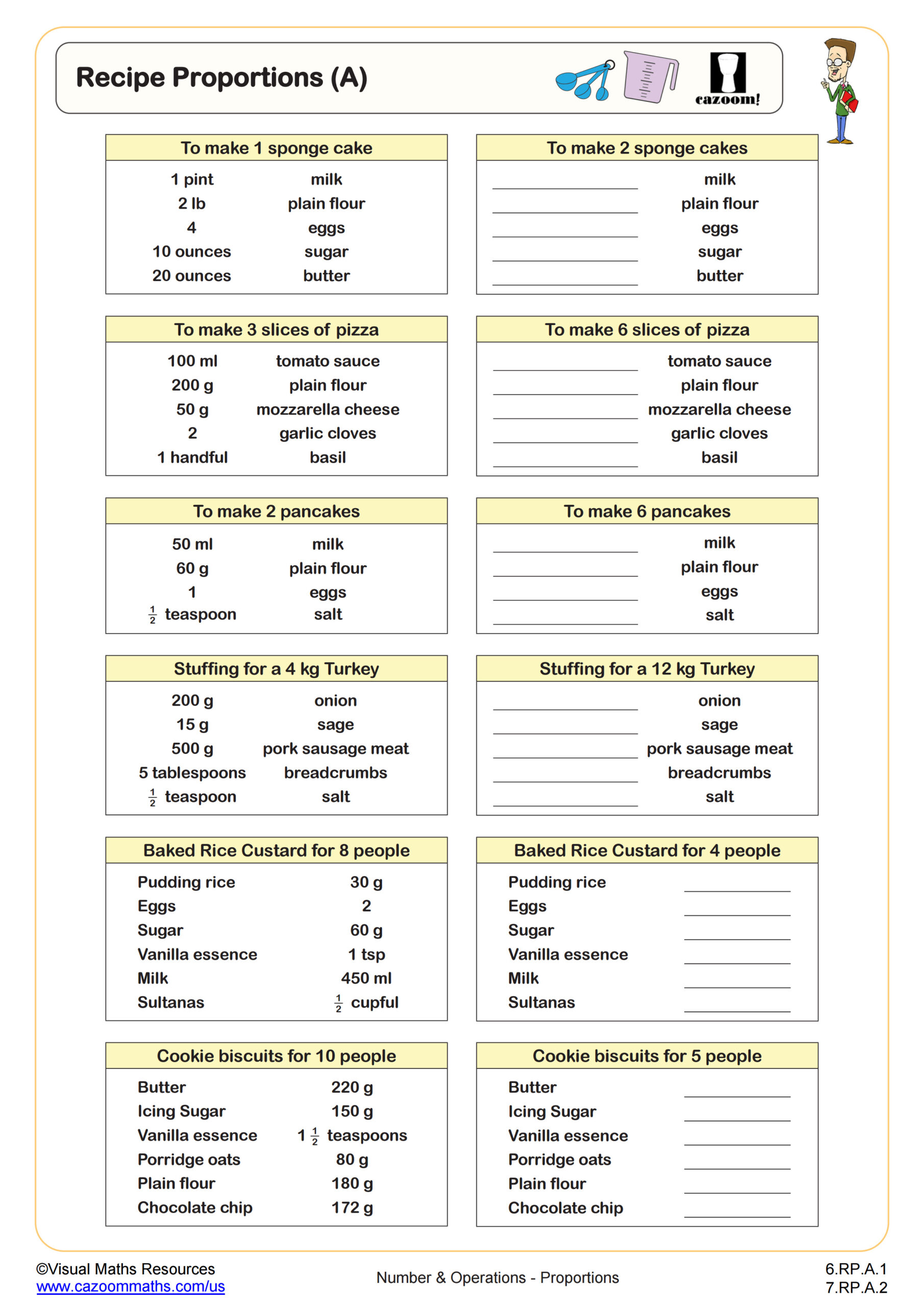
Recipe Proportions (A)
Grades: 6th Grade, 7th Grade
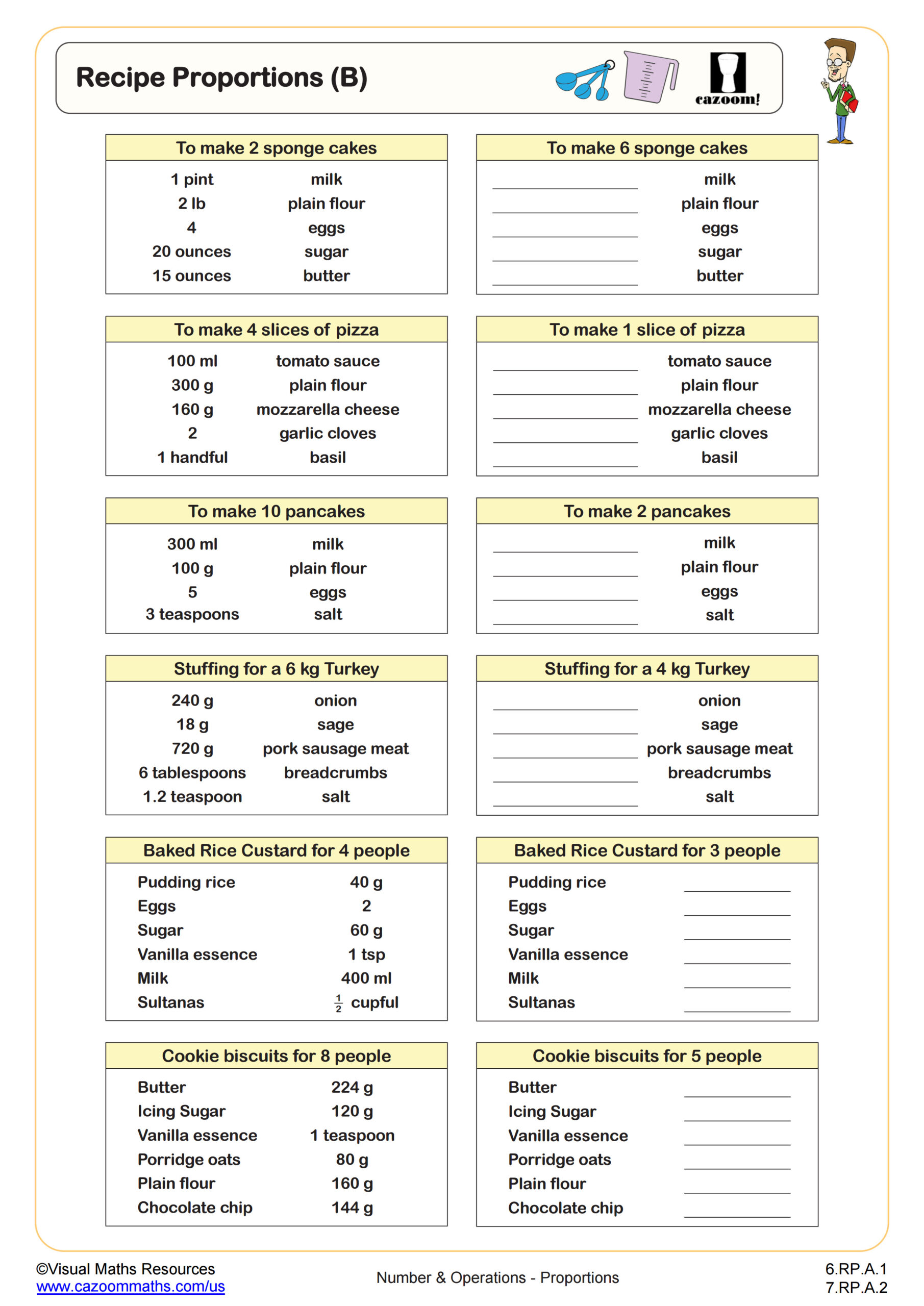
Recipe Proportions (B)
Grades: 6th Grade, 7th Grade
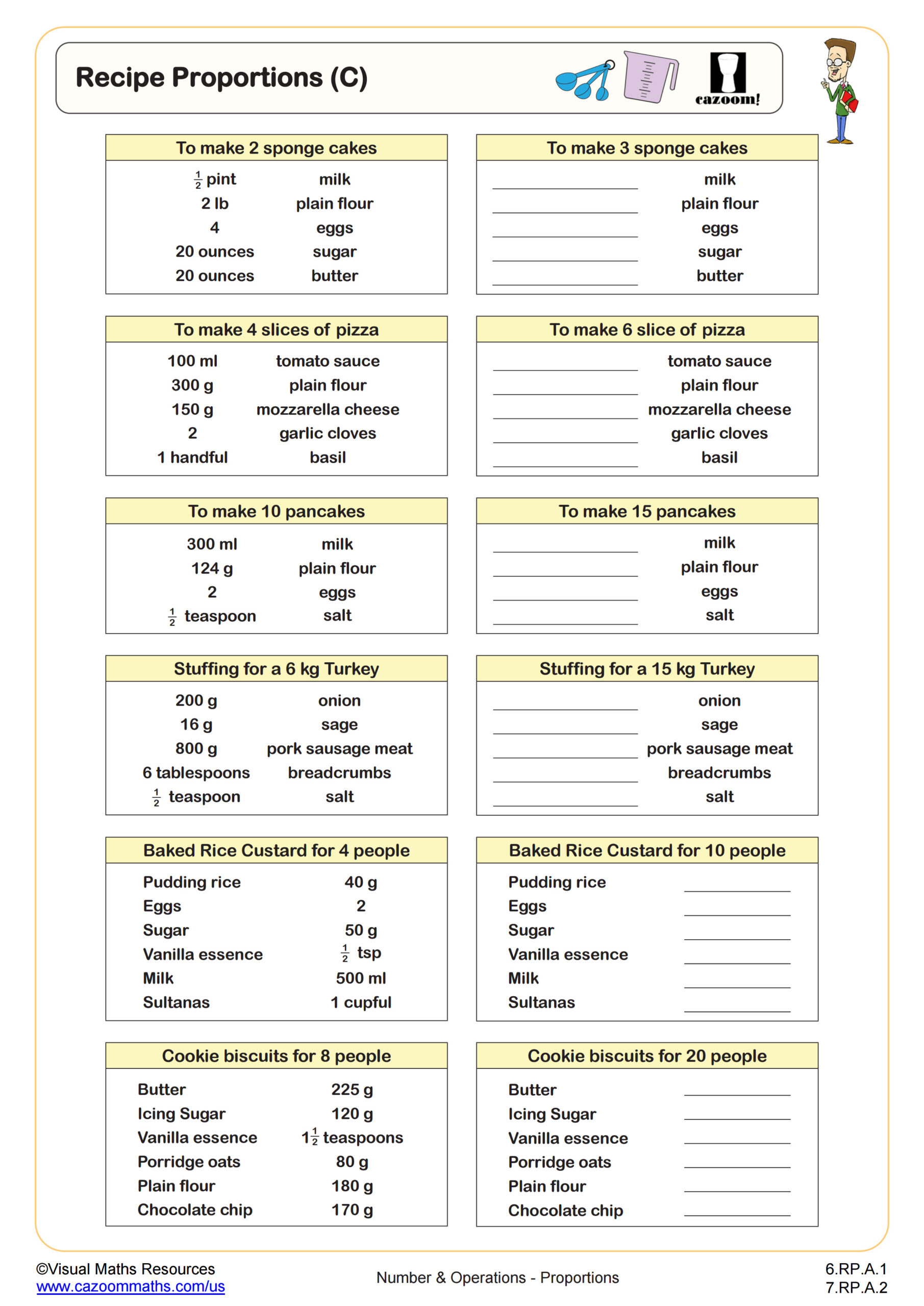
Recipe Proportions (C)
Grades: 6th Grade, 7th Grade
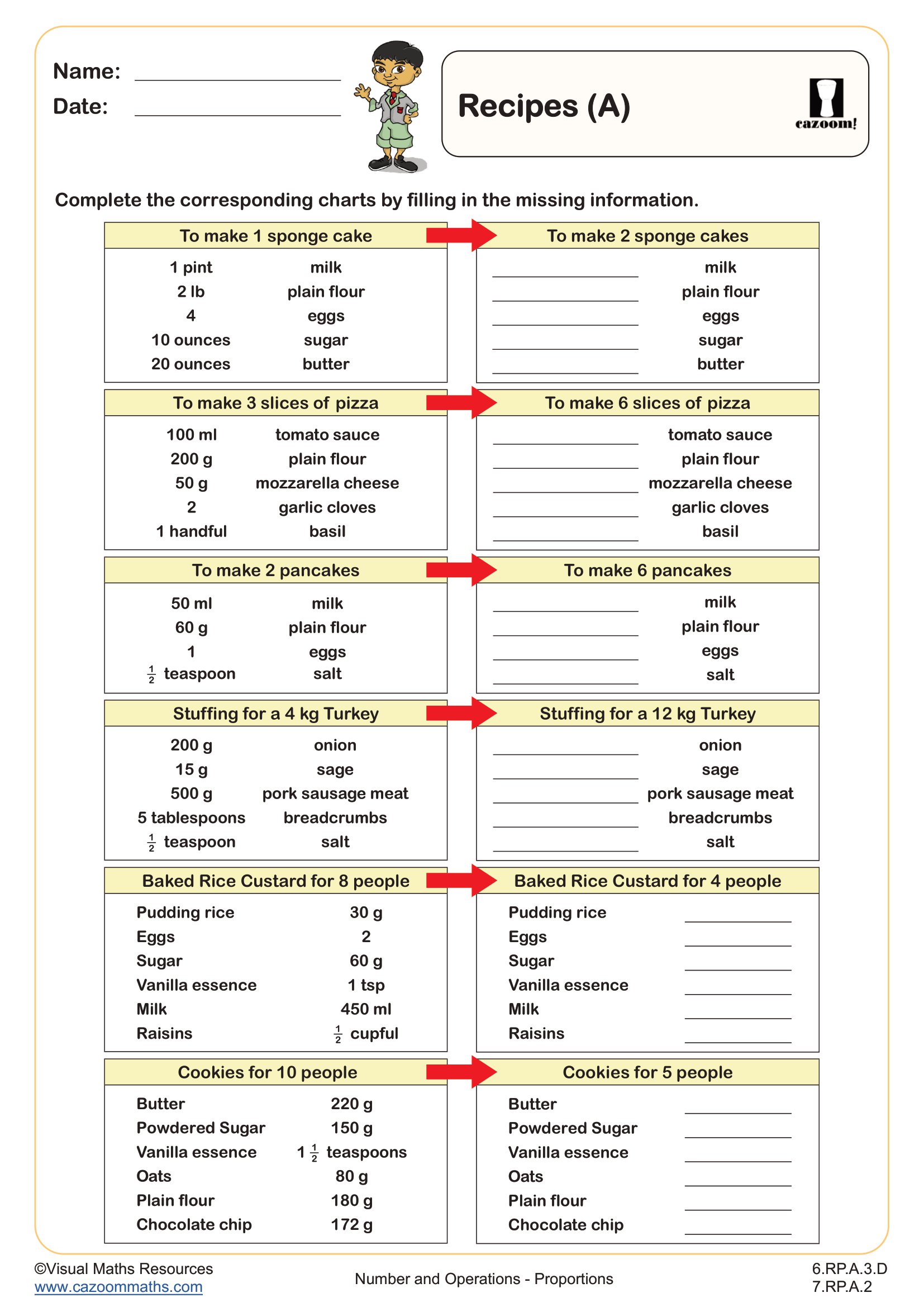
Recipes (A)
Grades: 6th Grade, 7th Grade
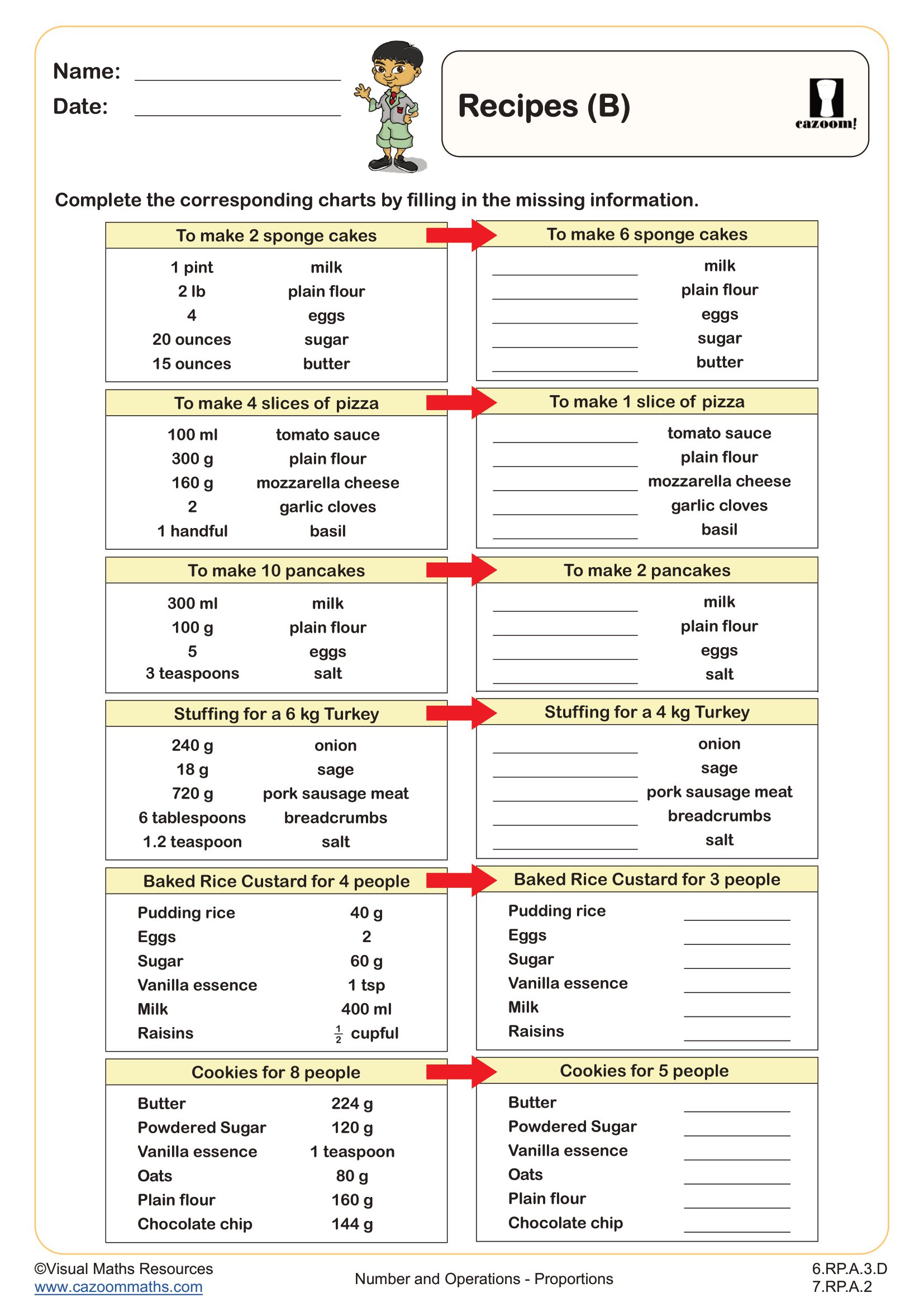
Recipes (B)
Grades: 6th Grade, 7th Grade
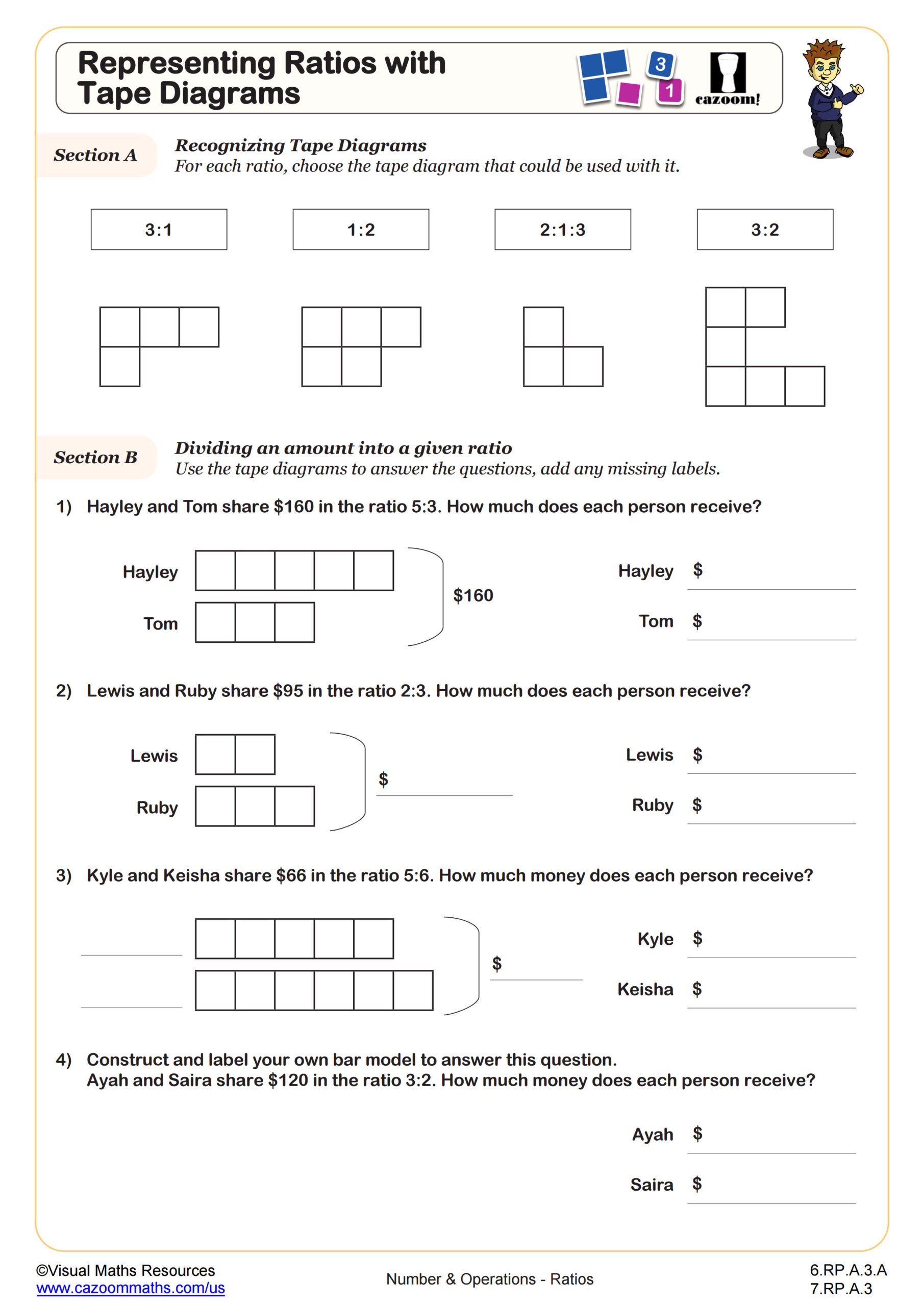
Representing Ratios with Tape Diagrams
Grades: 6th Grade, 7th Grade
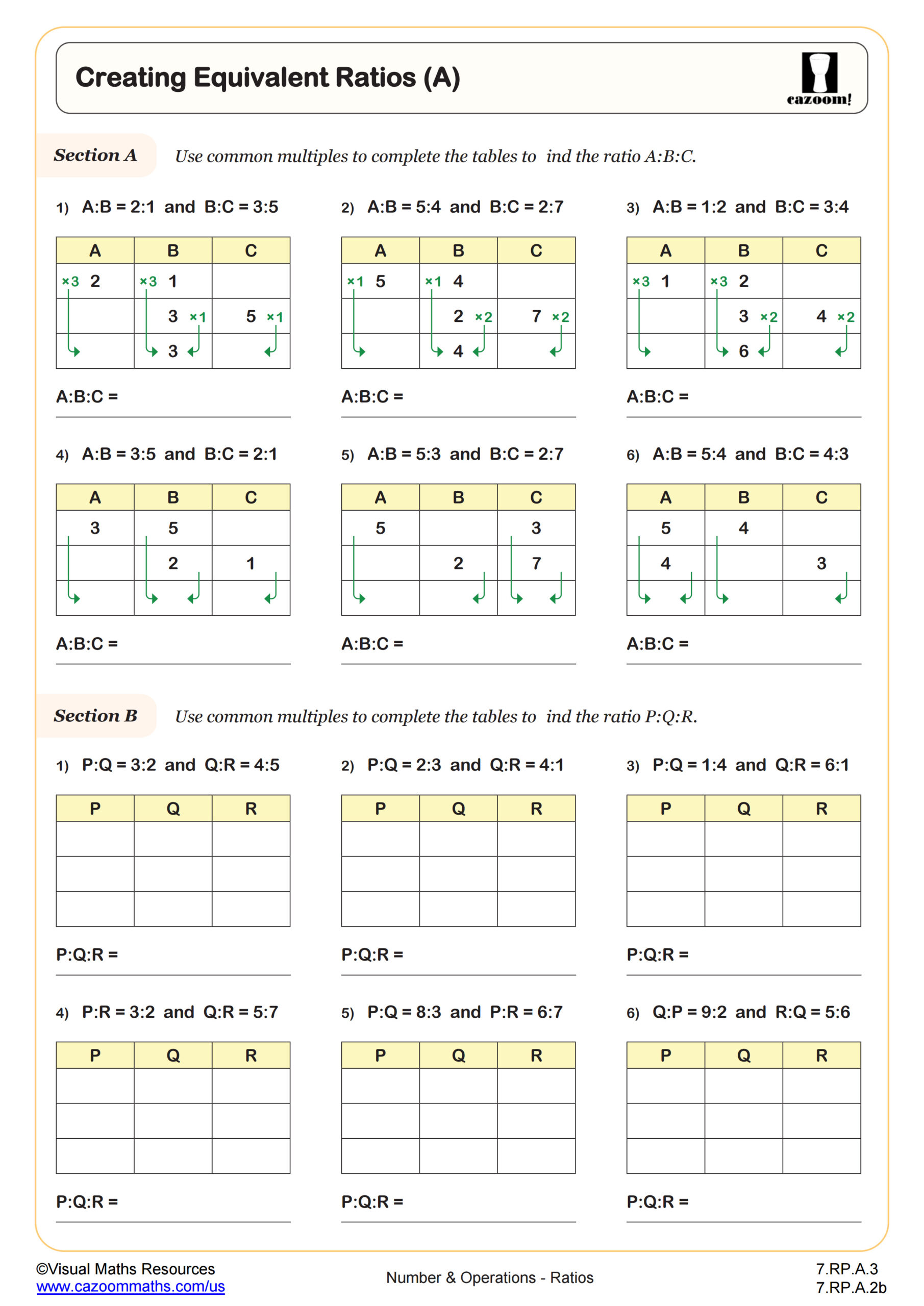
Creating Equivalent Ratios (A)
Grades: 7th Grade
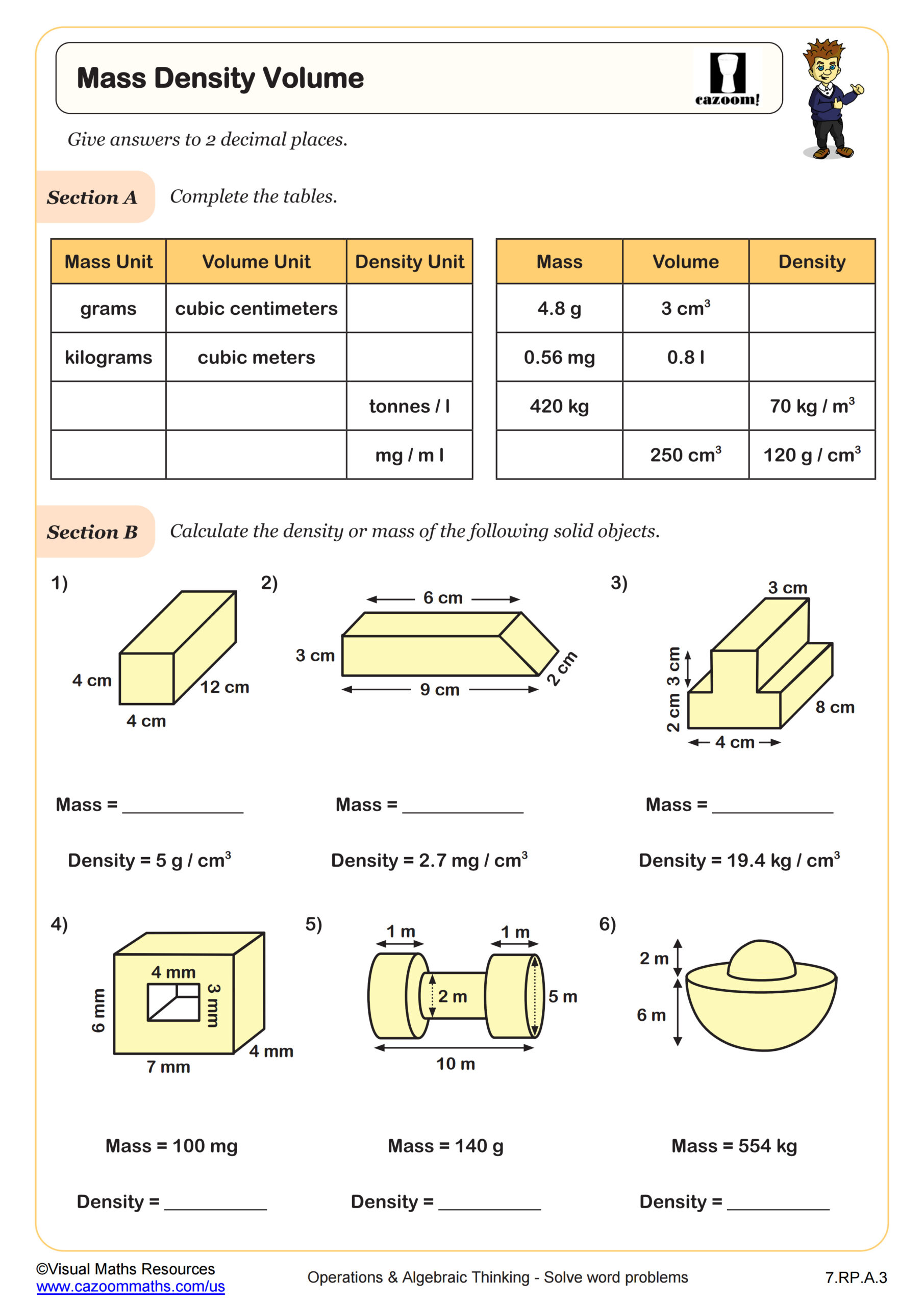
Density, Mass, and Volume
Grades: 7th Grade
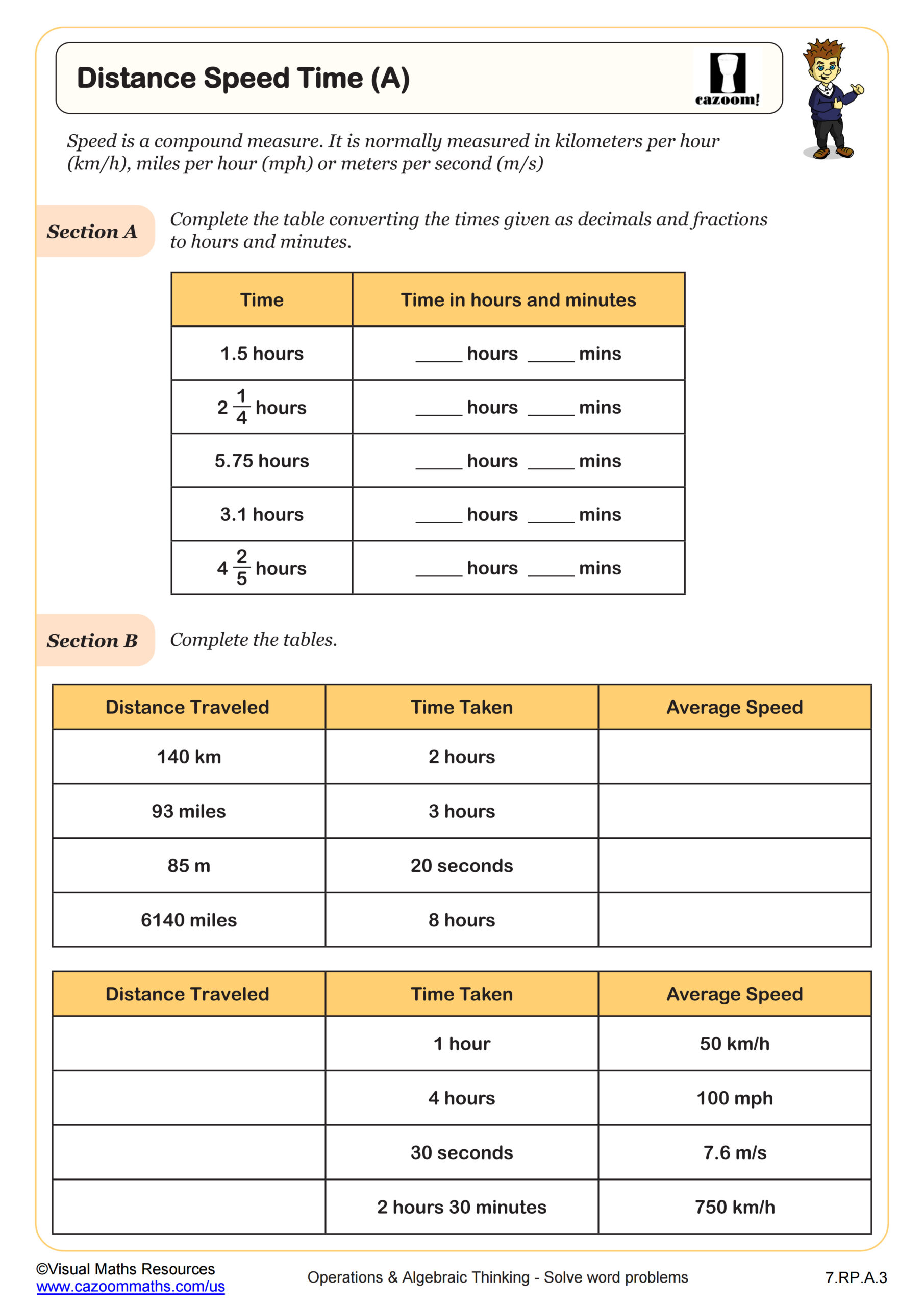
Distance, Speed, and Time (A)
Grades: 7th Grade
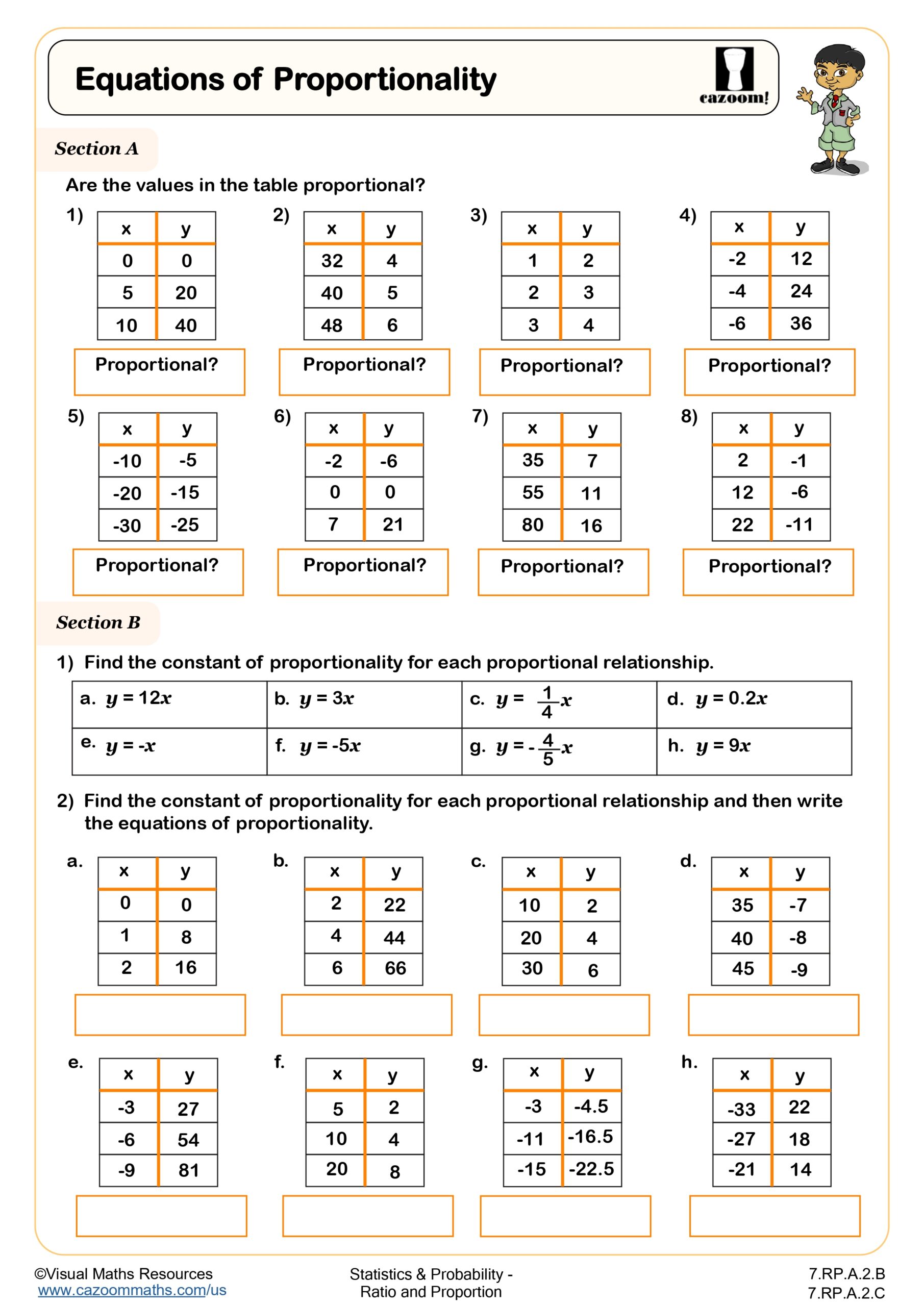
Equations of Proportionality
Grades: 7th Grade
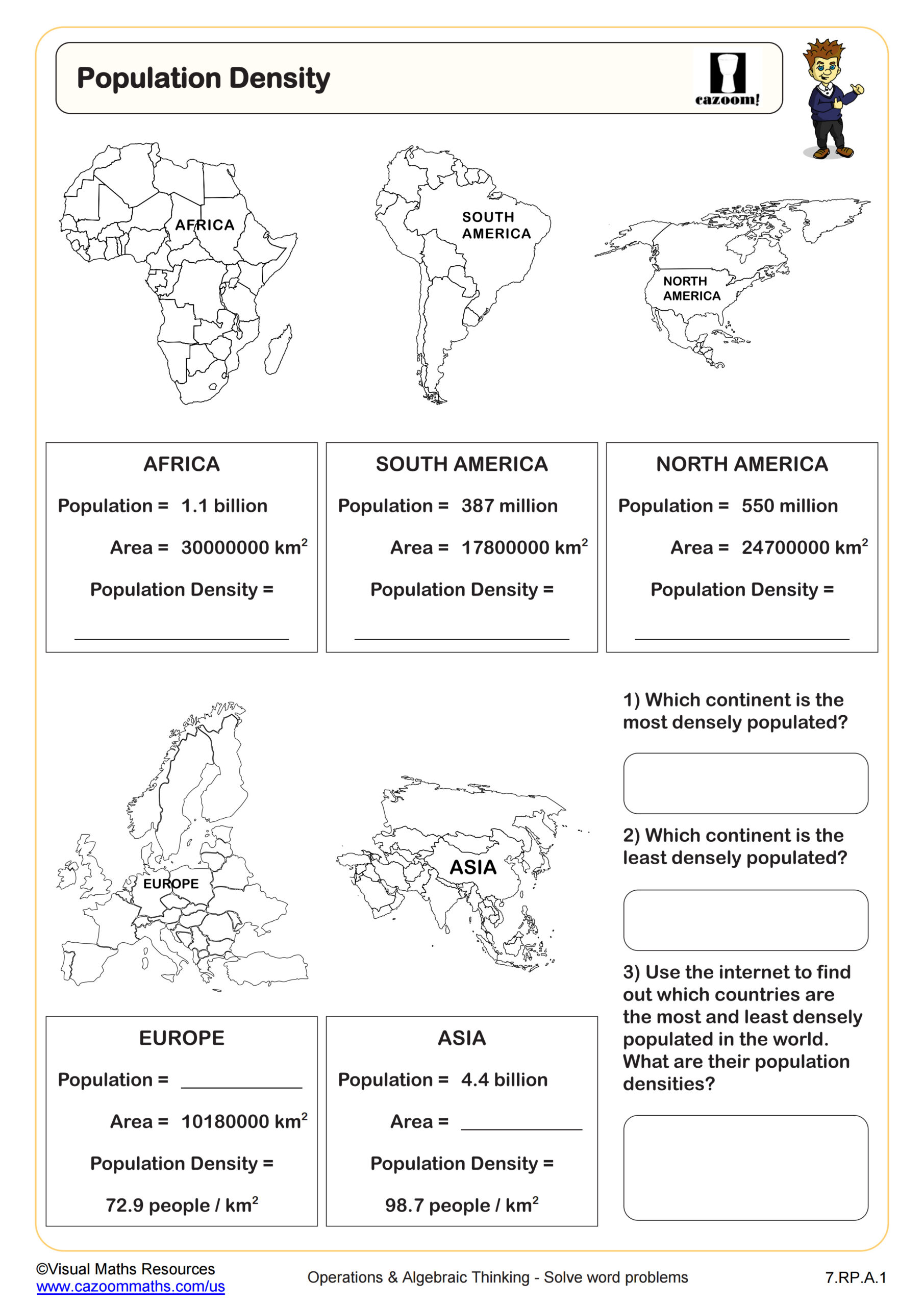
Population Density
Grades: 7th Grade
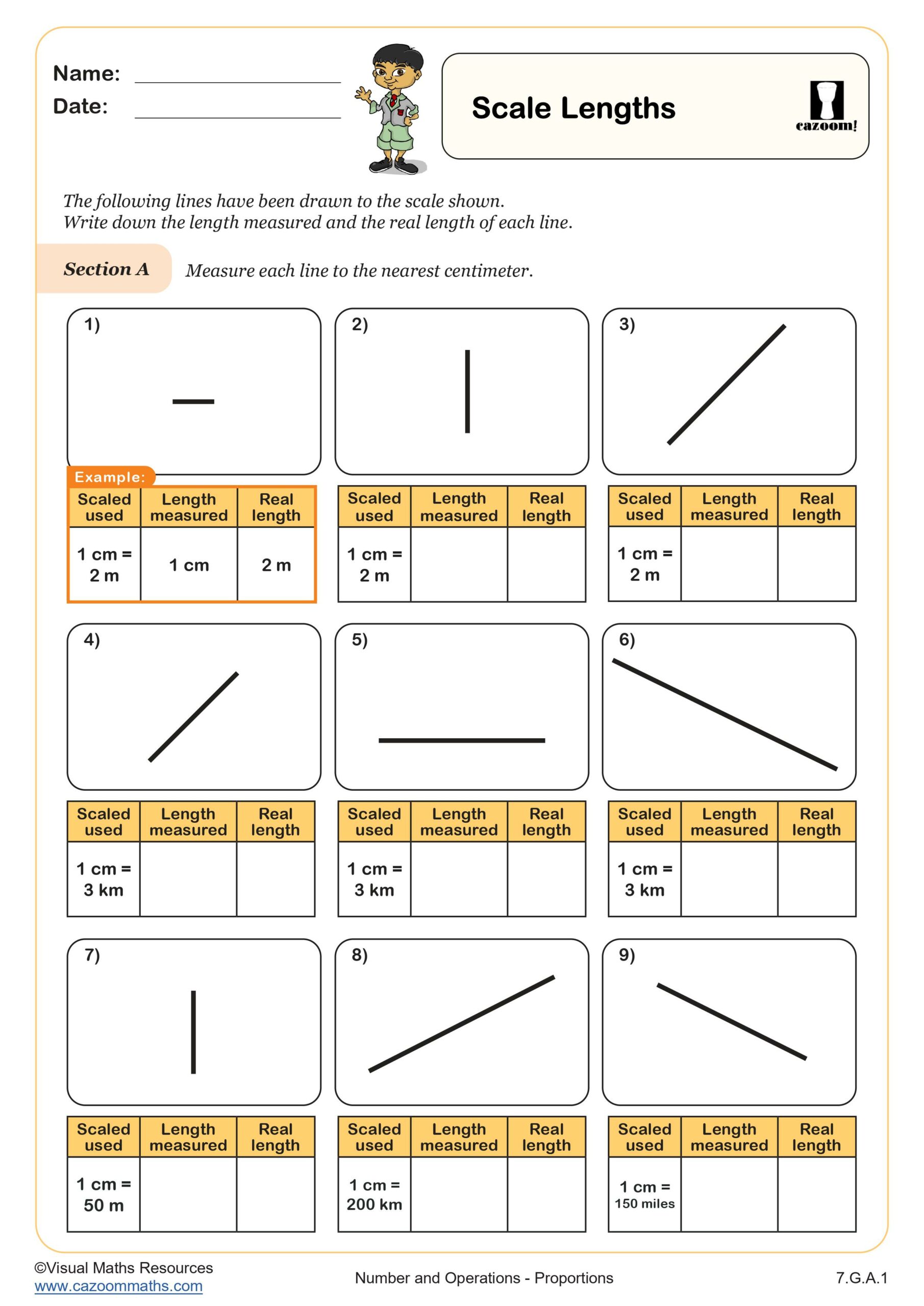
Scale Lengths
Grades: 7th Grade
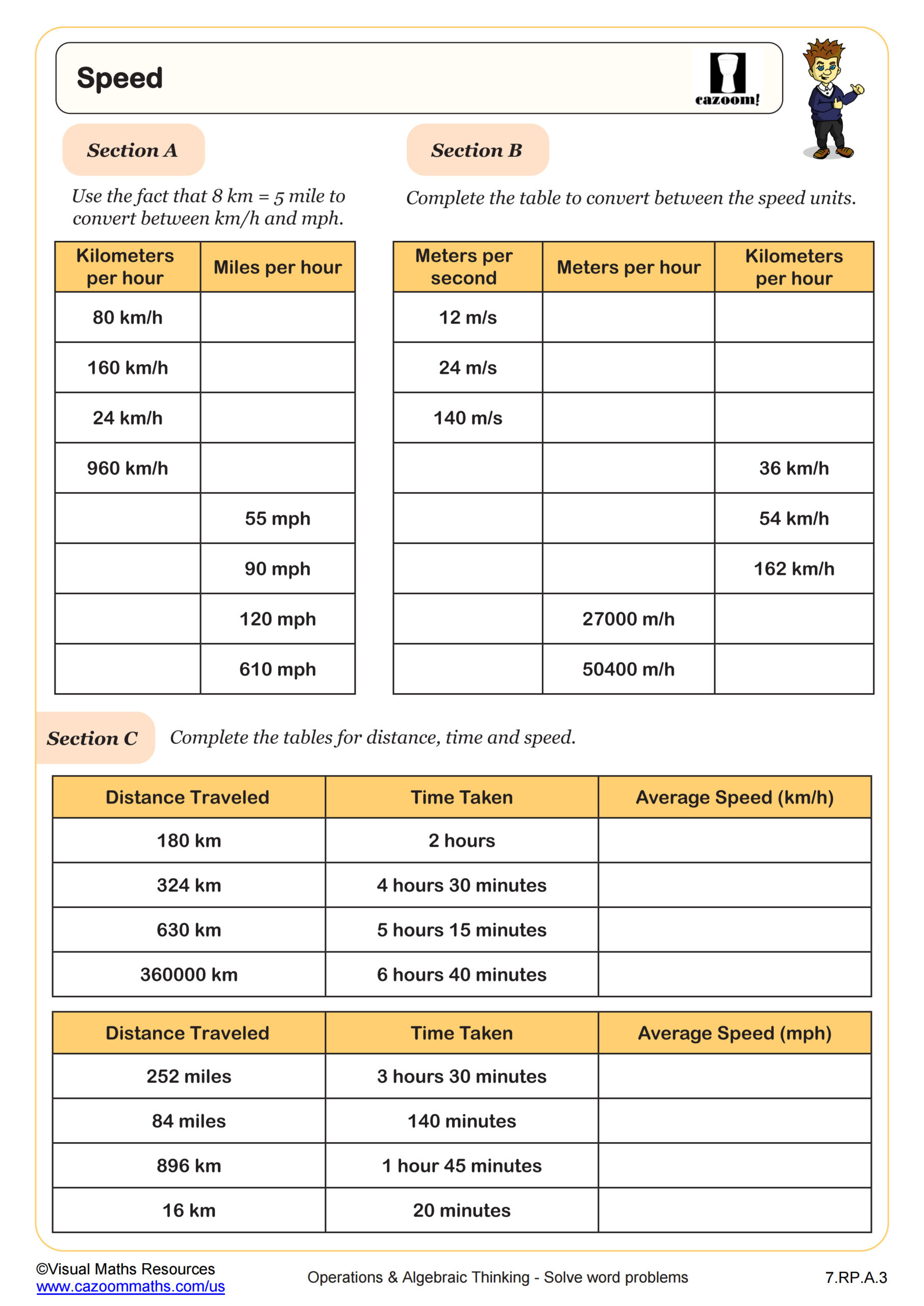
Speed
Grades: 7th Grade
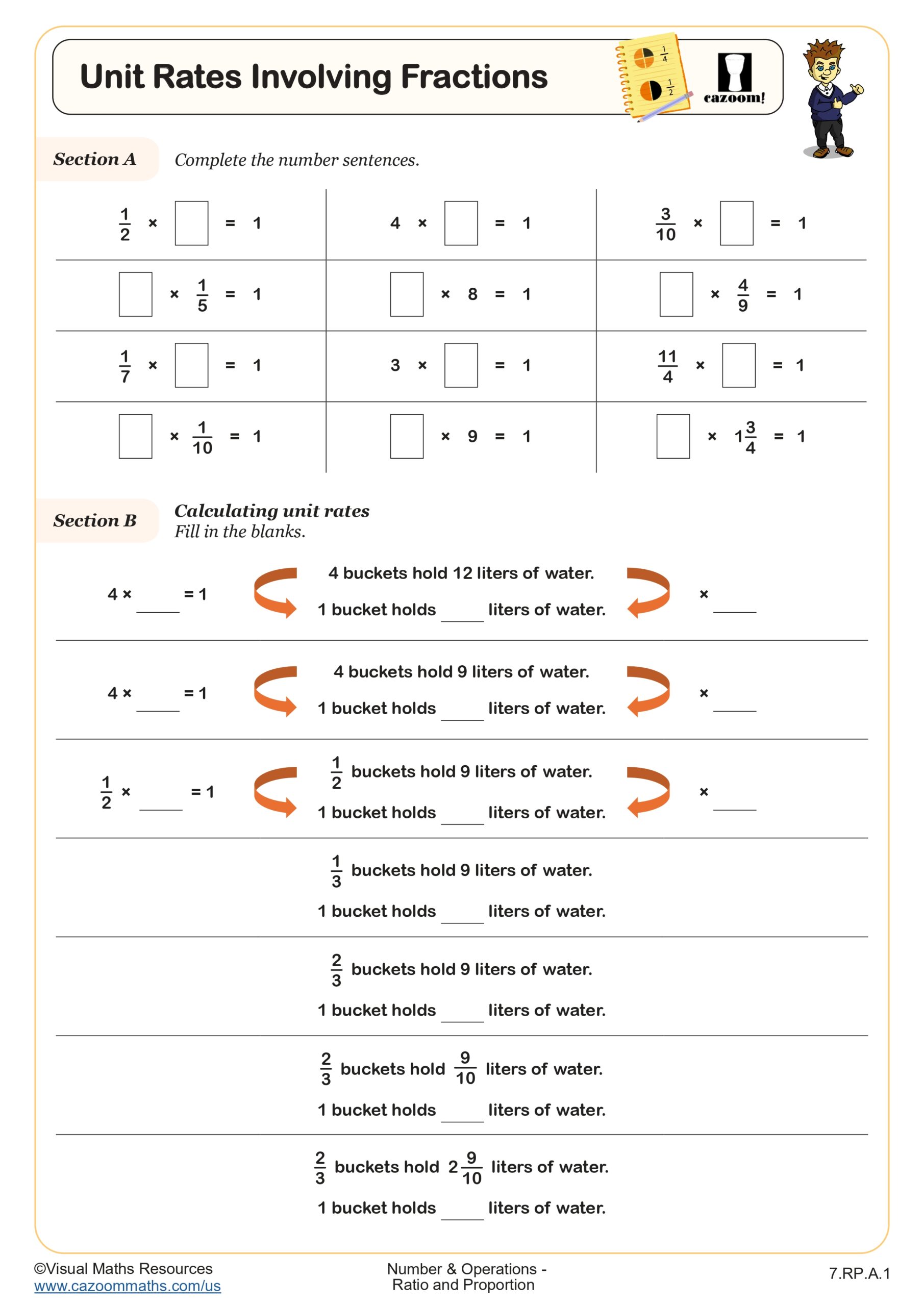
Unit Rates Involving Fractions
Grades: 7th Grade
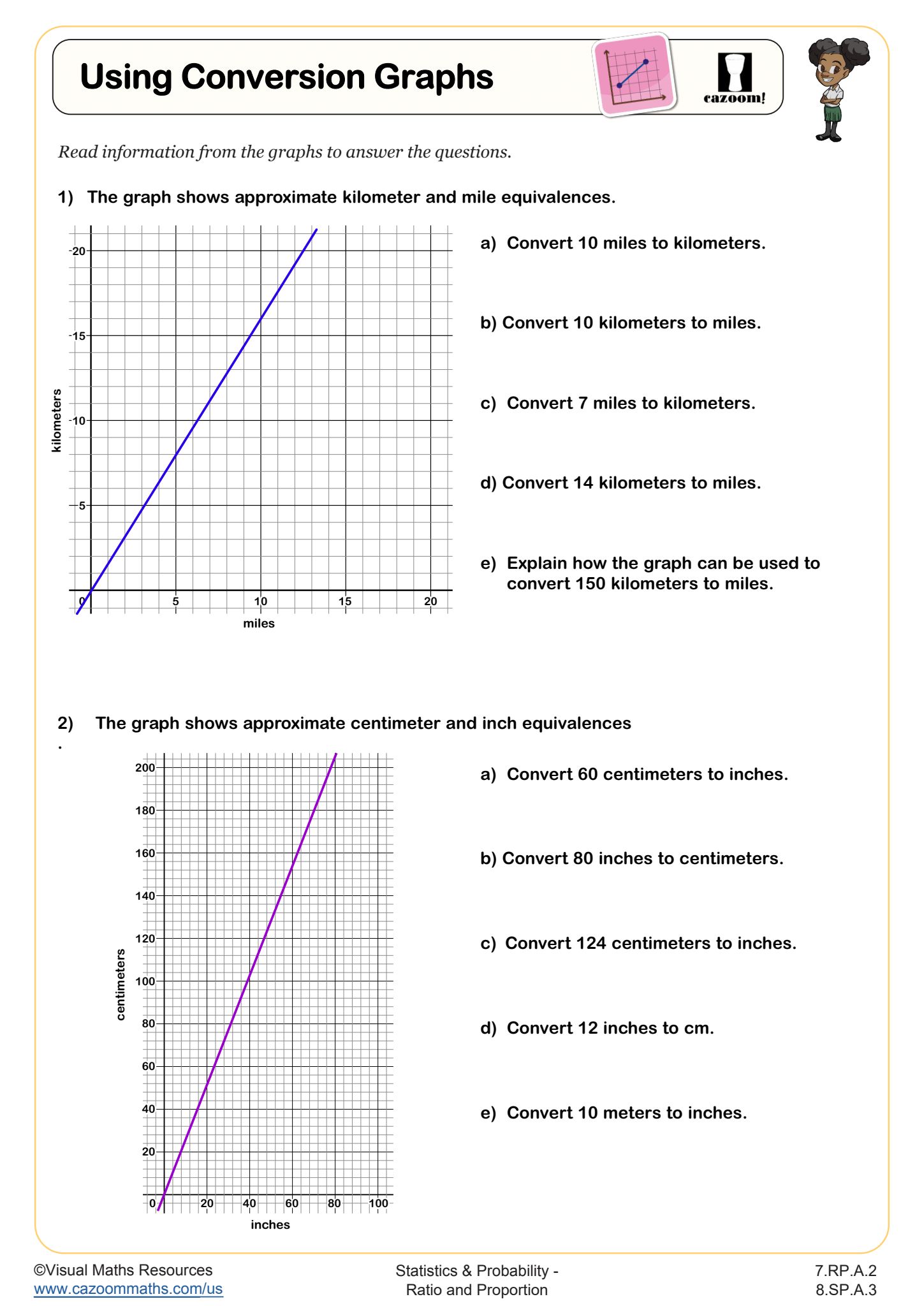
Using Conversion Graphs
Grades: 7th Grade, 8th Grade
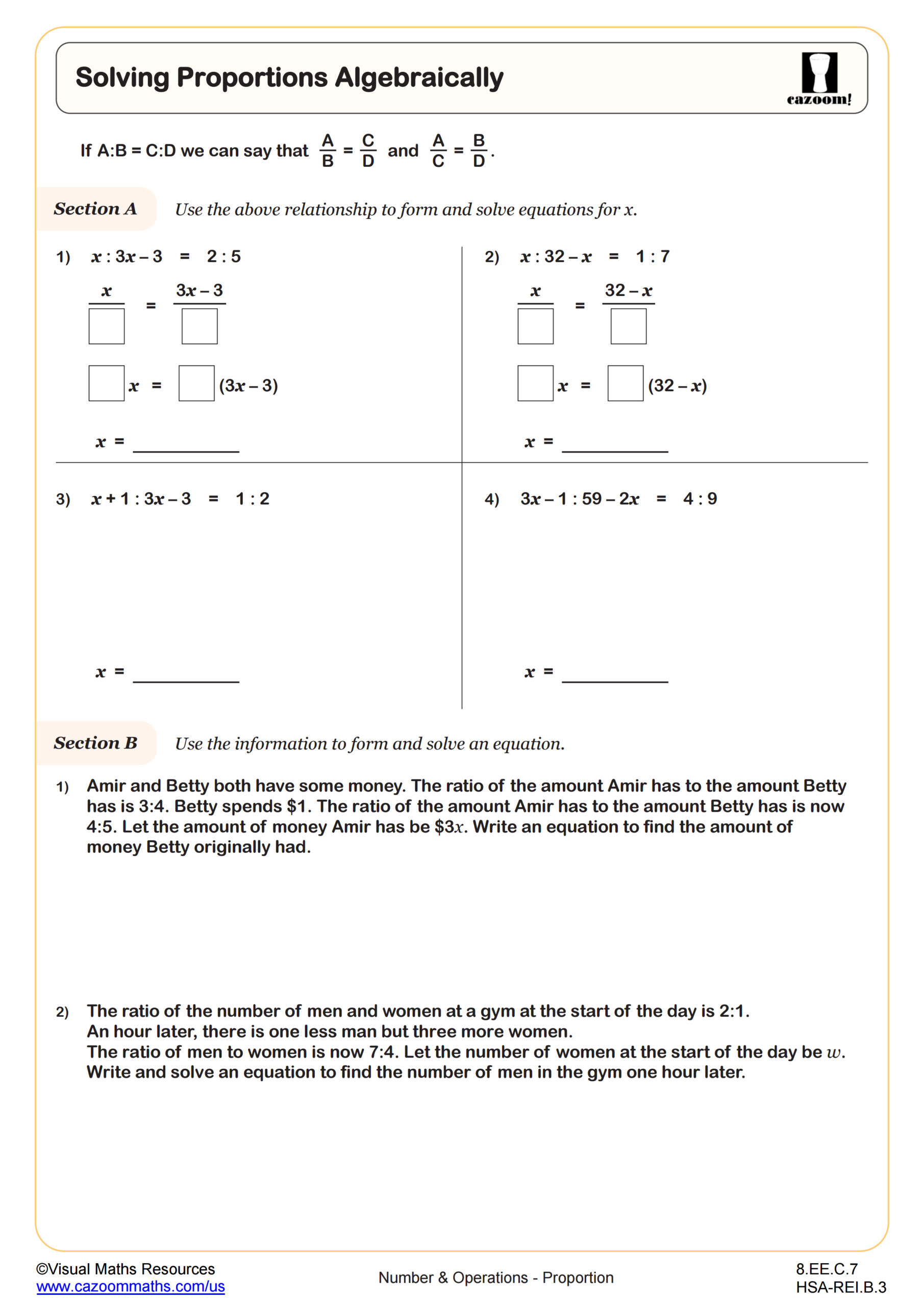
Solving Proportions Algebraically
Grades: 8th Grade, Algebra I
All worksheets are created by the team of experienced teachers at Cazoom Math.
What topics do proportion worksheets typically cover?
Proportion worksheets cover foundational topics aligned with Common Core standards from middle school through high school. Students practice identifying equivalent ratios, cross-multiplication techniques, direct and inverse proportions, and scale factor applications. The worksheets progress from simple proportion worksheet problems with whole numbers to complex scenarios involving decimals, fractions, and algebraic expressions.
Teachers notice that students often confuse direct and inverse relationships, especially when working with real-world contexts like recipe scaling or map distances. Effective worksheets include visual representations and varied problem types to help students recognize these different proportion relationships and choose appropriate solution strategies.
At what grade levels should students practice proportions?
Proportional reasoning typically begins in 6th grade with ratio and rate concepts, then develops into formal proportion solving by 7th grade according to Common Core standards. Middle school students focus on recognizing proportional relationships and using cross-multiplication, while high school students apply these skills in geometry, algebra, and real-world modeling contexts.
Teachers find that students benefit from extended practice across multiple grade levels because proportion concepts appear in diverse mathematical contexts. A student might master basic cross-multiplication in 7th grade but struggle with proportions in similar triangles during geometry class, requiring continued reinforcement and application practice.
How do direct proportion worksheets differ from other types?
Direct proportion worksheet problems focus specifically on relationships where variables increase or decrease together at a constant rate, such as distance and time at constant speed or ingredients in recipe scaling. These worksheets emphasize identifying when two quantities maintain a constant ratio and using this relationship to find missing values through cross-multiplication or scaling methods.
Many teachers observe that students initially assume all proportional relationships are direct, leading to errors with inverse proportions like speed and travel time problems. Direct proportion worksheets help students recognize the characteristic patterns and language cues that signal this specific relationship type, building a foundation for distinguishing between direct and inverse scenarios later.
How can teachers effectively use these worksheets in the classroom?
Teachers find success using proportion worksheets as warm-up activities, homework assignments, and assessment preparation tools. The included answer keys allow for immediate feedback and self-checking opportunities, while the PDF format enables easy printing and digital distribution. Many educators use these worksheets for differentiated instruction, selecting problems that match individual student readiness levels.
Experienced teachers recommend starting each worksheet session by having students identify the relationship type before solving, as this prevents the common error of applying cross-multiplication incorrectly. Using worksheets alongside manipulatives or visual models helps students connect abstract proportion concepts to concrete representations, especially when introducing new problem types or working with struggling learners.