Rational Numbers Worksheets with Answers
Absolute and Opposite Values
Grades: 6th Grade, 7th Grade
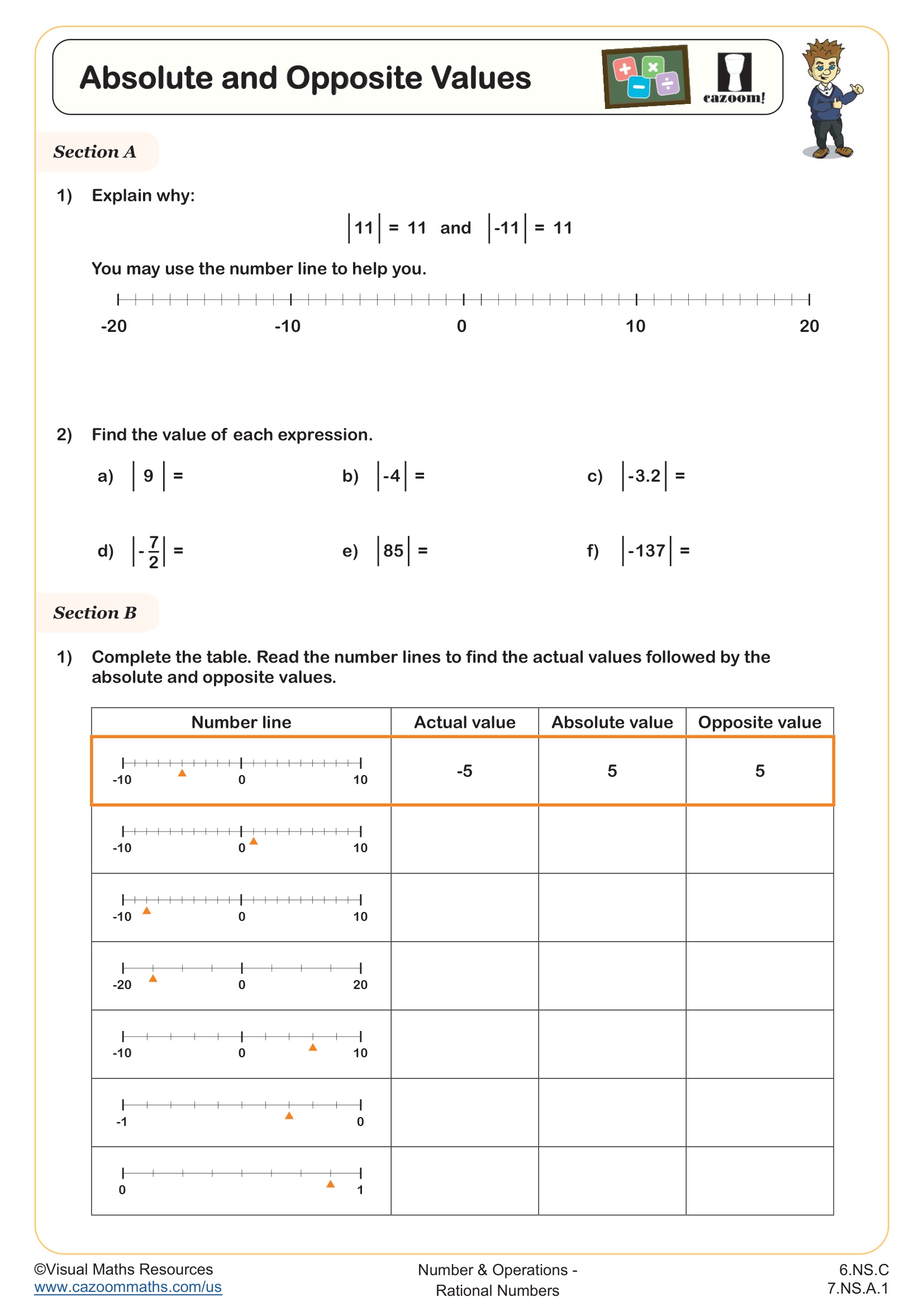
Absolute Value Arithmetic
Grades: 6th Grade, 7th Grade
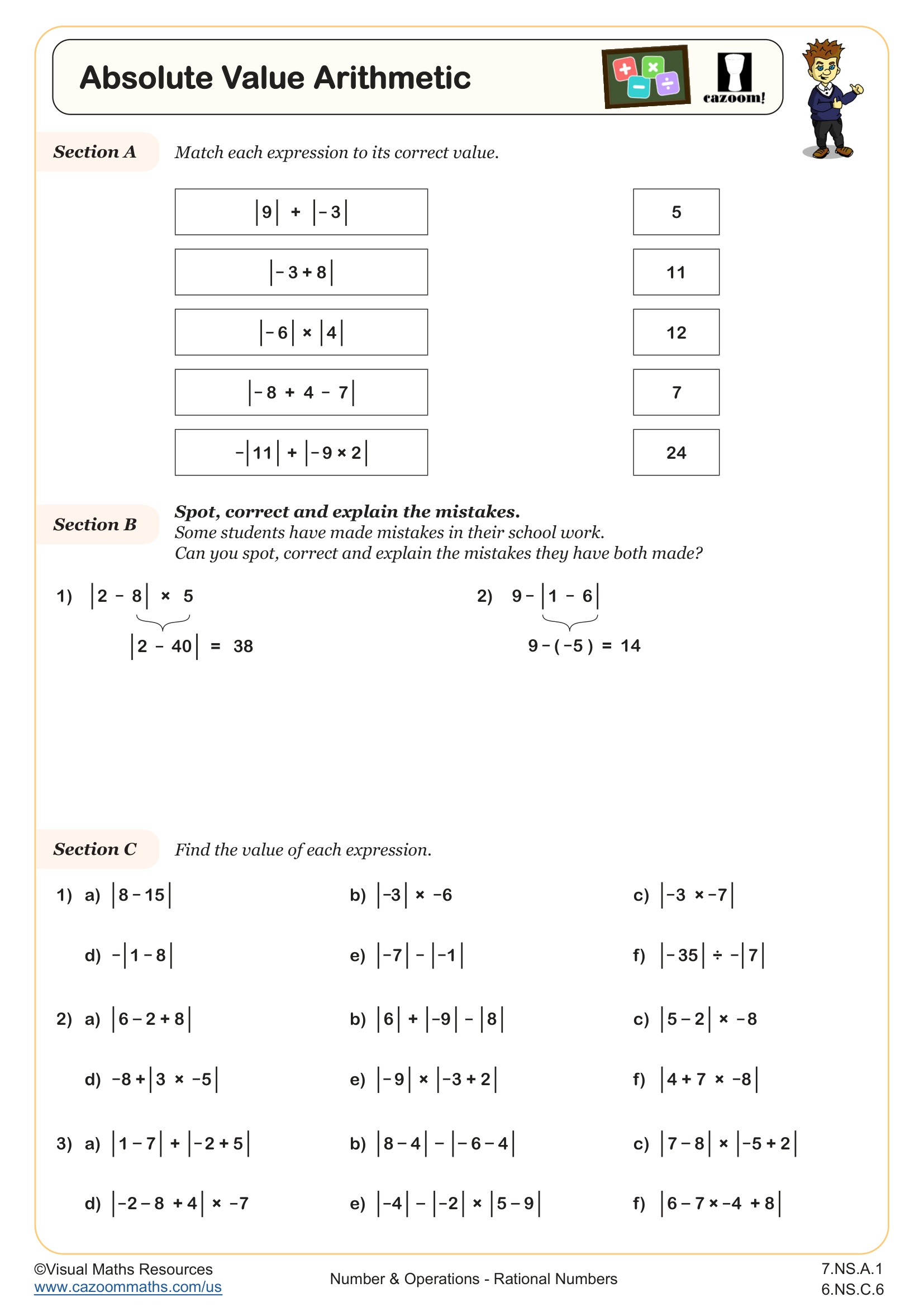
Compare Absolute Values
Grades: 6th Grade, 7th Grade
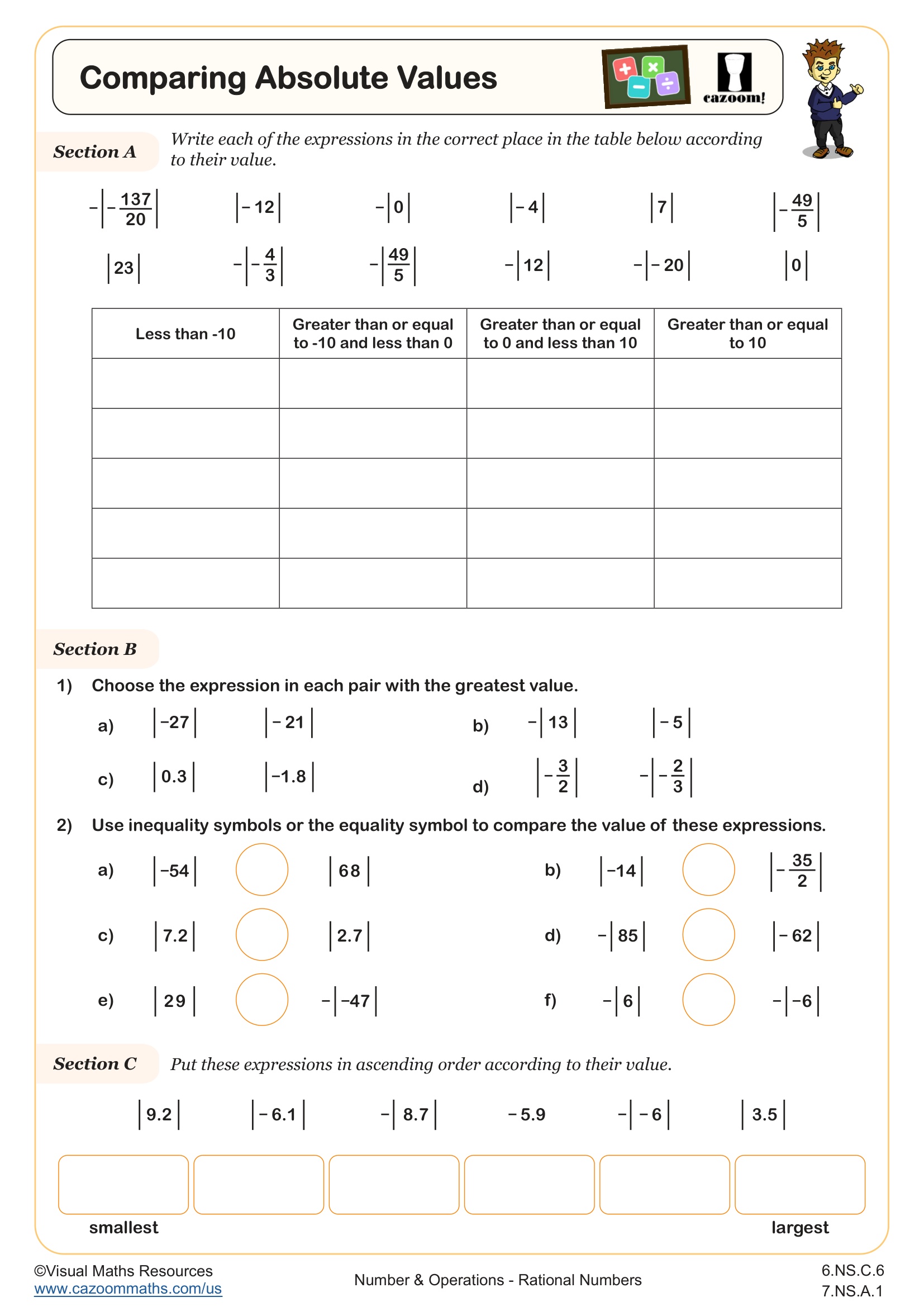
Comparing Rational Numbers
Grades: 6th Grade, 7th Grade
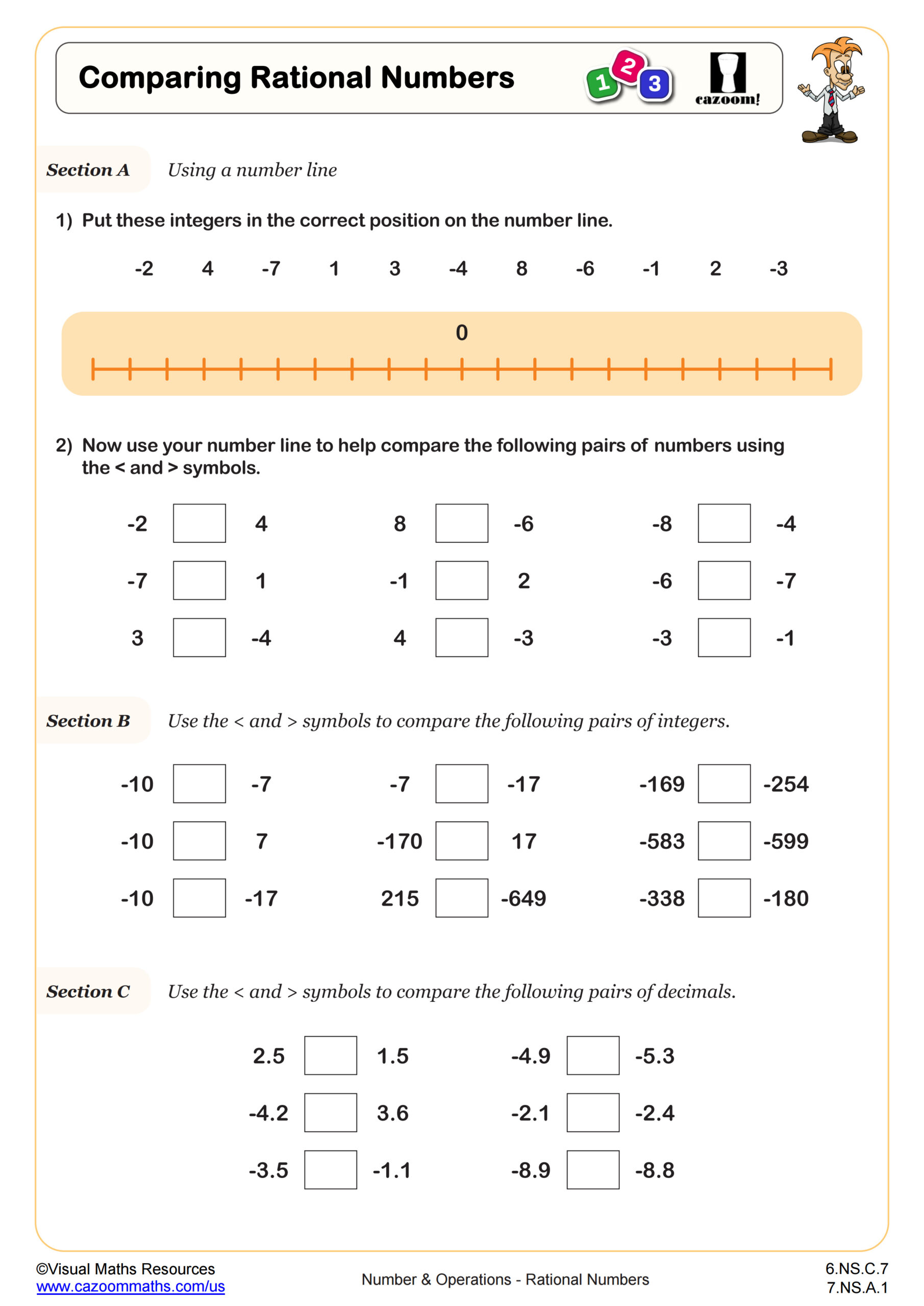
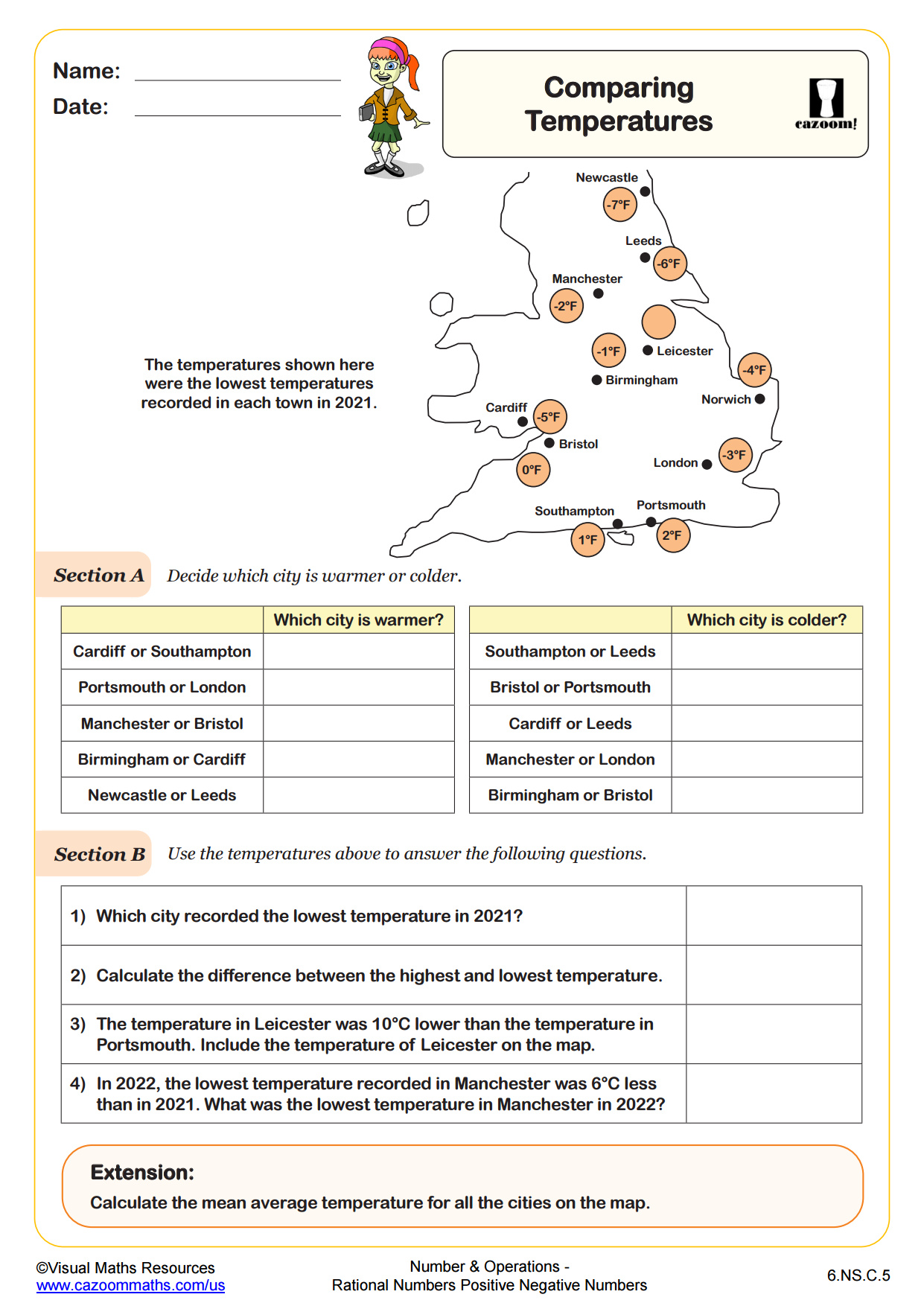
Comparing Temperatures
Grades: 6th Grade
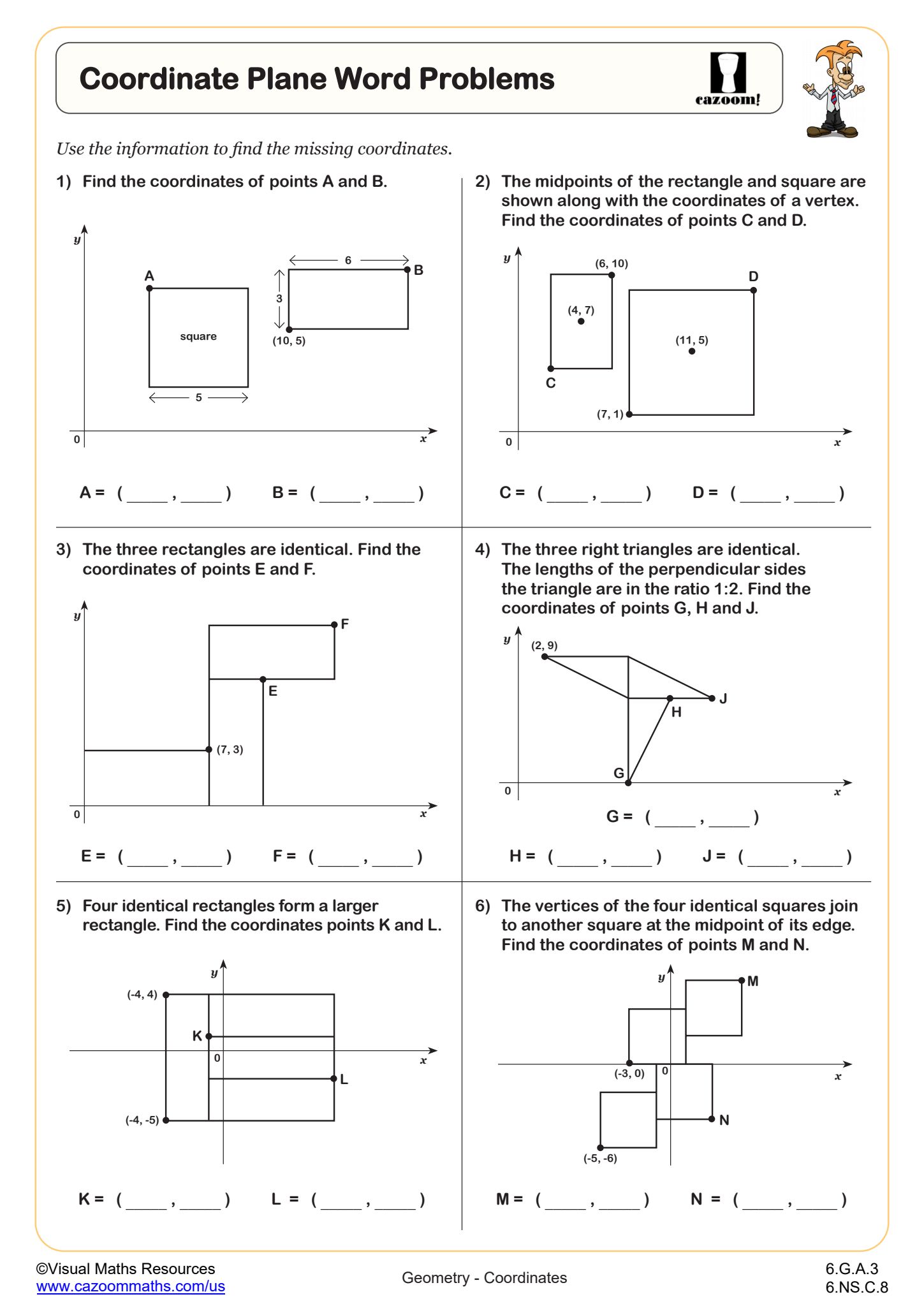
Coordinate Plane Word Problems
Grades: 6th Grade
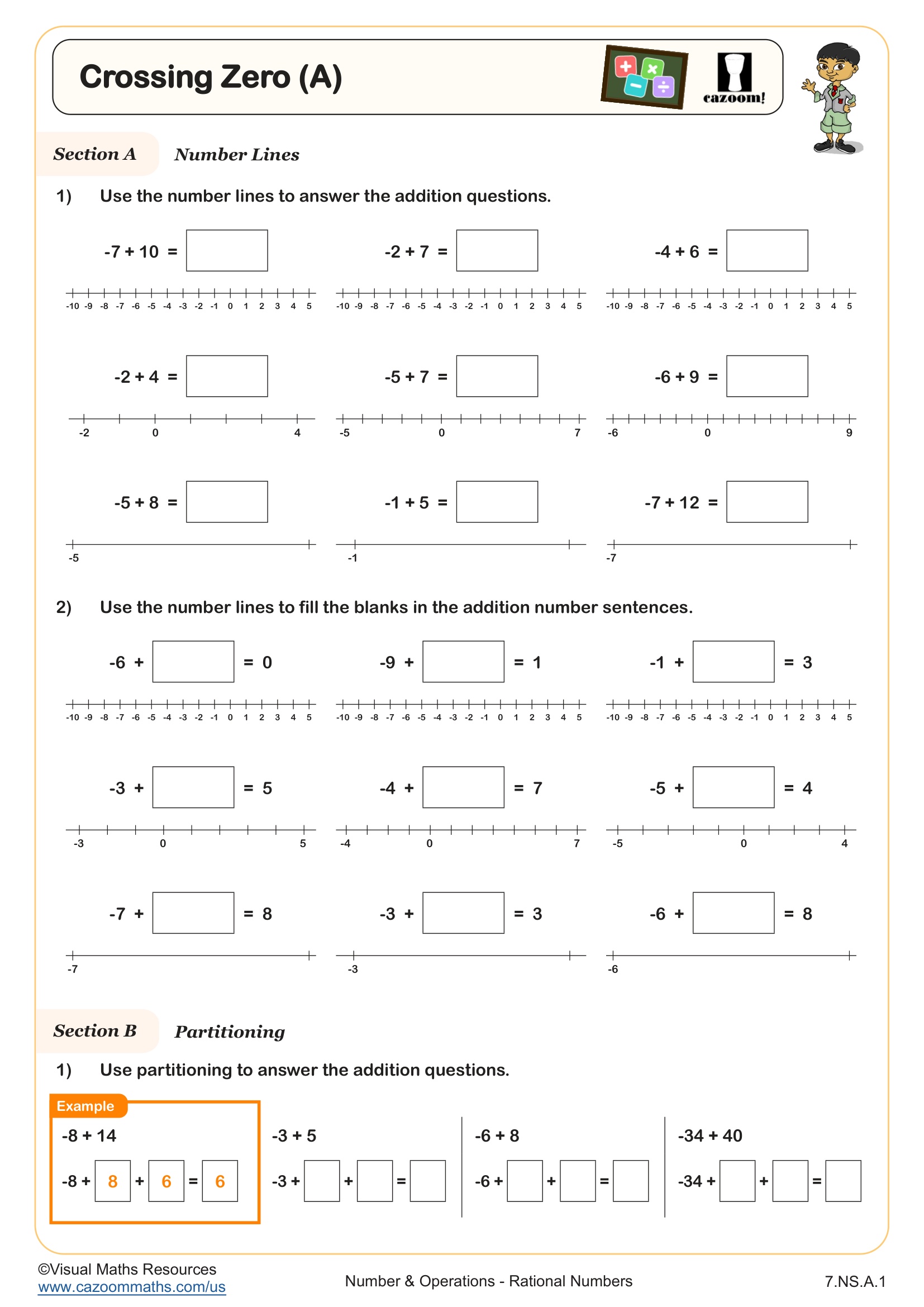
Crossing Zero (A)
Grades: 6th Grade, 7th Grade
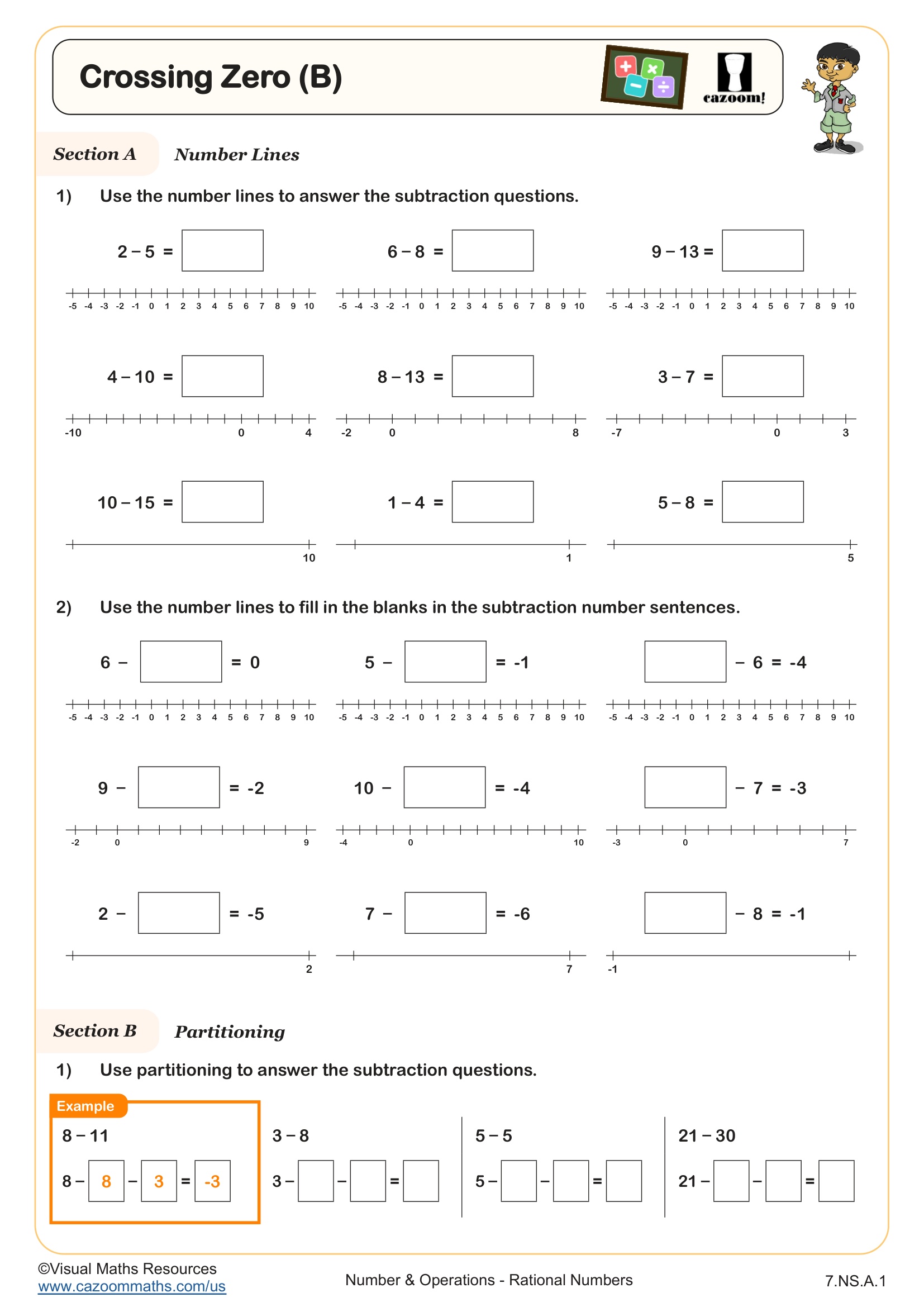
Crossing Zero (B)
Grades: 6th Grade, 7th Grade
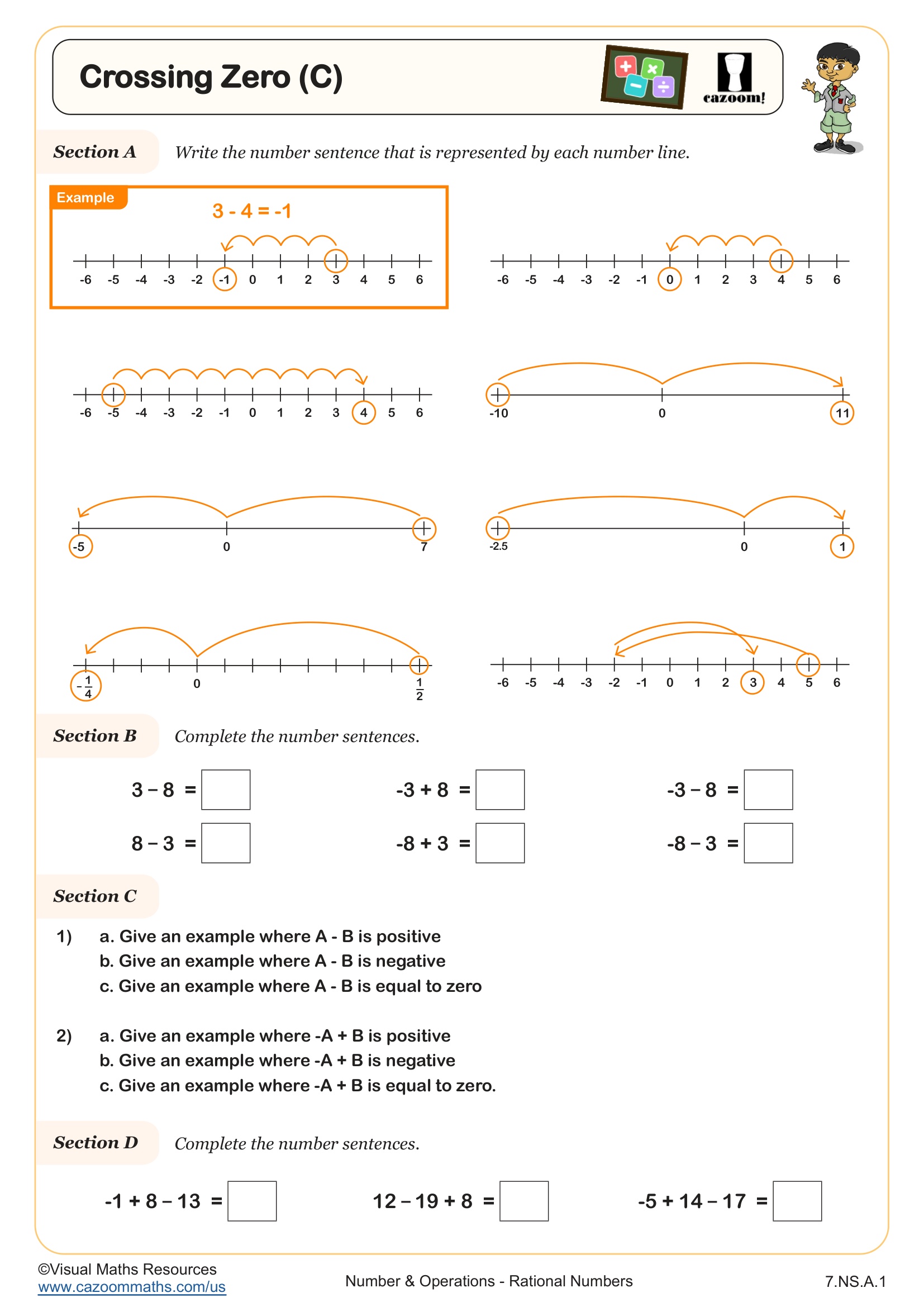
Crossing Zero (C)
Grades: 6th Grade, 7th Grade
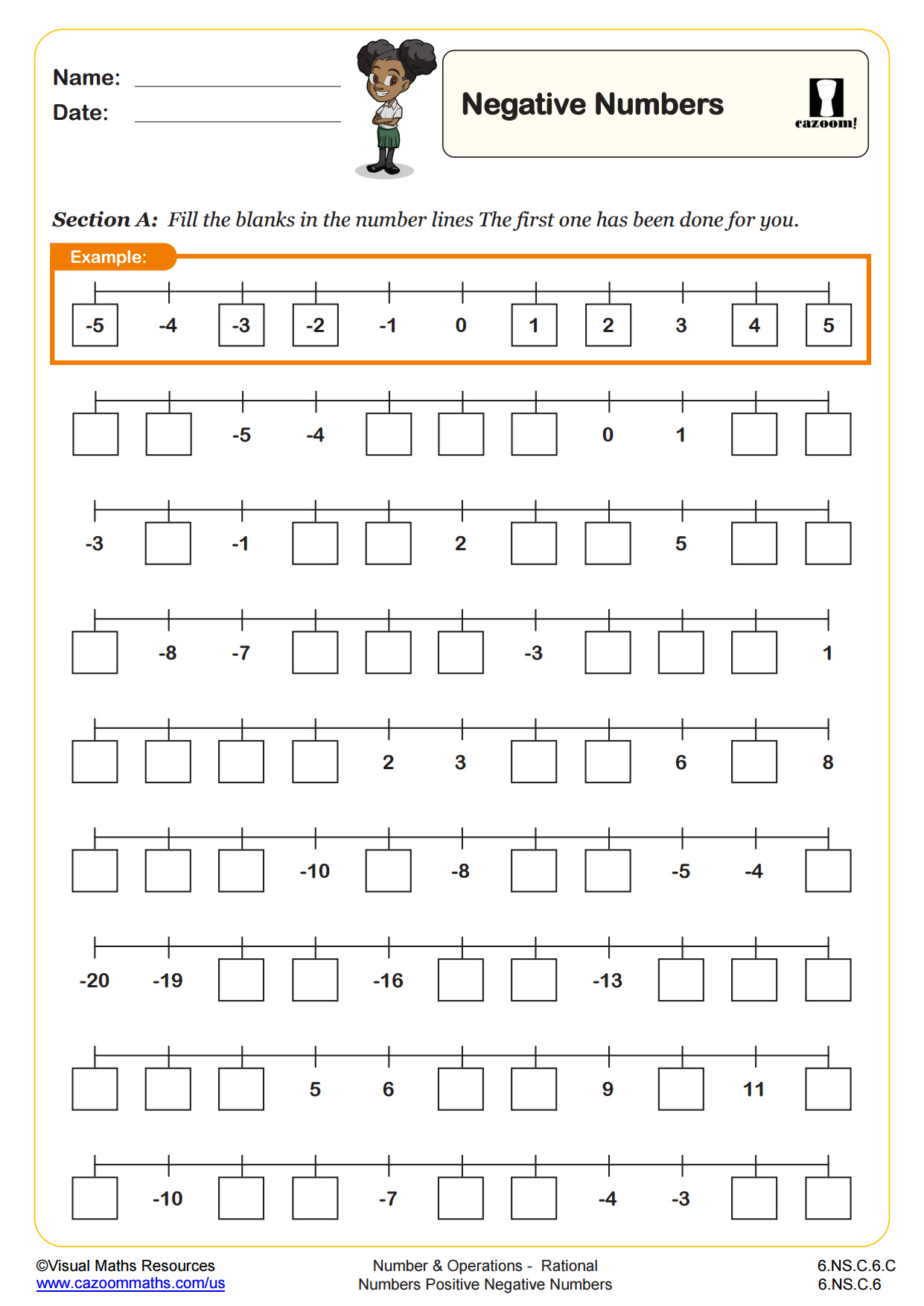
Negative Numbers
Grades: 6th Grade
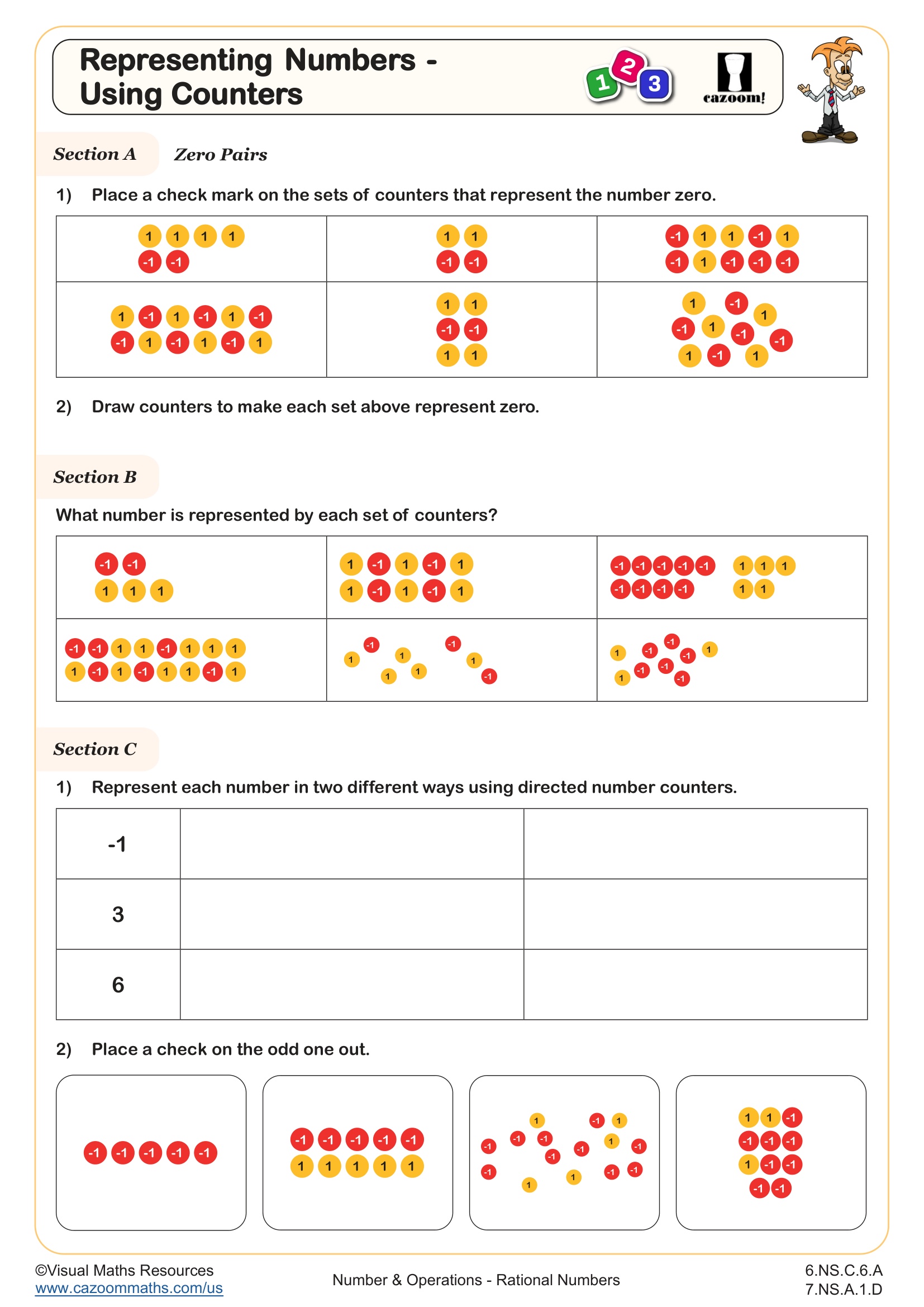
Representing Numbers - Using Counters
Grades: 6th Grade, 7th Grade
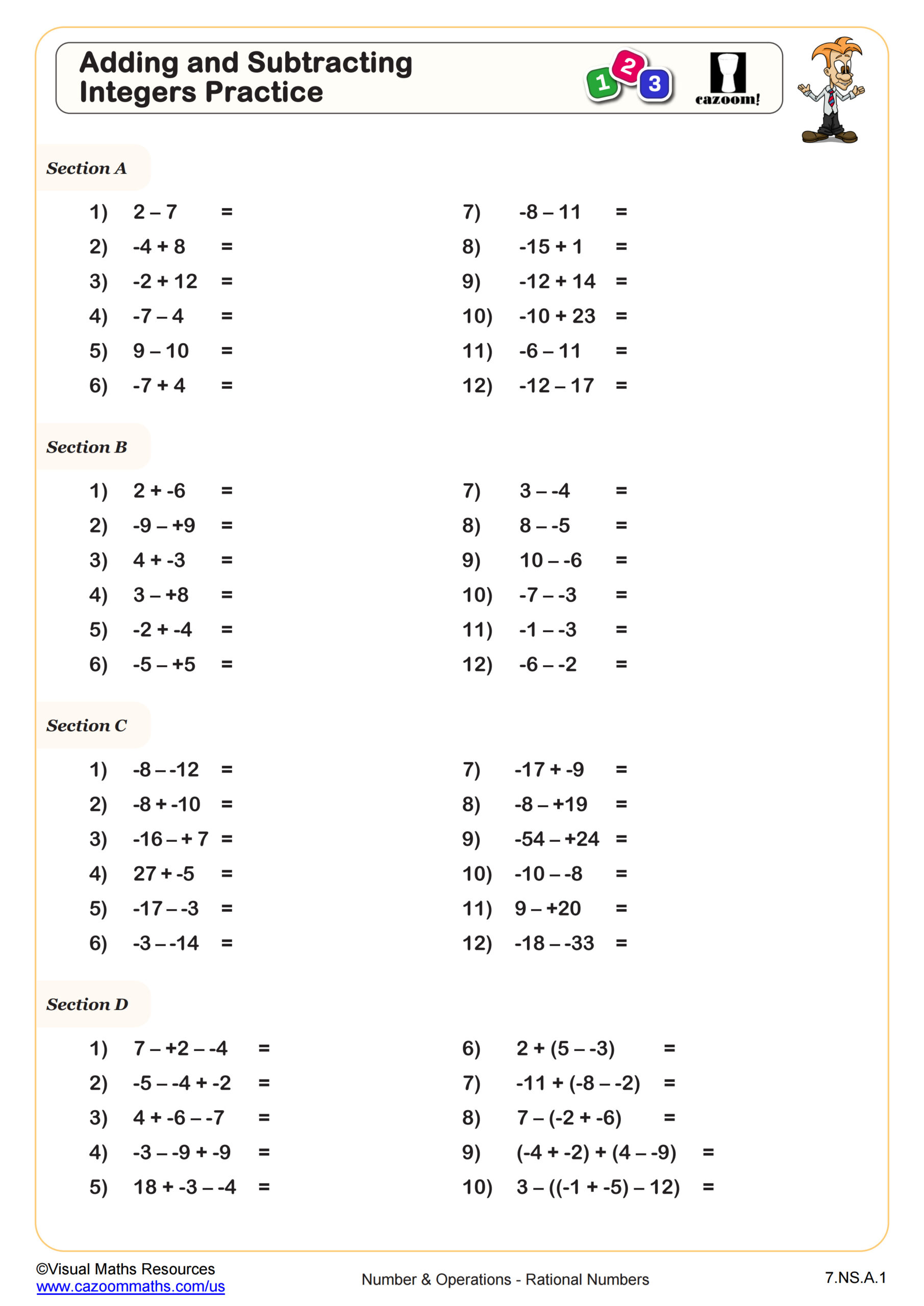
Adding and Subtracting Integers Practice
Grades: 7th Grade
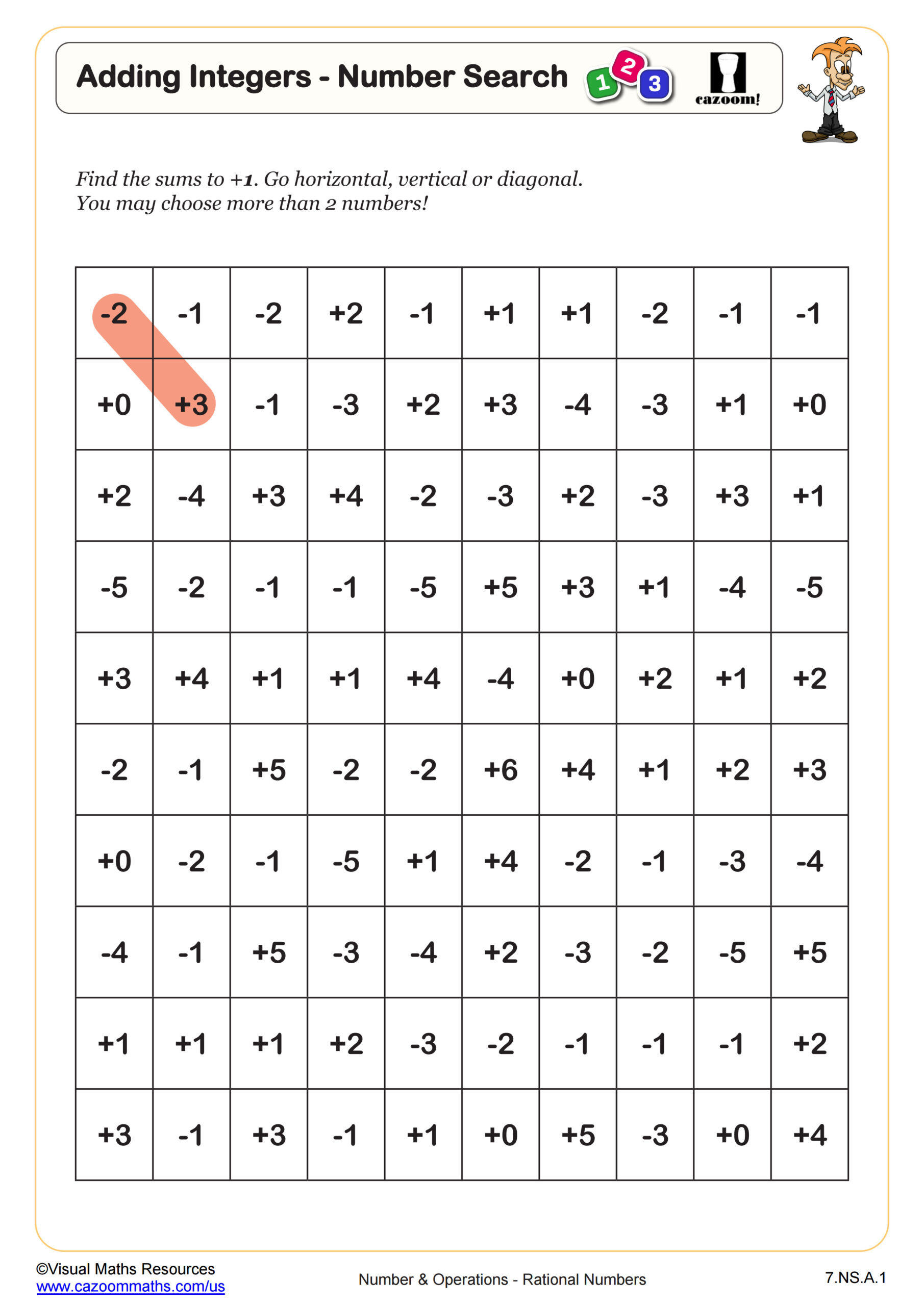
Adding Integers - Number Search
Grades: 7th Grade
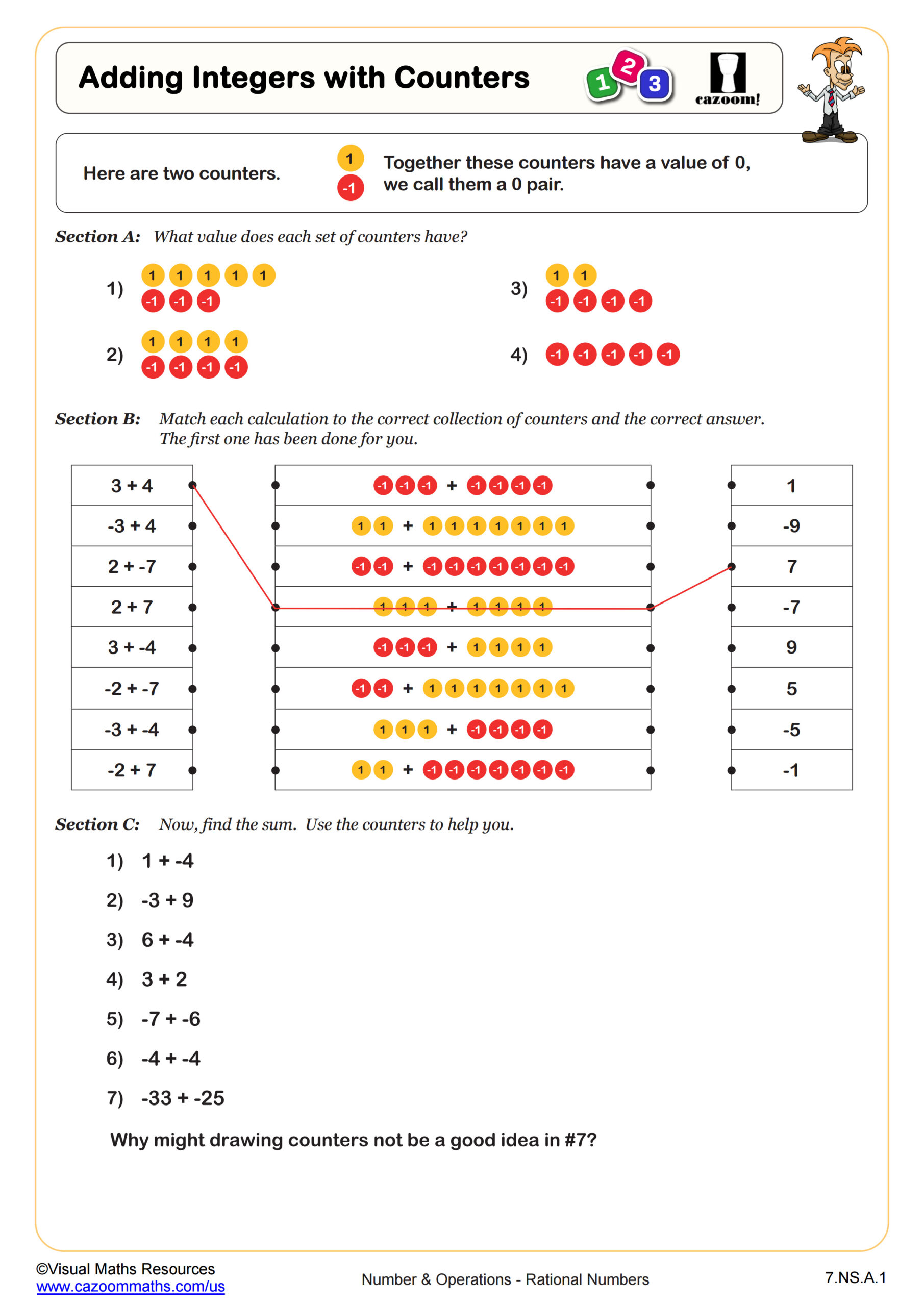
Adding Integers with Counters
Grades: 7th Grade
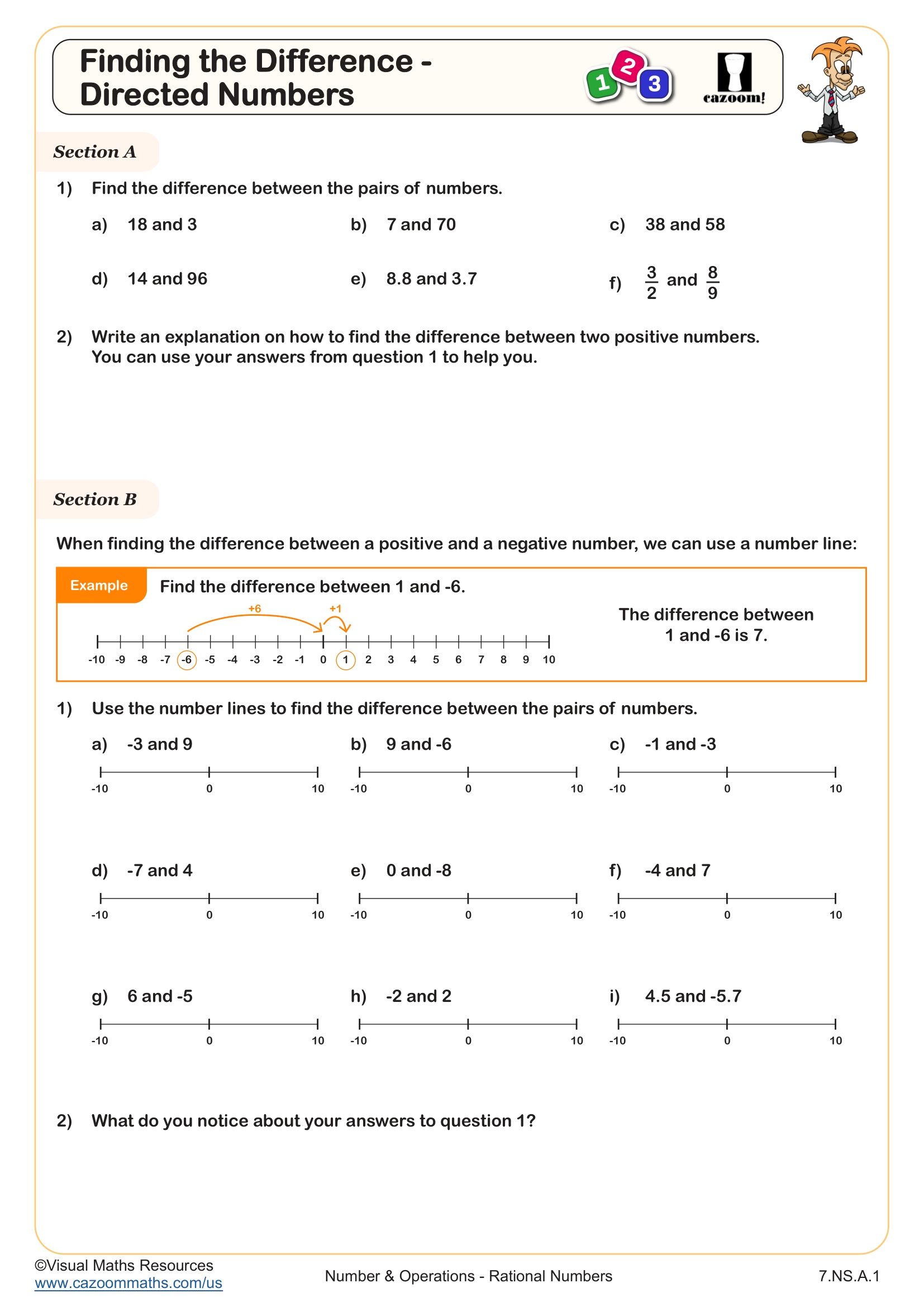
Finding the Difference - Directed Numbers
Grades: 7th Grade
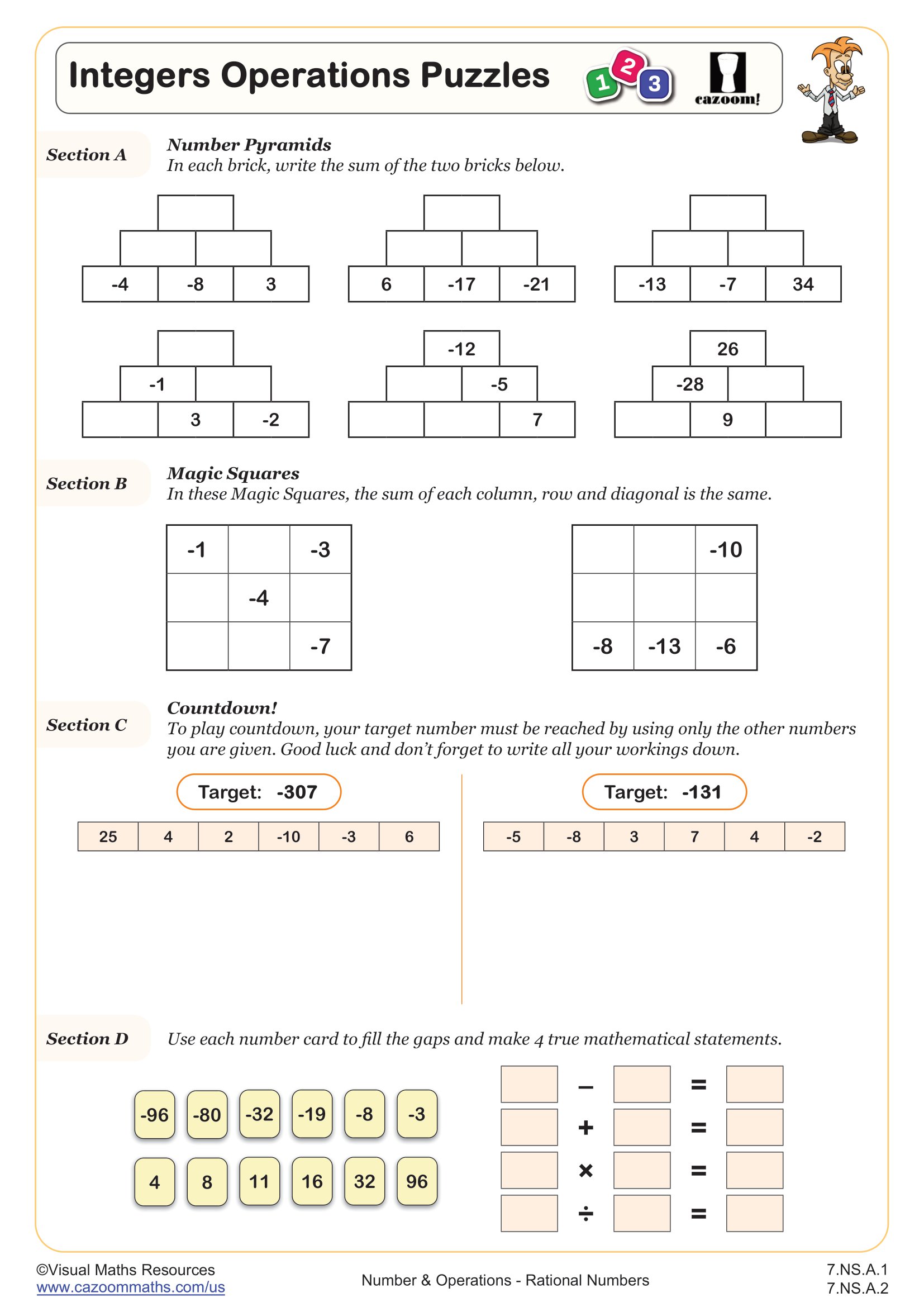
Integers Operations Puzzles
Grades: 7th Grade
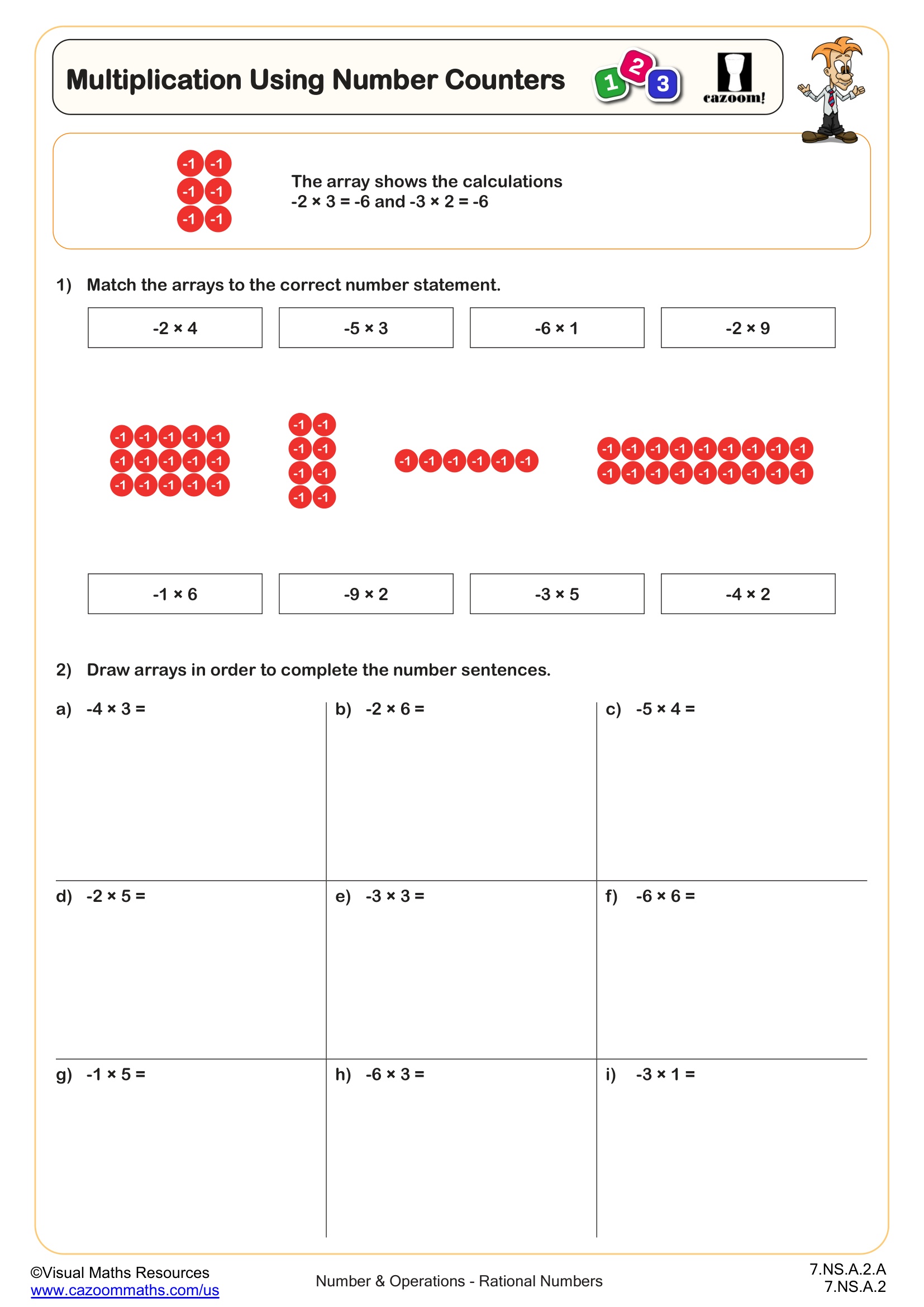
Multiplication Using Number Counters
Grades: 7th Grade
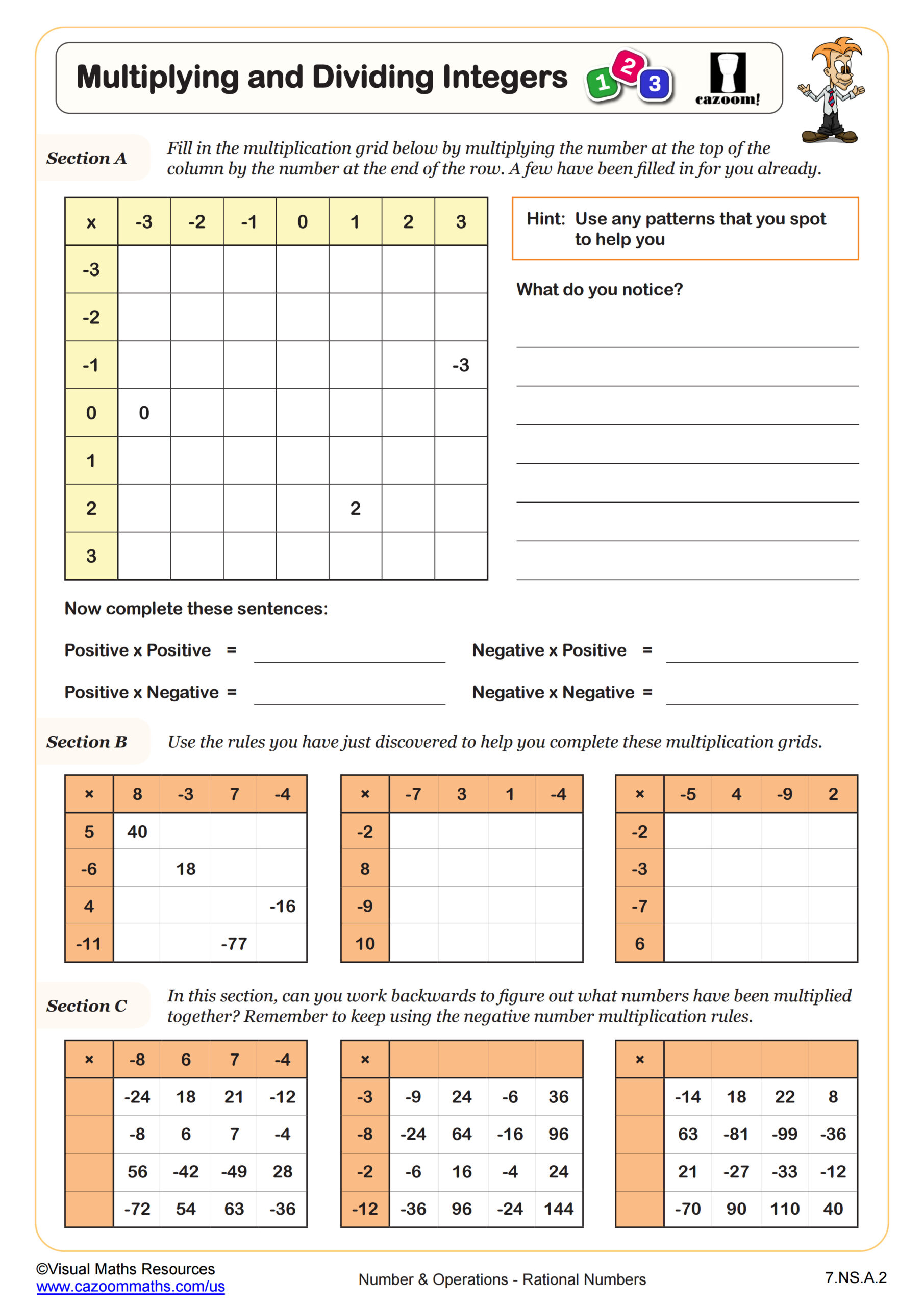
Multiplying and Dividing Integers
Grades: 7th Grade
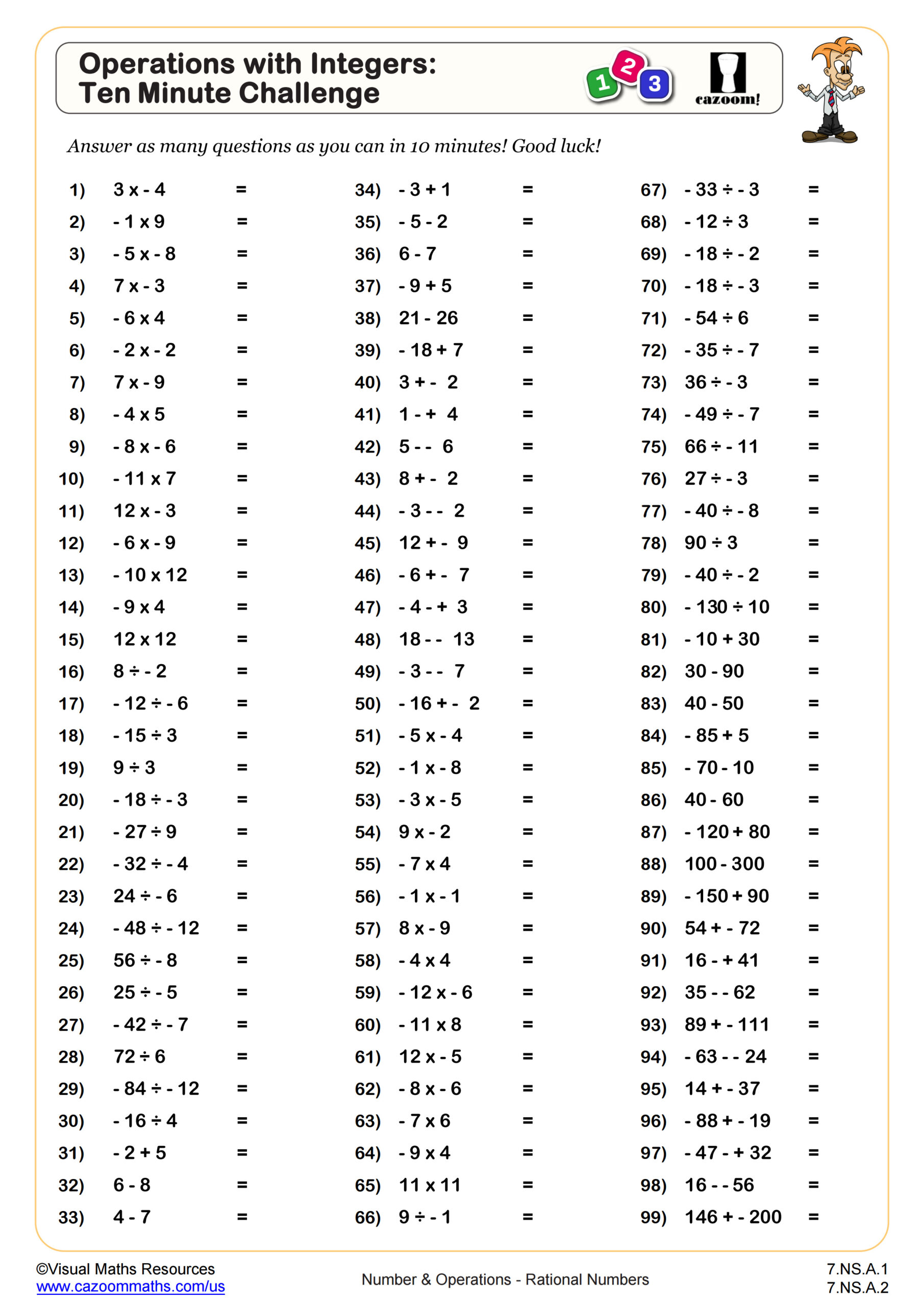
Operations with Integers Ten Minute Challenge
Grades: 7th Grade
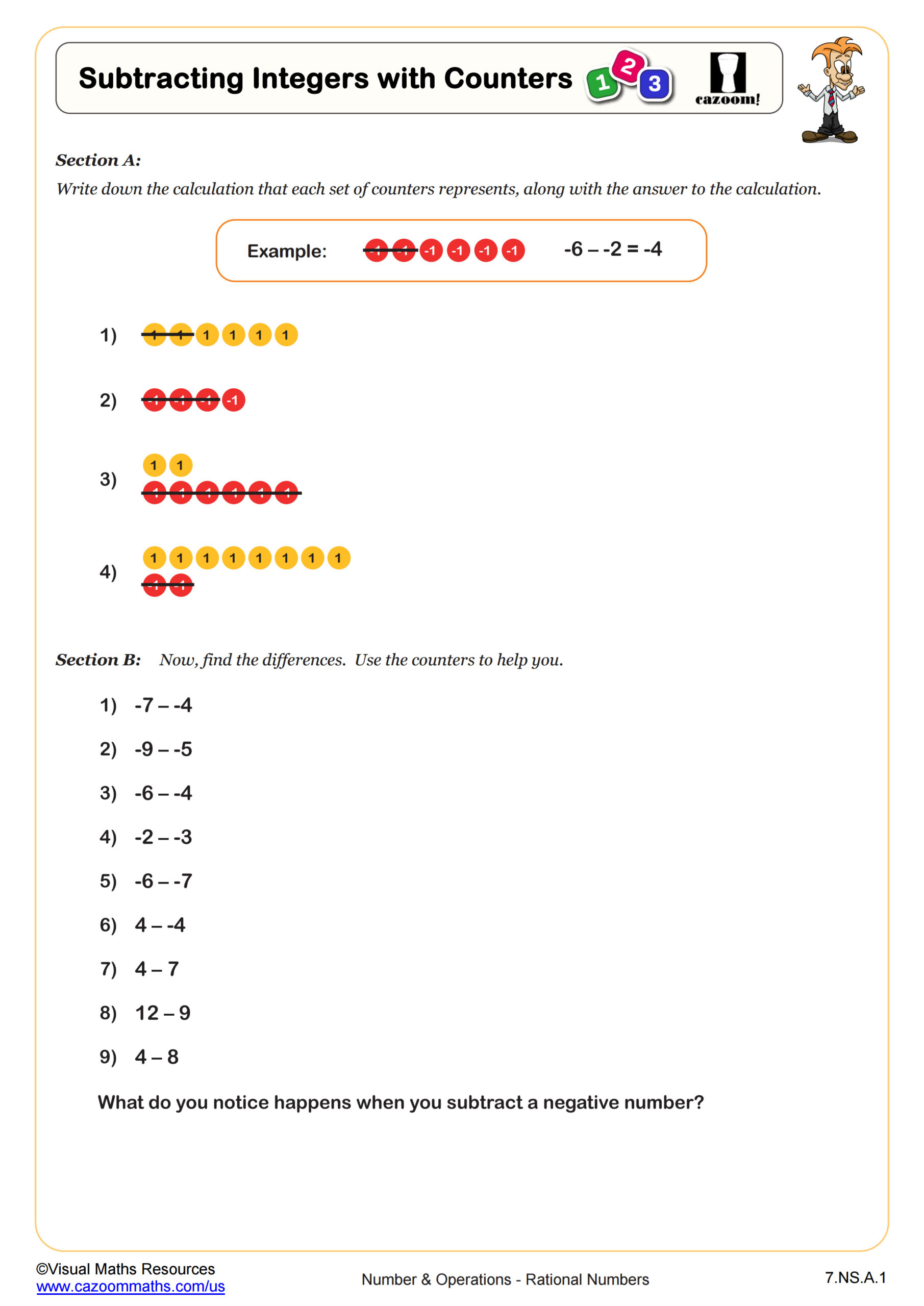
Subtracting Integers with Counters
Grades: 7th Grade
All worksheets are created by the team of experienced teachers at Cazoom Math.
What makes a good rational numbers worksheet pdf for classroom use?
A quality rational numbers worksheet with answers pdf should cover the core components that align with Common Core standards 6.NS.5 through 6.NS.8. This includes plotting rational numbers on coordinate planes, understanding absolute value, and comparing numbers using inequality symbols. The worksheet should progress from concrete examples to abstract reasoning.
Teachers frequently observe that students make errors when comparing negative rational numbers, often thinking that -3 is greater than -1 because 3 is greater than 1. Effective worksheets address this misconception directly through number line activities and real-world temperature or elevation problems that help students visualize the relationships between negative rational numbers.
How do rational number worksheets adapt across different grade levels?
While rational numbers are formally introduced in 6th grade, the concept builds on fraction work from 4th and 5th grades and extends into advanced topics in 7th and 8th grade. Sixth grade worksheets focus on basic identification, plotting on number lines, and simple comparisons. Later grades incorporate operations with rational numbers and more complex coordinate plane work.
Many teachers notice that students who struggled with fraction concepts in earlier grades need additional support when rational numbers expand to include negative values. The worksheets should provide scaffolding that connects familiar positive fractions and decimals to their negative counterparts, helping students see the complete number system rather than treating negative numbers as entirely separate concepts.
What should teachers look for in comparing rational numbers worksheet with answers?
Effective comparing worksheets should include multiple representations: number lines, coordinate grids, and real-world contexts. Students need practice comparing rational numbers in different forms, such as comparing -0.5 to -1/3 or ordering mixed sets of fractions, decimals, and integers. The problems should require students to convert between forms when necessary.
Teachers often find that students can compare rational numbers when they're in the same form but struggle with mixed formats. A strong rational number worksheet addresses this by including problems that require strategic thinking about equivalent forms. For instance, students might need to convert -3/4 to -0.75 to compare it with -0.8, developing number sense alongside procedural skills.
How can teachers maximize student learning with rational numbers worksheets?
Teachers get the best results when they use worksheets as part of a balanced approach that includes hands-on activities and discussion. The answer keys allow for quick formative assessment, but teachers should encourage students to explain their reasoning rather than just checking for correct answers. Group work helps students verbalize their thinking about number relationships.
Many educators find success in having students create their own rational number problems after completing worksheet practice. This approach helps identify whether students truly understand the concepts or are simply following procedures. Teachers can also extend worksheet problems by asking students to explain why certain comparisons make sense in real-world contexts, such as why -10°F is colder than -5°F despite 10 being greater than 5 in absolute terms.