Reason With Shapes Worksheets
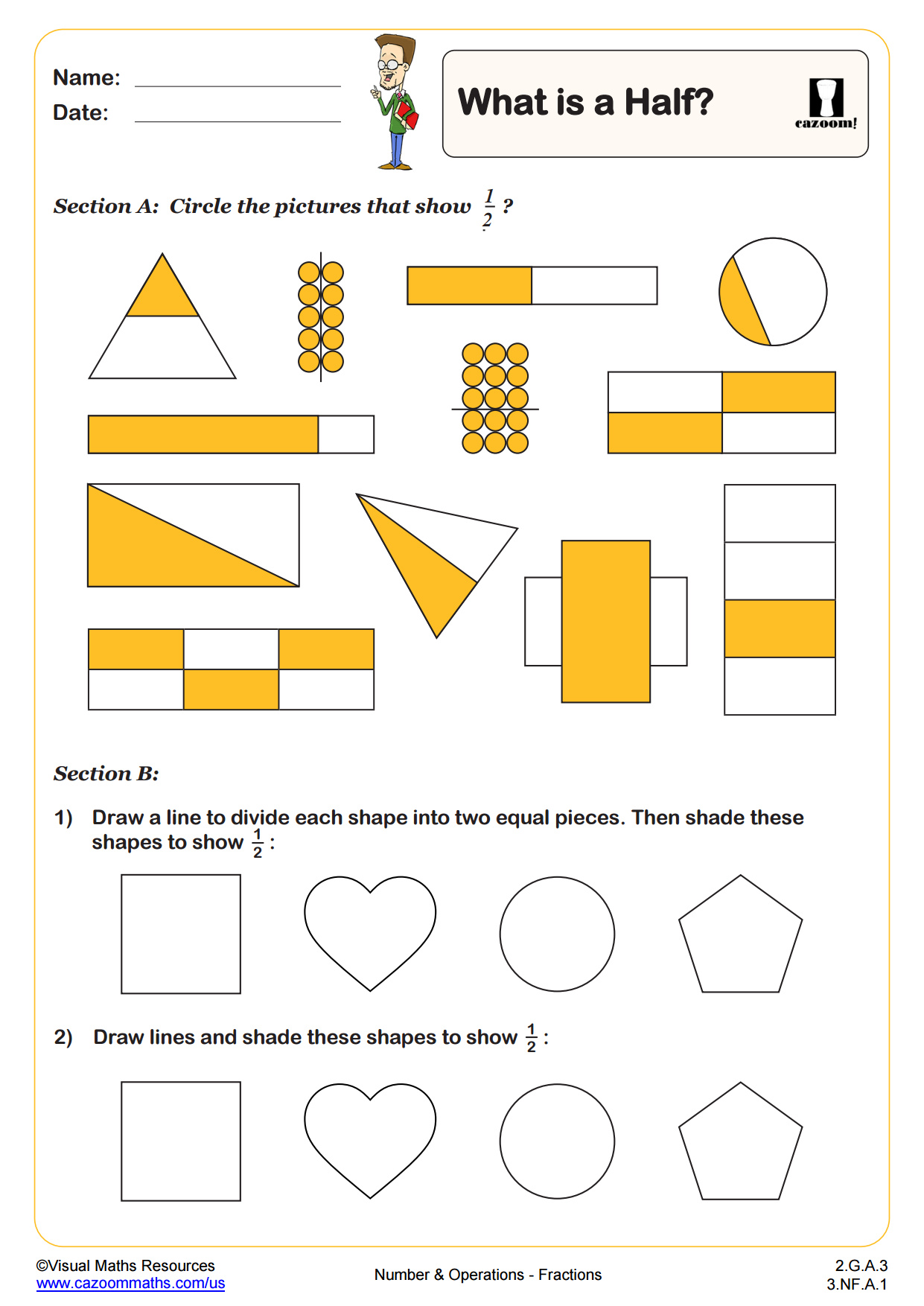
What is a Half
Grades: 2nd Grade, 3rd Grade
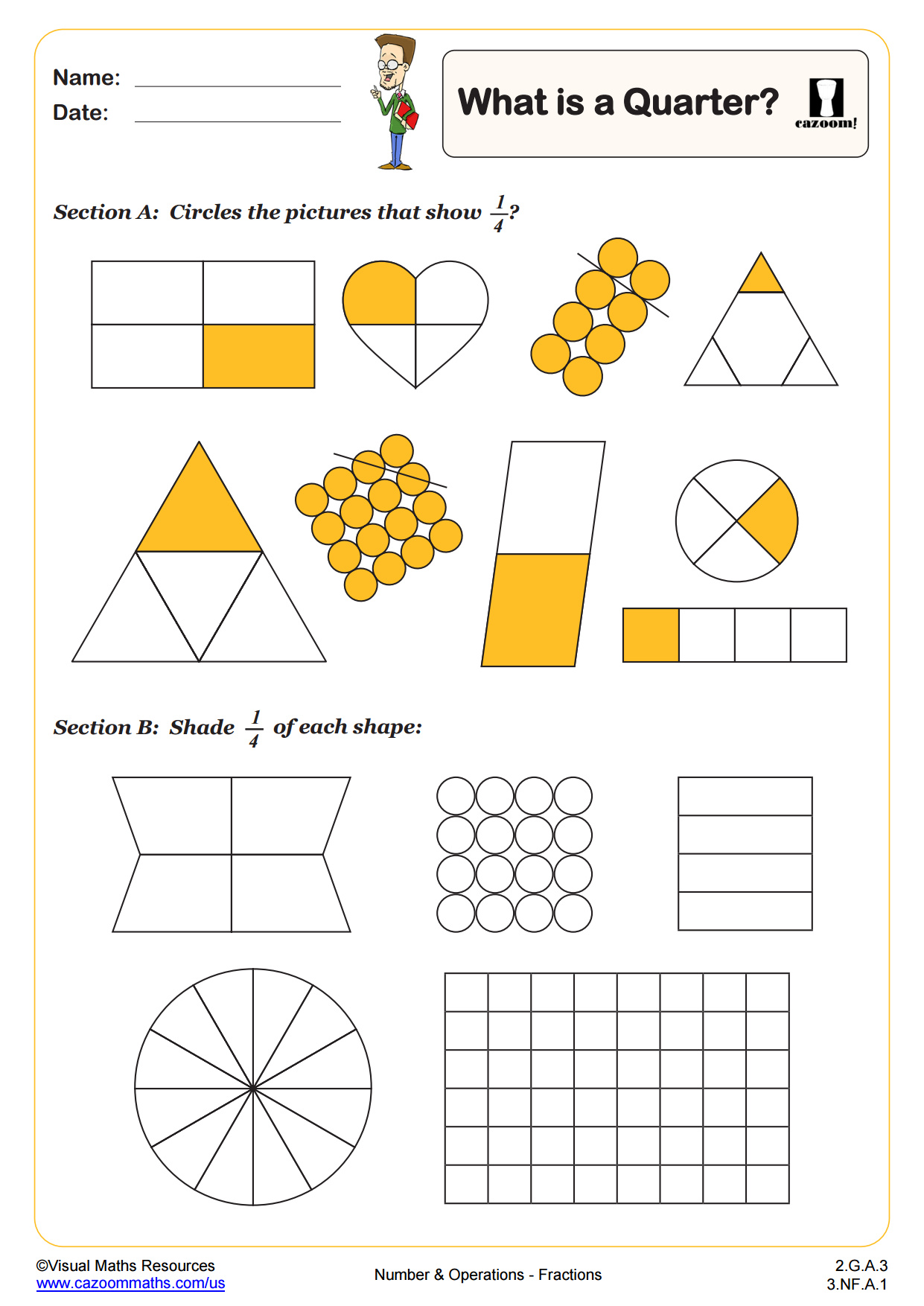
What is a Quarter
Grades: 2nd Grade, 3rd Grade
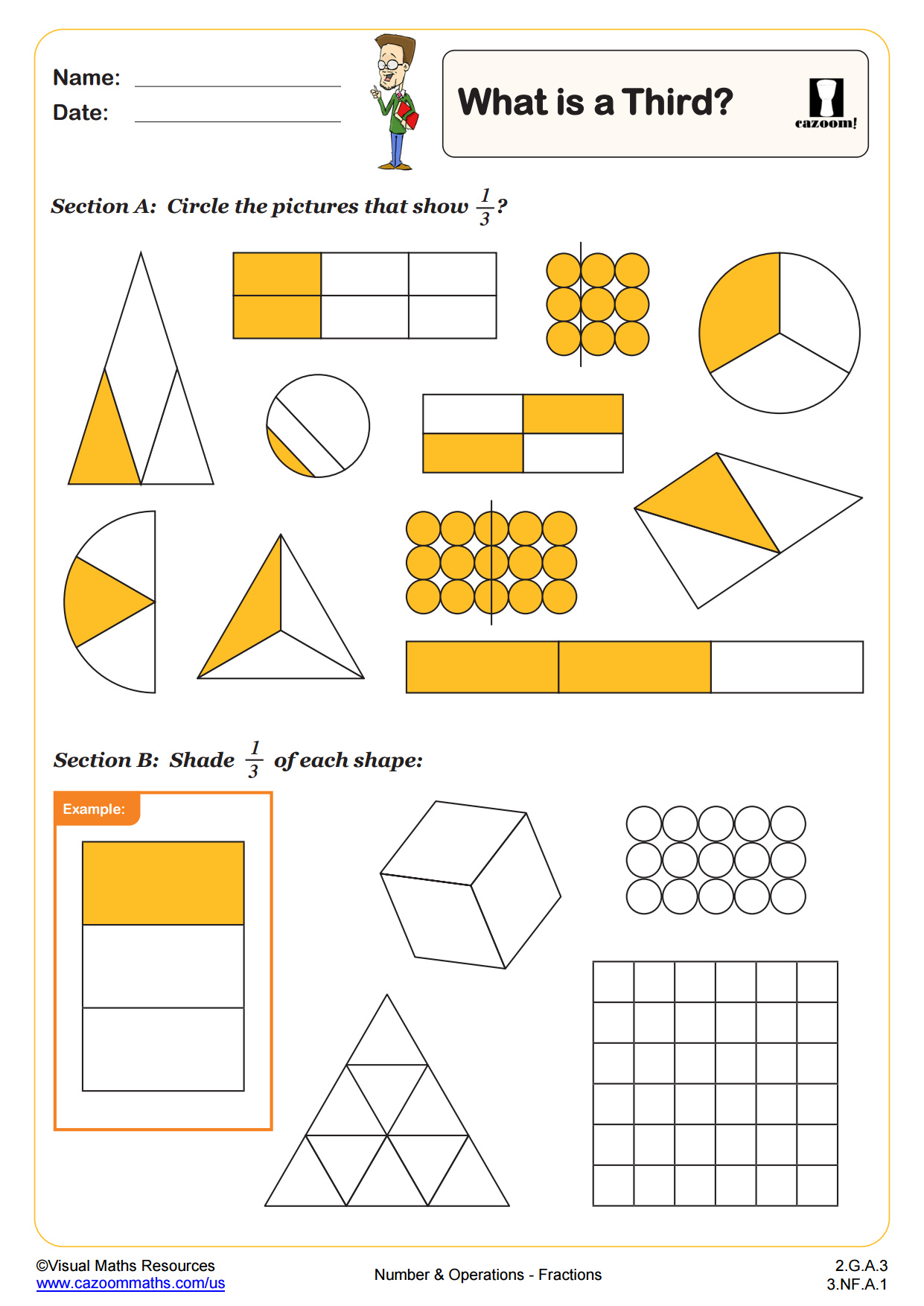
What is a Third
Grades: 2nd Grade, 3rd Grade
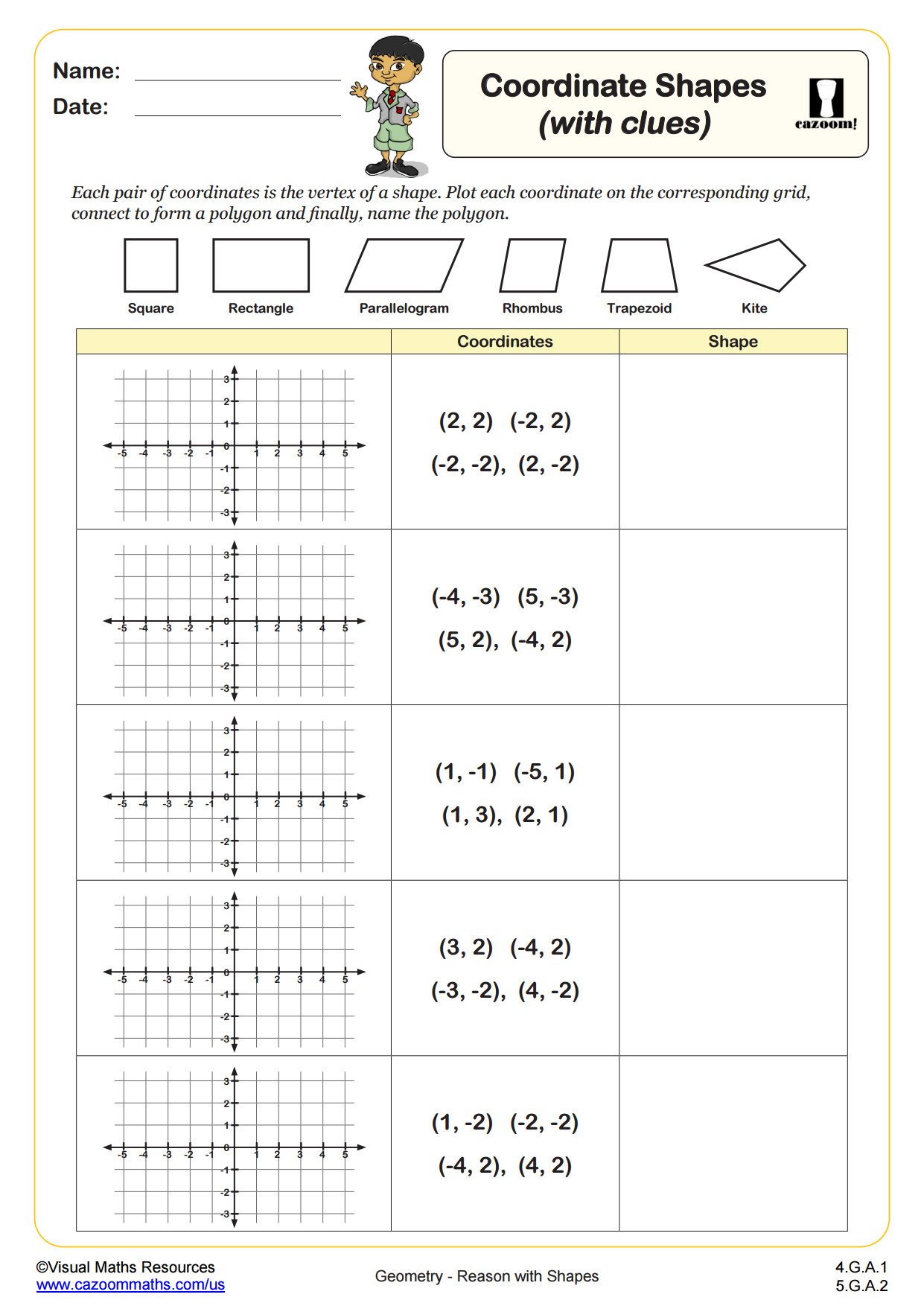
Coordinate Shapes (with clues)
Grades: 4th Grade, 5th Grade
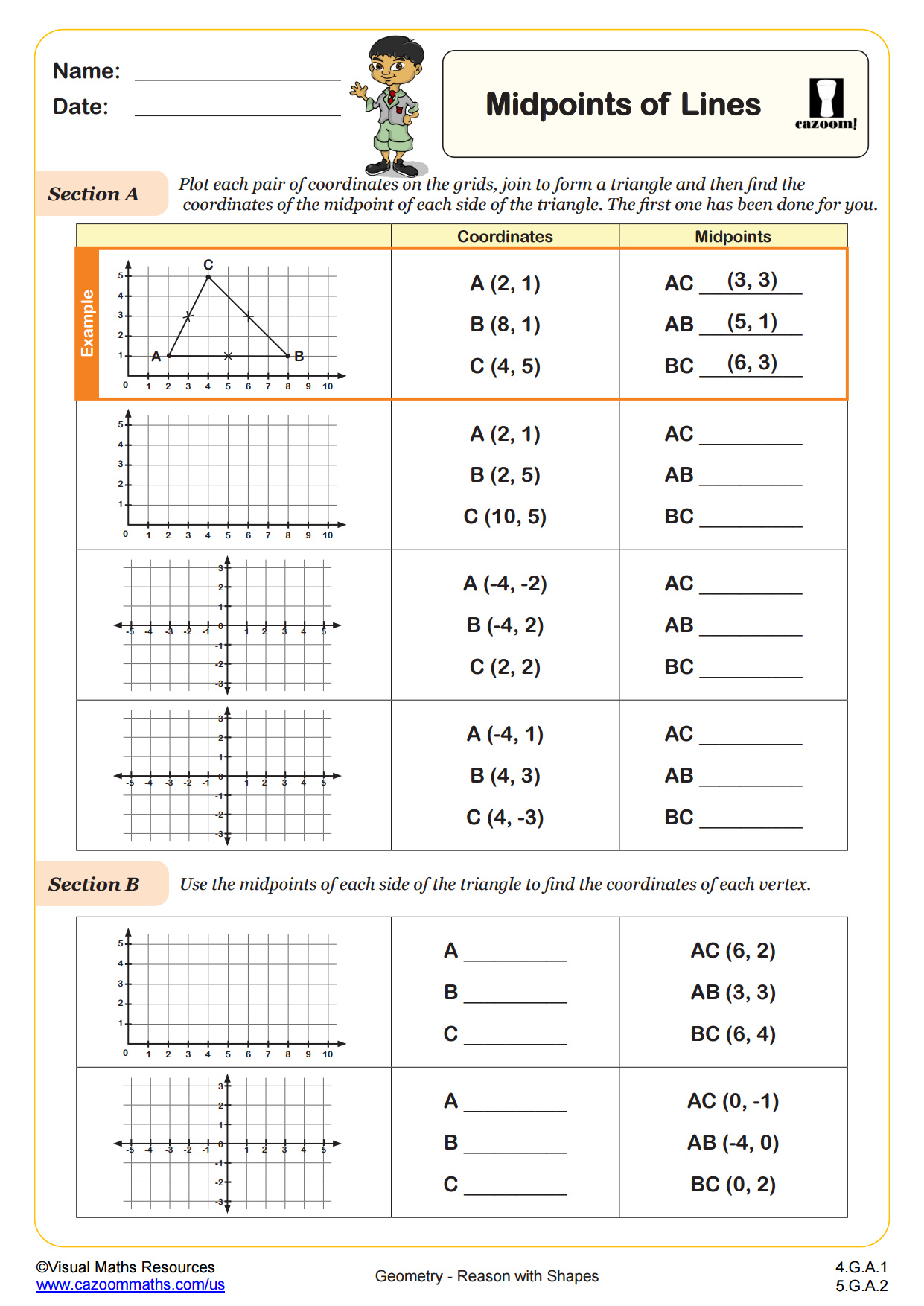
Midpoints of Lines
Grades: 4th Grade, 5th Grade
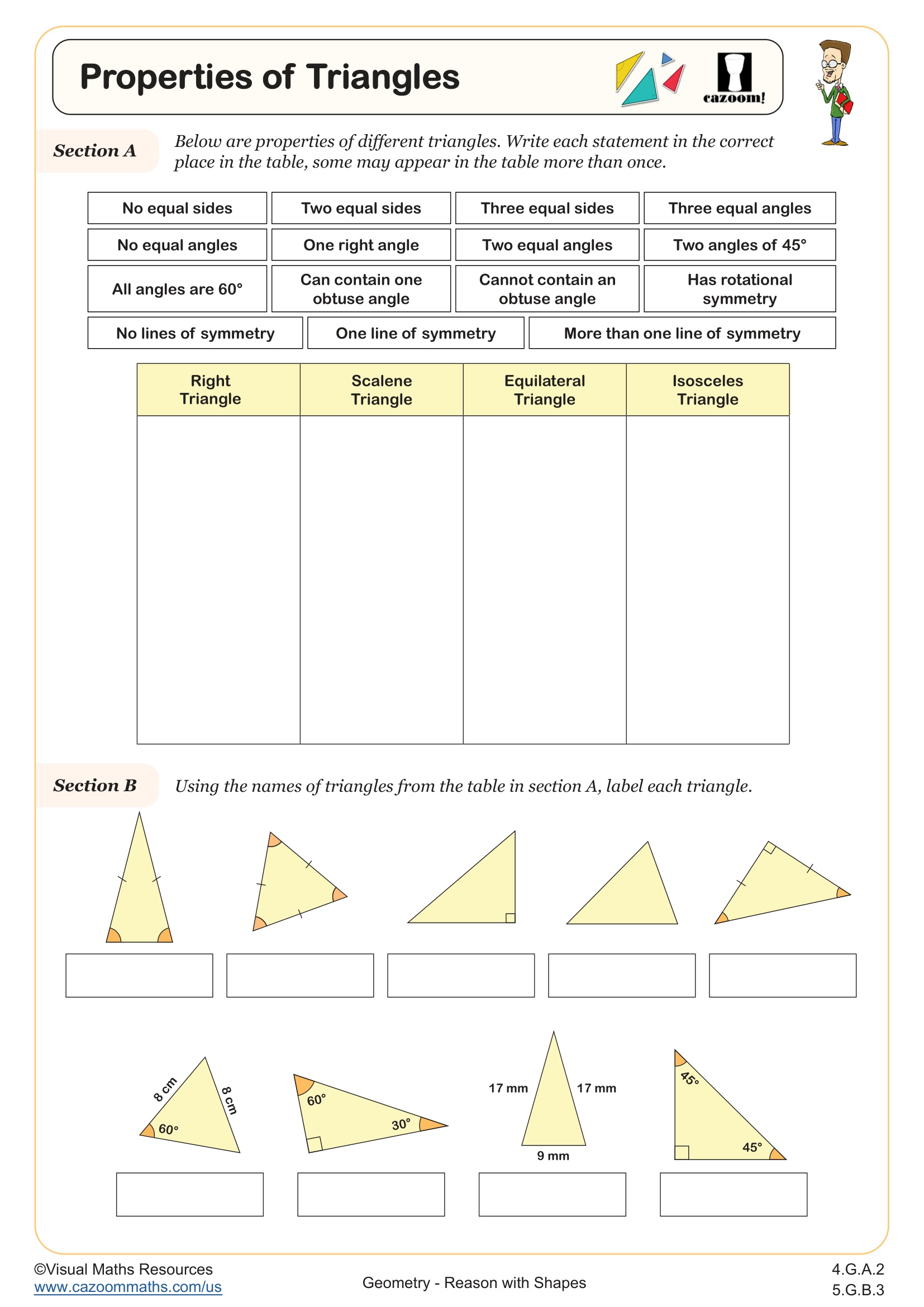
Properties of triangles
Grades: 4th Grade, 5th Grade
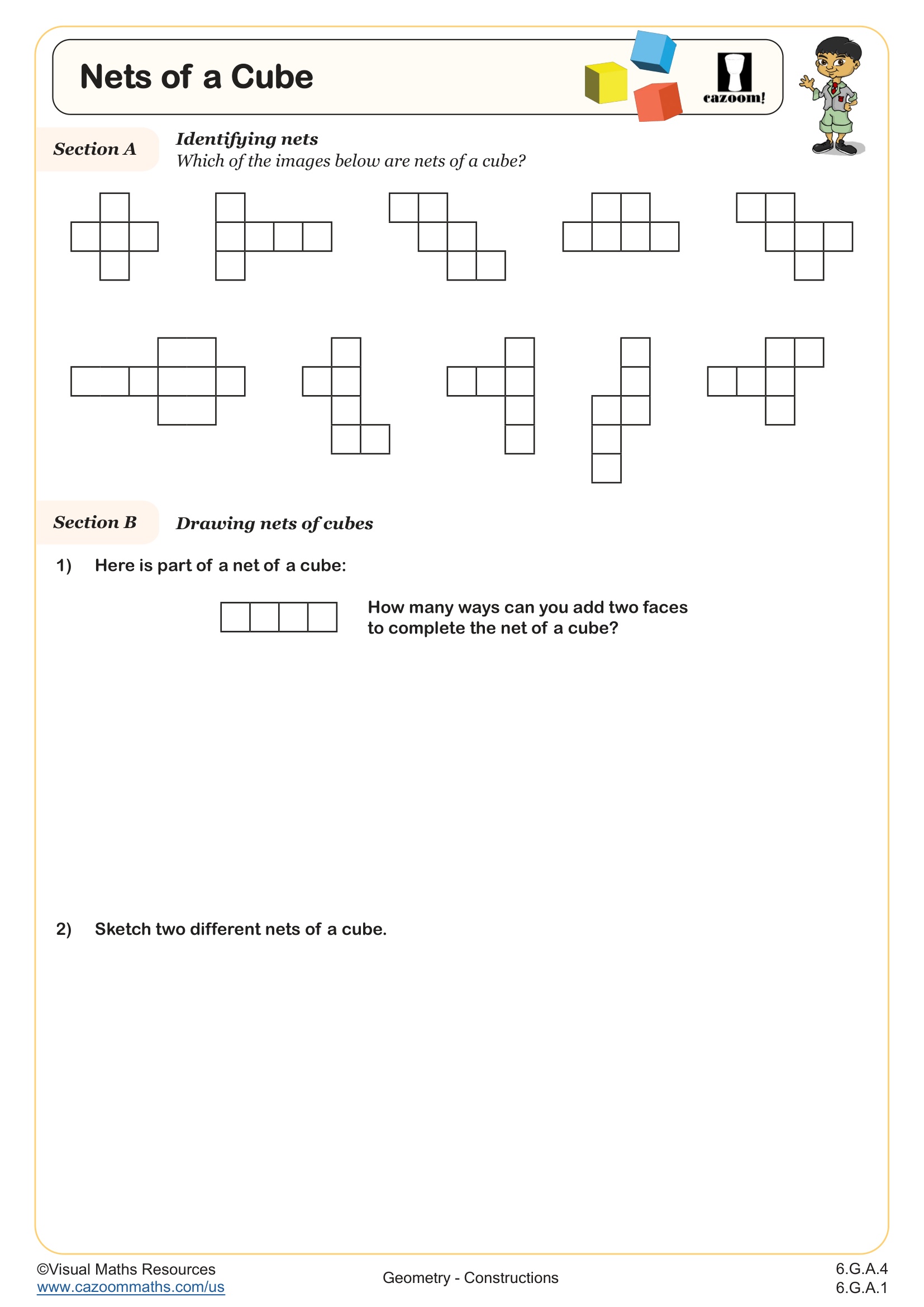
Nets of a Cube
Grades: 6th Grade
All worksheets are created by the team of experienced teachers at Cazoom Math.
How do students find the correct answer when reasoning with shapes?
Students find the correct answer by systematically analyzing shape properties, comparing attributes, and using logical reasoning to support their conclusions. The Common Core emphasizes mathematical reasoning alongside computational skills, requiring students to justify their geometric thinking with evidence and clear explanations.
Teachers frequently observe that students initially struggle with open-ended reasoning tasks because they expect single correct answers. Many students need scaffolding to understand that geometric reasoning involves explaining why an answer is correct, not just identifying it. The most successful approach involves teaching students to organize their thinking through structured questioning and visual proof methods.
Which grade levels benefit most from shape reasoning activities?
Elementary students in grades 2-5 develop foundational reasoning skills by analyzing basic shape properties, while middle school students tackle more complex geometric relationships and proof concepts. High school geometry students use formal reasoning to construct mathematical arguments and explore advanced spatial relationships.
The progression builds naturally across grade levels, with younger students focusing on observable properties like number of sides or angles, while older students engage in deductive reasoning and formal geometric proofs. Teachers notice that students who master early reasoning skills in elementary grades show stronger performance in high school geometry courses.
What makes geometric reasoning different from shape identification?
Geometric reasoning requires students to analyze relationships, make predictions, and justify conclusions about shapes, while identification simply involves naming geometric figures. Students must connect visual information to mathematical properties and communicate their thinking through logical arguments and evidence.
Classroom observations show that many students can quickly identify a rectangle but struggle to explain why all rectangles are parallelograms or how to distinguish between similar quadrilaterals. The reasoning process involves understanding hierarchical relationships between shape categories and applying geometric definitions to make mathematical arguments that others can follow and verify.
How should teachers implement these reasoning worksheets effectively?
Teachers achieve better results by modeling the reasoning process explicitly before students work independently, demonstrating how to organize thoughts and present logical arguments. The most effective approach involves guided practice where students draw and show their thinking process through diagrams paired with written explanations.
Many educators find success using think-pair-share activities where students first reason individually, then discuss their approaches with peers before sharing with the class. This strategy helps students recognize multiple valid reasoning paths and builds confidence in mathematical communication. The answers PDF allows teachers to prepare for common student misconceptions and plan targeted interventions.
Requisite Knowledge Before Learning to Reason with Shapes
Before using these worksheets, students should be able to:
• Recognize and name basic 2D and 3D shapes
• Count sides, corners, and edges
• Use words like “next to,” “under,” “above,” and “beside”
• Match and sort objects by shape, size, or color
Our worksheets review these concepts while gently introducing deeper reasoning and spatial thinking.