Probability Worksheets With Answers
Grouped Frequency Tables
Grades: 6th Grade, 7th Grade
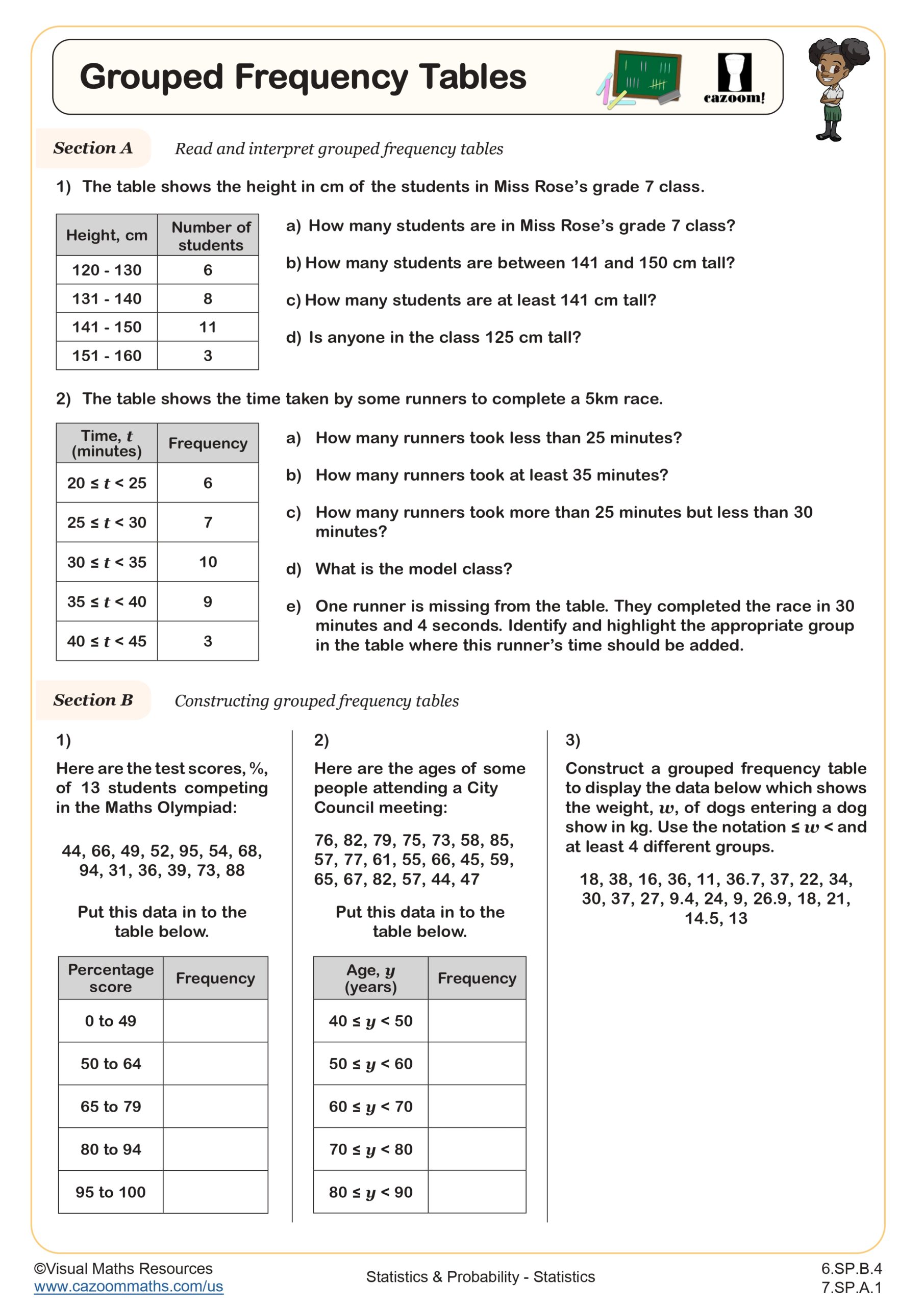
Calculating Probability
Grades: 7th Grade
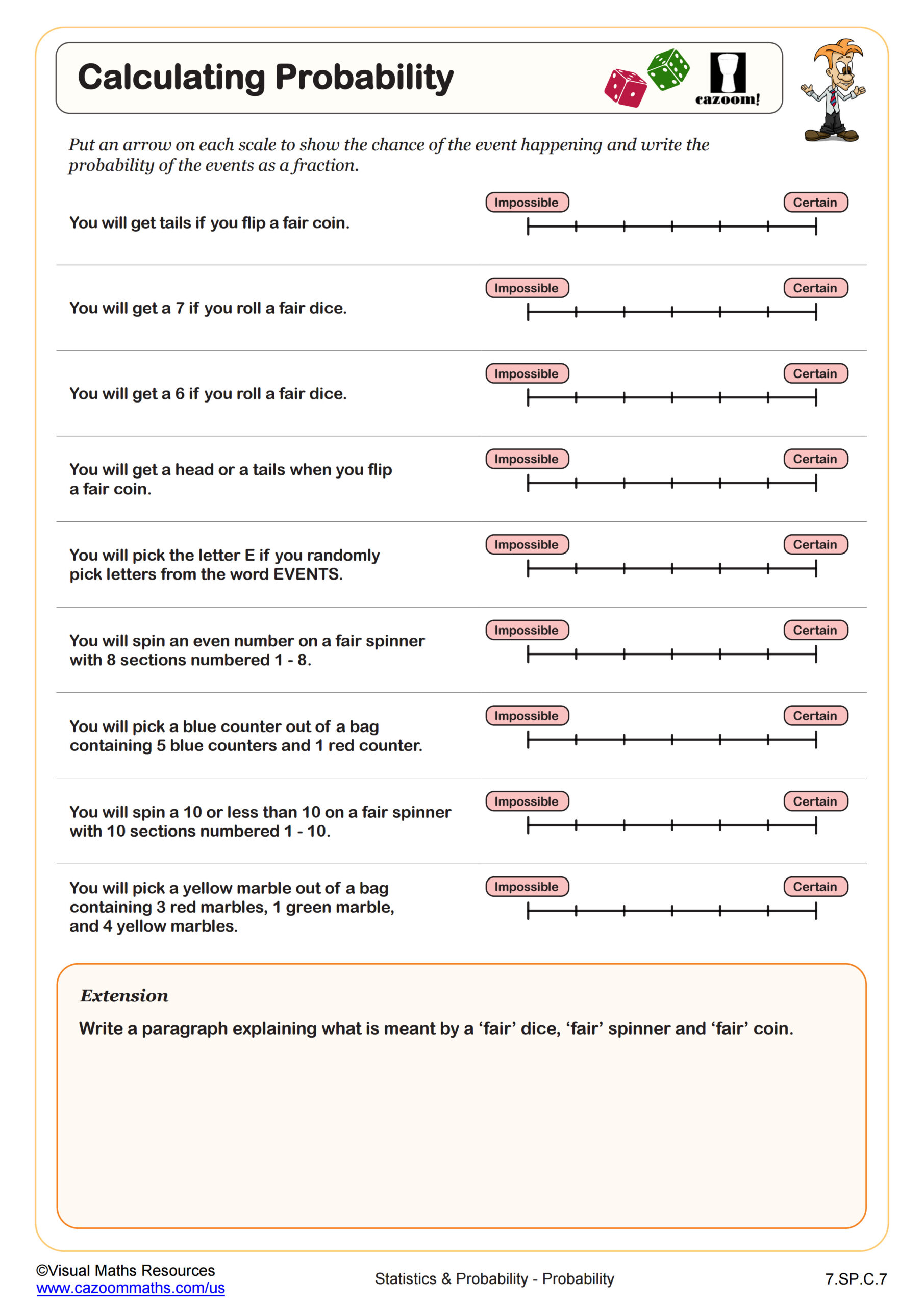
Compound Events
Grades: 7th Grade
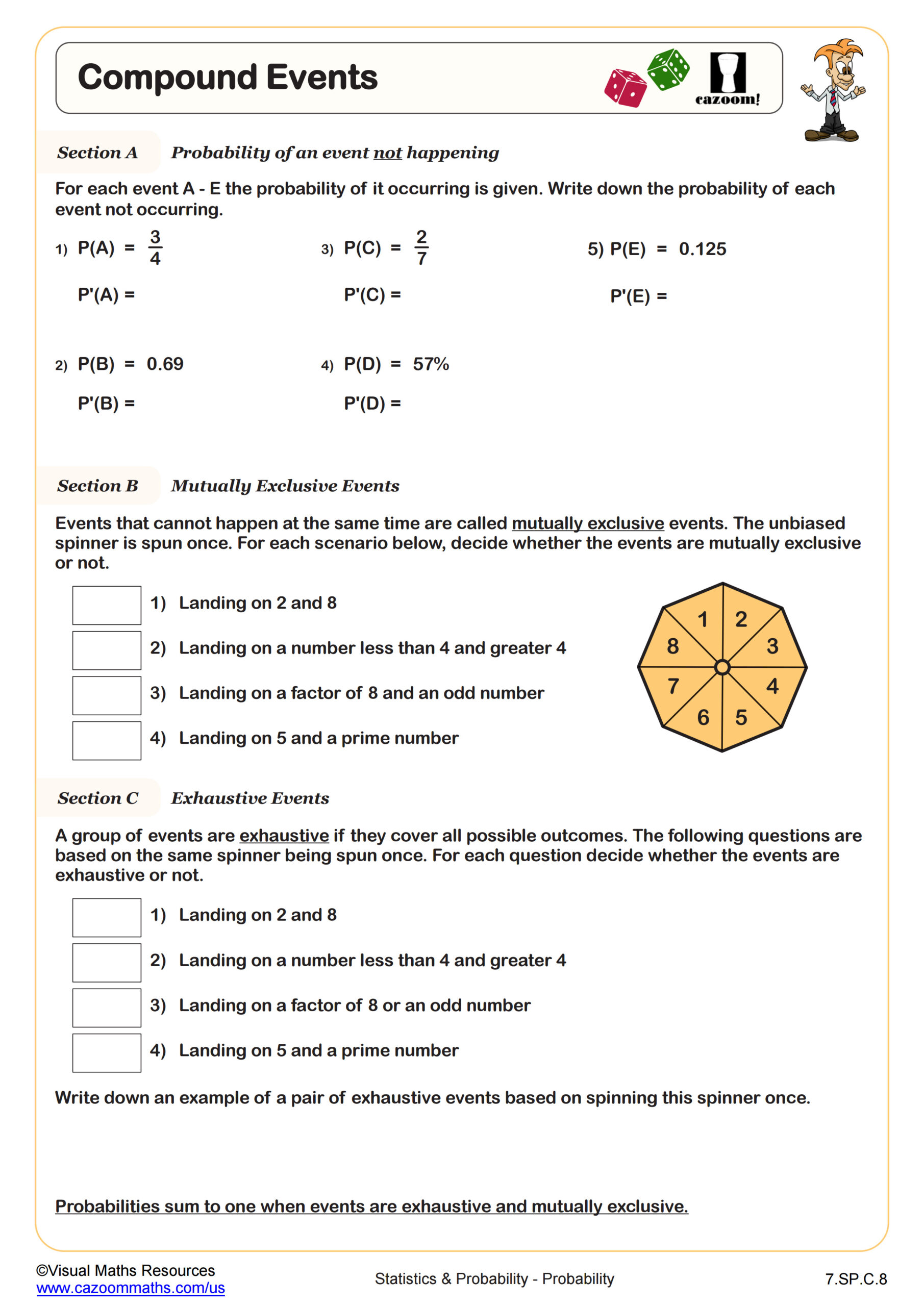
Evaluating Probability Statements
Grades: 7th Grade
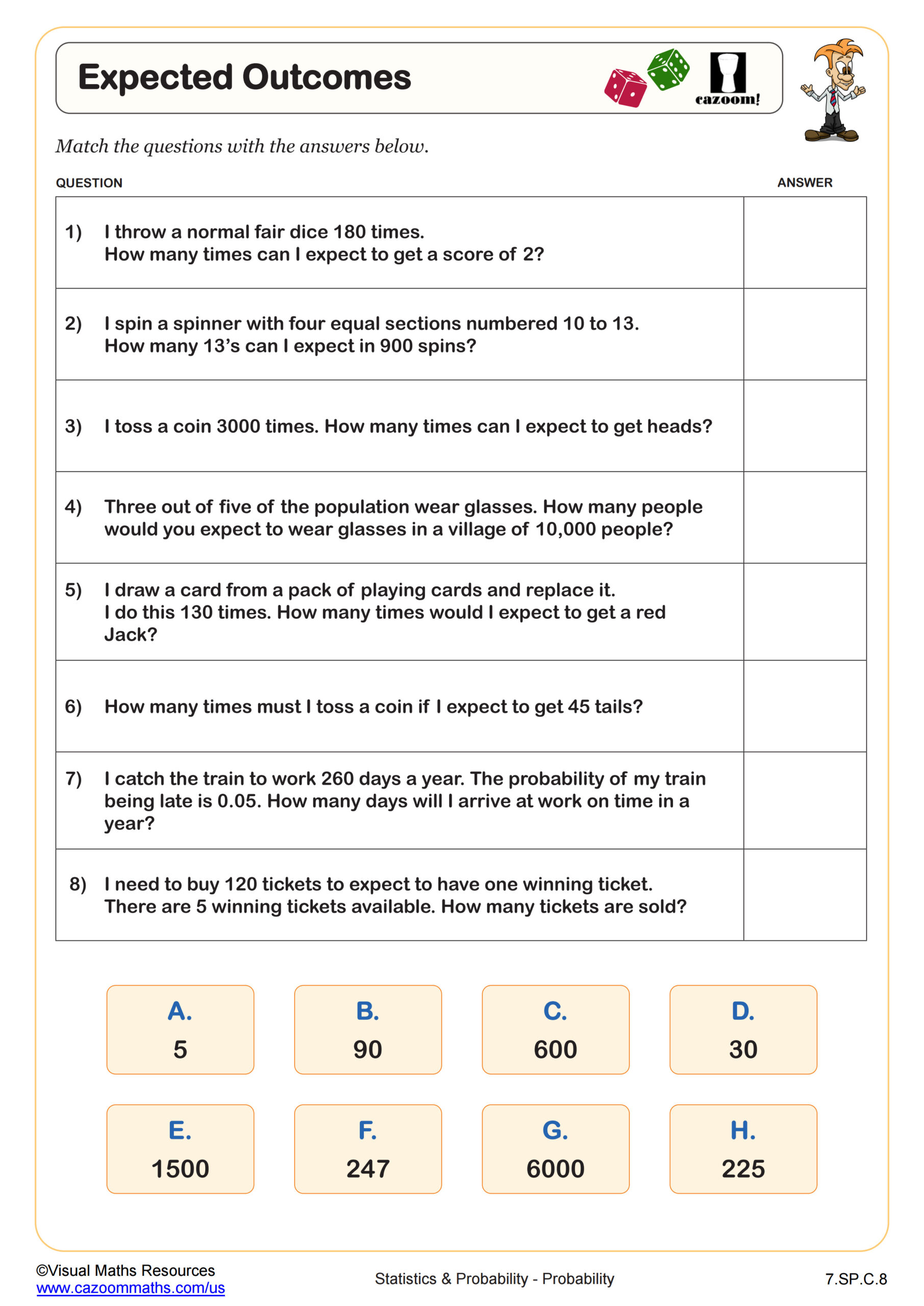
Expected Outcomes
Grades: 7th Grade
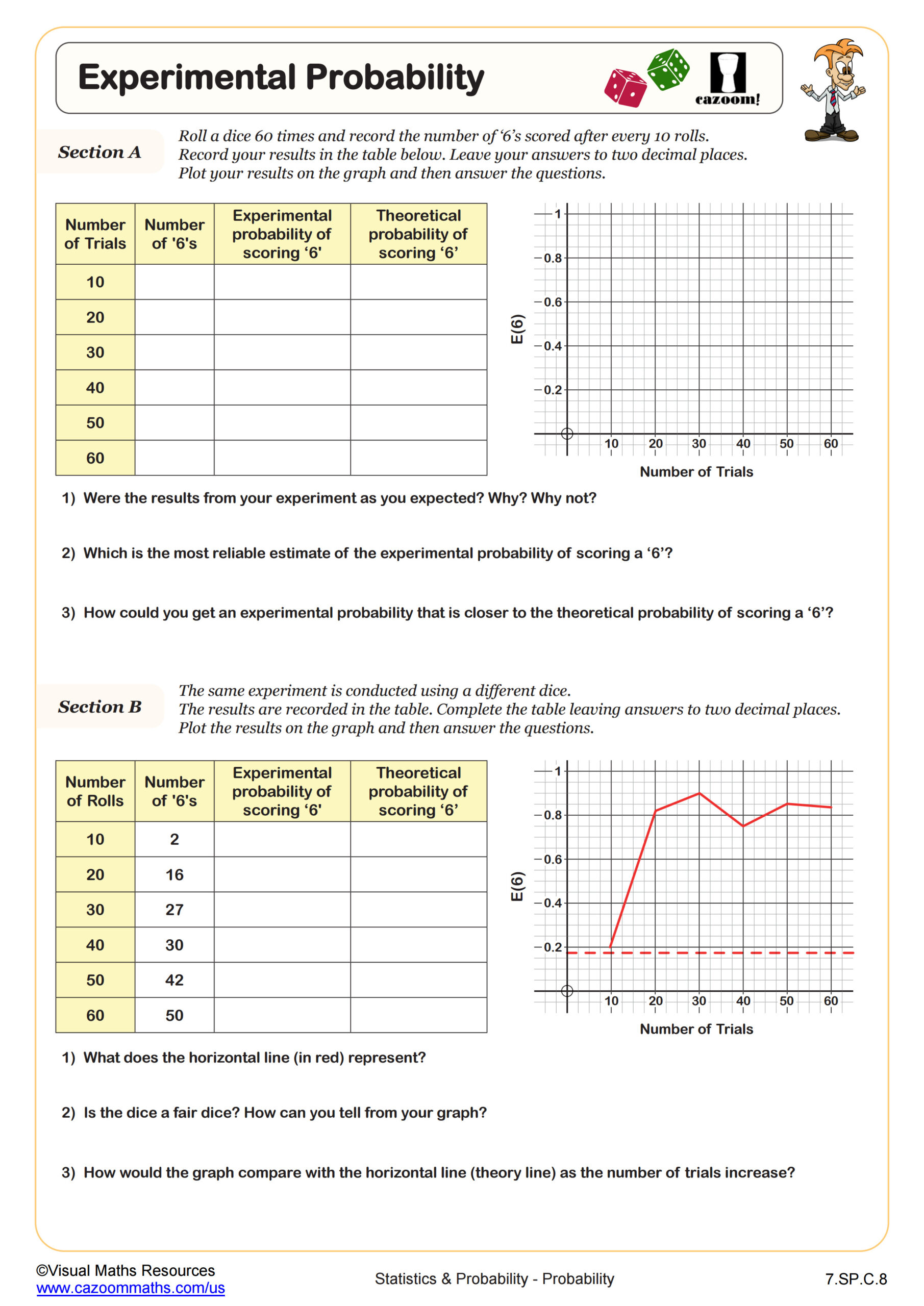
Experimental Probability
Grades: 7th Grade
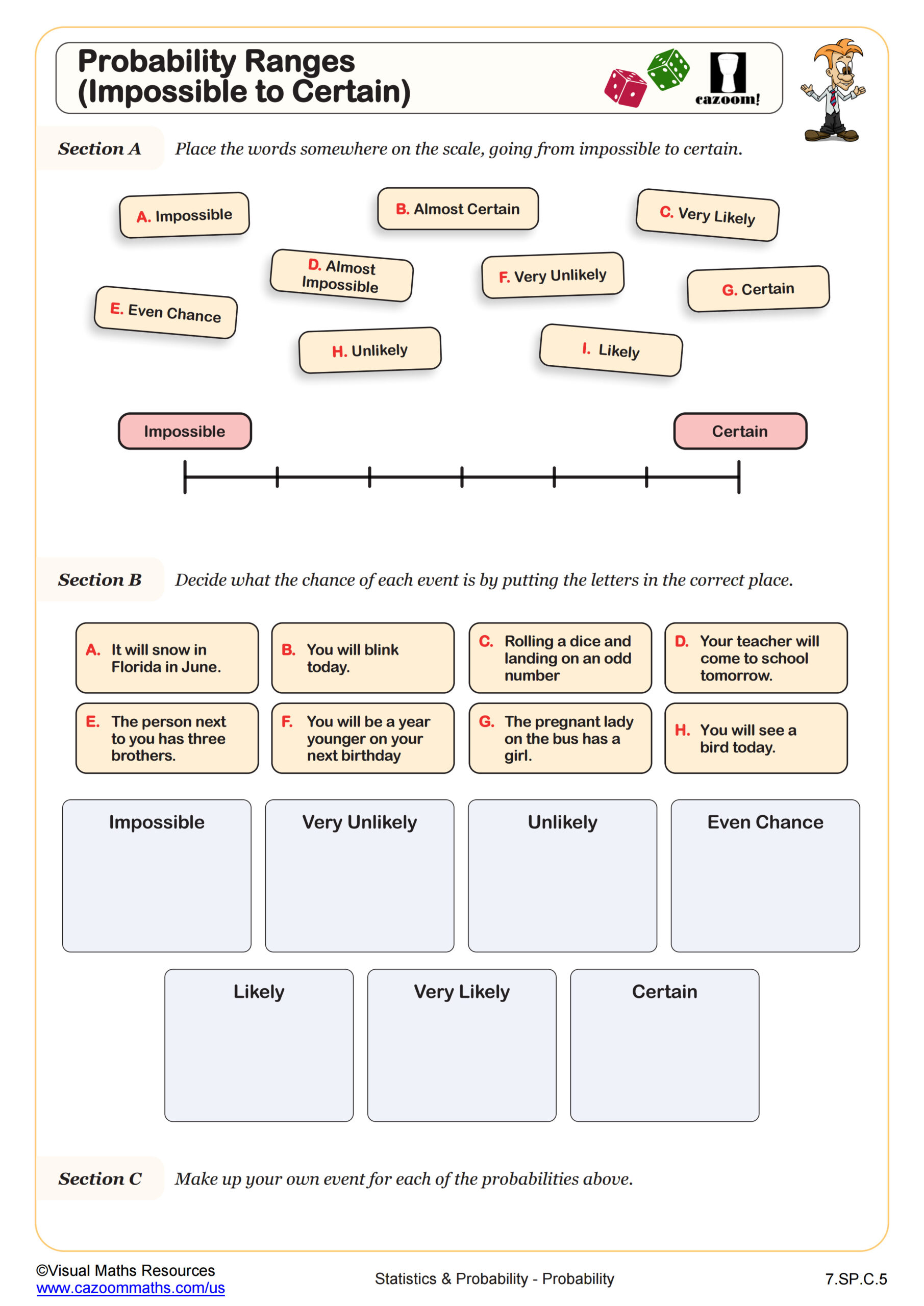
Probability Ranges (Impossible to Certain)
Grades: 7th Grade
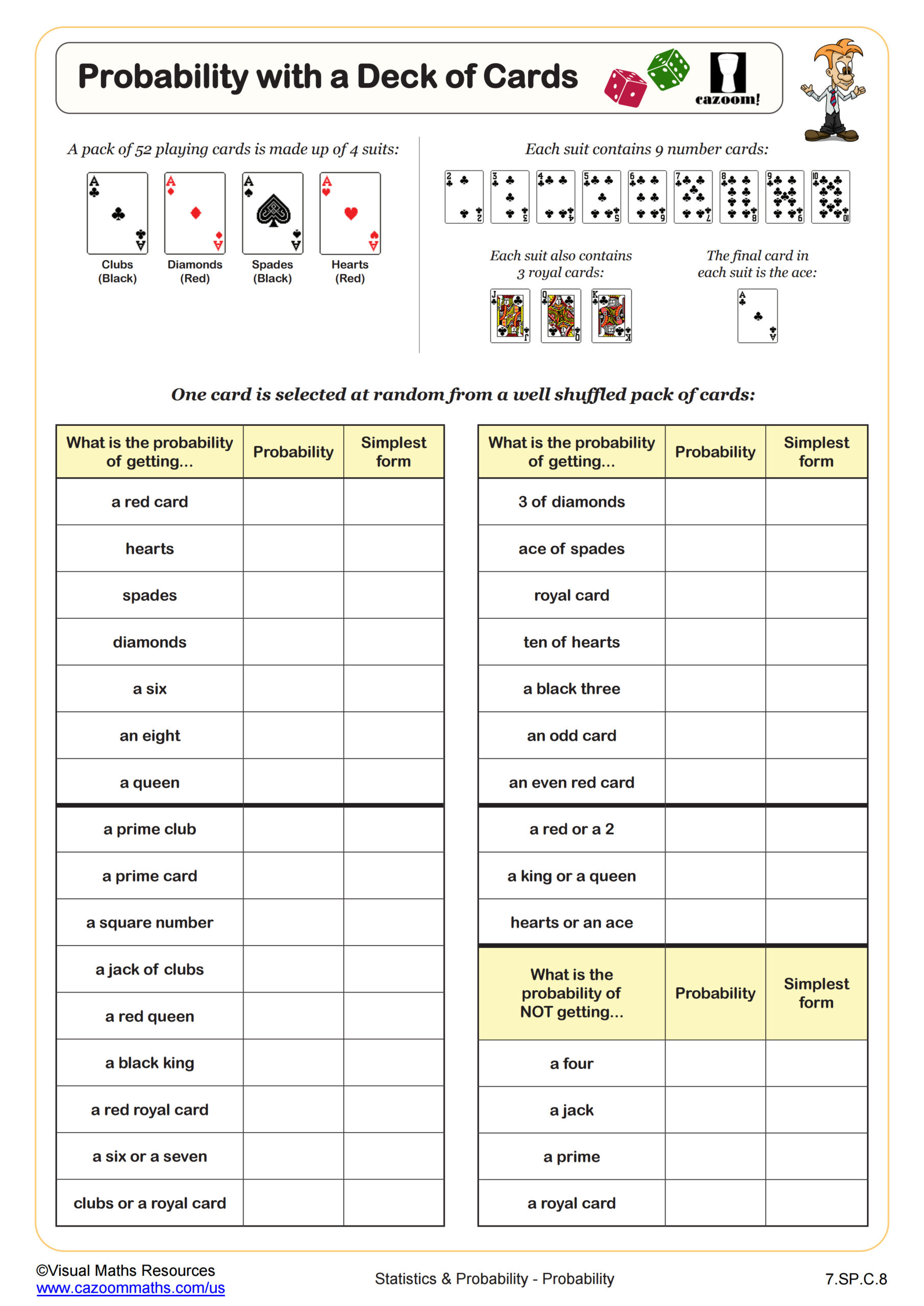
Probability with a Deck of Cards
Grades: 7th Grade
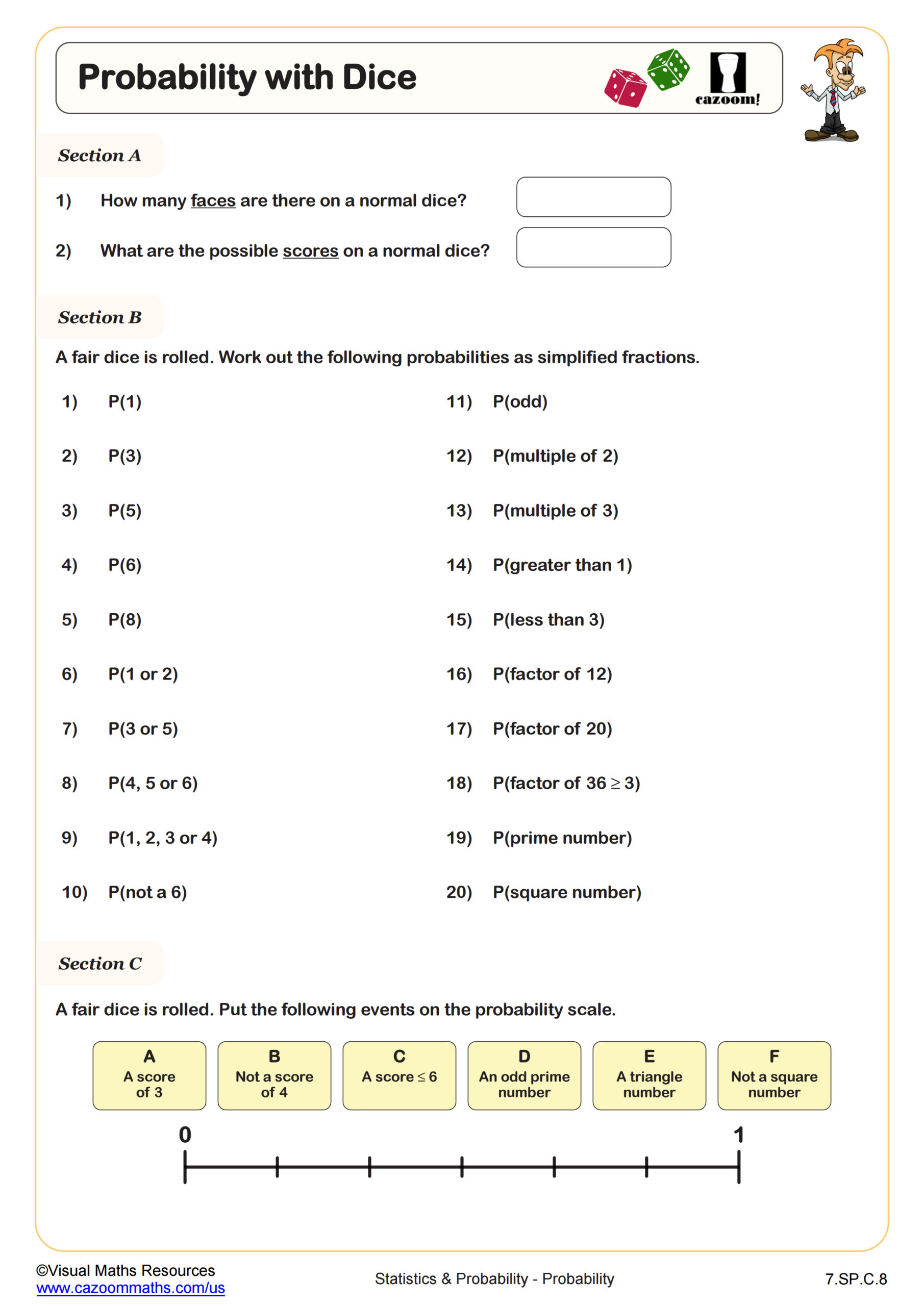
Probability with Dice
Grades: 7th Grade
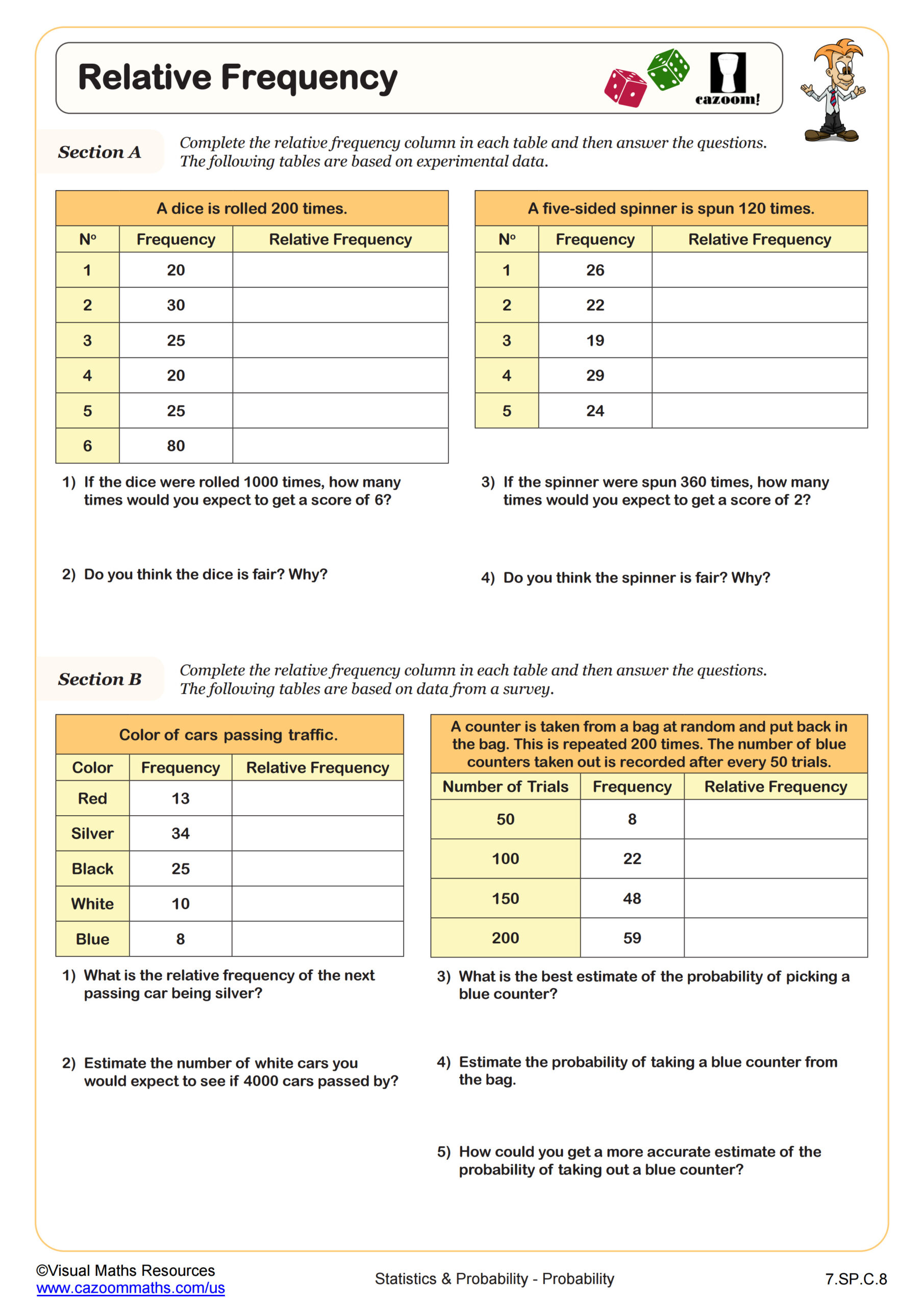
Relative Frequency
Grades: 7th Grade
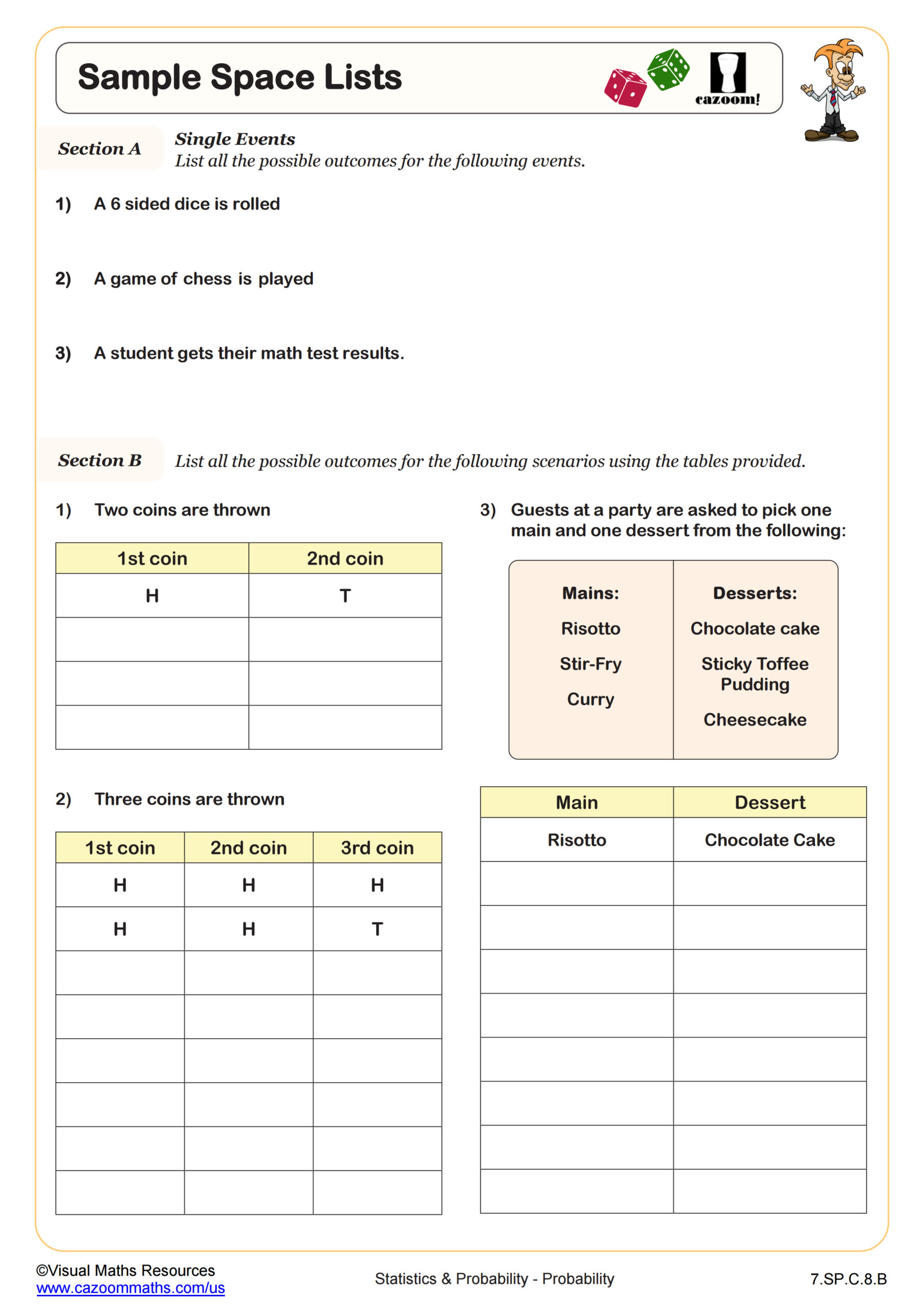
Sample Space Lists
Grades: 7th Grade
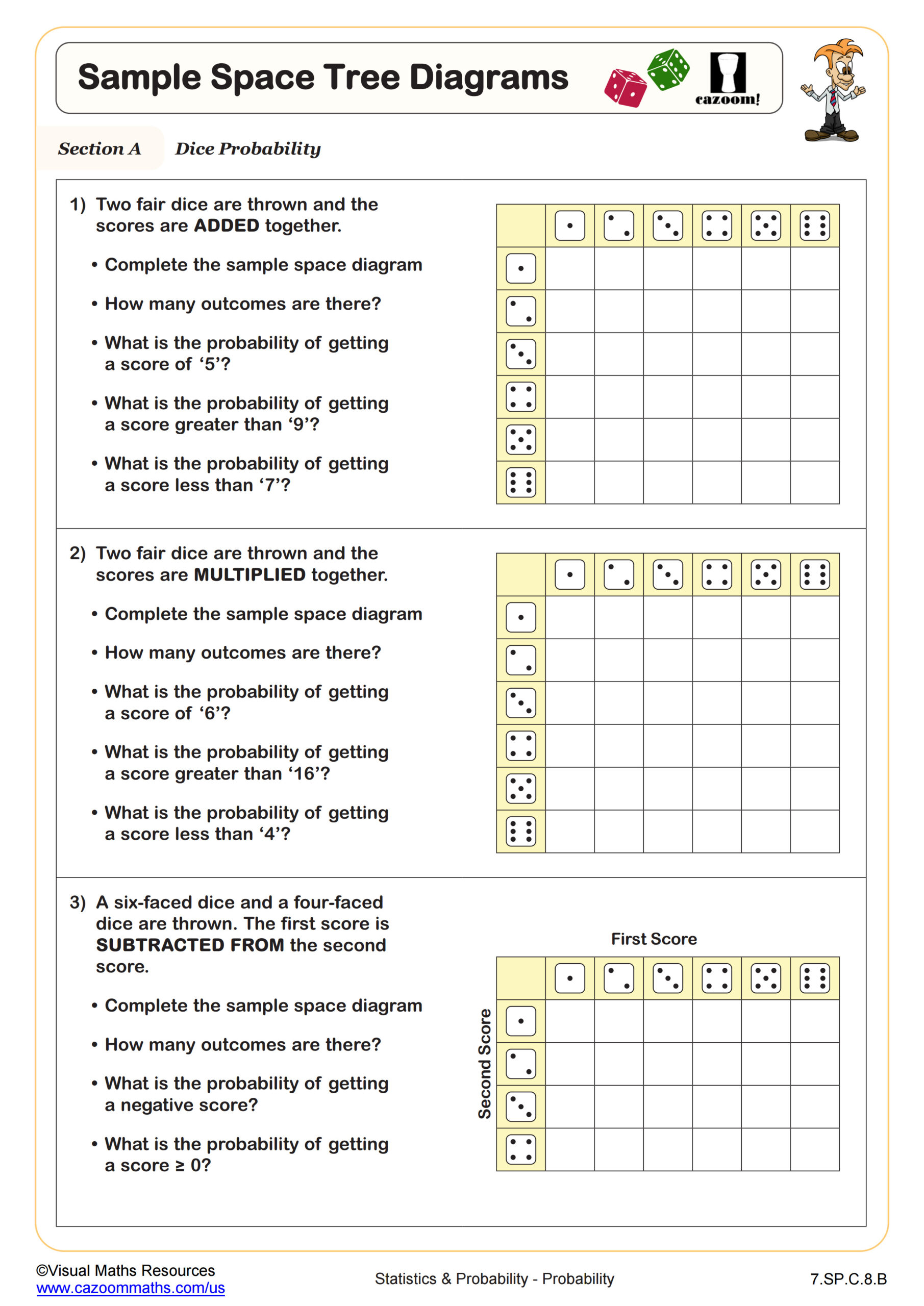
Sample Space Tree Diagrams
Grades: 7th Grade
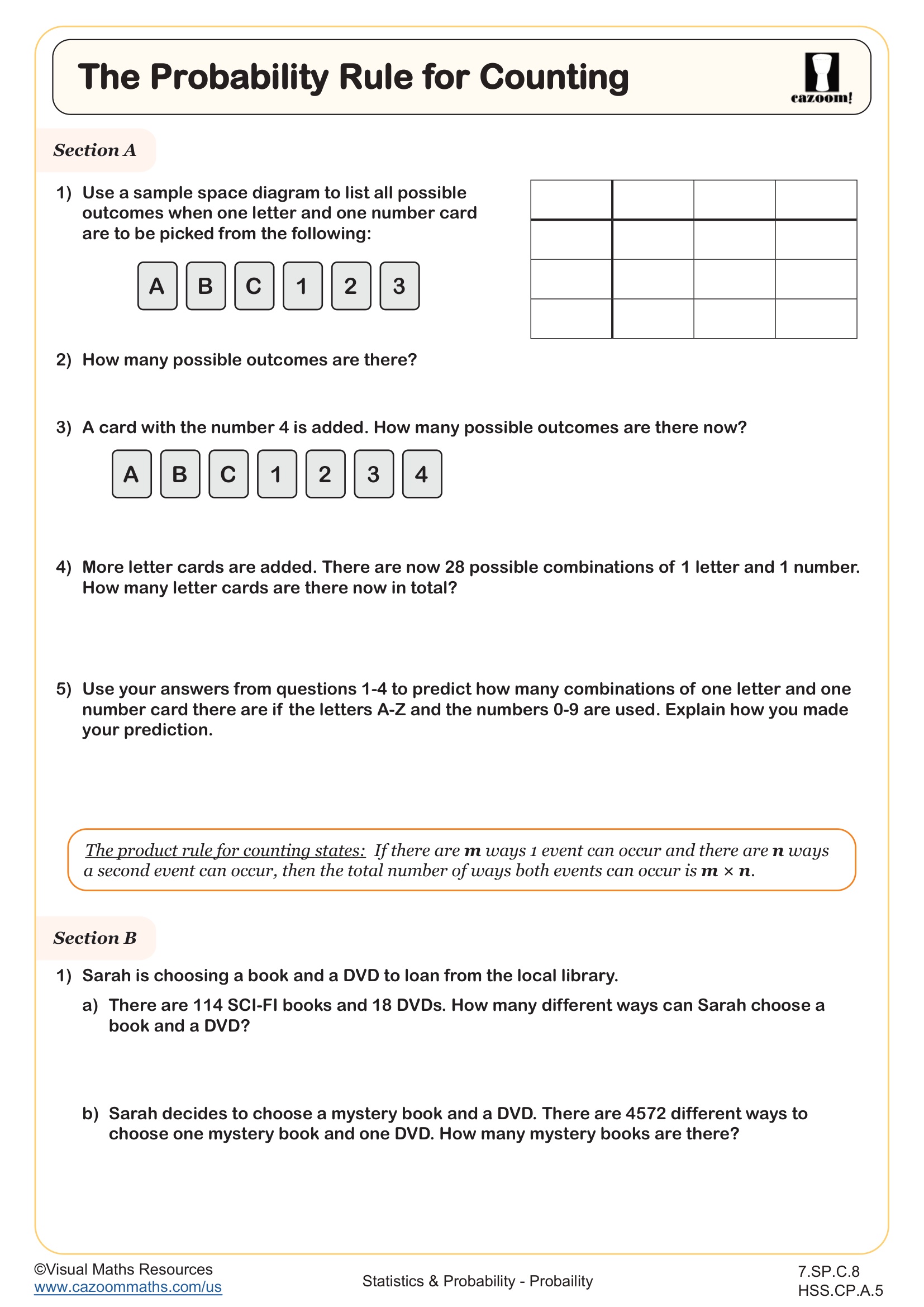
The Probability Rule for Counting
Grades: 7th Grade, Algebra I, IM 1
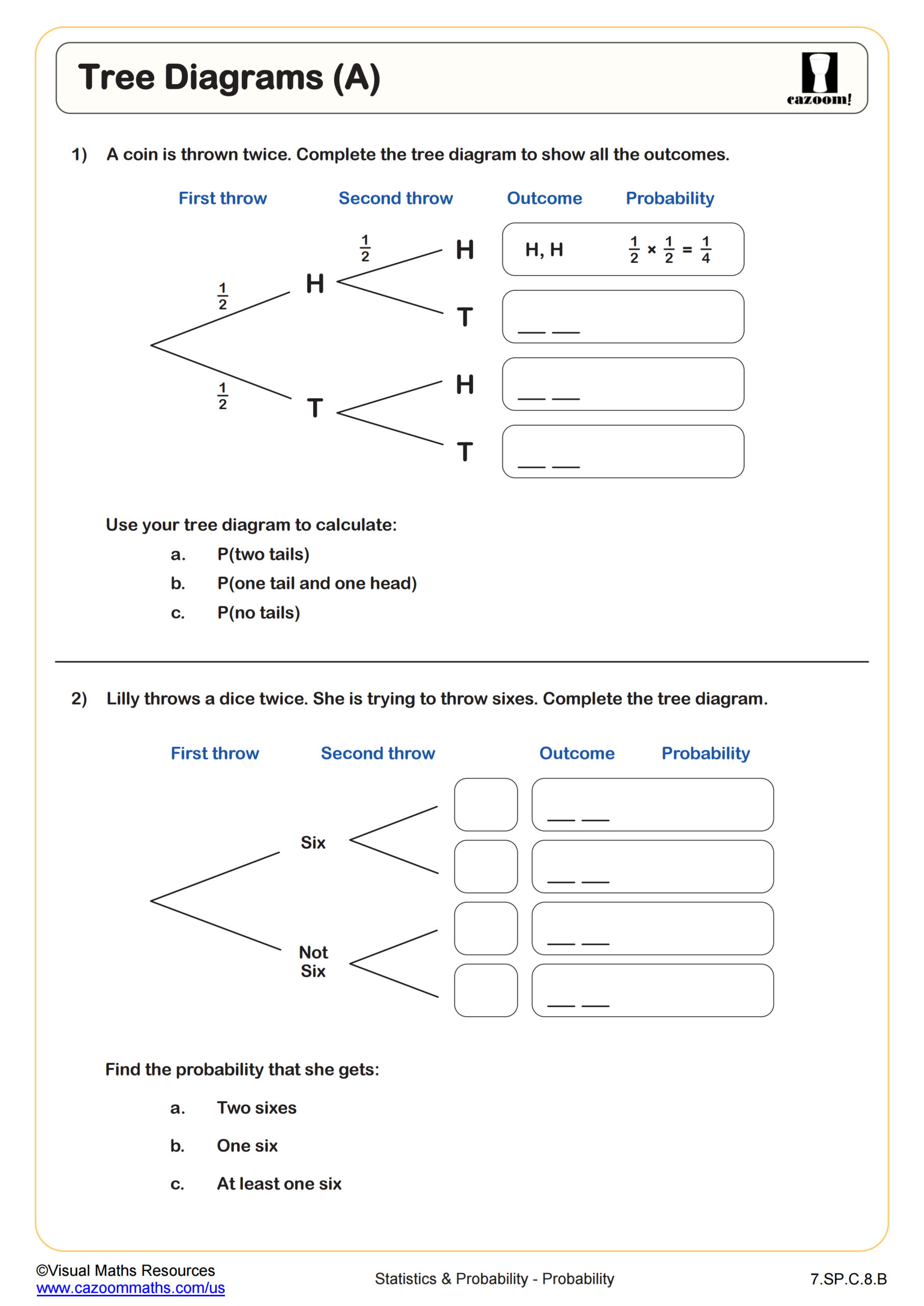
Tree Diagrams (A)
Grades: 7th Grade
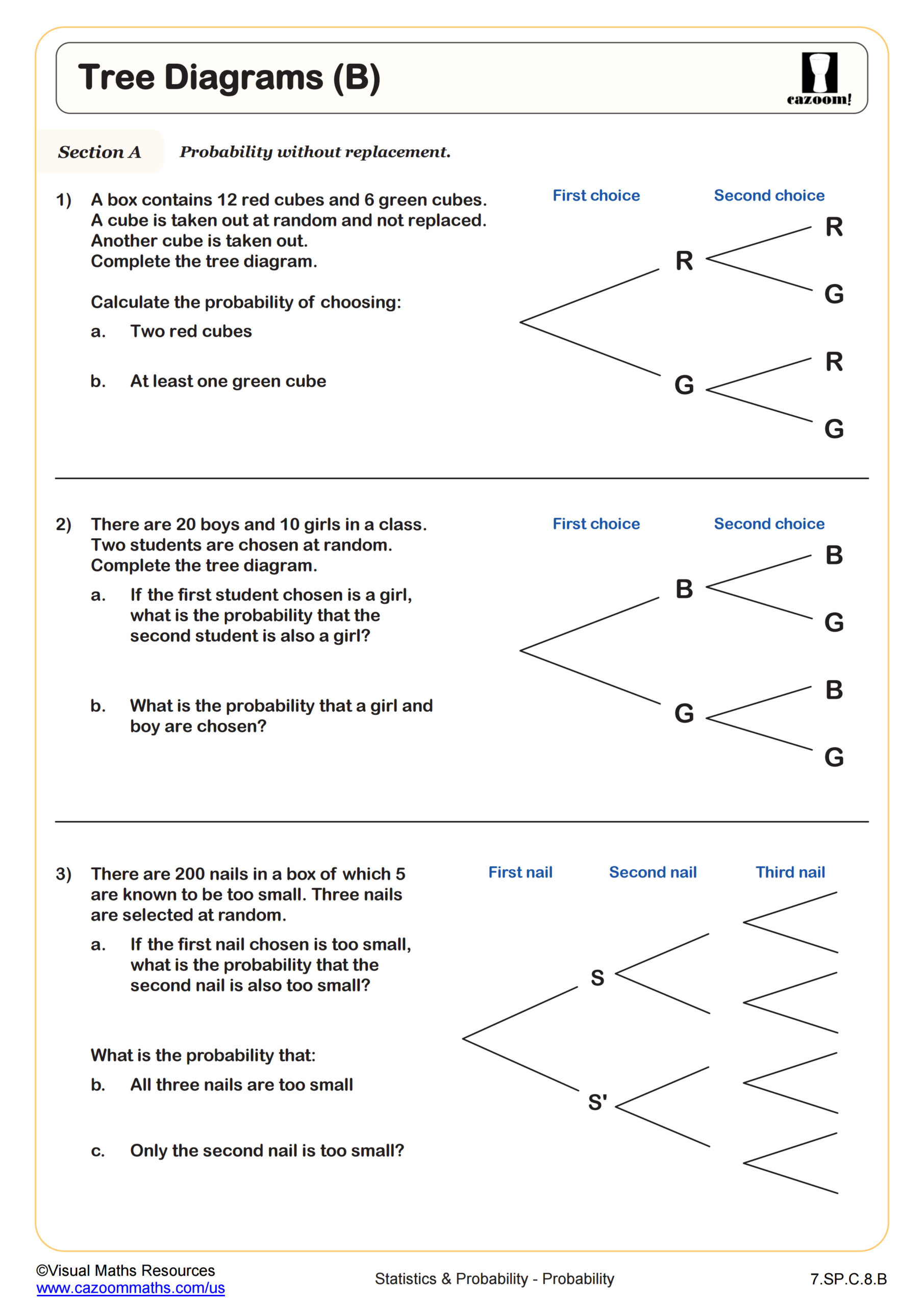
Tree Diagrams (B)
Grades: 7th Grade
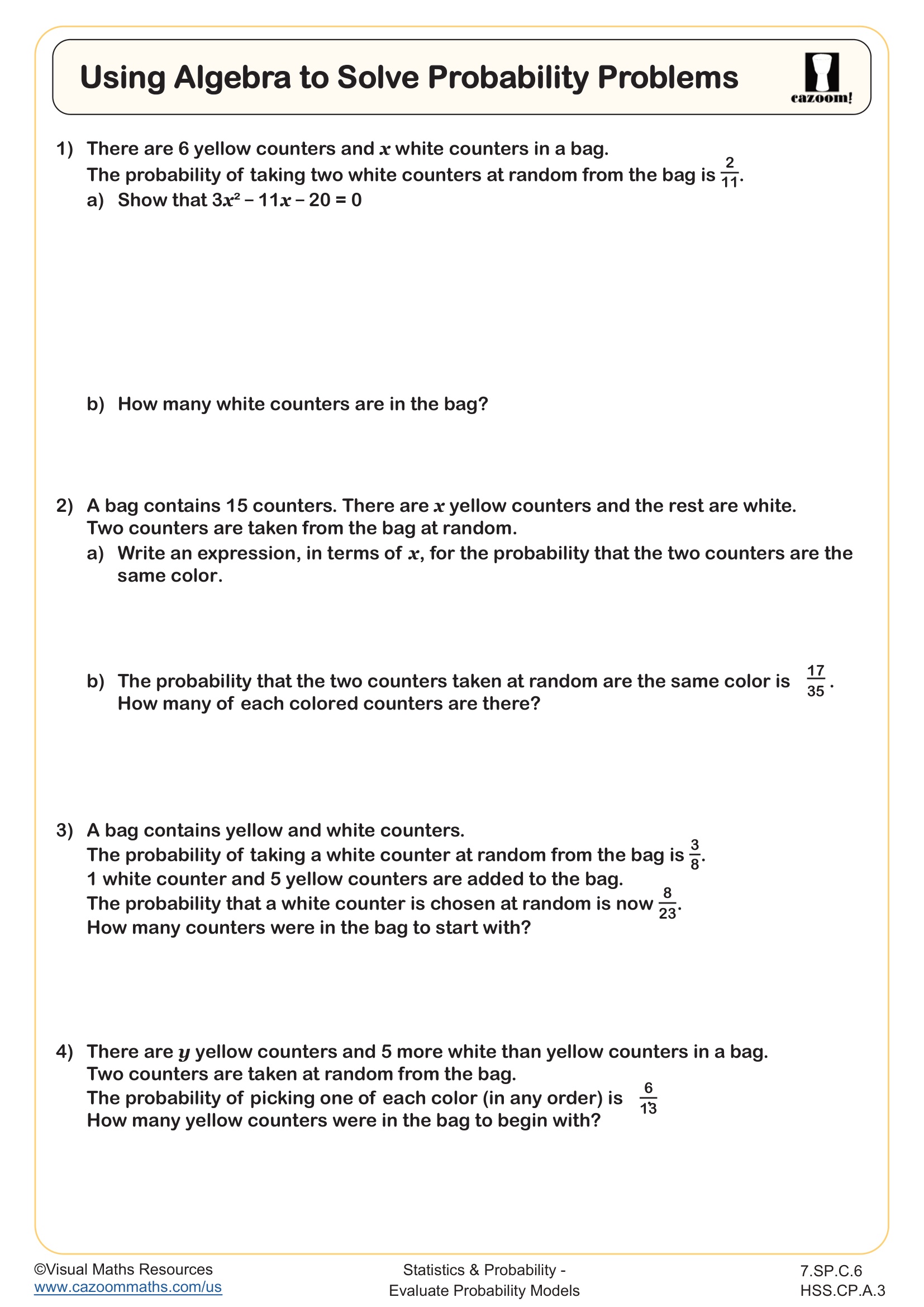
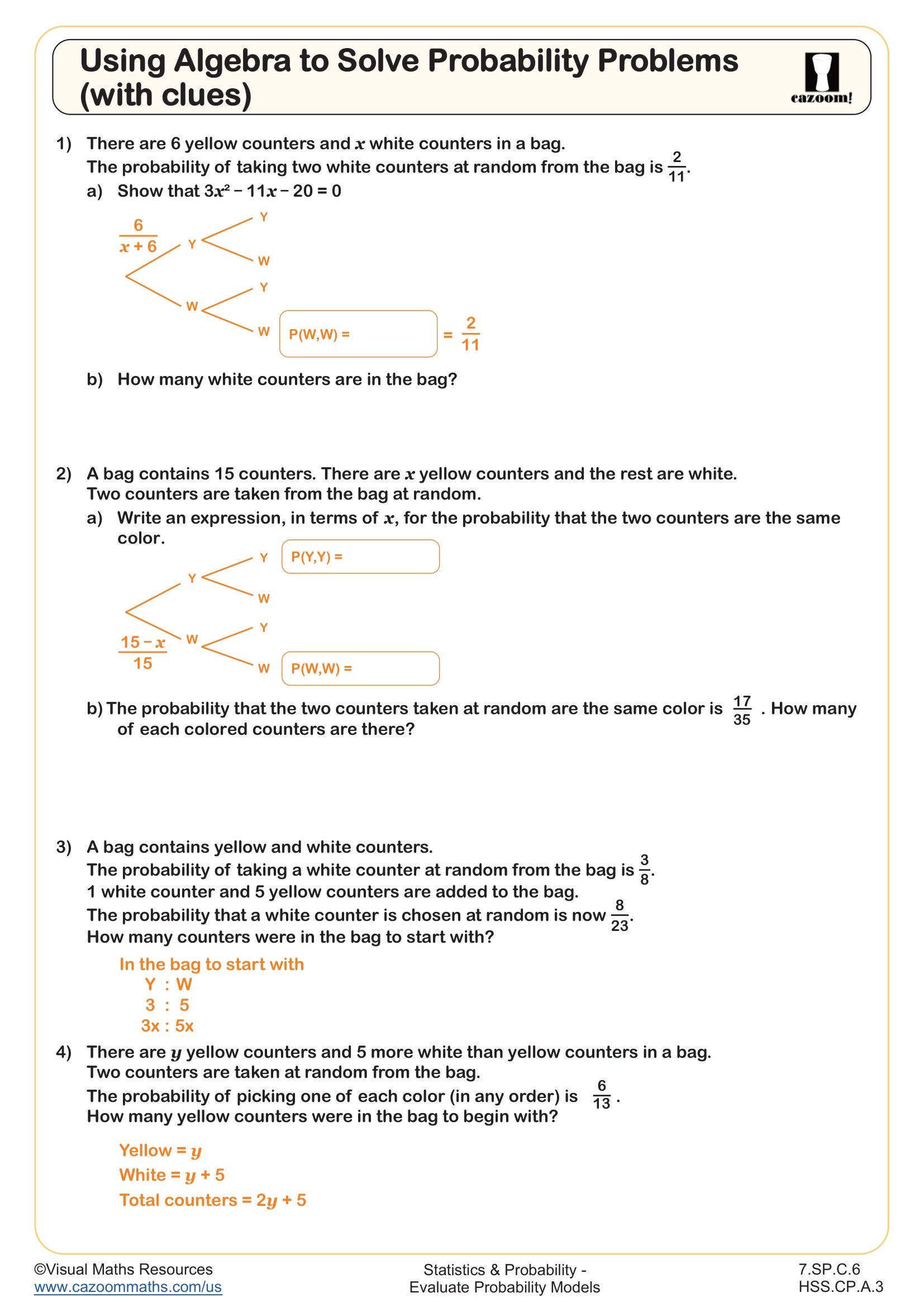
Using Algebra to Solve Probability Problems
Grades: 7th Grade, Algebra I, IM 1
Using Algebra to Solve Probability Problems (with clues)
Grades: 7th Grade, Algebra I, IM 1
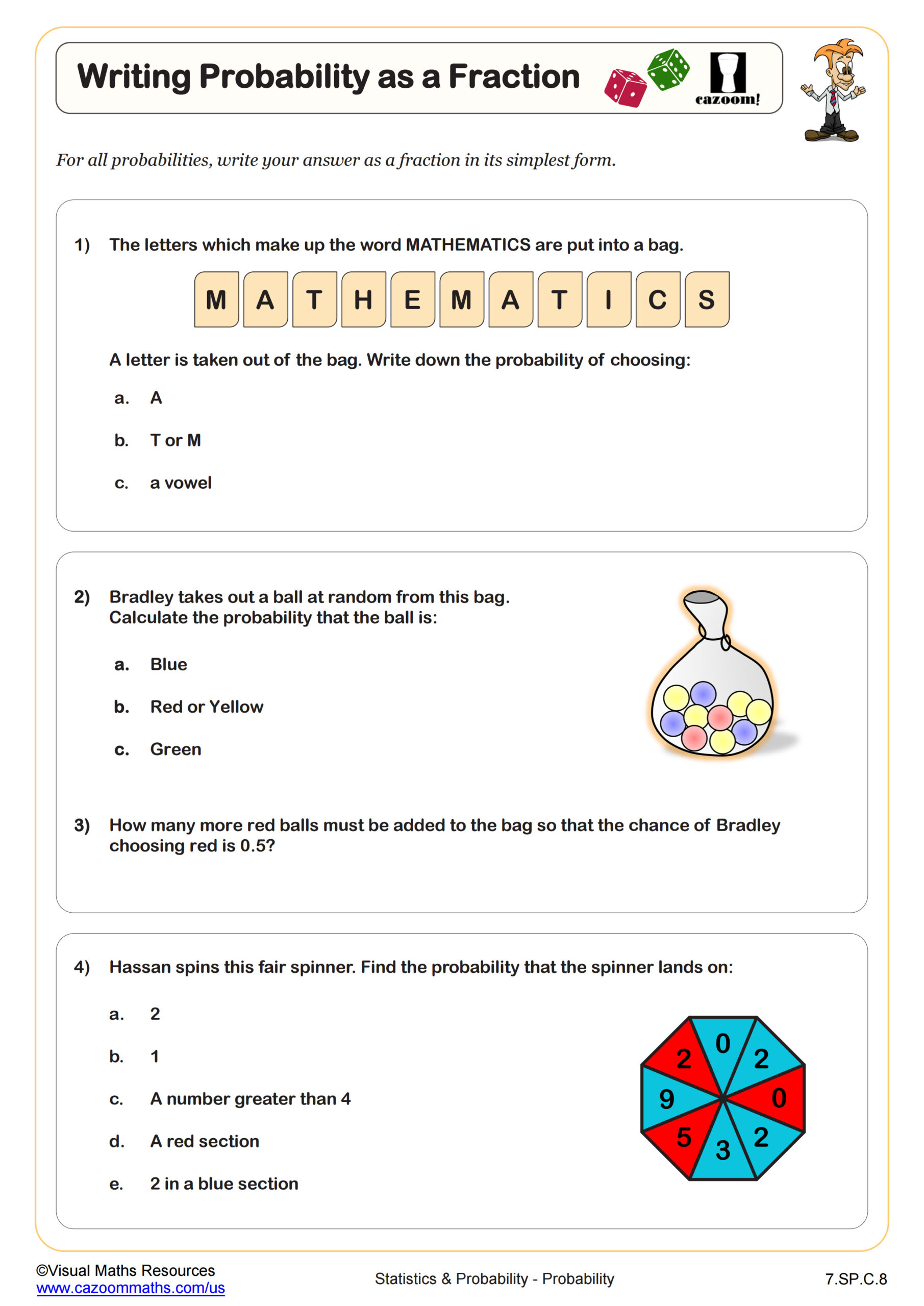
Writing Probability as a Fraction
Grades: 7th Grade
Mutually Exclusive Events
Grades: Geometry, IM 2
.jpg?w=3840)
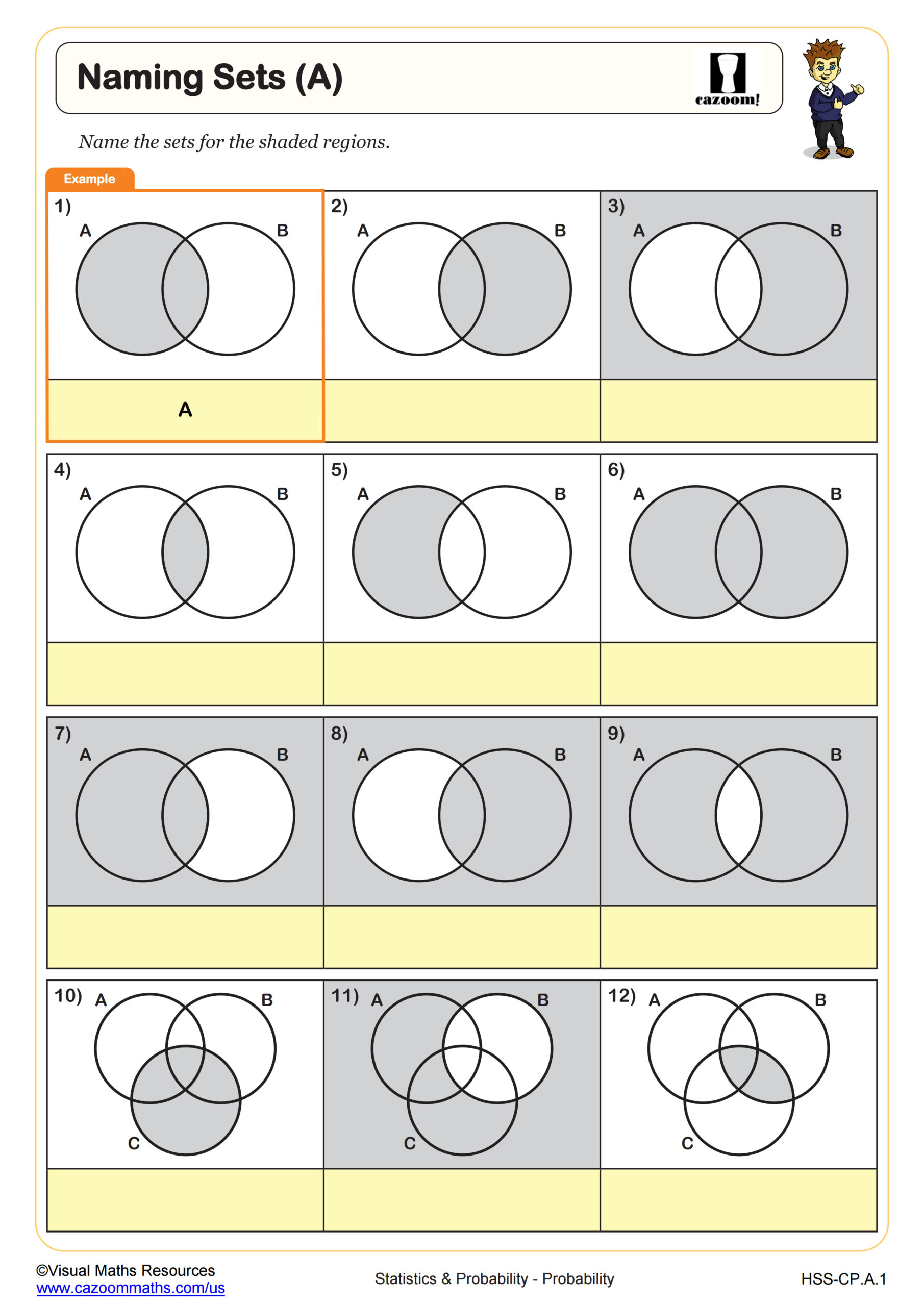
Naming Sets (A)
Grades: Geometry, IM 2
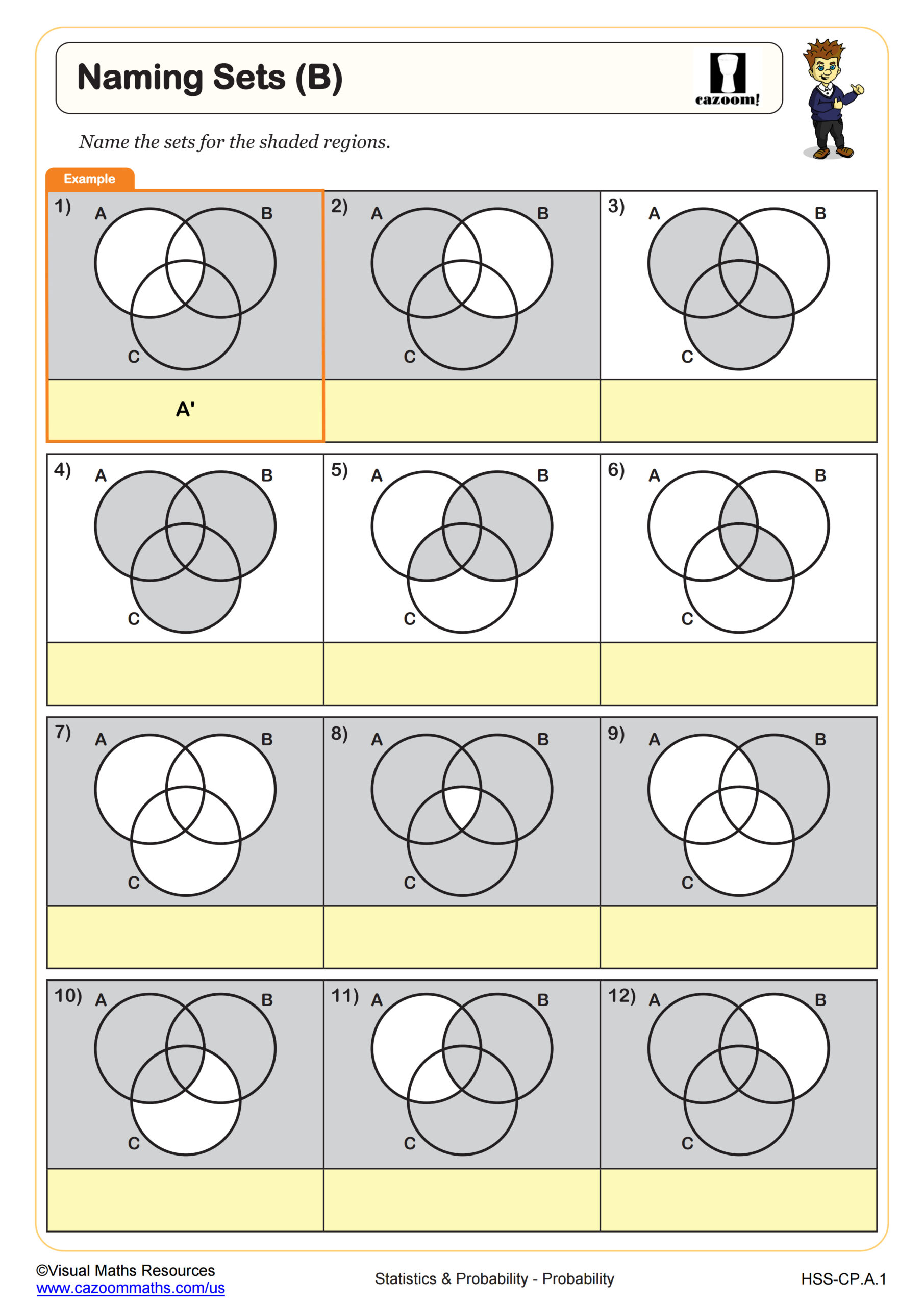
Naming Sets (B)
Grades: Geometry, IM 2
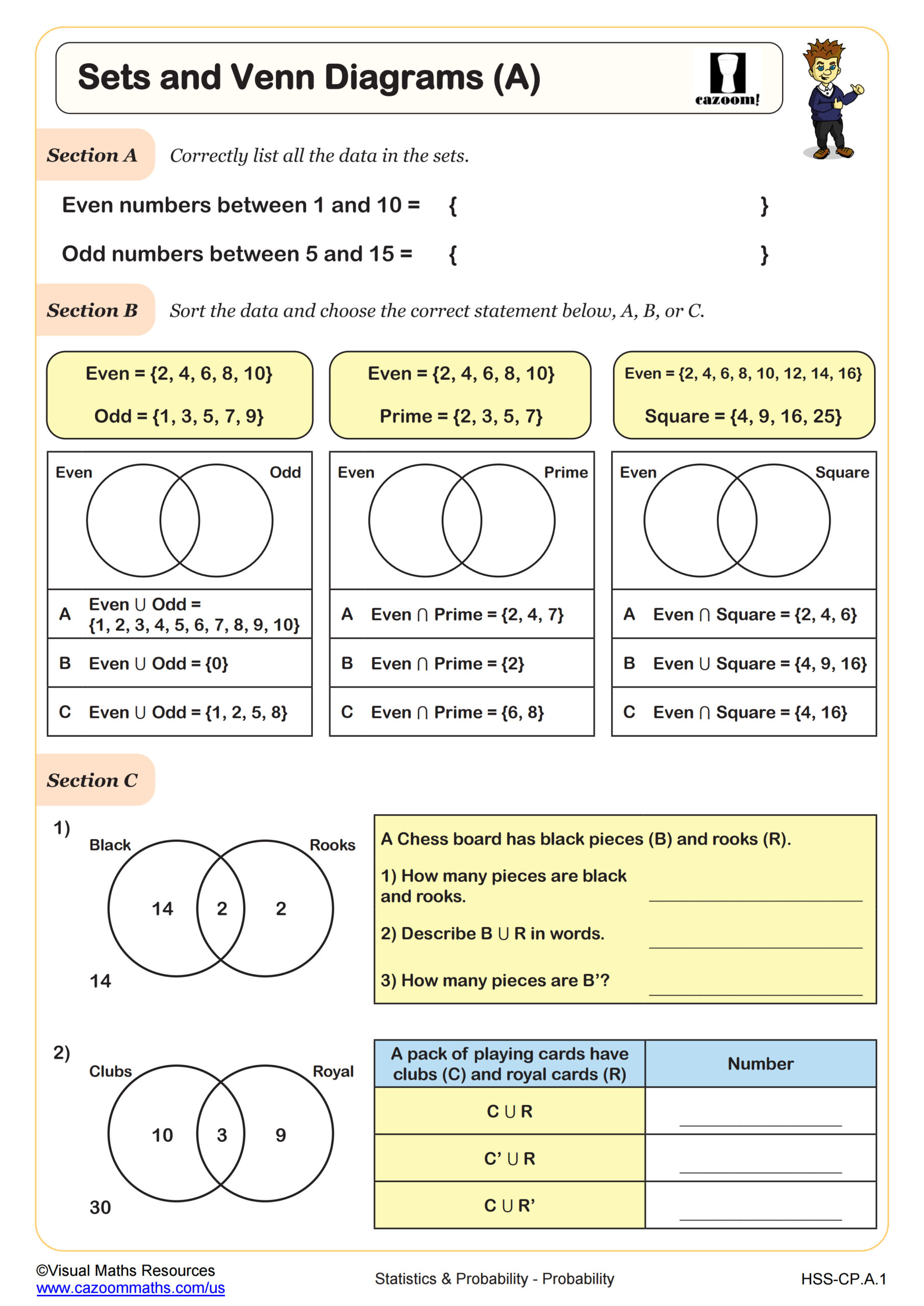
Sets and Venn Diagrams (A)
Grades: Geometry, IM 2
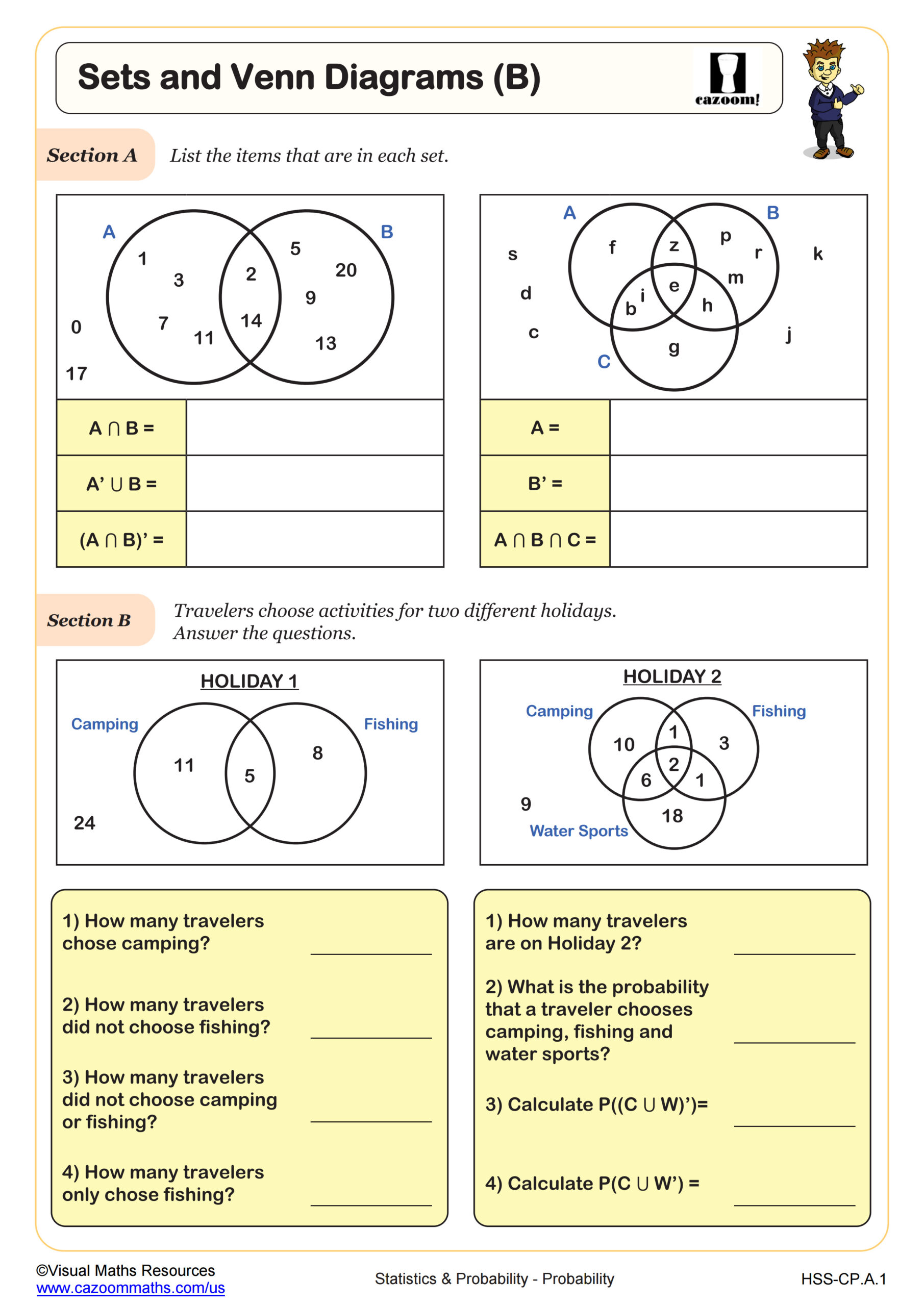
Sets and Venn Diagrams (B)
Grades: Geometry, IM 2
All worksheets are created by the team of experienced teachers at Cazoom Math.
What topics do these probability worksheets cover for different grade levels?
The probability worksheet collection aligns with Common Core standards from grades 6-8, progressing from basic probability concepts to more complex applications. Grade 6 focuses on understanding probability as a number between 0 and 1, while 7th grade probability worksheets introduce compound events and sample space analysis. Probability grade 7 worksheets with answers typically include tree diagrams, two-way tables, and theoretical versus experimental probability comparisons.
Teachers notice that students often confuse independent and dependent events when working through probability 7th grade worksheet problems. The 6th grade probability worksheets establish foundational vocabulary like 'certain,' 'impossible,' and 'equally likely,' while grade 7 probability worksheets advance to calculating probabilities of compound events using multiplication and addition rules.
How do probability concepts progress from 6th to 7th grade?
The progression from 6th to 7th grade probability shows a significant jump in complexity and mathematical reasoning. Sixth grade students work with single events and basic fraction-to-decimal conversions, while 7th grade probability worksheet content introduces systematic counting methods and organized lists. Teachers observe that this transition challenges students who haven't mastered fraction operations from earlier grades.
The probability worksheet 7th grade level requires students to analyze multiple outcomes simultaneously, such as drawing colored marbles without replacement or spinning two spinners. Many teachers find that students who excel with 6th grade probability worksheets still struggle when 7th grade probability worksheets demand deeper reasoning about how one event affects another, particularly in dependent probability situations.
Why do students struggle with experimental versus theoretical probability?
Students frequently confuse experimental and theoretical probability because they expect experimental results to match theoretical predictions exactly. Teachers notice this misconception most clearly when students conduct coin flip experiments and become frustrated when their results don't yield exactly 50% heads. The theoretical probability represents what should happen mathematically, while experimental probability shows what actually occurs during trials.
This concept connects directly to quality control in manufacturing and medical research, where understanding variation between expected and observed outcomes is crucial. Teachers find that having students repeat experiments multiple times and compare class data helps demonstrate how experimental probability approaches theoretical probability with larger sample sizes, making this abstract concept more concrete for middle school learners.
How can teachers effectively use these worksheets in their probability instruction?
Effective probability instruction benefits from combining these worksheets with hands-on activities and real-world connections. Teachers report that students engage more deeply when they first conduct physical experiments with dice, cards, or spinners before completing theoretical calculations on worksheets. The answer keys allow teachers to quickly identify whether students are making computational errors or conceptual mistakes about probability rules.
Many teachers use these worksheets as formative assessments during probability units, assigning different difficulty levels based on student readiness. The variety of problem types helps teachers differentiate instruction, with some students working on basic single-event problems while others tackle compound probability scenarios. Having complete solutions available enables peer tutoring opportunities where stronger students can explain their reasoning to classmates who need additional support.