Subtracting With Single Digits Worksheets
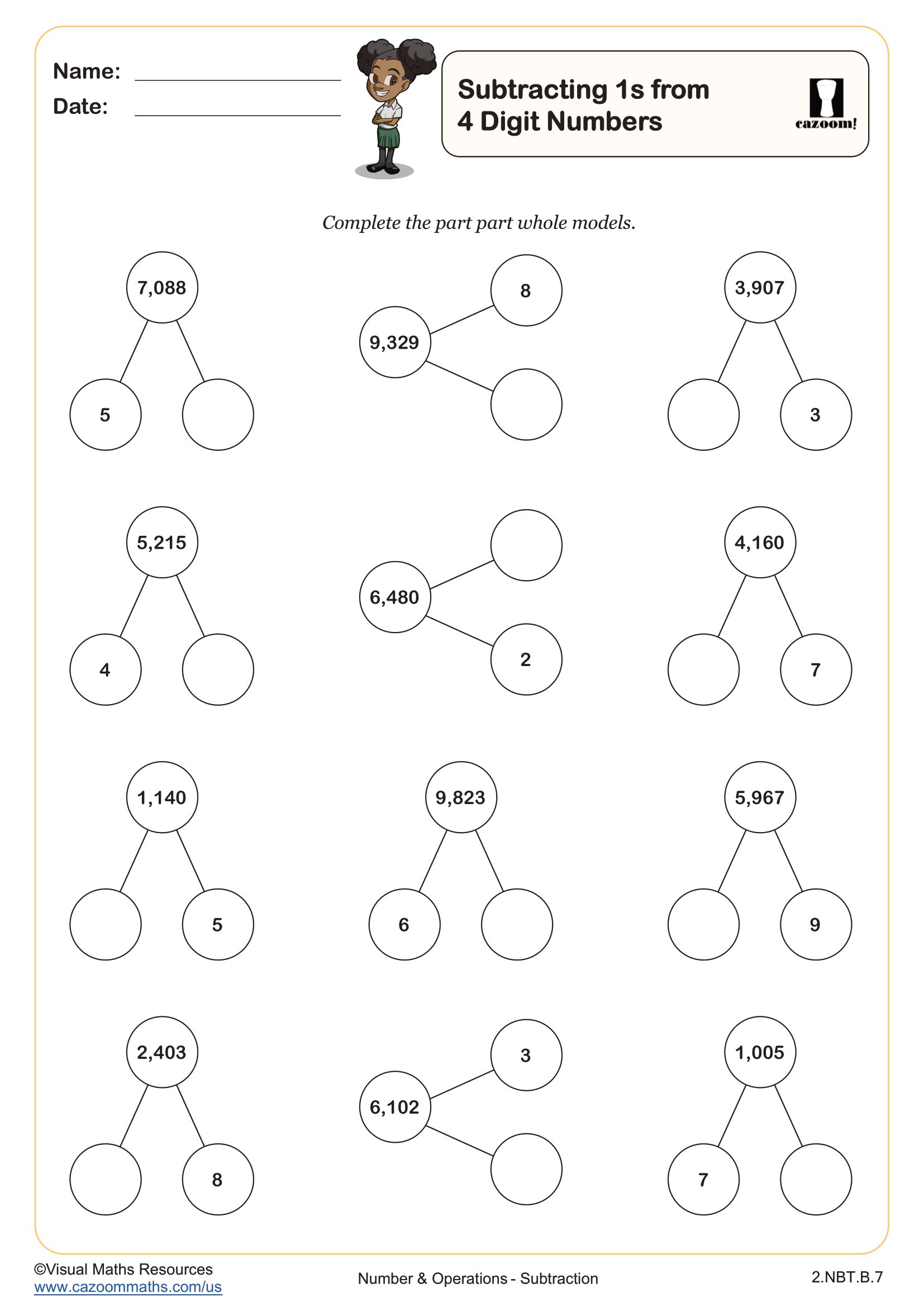
Subtracting 1s from 4 Digit Numbers
Grades: 2nd Grade
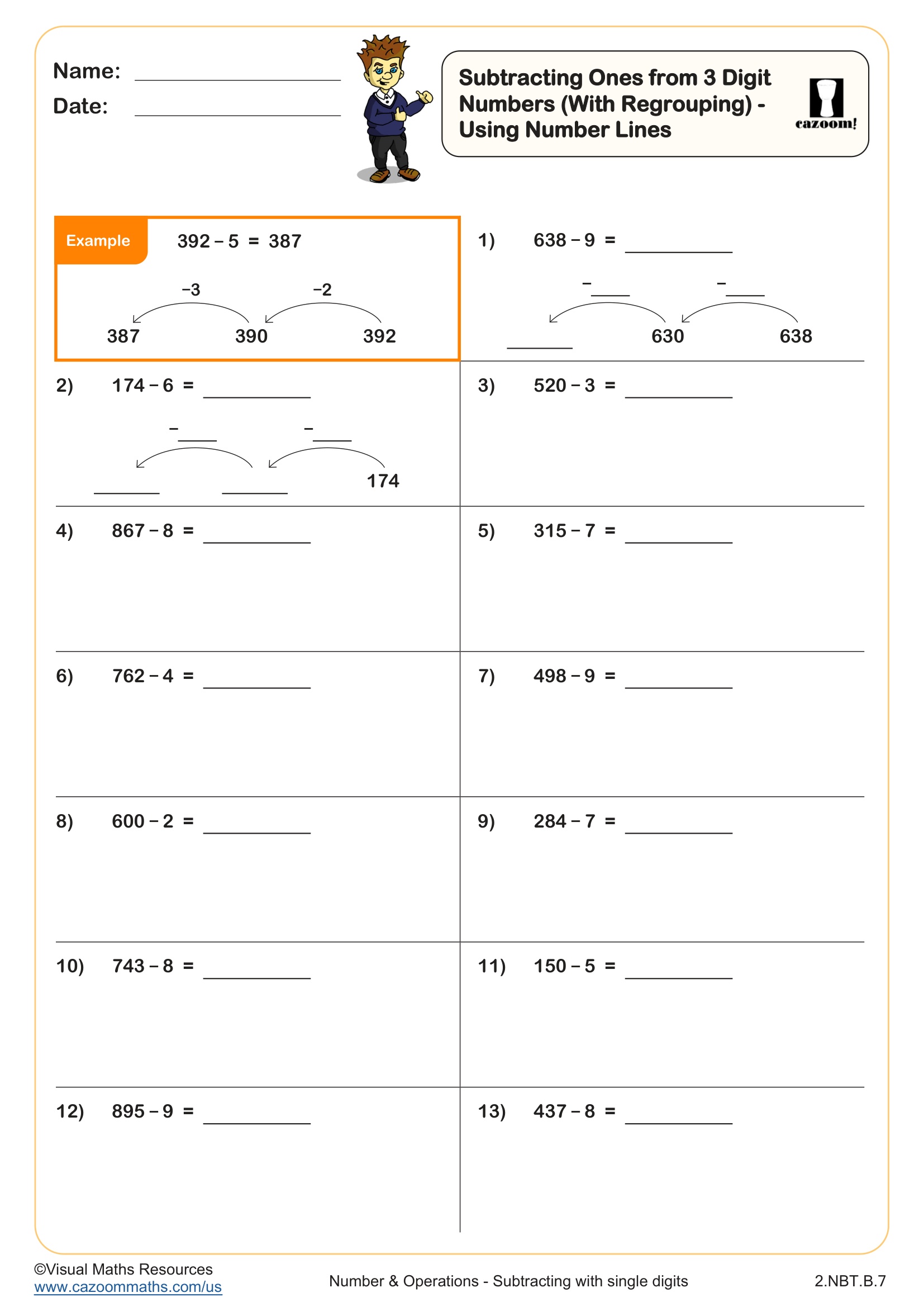
Subtracting Ones from 3 Digit Numbers (With Regrouping) - Using Number Lines
Grades: 2nd Grade
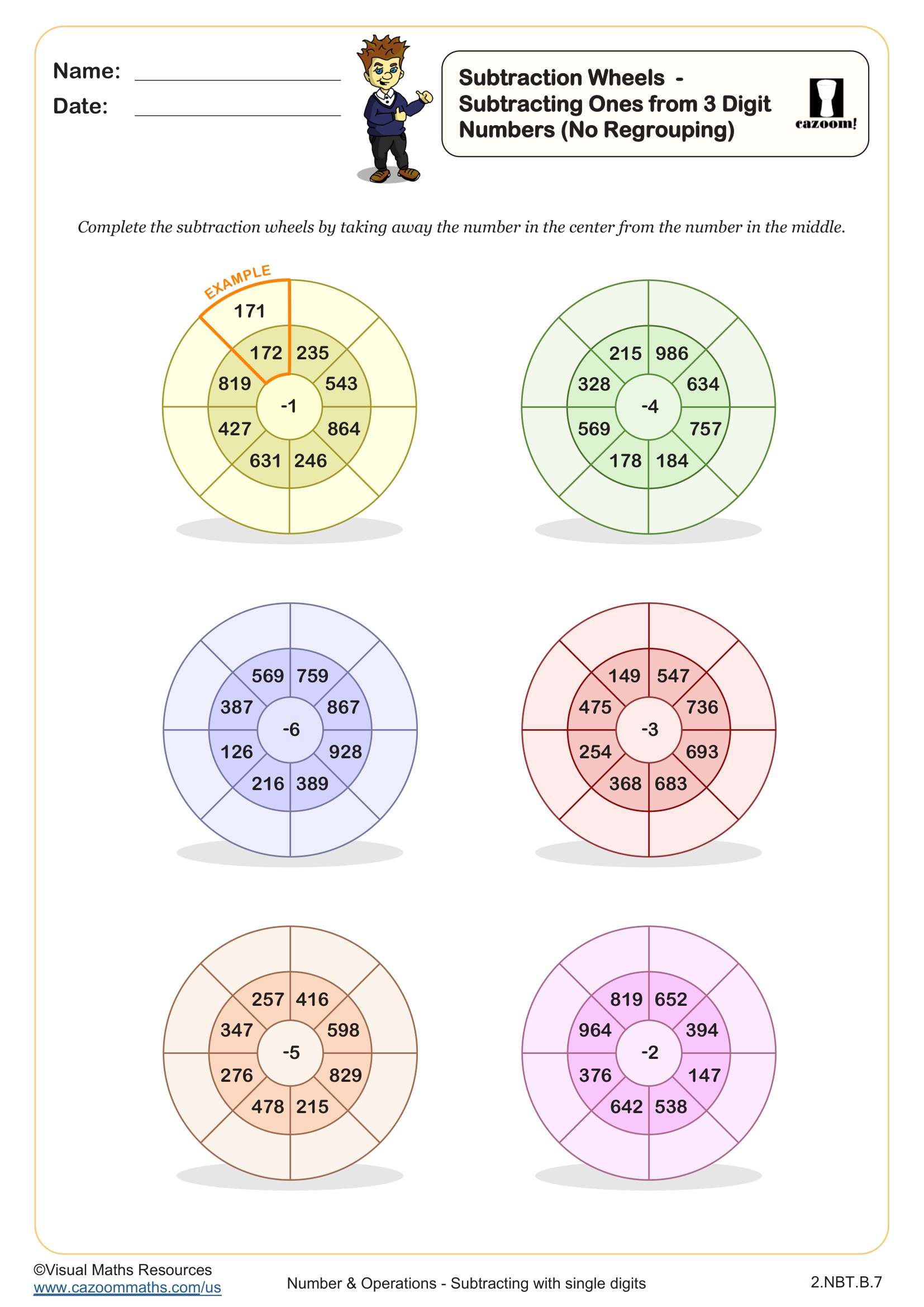
Subtraction Wheels - Subtracting Ones from 3 Digit Numbers (No Regrouping)
Grades: 2nd Grade
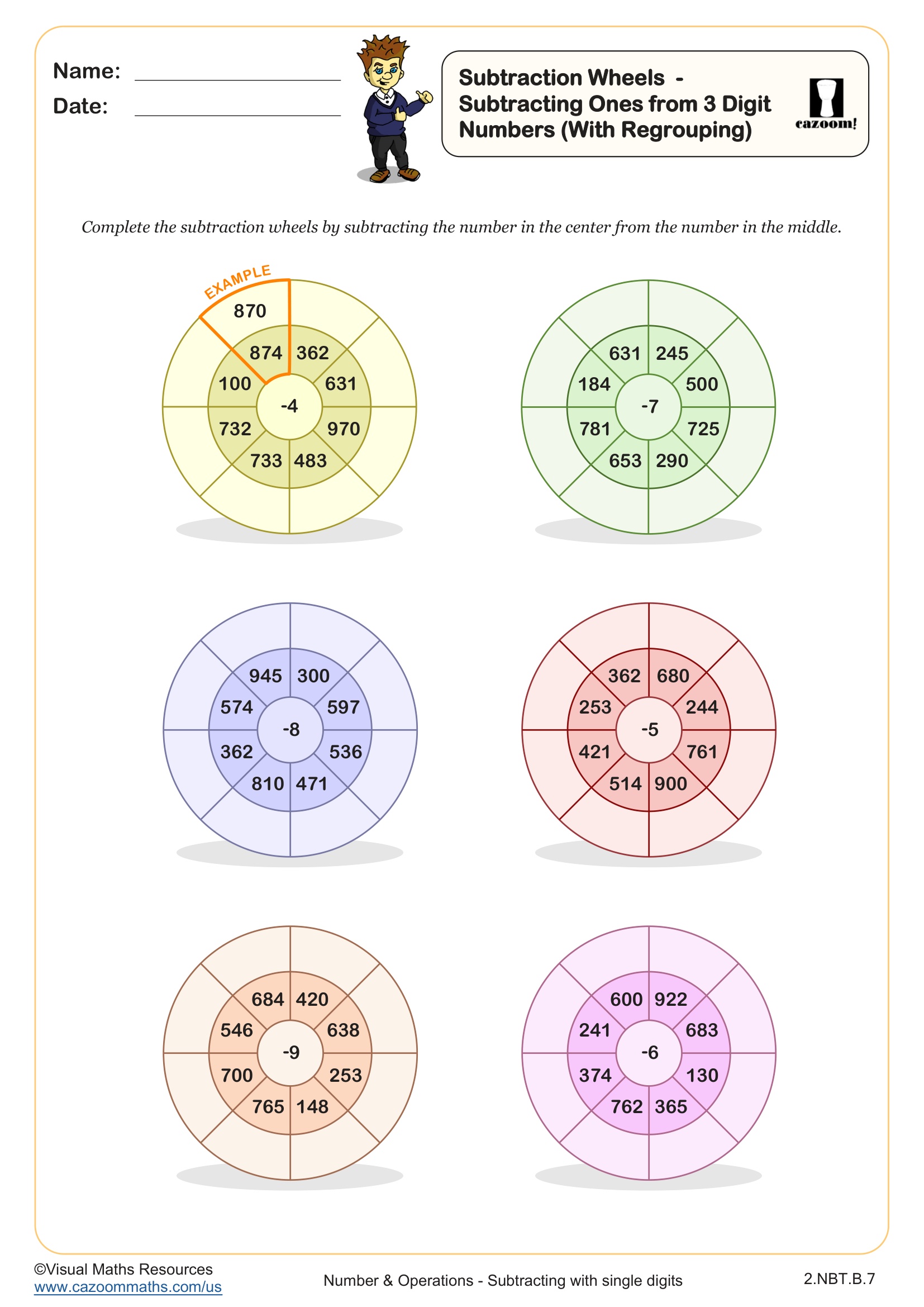
Subtraction Wheels - Subtracting Ones from 3 Digit Numbers (With Regrouping)
Grades: 2nd Grade
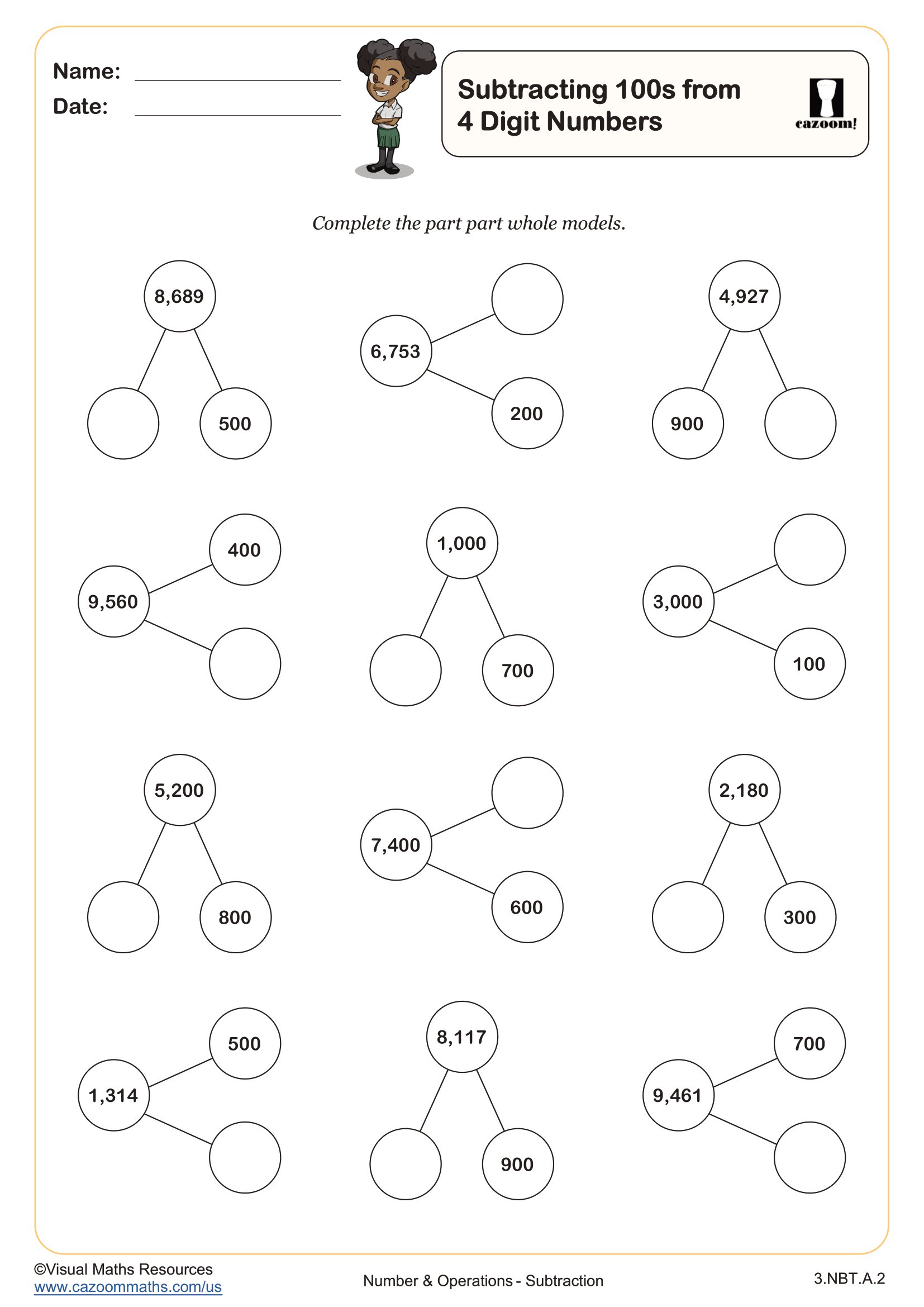
Subtracting 100s from 4 Digit Numbers
Grades: 3rd Grade
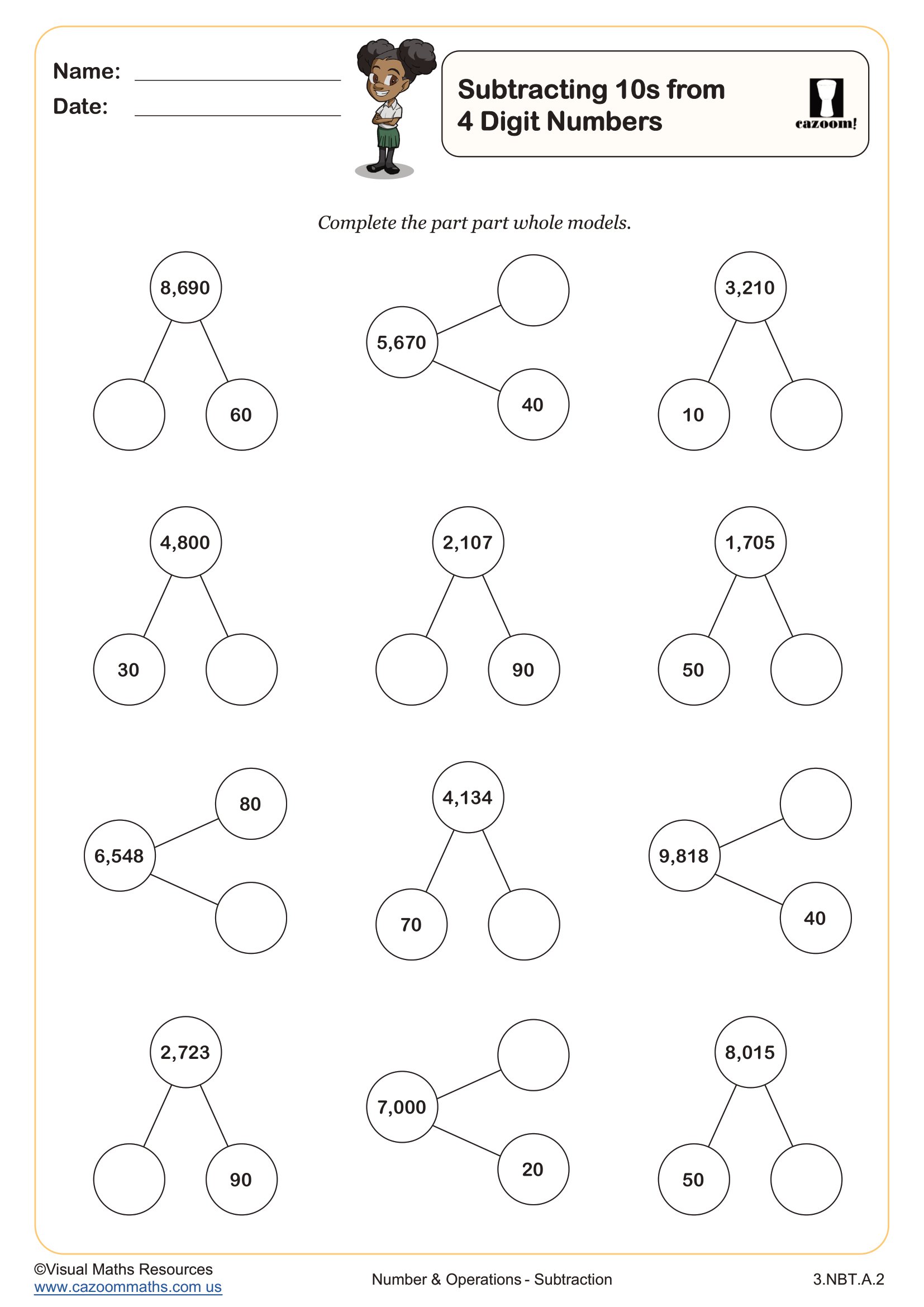
Subtracting 10s from 4 Digit Numbers
Grades: 3rd Grade
All worksheets are created by the team of experienced teachers at Cazoom Math.
What skills do single digit subtraction worksheets help students develop?
Single digit subtraction worksheets build computational fluency with basic subtraction facts from 0-0 through 18-9, aligning with Common Core standards for early elementary grades. Students practice mental math strategies, develop number sense, and strengthen their understanding of the inverse relationship between addition and subtraction.
Teachers notice that consistent practice with 1 digit subtraction problems helps students recognize patterns and commit basic facts to memory. This automaticity becomes crucial when students progress to multi-digit subtraction, where they need to recall single-digit facts quickly while managing more complex algorithms. The worksheets also reinforce place value concepts and prepare students for regrouping strategies in later grades.
Which grade levels benefit most from one digit subtraction worksheets?
One digit subtraction worksheets are most beneficial for students in kindergarten through second grade, though they serve as remedial practice for older students who need to strengthen foundational skills. Kindergarten students typically work with subtraction within 5, while first graders extend to subtraction within 20, and second graders focus on fluency and speed.
Teachers find these worksheets valuable for differentiated instruction across grade levels. Advanced kindergarten students can tackle simple subtraction single digit problems, while struggling third or fourth graders benefit from returning to basics before attempting multi-digit operations. The worksheets also support RTI interventions and provide targeted practice for students who missed foundational concepts during remote learning periods.
How do these worksheets address common subtraction misconceptions?
Subtraction 1 digit worksheets systematically address frequent misconceptions, particularly the tendency for students to always subtract the smaller number from the larger number regardless of position. Many students initially compute 12 - 7 as 12 - 2 = 10, then 10 - 5 = 5, showing confusion about place value and operation order.
Teachers report that structured worksheet practice helps students recognize when answers should be smaller than the starting number and understand subtraction as 'taking away' rather than just manipulating digits. The worksheets include varied problem formats and visual representations that reinforce the concept that subtraction reduces quantity, helping students avoid the common error of adding instead of subtracting when faced with unfamiliar number combinations.
What teaching strategies work best with single digit subtraction worksheets?
Effective implementation involves using single digit subtraction worksheets as guided practice after introducing concepts with manipulatives and visual models. Teachers achieve better results when they demonstrate problems using number lines, ten frames, or counters before transitioning to abstract worksheet practice.
Successful educators often use timed practice sessions with these worksheets to build fluency, starting with longer time limits and gradually decreasing as students gain confidence. They also recommend having students explain their thinking for challenging problems, particularly those involving zero or requiring regrouping. The answer keys enable quick assessment of student understanding and help teachers identify which facts need additional reinforcement through targeted intervention or homework assignments.