Subtraction Worksheets With Answers
Finding the Difference (A)
Grades: 1st Grade, 2nd Grade
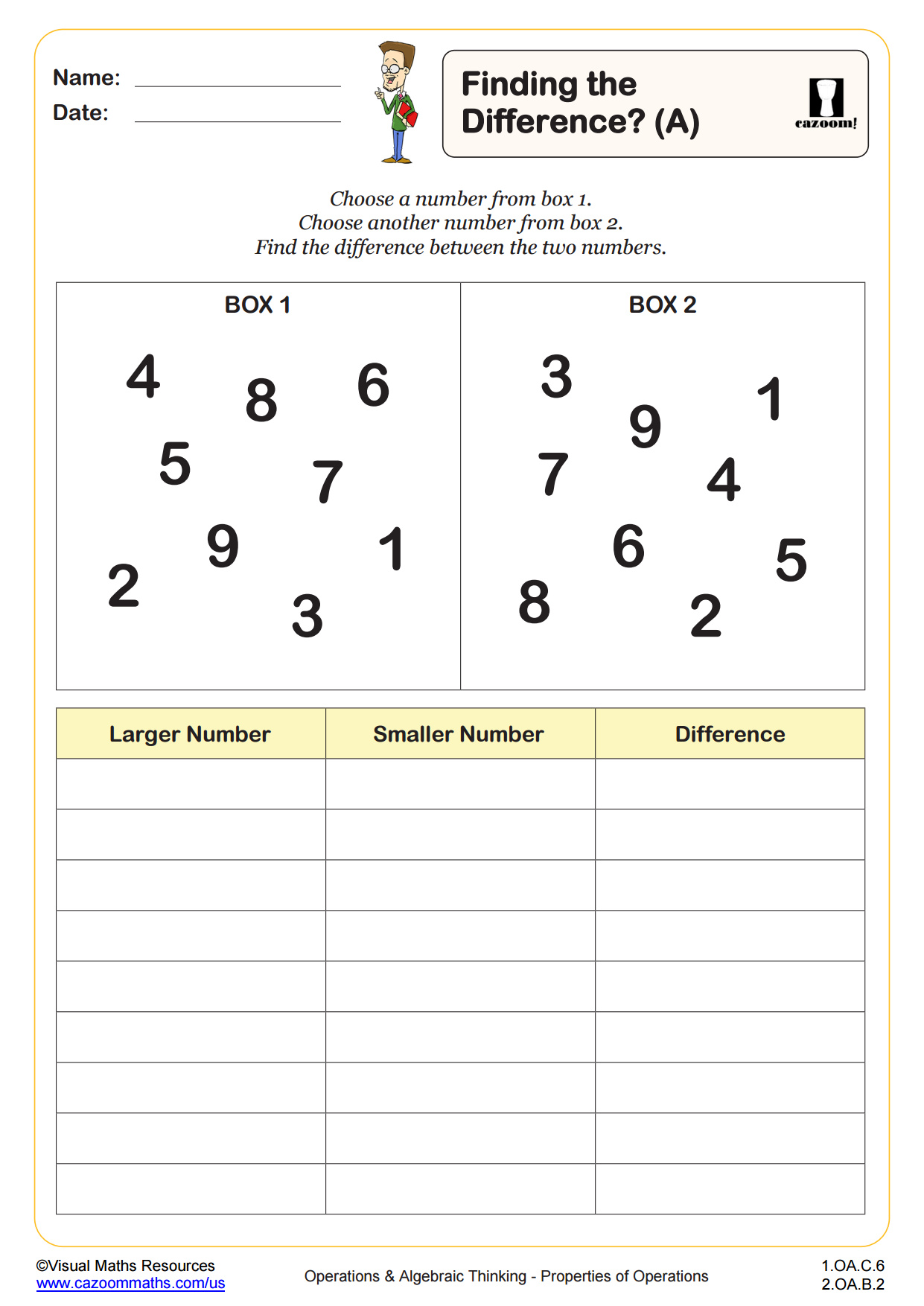
Finding the Difference (B)
Grades: 1st Grade, 2nd Grade
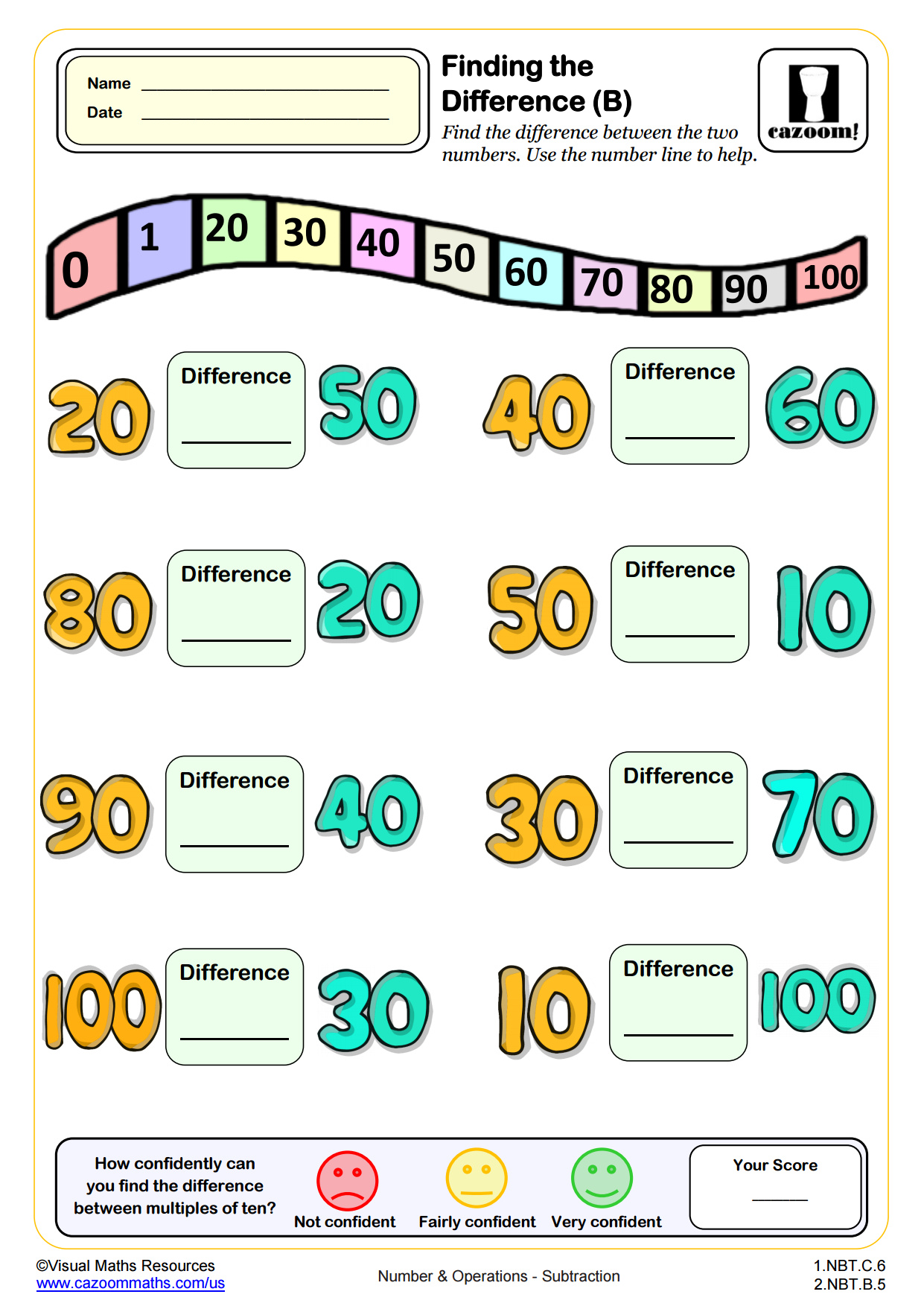
Part Part Whole to 100
Grades: 1st Grade, 2nd Grade
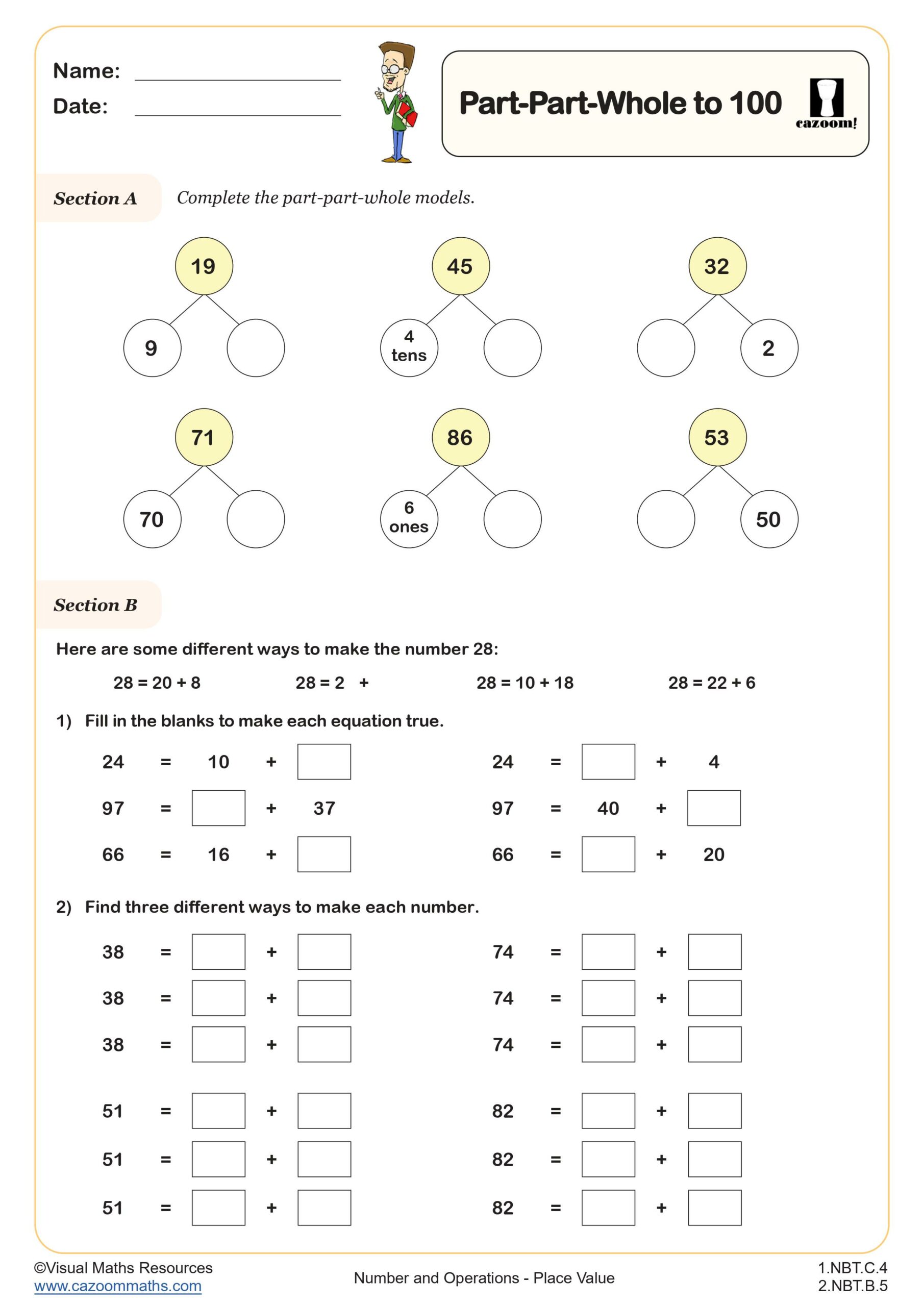
Subtraction Wheels (Subtracting 10)
Grades: 1st Grade, 2nd Grade
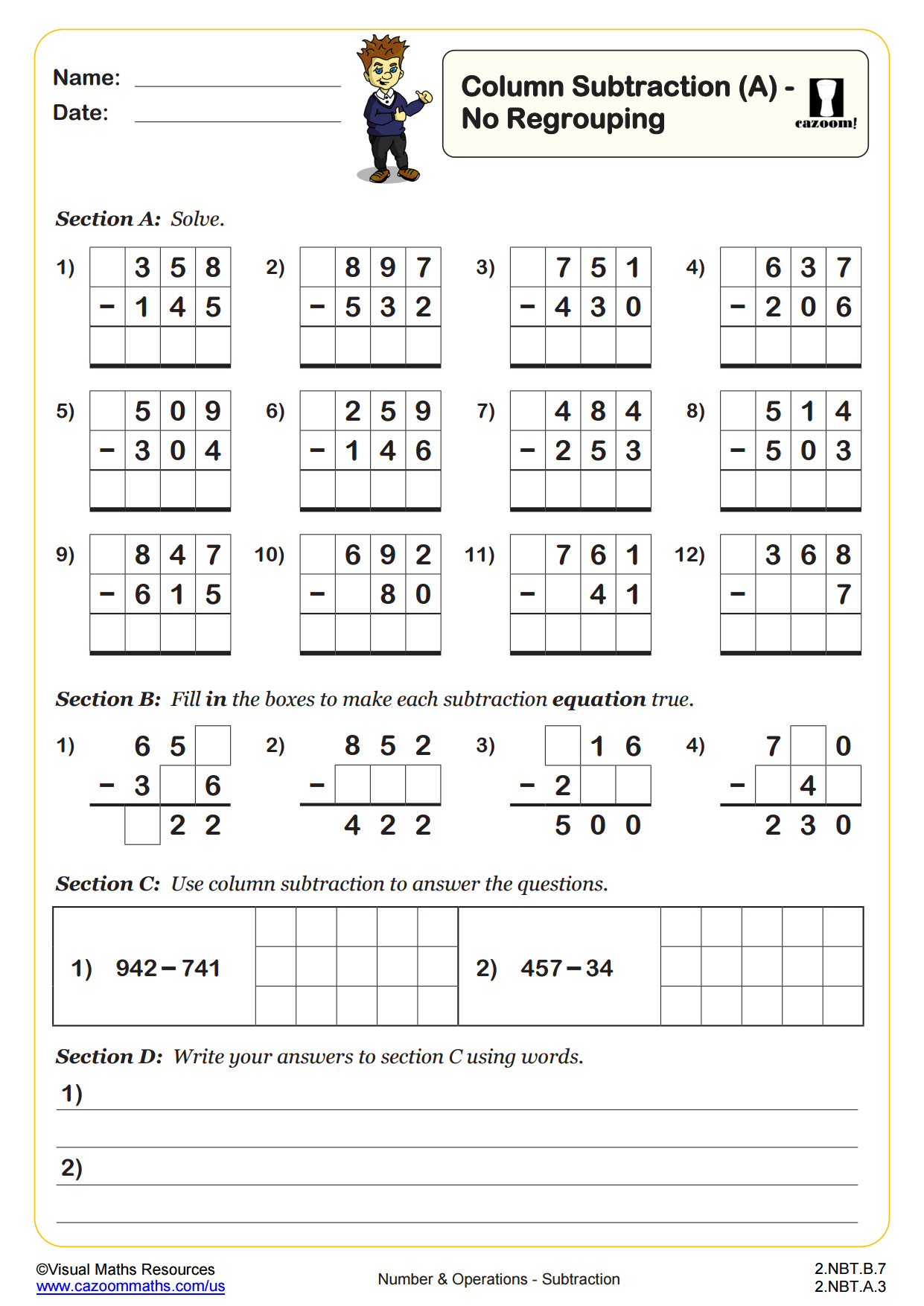
Column Subtraction (A)
Grades: 2nd Grade
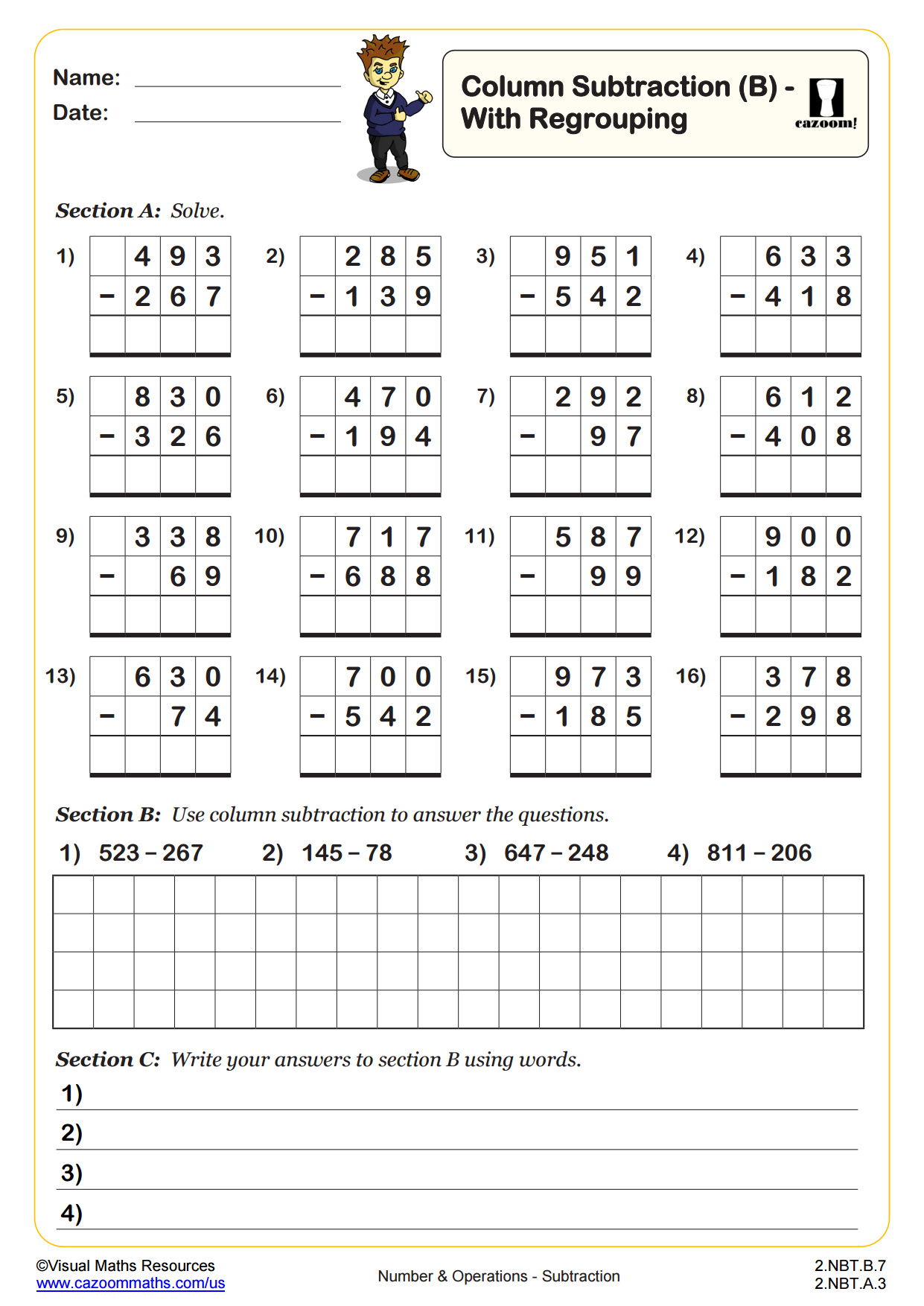
Column Subtraction (B)
Grades: 2nd Grade
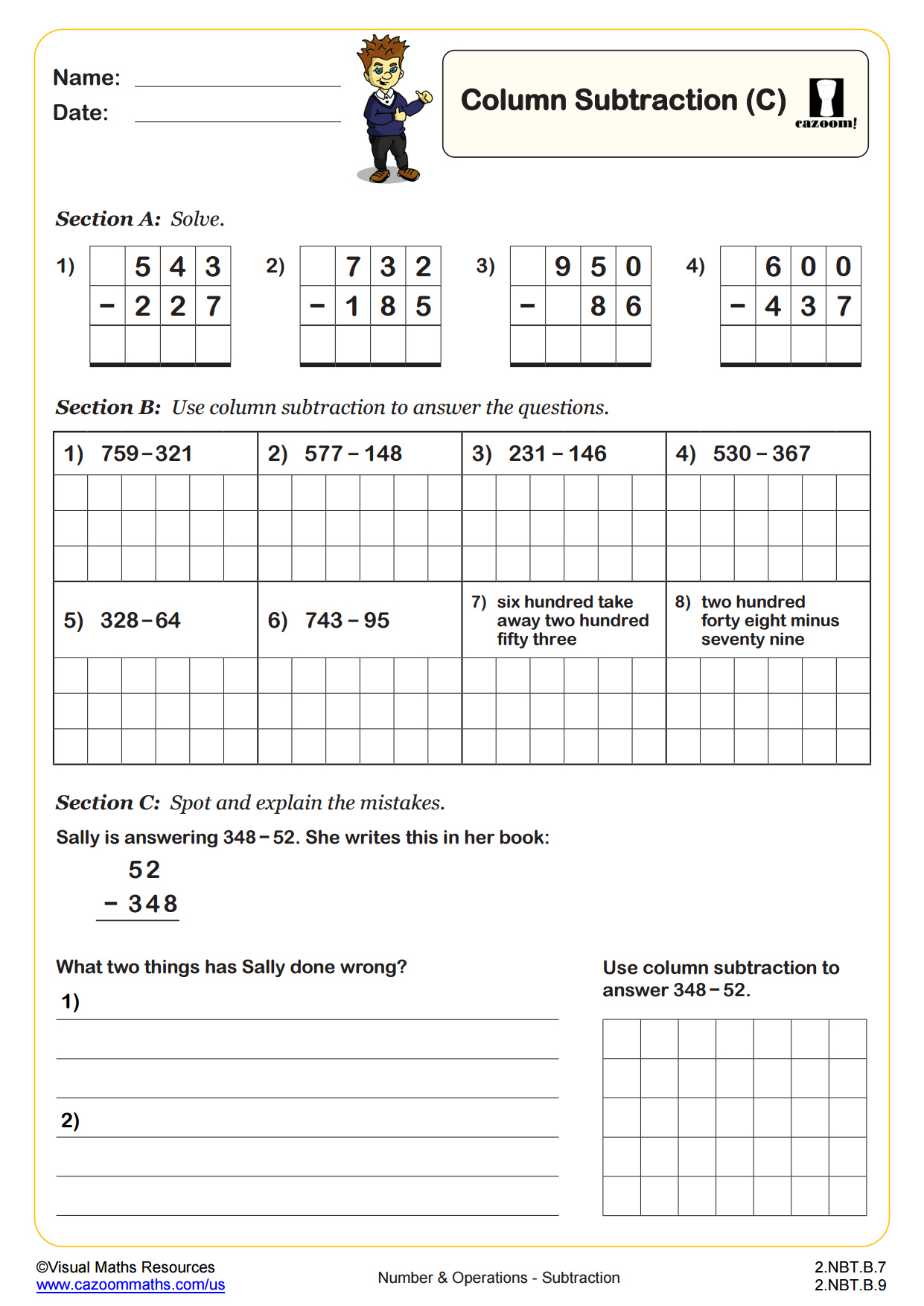
Column Subtraction (C)
Grades: 2nd Grade
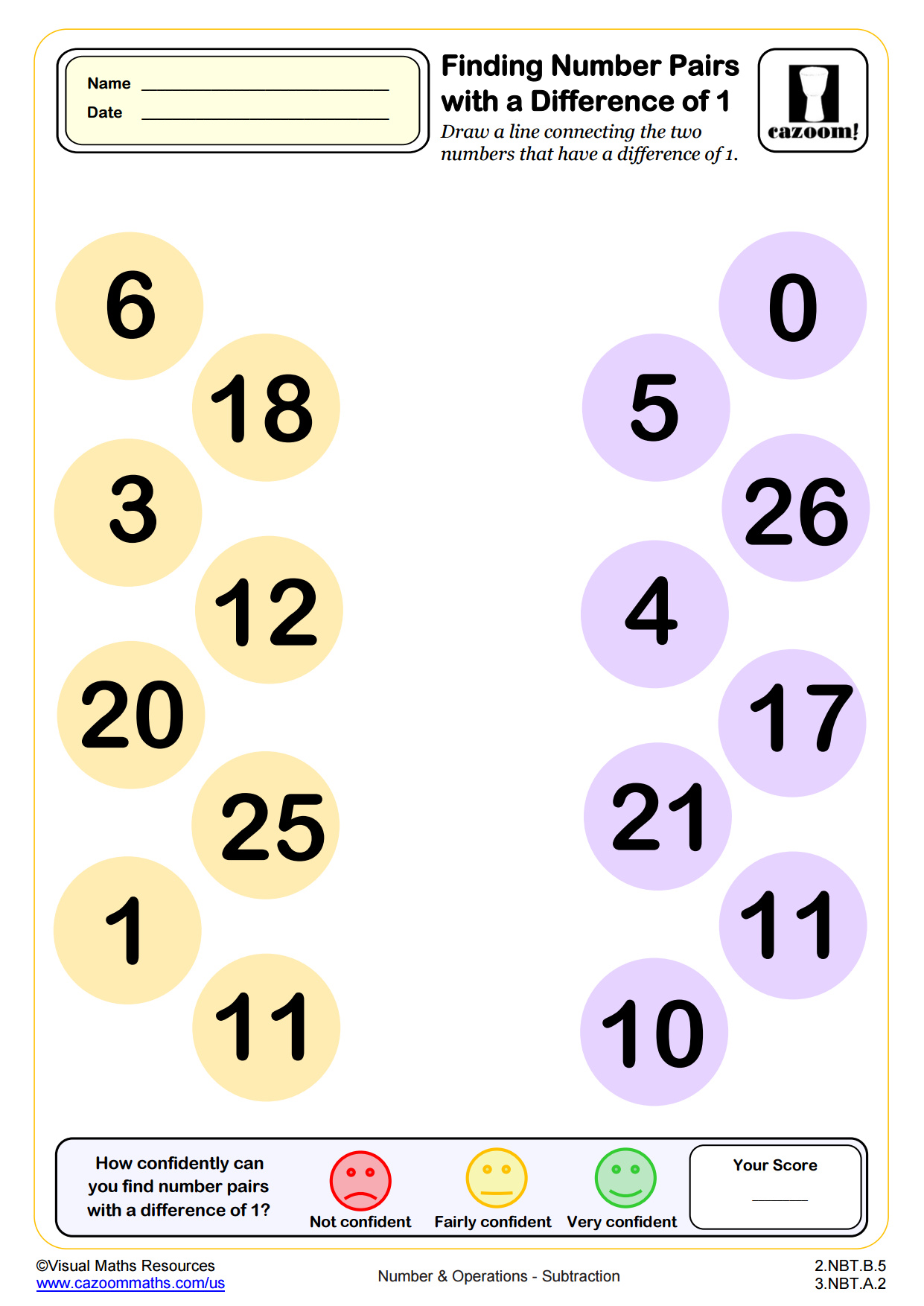
Find Number Pairs with a Difference of 1
Grades: 2nd Grade, 3rd Grade
Find Number Pairs with a Difference of 10
Grades: 2nd Grade, 3rd Grade
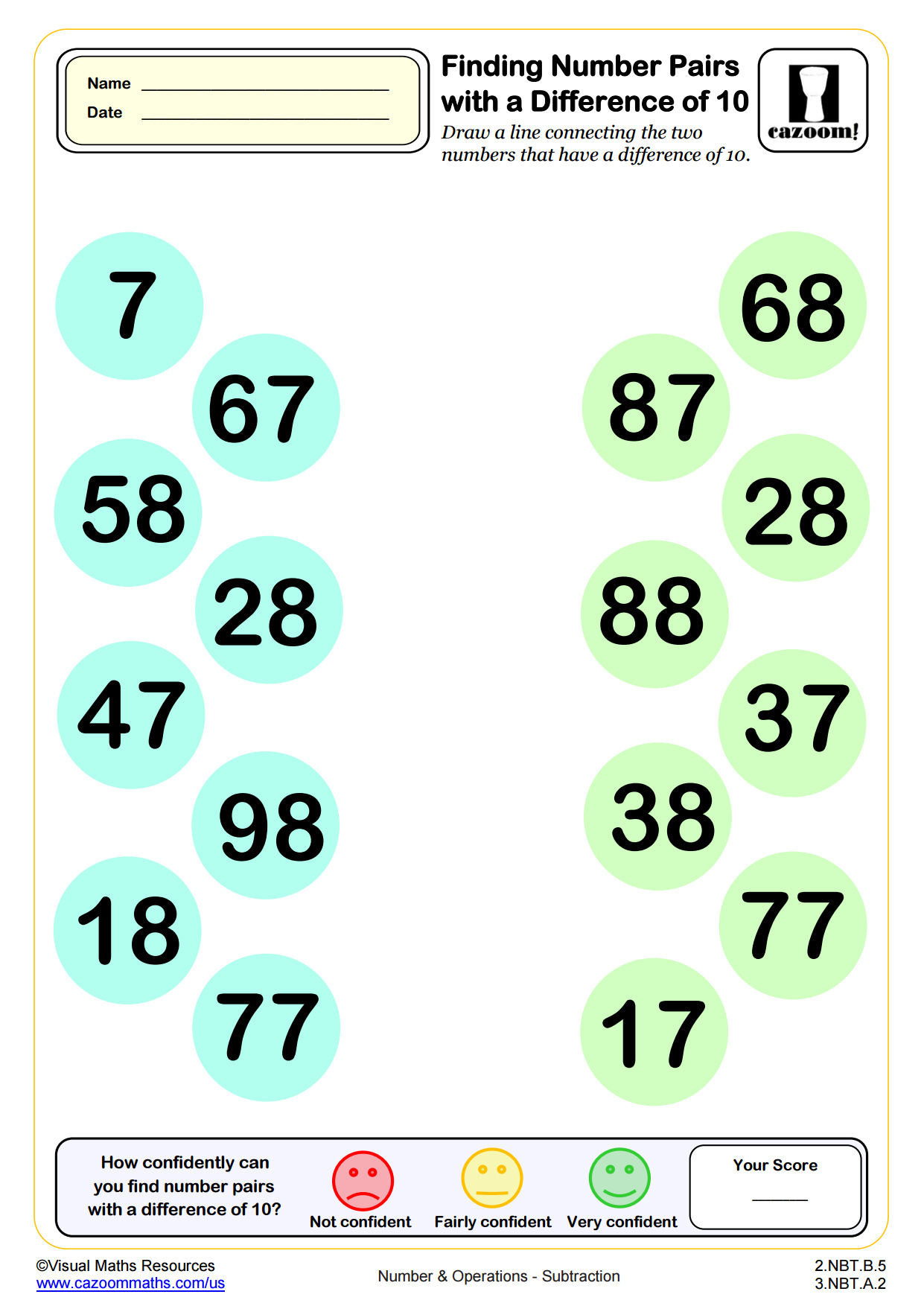
Find Number Pairs with a Difference of 15
Grades: 2nd Grade, 3rd Grade
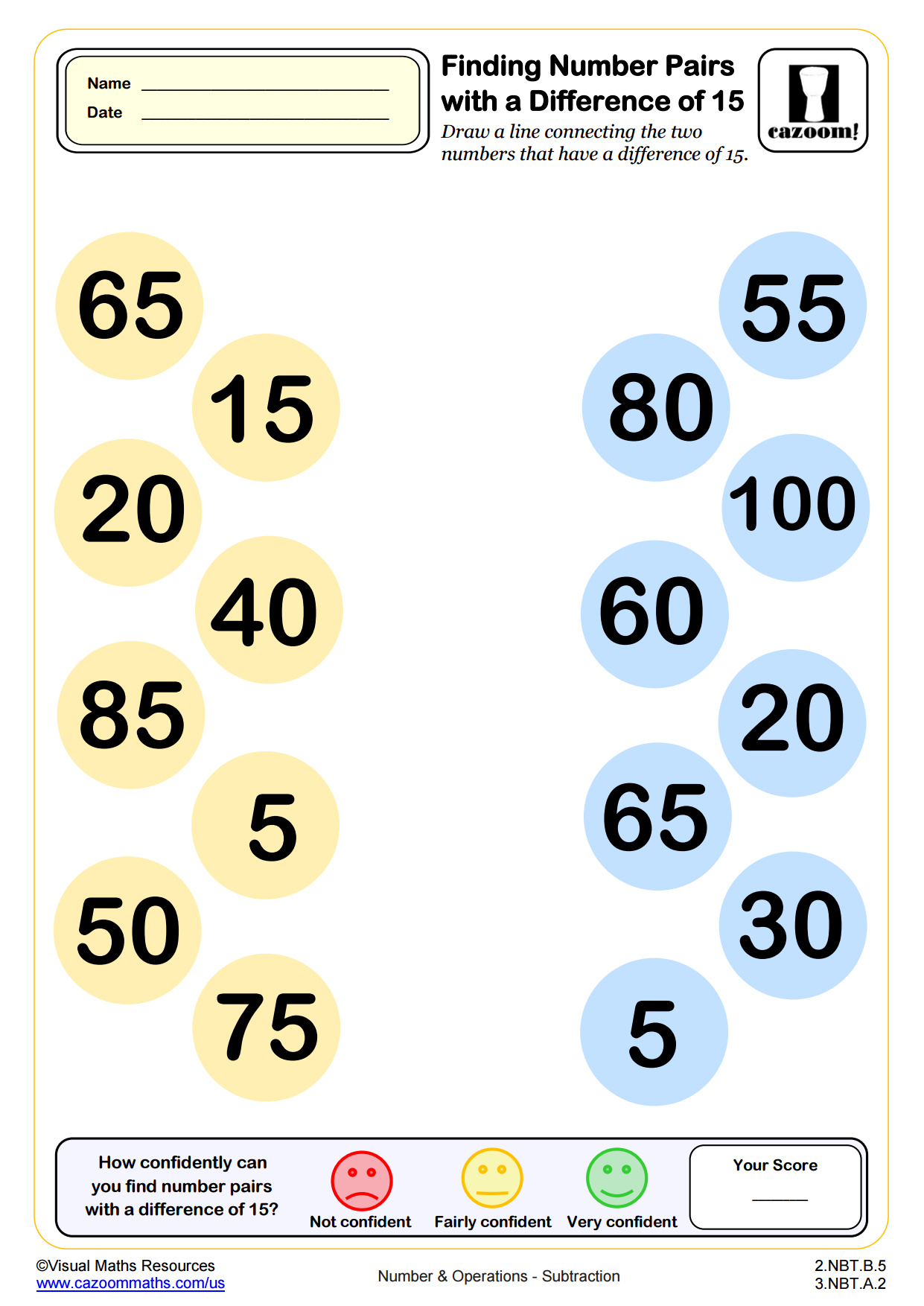
Find Number Pairs with a Difference of 2
Grades: 2nd Grade, 3rd Grade
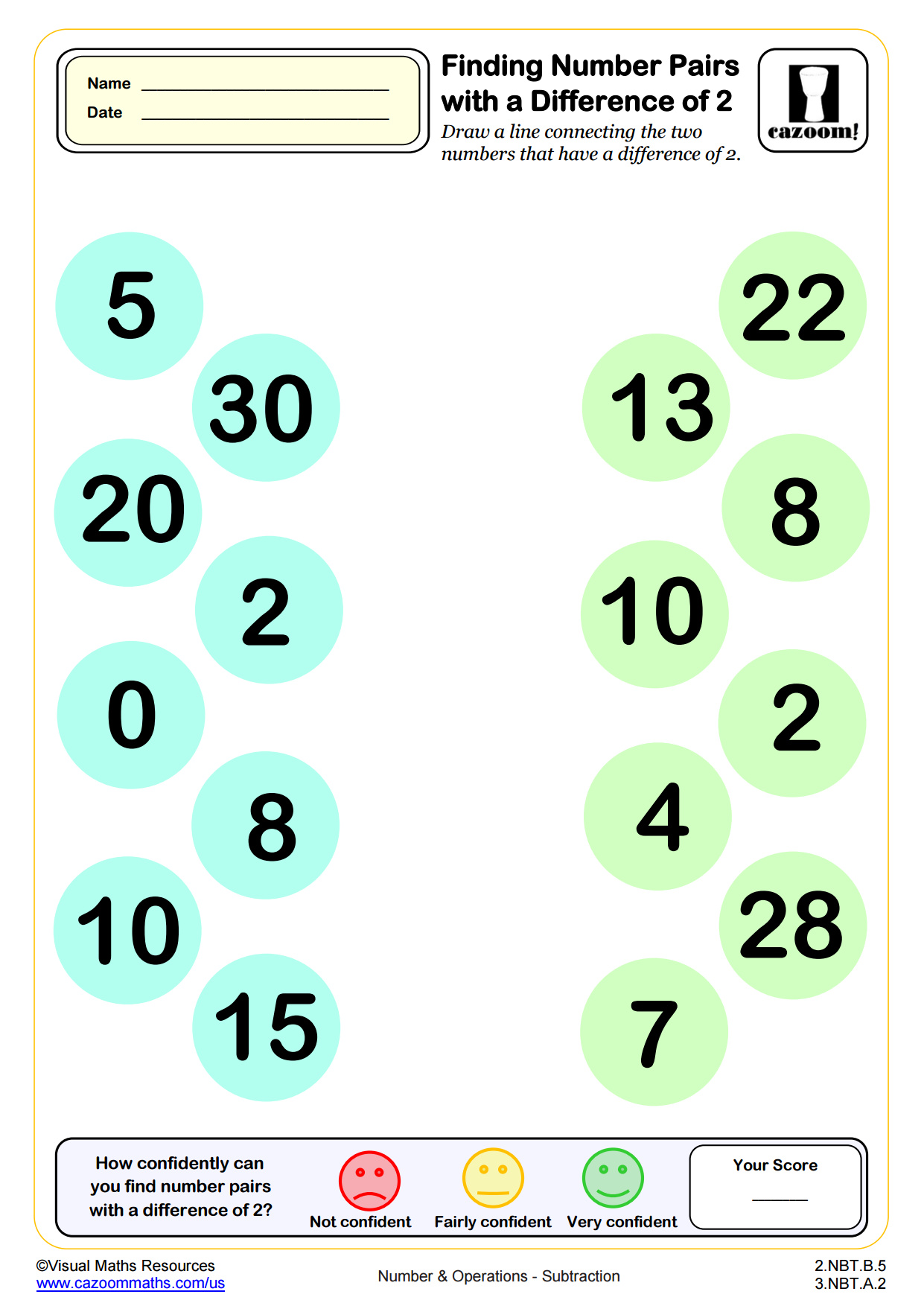
Find Number Pairs with a Difference of 5
Grades: 2nd Grade, 3rd Grade
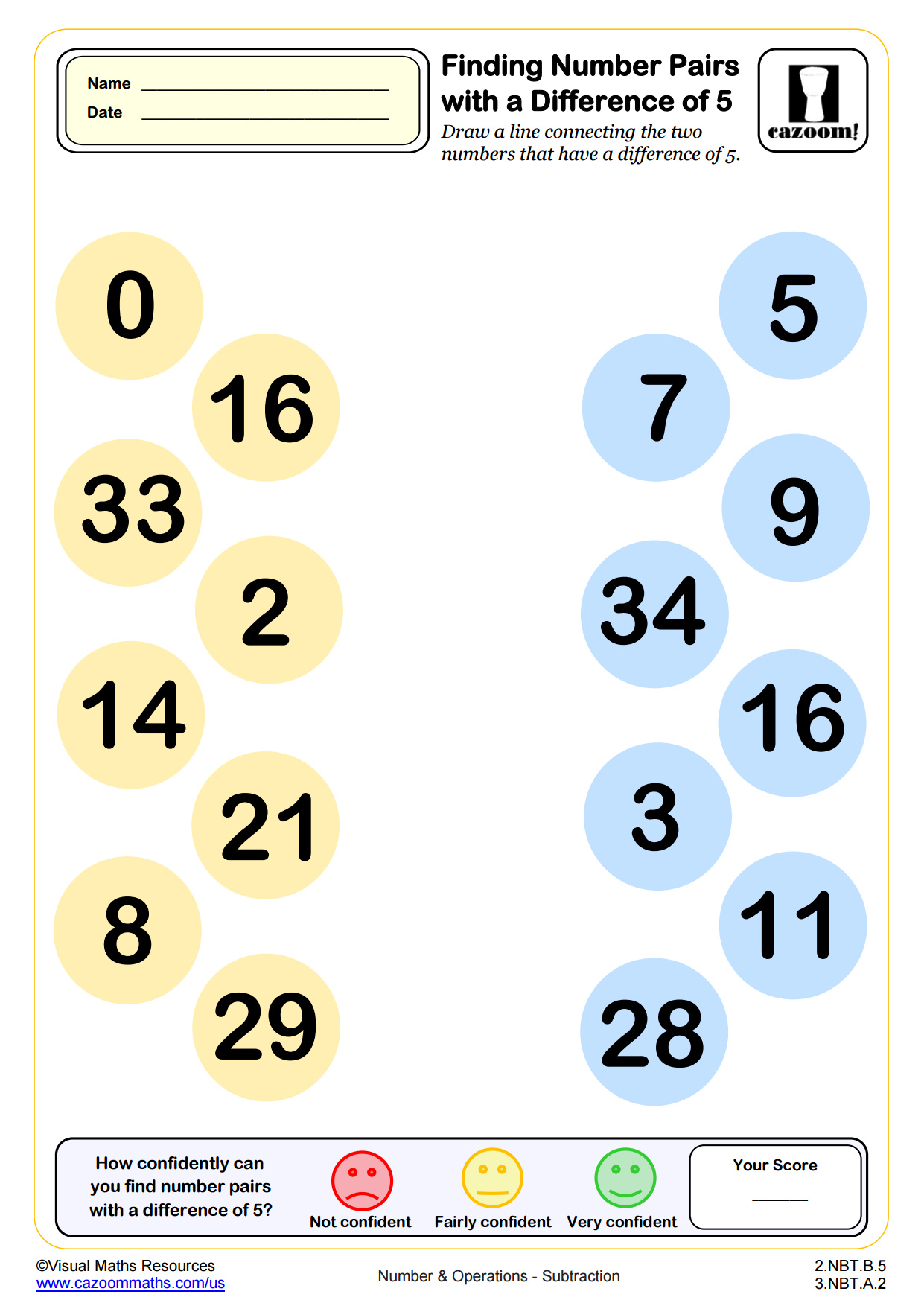
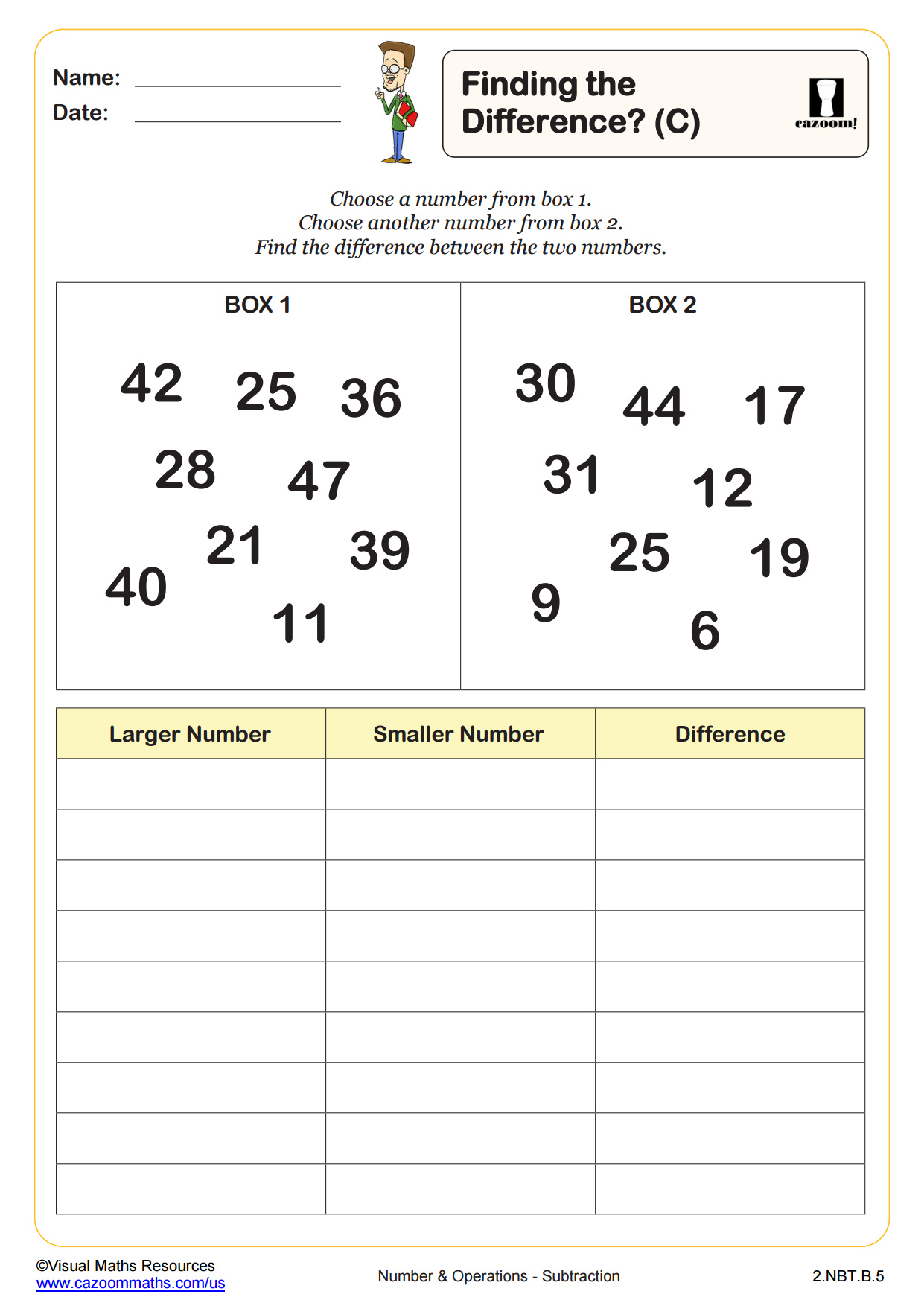
Finding the Difference (C)
Grades: 2nd Grade, 3rd Grade
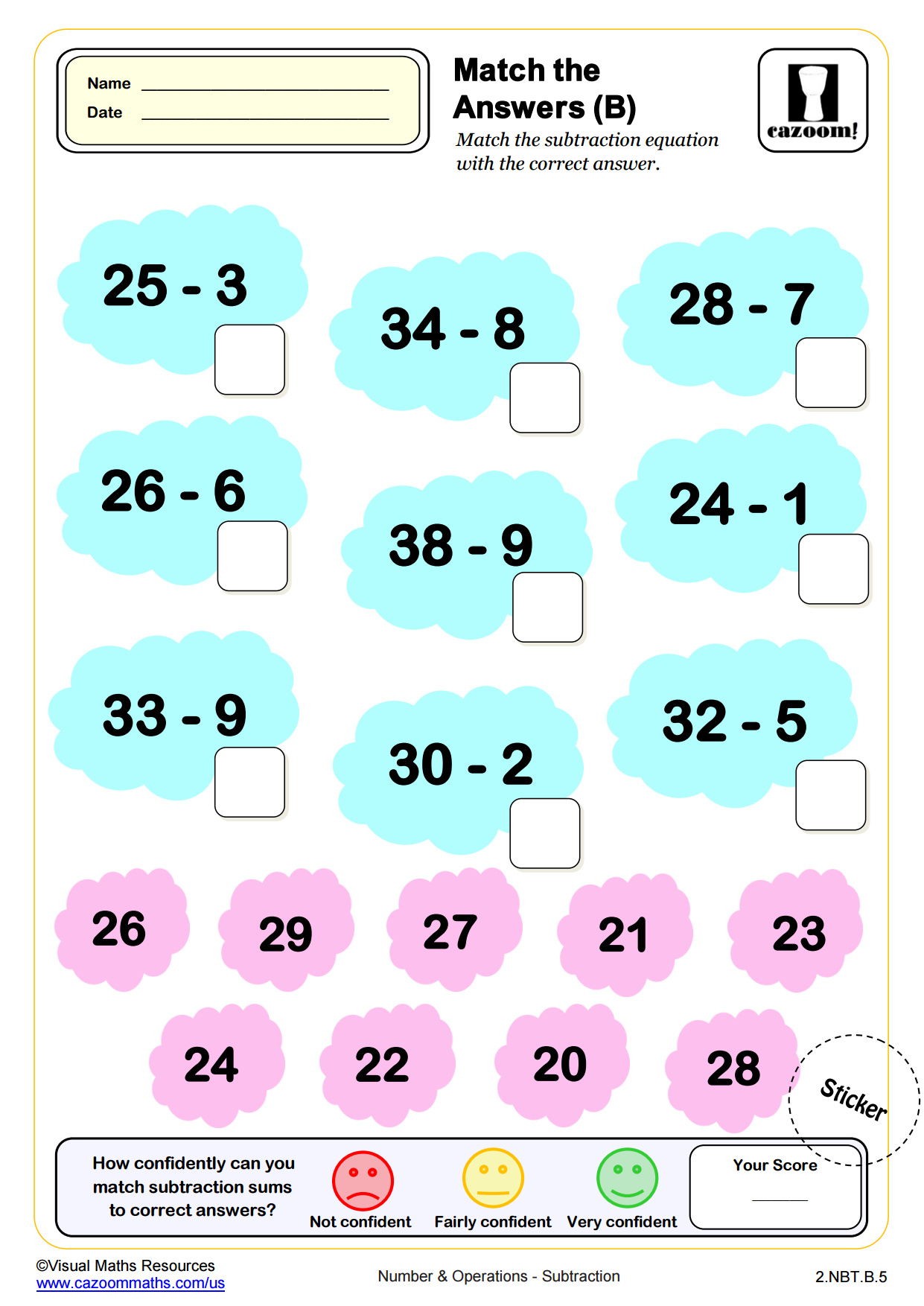
Match the Answers (B)
Grades: 2nd Grade
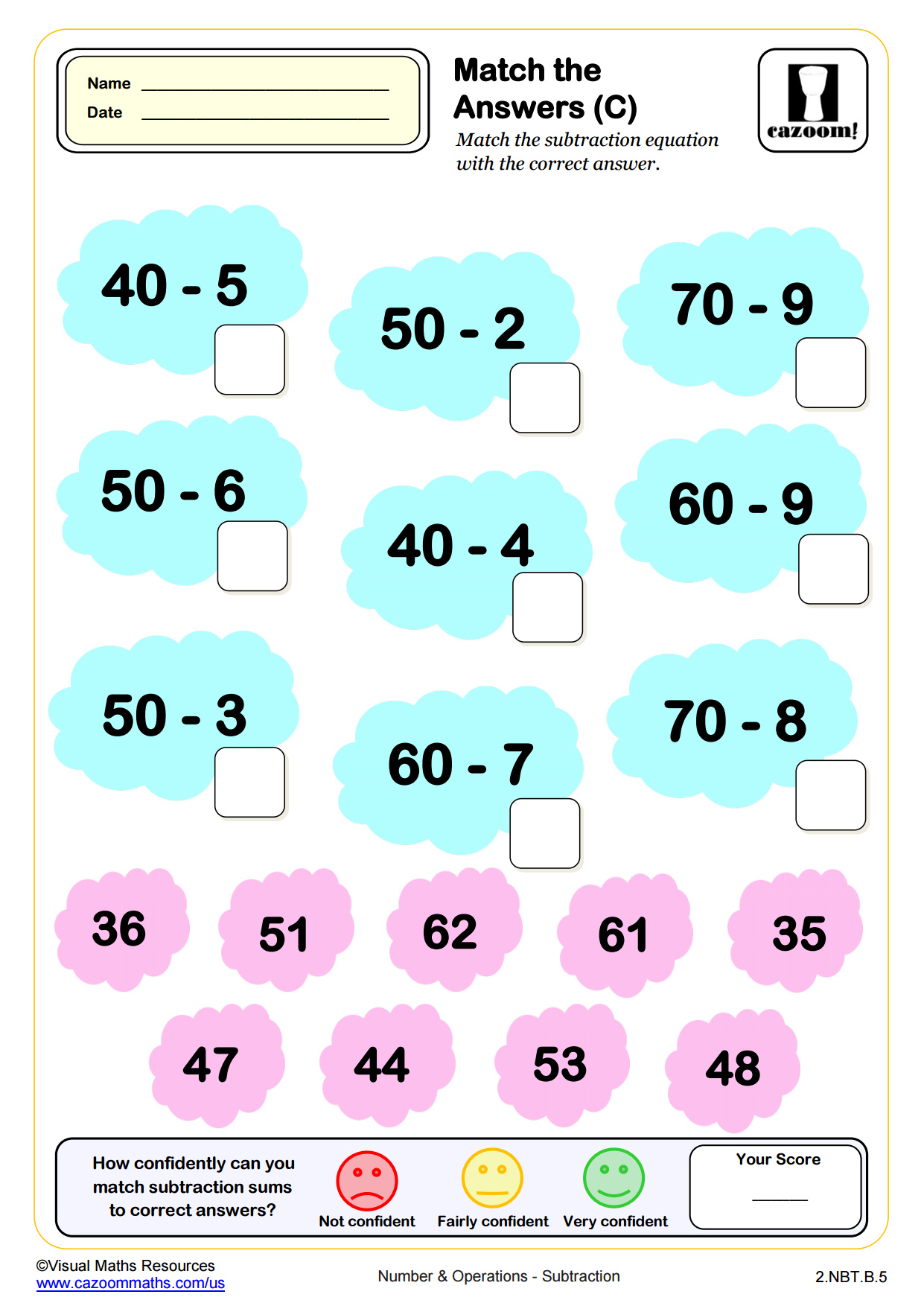
Match the Answers (C)
Grades: 2nd Grade
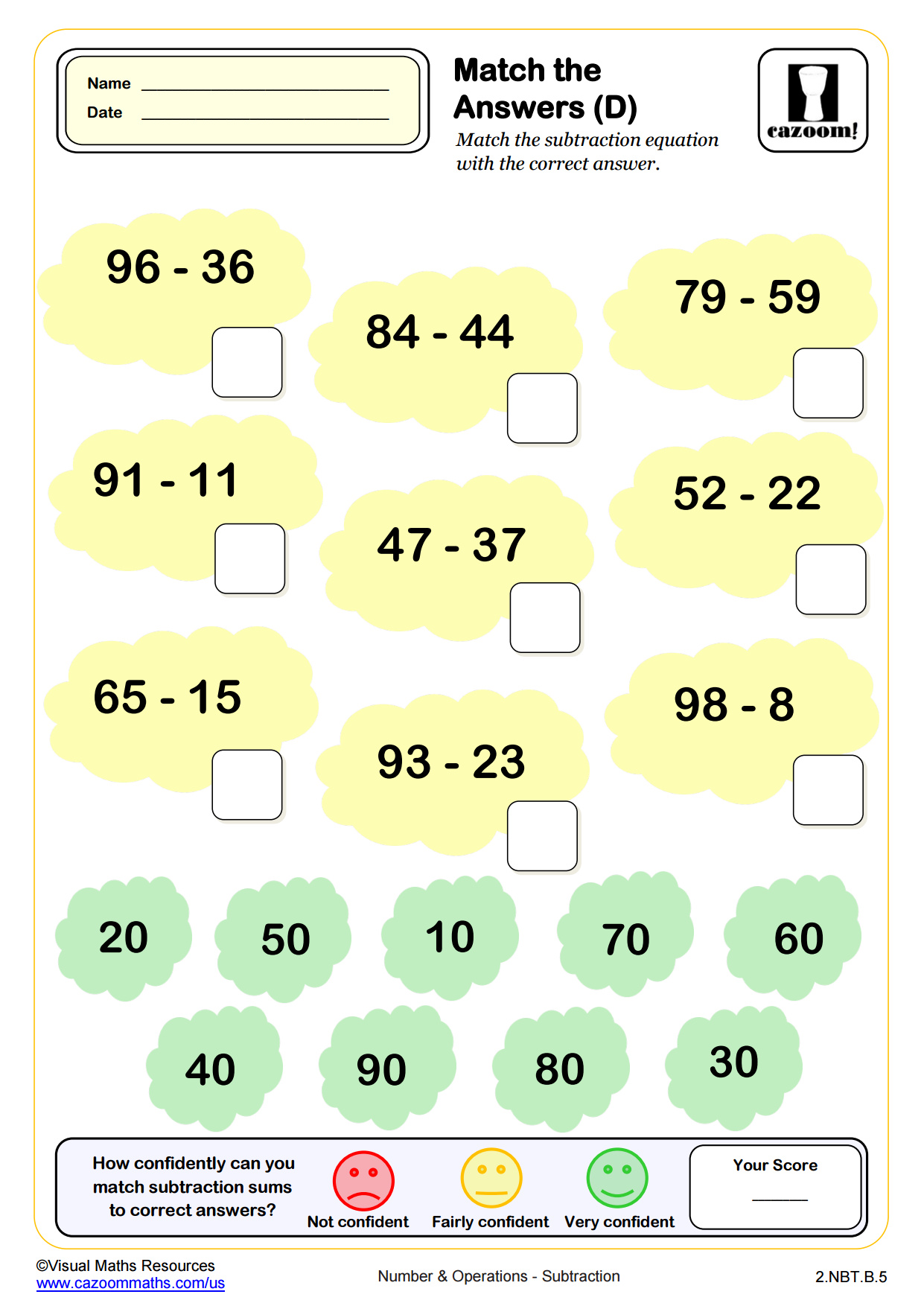
Match the Answers (D)
Grades: 2nd Grade
Subtracting 1 Digit from 2 Digits (A)
Grades: 2nd Grade
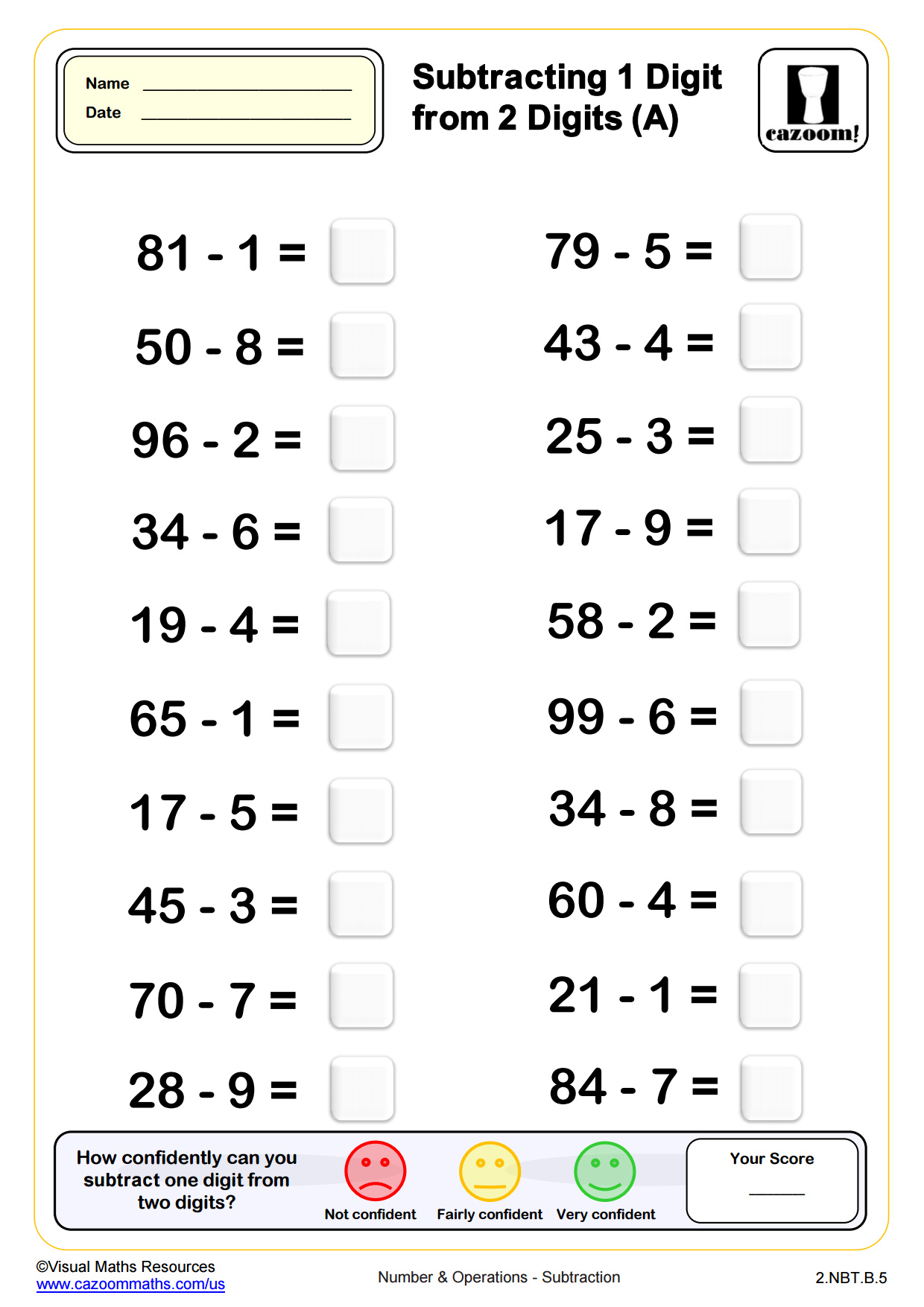
Subtracting 1 Digit from 2 Digits (B)
Grades: 2nd Grade
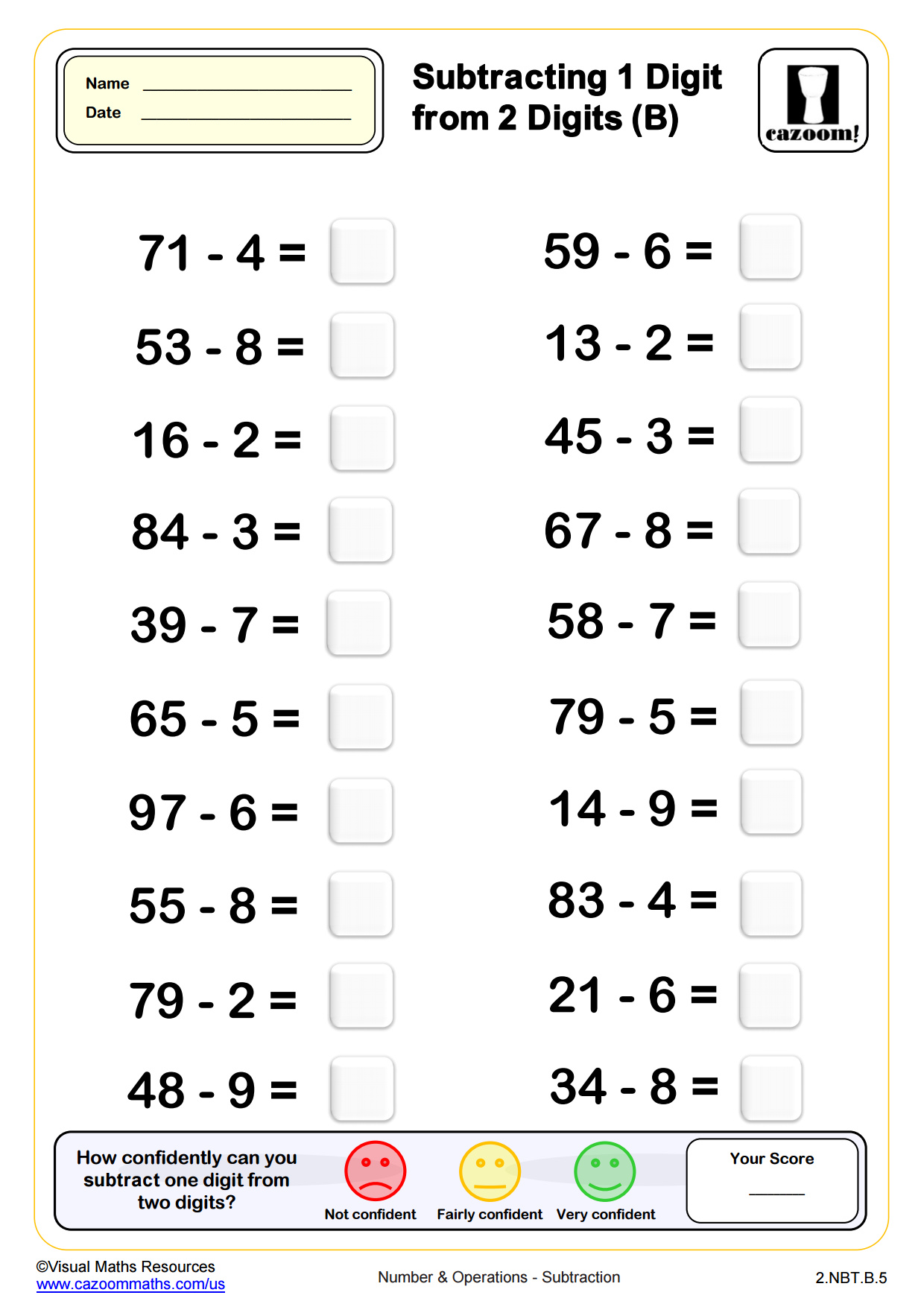
Subtracting 1 Digit from 2 Digits (C)
Grades: 2nd Grade
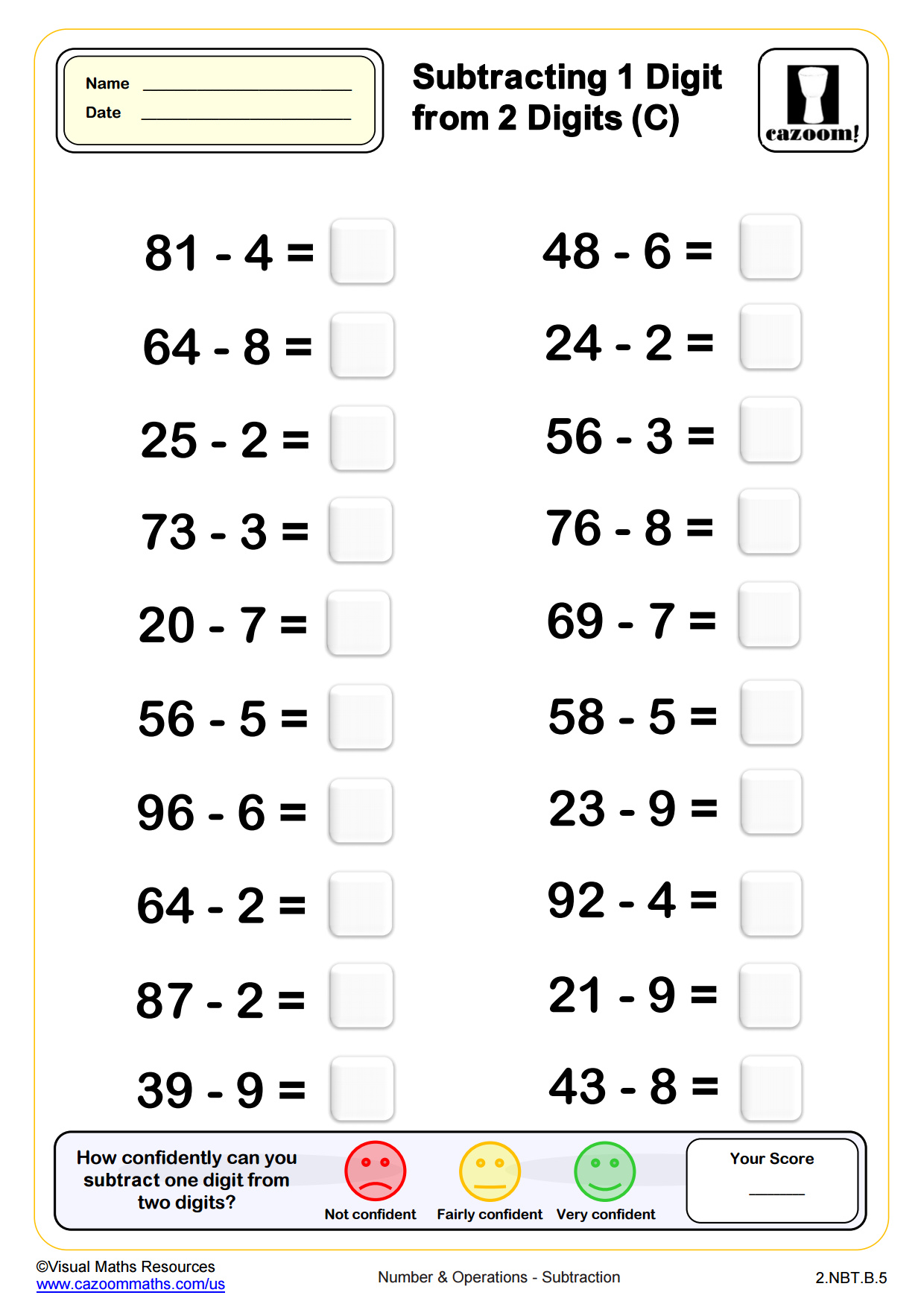
Subtracting 1 from two digit numbers (10 questions)
Grades: 2nd Grade
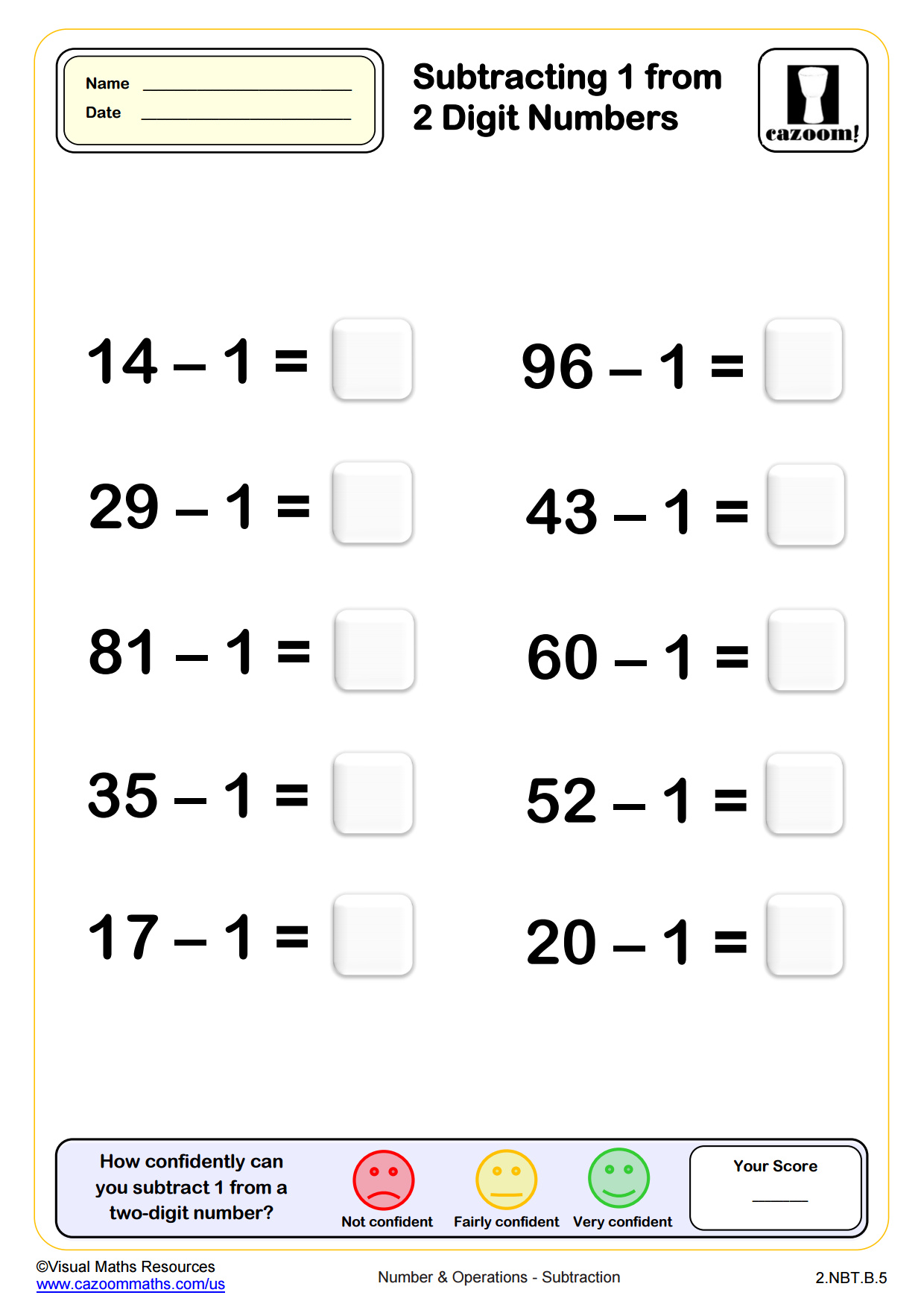
Subtracting 1 from two digit numbers (20 questions)
Grades: 2nd Grade
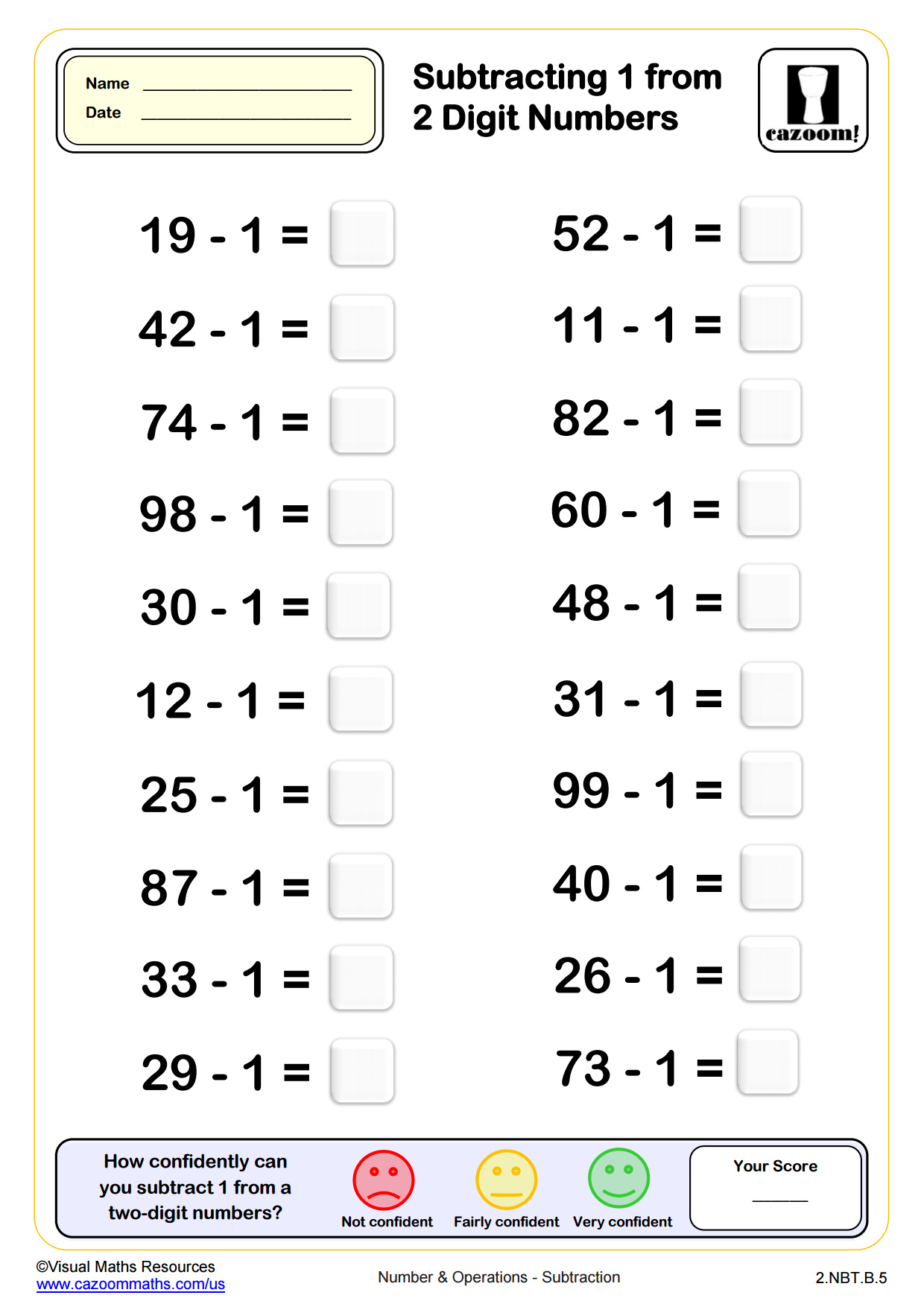
Subtracting 1 from two digit numbers (50 questions)
Grades: 2nd Grade
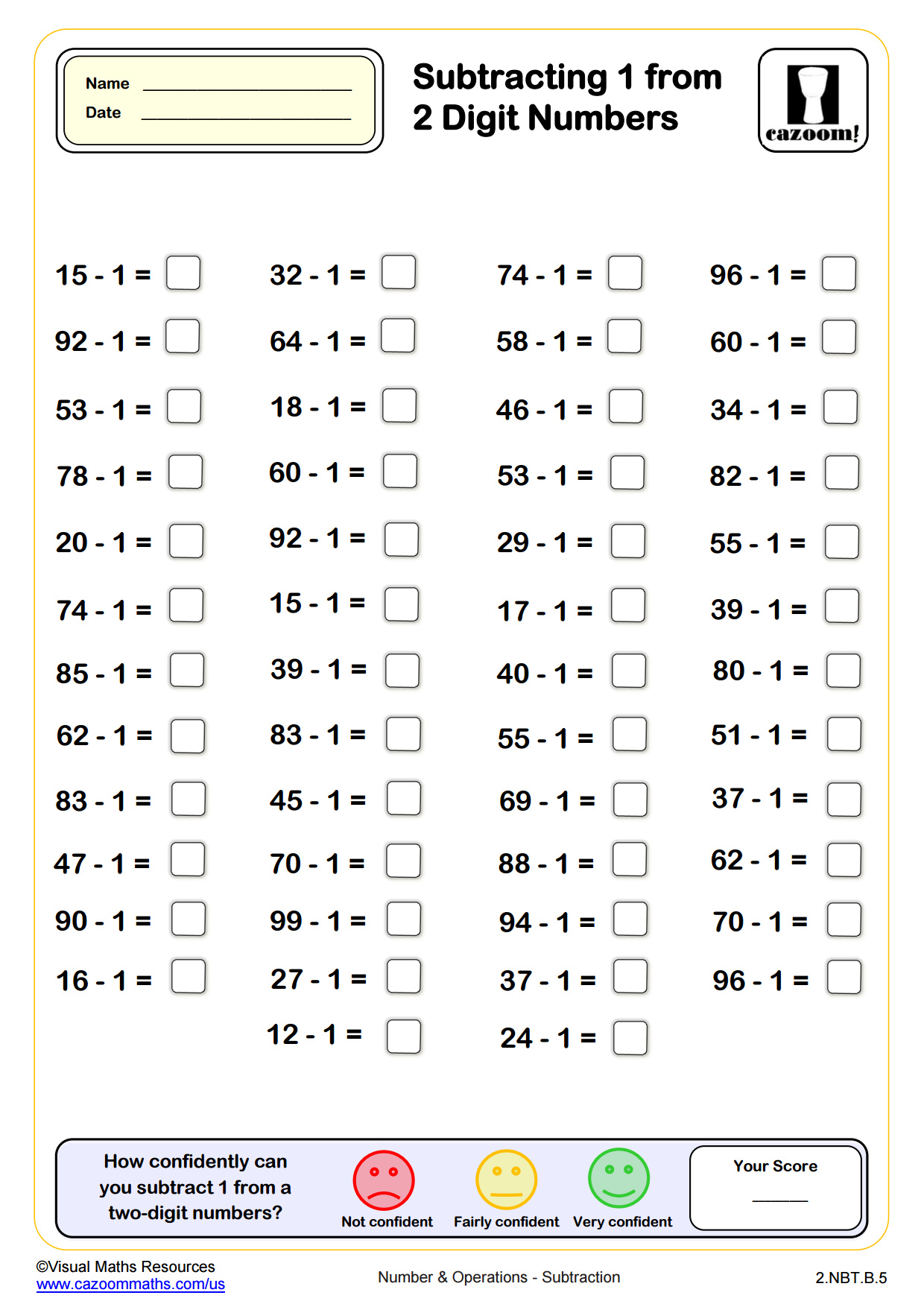
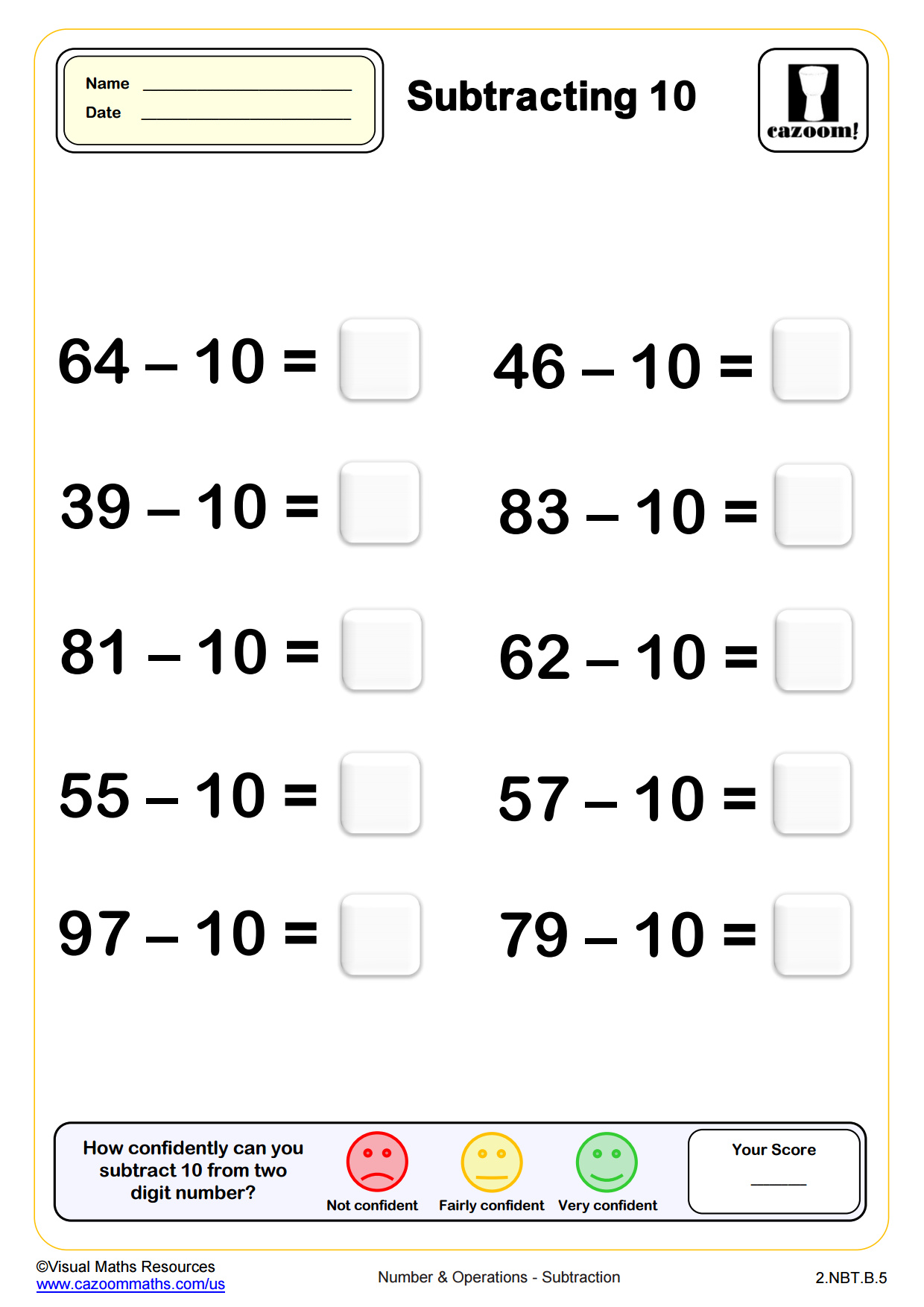
Subtracting 10 (10 questions)
Grades: 2nd Grade
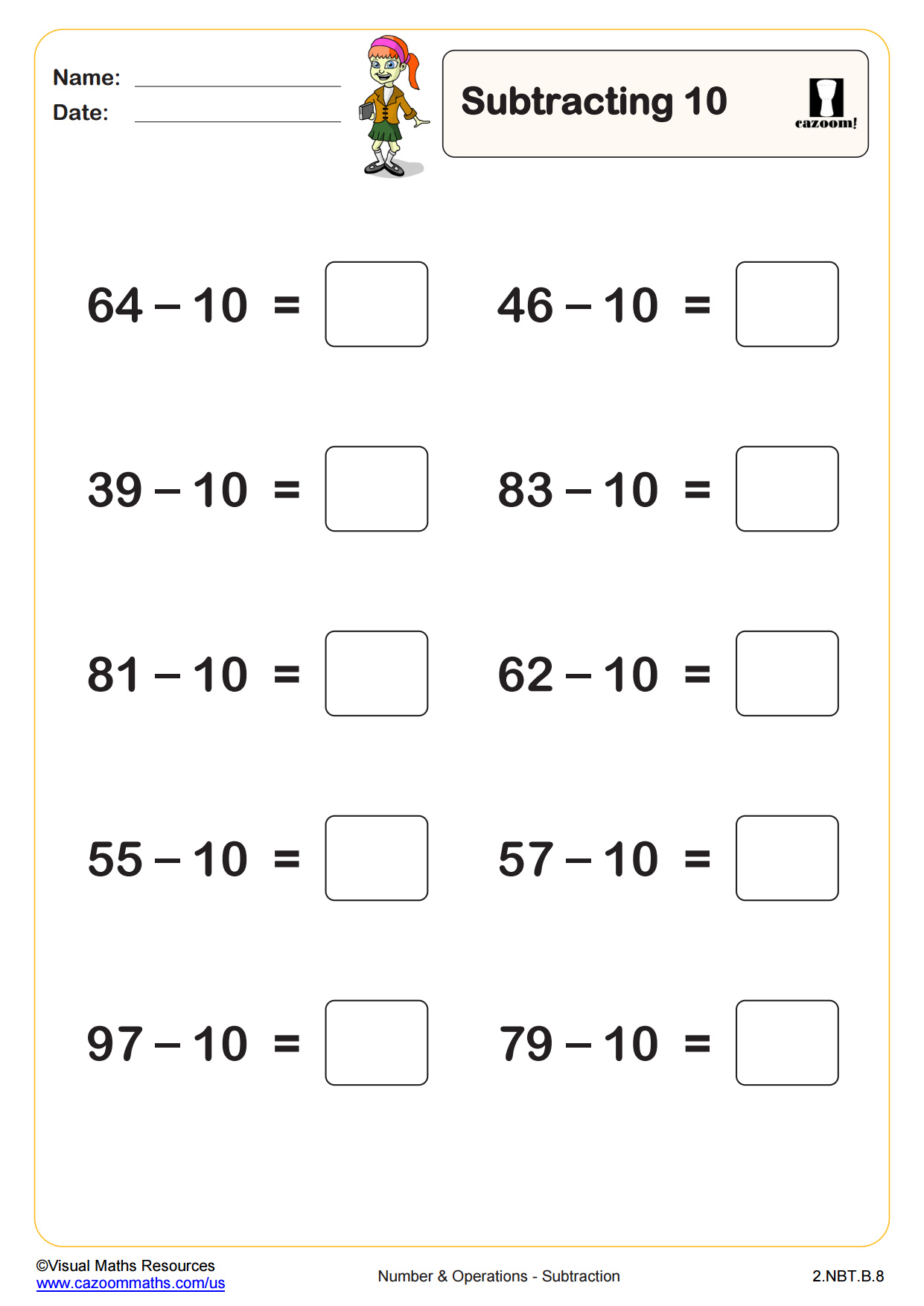
Subtracting 10 (20 questions)
Grades: 2nd Grade
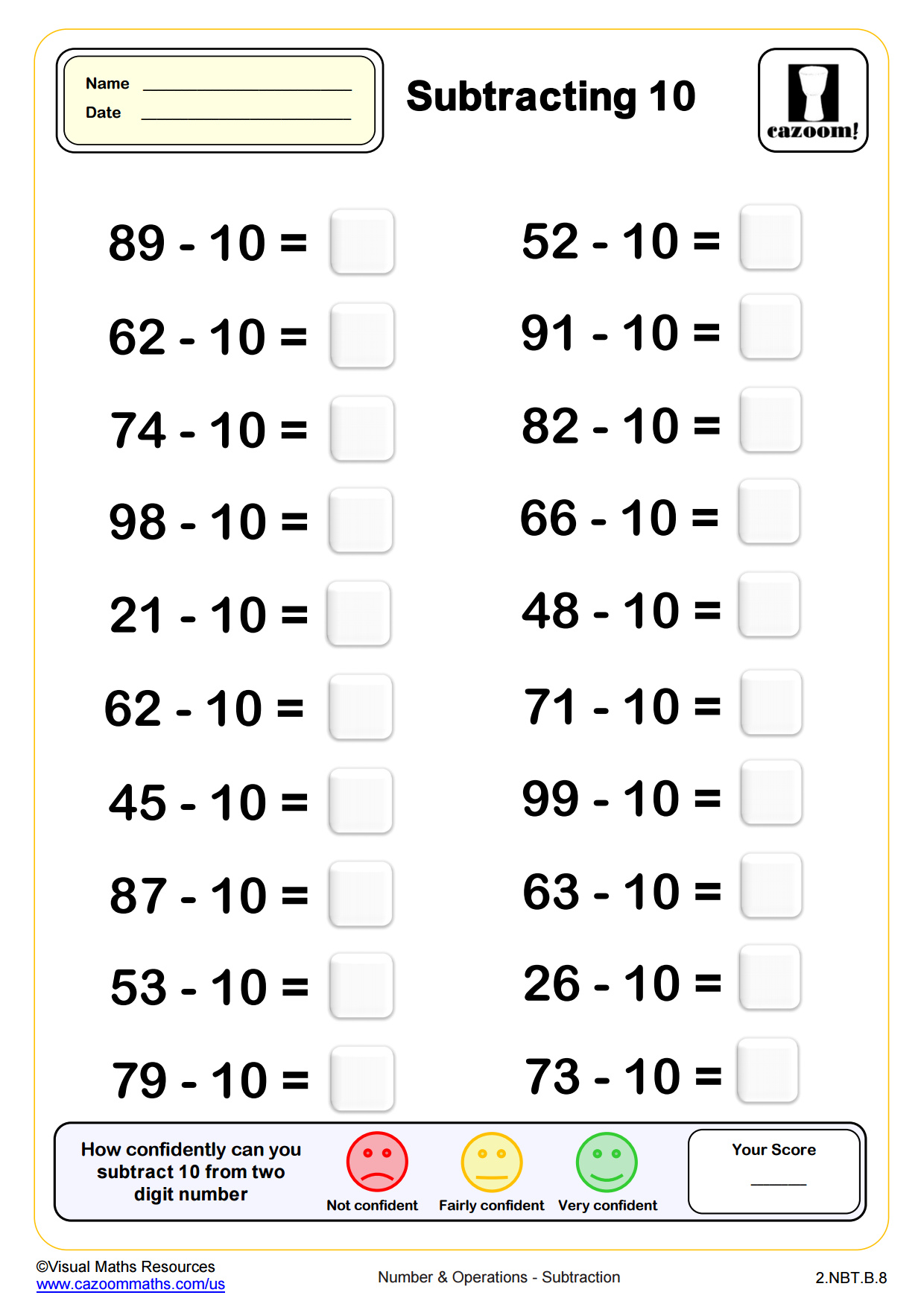
Subtracting 10 (50 questions)
Grades: 2nd Grade
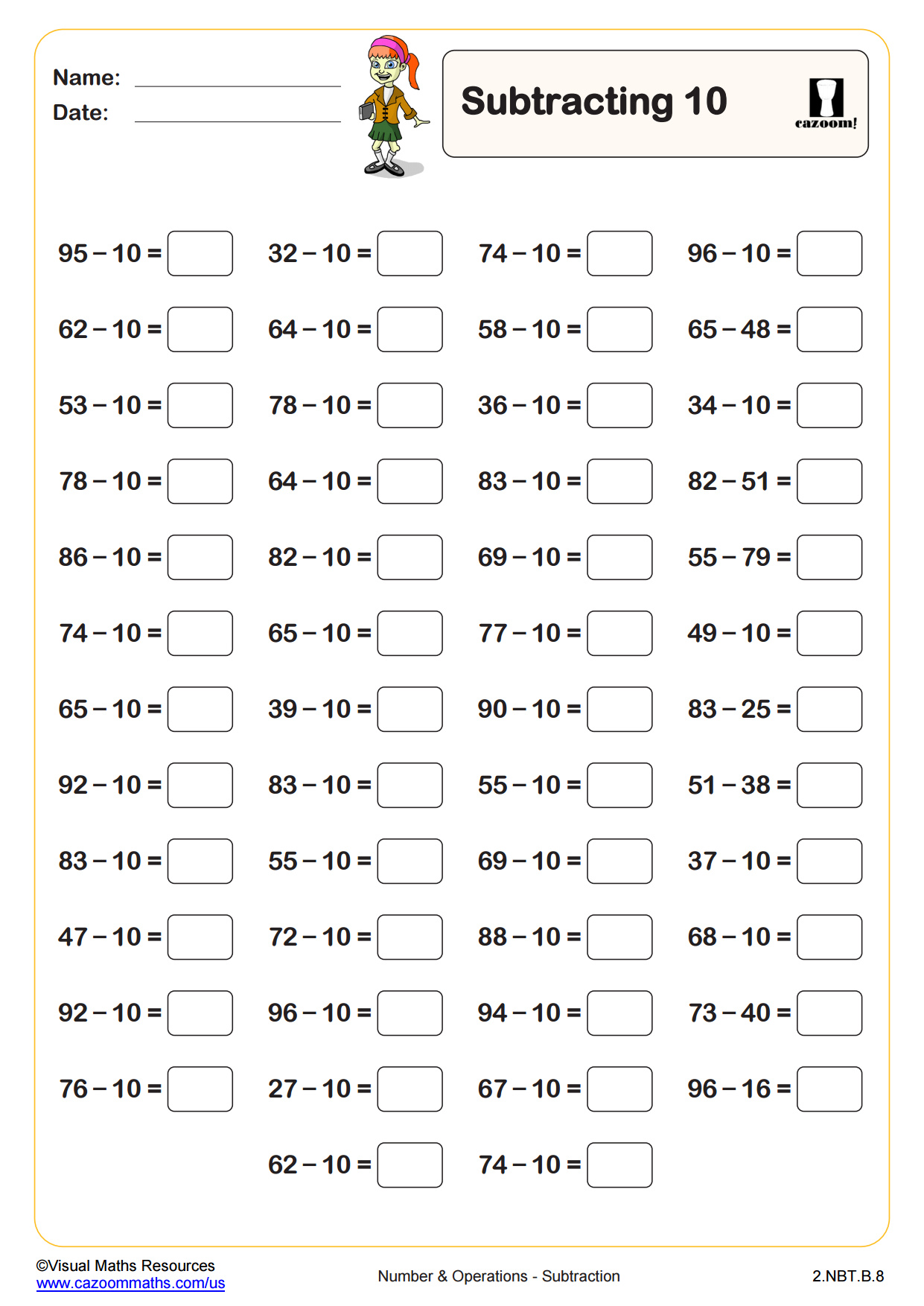
Subtracting 1s from 4 Digit Numbers
Grades: 2nd Grade
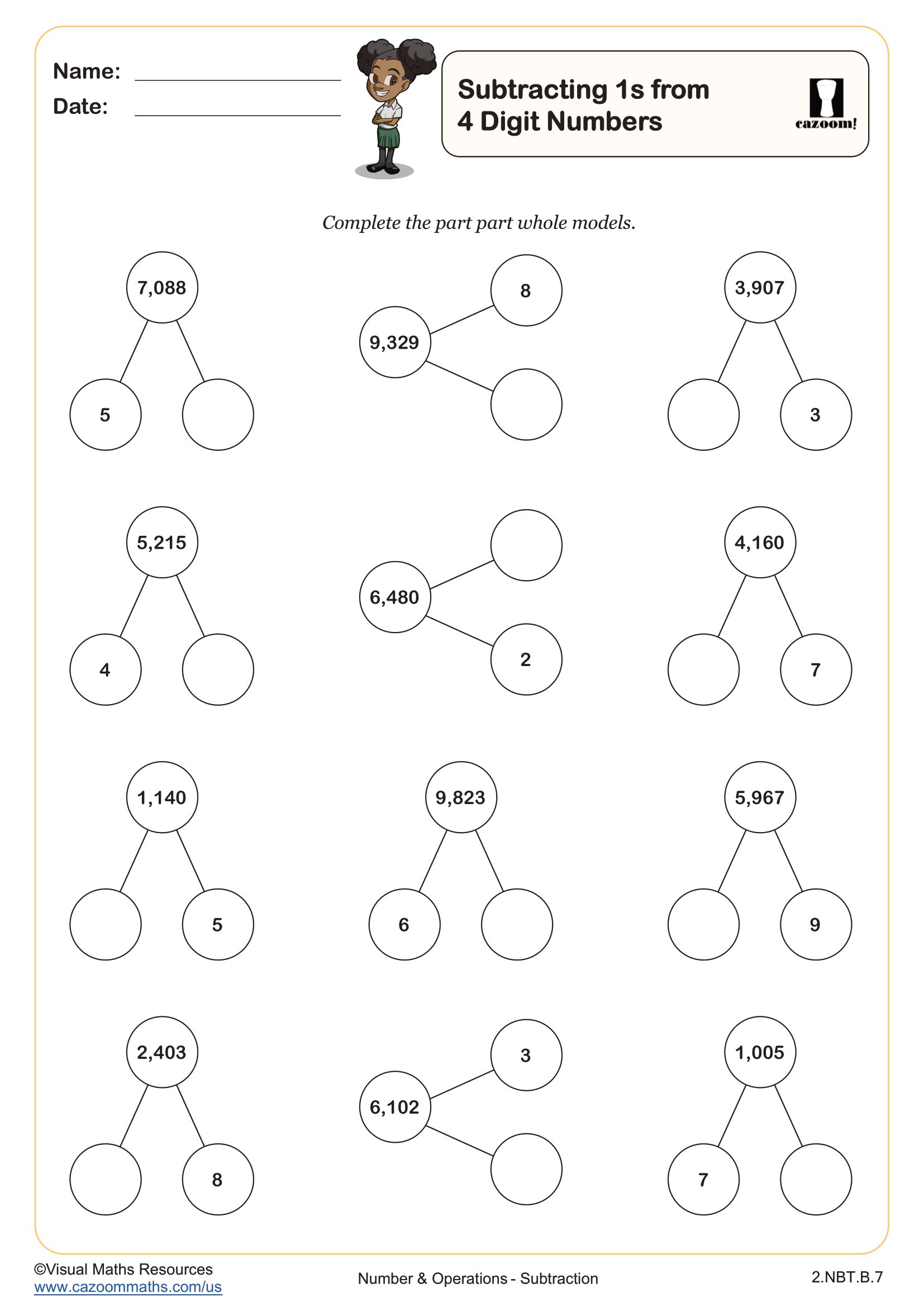
Subtracting 2 from two digit numbers (20 questions)
Grades: 2nd Grade
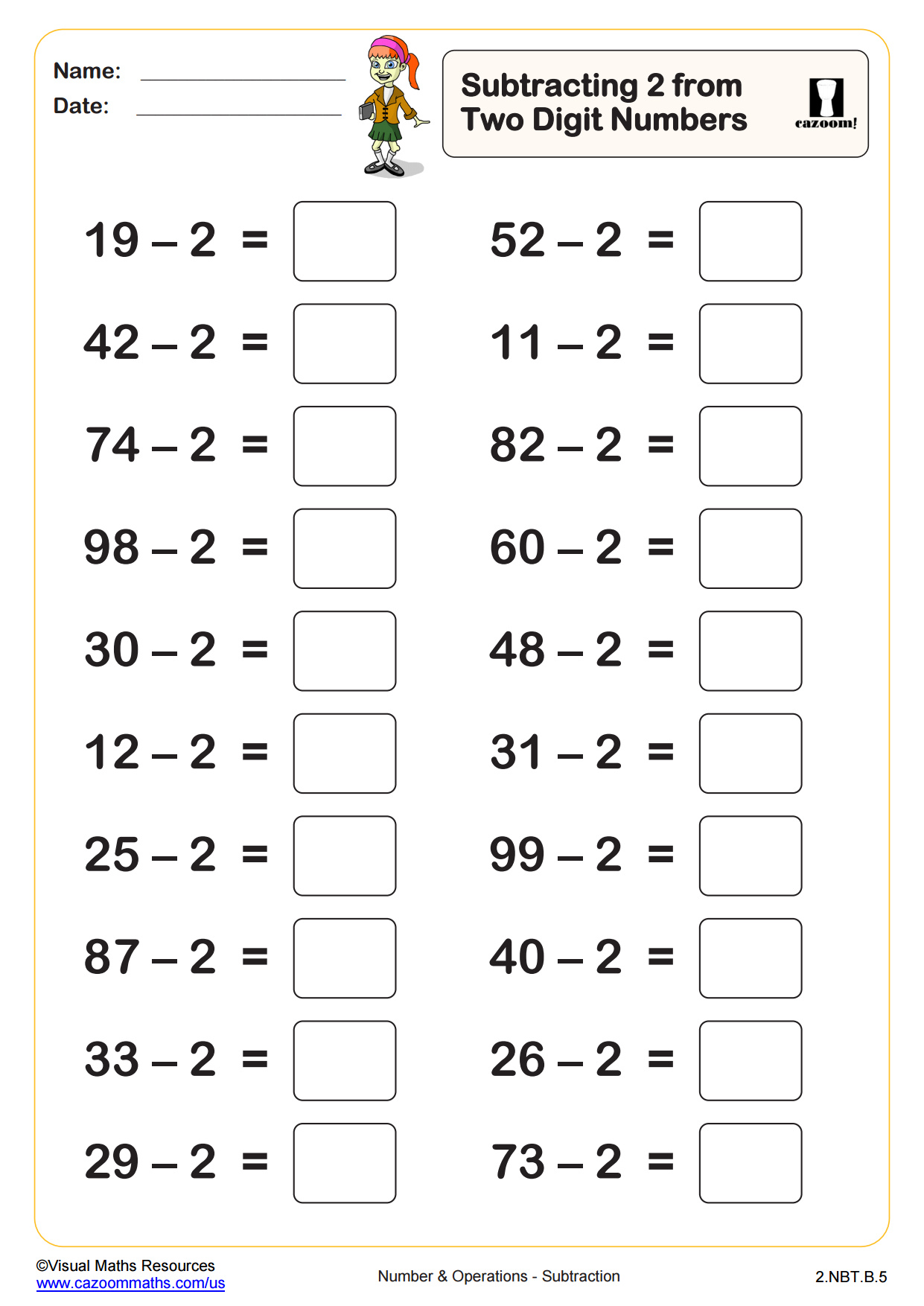
Subtracting 2 from two digit numbers (50 questions)
Grades: 2nd Grade
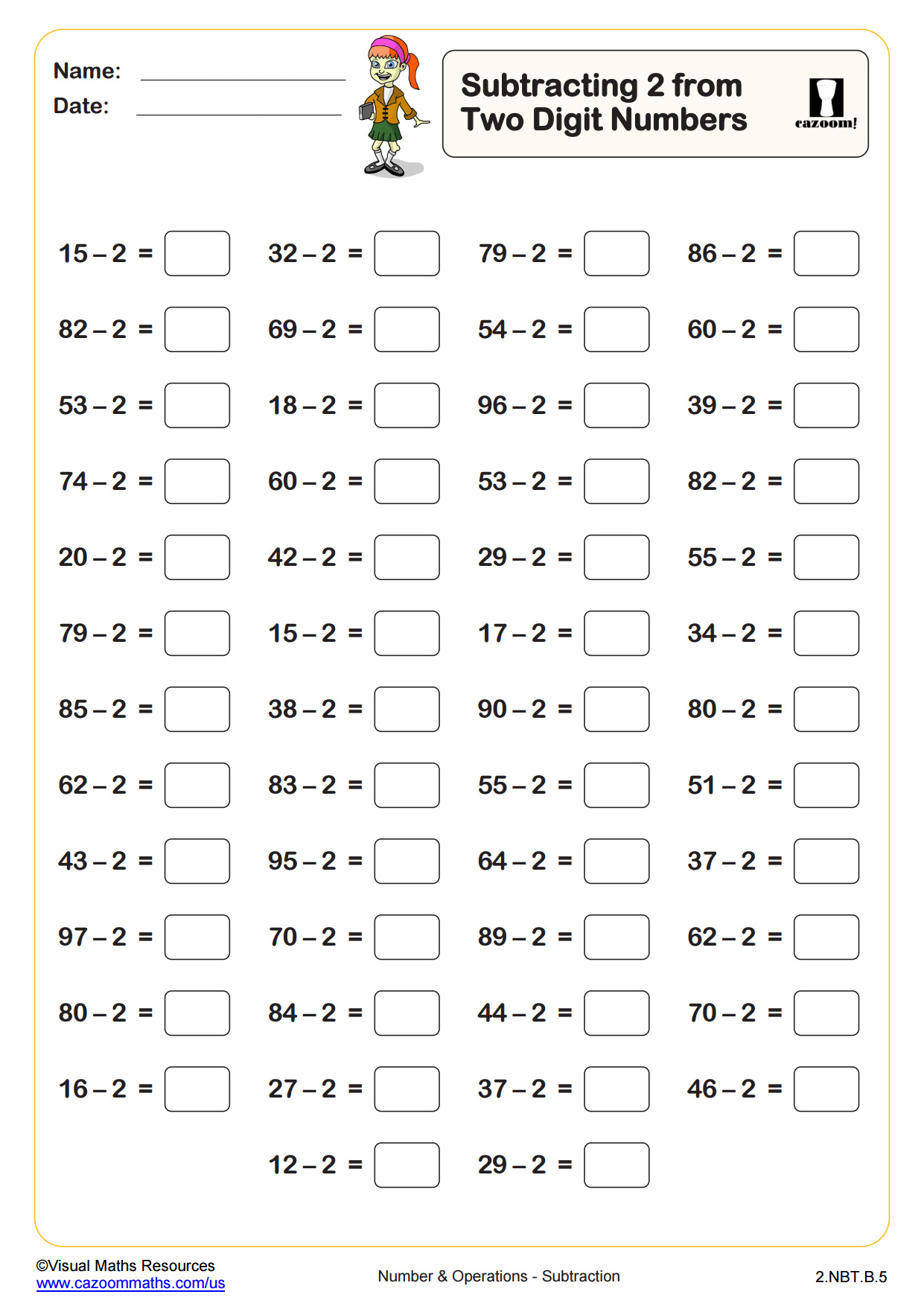
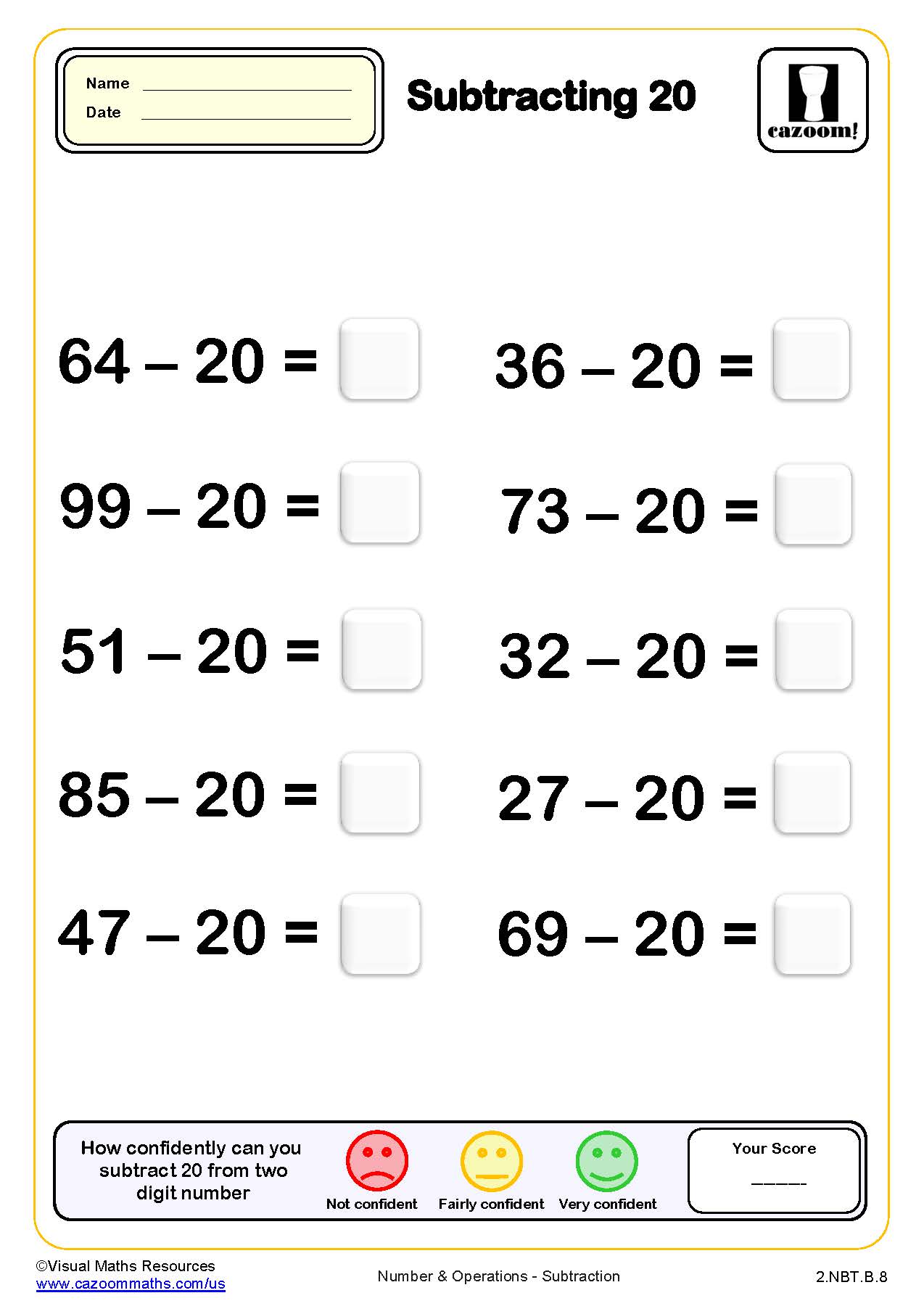
Subtracting 20 (10 questions)
Grades: 2nd Grade
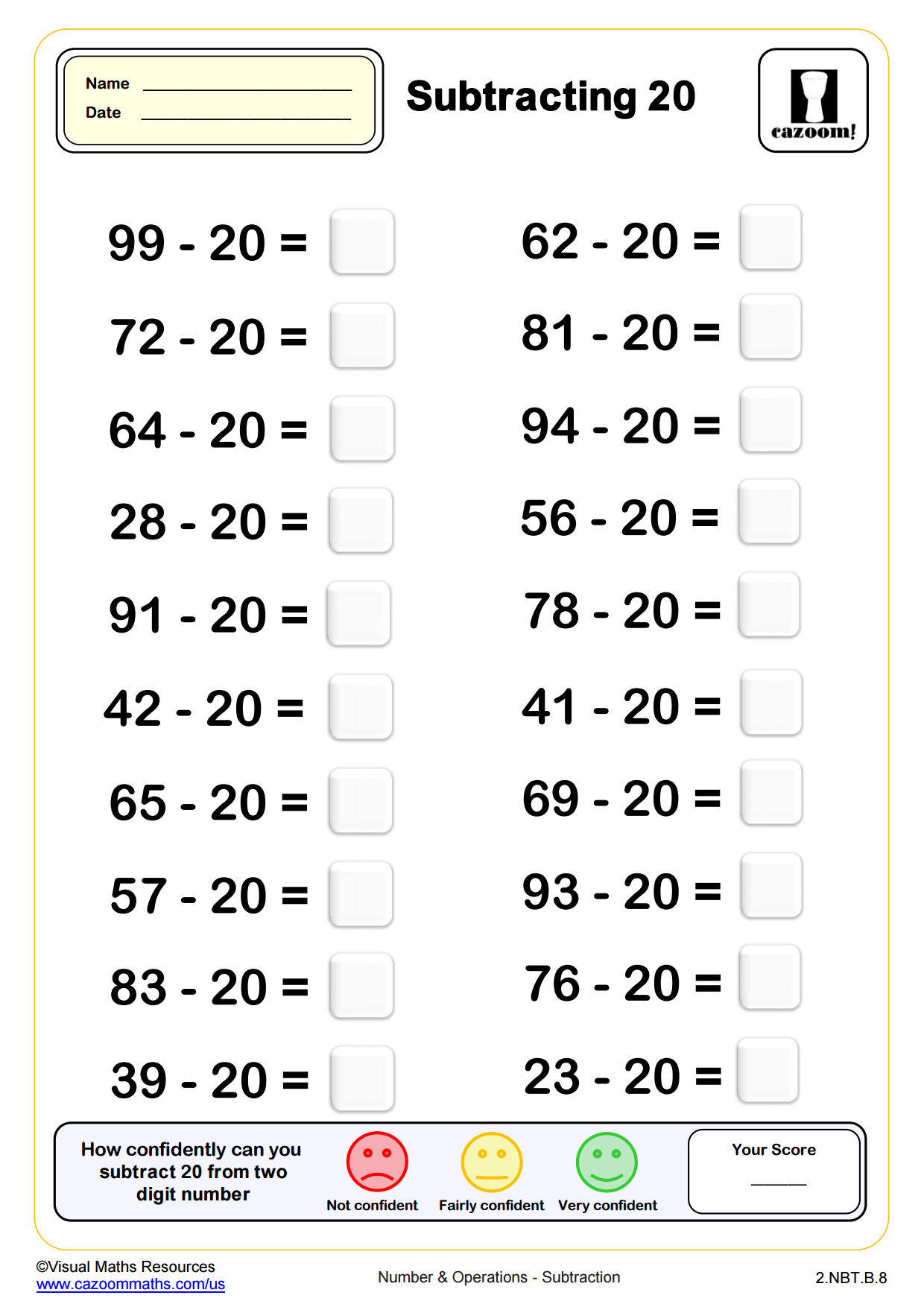
Subtracting 20 (20 questions)
Grades: 2nd Grade
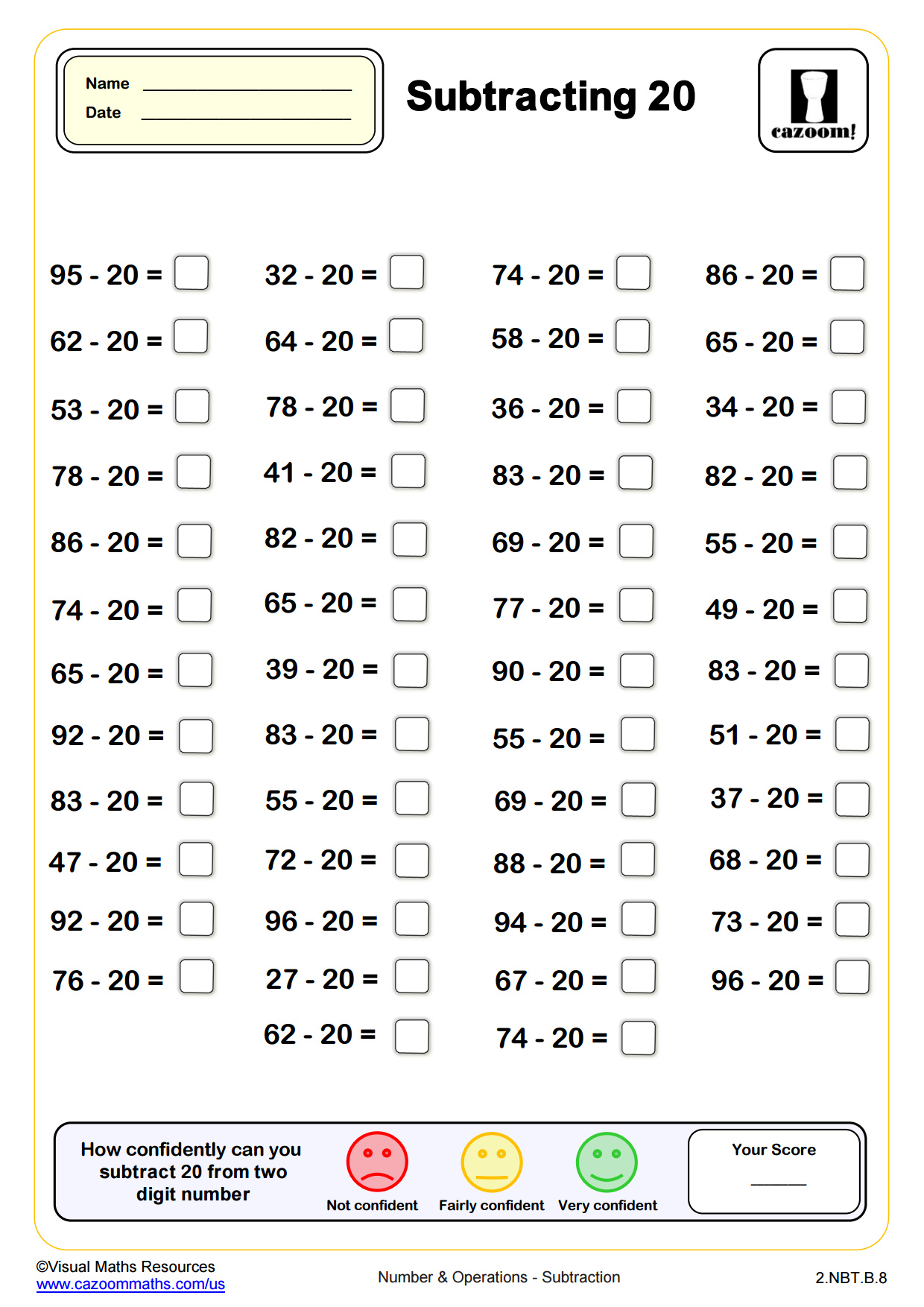
Subtracting 20 (50 questions)
Grades: 2nd Grade
Subtracting 3 from Two Digit Numbers (10 questions)
Grades: 2nd Grade
Subtracting 3 from Two Digit Numbers (20 questions)
Grades: 2nd Grade
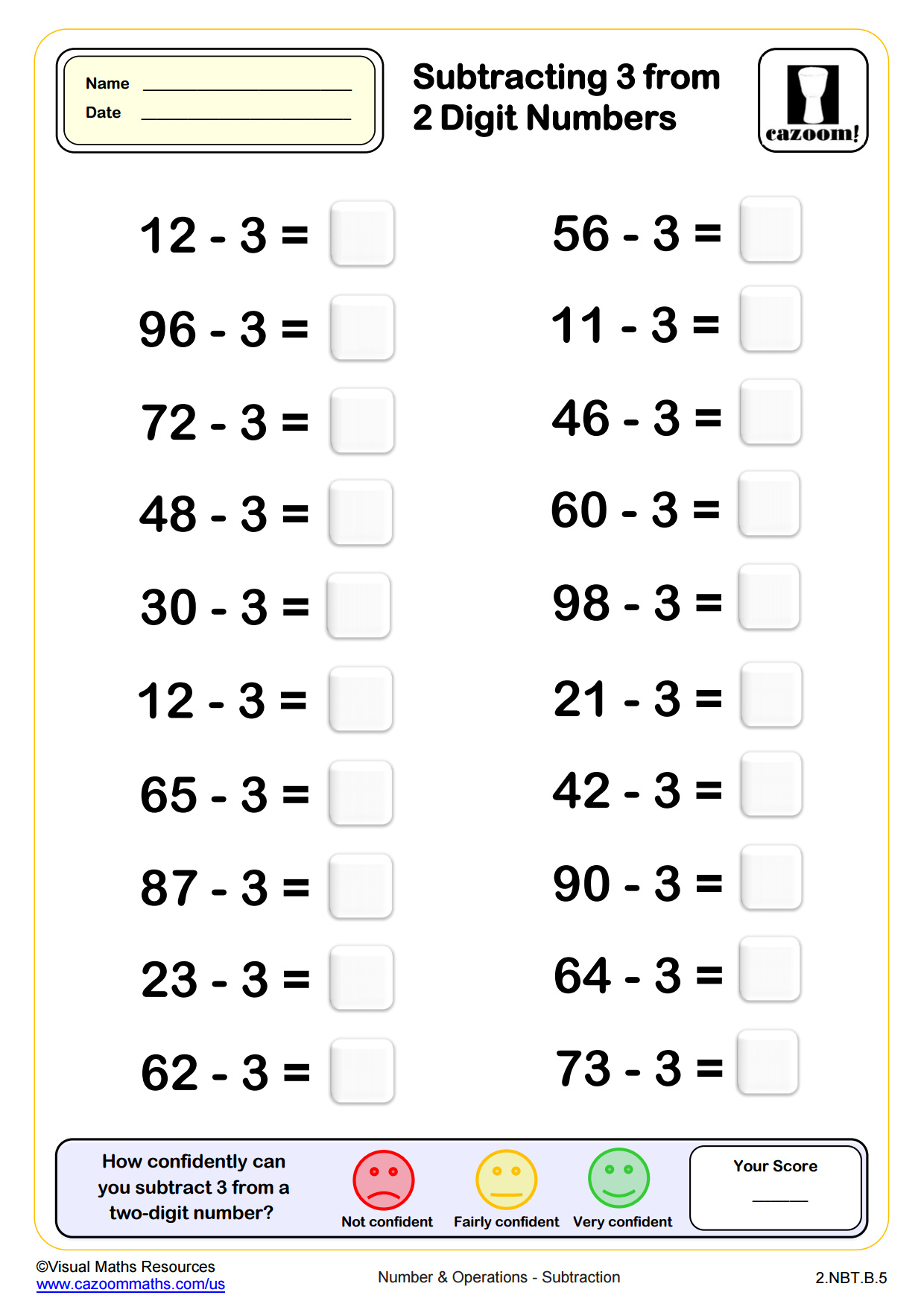
Subtracting 3 from Two Digit Numbers (50 questions)
Grades: 2nd Grade
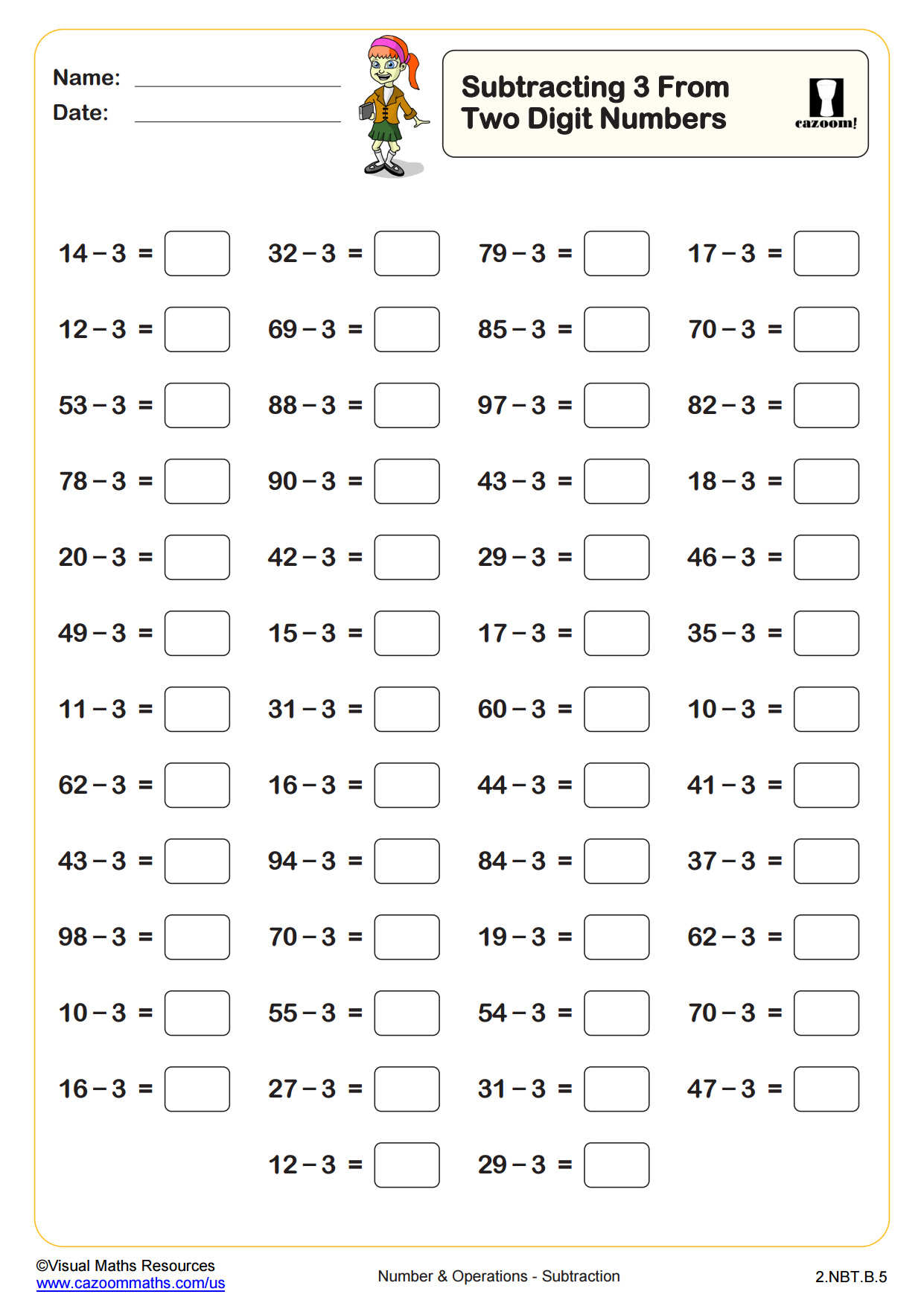
Subtracting 4 from Two Digit Numbers (10 questions)
Grades: 2nd Grade
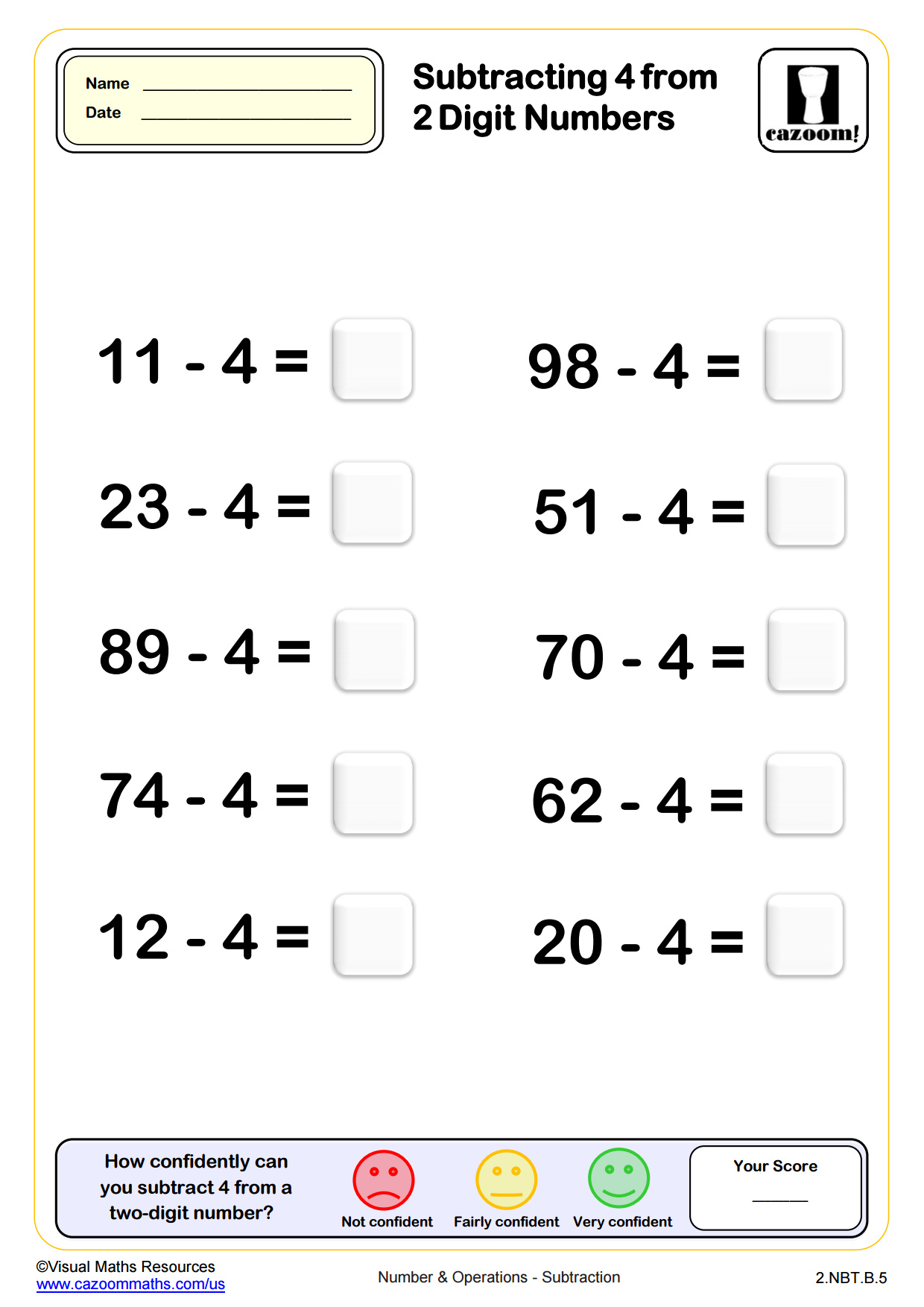
Subtracting 4 from Two Digit Numbers (20 questions)
Grades: 2nd Grade
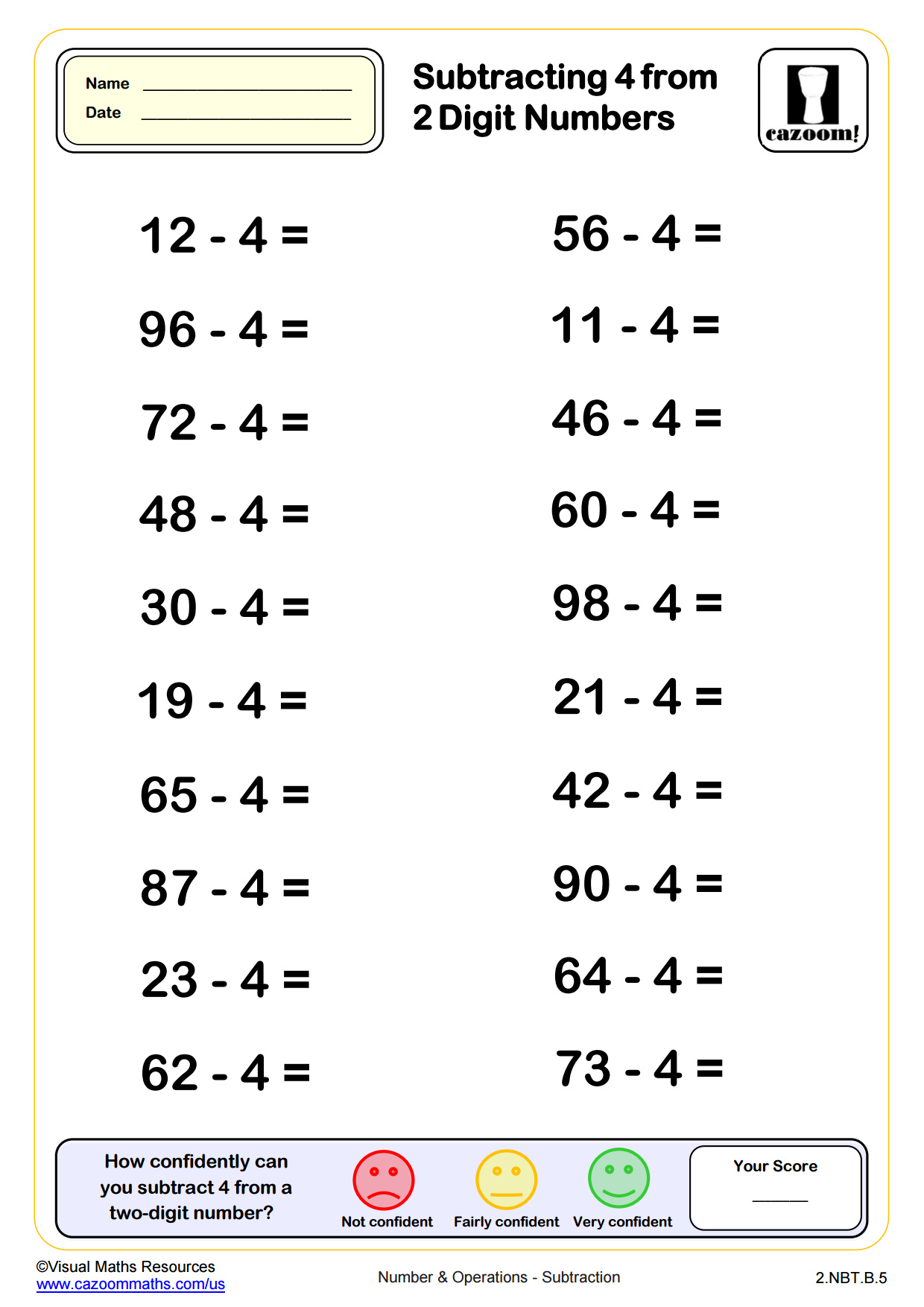
Subtracting 4 from Two Digit Numbers (50 questions)
Grades: 2nd Grade
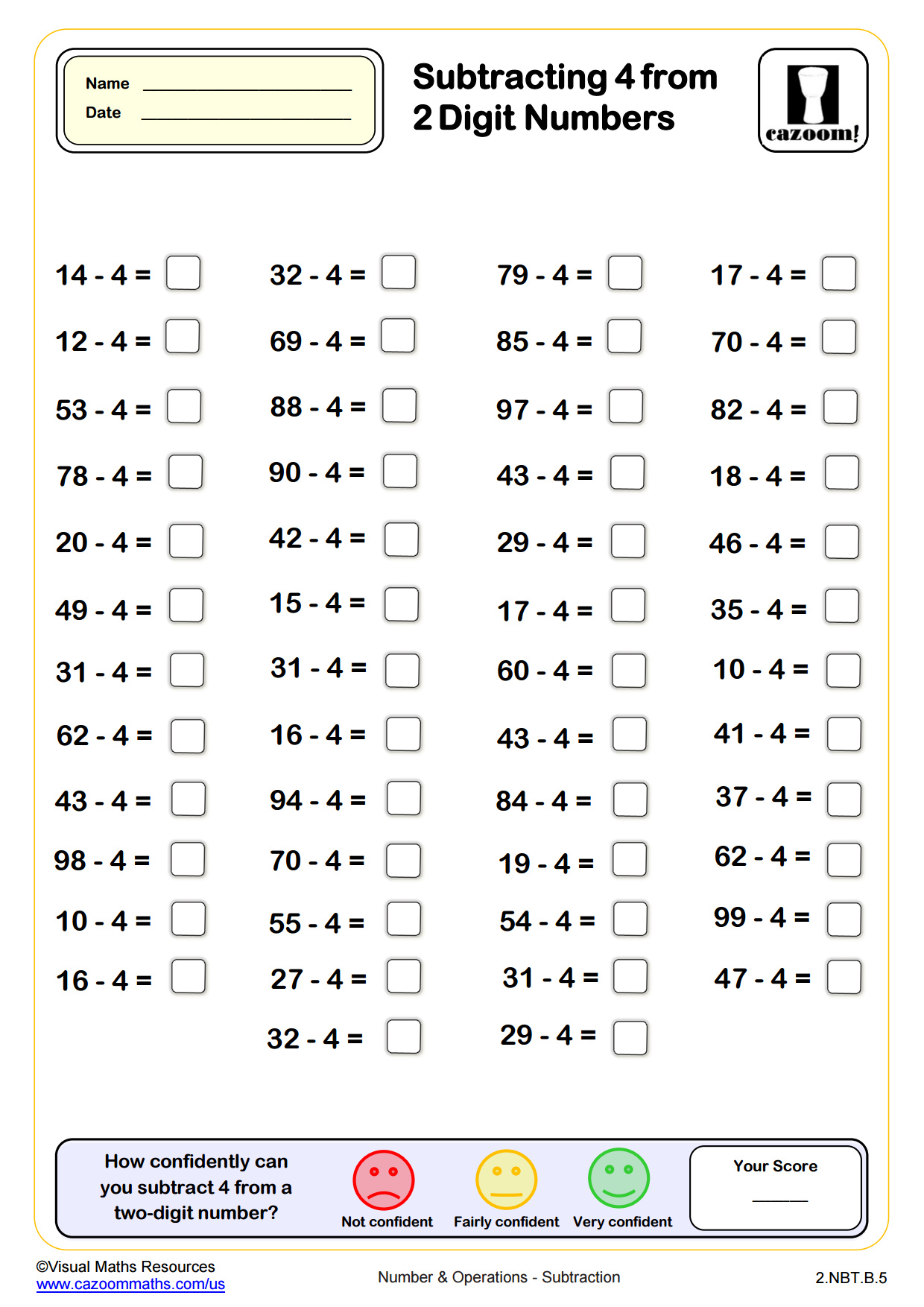
Subtracting 5 from Two Digit Numbers (10 questions)
Grades: 2nd Grade
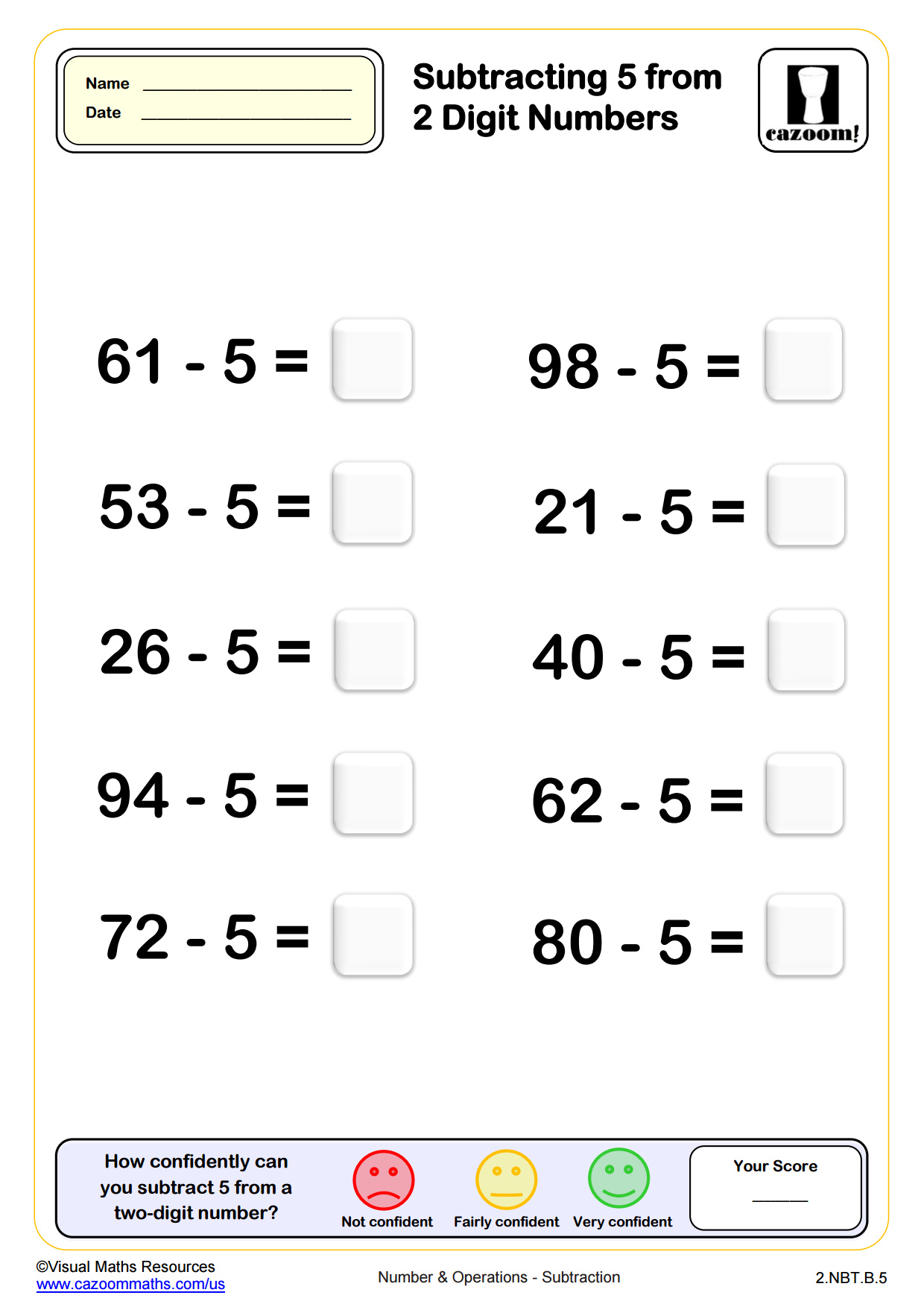
Subtracting 5 from Two Digit Numbers (20 questions)
Grades: 2nd Grade
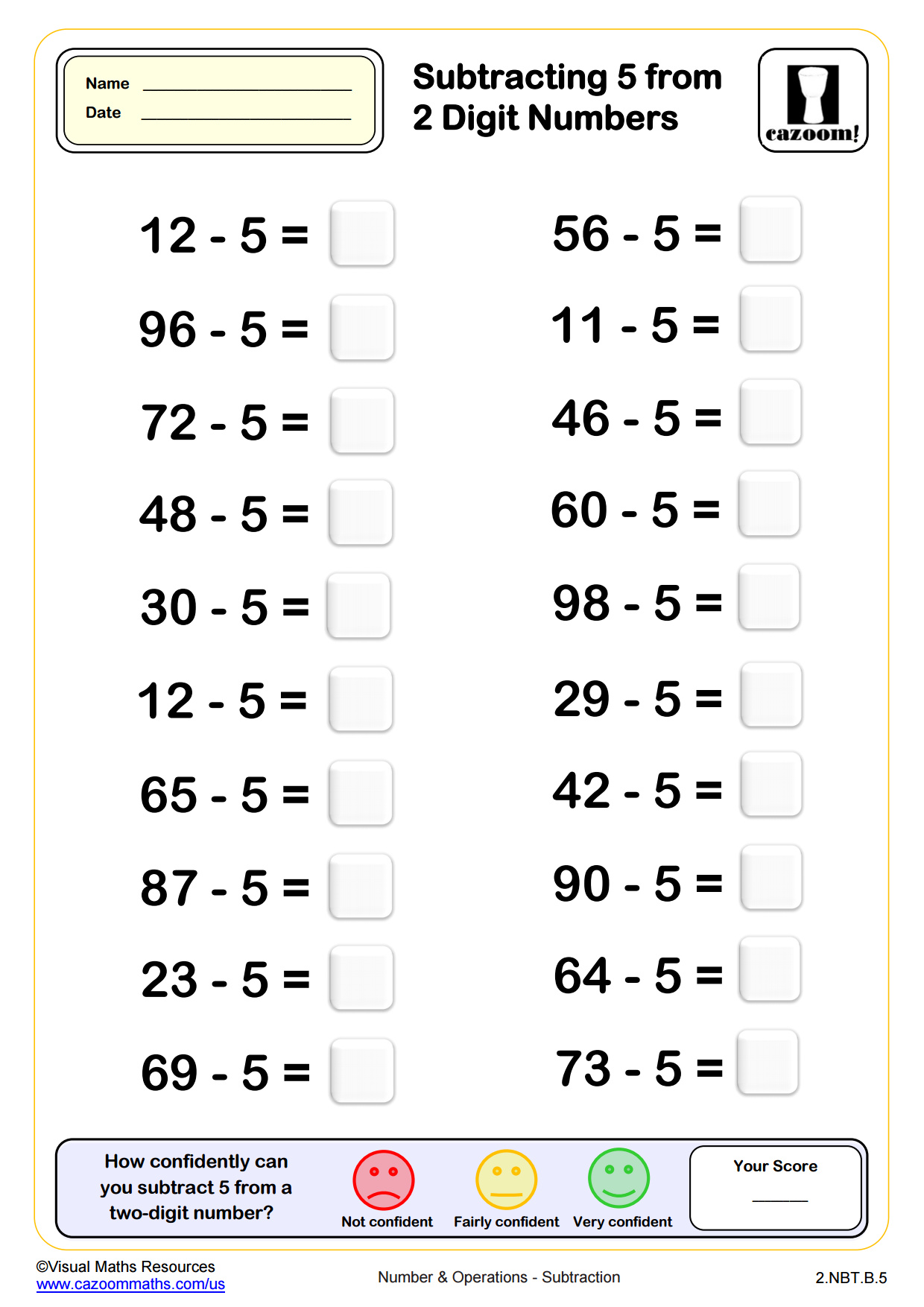
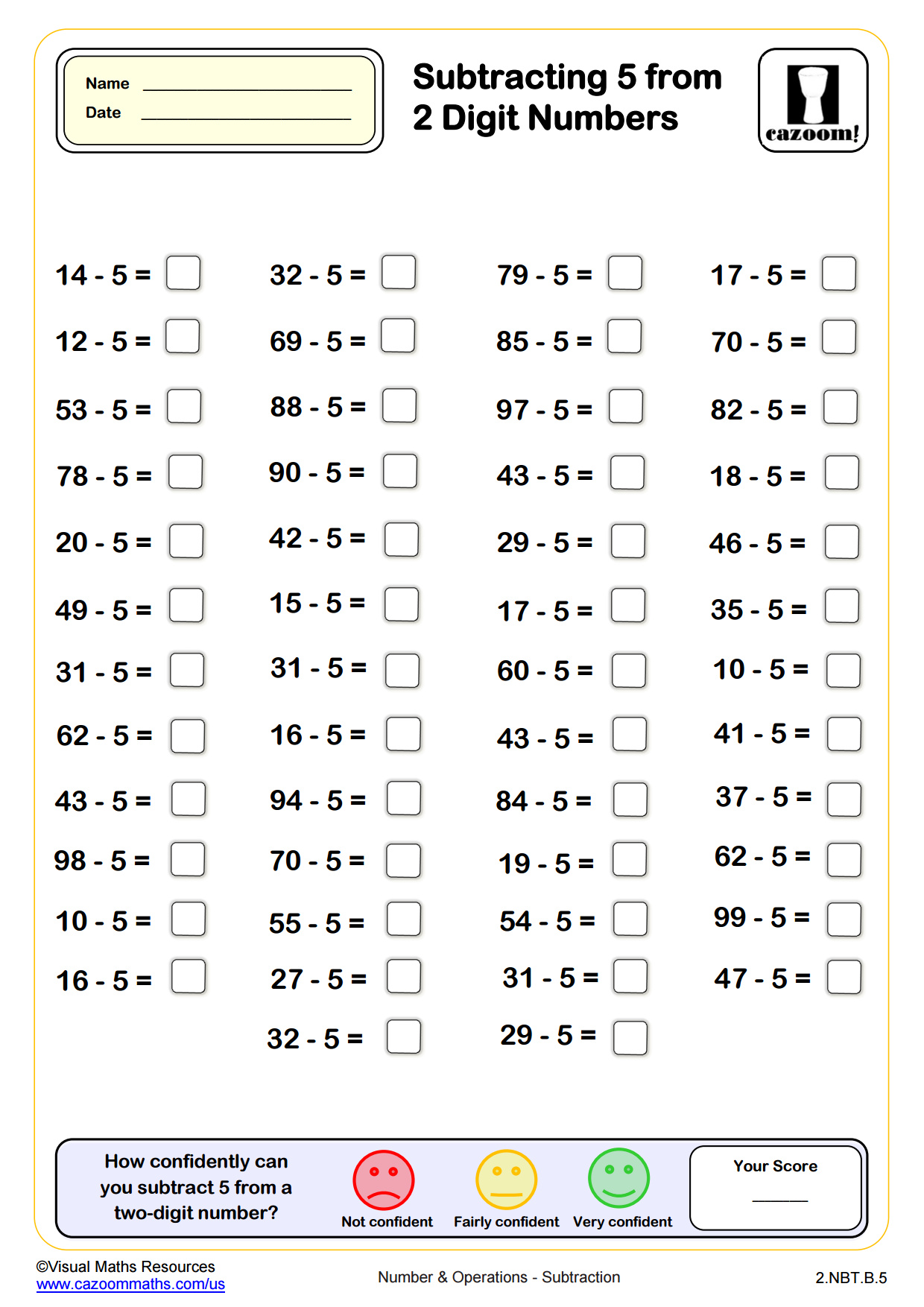
Subtracting 5 from Two Digit Numbers (50 questions)
Grades: 2nd Grade
Subtracting Numbers Less Than 15 (A)
Grades: 2nd Grade
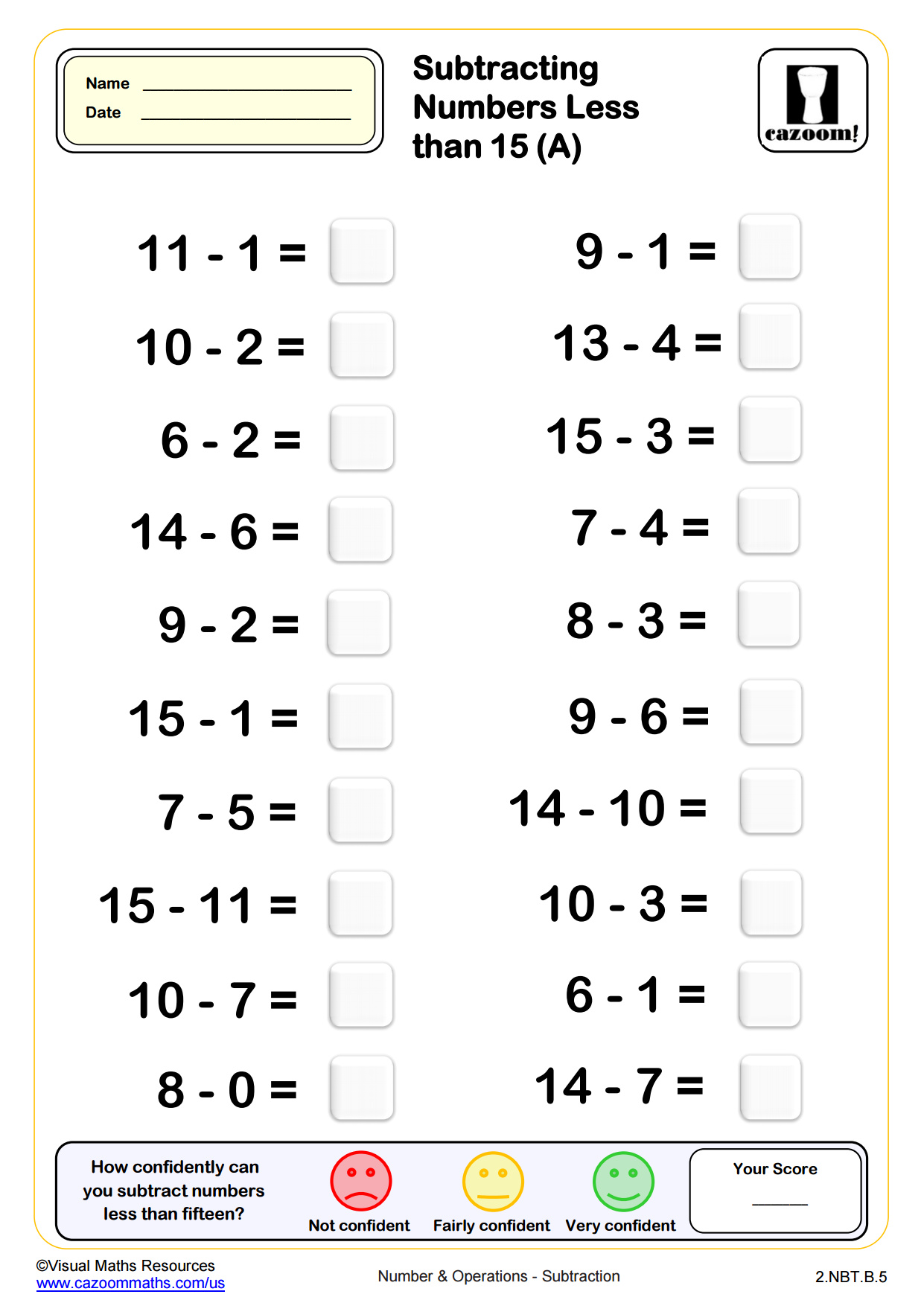
Subtracting Numbers Less Than 15 (B)
Grades: 2nd Grade
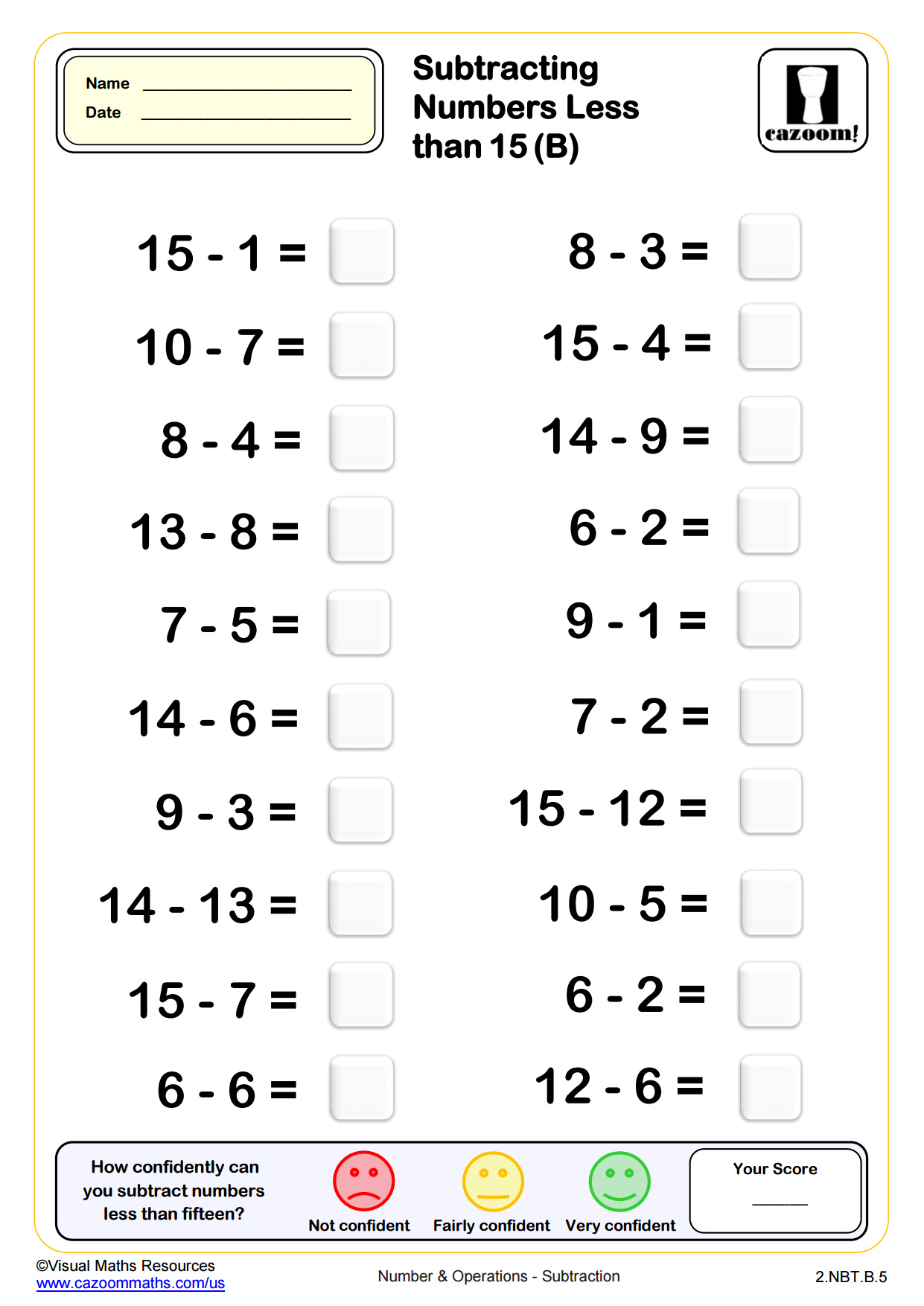
Subtracting Numbers Less Than 15 (C)
Grades: 2nd Grade
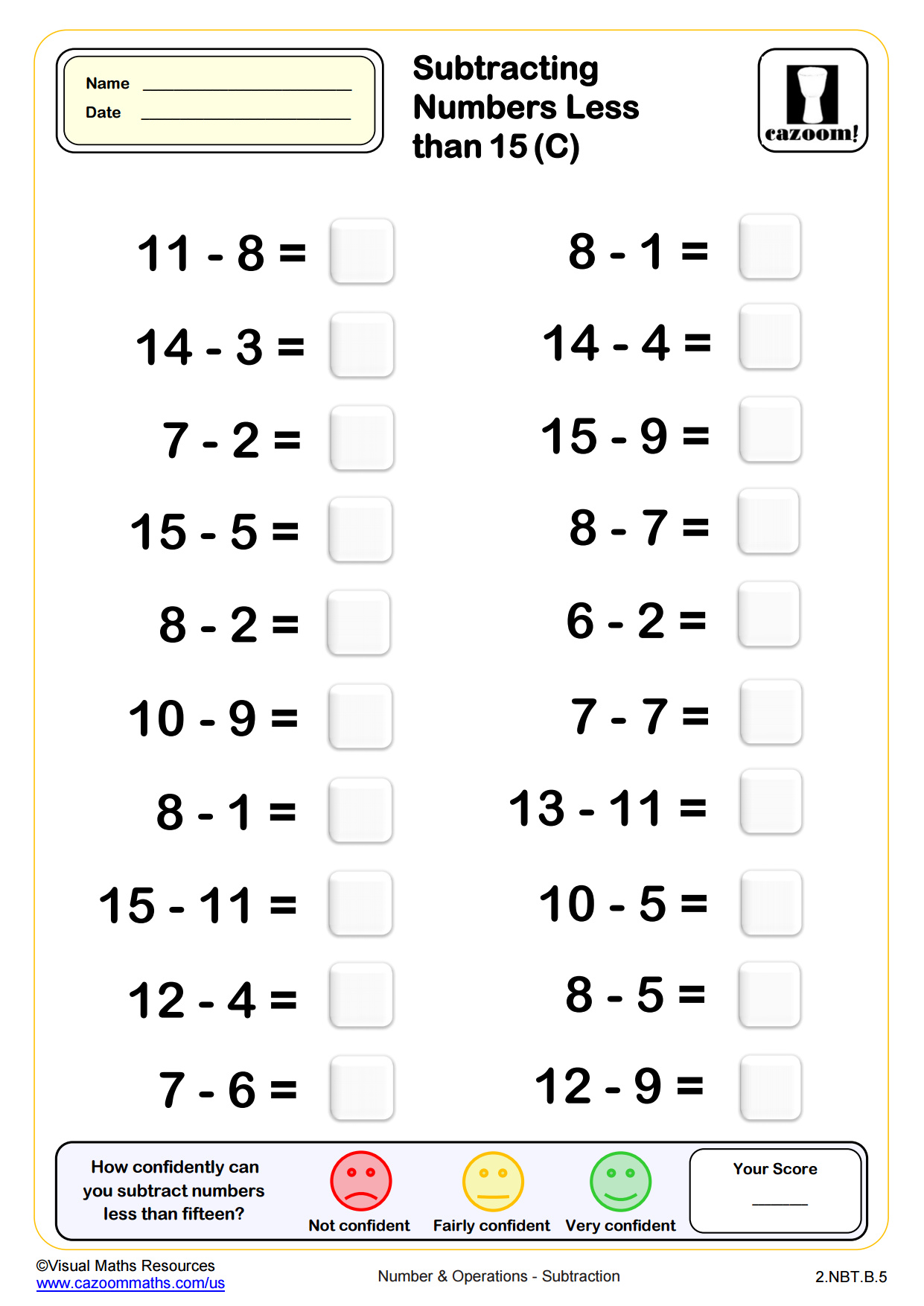
Subtracting Numbers Up to 100
Grades: 2nd Grade, 3rd Grade
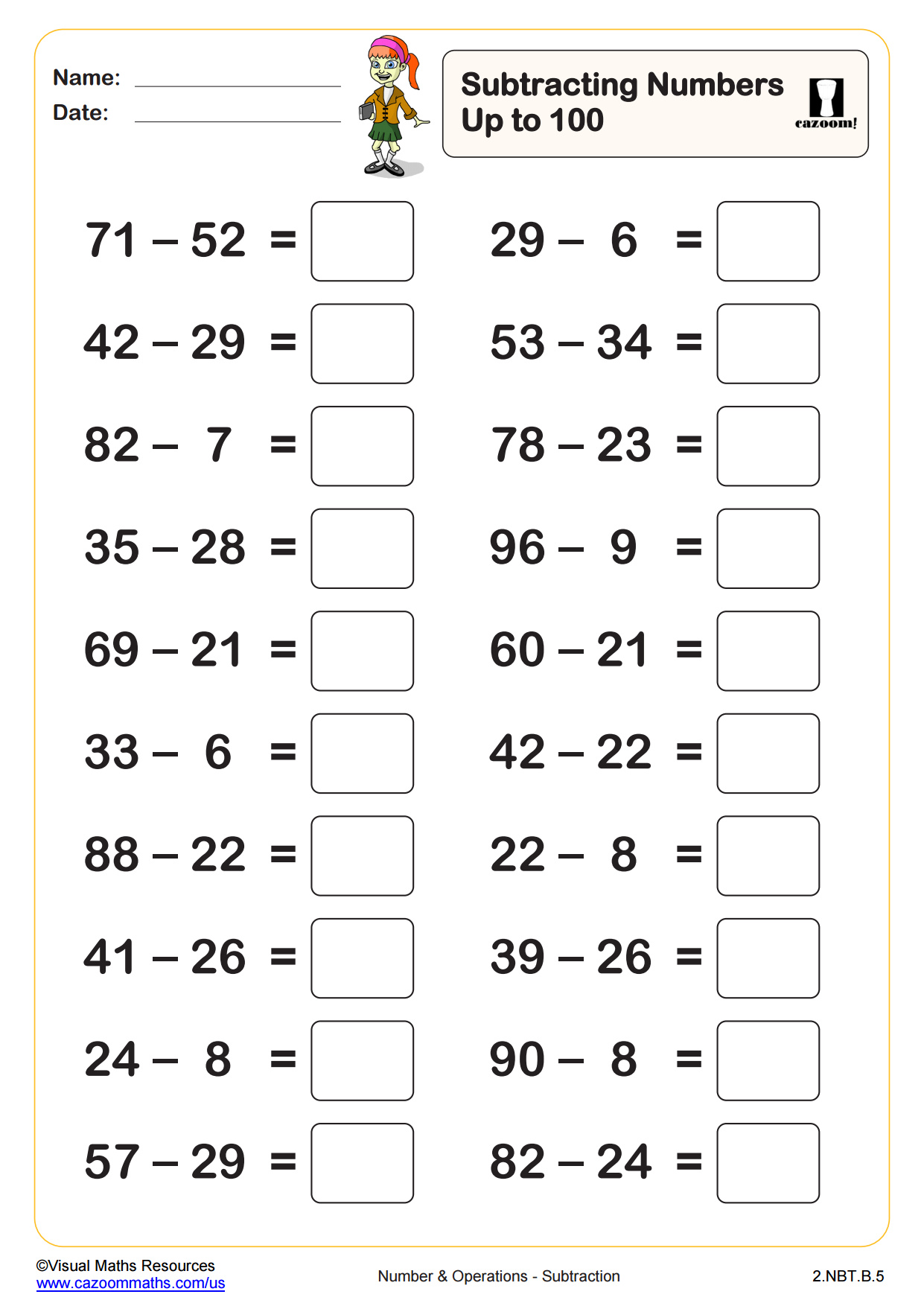
Subtracting Numbers Up to 30 (A)
Grades: 2nd Grade
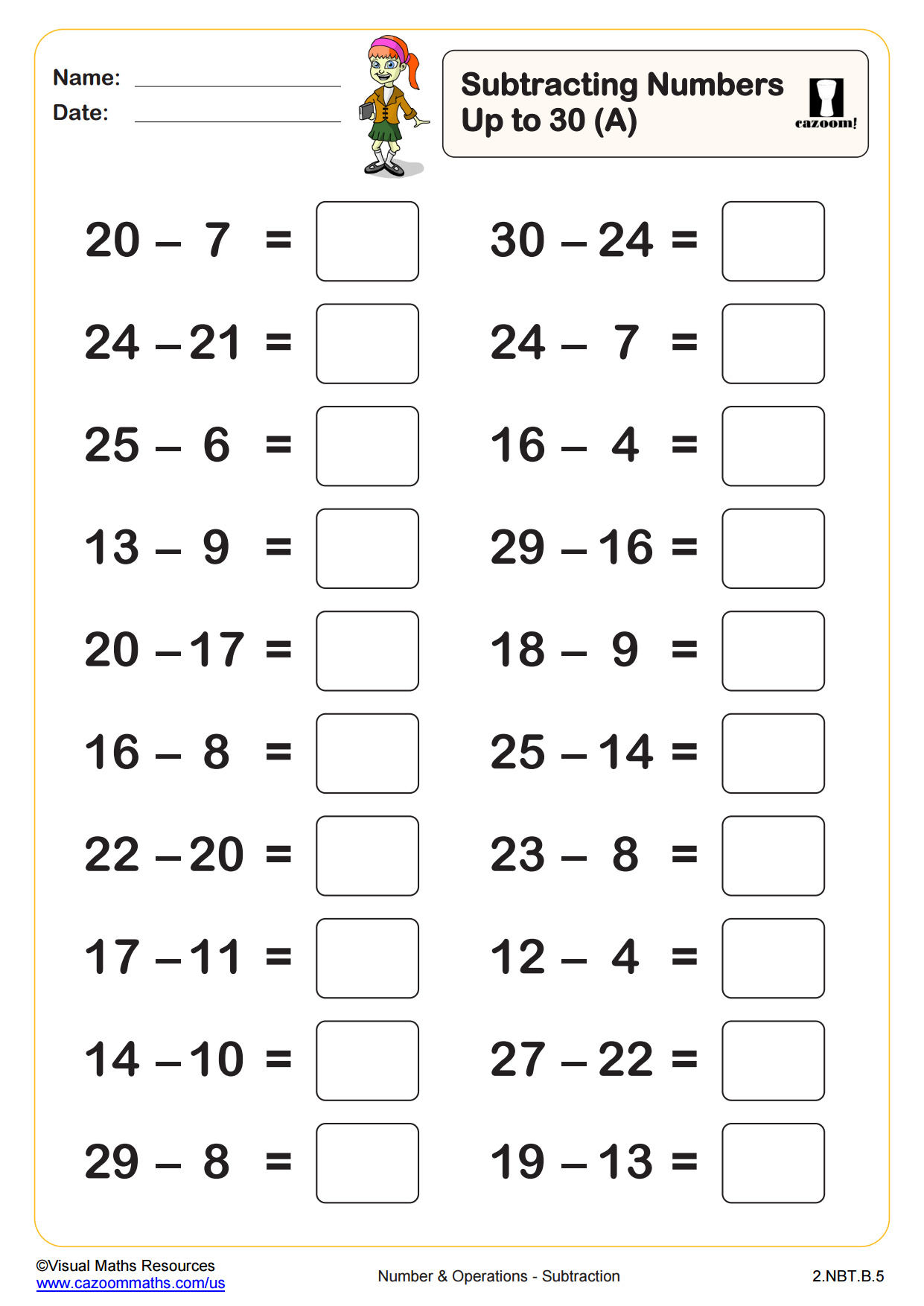
Subtracting Numbers Up to 30 (B)
Grades: 2nd Grade
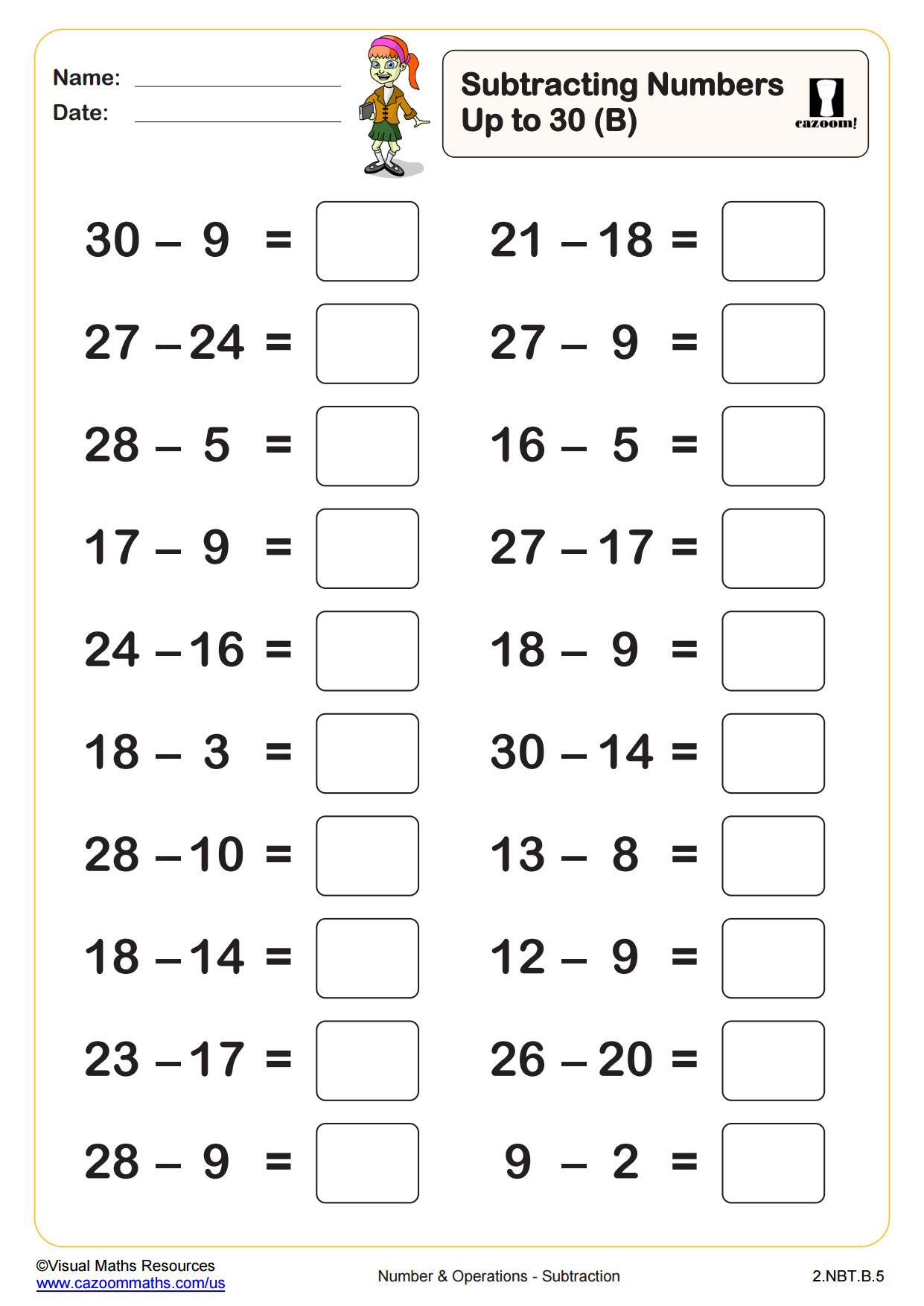
Subtracting Numbers Up to 30 (C)
Grades: 2nd Grade
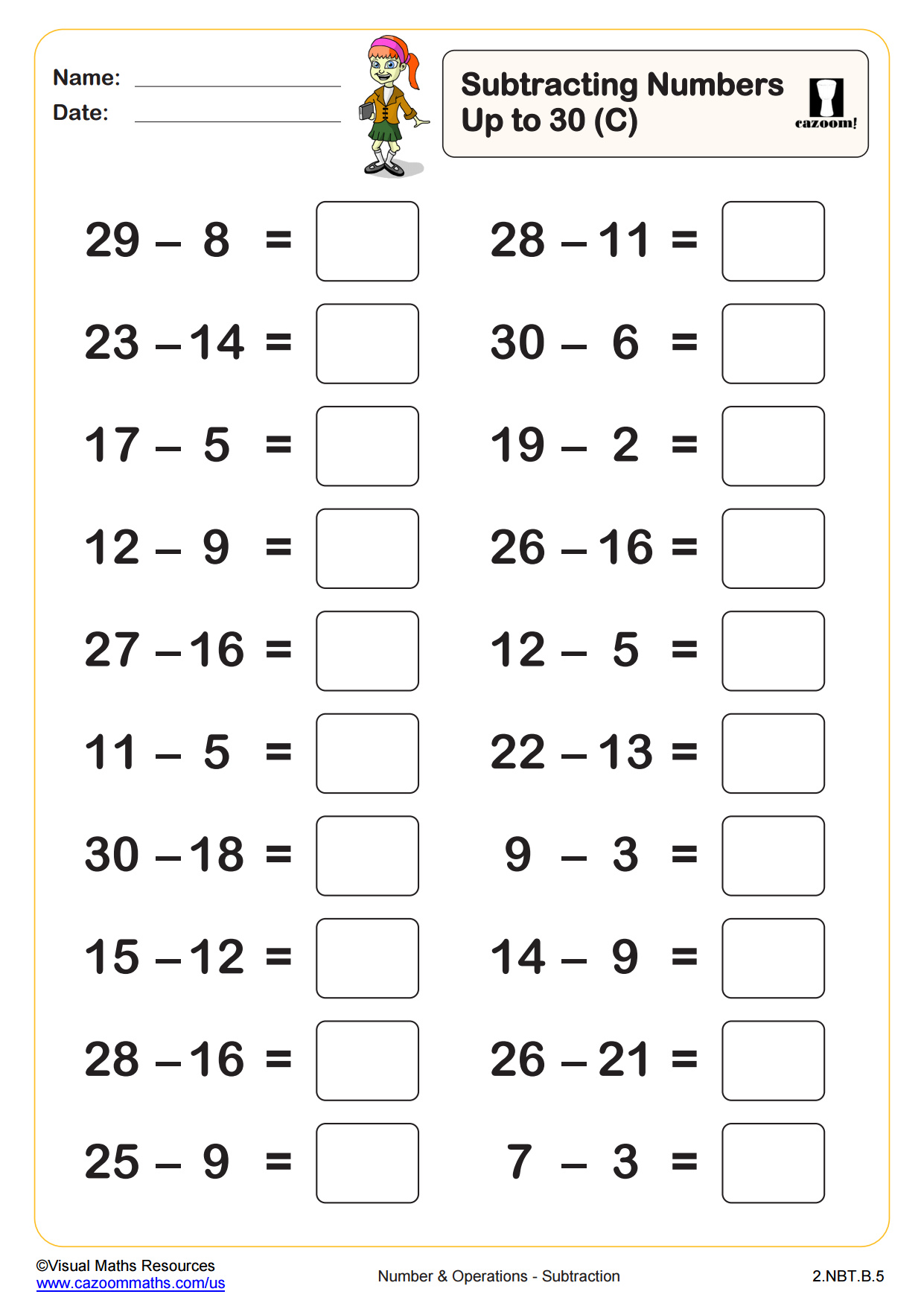
Subtracting Numbers Up to 50
Grades: 2nd Grade, 3rd Grade
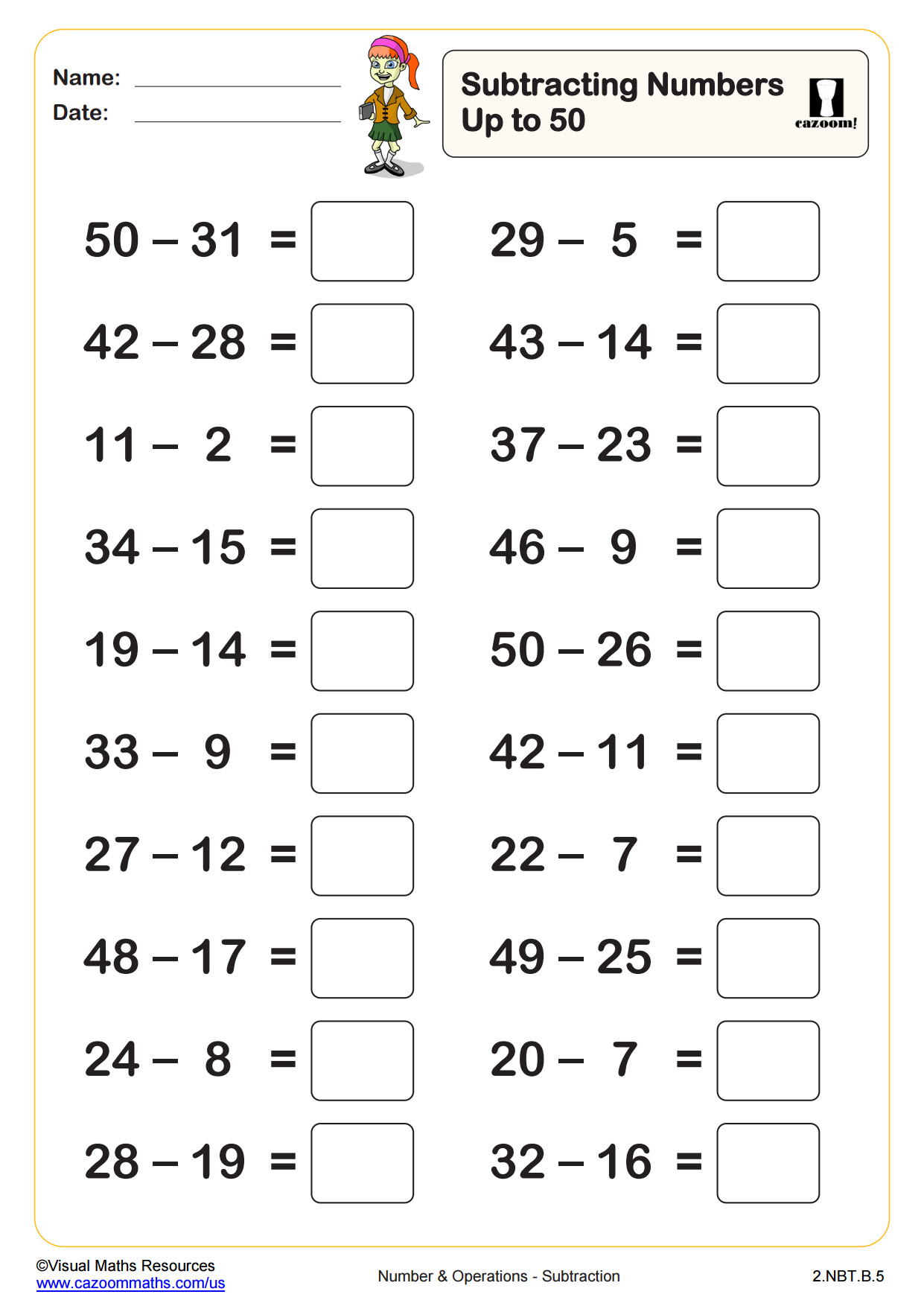
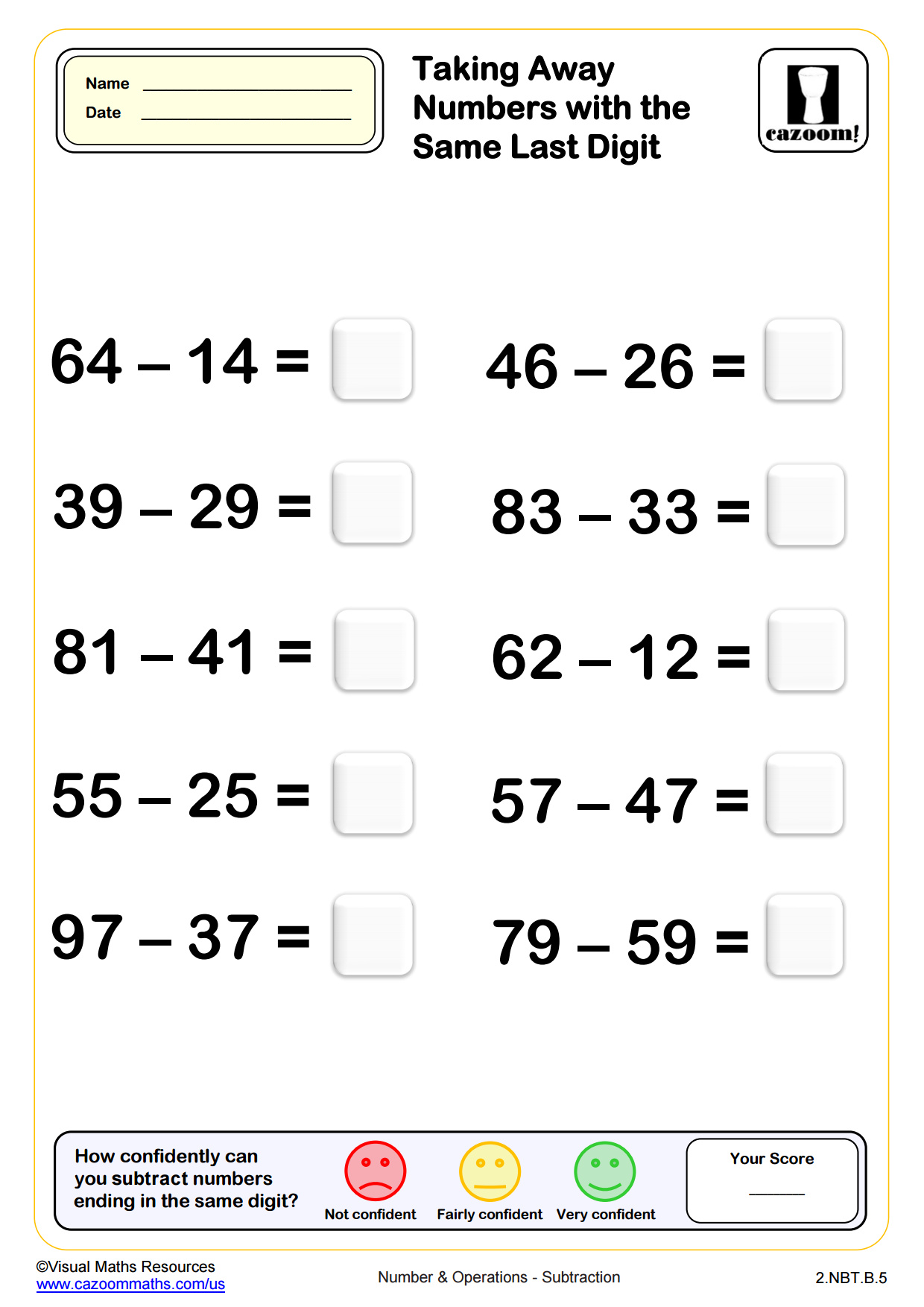
Subtracting Numbers with the Same Last Digit (10 questions)
Grades: 2nd Grade, 3rd Grade
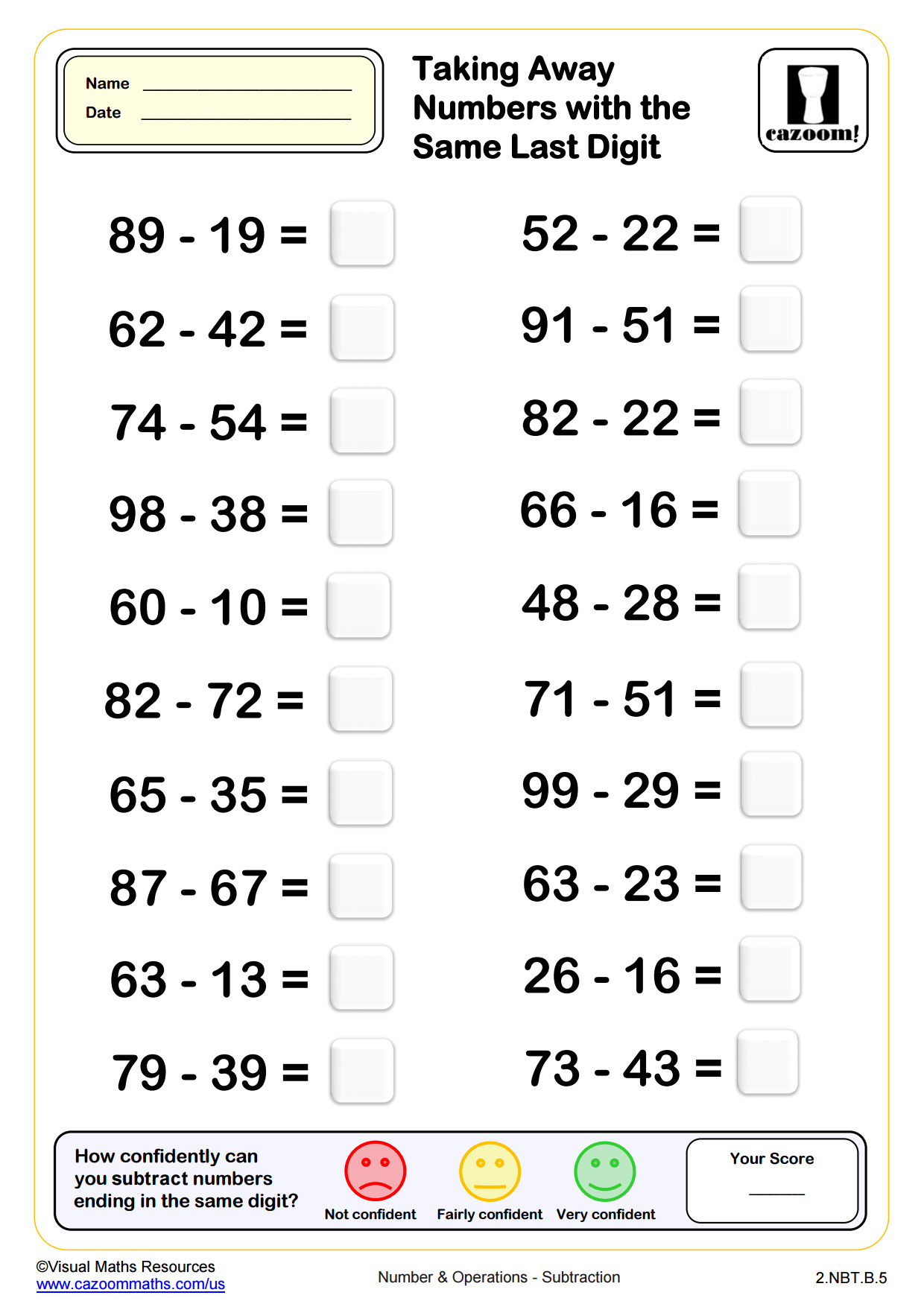
Subtracting Numbers with the Same Last Digit (20 questions)
Grades: 2nd Grade, 3rd Grade
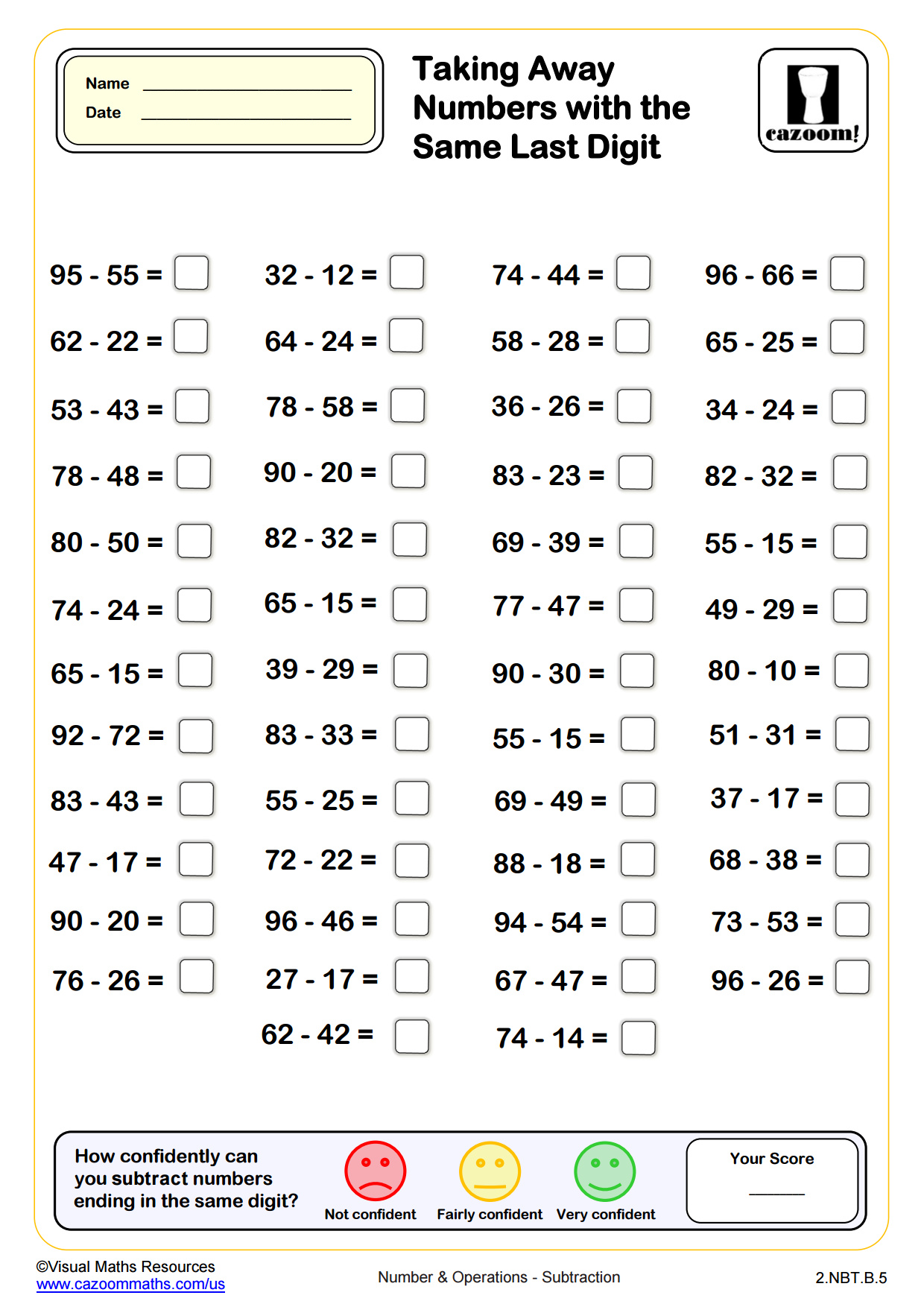
Subtracting Numbers with the Same Last Digit (50 questions)
Grades: 2nd Grade, 3rd Grade
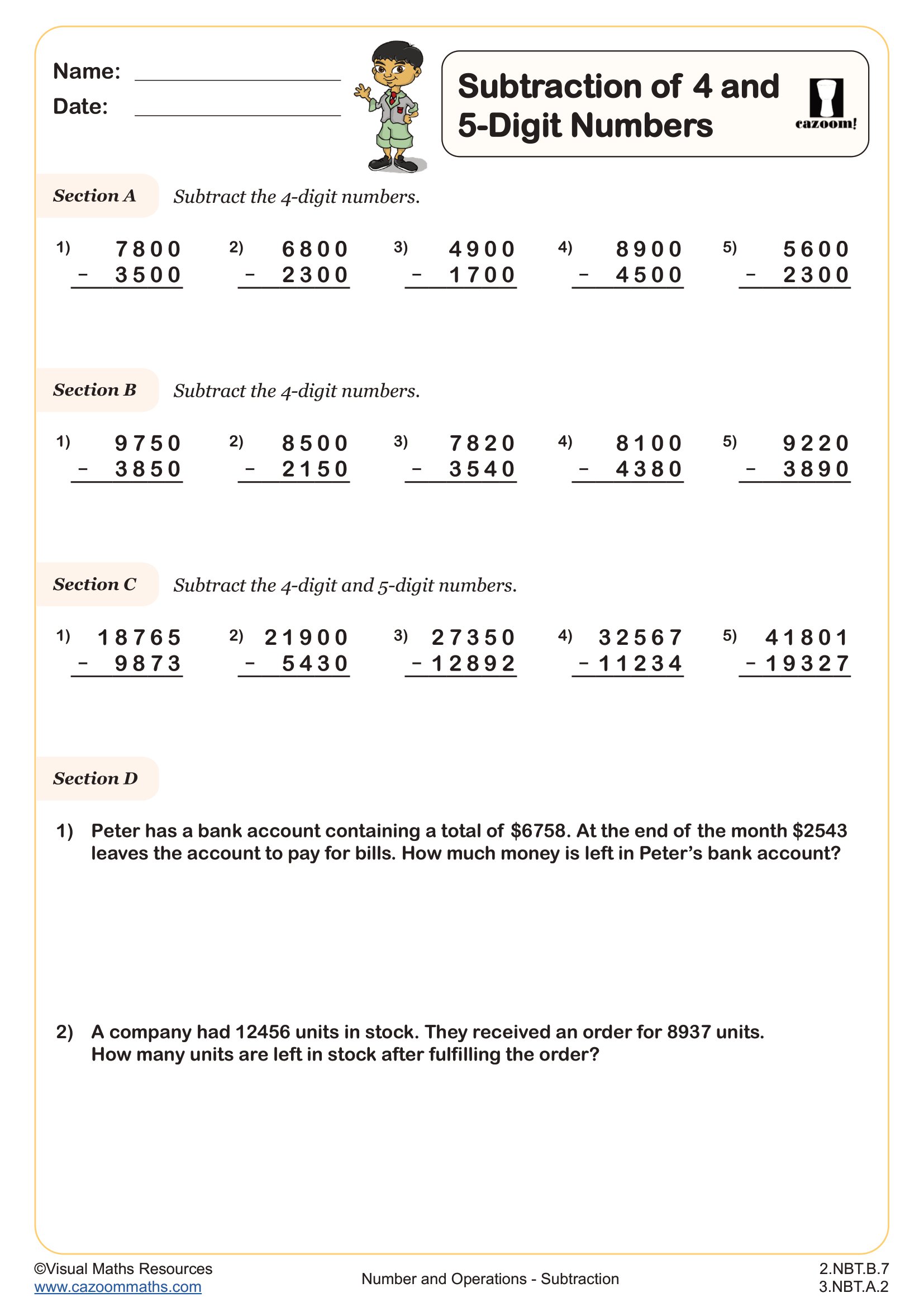
Subtraction of 4 and 5-digit Numbers
Grades: 2nd Grade, 3rd Grade
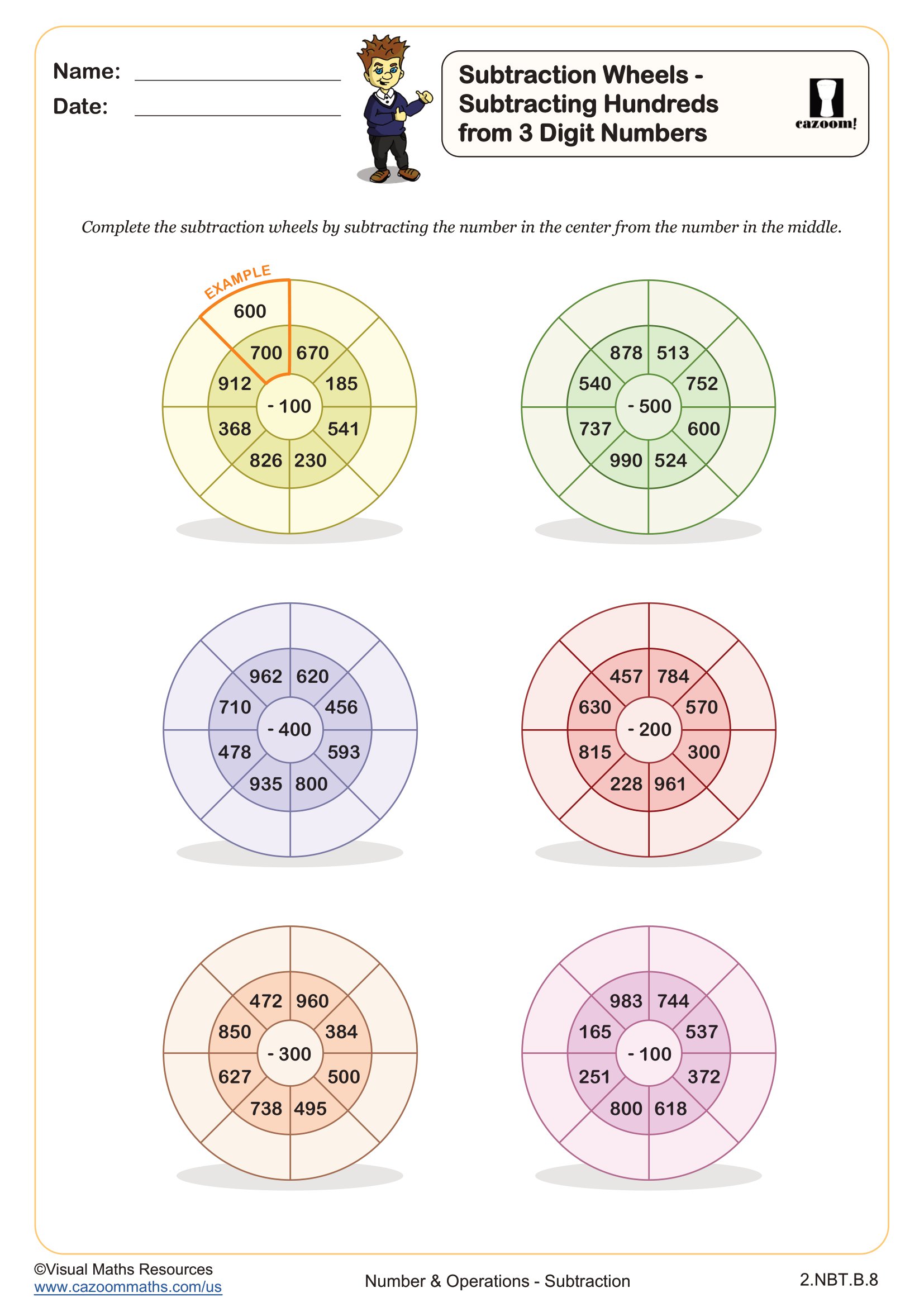
Subtraction Wheels - Subtracting Hundreds from 3 Digit Numbers
Grades: 2nd Grade
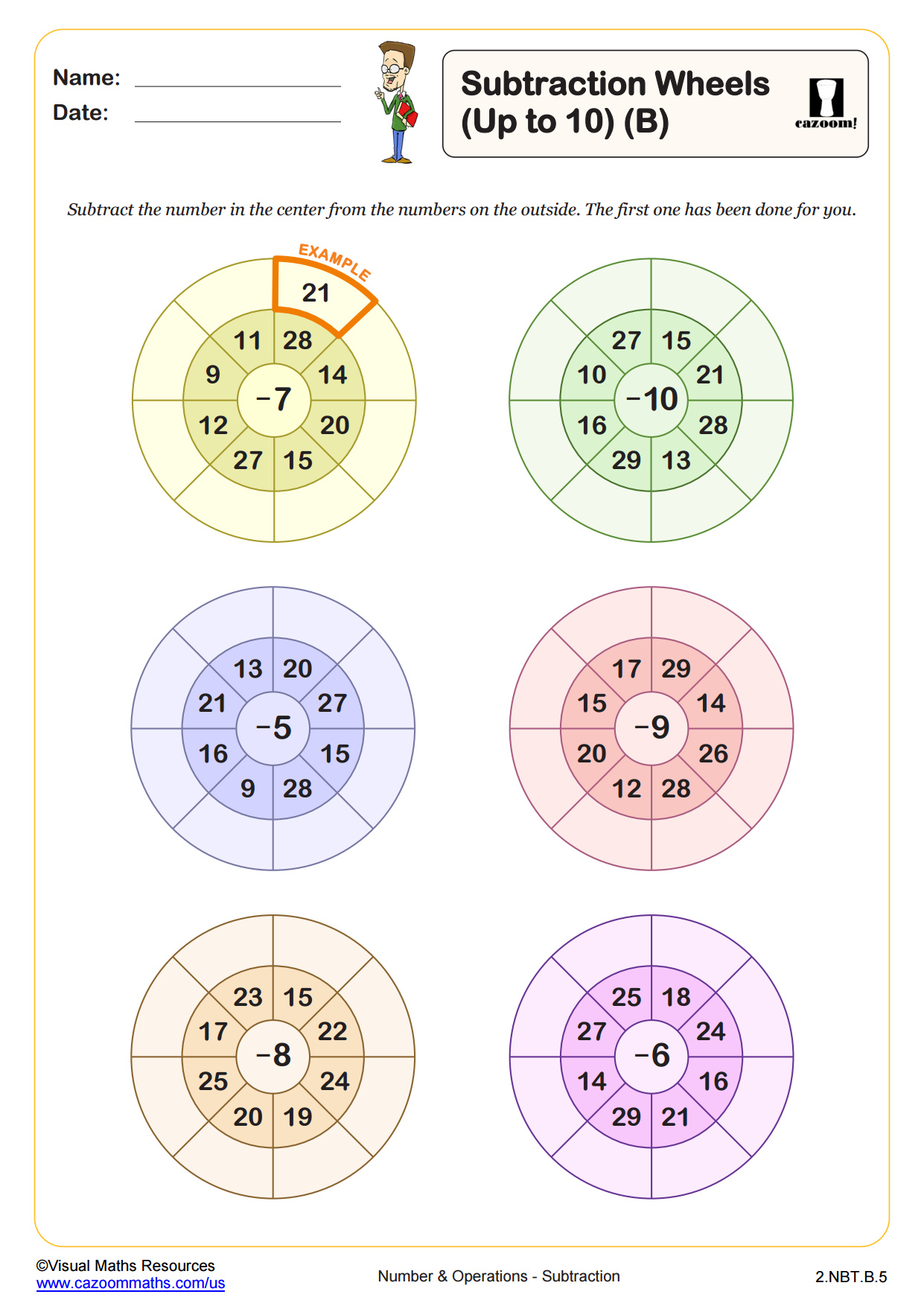
Subtraction Wheels (Up to 10 B)
Grades: 2nd Grade
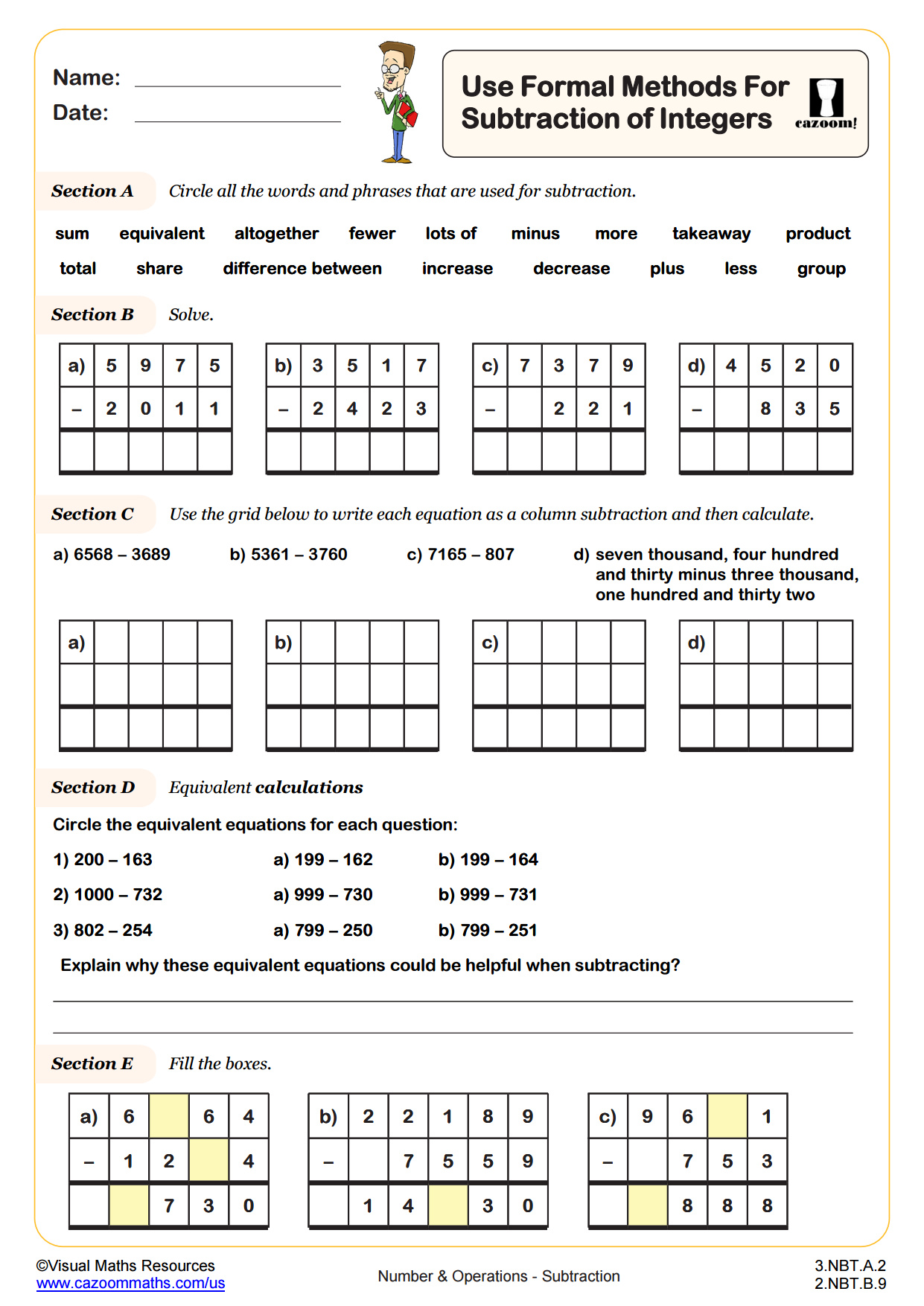
Use Formal Methods For Subtraction of Integers
Grades: 2nd Grade, 3rd Grade
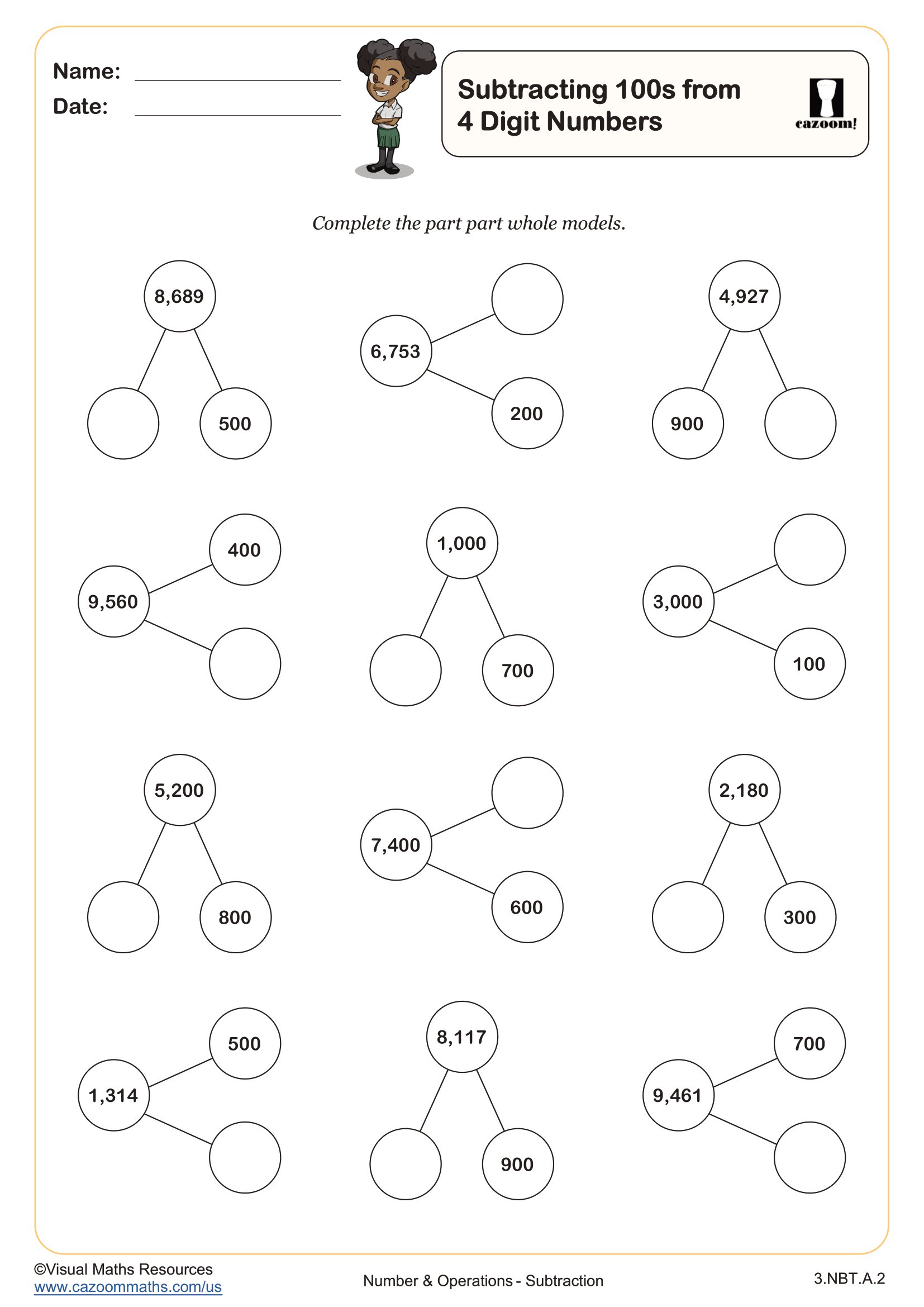
Subtracting 100s from 4 Digit Numbers
Grades: 3rd Grade
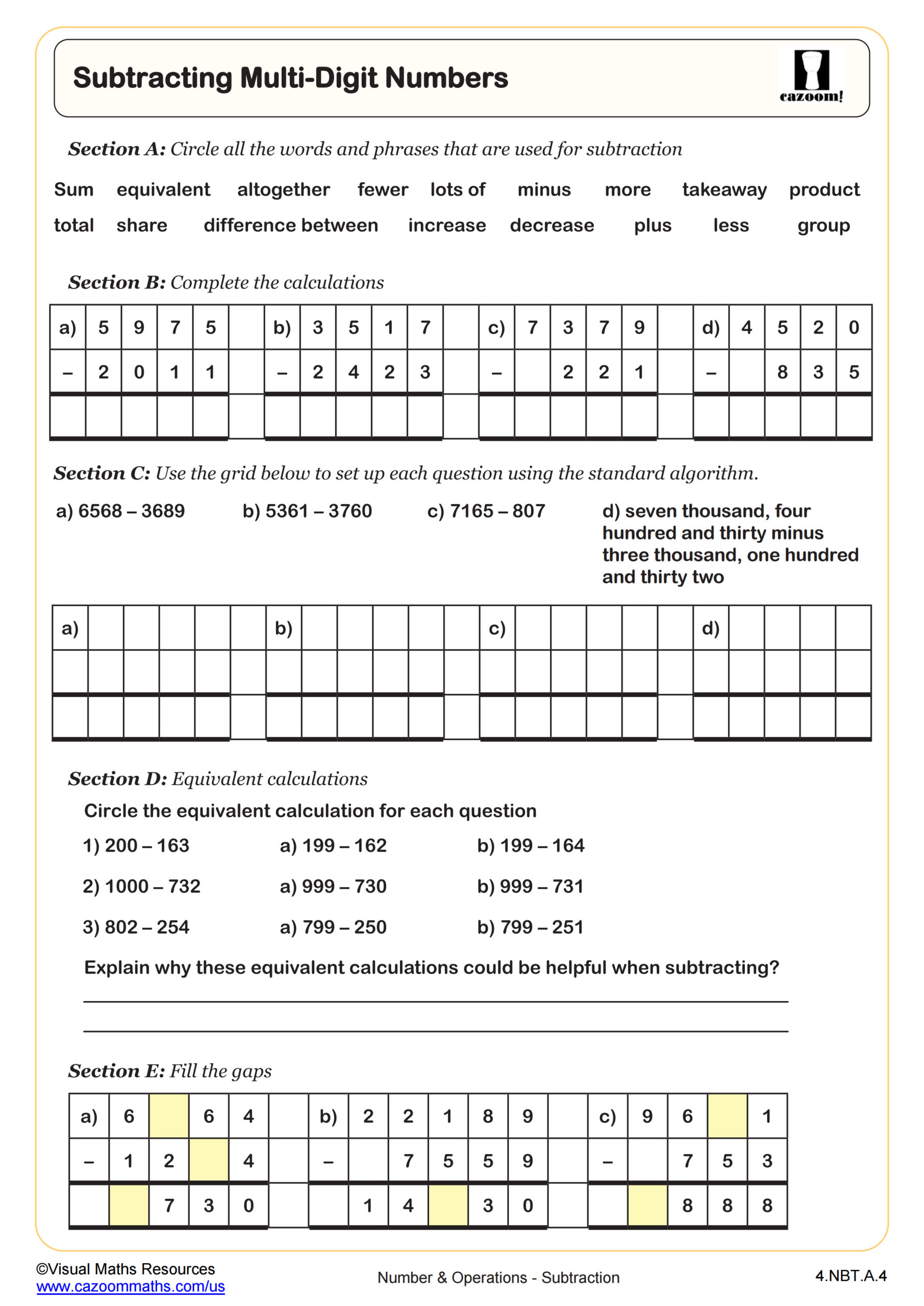
Subtracting Multi-Digit Numbers
Grades: 4th Grade
All worksheets are created by the team of experienced teachers at Cazoom Math.
What makes effective subtraction worksheets for classroom use?
Effective subtraction worksheets provide scaffolded practice that aligns with Common Core State Standards, progressing from concrete to abstract thinking. Quality worksheets include varied problem types, clear formatting, and thorough answer keys that help teachers provide immediate feedback during independent practice or homework review.
Teachers notice that students benefit most from worksheets that incorporate visual models alongside traditional algorithms. Problems should progress logically from single-digit subtraction to multi-digit scenarios, with special attention to regrouping situations that challenge learners. The best subtraction worksheets also include word problems that connect mathematical operations to real-world contexts, helping students understand when and why to subtract.
How do subtraction skills develop across different grade levels?
Subtraction development follows a predictable progression from kindergarten through middle school. Early elementary students begin with concrete manipulatives and visual number lines, while upper elementary students master multi-digit algorithms and decimal subtraction. By middle school, students apply subtraction within algebraic contexts and rational number operations.
Grade 1 students typically work with differences within 10, while Grade 2 expands to two-digit problems with regrouping. Grade 3 introduces three-digit subtraction, and Grade 4 incorporates decimals and larger numbers. Teachers observe that students who struggle with basic fact fluency in earlier grades often experience difficulties with more complex subtraction procedures later, making early intervention critical.
Why do students struggle with borrowing and regrouping in subtraction?
Borrowing and regrouping represent abstract concepts that require strong place value understanding. Many students memorize the mechanical steps without grasping the underlying mathematical reasoning, leading to errors when problems deviate from practiced patterns. Teachers frequently see students subtract smaller digits from larger ones regardless of position, avoiding the borrowing process entirely.
The most common errors occur when zeros appear in the minuend, requiring multiple regrouping steps. Students also struggle with decimal subtraction when place value alignment becomes crucial. Effective instruction combines visual models like base-ten blocks with systematic practice, helping students connect the concrete representation to the abstract algorithm through carefully designed worksheet activities.
How can teachers maximize student learning with subtraction worksheets?
Strategic worksheet implementation involves more than independent practice. Teachers achieve better results when they use worksheets diagnostically to identify specific skill gaps, then provide targeted instruction before assigning additional practice. Reviewing common errors as a class helps students recognize and avoid typical mistakes.
Timely feedback proves valuable for worksheet effectiveness. Teachers should review answers promptly, focusing on problem-solving strategies rather than just correct solutions. Pairing worksheets with manipulatives or digital tools reinforces conceptual understanding, while incorporating real-world applications like calculating change or measuring differences helps students see subtraction's practical relevance in STEM fields and daily life.
Real-Life Uses of Subtraction
Subtraction is everywhere in daily life. Kids use subtraction to count how much money is left, track scores in games, calculate time passed, or find out how many more items they need. Our worksheets include real-world examples to show how subtraction is used outside of the classroom, making learning meaningful and practical.