Understanding the Difference Worksheets
Finding the Difference (A)
Grades: 1st Grade, 2nd Grade
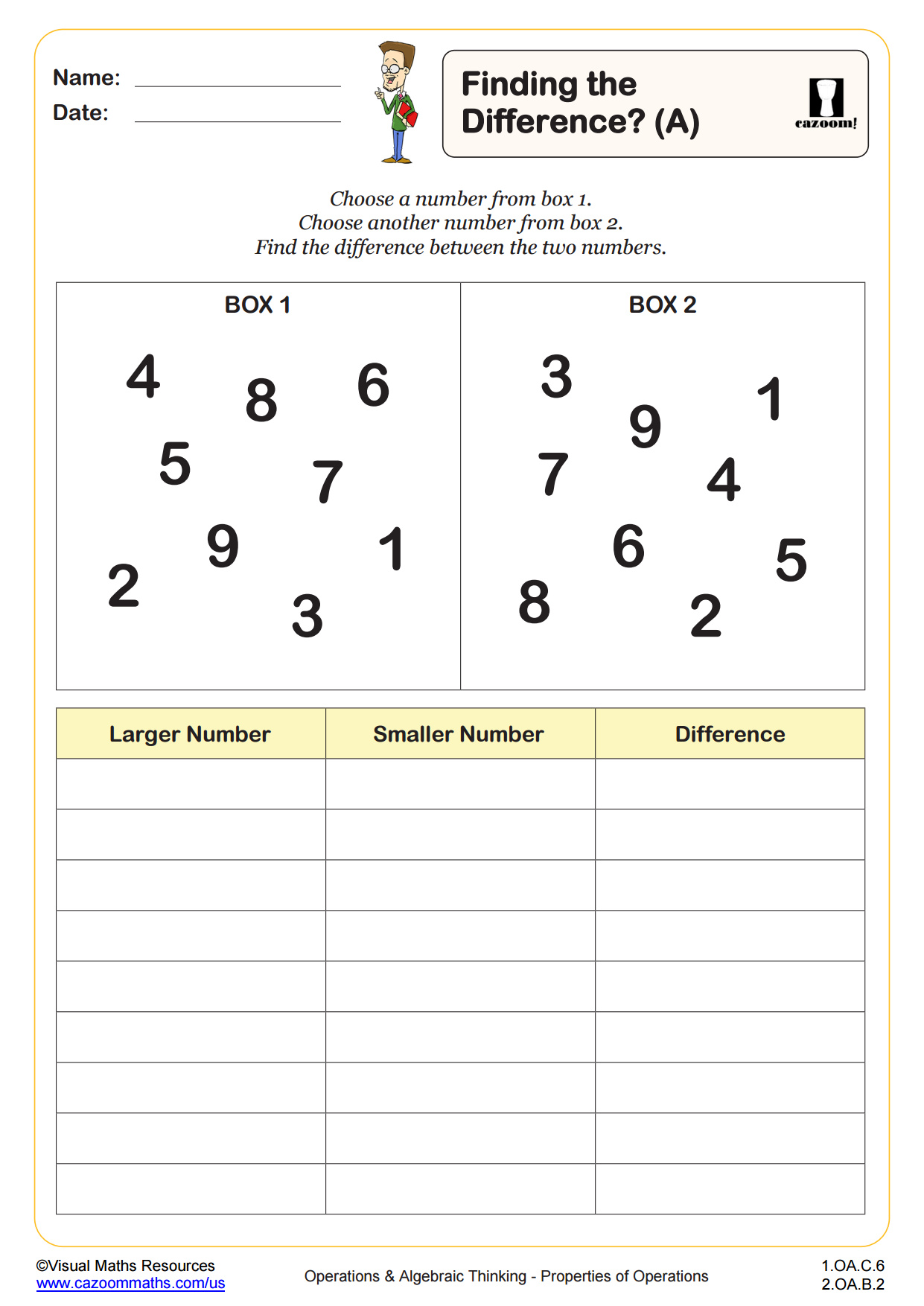
Finding the Difference (B)
Grades: 1st Grade, 2nd Grade
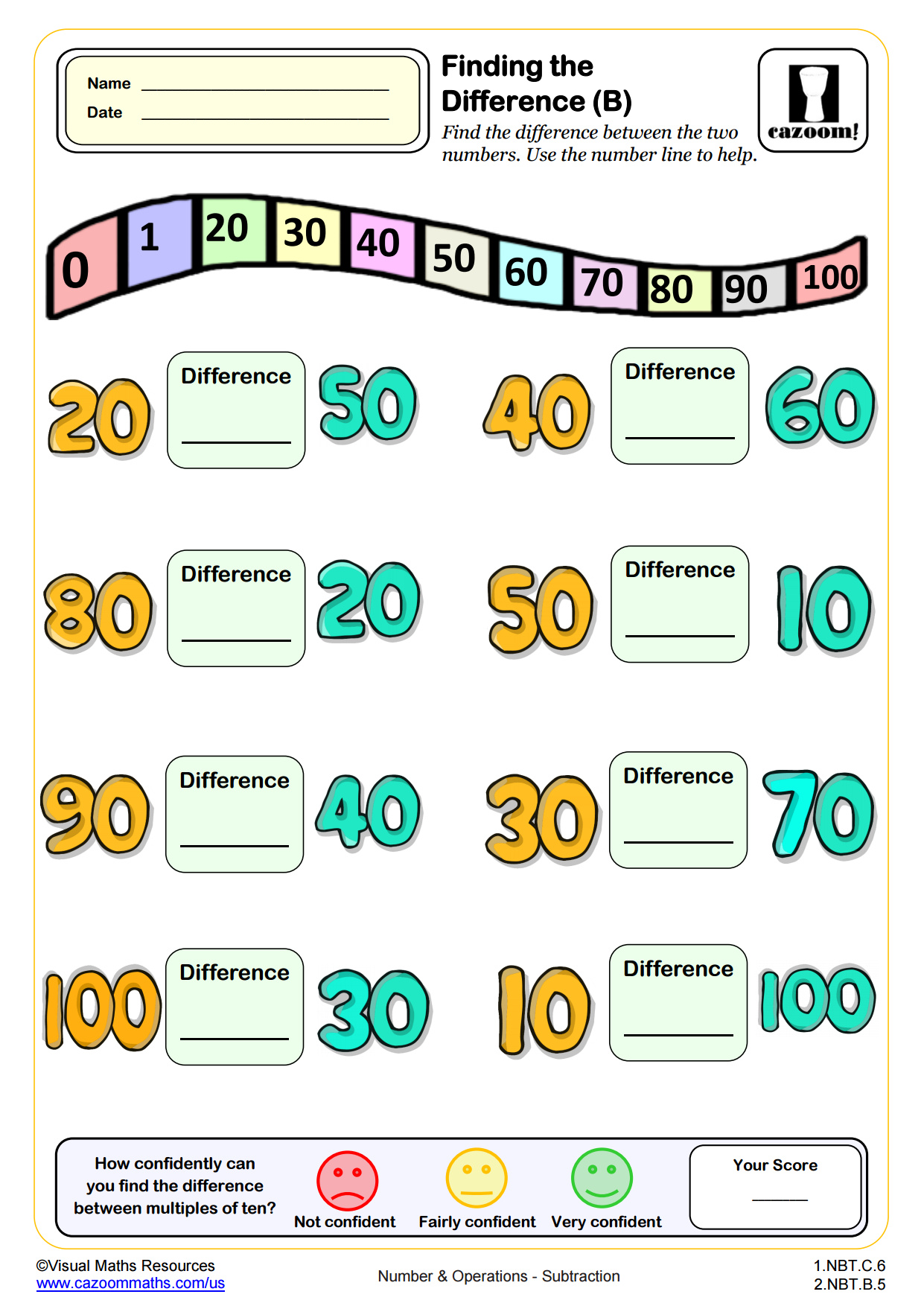
Find Number Pairs with a Difference of 1
Grades: 2nd Grade, 3rd Grade
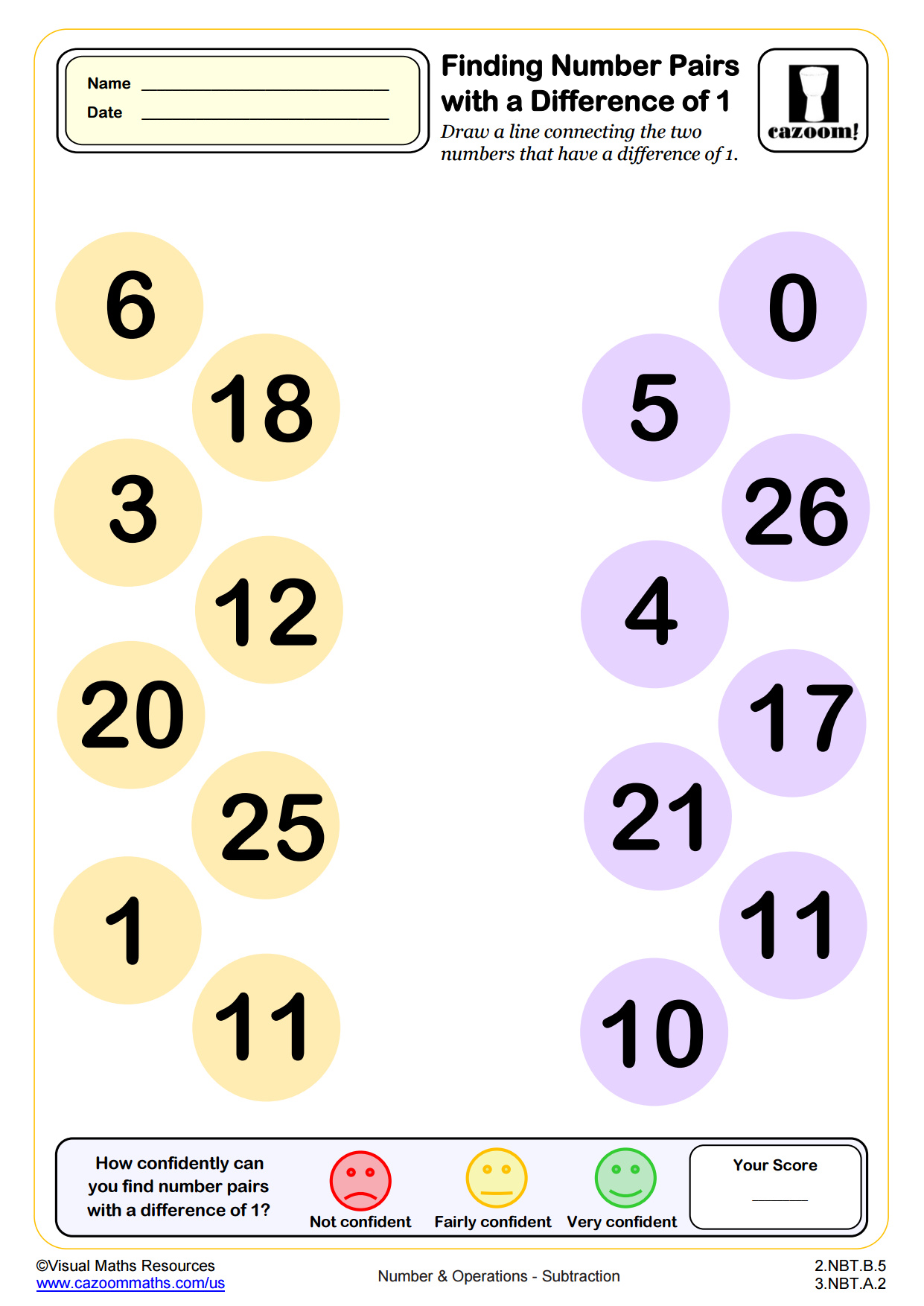
Find Number Pairs with a Difference of 10
Grades: 2nd Grade, 3rd Grade
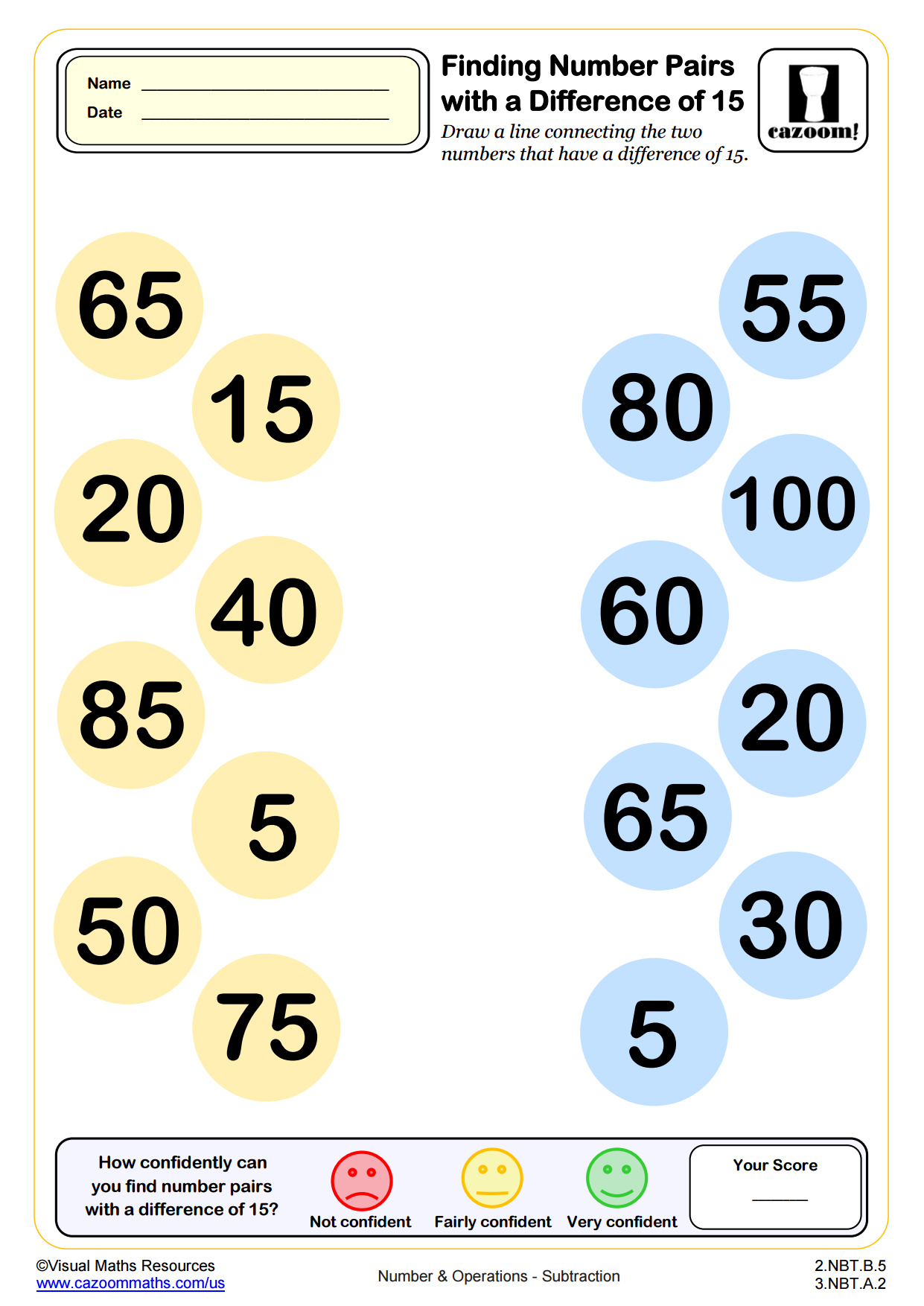
Find Number Pairs with a Difference of 15
Grades: 2nd Grade, 3rd Grade
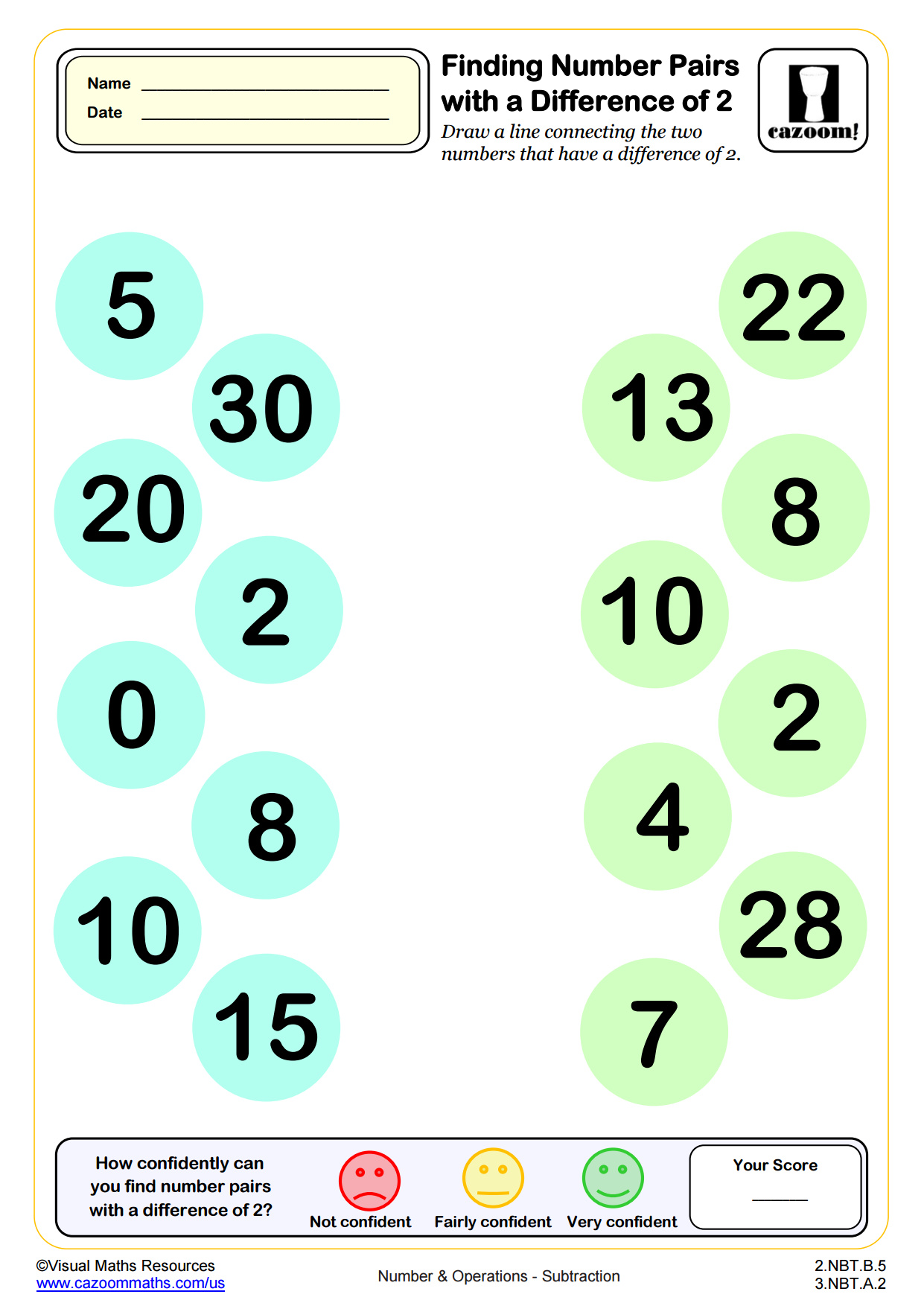
Find Number Pairs with a Difference of 2
Grades: 2nd Grade, 3rd Grade
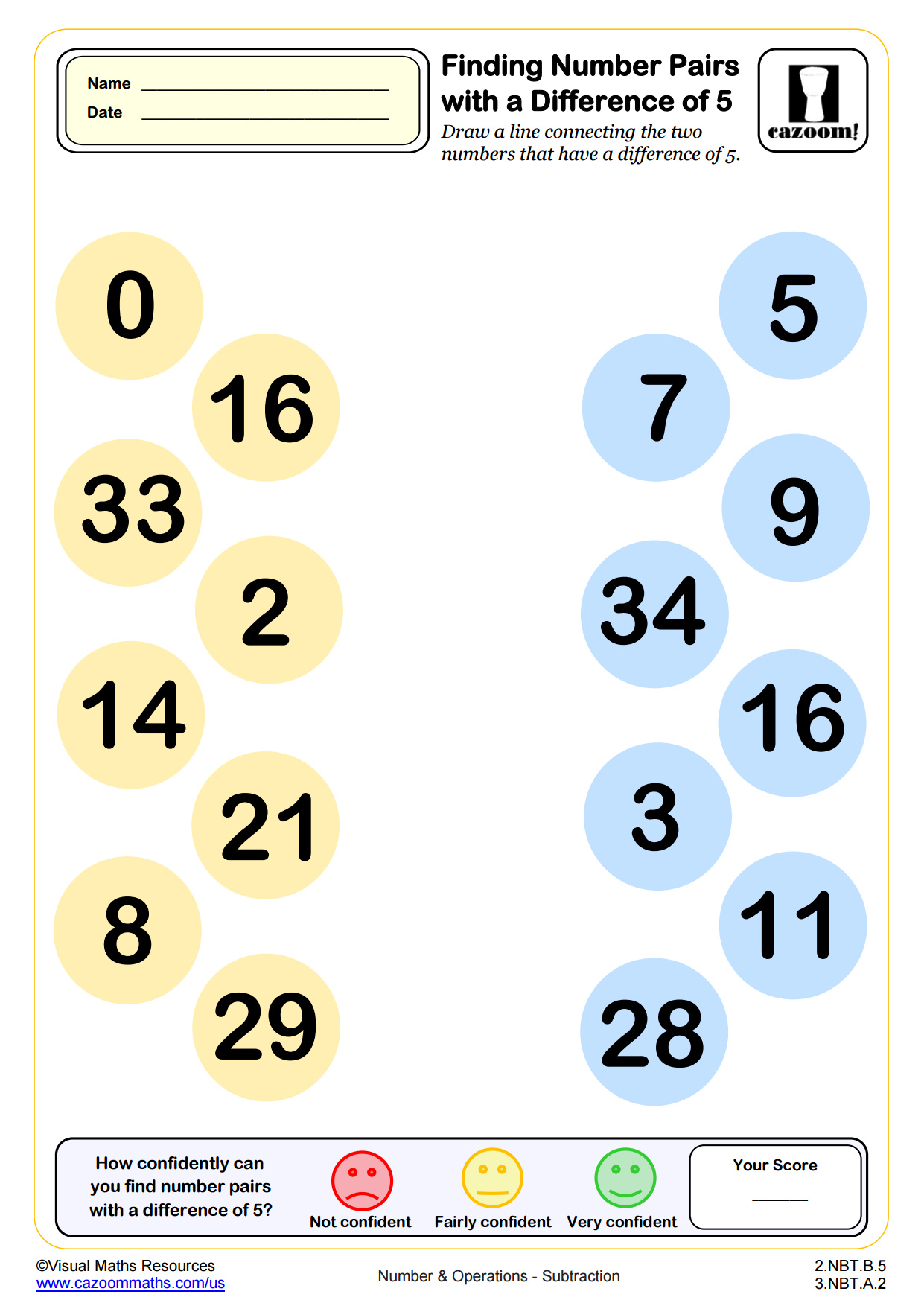
Find Number Pairs with a Difference of 5
Grades: 2nd Grade, 3rd Grade
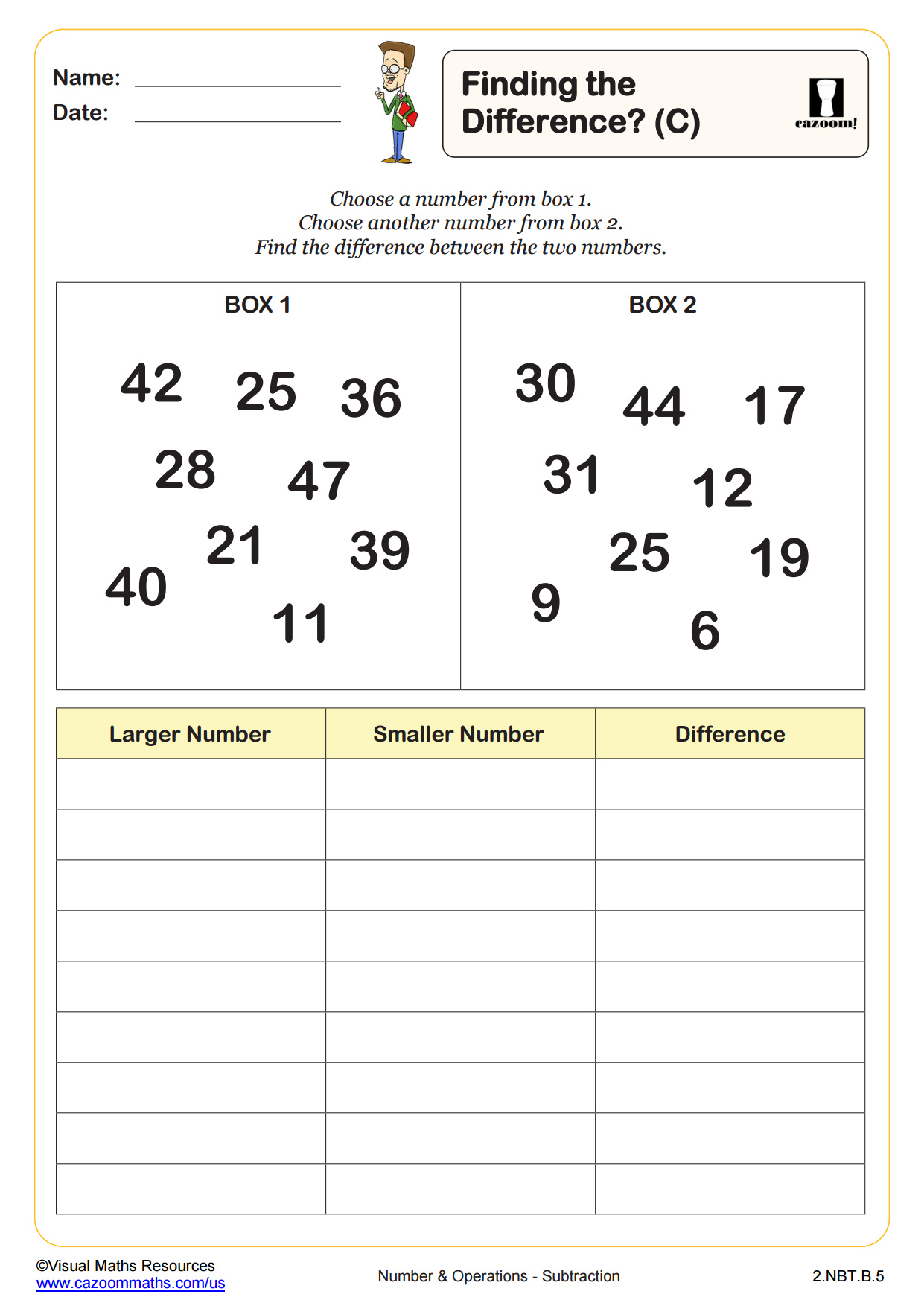
Finding the Difference (C)
Grades: 2nd Grade, 3rd Grade
Subtraction Wheels - Subtracting Hundreds from 3 Digit Numbers
Grades: 2nd Grade
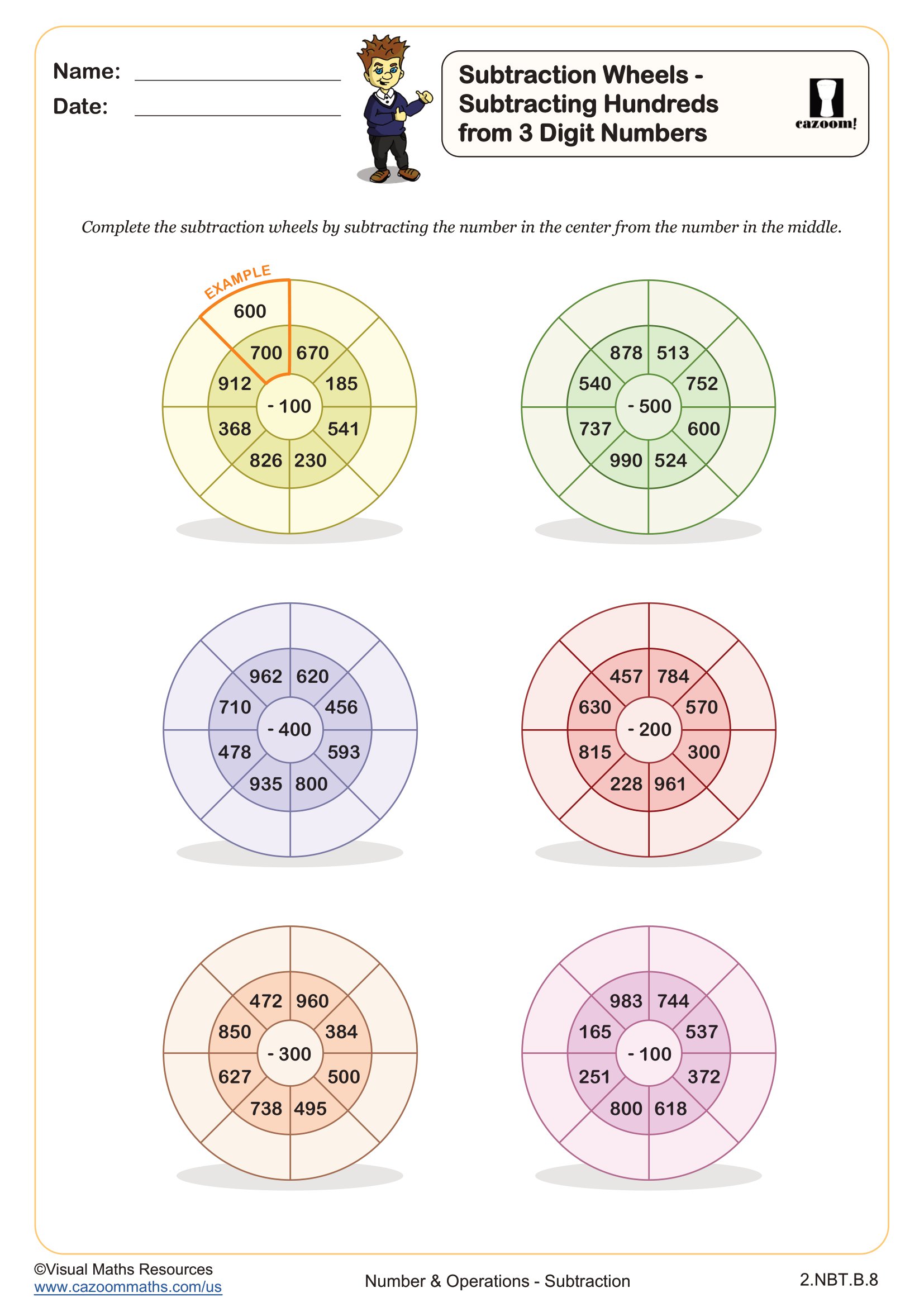
All worksheets are created by the team of experienced teachers at Cazoom Math.
What makes a finding the difference worksheet effective for classroom instruction?
An effective finding the difference worksheet incorporates multiple representation methods and gradually increases in complexity. Teachers find that worksheets work best when they include visual models like number lines or base-ten blocks alongside numerical problems, helping students understand subtraction as "finding how much more" or "finding how much less."
Classroom experience shows that students benefit most when worksheets mix concrete scenarios with abstract problems. Teachers notice that students who struggle with traditional algorithms often succeed when worksheets present difference problems through comparison contexts, such as finding how many more apples Sarah has than Tom, before moving to symbolic representation.
Which grade levels benefit most from find the difference worksheet practice?
Find the difference worksheets span from kindergarten through middle school, with each grade level focusing on different computational skills. Elementary teachers use these worksheets extensively in grades 1-2 for basic subtraction facts, while upper elementary grades tackle multi-digit problems and decimal differences that align with Common Core standards.
Teachers observe that grade 3 students often need extra support transitioning from concrete manipulatives to abstract thinking about differences. By middle school, find the difference worksheet for grade 6 and above typically incorporates algebraic concepts, negative numbers, and applications in geometry and data analysis, preparing students for more advanced mathematical reasoning.
How do comparison-based difference problems support mathematical understanding?
Comparison-based difference problems help students develop number sense by connecting subtraction to real-world situations. Teachers notice that students grasp subtraction concepts more readily when problems ask "How many more?" or "What is the difference between?" rather than presenting abstract numerical expressions.
Math educators find that comparison contexts reduce computational errors because students can visualize the problem situation. When worksheets present scenarios like comparing heights, ages, or quantities, students naturally understand that finding the difference means determining the gap between two values, which strengthens their conceptual foundation for more complex algebraic operations involving absolute value and distance.
What strategies help teachers maximize learning from difference worksheets?
Teachers achieve better results when they use difference worksheets as part of a thorough instructional approach that includes modeling and discussion. Successful classroom implementation involves having students explain their reasoning before diving into independent practice, helping identify misconceptions early in the learning process.
Experienced teachers recommend using the answer keys not just for grading but as discussion tools during whole-group review. They often project worked solutions to demonstrate multiple solution strategies, showing students that finding the difference can involve counting up, counting back, or using number relationships, which builds mathematical flexibility and confidence.