World Space Week Worksheets
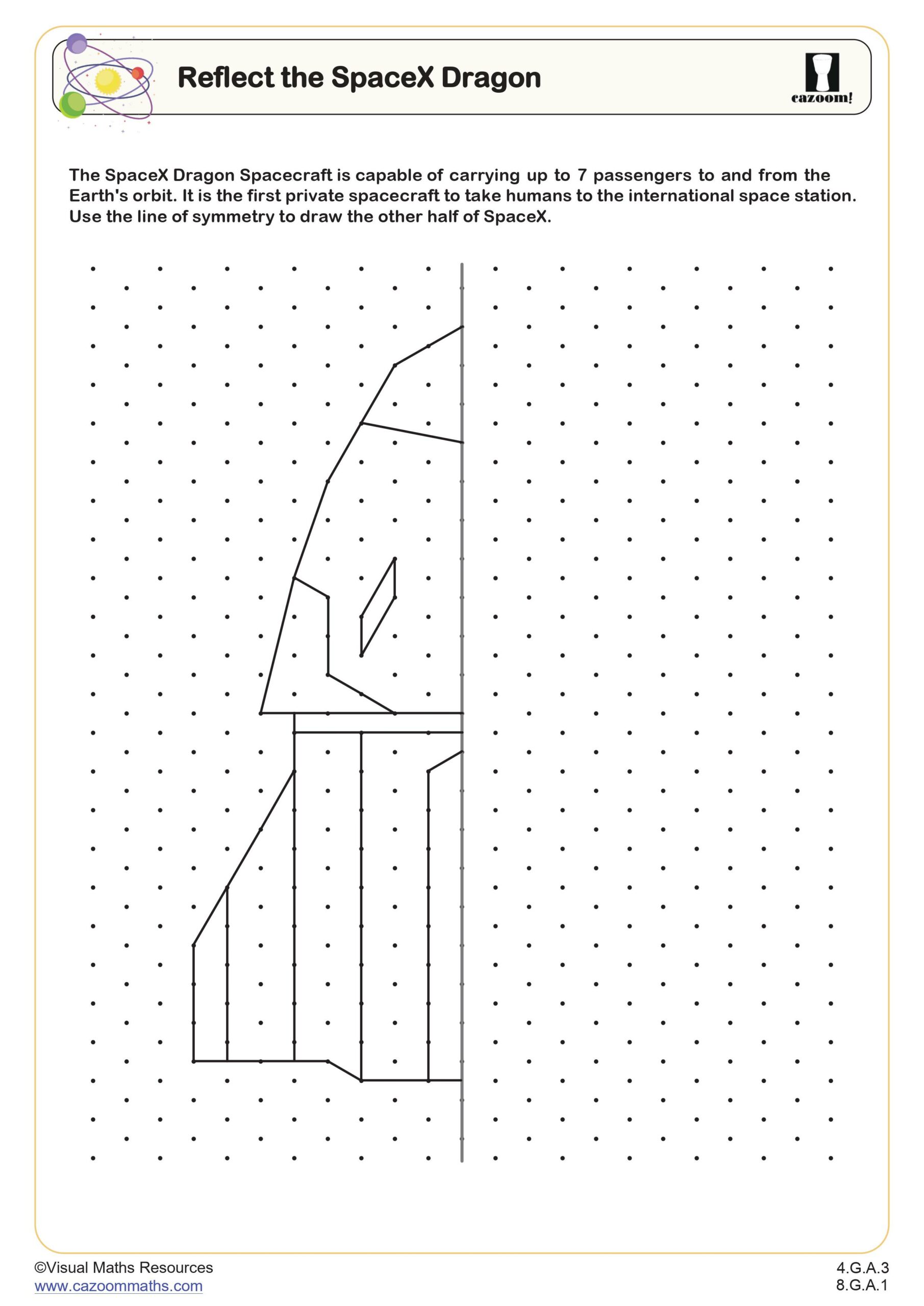
Reflect the SpaceX Dragon
Grades: 4th Grade, 8th Grade
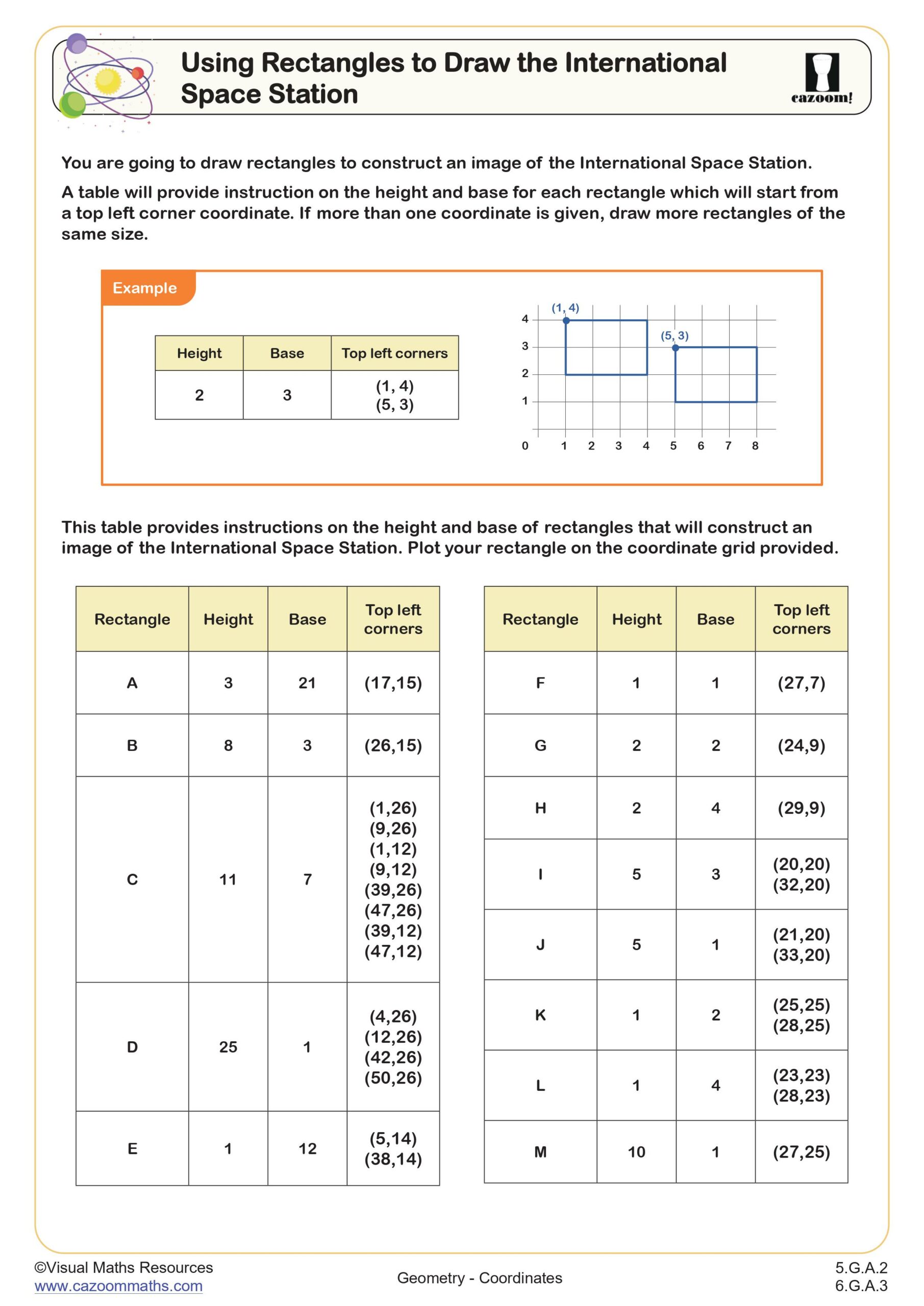
Using Rectangles to Draw the International Space Station
Grades: 5th Grade, 6th Grade
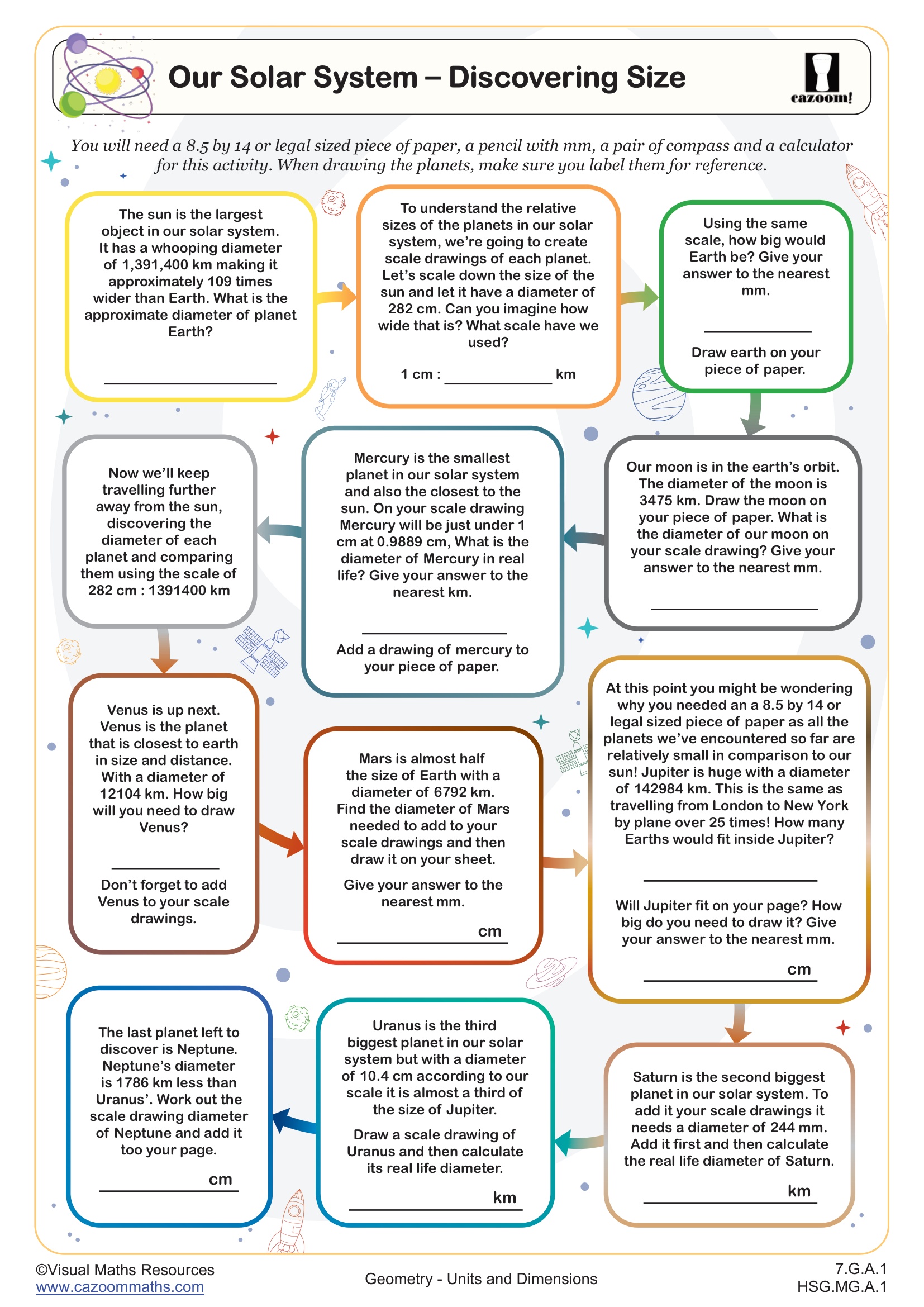
Our Solar System- Discovering Size
Grades: 7th Grade, Geometry, IM 2
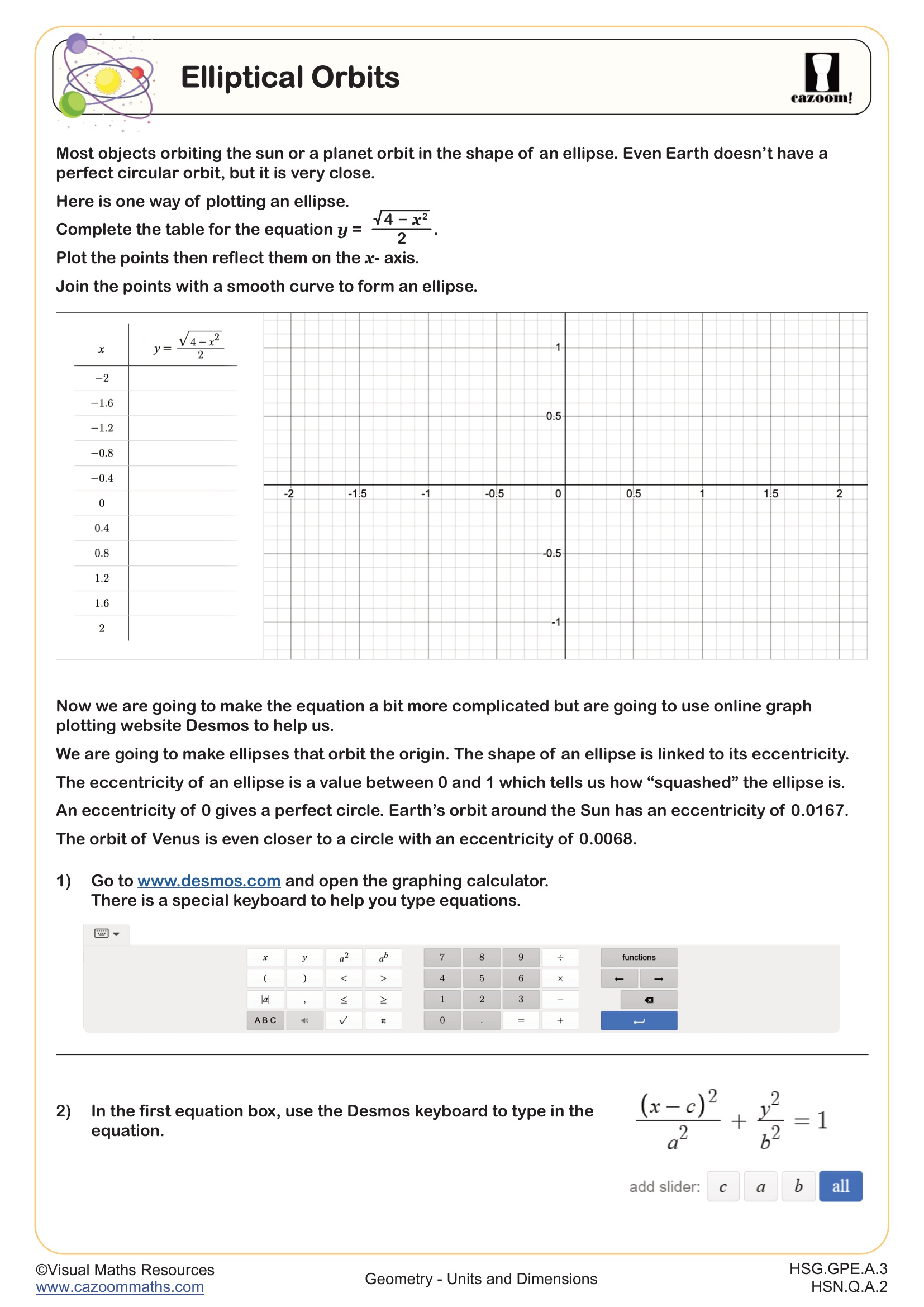
Elliptical Orbits
Grades: Geometry, IM 2
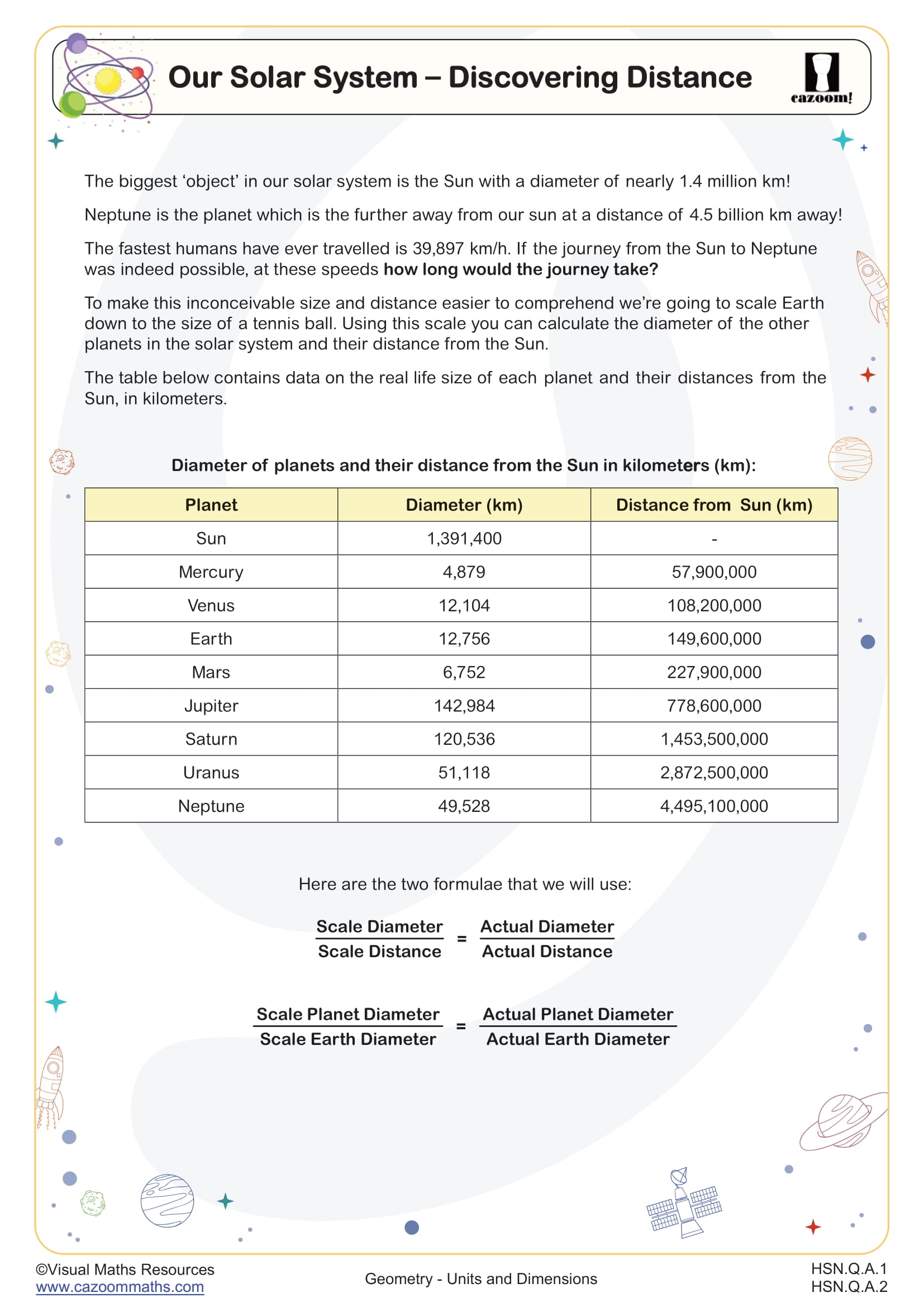
Our Solar System- Discovering Size and Distance
Grades: Geometry, IM 2
All worksheets are created by the team of experienced teachers at Cazoom Math.
How do space math worksheets support curriculum standards?
Space math worksheets align with Common Core State Standards across multiple grade levels, incorporating measurement and data, number and operations, and ratios and proportional relationships. These activities connect mathematical concepts to STEM fields, particularly astronomy and engineering, while reinforcing computational skills through authentic contexts.
Teachers find that space-themed problems naturally introduce scientific notation, typically introduced in 8th grade, while allowing younger students to work with place value and operations using large numbers. The real-world connections help students understand why mathematical precision matters in fields like NASA mission planning and satellite positioning.
What grade levels can effectively use these space-themed math activities?
Elementary students work with basic operations using space facts, such as calculating distances between planets or comparing spacecraft speeds. Middle school students tackle more complex problems involving scientific notation, proportional reasoning, and unit conversions with astronomical data.
High school students apply advanced concepts like exponential functions for rocket trajectories and logarithmic scales for measuring celestial brightness. Teachers notice that the space theme maintains engagement across all levels while allowing differentiation through problem complexity rather than changing contexts entirely.
How do these worksheets address common misconceptions about scale and distance?
Many students struggle with the vast scales involved in space mathematics, often treating astronomical distances as ordinary numbers without grasping their true magnitude. These worksheets include activities that help students visualize relative distances and sizes through scaled models and proportional reasoning problems.
Teachers observe that students frequently confuse units when working with space measurements, mixing miles with kilometers or light-years with astronomical units. The structured practice helps students develop number sense with large quantities while reinforcing the importance of unit consistency in mathematical calculations and scientific applications.
What strategies help students succeed with space-themed mathematical problems?
Students benefit from starting with concrete comparisons before moving to abstract calculations. Teachers find success having students estimate answers first, then use calculators to verify their computational work with large numbers and scientific notation.
Providing reference sheets with space facts and unit conversion factors helps students focus on mathematical reasoning rather than memorizing data. Many teachers pair these worksheets with visual aids like scale diagrams or online simulations to reinforce the mathematical relationships students are calculating.