World Sudoku Day Worksheets
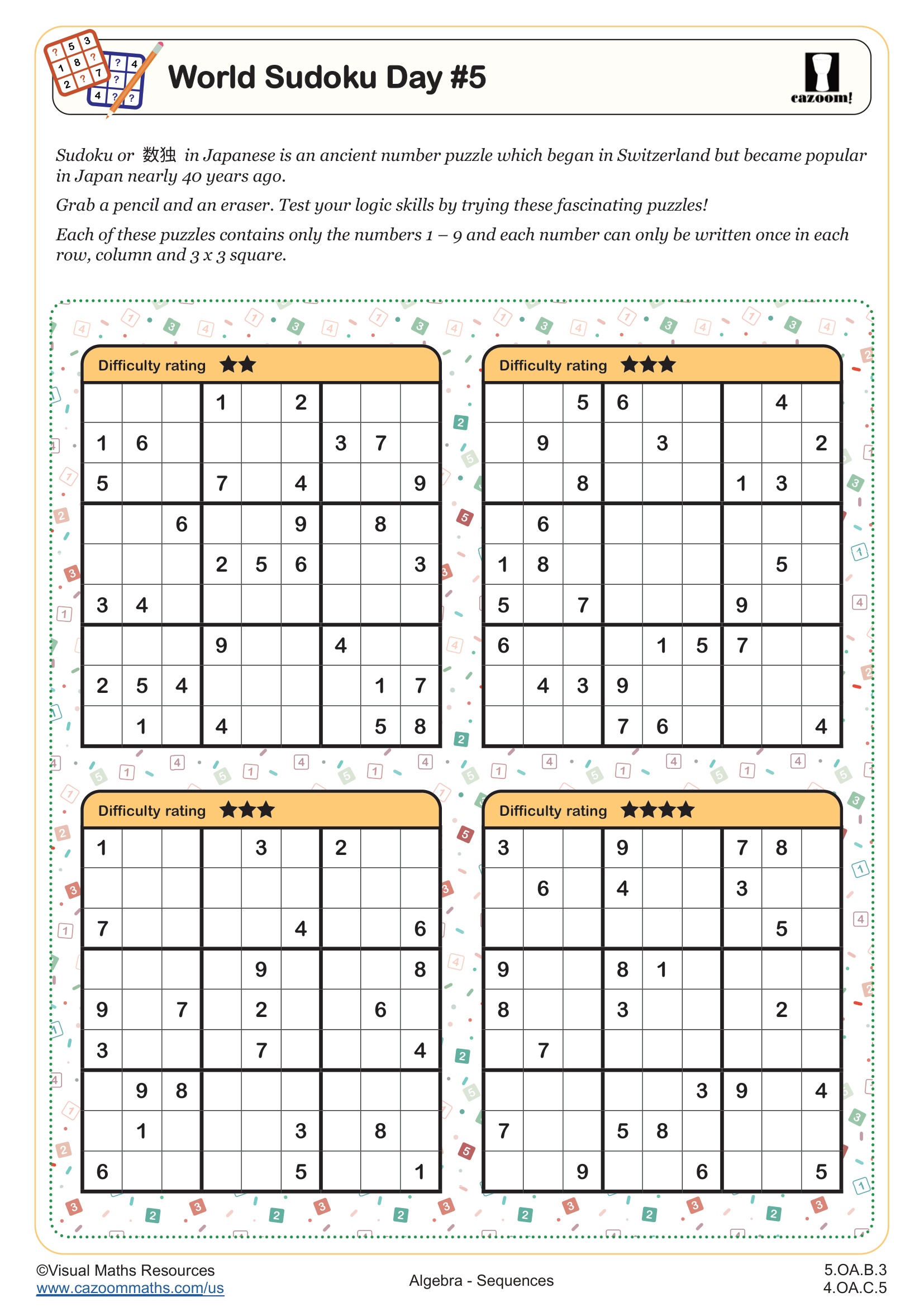
All worksheets are created by the team of experienced teachers at Cazoom Math.
How do you introduce 5th grade sudoku to students who have never solved these puzzles before?
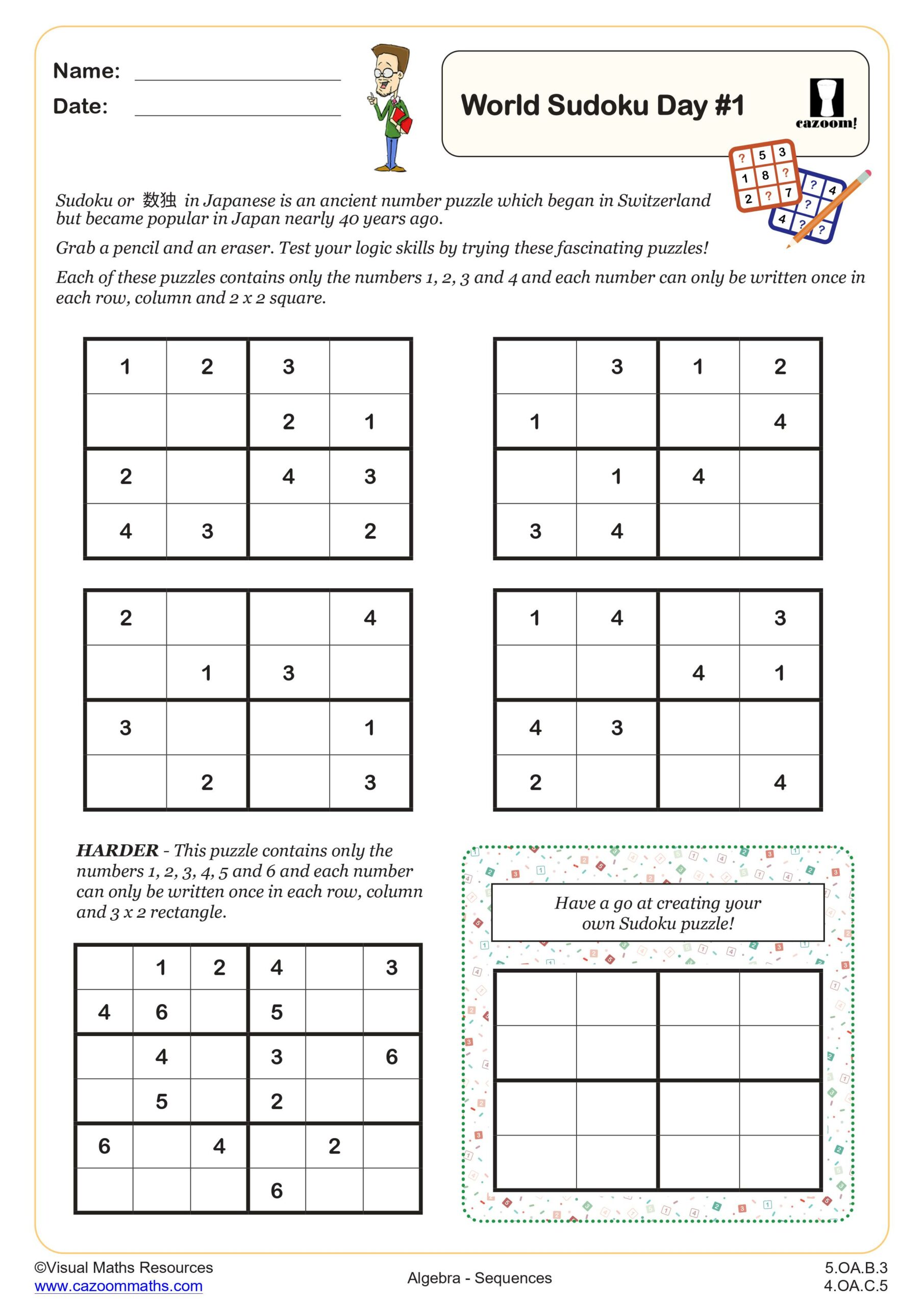
Start 5th grade sudoku instruction with 4x4 grids that use numbers 1-4, as these smaller puzzles allow students to grasp the fundamental rules without feeling overwhelmed. Teachers should demonstrate the three basic rules: each row, column, and 2x2 box must contain each number exactly once, with no repeating digits in any section.
Many students initially guess randomly instead of using logical deduction, so teachers find success in modeling the elimination strategy where students pencil in possible numbers for empty cells. This systematic approach helps students understand that sudoku grade 5 puzzles have unique solutions that can be found through reasoning rather than trial and error.
What grade levels can successfully work with sudoku puzzles?
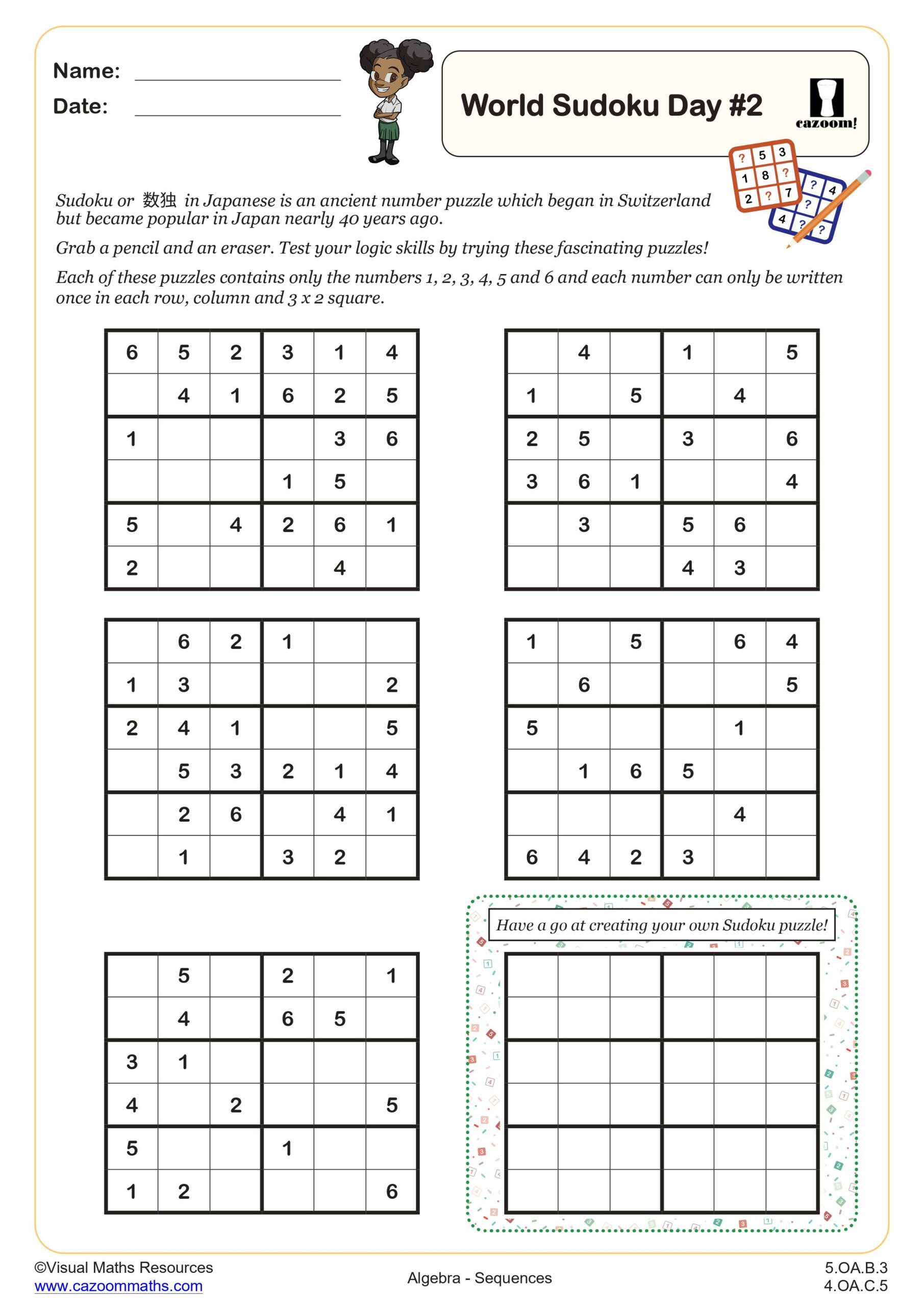
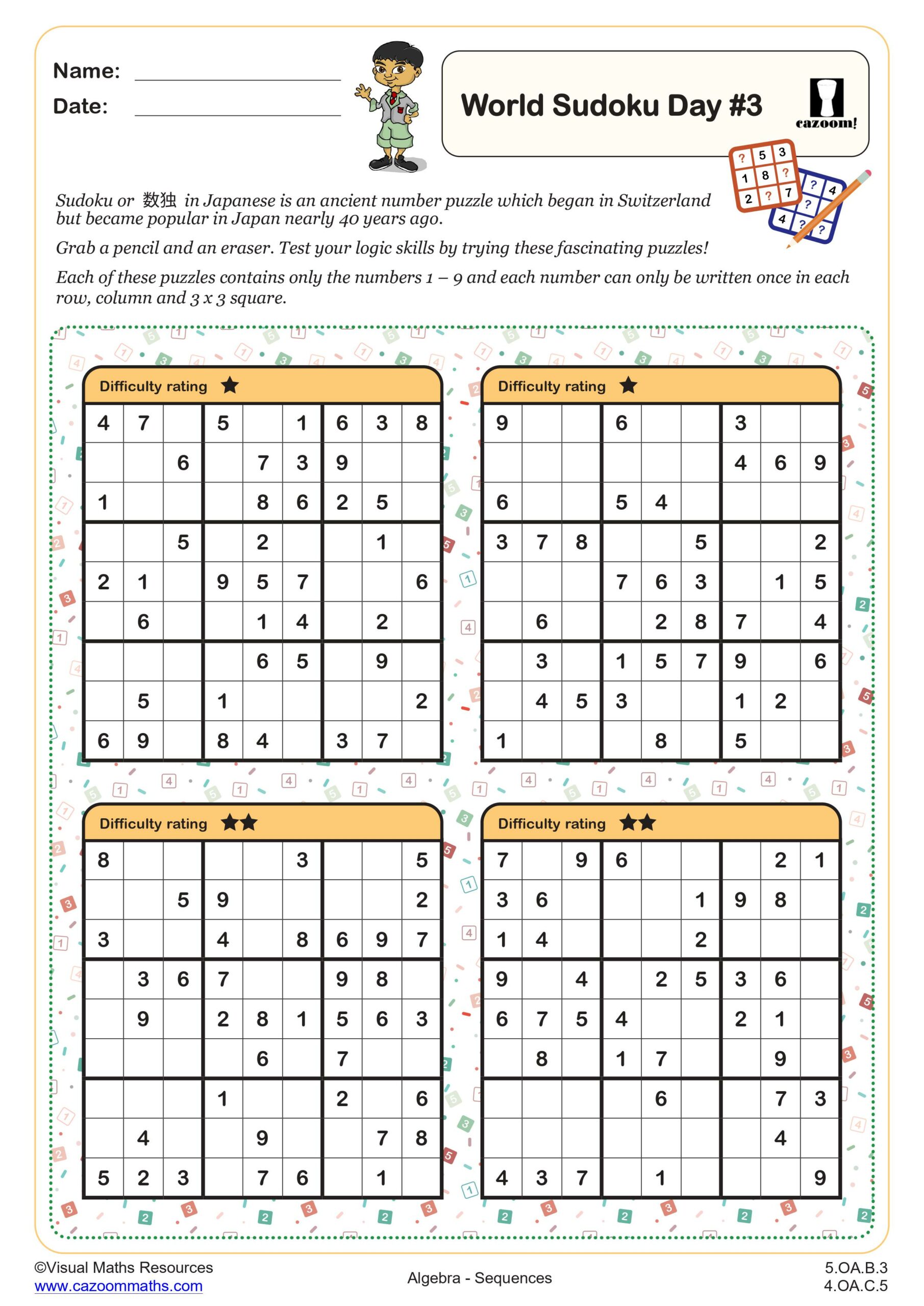
Elementary students typically begin with 4x4 sudoku puzzles in grades 3-4, progressing to 6x6 grids by grade 5, and attempting 9x9 puzzles in middle school. The key factor is not age but logical reasoning development, as some advanced elementary students can handle complex puzzles while others need more scaffolding with simpler versions.
Teachers observe that students who struggle with number sense often benefit from using symbols or colors instead of numbers initially. This adaptation removes the numerical processing burden and allows students to focus purely on the logical relationships between grid positions, building confidence before transitioning back to traditional number-based puzzles.
What strategies help students learn how to solve sudoku puzzles systematically?
The most effective teaching strategy involves showing students how to scan for "naked singles" - cells where only one number can logically fit based on the numbers already placed in that row, column, or box. Teachers should model this scanning process explicitly, demonstrating how to eliminate possibilities methodically rather than guessing.
Students often benefit from learning the "pencil mark" technique, where they lightly write small possible numbers in each empty cell. This visual organization helps them see patterns and contradictions more clearly. Teachers notice that students who master this systematic approach show improved problem-solving skills in other mathematical contexts, particularly in algebra where logical deduction is crucial.
How can teachers use these sudoku worksheets most effectively in the classroom?
Teachers find the most success when they introduce sudoku as a warm-up activity or brain break rather than as a graded assignment, which reduces anxiety and encourages exploration. The answer keys allow teachers to provide immediate feedback and help students identify where their logical reasoning went off track, turning mistakes into learning opportunities.
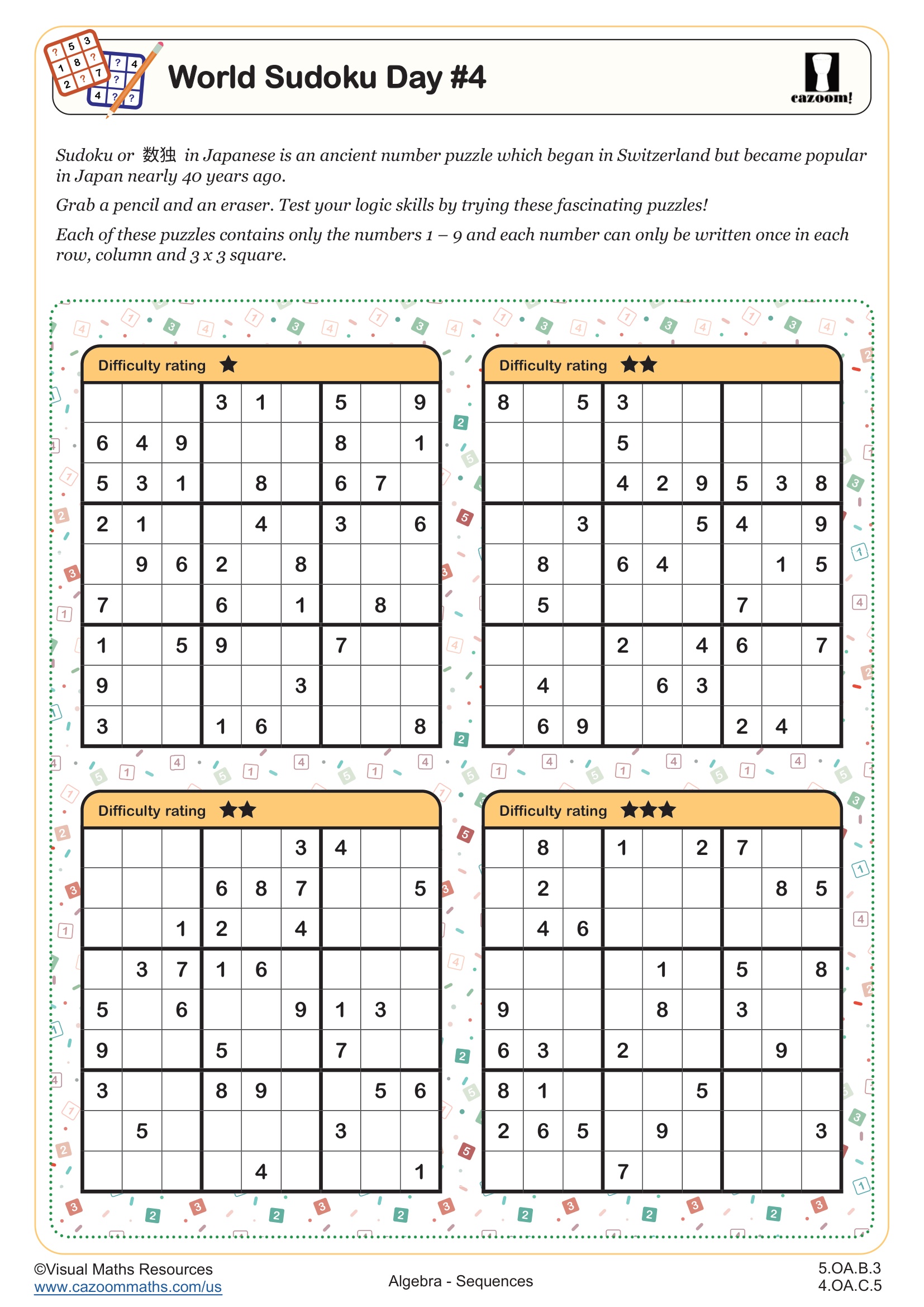
Many teachers use sudoku puzzles for differentiated instruction, giving struggling students 4x4 grids while challenging advanced learners with 9x9 puzzles. The puzzles also work well for collaborative learning, where students can discuss their reasoning processes and learn different solving strategies from peers, building both mathematical discourse and logical thinking skills.